



 Français
 Español
 Deutsch
Content
- 1 Product Overview
- 2 Softness as the First Consumer Experience
- 3 Warmth Without Excessive Weight
- 4 The Pocket Function: A Practical Advantage Over Standard Quilts
- 5 Design Value for Modern Home Décor
- 6 Material Construction and Performance Logic
- 7 Advantages Over Ordinary Microfiber Quilts
- 8 Manufacturing Strength Behind the Product
- 9 Typical Production Process
- 10 Quality Management and Certifications
- 11 Customization Capabilities for Different Markets
- 12 Applications in Daily Life
- 13 Retail and Wholesale Selling Points
- 14 Comfort, Durability, and Care Considerations
- 15 Why Manufacturing Experience Matters
- 16 Comparison With Competing Products
- 17 Commercial Value for Buyers
- 18 Responsible Production and Buyer Confidence
- 19 Q&A Section
- 19.1 What is a functional pocket quilt?
- 19.2 What makes this quilt different from a standard microfiber quilt?
- 19.3 What is the default size of the product?
- 19.4 What materials are used in the quilt?
- 19.5 Can the quilt be customized?
- 19.6 Is the quilt suitable for travel?
- 19.7 Why is the 3D fibre lining important?
- 19.8 How does the pocket function improve home organization?
- 19.9 What types of buyers may benefit from this product?
- 19.10 What manufacturing strengths support product quality?
- 20 Conclusion
- 21 References
- 22 Product: Functional Pocket Quilt
A functional pocket quilt is more than a simple layer of bedding. It is a practical home textile product designed for modern households, travel use, dormitory living, guest rooms, children’s rooms, and casual relaxation spaces where softness, warmth, portability, and space-saving performance matter. The Functional Pocket Quilt described here combines an ultra-soft fur front fabric, a colorful brushed fabric back, and a 120gsm 3D fibre lining to create a quilt that can serve as a cozy blanket and also fold into a cushion. This dual-purpose structure gives the product a clear advantage over many conventional microfiber quilts, which usually provide warmth but do not offer the same convenient folding, storage, and decorative cushion function.
In the home textile market, consumers increasingly expect products to be comfortable, attractive, durable, easy to maintain, and adaptable to multiple daily scenarios. A quilt that can only be used on a bed may still be useful, but a quilt that can also be folded into a cushion brings additional value. It can be placed on a sofa, carried for travel, stored neatly in a living room, or used as an emergency warm cover for guests. The pocket construction allows the user to keep the quilt organized while adding a soft cushion to the room. This combination of bedding and home décor is one of the product’s strongest selling points.
The product belongs to the microfiber quilt category and reflects the strengths of a mature home textile manufacturer with long-term experience in bedding production. With a manufacturing background covering quilts, pillows, cushions, mattress protectors, blankets, mattress covers, and related home textile products, the production system behind this quilt is built to handle fabric selection, filling control, stitching consistency, quality inspection, customization, and large-scale order delivery. The result is a product that fits both consumer comfort expectations and the commercial requirements of retailers, importers, wholesalers, hotels, promotional programs, and private-label bedding brands.
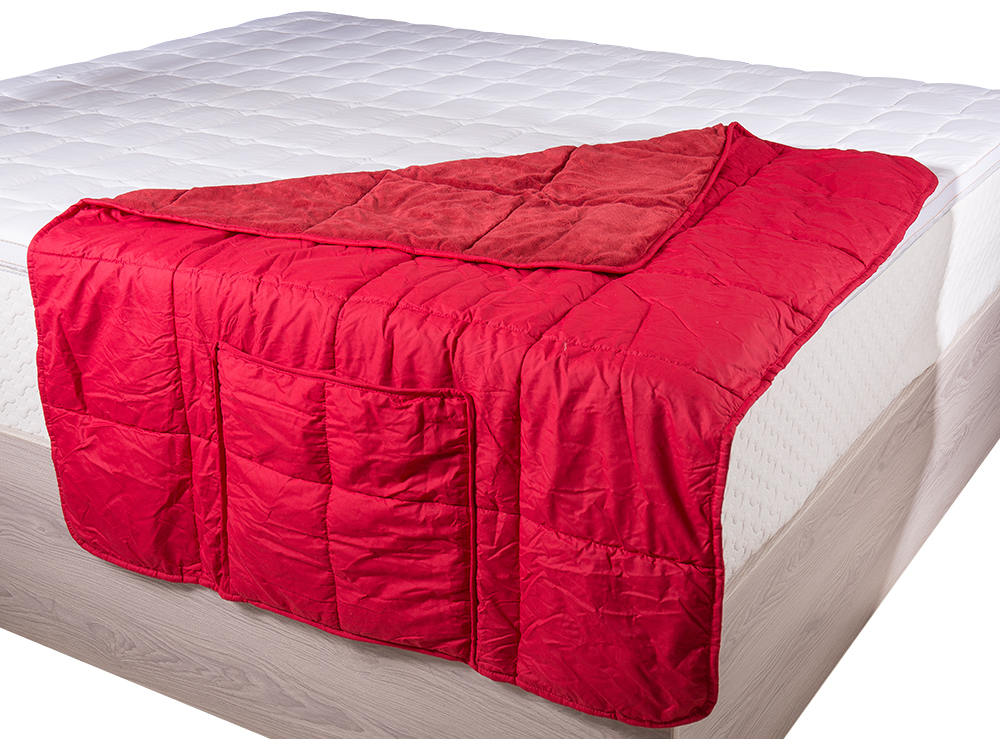
Functional Pocket Quilt
Product Overview
The Functional Pocket Quilt is designed as a soft, warm, and versatile quilt with a built-in folding function. Its default size is 140x200cm, while customized sizes can also be produced according to customer requirements. The front fabric is ultra-soft fur fabric, selected for its plush touch and inviting appearance. The back fabric is 95gsm colorful brushed fabric, which supports comfort while adding color options and a pleasant hand feel. Inside the quilt, a 120gsm 3D fibre lining provides loft, resilience, and lightweight warmth.
The most distinctive feature is its multifunctional design. It can be used as a blanket or quilt when unfolded, and it can be folded into a cushion when not in use. This structure makes it especially suitable for living rooms, offices, dormitories, travel vehicles, camping support, children’s play areas, and guest bedding. Instead of being stored away in a closet, the folded quilt becomes part of the room’s functional décor. This improves both practicality and perceived value.
Compared with a standard microfiber quilt, the Functional Pocket Quilt offers more usage flexibility. Compared with a regular cushion, it contains a full-size quilt hidden inside. Compared with a basic blanket, it provides a more structured design and a more convenient storage solution. This makes it an attractive product for customers who want bedding that performs well in multiple environments.
Product Item |
Functional Pocket Quilt |
Product Category |
Microfiber Quilt |
Default Size |
140x200cm |
Customization |
Size, fabric color, pattern, packing, and specifications can be customized |
Front Fabric |
Ultra-soft fur fabric |
Back Fabric |
95gsm colorful brushed fabric |
Lining |
120gsm 3D fibre |
Main Function |
Can be used as a quilt, blanket, or folded cushion |
Typical Applications |
Home bedding, sofa blanket, travel quilt, guest bedding, dormitory bedding, promotional gift, private-label retail product |
Softness as the First Consumer Experience
For a quilt product, the first impression is often created by touch. Consumers usually decide whether a blanket or quilt feels desirable within seconds of handling it. The ultra-soft fur fabric on the front side gives this product a plush, silky, and comforting surface. This is particularly important in colder seasons, where a soft and warm texture immediately creates a sense of relaxation. The fabric is intended to feel gentle against the skin, making the quilt suitable for use on sofas, beds, or while traveling.
Many ordinary quilts use plain polyester fabric or standard microfiber surfaces that may be functional but lack a luxurious touch. The fur fabric surface gives this product a more premium appearance and tactile experience. It can attract retail customers because it looks soft even before it is touched. Visual softness matters in bedding merchandising. When displayed in a store, photographed for online sales, or folded as a cushion, the plush surface communicates warmth and comfort effectively.
The back side of the quilt uses 95gsm colorful brushed fabric. Brushed fabric improves the hand feel compared with untreated fabric because the surface is gently raised to create a smoother and softer touch. The colorful back fabric also allows the product to be designed in various color combinations, supporting seasonal collections, children’s designs, neutral home décor styles, or private-label requirements. This two-sided material approach gives the quilt both comfort and design flexibility.
The combination of ultra-soft fur fabric and brushed backing makes the quilt different from single-fabric blankets. One side offers a plush and cozy look, while the other side provides a lighter, smooth, and colorful surface. This dual-texture structure supports different user preferences. Some users may prefer the fur side against the body for maximum softness, while others may prefer the brushed fabric side depending on temperature and use setting.
Warmth Without Excessive Weight
Inside the quilt, the 120gsm 3D fibre lining provides a balance of insulation, loft, and lightweight comfort. A quilt should be warm enough to satisfy daily comfort needs, but not so heavy that it becomes difficult to fold, carry, wash, or store. The 3D fibre structure helps trap air within the filling, contributing to warmth while maintaining softness and resilience. This is especially valuable in a multifunctional product because the quilt must perform when unfolded and also fold smoothly into a cushion.
Traditional heavy quilts may provide warmth, but they are not always convenient for daily movement or storage. Very thin blankets may be easy to carry, but they may lack a comfortable quilt-like feeling. The Functional Pocket Quilt sits between these extremes by using a moderate fibre lining that supports everyday comfort. It can be used while watching television, reading, resting, working from home, taking a nap, or adding warmth to a bed.
The 120gsm lining also supports product consistency. In manufacturing, controlling fibre weight is essential because uneven filling can lead to cold spots, poor appearance, or reduced durability. A controlled filling specification allows the quilt to maintain a predictable feel across production batches. For retailers and importers, this consistency is important because customers expect the same comfort level from one piece to another.
Another advantage of fibre lining is its suitability for broad consumer markets. Microfiber and polyester-based fillings are widely used in modern bedding because they are practical, cost-effective, and adaptable to different climates and price segments. When combined with proper stitching and quilting processes, the fibre can remain distributed across the quilt surface, helping the product keep its shape through repeated use.
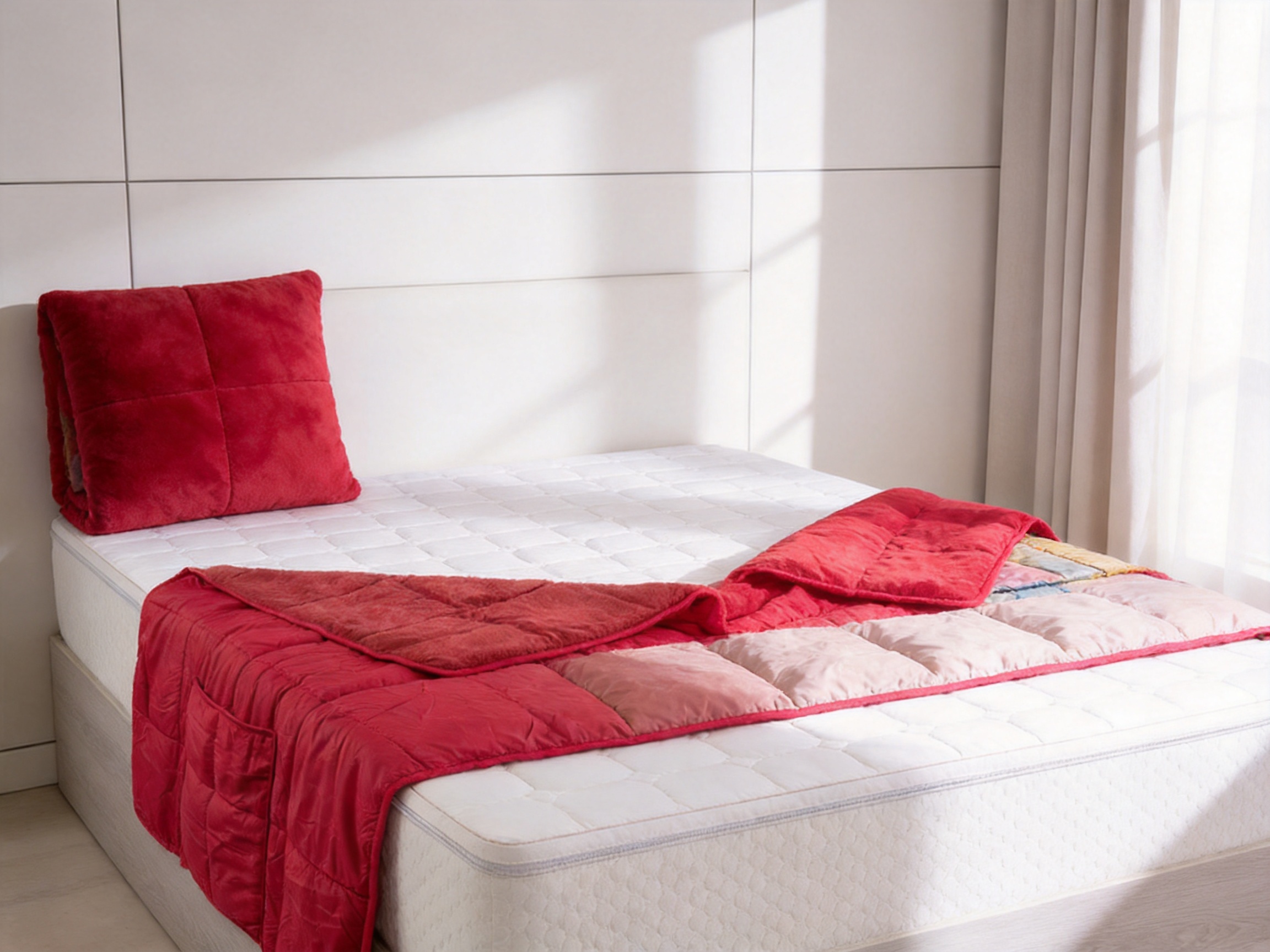
The Pocket Function: A Practical Advantage Over Standard Quilts
The defining feature of the Functional Pocket Quilt is its ability to fold into a cushion. This design solves a common problem in household bedding: storage. Many blankets and quilts are used frequently but become messy when left on sofas or beds. Users often fold them casually, place them in baskets, or hide them in cabinets. A pocket quilt changes this routine. After use, the quilt can be folded into its pocket form and become a neat cushion. The user does not need a separate storage bag or dedicated closet space.
This feature is highly attractive for small homes, apartments, student dormitories, children’s rooms, recreational vehicles, and offices. In compact spaces, every product must justify its presence. A quilt that also functions as a cushion is more efficient than buying and storing a separate cushion and blanket. This can make the product especially appealing in urban markets where living space is limited.
The cushion form also enhances portability. When folded, the quilt is easier to carry, stack, display, and package. Consumers can keep it in a car for road trips, bring it to a picnic, use it at work during cold seasons, or store it in a guest room without creating clutter. For retailers, the folded cushion shape may improve shelf presentation because it appears compact and giftable.
Compared with competitors that offer ordinary fleece blankets or microfiber quilts, this product provides an extra function without sacrificing the original comfort purpose. The user still receives a soft quilt when needed, but also gains a cushion when the quilt is folded. This additional function increases the value perception of the product and helps it stand out in a crowded bedding market.
Design Value for Modern Home Décor
Home textile products are no longer judged only by warmth. Consumers also consider how bedding items fit into the overall look of a home. The Functional Pocket Quilt is designed to support both comfort and décor. When folded into a cushion, it can be placed on a sofa, armchair, bed, or window seat. Its soft fur surface gives it a cozy and inviting appearance, making it suitable for both functional use and decorative placement.
The colorful brushed back fabric offers opportunities for creative color matching. Retailers may request neutral tones for minimalist interiors, warm colors for autumn and winter collections, playful patterns for children’s products, or promotional colors for branded gift programs. This adaptability is a key competitive advantage because different markets have different style preferences. A manufacturer with customization capability can help customers build product lines that match local trends.
For hotels, guest houses, and hospitality buyers, the quilt can serve as a convenient guest comfort item. It can be presented as a cushion during the day and unfolded as an additional blanket when required. For e-commerce sellers, the multifunctional feature can be clearly communicated through product photos and instructions, helping consumers understand the added value quickly.
The product is also well suited for seasonal promotions. In winter, it can be marketed as a warm sofa blanket. During travel seasons, it can be positioned as a portable quilt. For holidays, it can be sold as a giftable cushion blanket. This flexibility makes it easier for buyers to create multiple sales messages from one product design.
Material Construction and Performance Logic
The performance of a quilt depends on how its materials work together. The Functional Pocket Quilt uses a layered structure: ultra-soft fur fabric on the front, 120gsm 3D fibre in the middle, and 95gsm colorful brushed fabric on the back. Each layer has a clear purpose. The front fabric creates plush comfort and visual warmth. The inner fibre provides loft and insulation. The back fabric contributes softness, color, and flexibility.
Because the quilt must fold into a cushion, the materials need to be soft enough to compress but resilient enough to unfold again. If the fabric were too stiff, the cushion would feel bulky and uncomfortable. If the filling lacked resilience, the quilt might appear flat after folding. The selected structure supports both functions. It can compress for cushion use and expand for quilt use.
Stitching and sewing quality are also important. A pocket quilt requires accurate dimensions, stable seams, and neat finishing because the product is visible in both quilt and cushion forms. Poor stitching could affect folding performance or reduce consumer confidence. A professionally manufactured pocket quilt needs reliable edge sewing, stable pocket construction, even filling distribution, and careful inspection.
The product’s default size of 140x200cm is practical for single-person use, sofa use, travel, and guest bedding. It provides enough coverage for resting while remaining manageable for folding. Customizable sizing allows buyers to adapt the product to regional standards or special retail requirements. For example, some markets may prefer smaller travel sizes, while others may request larger throws or bedding dimensions.
Advantages Over Ordinary Microfiber Quilts
Ordinary microfiber quilts often compete mainly on price, color, weight, and basic comfort. The Functional Pocket Quilt adds a stronger value proposition through its multifunctional design. Instead of being only a quilt, it becomes a quilt, blanket, cushion, storage solution, and décor accessory. This creates several competitive advantages.
First, it improves space efficiency. A standard quilt requires separate storage, while this quilt folds into itself. Second, it offers better daily accessibility. Because it can remain on a sofa as a cushion, it is always available when the user needs warmth. Third, it has stronger gift appeal. A cushion-style folded quilt is easier to present as a practical and cozy gift. Fourth, it supports stronger retail storytelling. Sellers can demonstrate the transformation from cushion to quilt, making the product more memorable.
Another advantage is tactile differentiation. Many low-cost microfiber quilts use simple flat fabrics. The ultra-soft fur front fabric gives this product a more luxurious feel and appearance. The brushed back fabric adds comfort and color depth. Together, these fabrics create a richer sensory experience than many basic alternatives.
The 3D fibre lining also contributes to comfort. While some competitors may use thinner fillings that feel flat or uneven, the 120gsm lining offers a balanced loft suitable for daily use. The quilt is not positioned as a heavy winter duvet, but as a versatile comfort quilt that can serve multiple roles. This practical balance is exactly what many modern consumers want.
Finally, the product benefits from production by an experienced home textile manufacturer. In a market where similar-looking products may vary greatly in quality, manufacturing capability matters. Stable sewing, controlled filling, fabric inspection, and certification-supported management can separate a dependable product from low-quality copies.

Manufacturing Strength Behind the Product
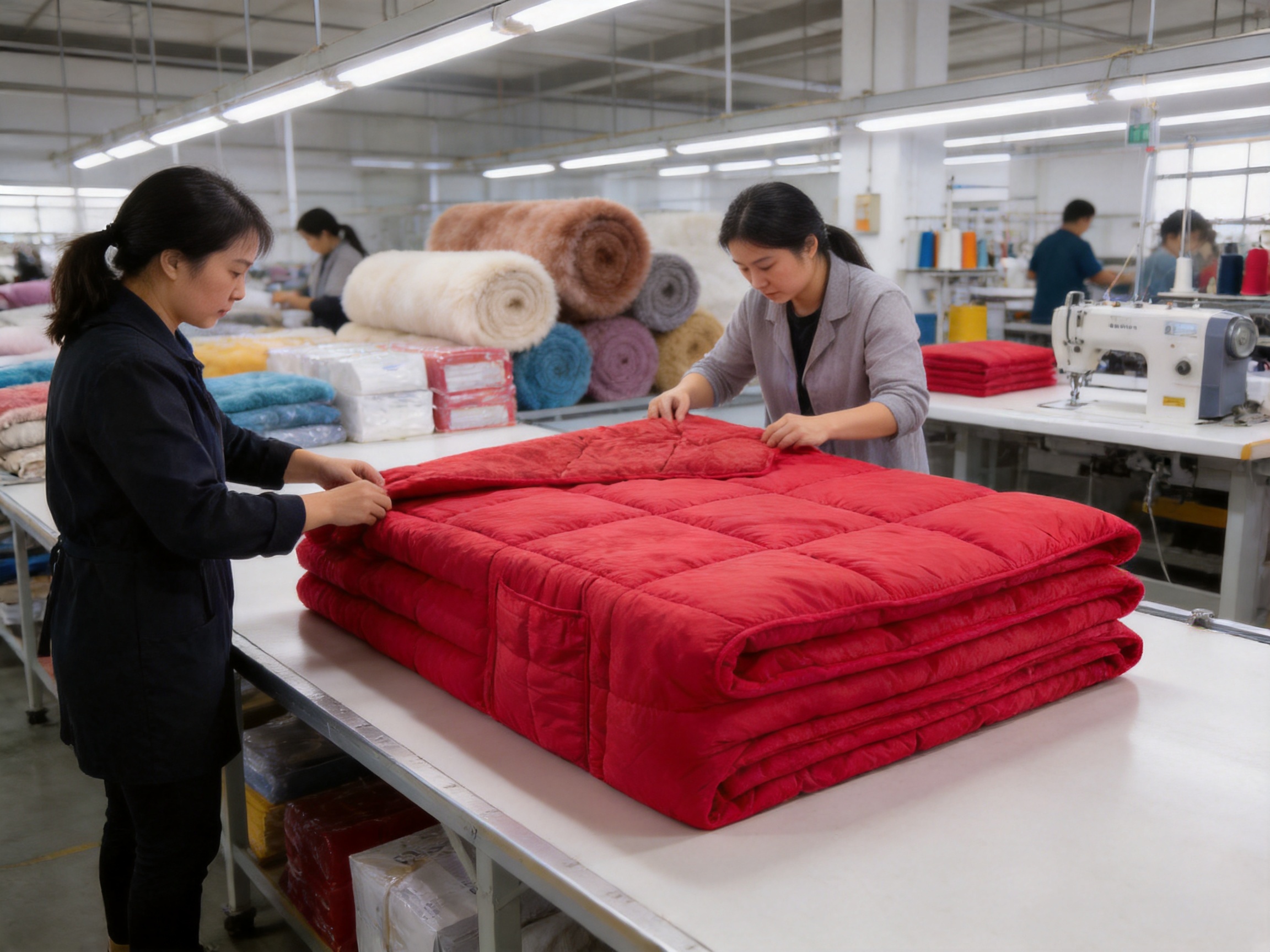
A well-designed quilt is only successful when the factory can produce it consistently. The manufacturer behind this product was established in 2002 and has developed long-term experience in the home textile industry. Its product range includes silk cotton quilts, chemical fibre quilts, pillows, cushions, bedspreads, travel quilts, mattress protectors, blankets, quilt covers, pillowcases, shower curtains, curtains, and other household textile products. This broad production background supports material knowledge, sewing expertise, quality management, and customization capability.
The production facility covers an area of 21,000 square meters, with a construction area of 18,000 square meters. With more than 320 employees and a range of advanced production equipment, the company has the capacity to handle regular production, customized orders, and market-specific product development. For buyers, this means the product is not produced by a small workshop with limited process control, but by a structured manufacturer with the resources to support stable supply.
Advanced production equipment is important for bedding manufacturing because fabric cutting, filling, quilting, sewing, finishing, inspection, and packing all affect the final product. A pocket quilt requires more careful construction than a simple blanket because the folding function must work properly. Accurate cutting ensures that the quilt folds into the correct cushion shape. Consistent filling helps the quilt look smooth when unfolded. Strong stitching supports repeated folding and daily use. Careful finishing improves consumer perception.
Professional technical personnel also contribute to product quality. The home textile market changes quickly, with new materials, colors, patterns, and product functions appearing every season. A manufacturer that continues to develop and innovate can respond to customer needs more effectively. For the Functional Pocket Quilt, technical capability is reflected in the combination of soft fabric, fibre lining, and folding pocket structure.
Typical Production Process
The production of a functional pocket quilt generally begins with material selection. Fabrics and fibres must be chosen according to the required hand feel, weight, color, size, and performance. The ultra-soft fur fabric needs to meet softness and appearance requirements, while the brushed fabric must match color standards and fabric weight expectations. The 3D fibre lining must be controlled to provide the specified 120gsm level.
After material preparation, fabric inspection helps identify defects such as uneven color, stains, holes, or weaving irregularities. This step is essential because plush and brushed fabrics are highly visible to consumers. A defect on the surface can reduce product value immediately. Inspection before cutting helps reduce waste and prevents defective materials from entering later production stages.
Cutting is then performed according to the product pattern and size. For a 140x200cm quilt, dimensional accuracy matters not only for coverage but also for folding. The pocket section must be positioned correctly so the quilt can transform into a cushion. Inaccurate cutting can create uneven edges, poor folding, or an unattractive cushion shape.
Next comes filling placement and quilting or sewing preparation. The 3D fibre lining must be evenly distributed between the front and back fabrics. Workers and machines must ensure that the layers remain aligned. Depending on the requested design, the quilt may use specific stitching patterns or edge construction to stabilize the filling. The goal is to prevent shifting and preserve a smooth appearance.
The pocket construction is a key step. The pocket area must be strong enough to contain the folded quilt and neat enough to look like a finished cushion. Seam strength is important because the pocket will experience repeated handling. The sewing process must balance durability with softness, avoiding hard or uncomfortable seam areas.
After sewing, the quilt enters finishing and quality inspection. Loose threads are removed, seams are checked, dimensions are measured, and the overall appearance is reviewed. Products may also be checked for folding performance to ensure the cushion function works as intended. Only after passing inspection should the quilt be packed for shipment.
Quality Management and Certifications
Quality management is a major advantage for professional bedding manufacturers. The company has passed international certifications and standards including ISO9001, ISO14001, OEKO-related certifications, GRS, and BSCI. These certifications reflect attention to quality systems, environmental management, responsible textile production, recycled material chain considerations where applicable, and social compliance expectations. For international buyers, such certifications can reduce sourcing risk and support compliance with retailer requirements.
ISO9001 is associated with quality management systems. In practical terms, this means that production should follow controlled processes, documentation, corrective action procedures, and continuous improvement principles. For a quilt product, such systems help ensure that materials, dimensions, sewing quality, and packing specifications are managed consistently.
ISO14001 relates to environmental management. Home textile manufacturing involves fabric sourcing, cutting waste, energy use, water considerations, and packaging. An environmental management system helps a manufacturer identify and control environmental impacts. This is increasingly important because buyers and consumers are paying more attention to sustainable and responsible production.
OEKO-related certifications are important in the textile industry because they address harmful substance concerns and responsible production expectations. Consumers want bedding that feels safe and reliable, especially because quilts come into close contact with the body. Certification-supported production can provide added confidence for buyers who sell to quality-sensitive markets.
GRS, the Global Recycled Standard, is relevant when recycled materials are used and chain-of-custody requirements apply. Even if a specific order depends on buyer requirements, having experience with GRS can show that the manufacturer understands the procedures needed for responsible material tracking. BSCI relates to business social compliance, which is important for global retailers and brands that expect suppliers to meet responsible workplace standards.
In addition, the company has been rated as a safety production standardization enterprise for several consecutive years since 2016. Safety production is not only important for employees; it also supports stable manufacturing. A safe and standardized production environment reduces disruption, improves process discipline, and contributes to reliable delivery.
Customization Capabilities for Different Markets
One of the key advantages of this Functional Pocket Quilt is customization. The default size is 140x200cm, but buyers may request other dimensions. Customization can also include fabric colors, prints, packaging methods, labels, carton specifications, and market-specific presentation. This is especially important for importers, wholesalers, e-commerce sellers, and private-label bedding brands.
Different markets have different preferences. European customers may prefer soft neutral colors and simple packaging. North American buyers may want seasonal patterns and gift-ready presentation. Children’s product buyers may request bright colors or playful prints. Promotional clients may need colors that match a campaign. Hospitality buyers may prefer durable, calm tones that fit room décor. A customizable quilt can serve all these segments with the same basic product concept.
Customization also helps retailers avoid direct price competition. If every seller offers the same color and packaging, competition becomes focused mainly on price. By customizing color combinations, fabric patterns, labels, and product sets, buyers can create differentiated assortments. The pocket quilt format is already distinctive, and customization makes it even more marketable.
For large buyers, factory customization can support brand consistency. Labels, care instructions, packing bags, hangtags, and carton marks can be arranged according to order requirements. This makes the product suitable for private-label programs and retail chains that require consistent presentation across stores and online channels.
Applications in Daily Life
The Functional Pocket Quilt can be used in many daily settings. In the living room, it can remain folded as a cushion on the sofa. When the room becomes cold, the user can unfold it into a soft blanket. This is ideal for watching movies, reading, or relaxing with family. Because it folds back into a cushion, it does not create the messy appearance that ordinary blankets sometimes do.
In the bedroom, it can serve as an additional quilt for naps or cold nights. It is particularly useful in guest rooms because it can stay on a bed or chair as a cushion until needed. Guests can unfold it easily without searching through storage closets. The 140x200cm default size is convenient for single-person coverage.
For travel, the product is practical because it is portable and easy to store. It can be kept in a car for road trips, used during camping, taken to a dormitory, or brought to an office. Travelers often need bedding that is compact but still comfortable. The cushion form makes carrying and storage more convenient than a loose quilt.
For children, the quilt can be used as a nap blanket or playroom cushion. The soft fur fabric creates a comforting texture, while the folding function encourages neat storage. Parents often appreciate products that reduce clutter and serve multiple purposes.
For promotional gifts, the product offers strong perceived value. A simple blanket may be common, but a blanket that folds into a cushion feels more creative. Companies, event organizers, and gift distributors may find it suitable for winter promotions, employee gifts, travel campaigns, or lifestyle product packages.
Retail and Wholesale Selling Points
Retailers need products that can be explained quickly and visually. The Functional Pocket Quilt has a simple and attractive message: use it as a quilt, fold it into a cushion. This message is easy for sales staff, online product pages, packaging graphics, and advertising campaigns. A product with a clear transformation function often performs well because customers understand the benefit immediately.
For online sales, the product can be displayed in both forms. Images can show the unfolded quilt, the soft fur texture, the colorful brushed back, and the folded cushion form. Demonstrating the folding process can increase customer confidence and reduce uncertainty. The more clearly the function is shown, the more likely consumers are to recognize the value.
For wholesale buyers, the product offers assortment flexibility. It can be sold as a sofa blanket, travel blanket, cushion blanket, children’s nap quilt, dormitory bedding, or gift item. One product can enter multiple sales categories. This helps buyers test different markets without developing entirely separate products.
The product also supports seasonal sales. During autumn and winter, warmth and softness become major selling points. During holiday seasons, the cushion form increases gift appeal. During back-to-school periods, compact storage is valuable for dormitories. During travel seasons, portability becomes the focus. This year-round adaptability is an advantage over products that are limited to one specific use.
Comfort, Durability, and Care Considerations
Comfort is the main reason consumers buy bedding, but durability determines whether they remain satisfied. The Functional Pocket Quilt is designed with daily usability in mind. The fabrics are soft, the filling is lightweight and resilient, and the sewing construction supports repeated folding. A product that is frequently folded and unfolded must have stable seams and fabric alignment.
Durability also depends on proper care. As with most soft microfiber and fur-fabric bedding products, users should follow the care label provided with the specific order. Gentle washing, mild detergent, and appropriate drying conditions can help preserve softness and shape. Buyers can request care instructions suitable for their market and material specifications.
Compared with natural down or heavy cotton quilts, microfiber and synthetic fibre quilts are often easier to manage in daily life. They can be made lightweight, quick to dry, and practical for frequent use. This makes the product suitable for families, students, travelers, and commercial programs where ease of care matters.
Another comfort advantage is the combination of warmth and softness without excessive bulk. Some bedding products feel warm but heavy, while others feel light but not cozy. The Functional Pocket Quilt is intended to provide a comfortable middle ground. It is soft enough for close contact, warm enough for common indoor use, and compact enough to fold into a cushion.
Why Manufacturing Experience Matters
In the bedding industry, product appearance can be copied, but production consistency is harder to replicate. A functional pocket quilt requires experience in fabric handling, fibre control, sewing structure, and finishing. A manufacturer with more than two decades of operation in home textiles has accumulated knowledge that supports stable product quality.
Handling ultra-soft fur fabric requires care because plush surfaces can shift during sewing or show pressure marks if processed incorrectly. Brushed fabric must be cut and sewn cleanly to maintain appearance. Fibre lining must be evenly placed to avoid lumps or thin areas. The pocket structure must be integrated without making the product uncomfortable. Each detail affects the final user experience.
Manufacturing scale also matters. A factory with a large production area, advanced equipment, and more than 320 employees can support larger orders and more complex production planning. This is important for buyers who need consistent delivery schedules. If a product becomes successful in retail, the supplier must be able to repeat production while maintaining quality.
The company’s commitment to quality as a core business principle is reflected in standardized operating procedures, employee technical improvement, and product quality enhancement. Continuous improvement is important because textile markets change quickly. Buyers may request new colors, new packaging, different fabric weights, recycled materials, or certification documentation. A capable manufacturer can adapt to these requirements more effectively than a supplier with limited systems.
Comparison With Competing Products
When compared with a common fleece blanket, the Functional Pocket Quilt offers more structure and a thicker quilt-like feel due to its fibre lining. A fleece blanket may be soft, but it usually does not provide the same pocket cushion function. It may also look less refined when left on a sofa. The Functional Pocket Quilt can be folded neatly and displayed as a cushion.
When compared with a traditional quilt, this product is more portable and easier to store. Traditional quilts are often larger and designed mainly for beds. They may be too bulky for travel or living room use. The pocket quilt is more flexible and suitable for casual daily use.
When compared with a separate cushion and blanket combination, the pocket quilt saves space and simplifies purchasing. Consumers do not need to match two items or store them separately. The product combines both functions into one coordinated design.
When compared with low-cost microfiber quilts, this product has stronger tactile and visual appeal because of the ultra-soft fur front and colorful brushed backing. The multifunctional design also creates a premium selling point, making it less dependent on price-only competition.
When compared with novelty convertible blankets that may focus mainly on appearance, this product benefits from a bedding manufacturing background. The materials, filling, and sewing are selected to support real comfort and repeated use, not only novelty value.
Commercial Value for Buyers
For importers and wholesalers, product differentiation is essential. The Functional Pocket Quilt provides differentiation through function, material feel, and customization potential. It can be positioned at different price levels depending on fabric selection, packaging, order quantity, and market requirements. This flexibility helps buyers create assortments for supermarkets, home textile stores, online platforms, gift channels, and specialty retailers.
The product’s compact cushion form can also help with logistics and presentation. While final packing depends on customer requirements, a foldable quilt can be arranged neatly for cartons and retail display. Attractive packaging can make it suitable for gift sales. Clear instructions can help consumers understand the folding function quickly.
For private-label brands, this product can become a signature comfort item. The brand can select colors, patterns, label designs, and packaging themes to create a unique identity. Because the product is functional and easy to demonstrate, it can support online marketing, short videos, store demonstrations, and seasonal campaigns.
For hospitality and institutional buyers, the product can serve as a flexible extra blanket. Its cushion form keeps rooms tidy while allowing guests to access warmth when needed. The soft appearance can improve guest perception of comfort.
Responsible Production and Buyer Confidence
Modern buyers are increasingly concerned about responsible production. Certifications such as ISO9001, ISO14001, OEKO-related standards, GRS, and BSCI help demonstrate that the manufacturer understands international expectations. Although specific product certification details depend on order materials and documentation, a supplier with these systems is better prepared to support buyer compliance requirements.
Responsible production also includes process stability, employee safety, and quality traceability. A standardized factory environment helps reduce errors and improves accountability. Buyers benefit because communication, sampling, production, inspection, and shipping can be handled more professionally.
For consumers, responsible production may not always be visible, but it influences product trust. Bedding is a close-contact product used in intimate home environments. Customers want to feel confident that the product is made with care, safe materials, and reliable workmanship. A professional manufacturing background supports this confidence.
Q&A Section
What is a functional pocket quilt?
A functional pocket quilt is a quilt or blanket designed with a folding structure that allows it to be converted into a cushion. When unfolded, it provides soft coverage and warmth. When folded, it becomes a compact cushion for storage, decoration, or portability.
What makes this quilt different from a standard microfiber quilt?
The main difference is multifunctionality. A standard microfiber quilt is usually used only as bedding, while this product can be used as a quilt, blanket, and cushion. It also combines ultra-soft fur fabric, colorful brushed backing, and 120gsm 3D fibre lining for a comfortable and attractive structure.
What is the default size of the product?
The default size is 140x200cm. This size is suitable for sofa use, single-person coverage, travel, dormitory use, and guest bedding. Custom sizes can also be produced according to buyer requirements.
What materials are used in the quilt?
The front fabric is ultra-soft fur fabric, the back fabric is 95gsm colorful brushed fabric, and the lining is 120gsm 3D fibre. This combination supports softness, warmth, flexibility, and foldability.
Can the quilt be customized?
Yes. Customization can include size, color, fabric pattern, label, packaging, and order specifications. This makes the product suitable for private-label brands, retailers, wholesalers, promotional programs, and hospitality buyers.
Is the quilt suitable for travel?
Yes. Because it folds into a cushion, it is easier to carry and store than many ordinary quilts. It can be kept in a car, used during road trips, taken to a dormitory, or stored in an office for extra warmth.
Why is the 3D fibre lining important?
The 120gsm 3D fibre lining helps provide loft, softness, and lightweight warmth. It supports the quilt’s comfort while allowing it to fold into a cushion without becoming too bulky.
How does the pocket function improve home organization?
Instead of leaving a blanket loosely on a sofa or storing it in a closet, users can fold the quilt into its pocket form. It becomes a neat cushion, reducing clutter and keeping the quilt accessible.
What types of buyers may benefit from this product?
The product is suitable for home textile retailers, importers, wholesalers, e-commerce sellers, private-label brands, gift distributors, hotels, dormitory suppliers, and promotional product companies.
What manufacturing strengths support product quality?
The manufacturer has long-term experience in home textile production, a large production facility, advanced equipment, professional technical personnel, and quality management certifications. These strengths support stable sewing, consistent filling, customization, inspection, and delivery.
Conclusion
The Functional Pocket Quilt offers a strong combination of comfort, versatility, and commercial value. Its ultra-soft fur front fabric creates a plush and inviting touch, while the 95gsm colorful brushed back fabric adds softness and design flexibility. The 120gsm 3D fibre lining provides lightweight warmth and loft, making the quilt suitable for daily home use, travel, guest bedding, dormitories, sofa relaxation, and promotional programs.
The pocket function is the product’s most distinctive advantage. By folding into a cushion, the quilt solves storage problems, improves portability, and adds decorative value. It stands apart from ordinary microfiber quilts, fleece blankets, and traditional bedding products because it offers multiple functions in one compact design. This makes it appealing to consumers who want practical comfort and to buyers who need differentiated products for competitive markets.
Behind the product is a mature home textile manufacturing system with extensive experience, advanced equipment, skilled personnel, and international certification support. These strengths help ensure stable quality, customization capability, and reliable production. For retailers, importers, wholesalers, and private-label brands, the Functional Pocket Quilt is not only a soft bedding item but also a marketable solution that meets modern consumer expectations for comfort, convenience, and smart home living.
References
International Organization for Standardization. ISO 9001 Quality Management Systems: Requirements.
International Organization for Standardization. ISO 14001 Environmental Management Systems: Requirements with Guidance for Use.
OEKO-TEX Association. STANDARD 100 by OEKO-TEX: Testing for Harmful Substances in Textiles.
OEKO-TEX Association. STeP by OEKO-TEX: Sustainable Textile and Leather Production.
Textile Exchange. Global Recycled Standard: Chain of Custody and Recycled Material Requirements.
amfori. BSCI System Manual: Social Compliance and Responsible Business Practices.
The Textile Institute. Textile Terms and Definitions.
Collier, B. J., and Epps, H. H. Textile Testing and Analysis.

 +86-573-88798028