



 Français
 Español
 Deutsch
Content
- 1 Product Overview: A Decorative Cushion with Practical Comfort
- 2 Design Appeal: Why Hollow Suede Fabric Stands Out
- 3 Comfort Performance: High-Support Polyester Filling
- 4 Key Product Specifications
- 5 Advantages Over Ordinary Decorative Cushions
- 6 Interior Styling Value
- 7 Manufacturing Background and Production Strength
- 8 Advanced Manufacturing Processes Behind the Cushion
- 9 Certification and Quality Management Strength
- 10 Why Manufacturing Scale Matters for Buyers
- 11 Customization Potential and Market Adaptability
- 12 Applications in Residential Spaces
- 13 Applications in Hospitality and Commercial Interiors
- 14 Retail and E-Commerce Advantages
- 15 Relationship to Broader Home Textile Categories
- 16 Quality as a Business Philosophy
- 17 Durability and Long-Term Use Considerations
- 18 Sustainability and Responsible Sourcing Relevance
- 19 Why This Cushion Is a Strong Choice for Buyers
- 20 Q&A Section
- 20.1 What is the Fashion Hollow Suede Cushion?
- 20.2 What size is the cushion?
- 20.3 What makes the fabric special?
- 20.4 What type of filling is used?
- 20.5 How does this cushion compare with ordinary cushions?
- 20.6 Where can the cushion be used?
- 20.7 Is the cushion suitable for retail collections?
- 20.8 Can the cushion be customized?
- 20.9 What manufacturing strengths support the product?
- 20.10 What certifications does the manufacturer have?
- 21 Conclusion
- 22 References
- 23 Product: Fashion Hollow Suede Cushion
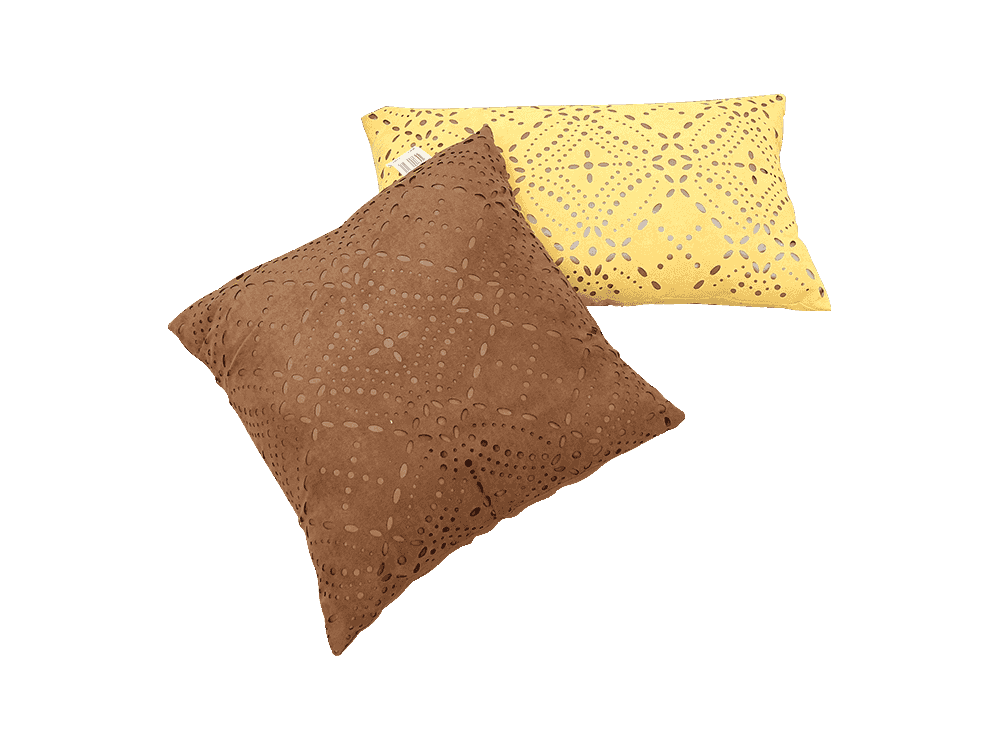
In modern home textiles, a decorative cushion is no longer a simple accessory placed on a sofa or bed as an afterthought. It is a design detail, a comfort item, a tactile experience, and a practical product that helps define the atmosphere of a living space. The Fashion Hollow Suede Cushion is created for customers who want a cushion that looks refined, feels comfortable, and maintains dependable support in daily use. With a fashionable hollow suede fabric surface, a versatile 45 x 45 cm size, and high-support polyester filling, this cushion combines visual appeal with functional performance.
The product belongs to the decorative cushion category, yet its value extends beyond decoration. It is designed to enhance sofas, lounge chairs, beds, hotel rooms, guest areas, office relaxation zones, and retail display settings. The hollow suede fabric gives the cushion a distinctive appearance that can be adapted into a variety of styles. This makes it suitable for both contemporary and classic interiors, as well as for seasonal collections and customized home textile programs.
Compared with ordinary cushions that depend only on printed patterns or basic plain fabrics, this hollow suede cushion offers a stronger sense of texture and craftsmanship. Its fabric structure contributes to a fashionable, layered look, while the soft suede-like hand feel provides warmth and comfort. The high-support polyester filling helps the cushion retain fullness and resilience, reducing the flat, tired appearance that can occur in lower-quality cushions after repeated use.
Behind the cushion is a home textile manufacturer with extensive experience in bedding and household textile production. Established in 2002 and located in Zhejiang Province, China, the manufacturer has developed from a specialized production enterprise into a broad home textile supplier with product lines covering quilts, pillows, cushions, mattress protectors, blankets, mattress covers, bedspreads, travel quilts, pillowcases, shower curtains, curtains, and related textile products. Its manufacturing strength, quality control systems, certification background, and ability to develop fashionable household products all support the performance and market value of this cushion.
Product Overview: A Decorative Cushion with Practical Comfort
The Fashion Hollow Suede Cushion is designed around three essential product features: appearance, comfort, and usability. Its 45 x 45 cm size is one of the most widely accepted cushion dimensions for home and hospitality markets. This square format works well on sofas, armchairs, beds, benches, window seats, and decorative lounge arrangements. It is large enough to create visual presence, yet compact enough to be layered with other cushions or used in multiple quantities.
The cushion’s fabric is described as fashionable hollow suede. This indicates a surface material with a decorative hollow or cut-out style effect and a suede-like texture. Such fabric can be made into a variety of styles, which gives the product strong design flexibility. In interior decoration, fabric texture is often as important as color. A cushion with a refined texture can elevate a room even when the color palette is simple. The hollow suede surface creates visual depth, allowing light and shadow to interact with the pattern and giving the cushion a more premium appearance than a flat woven or printed fabric.
The filling uses high-support polyester. Polyester filling is widely used in quality cushions because it can provide softness, loft, resilience, and shape retention. High-support polyester filling improves the cushion’s ability to maintain its structure after compression. This is important for both comfort and appearance. A decorative cushion must look full on display, but it must also feel comfortable when someone leans against it or holds it. The filling supports the body while keeping the cushion plump and inviting.
The product is especially suitable for customers looking for a balance between fashion and practicality. Some decorative cushions are visually attractive but too delicate for daily use. Others are durable but plain and uninspiring. This cushion aims to bridge that gap by combining a fashionable surface with reliable filling and practical sizing.
Design Appeal: Why Hollow Suede Fabric Stands Out
Hollow suede fabric is a key differentiator of this product. Many cushions in the mass market rely on basic cotton, polyester plain cloth, simple velvet, or low-cost printed fabric. While these options can serve basic decorative needs, they often lack distinctive texture. The Fashion Hollow Suede Cushion provides a richer surface expression. The hollow design gives the fabric a crafted look, while the suede-like finish adds softness and warmth.
Suede textures are often associated with comfort, elegance, and a slightly luxurious touch. In home decoration, suede-like fabrics can soften the visual feel of a room and create a cozy atmosphere. When combined with hollow detailing, the fabric can appear more artistic and dimensional. This makes the cushion suitable for modern minimalist interiors, warm natural interiors, boutique hotel rooms, fashion-forward apartments, and retail home décor collections.
The fabric’s ability to be made into various styles is also commercially important. Home textile buyers often need products that can be adapted to different markets, colors, trends, and seasonal themes. A fabric that supports multiple style directions gives retailers and wholesalers greater flexibility. It can be used for neutral collections, bold fashion collections, elegant bedroom settings, and soft living room concepts.
Compared with competitors that offer only fixed designs, this cushion has broader development potential. The hollow suede material can be adapted for different colorways and styling requirements, helping customers create product lines that feel fresh and differentiated. In competitive home textile markets, design adaptability can be a major advantage because retailers constantly need new looks without sacrificing proven product construction.
Comfort Performance: High-Support Polyester Filling
A cushion may first attract attention through its fabric, but its long-term satisfaction depends heavily on the filling. The Fashion Hollow Suede Cushion uses high-support polyester filling, which is selected to provide resilience and dependable fullness. This feature helps the cushion maintain a supportive feel when used as a back cushion, side cushion, or decorative pillow.
Low-quality fillings often lose shape quickly. They may clump, collapse, or become uneven after repeated compression. This affects both user comfort and retail appearance. A flattened cushion looks cheap even if the outer fabric is attractive. High-support polyester filling helps solve this problem by offering better recovery after use. The cushion can remain fuller and more presentable, which is important in homes, hotels, showrooms, and stores.
Polyester filling also offers practical advantages. It is lightweight, easy to process, and suitable for consistent production. It can be engineered for different levels of softness and support, allowing manufacturers to meet different customer specifications. For decorative cushions, polyester filling can provide a pleasant balance: soft enough for comfort, yet firm enough to hold the cushion’s shape.
Compared with natural fillings that may require special care or present allergy concerns for some consumers, polyester filling can offer a more accessible and practical solution. It is commonly used in bedding and cushion production because it supports scalable manufacturing, stable quality, and dependable performance. For buyers serving broad consumer markets, these qualities are valuable.
Key Product Specifications
The following table summarizes the main product details and how each feature contributes to the cushion’s value.
Product Name |
Fashion Hollow Suede Cushion |
Designed as a decorative cushion with both visual appeal and practical comfort. |
Product Category |
Decorative Cushion |
Suitable for home, hospitality, retail, and interior styling applications. |
Size |
45 x 45 cm |
A widely used square cushion size that fits sofas, beds, chairs, and layered décor arrangements. |
Fabric |
Fashionable hollow suede fabric |
Provides a textured, stylish surface that can be developed into various decorative styles. |
Filling |
High-support polyester filling |
Helps maintain fullness, resilience, comfort, and a stable cushion shape. |
Main Advantage |
Combination of fashion texture and reliable support |
Offers stronger decorative value than ordinary plain cushions while remaining practical for daily use. |
Use Scenarios |
Living rooms, bedrooms, hotels, guest areas, office lounges, and retail displays |
Flexible styling potential supports multiple market segments and interior themes. |
Advantages Over Ordinary Decorative Cushions
The cushion market is highly competitive, and many products appear similar at first glance. However, differences in fabric selection, filling quality, production control, and design flexibility can greatly influence the final product experience. The Fashion Hollow Suede Cushion offers several advantages over ordinary decorative cushions.
More Distinctive Fabric Texture
Many competing cushions use simple plain fabric or basic printed covers. These products may be affordable, but they often lack depth and tactile interest. The hollow suede fabric gives this cushion a more refined and fashionable appearance. Its texture creates a sense of craftsmanship that can be felt and seen. This helps the cushion stand out in retail displays and online product images.
Better Decorative Versatility
The cushion can be made into a variety of styles because of the adaptability of the hollow suede fabric. This is valuable for buyers who need collections for different home décor trends. Whether the target style is cozy, elegant, modern, artistic, or fashion-oriented, the cushion’s material provides a flexible foundation.
Improved Shape Support
The high-support polyester filling helps the cushion retain fullness. In contrast, lower-grade cushions may compress quickly and lose their attractive shape. A cushion that remains plump creates a better impression and delivers better comfort. Shape retention is especially important for hospitality and retail settings, where products must continue looking fresh after frequent handling.
Balanced Comfort and Display Value
Some decorative cushions are made mainly for appearance and are uncomfortable in practical use. Others are comfortable but visually ordinary. This cushion provides both. The suede-like surface encourages touch, the hollow pattern adds visual charm, and the filling provides supportive comfort.
Suitable for Broad Market Applications
Because of its standard 45 x 45 cm size and adaptable design, the cushion can be used in different sales channels. It can serve as a retail decorative cushion, a hotel room accessory, a furniture showroom styling product, a home textile collection item, or a customized interior project component.
Interior Styling Value
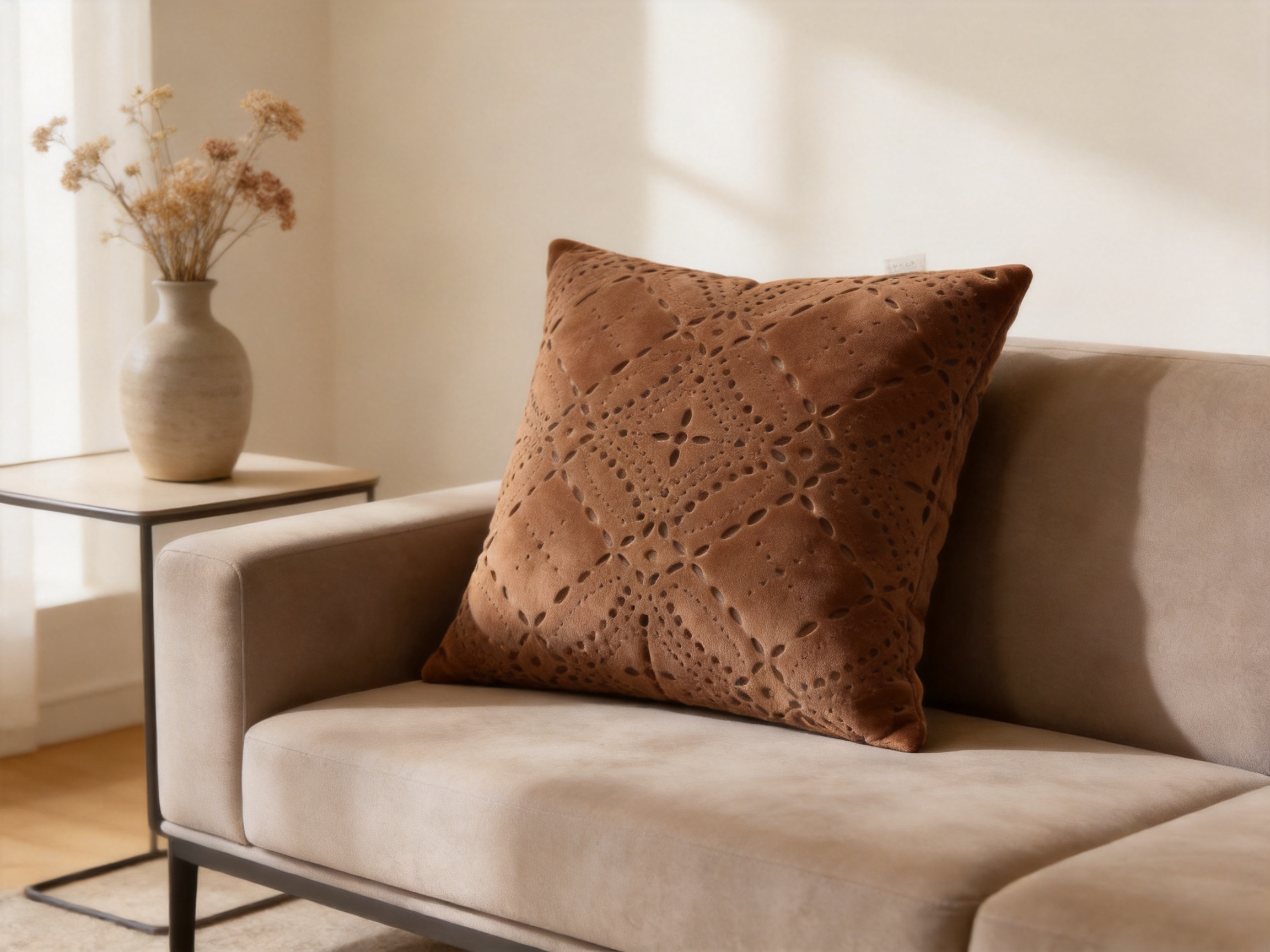
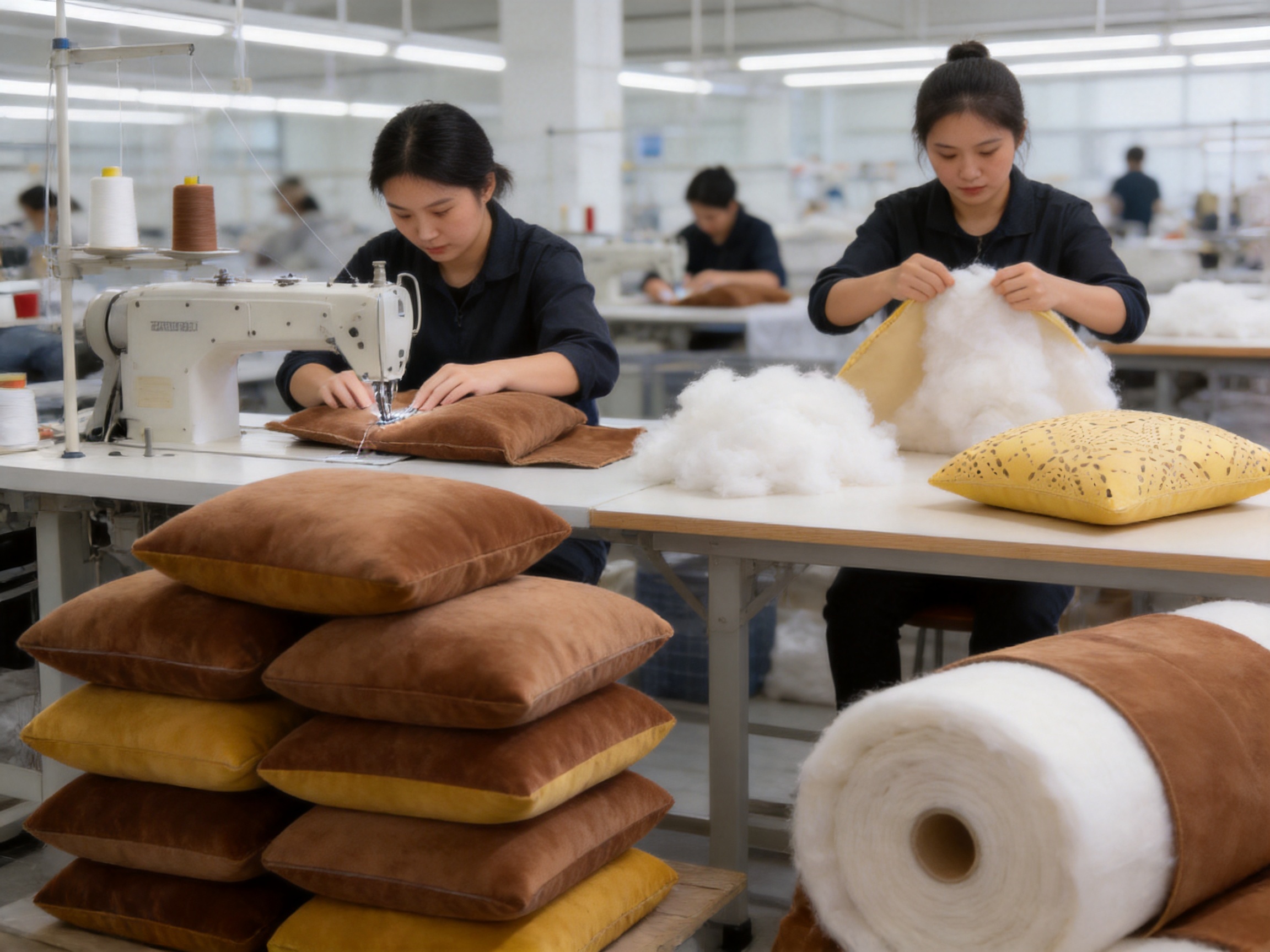
A decorative cushion can change the character of a space without requiring major renovation. The Fashion Hollow Suede Cushion is especially effective because it adds both texture and softness. In a living room, it can make a sofa look more complete and inviting. In a bedroom, it can add a layered effect when placed in front of pillows or on top of a quilt. In a hotel room, it can help create a refined first impression for guests.
The 45 x 45 cm size is particularly versatile for styling. A single cushion can accent a chair, while two or three can create symmetry on a sofa. Several cushions can be mixed with blankets, quilts, or bedding accessories to build a coordinated home textile display. This makes the product useful not only for end consumers but also for interior designers, hotel procurement teams, furniture stores, and home textile retailers.
The hollow suede texture works well with many materials. It can be paired with cotton bedding for a soft and natural feeling, with velvet or faux fur for a richer decorative look, with linen-style fabrics for contrast, or with smooth woven upholstery for added depth. Because it has a tactile surface, it helps prevent interiors from feeling flat or overly simple.
In seasonal decoration, the cushion can support warm autumn and winter collections because suede-like fabric often creates a cozy impression. At the same time, depending on color selection and styling, it can also work in spring and summer settings as a fashionable accent. This year-round potential improves its commercial value.
Manufacturing Background and Production Strength
The Fashion Hollow Suede Cushion is supported by the manufacturing experience of Tongxiang Xinlong Bedding Co., Ltd., a home textile enterprise established in January 2002. Located in Wuzhen, Tongxiang City, Jiaxing, Zhejiang Province, China, the company has grown within one of China’s important textile manufacturing regions. Its production background covers many home textile categories, including silk cotton quilts, chemical fiber quilts, pillows, cushions, bedspreads, travel quilts, mattress protectors, blankets, quilt covers, pillowcases, shower curtains, curtains, and other household textile items.
This broad product experience is significant. A manufacturer that produces only one simple item may have limited understanding of textile structures, filling behavior, stitching requirements, and finishing standards. A company with experience across bedding and home textile categories can apply knowledge from quilts, pillows, mattress protectors, and cushions to improve product development. For example, filling management knowledge from pillows and quilts can support better cushion loft and resilience. Fabric handling experience from bedding and covers can improve cutting, sewing, and finishing quality.
The company covers an area of approximately 21,000 square meters, with a construction area of approximately 18,000 square meters. It has more than 320 employees and is equipped with various advanced production equipment. These factors support stable production capacity and organized manufacturing. For customers who require consistent supply, this matters as much as product design. A beautiful cushion is commercially useful only if it can be produced reliably, delivered consistently, and maintained at a repeatable quality level.
The company continues to develop and innovate in response to changes in the home textile industry. It is equipped with professional and technical personnel who design and produce fashionable and warm household products for customers. This product development capability is directly relevant to the Fashion Hollow Suede Cushion. Since the cushion’s fabric can be made into many styles, technical and design support can help customers transform the base concept into market-ready collections.
Advanced Manufacturing Processes Behind the Cushion
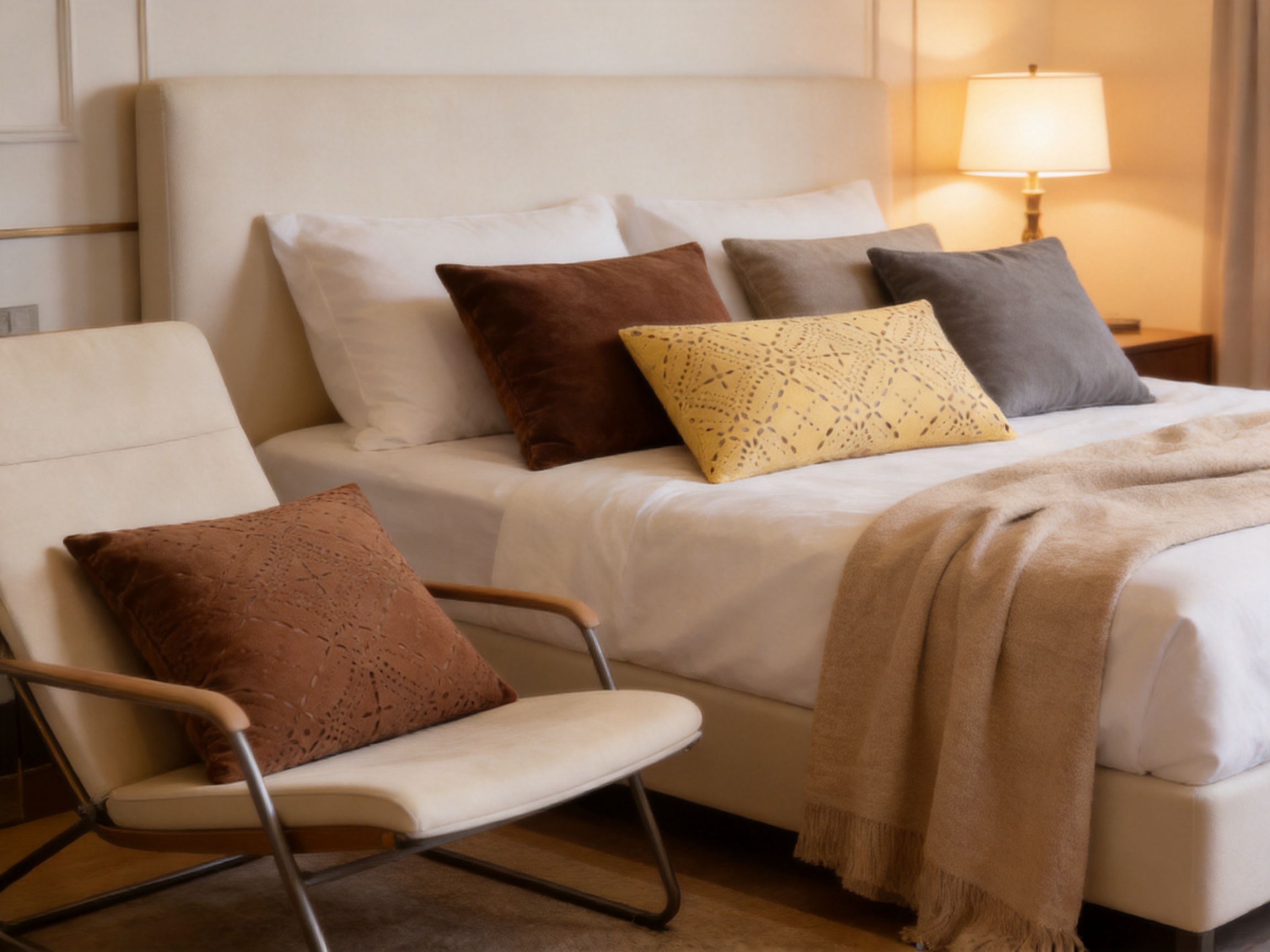
Although a cushion may seem simple, quality production involves multiple controlled steps. Fabric selection, cutting accuracy, sewing consistency, filling distribution, edge finishing, shape checking, and final inspection all influence the final product. A manufacturer with established home textile systems can manage these processes more effectively.
Material Selection and Fabric Handling
The hollow suede fabric must be selected and handled carefully to preserve its visual texture. Decorative fabrics with surface effects require attention during cutting and sewing because improper handling may distort the pattern, damage the surface, or create uneven appearance. Experienced production teams understand how to manage fabric direction, pattern alignment, tension, and sewing pressure.
For a decorative cushion, fabric consistency is essential. If the surface texture varies too much, finished cushions may look different from one another. This is especially important for wholesale orders, hotel projects, and retail collections where multiple pieces are displayed together. Controlled fabric inspection helps ensure that the final cushions meet customer expectations.
Precision Cutting
A 45 x 45 cm cushion needs accurate cutting to achieve a clean square shape. Inconsistent panel dimensions can cause twisting, uneven corners, or poor filling distribution. Advanced production equipment and trained operators help maintain cutting accuracy. Precision at this early stage makes later sewing and finishing more reliable.
Durable Sewing and Seam Construction
Seams are one of the most important quality points in a cushion. A decorative cushion is often pressed, moved, leaned on, and handled repeatedly. Weak seams may open or deform over time. Proper sewing techniques help the cushion maintain structure and improve durability. Experienced home textile manufacturers understand stitch density, thread selection, seam allowance, and corner control.
Filling Control
The high-support polyester filling must be distributed evenly. Too little filling creates a weak, flat cushion. Too much filling may make the cushion overly stiff or distort the fabric. Proper filling control achieves the desired balance of softness, support, and shape. Production teams with pillow and quilt experience are well positioned to manage this step because they understand loft, compression, and recovery performance.
Finishing and Shape Adjustment
After sewing and filling, cushions require finishing. This may include shaping, corner adjustment, surface smoothing, thread trimming, and appearance checking. For a decorative cushion, visual presentation is critical. A cushion must look attractive immediately when unpacked or displayed. The finishing stage ensures that the hollow suede surface appears clean and that the cushion has a full, balanced form.
Quality Inspection
Quality inspection helps identify issues such as fabric defects, uneven filling, loose threads, poor seam alignment, stains, incorrect dimensions, or shape irregularities. A manufacturer with standardized operating procedures can reduce inconsistencies and improve customer confidence. Inspection is especially important for export-oriented home textile products, where buyers expect reliable quality across batches.
Certification and Quality Management Strength
The manufacturer has passed international certifications including ISO9001, ISO14001, OEKO-100, OEKO-STEP, GRS, and BSCI. These certifications help demonstrate a structured approach to quality, environmental management, product safety, social compliance, and responsible production practices.
ISO9001 is associated with quality management systems. For customers, this indicates that the manufacturer follows organized processes to maintain quality and improve operations. In cushion production, such systems can support consistent material control, production tracking, inspection procedures, and corrective action.
ISO14001 relates to environmental management. Home textile buyers increasingly value suppliers that pay attention to environmental impact. A manufacturer with environmental management certification is better positioned to serve customers who require more responsible sourcing.
OEKO-related certifications are meaningful in the textile industry because they are associated with product safety and sustainable production standards. For products used in homes, bedrooms, and close-contact environments, textile safety is a major concern. Customers want confidence that materials are managed according to recognized standards.
GRS, the Global Recycled Standard, is relevant for recycled material supply chains. Even when a specific product is not described as recycled, a manufacturer with GRS certification demonstrates capability in responsible material programs. This can be valuable for customers planning sustainable cushion or bedding collections.
BSCI is related to social compliance. For global buyers, responsible production conditions are increasingly important. A supplier with BSCI-related compliance can better meet the expectations of importers, retailers, and brands that require ethical sourcing standards.
The company has also been rated as a safety production standardization enterprise for several consecutive years since 2016. This reflects attention to operational safety and standardized production. Safe and organized production environments support stable output, lower risk, and better long-term cooperation.
Why Manufacturing Scale Matters for Buyers
Scale is not only about producing large quantities. It is also about stability, organization, and the ability to support different customer needs. With a site area of approximately 21,000 square meters, a construction area of approximately 18,000 square meters, and more than 320 employees, the manufacturer has the infrastructure to support professional home textile production.
For buyers, this scale can provide several advantages. First, production capacity is more reliable. Customers ordering cushions for retail seasons, hospitality projects, or promotional programs need suppliers who can meet deadlines. Second, a larger production environment can support multiple processes and product categories, improving flexibility. Third, an experienced workforce can help maintain quality in repeated orders.
The manufacturer’s broad product category coverage also allows customers to source coordinated items. A buyer interested in the Fashion Hollow Suede Cushion may also need quilts, pillows, mattress protectors, blankets, mattress covers, bedspreads, or pillowcases. Working with a supplier that can produce multiple home textile categories can simplify procurement, improve collection consistency, and reduce communication costs.
Customization Potential and Market Adaptability
One of the strongest advantages of the Fashion Hollow Suede Cushion is its adaptability. The fabric can be made into a variety of styles, which gives customers room to develop customized decorative programs. In the home textile industry, customization is often essential because different markets have different color preferences, interior trends, packaging requirements, and price positions.
A retailer may want neutral tones for a minimalist collection. A hotel buyer may prefer elegant and calm colors that match room interiors. A furniture showroom may need bolder cushions that attract attention on display sofas. An online seller may require a distinct texture that photographs well. The hollow suede material gives the cushion a strong base for these different directions.
Customization may involve color selection, fabric coordination, filling level adjustment, packaging style, label requirements, and order specifications. The company’s experience in designing and producing various fashionable and warm household products supports these possibilities. Technical personnel can help translate customer ideas into manufacturable products.
Compared with competitors that offer only standard stock designs, a manufacturer with development capability can help customers create differentiated offerings. Differentiation is important because home textile markets are crowded. A cushion that looks unique and feels well made can help retailers improve product storytelling and increase consumer interest.
Applications in Residential Spaces
In residential use, the Fashion Hollow Suede Cushion can serve several roles. On a sofa, it provides both comfort and decoration. Its suede-like surface creates a warm and inviting feeling, while the hollow texture adds visual interest. On an armchair, it can function as a supportive accent for reading or relaxing. On a bed, it can be arranged with sleeping pillows and bedding to create a layered, finished appearance.
For homeowners and decorators, the cushion offers a simple way to refresh a room. Changing cushions is far easier than replacing furniture or repainting walls. A textured cushion can update a room’s style immediately. Because the cushion is 45 x 45 cm, it can blend easily with existing cushion sets or be used as a coordinated pair.
The cushion can also support emotional comfort. Soft home textiles contribute to a sense of warmth and relaxation. A comfortable cushion encourages people to settle into a space, rest, and feel at home. This practical emotional value is one reason decorative cushions remain popular in home textile markets.
Applications in Hospitality and Commercial Interiors
Hotels, serviced apartments, guesthouses, and commercial lounges often use cushions to improve atmosphere. The Fashion Hollow Suede Cushion is suitable for these environments because it combines decorative appeal with supportive filling. Hotel guests notice small details, and cushions can contribute to the perception of comfort and quality.
In hotel rooms, cushions are often placed on beds, chairs, or sofas. They help create a welcoming scene when guests enter. The hollow suede fabric can add a boutique feel, while the high-support polyester filling helps the cushion maintain a full appearance after repeated use. This is important because hospitality products must withstand frequent handling by guests and housekeeping teams.
In office lounges, reception areas, and waiting rooms, cushions can soften furniture and create a more relaxed environment. A visually attractive cushion can make commercial spaces feel less formal and more comfortable. In retail stores and furniture showrooms, cushions help demonstrate how furniture can look in a real home setting.
Retail and E-Commerce Advantages
For retail and e-commerce, product appearance is crucial. Online shoppers cannot touch the cushion before purchase, so images must communicate texture, fullness, and style. The hollow suede surface is visually stronger than many plain fabrics, which can help the product stand out in online listings. Its texture can create shadows and highlights that show depth in photography.
In physical stores, tactile quality becomes even more important. Shoppers often touch cushions before buying. A suede-like surface encourages interaction, and a full, supportive cushion creates a positive impression when squeezed or held. High-support filling helps the product look attractive on shelves and display sofas.
The standard size also helps retail planning. A 45 x 45 cm cushion is familiar to consumers and compatible with common cushion inserts, covers, and display arrangements. This reduces purchase hesitation and improves styling flexibility.
For wholesalers and distributors, the product’s adaptable design can support multiple customer segments. The same basic cushion concept can be positioned as a cozy living room accessory, a bedroom styling cushion, a hotel decorative item, or a seasonal home textile product. This broad positioning increases market opportunities.
Relationship to Broader Home Textile Categories
The manufacturer’s product category range includes pillows, quilts, mattress protectors, blankets, mattress covers, and cushions. This broader context matters because decorative cushions often sell best when coordinated with other home textile products. A cushion can be paired with a blanket for a sofa set, with a quilt for a bedroom collection, or with pillows and bedspreads for a complete bedding theme.
Customers who source from a multi-category home textile manufacturer can develop coordinated collections more efficiently. For example, a retailer may create a bedroom range that includes a quilt, pillow, cushion, and matching cover. A hotel procurement team may require pillows, mattress protectors, blankets, and decorative cushions from one supplier to maintain consistent quality and simplify logistics.
This multi-category capability also demonstrates textile expertise. Producing mattress protectors requires knowledge of protective fabrics and construction. Producing quilts requires filling management and quilting techniques. Producing pillows requires understanding support and resilience. Producing blankets requires fabric softness and finishing control. These combined capabilities strengthen the production foundation for cushions.
Quality as a Business Philosophy
The company takes quality as the life of the enterprise. This philosophy is important in home textile manufacturing because quality problems can quickly damage customer trust. A cushion may seem small, but defects such as loose stitching, uneven filling, fabric flaws, odor, incorrect sizing, or poor packaging can create dissatisfaction. A quality-centered approach helps prevent such problems.
Standardized operating procedures are part of this approach. When production steps are standardized, workers can repeat processes more accurately, inspection becomes more effective, and product consistency improves. Continuous improvement of employees’ technical level also contributes to better results. Skilled workers understand how to handle fabric, control seams, distribute filling, and finish products properly.
The company’s long-term customer appreciation and trust are built on this foundation. In home textiles, repeat cooperation often depends on consistency. Buyers need suppliers who can maintain quality not only in samples but also in bulk production. The Fashion Hollow Suede Cushion benefits from this manufacturing culture because its decorative fabric and supportive filling require careful handling.
Durability and Long-Term Use Considerations
Durability in a decorative cushion involves both structural durability and appearance durability. Structurally, the seams must hold, the filling must remain distributed, and the cushion must keep an acceptable shape. Visually, the fabric should maintain its decorative effect and continue looking attractive through normal use.
The high-support polyester filling helps with long-term appearance by resisting excessive flattening. A cushion that retains volume looks newer for longer. This can improve consumer satisfaction and reduce replacement frequency. In hospitality settings, better shape retention can reduce the need for constant cushion maintenance or replacement.
The hollow suede fabric contributes to perceived value. Textured fabrics may hide minor use marks better than completely flat shiny fabrics, depending on color and construction. The tactile surface also helps the cushion remain appealing as part of a room’s sensory experience.
Proper care is still important. Decorative cushions should be used according to fabric and construction recommendations. Keeping cushions away from excessive moisture, sharp objects, and harsh cleaning methods can help preserve appearance. For commercial buyers, care instructions and housekeeping procedures should be considered as part of product implementation.
Sustainability and Responsible Sourcing Relevance
Modern home textile buyers increasingly pay attention to sustainability and responsible manufacturing. While the Fashion Hollow Suede Cushion is primarily described by its fabric and filling, the manufacturer’s certifications and management systems provide a stronger sourcing background. ISO14001, OEKO-related certifications, GRS, and BSCI all support buyer confidence in responsible production capabilities.
Sustainability in textiles includes material choices, waste control, chemical safety, energy management, worker welfare, and product durability. A cushion that lasts longer and maintains its appearance can contribute to more responsible consumption by reducing premature disposal. Manufacturing systems that manage environmental and social factors also support more responsible supply chains.
For brands and retailers, working with certified suppliers can help meet internal compliance requirements and consumer expectations. Many markets now require more transparent sourcing. A manufacturer with recognized certifications is better prepared for these demands.
Why This Cushion Is a Strong Choice for Buyers
The Fashion Hollow Suede Cushion is a strong choice because it combines marketable design, practical comfort, and reliable manufacturing support. Its fashionable hollow suede fabric offers a distinctive appearance that can differentiate it from ordinary cushions. Its high-support polyester filling improves comfort and shape retention. Its 45 x 45 cm size makes it easy to use in many settings.
For retailers, the cushion provides visual appeal and styling flexibility. For wholesalers, it offers a product that can fit multiple customer types. For hotels and commercial interiors, it provides a decorative item with practical support. For consumers, it delivers a comfortable and attractive accent for daily living spaces.
The manufacturing background adds further value. With decades of experience, a broad product range, advanced equipment, professional personnel, and international certifications, the company can support stable production and customized development. This reduces sourcing risk and improves confidence in long-term cooperation.
Q&A Section
What is the Fashion Hollow Suede Cushion?
It is a decorative cushion made with fashionable hollow suede fabric and filled with high-support polyester filling. It is designed to provide both stylish appearance and comfortable support for home, hospitality, and commercial interiors.
What size is the cushion?
The cushion is 45 x 45 cm, a popular square size suitable for sofas, beds, chairs, benches, and layered decorative arrangements.
What makes the fabric special?
The hollow suede fabric provides a textured, fashionable surface that is more distinctive than ordinary plain or printed fabrics. It can be developed into a variety of styles, making it suitable for different interior design themes and market needs.
What type of filling is used?
The cushion uses high-support polyester filling. This filling helps the cushion maintain fullness, provide comfort, and recover better after compression compared with lower-quality fillings.
How does this cushion compare with ordinary cushions?
It offers stronger decorative texture, better style adaptability, supportive filling, and a more premium visual impression. Ordinary cushions may use basic fabric and low-resilience filling, which can result in a flatter appearance and less distinctive style.
Where can the cushion be used?
It can be used in living rooms, bedrooms, hotel rooms, guest areas, office lounges, furniture showrooms, retail displays, and other spaces where comfort and decoration are needed.
Is the cushion suitable for retail collections?
Yes. Its standard size, attractive texture, and adaptable design make it suitable for retail and e-commerce collections. The fabric photographs well and provides a tactile advantage in physical stores.
Can the cushion be customized?
The hollow suede fabric can be made into various styles, and the manufacturer has experience developing fashionable home textile products for different customers. Customization may depend on order requirements, color plans, packaging, and technical specifications.
What manufacturing strengths support the product?
The manufacturer has many years of home textile experience, advanced production equipment, more than 320 employees, a large production area, professional technical personnel, and experience across categories such as quilts, pillows, cushions, mattress protectors, blankets, and covers.
What certifications does the manufacturer have?
The manufacturer has passed certifications including ISO9001, ISO14001, OEKO-100, OEKO-STEP, GRS, and BSCI. These certifications support quality management, environmental management, textile safety, responsible materials, and social compliance.
Conclusion
The Fashion Hollow Suede Cushion represents the modern direction of decorative home textiles: visually distinctive, comfortable in use, adaptable for different markets, and supported by professional manufacturing. Its hollow suede fabric gives it a fashionable and textured character, while its high-support polyester filling ensures that beauty is matched by practical comfort. The 45 x 45 cm size makes it easy to use across residential, hospitality, commercial, and retail settings.
Its advantages over ordinary cushions are clear. It offers a richer surface texture, better decorative versatility, dependable shape support, and stronger market appeal. These product features are reinforced by the manufacturer’s production experience, advanced equipment, broad home textile capabilities, standardized quality systems, and international certifications.
For buyers seeking a cushion that can enhance home décor collections, improve interior styling, and satisfy practical comfort expectations, this product is a reliable and attractive choice. It is not merely a cushion placed on furniture; it is a small but meaningful textile product that adds warmth, design value, and everyday usability to living spaces.
References
International Organization for Standardization. ISO 9001 Quality Management Systems: Principles and Applications.
International Organization for Standardization. ISO 14001 Environmental Management Systems: Guidelines for Implementation.
OEKO-TEX Association. Standard 100 by OEKO-TEX: Textile Product Safety Criteria.
OEKO-TEX Association. STeP by OEKO-TEX: Sustainable Textile and Leather Production Framework.
Textile Exchange. Global Recycled Standard: Requirements for Recycled Content and Responsible Production.
amfori. Business Social Compliance Initiative: Principles for Responsible Supply Chains.
Goswami, K. K. Advances in Carpet Manufacture and Home Textiles. Woodhead Publishing.
Sinclair, R. Textiles and Fashion: Materials, Design and Technology. Woodhead Publishing.


 +86-573-88798028