



 Français
 Español
 Deutsch
Content
- 1 Product Overview
- 2 Key Product Specifications
- 3 The Appeal of Jacquard Fabric in Modern Bedding
- 4 Soft Warmth from 300gsm 6D Polyester Filling
- 5 Quilting Patterns That Combine Beauty and Function
- 6 Classic Piping for Edge Strength and Refined Finish
- 7 Advantages Over Ordinary Competing Quilts
- 8 Designed for Home Comfort and Interior Style
- 9 Manufacturing Strength Behind the Product
- 10 Quality Management and International Certifications
- 11 Advanced Manufacturing Process
- 12 Why Manufacturing Experience Matters
- 13 Customization Potential for Different Customers
- 14 Suitable Markets and Applications
- 15 Comfort, Practicality, and Long-Term Value
- 16 Care and Handling Considerations
- 17 Sustainability and Responsible Production Awareness
- 18 Q&A Section
- 18.1 What makes the Polyester Jacquard Quilt different from a basic polyester quilt?
- 18.2 Is the jacquard fabric only decorative?
- 18.3 What is the benefit of 300gsm 6D polyester filling?
- 18.4 Why is quilting important?
- 18.5 What does classic piping add to the quilt?
- 18.6 Can this quilt be customized for different markets?
- 18.7 Is the quilt suitable for retail sales?
- 18.8 Is this quilt suitable for hotels or guest rooms?
- 18.9 What manufacturing strengths support this product?
- 18.10 How should the quilt be cared for?
- 19 Conclusion
- 20 References
- 21 Product: Polyester Jacquard Quilt
A well-made quilt does more than cover a bed. It shapes the atmosphere of a bedroom, influences nightly comfort, supports a sense of warmth and relaxation, and reflects the quality standards of the manufacturer behind it. The Polyester Jacquard Quilt presented here is designed for homeowners, hospitality buyers, retailers, wholesalers, and home textile distributors who need a quilt that combines visual elegance, dependable warmth, practical durability, and consistent production quality.
Made with high-quality jacquard fabric, classic piping technology, beautiful quilting patterns, and soft polyester filling, this quilt is created to enhance both comfort and interior style. Its refined fabric texture gives the bed a more luxurious appearance than ordinary flat-fabric quilts, while its structured quilting helps keep the filling evenly distributed for stable performance during daily use.
The product is especially suitable for customers who want a quilt that looks decorative enough for modern home styling but remains practical enough for frequent use. With a size of 140 x 200 cm, 90gsm striped fabric, and 300gsm 6D polyester filling, it offers a balanced combination of lightness, warmth, loft, and easy handling. Whether used as a bedroom quilt, guest room bedding, seasonal comfort layer, display bedding, or home textile retail product, it delivers a polished and comfortable solution.
Product Overview
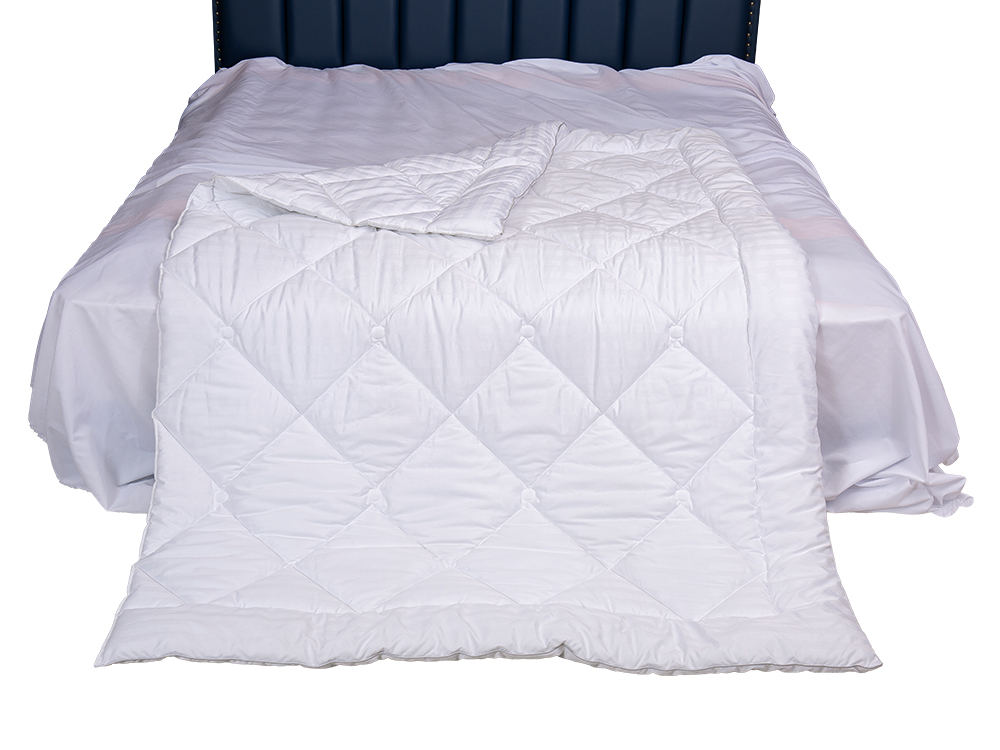
The Polyester Jacquard Quilt is developed as a decorative and functional home textile product. Its jacquard surface creates a rich visual texture, while the quilted construction provides structure and dimension. The design is not limited to simple coverage; it is intended to create a coordinated bedroom appearance while also offering comfortable warmth.
Jacquard fabric has long been valued in bedding because patterns are formed through the fabric structure rather than only surface printing. This gives the material a more refined look and a tactile quality that can make the quilt appear more sophisticated. For buyers looking to differentiate their bedding collections, jacquard fabric offers a visible upgrade compared with plain woven or basic printed fabrics.
The quilt also uses classic piping technology. Piping along the edges helps define the shape of the quilt, improves edge stability, and gives the product a finished appearance. This detail is important for bedding products because edges are frequently touched, folded, pulled, and displayed. A clean edge can make a quilt look better on the bed and help it maintain its form over time.
Inside the quilt, 300gsm 6D polyester filling provides soft loft and practical warmth. Polyester filling is widely used in modern bedding because it is resilient, relatively lightweight, easy to care for, and suitable for large-scale consistent manufacturing. The 6D specification indicates a fiber structure designed to provide volume and softness. Combined with quilting, the filling is held in place to reduce shifting and bunching.
Key Product Specifications
Product Type |
Polyester Jacquard Quilt |
Product Category |
Polyester Embossed Quilt |
Size |
140 x 200 cm |
Fabric |
90gsm Striped Fabric |
Filling |
300gsm 6D Polyester |
Main Features |
Jacquard texture, classic piping, decorative quilting, soft polyester warmth, refined bedroom appearance |
Recommended Applications |
Home bedrooms, guest rooms, bedding retail, hospitality supply, seasonal bedding collections, decorative bed layering |
The Appeal of Jacquard Fabric in Modern Bedding
One of the central strengths of this quilt is its jacquard fabric. In the bedding market, consumers often compare products first by appearance and touch. A quilt must attract attention visually before a customer evaluates its internal filling, stitching, or weight. Jacquard fabric gives this quilt an immediate advantage because it communicates quality through texture.
Compared with ordinary printed quilts, a jacquard quilt often looks more dimensional. The pattern effect is integrated into the textile structure, producing a refined surface that changes subtly under light. This gives the quilt a richer appearance on a bed, especially in bedrooms with natural lighting, soft lamps, or layered home décor.
The 90gsm striped fabric used in this quilt provides a practical balance. It is light enough to keep the quilt manageable and comfortable, yet structured enough to support the jacquard effect and quilting pattern. A quilt that is too heavy may feel burdensome or difficult to fold, while fabric that is too thin may lack visual presence. This product is designed to sit between those extremes, making it suitable for daily home use and product display.
Jacquard fabric also supports a more premium market position. Retailers and distributors often need products that can be placed above basic entry-level quilts but remain accessible for a broad customer base. This quilt meets that need by combining visual luxury with polyester practicality. It does not rely only on expensive materials to create value; instead, it uses textile design, quilting, piping, and manufacturing consistency to create a high-value product.
Soft Warmth from 300gsm 6D Polyester Filling
The filling is one of the most important components of any quilt. It affects warmth, loft, weight, resilience, and comfort. This quilt uses 300gsm 6D polyester filling, giving it a warm and soft inner structure suitable for many bedroom environments.
Polyester filling is popular because it provides consistent performance and can be engineered for different levels of warmth and loft. The 300gsm specification gives the quilt enough body to feel cozy without making it excessively heavy. This is important for users who want warmth but do not want a quilt that feels restrictive during sleep.
The 6D polyester fiber contributes to a fluffy hand feel. Fiber thickness, resilience, and arrangement influence how the quilt rebounds after compression. A good polyester filling should recover after folding, packing, or daily use, helping the quilt maintain a full and comfortable appearance.
Compared with lower-grade quilts that may use uneven or easily compressed filling, this quilt benefits from a filling structure designed for stable loft. When combined with quilting patterns, the polyester filling is better secured inside the fabric layers. This helps reduce migration, clumping, or cold spots, which are common issues in poorly constructed bedding.
The filling also supports easier maintenance. Many customers prefer polyester quilts because they are generally more convenient to care for than some natural-filled alternatives. While care instructions should always be followed according to the final label, polyester bedding is widely recognized for its practical handling, making it attractive to families, rental properties, hotels, and retailers.
Quilting Patterns That Combine Beauty and Function
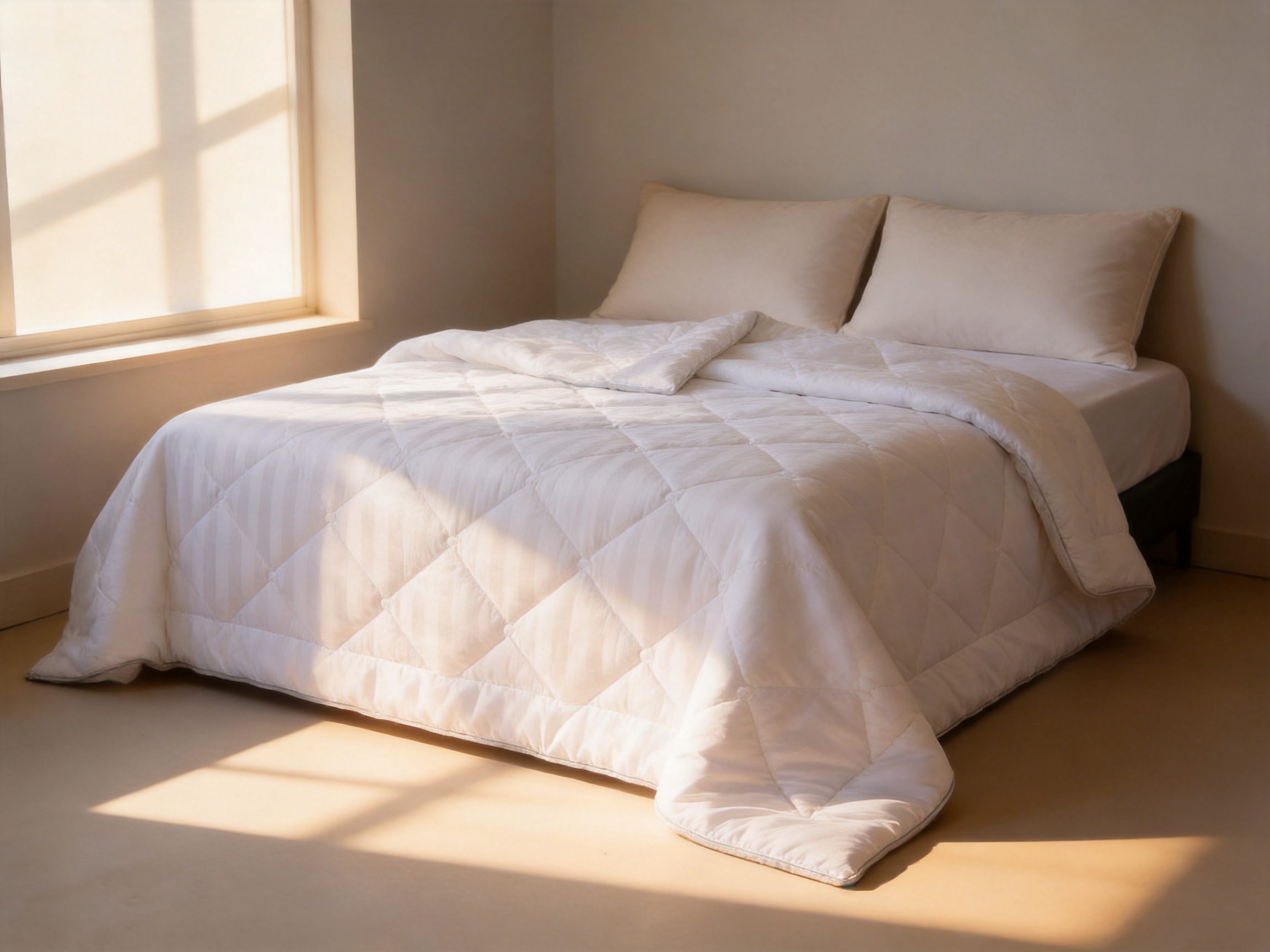
The quilting pattern is not only decorative. It plays an important structural role. By stitching through fabric and filling, quilting helps stabilize the inner material and maintain even distribution. This is essential for comfort because an uneven quilt can create areas that are too warm, too thin, or visually distorted.
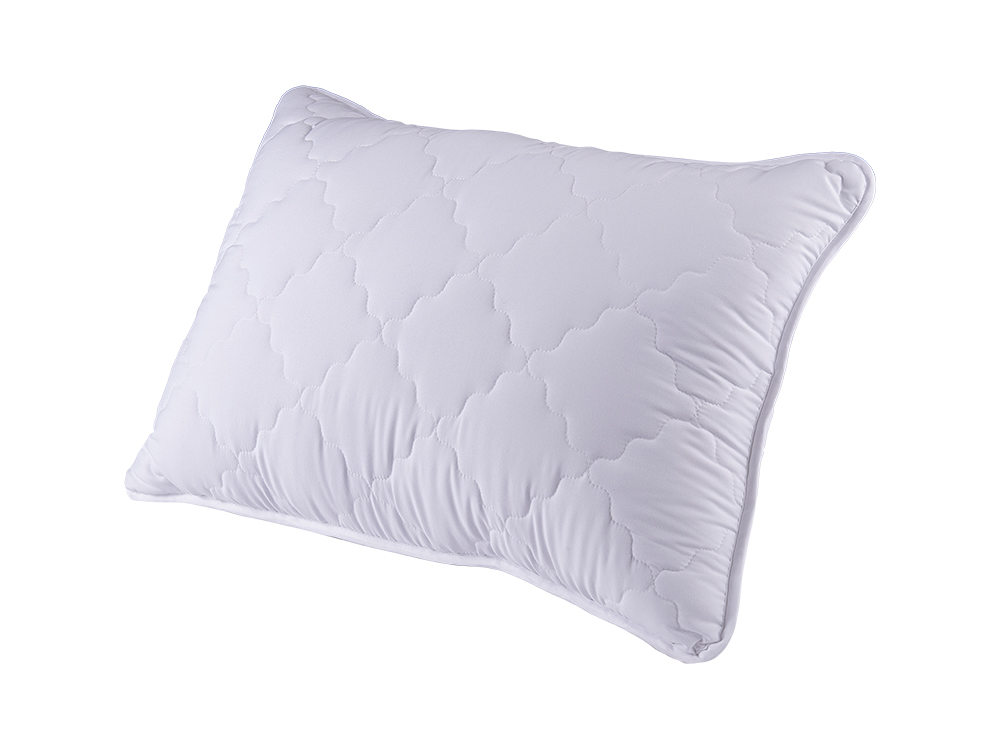
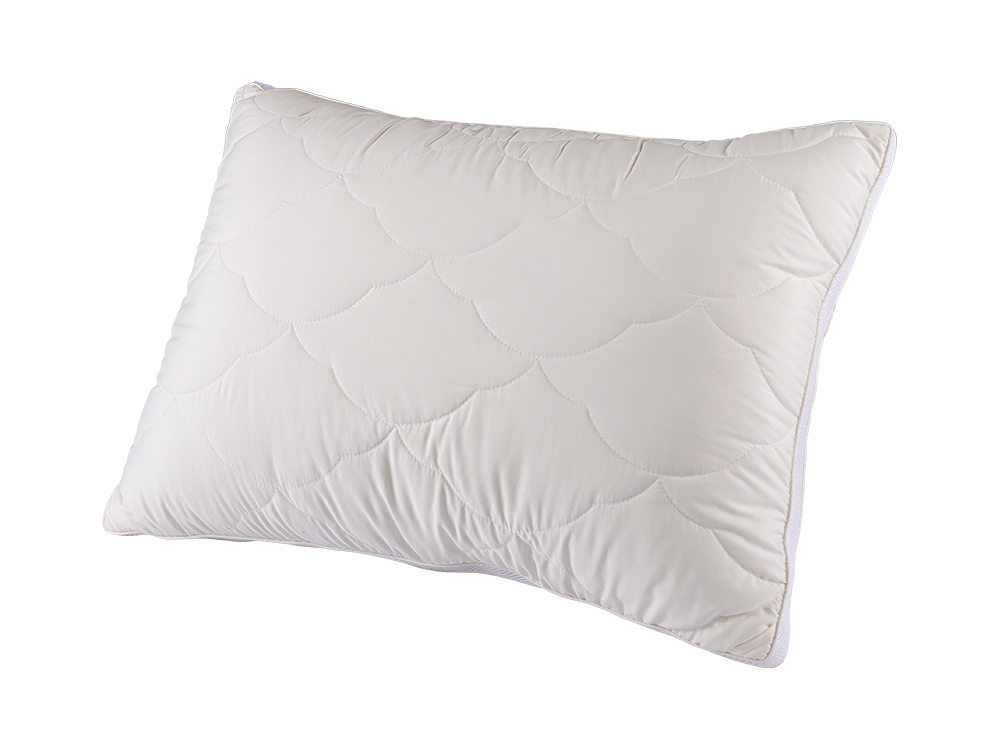
The Polyester Jacquard Quilt uses beautiful quilting patterns that enhance the appearance of the jacquard surface. The stitching adds depth and rhythm to the fabric, creating a more luxurious bed presentation. For home décor, this matters because a quilt is often visible throughout the day, not only used at night.
Compared with simple channel stitching or widely spaced quilting, a well-arranged quilting pattern can improve both style and comfort. It reduces the chance of filling displacement while reinforcing the visual identity of the product. The quilt looks more tailored and intentional, making it suitable for customers who value both utility and design.
For retailers, attractive quilting patterns also improve shelf and display appeal. A quilt that photographs well and looks refined when folded or spread on a bed can help strengthen product presentation in catalogs, online stores, and physical showrooms. In competitive bedding markets, visual differentiation is a major advantage.
Classic Piping for Edge Strength and Refined Finish
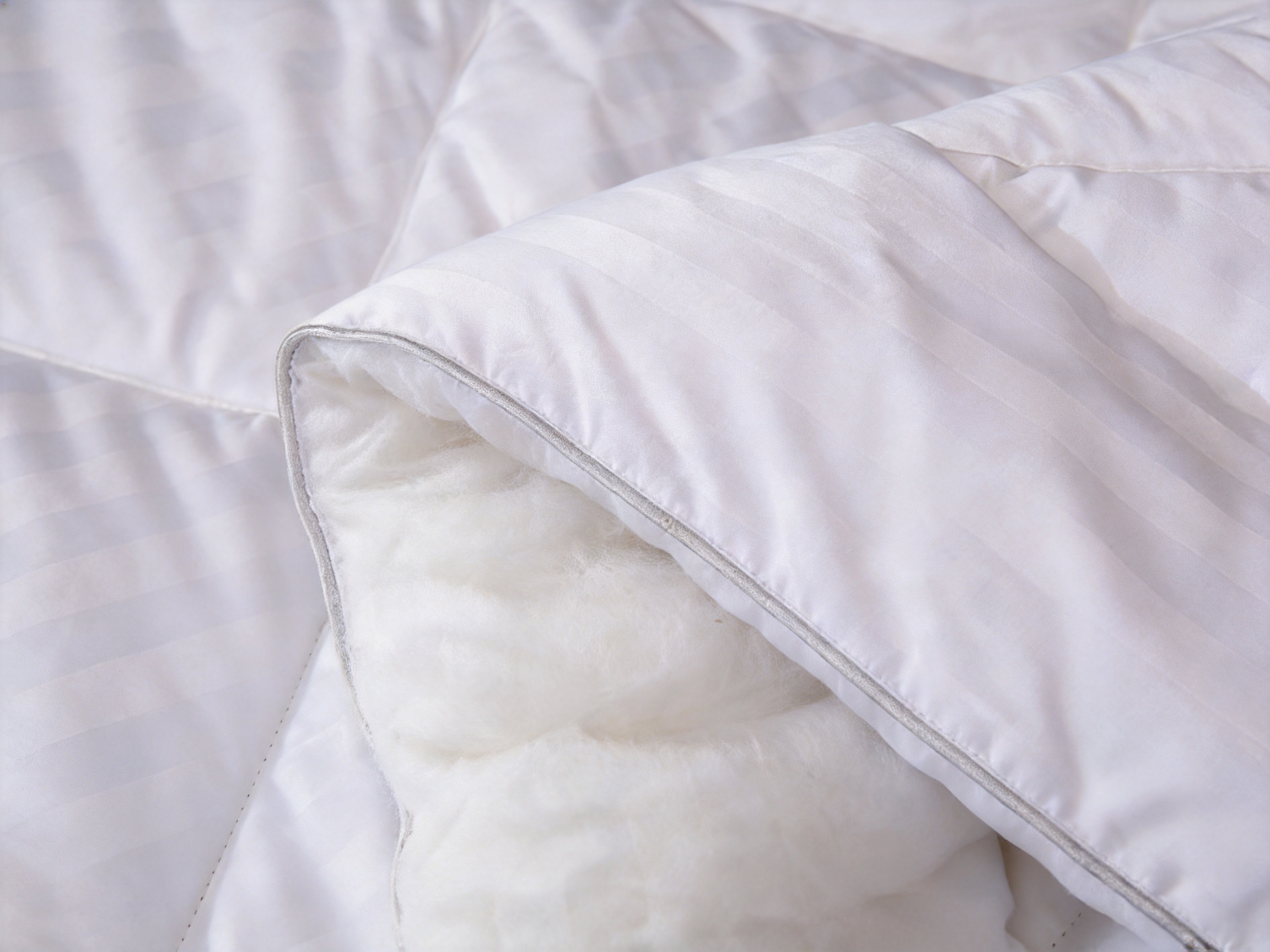
Edges are critical in bedding construction. They are the areas most likely to be pulled, folded, exposed, or inspected. Poor edge finishing can make even a soft quilt look low quality. This product uses classic piping technology to give the quilt a clean, polished border.
Piping creates a defined edge that frames the quilt. It helps the product maintain a neat outline on the bed and improves the sense of craftsmanship. In retail environments, customers often notice the edge finish when touching and evaluating bedding. A strong and attractive border can influence purchase confidence.
Compared with quilts that use basic overlocked or loosely finished edges, piped quilts often appear more premium. The piping reinforces the visual structure and can help reduce deformation at the edges. This is particularly useful for quilts that may be frequently folded, packaged, unpacked, displayed, or laundered according to care guidance.
The classic piping method used here reflects the manufacturer’s attention to finishing detail. A quilt is made from many small process decisions: fabric selection, filling weight, stitching density, edge treatment, inspection, and packaging. When these details are controlled, the final product feels more reliable and professional.
Advantages Over Ordinary Competing Quilts
The bedding market includes a wide range of quilts, from low-cost basic products to premium designer items. The Polyester Jacquard Quilt occupies a strong middle-to-premium position because it combines decorative design with practical materials. Its advantages become clear when compared with ordinary competing quilts.
Comparison Point |
Polyester Jacquard Quilt |
Ordinary Basic Quilt |
Surface Appearance |
Textured jacquard fabric with a refined striped effect |
Often plain, printed, or visually flat |
Edge Finish |
Classic piping for a clean and structured border |
May use simpler edge stitching with less premium appearance |
Filling Stability |
Quilted construction helps hold 300gsm 6D polyester filling evenly |
Filling may shift more easily if quilting is sparse or inconsistent |
Comfort Balance |
Soft loft, practical warmth, and manageable weight |
May be too thin, too heavy, or uneven in feel |
Decorative Value |
Suitable for visible bed styling and premium display |
Often mainly functional, with lower décor impact |
Manufacturing Consistency |
Produced by an experienced home textile manufacturer with advanced equipment and quality systems |
Quality may vary depending on supplier capability |
One advantage is visual value. Many basic quilts provide warmth but do not significantly improve bedroom style. This jacquard quilt, by contrast, is designed to become part of the room’s decorative language. Its texture and quilting create an elevated look that works with modern, classic, minimalist, and cozy interior themes.
Another advantage is structural reliability. The combination of quilting and piping helps the quilt maintain form. Customers often judge bedding quality after repeated use, not only at the time of purchase. If filling shifts, edges curl, or stitching loosens, customer satisfaction declines. This product is designed to address those concerns with controlled construction methods.
The quilt also offers a strong balance between warmth and usability. Some quilts are visually attractive but too delicate for daily use. Others are durable but lack comfort or style. This product brings together a comfortable filling, attractive fabric, and practical finishing, making it suitable for a wide range of customer needs.
Designed for Home Comfort and Interior Style
A bedroom should feel inviting, calm, and comfortable. Bedding plays a major role in achieving that atmosphere because it covers the largest visual area in the room. The Polyester Jacquard Quilt helps create a neat, soft, and coordinated appearance while offering the warmth expected from a daily-use quilt.
The jacquard fabric gives the bed a sense of detail without requiring overly complex styling. A quilt with texture can look complete even when paired with simple sheets and pillows. This is valuable for households that prefer easy bedroom maintenance but still want a stylish result.
The quilt can be used as the main cover in mild to cool seasons or as an additional decorative and warming layer depending on climate and personal preference. Its 140 x 200 cm size makes it suitable for single beds, compact guest beds, dormitory-style sleeping spaces, children’s rooms, or layered bedding presentations.
For guest rooms, the quilt offers a welcoming appearance. Guests often notice bedding quality immediately, and a quilt with a refined surface can make the room feel more cared for. For homeowners, this can improve the overall hospitality experience without requiring complicated décor changes.
Manufacturing Strength Behind the Product
The quality of a quilt depends heavily on the manufacturer’s capability. Tongxiang Xinlong Bedding Co., Ltd. has been engaged in home textile production since January 2002 and operates from Zhejiang Province, China, an important region for textile manufacturing. With years of industry experience, the company has developed the production systems, technical knowledge, and quality awareness needed to manufacture a wide range of bedding products.
The company produces various home textile items, including chemical fiber quilts, silk cotton quilts, pillows, cushions, bedspreads, travel quilts, mattress protectors, blankets, quilt covers, pillowcases, shower curtains, curtains, and other household textile products. This broad product experience is valuable because manufacturing knowledge from one category often improves another. For example, expertise in pillows and cushions supports filling management, while experience in bedspreads and quilts strengthens stitching, edge finishing, and fabric handling capabilities.
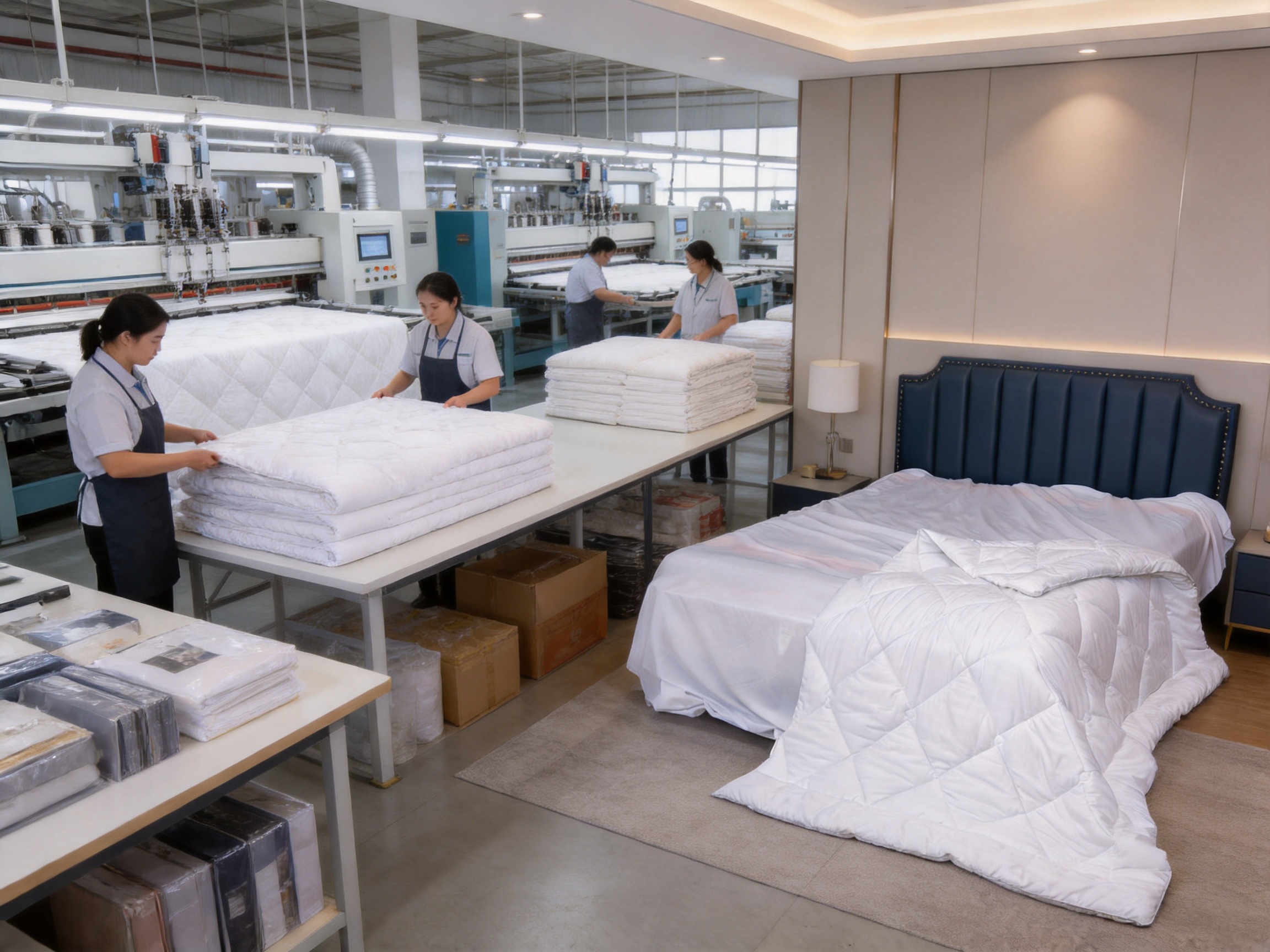
The company covers an area of 21,000 square meters, with a construction area of 18,000 square meters. This production scale supports stable manufacturing capacity, organized workflow, and the ability to serve different customer requirements. With more than 320 employees, the company has the workforce needed for production, inspection, technical support, packaging, and order coordination.
Advanced production equipment is another important strength. In modern bedding manufacturing, equipment affects cutting accuracy, quilting consistency, stitching quality, filling distribution, and production efficiency. Well-maintained machinery helps reduce variation between batches, which is essential for wholesalers, retailers, and brand customers who require consistent products across repeated orders.
The company also emphasizes ongoing development and innovation. Home textile preferences change with seasons, markets, consumer lifestyles, and interior design trends. A manufacturer that continues to develop new products can better support customers with updated styles, materials, and product solutions. The Polyester Jacquard Quilt reflects this approach by combining decorative textile design with practical construction.
Quality Management and International Certifications
Quality is a central concern in bedding production. Customers expect quilts to feel comfortable, look attractive, and perform reliably. Business buyers also require stable quality because product inconsistency can lead to returns, complaints, and brand damage. The manufacturer behind this quilt has passed several international certifications, including ISO9001, ISO14001, OEKO-100, OEKO-STEP, GRS, and BSCI.
ISO9001 is associated with quality management systems. It indicates that the company follows structured management principles related to process control, documentation, continuous improvement, and customer satisfaction. For buyers, this supports confidence that production is not handled casually but through organized quality procedures.
ISO14001 relates to environmental management. In the home textile industry, environmental responsibility is increasingly important. Buyers and end users are more aware of manufacturing impact, resource use, waste management, and responsible production practices. A company with environmental management systems can better meet the expectations of modern markets.
OEKO-related certifications are significant in textiles because they address safety and responsible production considerations. Bedding is used close to the body for long periods, so customers care about textile safety. Certifications support trust, particularly for export markets and quality-sensitive customers.
GRS, or Global Recycled Standard, is relevant to responsible material management and sustainability-focused textile supply chains. Even when a specific product configuration may vary by order, the presence of such certification indicates that the manufacturer has experience with certified textile systems and can support customers who require sustainable material solutions.
BSCI reflects social compliance expectations in global supply chains. For international buyers, responsible sourcing is not only about product price and quality; it also includes labor standards and business ethics. A manufacturer with BSCI-related compliance is better positioned to serve customers who require responsible sourcing documentation.
Advanced Manufacturing Process
The production of a quality quilt involves multiple controlled stages. Each stage affects the final comfort, appearance, and durability of the product. For the Polyester Jacquard Quilt, the process begins with fabric selection and inspection. The jacquard striped fabric must meet requirements for weight, appearance, hand feel, and consistency. Any visible defects, uneven texture, or fabric instability can affect the finished quilt, so early inspection is important.
After fabric preparation, cutting accuracy is essential. The fabric panels must be cut according to the required size and construction plan. Accurate cutting ensures that the quilt maintains its intended dimensions and that edges align properly during stitching and piping. Inconsistent cutting can cause twisting, uneven borders, or poor appearance after quilting.
The filling preparation stage is equally important. The 300gsm 6D polyester filling must be evenly layered so the quilt feels consistent across its surface. If filling is uneven before quilting, stitching alone cannot fully correct the problem. Proper filling handling helps create a smooth, soft, and balanced quilt.
Next comes quilting. The quilting process joins the fabric layers and filling together while creating the decorative pattern. Equipment precision and operator skill both matter. Stitch spacing, thread tension, pattern alignment, and seam strength must be controlled. If thread tension is too loose, the quilt may look uneven; if too tight, the fabric may pucker. A well-managed quilting process produces a neat pattern and stable structure.
Edge piping is then applied. This step requires careful alignment and steady stitching because the piping frames the entire product. The border must be clean, secure, and visually even. Piping not only improves appearance but also contributes to edge durability.
After sewing, the quilt undergoes inspection. Quality checks may include measurements, fabric appearance, stitching condition, filling distribution, edge finish, cleanliness, and packaging readiness. This inspection stage helps ensure that products shipped to customers meet expectations.
Finally, the quilt is folded and packaged. Packaging must protect the product during transportation and storage while presenting it attractively for retail or distribution. Proper compression, folding, and labeling all contribute to customer satisfaction and logistics efficiency.
Why Manufacturing Experience Matters
Experience matters because bedding production involves both technical and sensory judgment. A quilt must meet measurable standards, such as size and filling weight, but it must also feel right. The hand feel, softness, loft, and appearance are qualities that experienced manufacturers understand through years of production and customer feedback.
Since its establishment in 2002, the company has adapted to changes in the home textile industry. This long-term operation suggests familiarity with export requirements, product development cycles, material sourcing, quality inspection, and customer customization. For business buyers, an experienced manufacturer can reduce the risk of communication errors, inconsistent quality, and delayed delivery.
The company’s broad product range also indicates flexible manufacturing capability. A factory that can produce quilts, pillows, cushions, blankets, mattress protectors, covers, and curtains is likely to have strong textile handling knowledge. This flexibility allows customers to develop coordinated bedding programs, not just single products.
Professional and technical personnel support product design and production improvement. In bedding manufacturing, technical staff may assist with fabric selection, quilting pattern development, sample adjustment, process optimization, and quality troubleshooting. This is especially valuable for custom orders or market-specific product lines.
Customization Potential for Different Customers
Although the listed quilt specification is 140 x 200 cm with 90gsm striped fabric and 300gsm 6D polyester filling, bedding customers often need customization. Different markets may prefer different sizes, weights, patterns, colors, packaging methods, or label requirements. The manufacturer’s experience in custom home bedding supports these needs.
Retail customers may require private label packaging, barcode labeling, product inserts, or collection-based color coordination. Hospitality buyers may need simplified designs, durable stitching, and bulk packaging. Importers may require specific compliance documentation, carton markings, and repeatable order specifications. E-commerce sellers may prefer compact packaging, attractive product photography samples, and consistent sizing for online descriptions.
The Polyester Jacquard Quilt can serve as a base concept for many variations. The jacquard surface, quilting pattern, filling weight, and edge finish can be adapted depending on target market preferences. For example, a cooler climate may require a heavier fill, while a warmer region may prefer a lighter construction. A premium collection may emphasize richer texture and decorative patterns, while a value-focused collection may simplify certain elements while keeping the quilt attractive.
Customization is one of the important advantages of working with a specialized home bedding factory. Instead of purchasing only standard inventory, customers can collaborate on products that match their market positioning. This can help retailers and brands build distinctive collections and avoid competing only on price.
Suitable Markets and Applications
The Polyester Jacquard Quilt is suitable for multiple market channels. In home retail, it can be sold as a decorative quilt for everyday bedrooms, guest rooms, and seasonal bedding refreshes. Its jacquard fabric makes it visually attractive in stores and online product images.
For hospitality use, the quilt can provide a clean and refined bedding appearance. Hotels, guesthouses, serviced apartments, and vacation rentals need bedding that is comfortable, attractive, and practical. While specific hospitality requirements may vary, the quilt’s polyester filling, structured quilting, and neat piping make it a strong candidate for accommodation settings seeking a balance between appearance and function.
For wholesale and distribution, the product offers broad appeal. Its size and construction are easy to understand, and its design is not overly narrow or trend-dependent. A quilt with classic texture and neutral decorative value can fit many regions and customer preferences.
For e-commerce, the quilt’s visual texture is a benefit. Online shoppers rely heavily on images and descriptions. A jacquard quilt with clear quilting and a polished finish can communicate quality through product photography. The detailed specification table also helps customers understand what they are buying.
Comfort, Practicality, and Long-Term Value
Long-term value in bedding comes from the relationship between comfort, durability, appearance, and price. A low-cost quilt that loses shape quickly may become expensive over time because it disappoints customers and requires replacement. A luxury quilt that is too costly or difficult to maintain may not suit everyday needs. This Polyester Jacquard Quilt offers a practical middle path.
The polyester filling contributes to everyday usability. It is designed for soft warmth and resilience. The jacquard fabric improves appearance. Quilting supports filling stability. Piping strengthens the edge and improves the finish. Together, these features make the quilt more complete than products that focus on only one aspect.
For business buyers, long-term value also includes supplier reliability. A product must be produced consistently, delivered according to agreed specifications, and supported by a manufacturer capable of handling repeat orders. The company’s production scale, certifications, equipment, and experience all support this value.
Care and Handling Considerations
Proper care helps preserve the quilt’s appearance and performance. Customers should always follow the care label provided with the final product, as requirements may vary depending on fabric finishing, filling composition, and customer-specific production standards. In general, polyester quilts should be kept dry, aired regularly, and stored in a clean environment.
When not in use, the quilt should be folded carefully and stored away from moisture. Avoid sharp compression for very long periods if loft preservation is important. Gentle shaking or airing can help restore fullness after storage or packaging.
For commercial buyers, clear care instructions are important. Retailers and hospitality customers benefit when end users understand how to maintain bedding properly. Good care communication can reduce complaints and extend product satisfaction.
Sustainability and Responsible Production Awareness
Modern textile buyers increasingly consider sustainability, environmental management, and social responsibility. While comfort and design remain essential, responsible sourcing is now a key factor in supplier selection. The manufacturer’s certifications, including ISO14001, OEKO-related certifications, GRS, and BSCI, demonstrate awareness of these concerns.
In bedding production, responsible practices can include better material management, waste reduction, process control, safer textile inputs, employee welfare attention, and compliance with customer requirements. A company that has invested in international certifications is better prepared to support buyers with documentation and responsible supply chain expectations.
For retailers and brands, this matters because consumers are asking more questions about where products come from and how they are made. A quilt that combines attractive design with responsible manufacturing support can strengthen brand reputation and customer trust.
Q&A Section
What makes the Polyester Jacquard Quilt different from a basic polyester quilt?
The main difference is the combination of jacquard fabric, decorative quilting, classic piping, and 300gsm 6D polyester filling. A basic polyester quilt may provide warmth, but it often lacks the textured appearance, refined edge finish, and structured presentation offered by this product.
Is the jacquard fabric only decorative?
The jacquard fabric is decorative, but it also contributes to the overall hand feel and premium appearance of the quilt. Its textured surface gives the bedding more depth than plain fabric and helps the quilt look more elegant on the bed.
What is the benefit of 300gsm 6D polyester filling?
The 300gsm weight provides a practical level of warmth and body, while the 6D polyester fiber supports softness and loft. This combination helps the quilt feel cozy without becoming excessively heavy for everyday use.
Why is quilting important?
Quilting keeps the fabric layers and filling connected. It helps reduce filling movement, improves warmth consistency, and creates decorative patterns. Good quilting makes the quilt both more attractive and more functional.
What does classic piping add to the quilt?
Classic piping creates a clean border around the quilt. It improves edge appearance, supports shape stability, and gives the product a more finished and premium look compared with simpler edge treatments.
Can this quilt be customized for different markets?
Yes. The manufacturer has experience in custom home bedding production. Size, filling weight, fabric selection, quilting pattern, packaging, and labeling may be adjusted according to customer requirements and order conditions.
Is the quilt suitable for retail sales?
Yes. Its jacquard texture, attractive quilting, and clear specifications make it suitable for bedding retailers, home textile shops, online stores, and distributors seeking a product with both visual appeal and practical comfort.
Is this quilt suitable for hotels or guest rooms?
Yes, it can be suitable for guest rooms, serviced apartments, and hospitality environments depending on the buyer’s specific standards. Its soft polyester filling, neat quilting, and polished appearance make it a strong option for comfortable and attractive bedding presentations.
What manufacturing strengths support this product?
The product is supported by an experienced home textile manufacturer with a large production area, more than 320 employees, advanced equipment, professional technical personnel, and international certifications related to quality, environment, textile safety, recycled material systems, and social compliance.
How should the quilt be cared for?
Users should follow the care label attached to the final product. In general, the quilt should be kept clean and dry, aired regularly, stored away from moisture, and handled gently to preserve loft and appearance.
Conclusion
The Polyester Jacquard Quilt is a strong example of bedding that combines decorative elegance with practical comfort. Its high-quality jacquard fabric enhances bedroom style, while the 300gsm 6D polyester filling provides soft warmth and comfortable loft. Beautiful quilting patterns help stabilize the filling and enrich the surface design, and classic piping creates a polished, durable edge.
Compared with ordinary quilts, this product offers a more refined appearance, better structural detail, and stronger overall value. It is suitable for homes, guest rooms, retail collections, hospitality supply, and custom bedding programs. Its design makes it more than a simple blanket-like cover; it is a complete bedding product intended to improve both sleep comfort and room presentation.
The manufacturing strength behind the quilt further increases its value. With long-term home textile experience, advanced equipment, a sizable production base, professional employees, and multiple international certifications, Tongxiang Xinlong Bedding Co., Ltd. is positioned to support customers who need dependable bedding products and custom solutions. For buyers seeking a quilt that balances beauty, comfort, reliability, and professional manufacturing support, the Polyester Jacquard Quilt is a highly competitive choice.
References
Textile Institute. Textile Terms and Definitions.
Kadolph, S. J. Textiles.
Collier, B. J., and Epps, H. H. Textile Testing and Analysis.
Joseph, M. L. Introductory Textile Science.
ISO. ISO 9001 Quality Management Systems: Requirements.
ISO. ISO 14001 Environmental Management Systems: Requirements with Guidance for Use.
OEKO-TEX Association. Standard 100 by OEKO-TEX Product Information.
Textile Exchange. Global Recycled Standard Guidance.
amfori. BSCI System Manual and Responsible Supply Chain Guidance.


 +86-573-88798028