



 Français
 Español
 Deutsch
Content
- 1 Product Overview
- 2 Key Product Specifications
- 3 The Comfort Value of Short Plush Fabric
- 4 Why the Cushion Stands Out from Competing Products
- 5 Material Construction and Functional Performance
- 6 Design Flexibility for Modern Interiors
- 7 Applications in Different Living Spaces
- 8 Manufacturing Strength Behind the Product
- 9 Quality Management and Certification Advantages
- 10 Advanced Processes Supporting Consistent Cushion Quality
- 11 Customization for Business Buyers
- 12 Comparison with Common Cushion Alternatives
- 13 Value for Retailers and Importers
- 14 Value for Hospitality and Project Buyers
- 15 Comfort, Aesthetics, and Practicality in One Product
- 16 How the Cushion Supports a Coordinated Home Textile Range
- 17 Durability Considerations and Long-Term Use
- 18 Sustainability and Responsible Production Potential
- 19 Quality Inspection Points for Professional Buyers
- 20 Why Production Experience Matters
- 21 Market Positioning and Consumer Appeal
- 22 Practical Purchasing Considerations
- 23 Q&A Section
- 23.1 What is the Short Plush Home Cushion made of?
- 23.2 What is the standard size of the cushion?
- 23.3 Why is short plush fabric suitable for home cushions?
- 23.4 Does the cushion maintain its color well?
- 23.5 What makes 6D chemical fiber a good filling choice?
- 23.6 Can the cushion be customized for private-label orders?
- 23.7 Where can the cushion be used?
- 23.8 What advantages does the manufacturer provide?
- 23.9 How does this cushion compare with lower-cost alternatives?
- 23.10 Is the cushion suitable for hospitality projects?
- 24 Conclusion
- 25 References
- 26 Product: Short Plush Home Cushions
Home comfort is shaped by small details, and a well-made cushion is one of the most practical details in any interior. The Short Plush Home Cushion is designed for people who want softness, color coordination, reliable filling, and everyday durability in one product. With a comfortable short plush fabric surface, a resilient 6D chemical fiber filling, and a customizable size such as 45 x 45 cm, this cushion supports both decorative and functional needs in living rooms, bedrooms, lounges, hospitality spaces, and retail home textile collections.
This article introduces the product’s materials, comfort advantages, design flexibility, competitive strengths, and manufacturing background. It also explains how advanced home textile production capabilities, strict quality management, and international certification systems support the consistent quality of this cushion. For buyers, distributors, hotels, home furnishing brands, and private-label customers, the Short Plush Home Cushion offers a strong combination of touch comfort, visual appeal, production reliability, and customization potential.
Product Overview
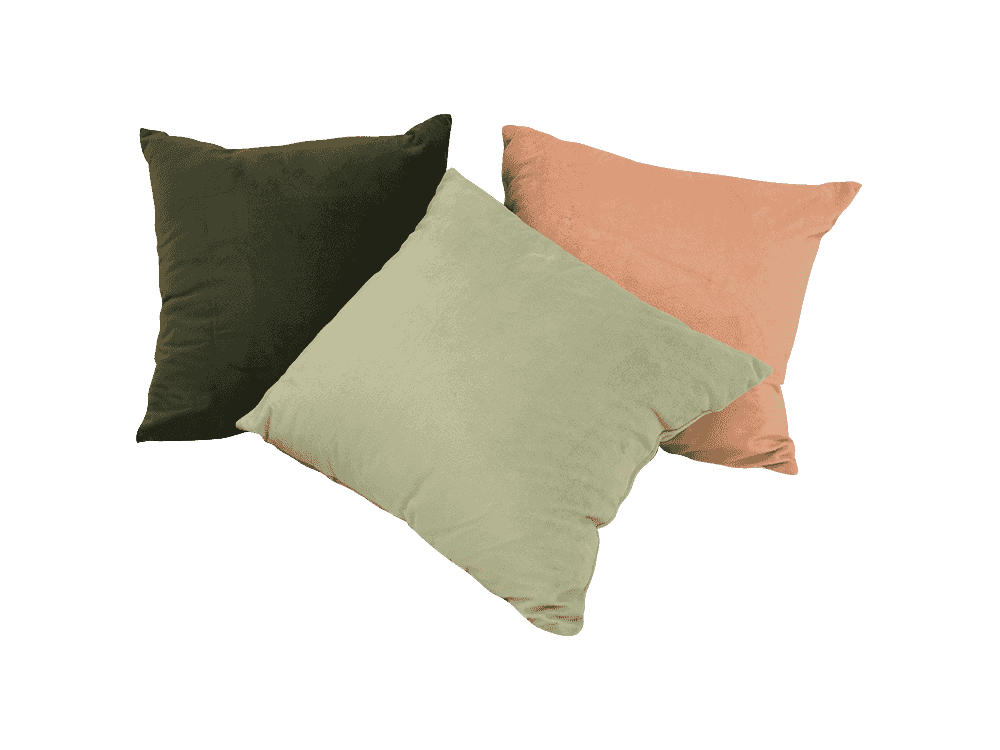
The Short Plush Home Cushion is a soft decorative and practical cushion made with 210 gsm short plush fabric and filled with 6D chemical fiber. The standard size is 45 x 45 cm, while customized dimensions can be produced according to customer requirements. The cushion is developed for home settings and can be matched with sofas, bedding, chairs, lounge areas, and other interior products.
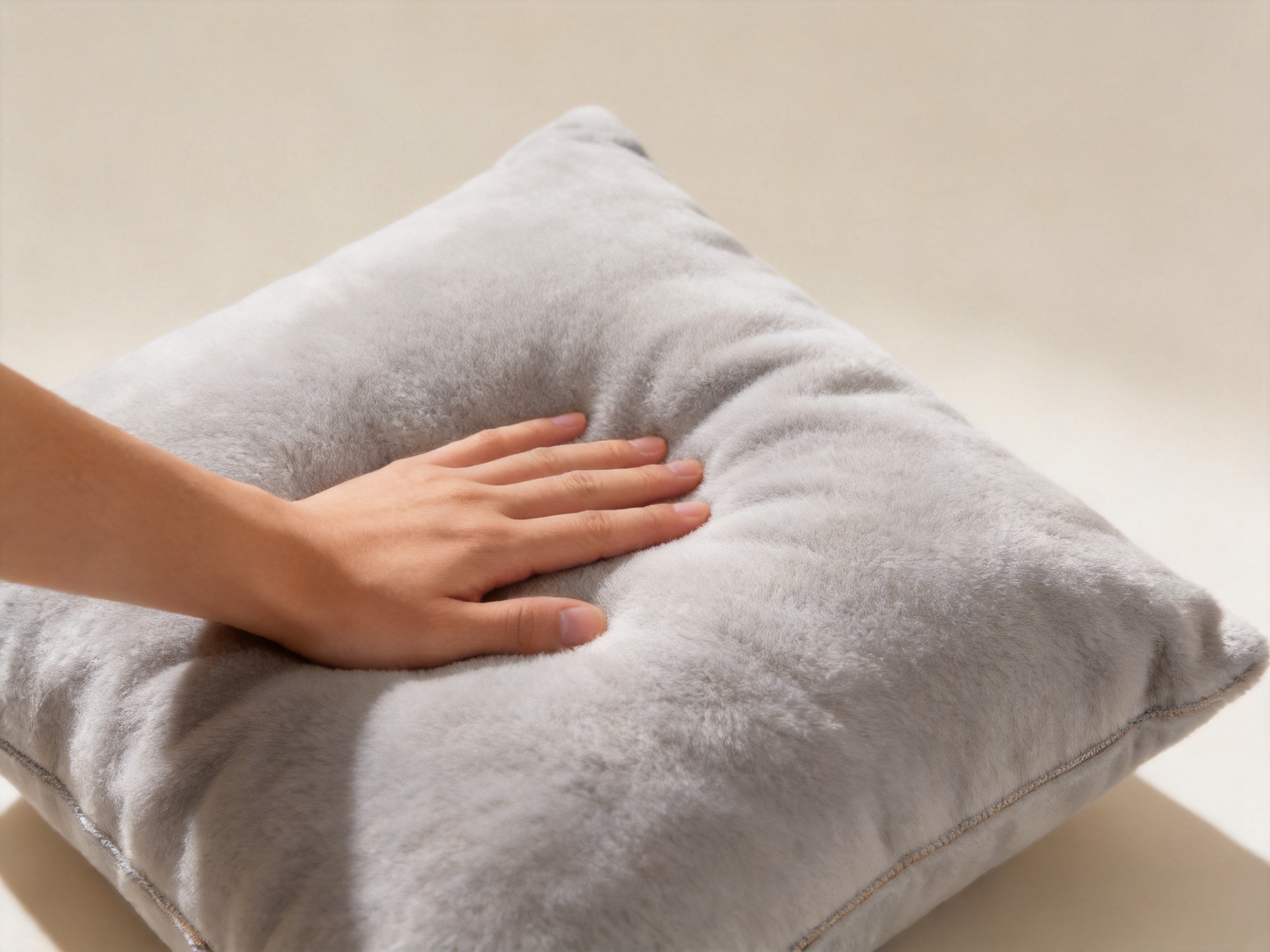
Short plush fabric is valued for its smooth hand feel, warm appearance, and elegant surface texture. Compared with some longer pile fabrics, short plush is easier to coordinate with modern interiors because it looks neat and refined while still providing a soft tactile experience. The fabric used for this cushion is comfortable to the touch and designed not to fade easily, helping the product maintain a fresh and attractive appearance over time.
The filling is 6D chemical fiber, a synthetic filling material commonly used in home textiles for its loft, resilience, and stable performance. It helps the cushion keep its shape after compression and use, making it suitable for daily sitting support, back support, decorative layering, and casual relaxation. The combination of short plush cover material and resilient fiber filling makes the cushion both attractive and practical.
In the home textile market, cushions are often purchased not only for comfort but also for interior styling. Color, texture, shape, and tactile quality all matter. This cushion addresses these needs by using fashionable colors that can match a variety of sofas, bedding sets, blankets, mattress covers, and other home textile products. It can function as a single accent cushion or as part of a coordinated collection.
Key Product Specifications
Product Name |
Short Plush Home Cushion |
Category |
Home Cushion |
Standard Size |
45 x 45 cm |
Custom Size |
Available according to customer requirements |
Fabric |
210 gsm short plush fabric |
Filling |
6D chemical fiber |
Main Features |
Soft touch, fashionable colors, good resilience, home decoration compatibility |
Application |
Sofas, bedding, chairs, lounges, hotels, apartments, home furnishing collections |
The Comfort Value of Short Plush Fabric
The fabric surface is one of the first qualities a consumer notices when touching a cushion. A cushion may look attractive in photos, but if the hand feel is rough, thin, or unpleasant, it will not create long-term satisfaction. The Short Plush Home Cushion uses 210 gsm short plush fabric to create a pleasant tactile impression. The fabric has a soft, cozy surface without excessive pile length, which helps balance comfort with a neat appearance.
Short plush fabric is especially suitable for cushions because it offers warmth and softness while remaining manageable for regular use. Long pile fabrics can sometimes trap more lint or create a heavier visual style. Very flat woven fabrics may look clean but can lack a soft, inviting touch. Short plush occupies a practical middle ground: it feels gentle, looks modern, and works well with many decorative styles.
The 210 gsm fabric weight provides a solid foundation for daily-use cushions. Fabric weight matters because it affects durability, drape, surface fullness, and perceived quality. A fabric that is too light may feel weak or inexpensive, while a fabric that is too heavy may reduce flexibility or increase cost unnecessarily. At 210 gsm, the short plush material supports a good balance between softness, stability, and production efficiency.
Another important advantage is color expression. Plush fabrics tend to display colors with depth and softness because the pile reflects light in a gentle way. Fashionable colors can therefore look warm and inviting rather than flat. This makes the cushion suitable for neutral interiors, colorful home collections, seasonal product lines, children’s rooms, guest rooms, and boutique hospitality environments.
Why the Cushion Stands Out from Competing Products
Many cushions in the market compete mainly on price, but price alone does not guarantee user satisfaction. The Short Plush Home Cushion offers several advantages over ordinary alternatives by combining quality fabric, resilient filling, flexible customization, and dependable production capability. These advantages are especially important for business buyers who need consistent products across larger orders.
First, the cushion provides a refined tactile experience. Some low-cost cushions use thin polyester fabric or rough materials that may look acceptable at first but feel less comfortable during use. The short plush fabric used here creates a smoother and softer surface, giving the cushion a more premium feel. This is a clear advantage in retail settings where shoppers often touch products before purchasing.
Second, the cushion is built with 6D chemical fiber filling. Low-quality fillings can flatten quickly, clump, or lose shape after repeated compression. A cushion that loses volume looks tired and unattractive even if the cover fabric remains intact. The 6D chemical fiber filling helps improve resilience, allowing the cushion to recover better after use and maintain its decorative fullness.
Third, the product is adaptable. The standard 45 x 45 cm size is widely accepted for home decoration, but customized sizing can be provided. This flexibility is important for customers who develop private-label collections, hotel room packages, sofa accessory sets, or coordinated bedding programs. Custom dimensions help align the cushion with specific design concepts and market needs.
Fourth, the cushion is produced by a manufacturer with broad home textile experience. A product is only as reliable as the system behind it. Manufacturing knowledge in pillows, quilts, mattress protectors, blankets, mattress covers, cushions, bedspreads, travel quilts, pillowcases, shower curtains, and curtains contributes to a mature understanding of fabric handling, stitching, filling distribution, packaging, and quality inspection.
Fifth, the company behind the product operates with international certification awareness and standardized production management. Certifications such as ISO9001, ISO14001, OEKO-TEX related systems, GRS, and BSCI reflect a broader commitment to quality, environmental management, material safety, responsible production, and social compliance. For buyers who sell into demanding markets, this background can reduce sourcing risk.
Material Construction and Functional Performance
A cushion may appear simple, but its performance depends on the relationship between fabric, filling, cutting, sewing, and finishing. Each component influences how the cushion feels, how it looks, and how long it remains attractive. The Short Plush Home Cushion uses a straightforward but effective construction: soft short plush fabric on the outside and 6D chemical fiber filling inside.
The outer short plush fabric provides the visible and touchable surface. It contributes to style, comfort, and consumer appeal. Because the fabric is designed not to fade easily, it supports long-term color presentation. Fade resistance is especially valuable for cushions placed on sofas or beds where they may receive natural light, frequent handling, or regular rearrangement.
The filling provides body and comfort. 6D chemical fiber refers to a fiber specification that can deliver loft and supportive volume. Synthetic fiber filling is widely used in home bedding and cushion products because it can be produced consistently, shaped effectively, and adapted to different firmness levels. It also supports cost-efficient mass production while maintaining a comfortable feel.
When a cushion is used on a sofa, it must compress and recover repeatedly. When used as a decorative bed cushion, it must hold shape to create a neat appearance. When used in a hotel or apartment project, it must meet expectations for durability and easy coordination. The filling selection helps the cushion perform across these different scenarios.
The stitching and finishing also matter. Even good fabric and filling can perform poorly if the seams are uneven, weak, or poorly aligned. A professional home textile manufacturer uses cutting systems, sewing processes, filling control, and inspection methods to achieve stable results. The cushion benefits from manufacturing experience accumulated across many home textile categories.
Design Flexibility for Modern Interiors
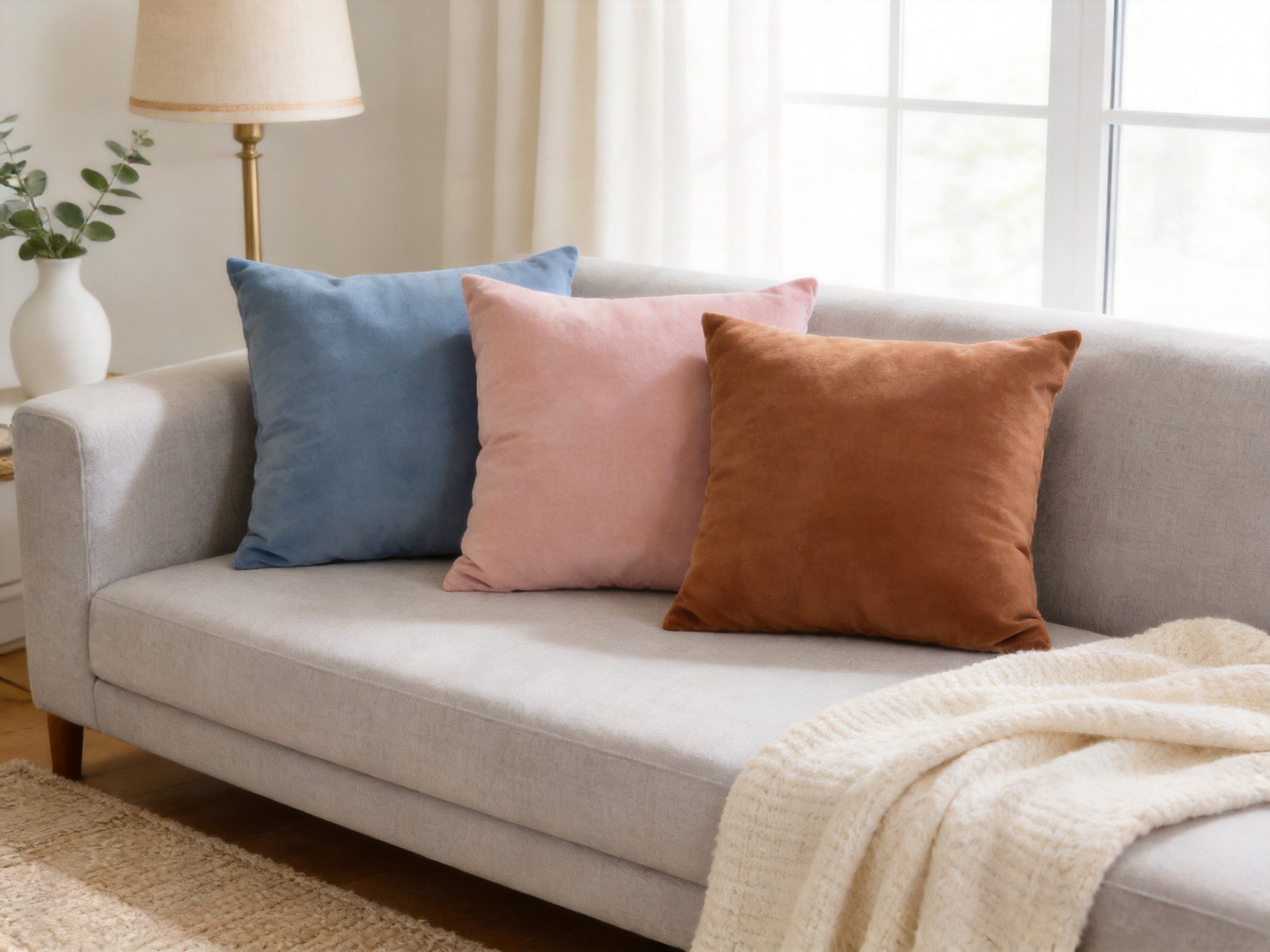
Interior design has become more personal and more varied. Some homes use calm neutral tones; others favor bold color contrast. Some customers prefer minimalist spaces, while others enjoy layered textures. The Short Plush Home Cushion is suitable for these different approaches because it combines a simple square format with a soft surface and fashionable color options.
The 45 x 45 cm size is one of the most versatile cushion dimensions. It is large enough to provide visual presence and back support, yet compact enough to layer with other cushions. On a sofa, several cushions can be arranged in pairs or mixed with different shapes. On a bed, square cushions can be placed in front of pillows or used as accent pieces. In a reading chair or window seat, a single cushion can add softness and style.
Color matching is another key strength. Because the product is described as being available in fashionable colors, it can be integrated into many home textile themes. Warm beige, ivory, grey, and brown tones can support a natural atmosphere. Blue, green, pink, yellow, or other seasonal shades can create a fresh decorative accent. Darker shades can add contrast and sophistication, while lighter shades can make a room feel softer and brighter.
Short plush fabric also works well with other materials. It can be paired with cotton bedding, microfiber quilts, knitted blankets, velvet sofas, linen curtains, or smooth mattress covers. The soft pile introduces tactile variety without overwhelming the room. For retailers, this makes the cushion easy to merchandise beside bedding, blankets, mattress protectors, and other home textile products.
Applications in Different Living Spaces
The Short Plush Home Cushion can be used in many home and commercial environments. Its broad application value makes it suitable for both retail distribution and project-based purchasing.
In the living room, the cushion can enhance sofas, armchairs, or floor seating. It adds softness to hard or structured furniture and creates a more relaxed atmosphere. A set of matching cushions can make a sofa look more complete, while contrasting colors can refresh older furniture without requiring major decoration changes.
In the bedroom, the cushion can be used as part of a bedding arrangement. It can match quilts, pillows, mattress covers, and blankets to form a coordinated sleep environment. Decorative cushions help make a bed look finished and inviting, especially in guest rooms, hotels, serviced apartments, and showroom displays.
In children’s rooms or family spaces, soft cushions can provide comfort for reading, play, or casual rest. The short plush surface feels gentle and friendly, while the fiber filling provides lightweight support. Colorful versions can fit playful interior themes.
In hospitality settings, cushions contribute to the guest experience. Hotels, inns, guesthouses, and holiday rentals use cushions to communicate comfort and attention to detail. A cushion that looks soft, keeps its shape, and coordinates with bedding can improve room presentation and guest satisfaction.
In retail home textile collections, the cushion can be positioned as a standalone accessory or as part of a coordinated product family. It can complement pillows, quilts, blankets, mattress protectors, and covers, supporting cross-selling opportunities and cohesive product displays.
Manufacturing Strength Behind the Product
A reliable cushion requires more than attractive materials. It depends on a manufacturer capable of controlling production from material selection to packaging. Tongxiang Xinlong Bedding Co., Ltd. is located in Zhejiang Province, China, and has been engaged in home textile manufacturing since 2002. With years of experience in bedding and household textile products, the company has built a strong production foundation.
The company produces a wide range of products, including silk cotton quilts, chemical fiber quilts, pillows, cushions, bedspreads, travel quilts, mattress protectors, blankets, quilt covers, pillowcases, shower curtains, curtains, and related home textile goods. This broad product scope gives the company practical expertise in different fabrics, fillings, stitching techniques, and finishing requirements.
The manufacturing site covers an area of 21,000 square meters, with a construction area of 18,000 square meters. This scale supports stable production planning, storage, material handling, and order fulfillment. More than 320 employees contribute to production, quality control, technical development, and customer service. Such organizational capacity is important for buyers who require timely delivery and consistent output.
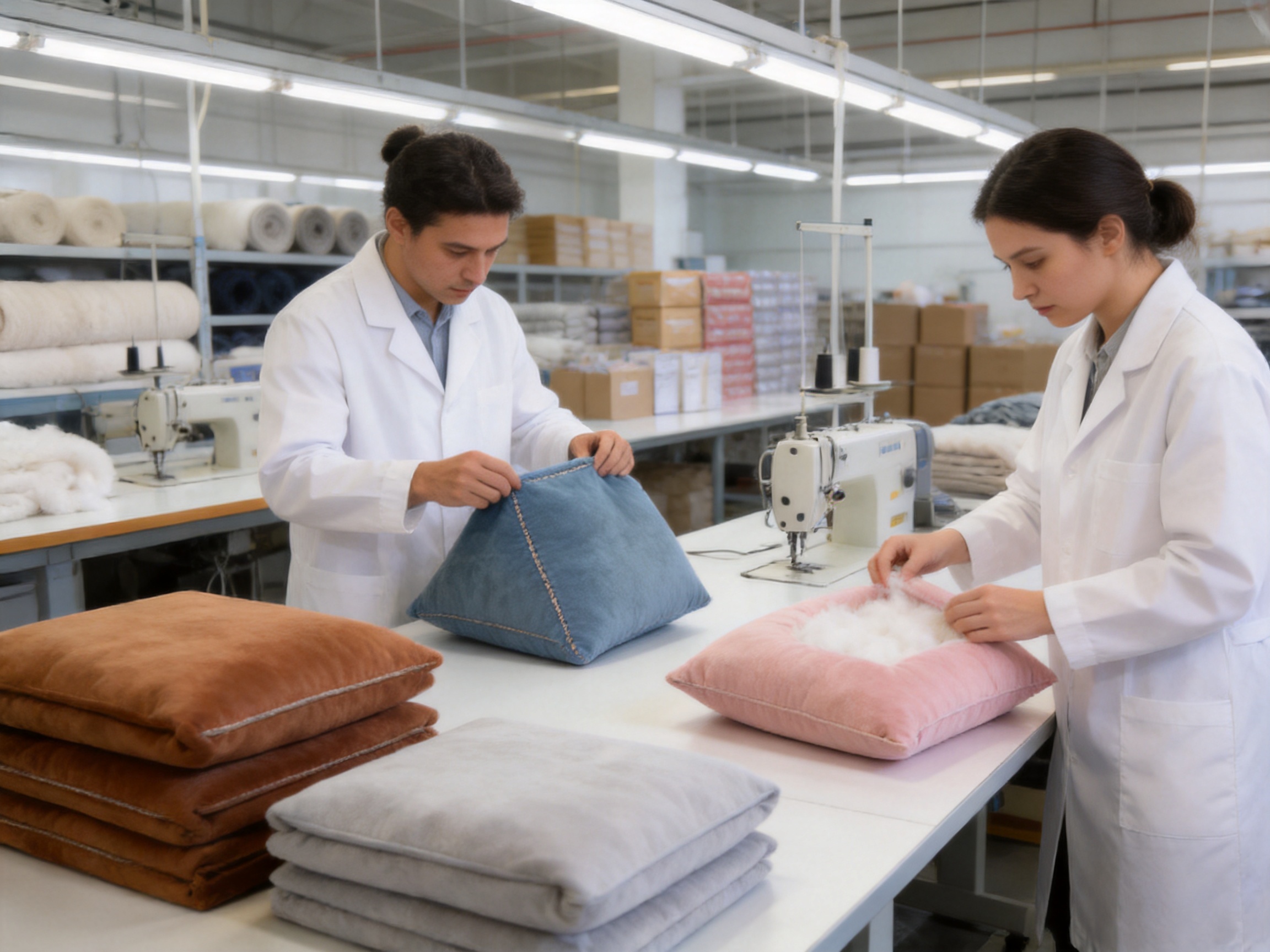
The company is equipped with various advanced production equipment. Advanced equipment helps improve cutting precision, sewing consistency, filling accuracy, and overall efficiency. In cushion production, equipment and skilled operation together affect seam quality, filling distribution, surface smoothness, and final appearance. A cushion that looks simple still requires careful control to achieve uniformity across large batches.
Another strength is continuous development and innovation. The home textile industry changes quickly as consumers respond to new colors, textures, sustainability expectations, and lifestyle trends. The company employs professional and technical personnel to design and produce fashionable and warm household products for different customer needs. This development capacity supports customization and helps business buyers bring market-oriented collections to life.
Quality Management and Certification Advantages
Quality is a central factor in the success of any home textile product. A cushion must look good, feel good, and remain dependable through handling, shipping, display, purchase, and use. The company operates with the purpose of treating quality as the life of the enterprise. This philosophy is supported by standardized operating procedures, employee skill improvement, and continuous product quality enhancement.
The company has passed international certifications and compliance systems including ISO9001, ISO14001, OEKO-TEX related certifications, OEKO-STeP, GRS, and BSCI. These systems provide confidence to buyers who need evidence of quality control, environmental management, material responsibility, and social compliance. In global trade, such certifications can be a decisive advantage because many retailers, importers, and brand owners require qualified suppliers.
ISO9001 focuses on quality management systems. It encourages process control, documentation, corrective action, and continuous improvement. For cushion production, this can support stable fabric inspection, cutting accuracy, sewing quality, filling consistency, and final inspection routines.
ISO14001 relates to environmental management. In the textile industry, environmental awareness is increasingly important. Buyers may consider how suppliers manage resources, waste, emissions, and compliance. Environmental management systems help demonstrate responsibility beyond basic production.
OEKO-TEX related certification is associated with textile safety and responsible chemical management. Consumers increasingly care about what touches their skin and living space. Although specific product claims depend on the certified scope, a manufacturer with OEKO-related experience is better positioned to serve markets that require textile safety assurance.
GRS, the Global Recycled Standard, is relevant to recycled materials and responsible supply chain practices. As sustainable home textile products grow in demand, GRS capability can support future product development for customers seeking recycled content or more responsible sourcing options.
BSCI, the Business Social Compliance Initiative, focuses on social responsibility in supply chains. For international buyers, social compliance helps reduce reputational risk and supports ethical sourcing programs. This is especially important for brands selling in Europe, North America, and other regulated or compliance-conscious markets.
The company has also been rated as a safety production standardization enterprise for several consecutive years since 2016. This reflects attention to workplace safety and standardized management. A safer production environment can improve employee stability, operational discipline, and production reliability.
Advanced Processes Supporting Consistent Cushion Quality
To manufacture a cushion consistently, several production stages must be controlled. These typically include material receiving, fabric inspection, cutting, sewing, filling preparation, filling insertion, shaping, closing, trimming, inspection, packaging, and shipment preparation. Each stage affects the finished product.
Material receiving and inspection are important because fabric defects can become visible on the final cushion. Short plush fabric must be checked for color consistency, surface uniformity, weight, and defects. If fabric inspection is weak, products may show shading differences, pile irregularities, or visible flaws.
Cutting precision affects size accuracy and seam alignment. For a standard 45 x 45 cm cushion, even small cutting variations can create uneven edges or inconsistent shapes. Professional cutting processes help ensure that panels match properly and that final cushions meet customer specifications.
Sewing quality affects durability and appearance. Seams should be strong, neat, and correctly positioned. Uneven stitching can reduce product value, while weak stitching can cause seam failure during use. Skilled workers and controlled sewing procedures help ensure that each cushion meets expected standards.
Filling control affects comfort, shape, and resilience. Too little filling may make the cushion flat and unattractive, while too much filling may make it stiff or distort the seams. The 6D chemical fiber filling must be distributed evenly so that the cushion feels balanced. Proper filling control creates a fuller and more comfortable product.
Finishing and inspection ensure that loose threads, surface irregularities, and shape issues are corrected before packaging. In competitive home textile markets, final presentation matters. A well-packed cushion should arrive clean, properly shaped, and ready for retail display or direct use.
Packaging also plays a role in product quality. Cushions are soft goods, but they can be compressed, deformed, or contaminated during transport if not packed correctly. Appropriate packaging supports shipping efficiency while protecting the product’s appearance.
Customization for Business Buyers
Customization is one of the most important advantages for professional buyers. The Short Plush Home Cushion can be produced in the standard 45 x 45 cm size or according to customer specifications. This allows importers, retailers, distributors, and private-label brands to develop products suited to their markets.
Size customization can support different furniture types and design purposes. Smaller cushions may be used for decorative layering, children’s furniture, or compact apartments. Larger cushions may be suitable for lounge seating, floor cushions, or oversized sofas. Custom sizes also help hotels and property developers match cushions with specific room designs.
Color customization can support seasonal collections, brand identity, or coordinated bedding sets. For example, a spring collection may use soft pastels, while an autumn collection may use warm earth tones. A minimalist brand may choose neutral shades, while a youth-oriented brand may prefer bright colors. The fabric’s plush surface helps present colors in a soft and appealing way.
Packaging customization can also be important. Retail buyers may require labeled bags, insert cards, hangtags, barcode stickers, or compressed packaging. E-commerce sellers may need packaging that protects products during individual parcel shipment. Hospitality buyers may prefer bulk packaging for efficient room installation.
Private-label support can make the cushion more valuable for customers who want to build their own home textile brand. A manufacturer with broad product experience can help align cushion designs with other categories such as pillows, quilts, blankets, mattress covers, and protectors. This supports complete home bedding or home furnishing programs.
Comparison with Common Cushion Alternatives
In the cushion market, buyers may encounter many material and construction options. Some cushions use plain woven polyester, cotton canvas, velvet, faux fur, linen blends, or knitted fabrics. Each material has its own style and cost structure, but short plush provides a strong balance of comfort, affordability, and visual warmth.
Compared with plain woven polyester cushions, short plush cushions usually feel softer and more inviting. Woven polyester may be durable and inexpensive, but it can feel cool or smooth in a less cozy way. Short plush adds a warmer touch that many consumers associate with comfort.
Compared with long faux fur cushions, short plush cushions are easier to integrate into everyday interiors. Faux fur can be dramatic and luxurious, but it may be too bold for some rooms and can require more careful maintenance. Short plush provides softness without excessive texture, making it suitable for wider markets.
Compared with cotton canvas cushions, short plush cushions provide a softer hand feel. Cotton canvas may appeal to rustic or casual styles, but it can feel firmer and less plush. For buyers targeting comfort-focused consumers, short plush offers a clearer tactile advantage.
Compared with low-grade filled cushions, the use of 6D chemical fiber supports better loft and recovery. Filling quality is often invisible at first, but it becomes obvious over time. Cushions that flatten quickly generate customer dissatisfaction and higher return risk. Better filling helps protect product reputation.
Compared with suppliers that lack certification systems or production scale, sourcing from an experienced certified manufacturer offers stronger confidence. Product consistency, documentation, quality inspection, and compliance support are essential when serving international markets or supplying retail chains.
Value for Retailers and Importers
Retailers and importers need products that are attractive, dependable, and easy to position. The Short Plush Home Cushion meets these needs because it offers visual appeal, practical comfort, and flexible customization. It can be sold as a decorative cushion, a comfort accessory, a sofa cushion, a bedroom accent, or part of a home textile collection.
The product’s soft touch is an advantage in physical retail. Customers often make quick decisions based on hand feel. A cushion that feels pleasant immediately has a higher chance of purchase. The fashionable colors help retailers build attractive displays that can change seasonally.
For e-commerce, the cushion’s features are easy to communicate. Product descriptions can highlight soft short plush fabric, comfortable touch, fade-resistant color performance, 6D fiber filling, and customizable size. Clear features help online buyers understand value even before touching the product.
For importers and wholesalers, production reliability is essential. Delays, inconsistent colors, poor stitching, or unstable filling quality can damage customer relationships. Working with a manufacturer that has established facilities, experienced employees, advanced equipment, and certifications can reduce these risks.
For brand owners, the cushion can be integrated into broader lifestyle collections. It can coordinate with quilts, blankets, mattress protectors, bedding sets, pillowcases, and curtains. This supports cohesive merchandising and helps create stronger brand identity in the home textile category.
Value for Hospitality and Project Buyers
Hotels, serviced apartments, guesthouses, rental properties, and interior project companies require products that look good and perform reliably. Cushions are part of the guest’s first impression. A neat, soft, well-coordinated cushion can make a room feel more welcoming and complete.
The Short Plush Home Cushion is suitable for hospitality because it offers comfort and decorative flexibility. The soft surface contributes to a cozy environment, while the square size can fit beds, sofas, lounge chairs, and reception areas. Custom sizing and colors allow project buyers to match interior design schemes.
Durability and shape retention are also important in hospitality. Cushions may be moved, leaned on, arranged by staff, and used by many guests. A cushion with resilient filling and stable construction can maintain presentation better than a low-quality alternative. This helps reduce replacement frequency and supports long-term operational value.
For project procurement, supplier stability matters. The company’s production scale and experience across home textile categories make it suitable for larger or repeated orders. If a hotel group needs matching cushions, pillows, mattress protectors, or blankets, a multi-category manufacturer can simplify sourcing and improve consistency.
Comfort, Aesthetics, and Practicality in One Product
The success of a home cushion depends on the balance of comfort, aesthetics, and practicality. A beautiful cushion that feels uncomfortable will not satisfy users. A soft cushion that loses shape quickly will not support long-term value. A durable cushion that lacks style may fail in retail. The Short Plush Home Cushion combines these dimensions in a balanced way.
Comfort comes from the soft short plush surface and supportive fiber filling. Aesthetics come from the neat square shape, plush texture, and fashionable color options. Practicality comes from the standard size, customizable options, fade-resistant fabric performance, and production support from an experienced manufacturer.
This balance makes the cushion suitable for many market levels. It can be used in affordable home collections, mid-range retail programs, hospitality projects, promotional home textile sets, and private-label product lines. Buyers can adjust specifications, colors, and packaging to meet their exact positioning.
How the Cushion Supports a Coordinated Home Textile Range
Because the manufacturer produces many home textile categories, the Short Plush Home Cushion can be developed as part of a coordinated range. This is valuable for buyers who want to create complete room solutions rather than single products. A cushion can match or complement quilts, pillows, blankets, mattress covers, mattress protectors, and bedding accessories.
In a bedroom collection, the cushion can be paired with a quilt or comforter to create a layered bed display. In a living room collection, it can be paired with a blanket or throw to create a warm sofa arrangement. In a home furnishing store, it can be displayed near curtains, bedding, or seasonal décor to encourage additional purchases.
Coordinated ranges can increase average order value because customers often buy multiple items when colors and textures match. For retailers, this improves merchandising efficiency. For brands, it strengthens visual identity. For consumers, it simplifies decorating decisions.
The cushion’s simple and adaptable design makes it an excellent anchor product for such collections. It is not overly complicated, which allows it to match different themes. At the same time, its plush texture gives it enough character to stand out.
Durability Considerations and Long-Term Use
Durability in cushions involves fabric strength, color stability, seam integrity, filling recovery, and resistance to everyday handling. The Short Plush Home Cushion is designed with these practical expectations in mind. The 210 gsm short plush fabric provides a comfortable yet stable surface, while the 6D chemical fiber filling supports loft and resilience.
Color performance is especially important because cushions are frequently visible in a room. A faded cushion can make an otherwise clean interior look worn. The fabric’s non-fading characteristic helps preserve decorative value. This is useful for both home users and commercial spaces where appearance must remain consistent.
Filling recovery affects long-term satisfaction. If a cushion collapses after short use, customers may perceive it as low quality. A resilient fiber filling helps maintain shape and fullness. This contributes to both comfort and appearance.
Seam quality is another essential factor. Cushions are often squeezed, leaned on, or moved around. Strong stitching helps prevent seam opening and filling leakage. Manufacturing control and inspection processes help support seam reliability.
For best use, cushions should be handled according to appropriate care instructions provided for the final product specification. Regular shaking or light fluffing can help maintain shape. Keeping cushions away from excessive moisture and harsh conditions can extend service life.
Sustainability and Responsible Production Potential
Sustainability is an increasingly important topic in home textiles. Consumers and business buyers are paying more attention to materials, production processes, environmental management, and social responsibility. While the Short Plush Home Cushion is primarily described by its fabric and filling, the manufacturing background supports responsible product development.
The company’s ISO14001 environmental management certification indicates attention to environmental systems. GRS certification capability supports opportunities for recycled material programs when customers request them. OEKO-related certifications reflect awareness of textile safety and chemical control. BSCI participation supports social compliance expectations.
For buyers, this means the cushion can be sourced from a manufacturer that understands modern compliance requirements. This is important for retailers and brands that must answer questions from consumers, auditors, or corporate sourcing teams. Responsible production is no longer optional in many international markets; it is part of long-term competitiveness.
The manufacturer’s broad experience also supports material innovation. As market demands evolve, customers may request recycled fibers, special packaging, reduced plastic use, or other improvements. A technically capable supplier is better positioned to collaborate on these goals.
Quality Inspection Points for Professional Buyers
Professional buyers evaluating a cushion should consider several inspection points. The Short Plush Home Cushion is designed to meet practical expectations, and these points help explain why manufacturing control matters.
Fabric appearance should be checked for consistent color, smooth pile, clean surface, and absence of stains or visible defects. Short plush fabric should feel soft and pleasant, without rough patches or uneven texture.
Size accuracy should be checked against the agreed specification. For a 45 x 45 cm cushion, consistent sizing helps create uniform displays and packaging. Custom sizes should follow approved samples and tolerance requirements.
Seam quality should be inspected for straight stitching, secure closure, and no loose threads. Good seam workmanship contributes to both durability and visual quality.
Filling distribution should be even. The cushion should not have hollow corners, lumps, or excessive stiffness. It should feel balanced when pressed and should recover after compression.
Color matching should be checked when multiple cushions are ordered in the same color. Batch consistency is important for retail displays and project installations.
Packaging should protect the cushion from dust, moisture, deformation, and contamination during transport. Labels and customer-specific packaging should be accurate and properly positioned.
Why Production Experience Matters
Experience in home textile manufacturing creates advantages that are not always visible in a product photo. A manufacturer with years of production history understands common problems and knows how to prevent them. This can include fabric shrinkage variation, shade difference, seam tension issues, filling unevenness, packaging compression, and shipping deformation.
Since 2002, the company has developed practical knowledge across many product categories. Producing quilts requires filling control and quilting experience. Producing pillows requires loft and comfort management. Producing mattress protectors requires attention to fit and functional fabric performance. Producing blankets requires surface texture control. Producing cushions combines many of these skills in a compact product.
This accumulated experience helps improve the Short Plush Home Cushion. The company can select suitable fabric, manage filling, control sewing, and inspect finished goods with a mature understanding of home textile quality. Buyers benefit from fewer production surprises and more consistent order execution.
Experienced manufacturers are also better at communication during product development. They can understand customer specifications, produce samples, adjust details, and scale production. This is important for private-label buyers who may need to refine color, size, firmness, or packaging before placing bulk orders.
Market Positioning and Consumer Appeal
The Short Plush Home Cushion can be positioned as a comfortable, stylish, and reliable home accessory. Its consumer appeal comes from the immediate softness of the fabric, the attractive color possibilities, and the familiar square shape. These features make it easy for customers to imagine the cushion in their own homes.
For budget-conscious consumers, the cushion offers a practical way to refresh a room without replacing furniture or bedding. For style-focused consumers, it offers texture and color. For comfort-focused consumers, it offers a soft surface and supportive filling. For gift buyers, it can be a simple and useful home item.
Retailers can use the cushion in seasonal campaigns. Soft plush cushions are especially appealing in autumn and winter because they create a warm feeling, but they can also be designed in bright colors for spring and summer. Neutral colors can be sold year-round.
The product can also appeal to online shoppers looking for sofa cushions, bedroom cushions, decorative pillows, plush cushions, and home textile accessories. Clear product photography, accurate size information, and feature descriptions can help improve conversion.
Practical Purchasing Considerations
When purchasing Short Plush Home Cushions in bulk, buyers should define specifications clearly. Important details include size, fabric color, filling weight or firmness preference, packaging method, label requirements, carton packing, delivery schedule, and quality standards. Clear communication helps ensure that production matches expectations.
Buyers should also consider the target market. For a retail chain, color assortment and packaging may be critical. For a hotel, durability and color consistency may matter most. For an e-commerce seller, product compression recovery and parcel packaging may be important. For a private-label brand, labels and collection coordination may be priorities.
Sampling is recommended before bulk production. A sample allows the buyer to evaluate fabric touch, color, cushion fullness, stitching, and overall appearance. Once the sample is approved, it can serve as the reference standard for mass production.
Production timing should be planned according to order quantity and seasonal demand. Home textile products often have peak seasons, especially before holidays, seasonal home refresh periods, or major retail campaigns. Working with an experienced factory helps buyers plan more effectively.
Q&A Section
What is the Short Plush Home Cushion made of?
The cushion is made with 210 gsm short plush fabric and filled with 6D chemical fiber. The fabric provides a soft and comfortable touch, while the filling supports loft, resilience, and shape retention.
What is the standard size of the cushion?
The standard size is 45 x 45 cm. Custom sizes can also be produced according to customer requirements.
Why is short plush fabric suitable for home cushions?
Short plush fabric offers a soft hand feel, warm appearance, and neat surface texture. It is comfortable to touch and easier to coordinate with different interior styles than some heavier or longer pile fabrics.
Does the cushion maintain its color well?
The fabric is designed not to fade easily, helping the cushion maintain an attractive appearance during normal use. Actual performance can depend on care conditions and final product specifications.
What makes 6D chemical fiber a good filling choice?
6D chemical fiber provides loft and resilience. It helps the cushion recover after compression and maintain a fuller shape, which is important for both comfort and decorative presentation.
Can the cushion be customized for private-label orders?
Yes. Size, color, packaging, and other order details can be customized according to customer requirements. This makes the product suitable for retailers, importers, distributors, hospitality buyers, and private-label brands.
Where can the cushion be used?
It can be used on sofas, beds, chairs, lounge furniture, reading corners, guest rooms, hotels, serviced apartments, and retail home textile displays.
What advantages does the manufacturer provide?
The manufacturer has broad home textile experience, a large production area, advanced equipment, skilled employees, technical development capability, and international certifications. These strengths support stable quality and reliable bulk production.
How does this cushion compare with lower-cost alternatives?
Compared with many low-cost alternatives, it offers a softer short plush surface, resilient 6D fiber filling, customizable specifications, and production support from an experienced certified manufacturer. These advantages help improve user satisfaction and reduce sourcing risk.
Is the cushion suitable for hospitality projects?
Yes. Its soft touch, neat appearance, customizable colors, and resilient filling make it suitable for hotels, guesthouses, serviced apartments, and other project-based interiors.
Conclusion
The Short Plush Home Cushion is a versatile home textile product that combines comfort, style, and practical manufacturing value. Its 210 gsm short plush fabric creates a soft and inviting touch, while its 6D chemical fiber filling supports resilience and shape retention. The standard 45 x 45 cm size suits common home decoration needs, and customization options allow buyers to develop products for specific markets, collections, and projects.
Its competitive advantages are clear. Compared with ordinary cushions, it offers a more pleasant plush surface, better decorative warmth, dependable filling performance, and flexible design possibilities. Compared with sourcing from less developed suppliers, it benefits from the support of an experienced home textile manufacturer with advanced production equipment, broad category expertise, quality management systems, and international certification experience.
For retailers, importers, hospitality buyers, and private-label brands, this cushion offers a reliable path to creating attractive and comfortable home textile collections. It can stand alone as a decorative cushion or integrate with bedding, blankets, pillows, mattress covers, and other home furnishing products. In a market where consumers expect both comfort and style, the Short Plush Home Cushion provides a practical and appealing solution.
References
American Association of Textile Chemists and Colorists. Textile Testing and Quality Control Principles.
International Organization for Standardization. ISO 9001 Quality Management Systems Guidelines.
International Organization for Standardization. ISO 14001 Environmental Management Systems Guidelines.
OEKO-TEX Association. Textile Safety and Sustainable Production Standards.
Textile Exchange. Global Recycled Standard Guidance Materials.
Business Social Compliance Initiative. Social Compliance Framework for Global Supply Chains.
Kadolph, S. J. Textiles: Basics. Pearson Education.
Collier, B. J., and Epps, H. H. Textile Testing and Analysis. Pearson Education.


 +86-573-88798028