



 Français
 Español
 Deutsch
Content
- 1 1. The Role of a High-Quality Mattress Protector
- 2 2. Product Overview
- 3 3. Cotton Jacquard Fabric and Its Premium Appearance
- 4 4. Layered Construction for Comfort and Stability
- 5 5. Secure Fit Through a Knitted Stretch Skirt
- 6 6. Customization for Different Markets
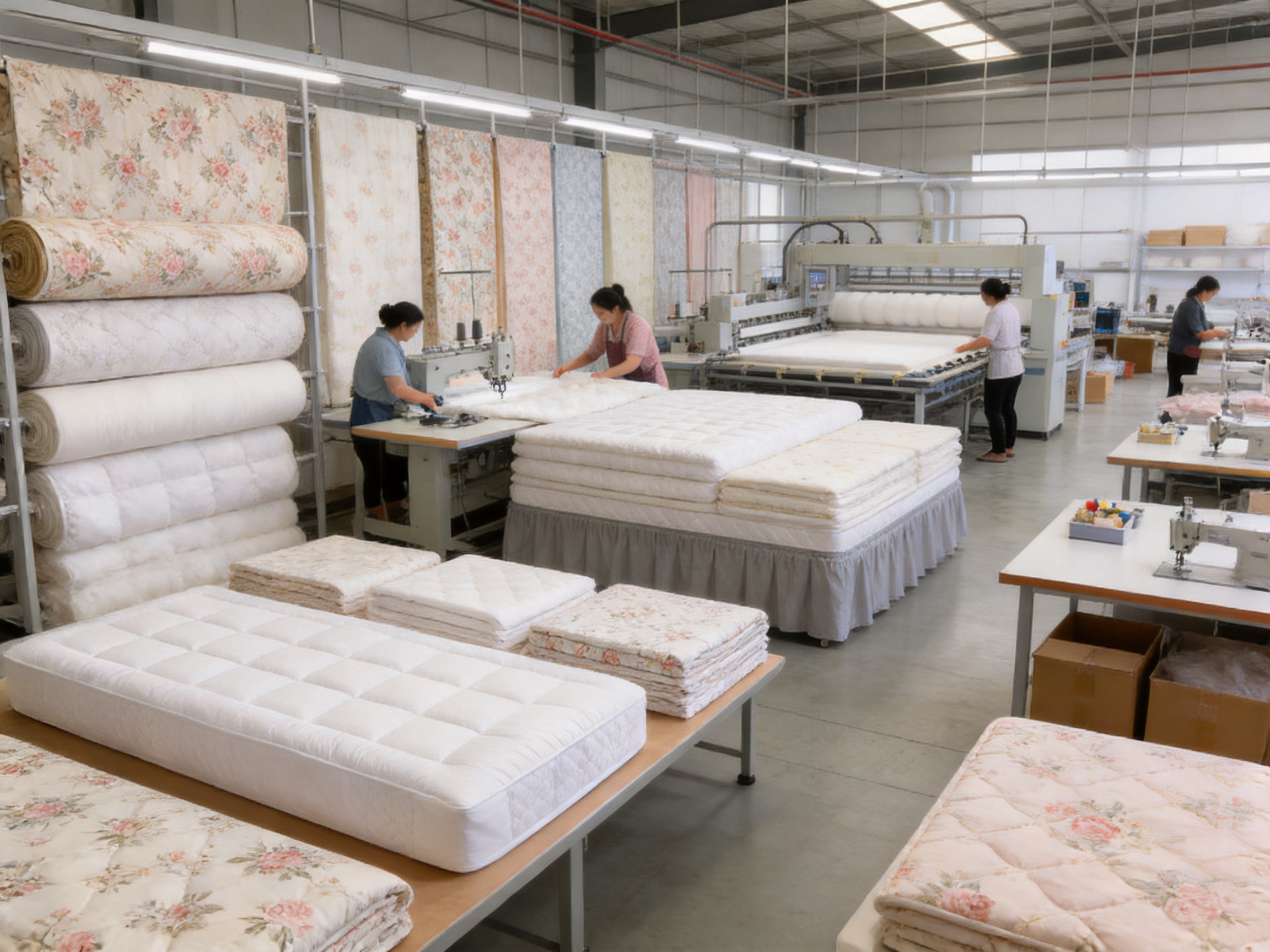
- 7 7. Manufacturing Capabilities and Factory Strengths
- 8 8. Quality Management and Production Control
- 9 9. Environmental and Social Considerations
- 10 10. Advantages Over Basic Mattress Protectors
- 11 11. Applications Across Different Customer Segments
- 12 12. Manufacturing Process from Material to Finished Product
- 13 13. Product Development and Order Cooperation
- 14 14. Care, Handling, and Expected Use
- 15 15. Why Factory Experience Matters to Buyers
- 16 16. Frequently Asked Questions
- 16.1 Q1: What is the main material on the top of the mattress protector?
- 16.2 Q2: What materials are used in the backing and skirt?
- 16.3 Q3: How much filling does the protector contain?
- 16.4 Q4: What is the standard size?
- 16.5 Q5: Can the floral quilting pattern be customized?
- 16.6 Q6: Is this product waterproof?
- 16.7 Q7: Is the product suitable for hotels?
- 16.8 Q8: What makes the product different from a thin mattress pad?
- 16.9 Q9: Can the product be developed for a private-label brand?
- 16.10 Q10: What quality systems does the manufacturer have?
- 16.11 Q11: What other products does the factory manufacture?
- 16.12 Q12: How should buyers begin a customized project?
- 17 17. Buyer Checklist for Product Evaluation
- 18 18. Overall Product Assessment
- 19 19. Conclusion
- 20 References
- 21 Product: Cotton Jacquard Fabric Mattress Protector
A mattress protector is more than an additional layer placed between the sleeper and the mattress. It is an important part of a complete bedding system, influencing comfort, mattress protection, appearance, maintenance, and product life. For hospitality projects, furniture retailers, bedding brands, and private-label distributors, the right mattress protector must combine attractive design with dependable construction, suitable materials, consistent quality, and flexible customization.
The Cotton Jacquard Fabric Mattress Protector is designed to meet these requirements through a carefully selected combination of cotton jacquard fabric, polyester backing, stretch side fabric, and substantial polyester filling. Its quilted floral surface gives the product a refined appearance, while its layered construction creates a soft and comfortable sleeping environment. The protector can be produced in the standard size of 160 x 200 cm or customized to meet different mattress dimensions, customer preferences, and market requirements.
Manufactured by Tongxiang Xinlong Bedding Co., Ltd., this mattress protector reflects the capabilities of an experienced home textile producer with a large production site, professional technical personnel, advanced equipment, and a broad product portfolio. The company has developed a manufacturing system that supports the production of quilts, pillows, cushions, mattress protectors, blankets, bedspreads, quilt covers, pillowcases, curtains, and other home textile products.
For buyers seeking a premium cotton mattress protector, the product offers several advantages over basic alternatives. It combines the visual quality of jacquard fabric with a structured quilted design, a comfortable 400 gsm filling layer, a stretchable skirt, and the option to customize size and floral patterns. These features make it suitable for residential bedding, guest rooms, hotels, serviced apartments, furniture packages, and branded home textile collections.
1. The Role of a High-Quality Mattress Protector
A mattress is a major household investment and is expected to provide reliable support for many years. However, the mattress surface is continuously exposed to body contact, friction, moisture, dust, and daily use. Without an additional protective layer, stains and wear can gradually affect the mattress cover and reduce its visual and hygienic condition.
A mattress protector creates a practical barrier between the sleeper and the mattress. Depending on its structure, it can help reduce direct contact with dust, skin particles, perspiration, and accidental spills. It can also reduce surface friction and help maintain the original condition of the mattress. While a protector is not a substitute for professional mattress cleaning or waterproofing unless specifically designed for those purposes, it is an important component of ordinary bedding care.
Comfort is equally important. A low-quality protector may feel stiff, noisy, thin, or unstable during sleep. A well-constructed protector should fit securely, feel pleasant against the bedding system, and add softness without making the mattress excessively hot or bulky. The Cotton Jacquard Fabric Mattress Protector addresses these expectations through a combination of a soft cotton jacquard top fabric, quilted construction, polyester filling, and a stretch skirt.
The product is also relevant to professional buyers. Hotels and accommodation providers need bedding products that look attractive, remain presentable through repeated use, and can be ordered in consistent specifications. Retailers and importers often require flexible dimensions, customized patterns, and private-label development. A factory capable of adjusting size, quilting appearance, and production details can provide more value than a supplier offering only fixed standard products.
2. Product Overview
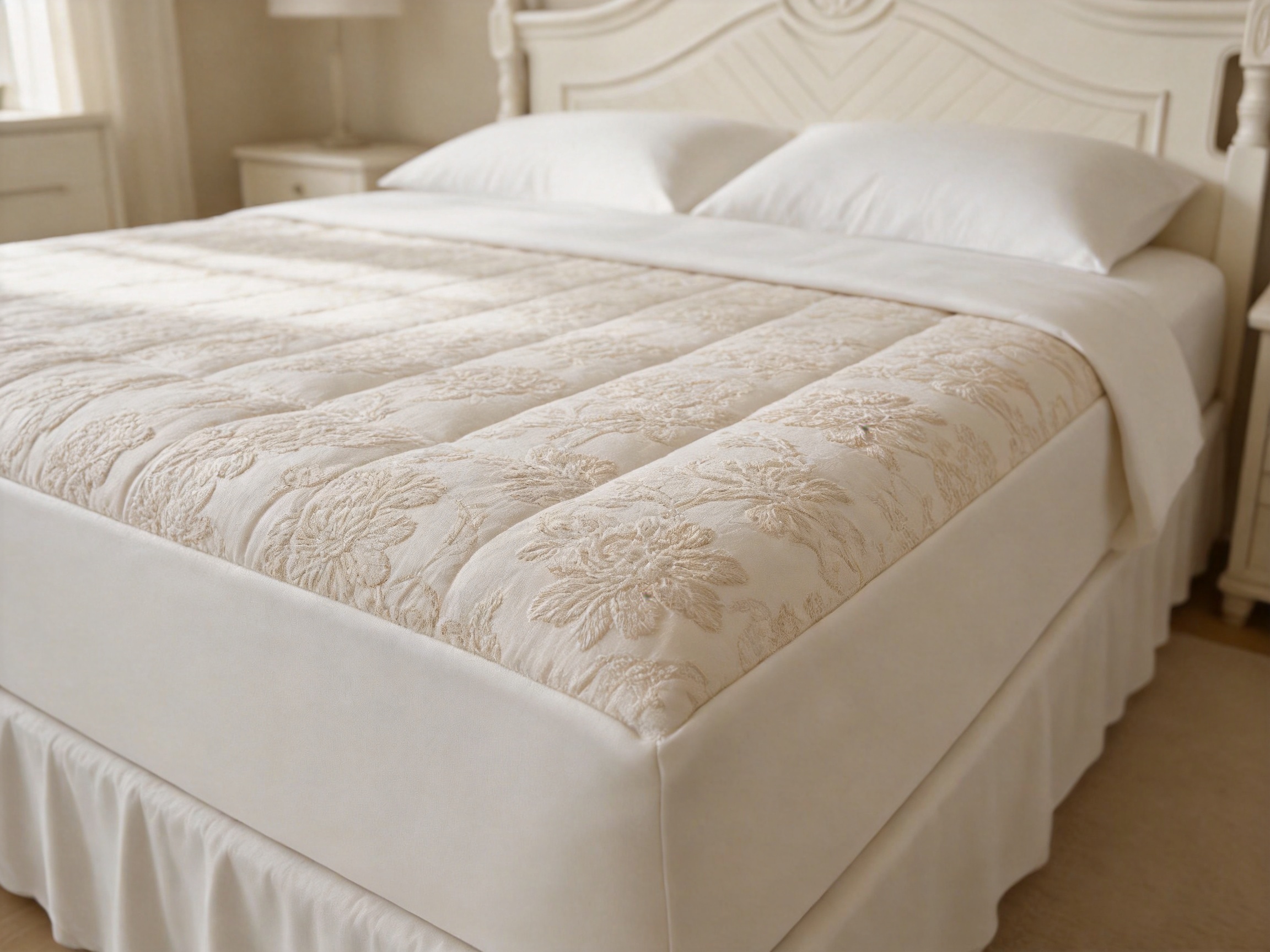
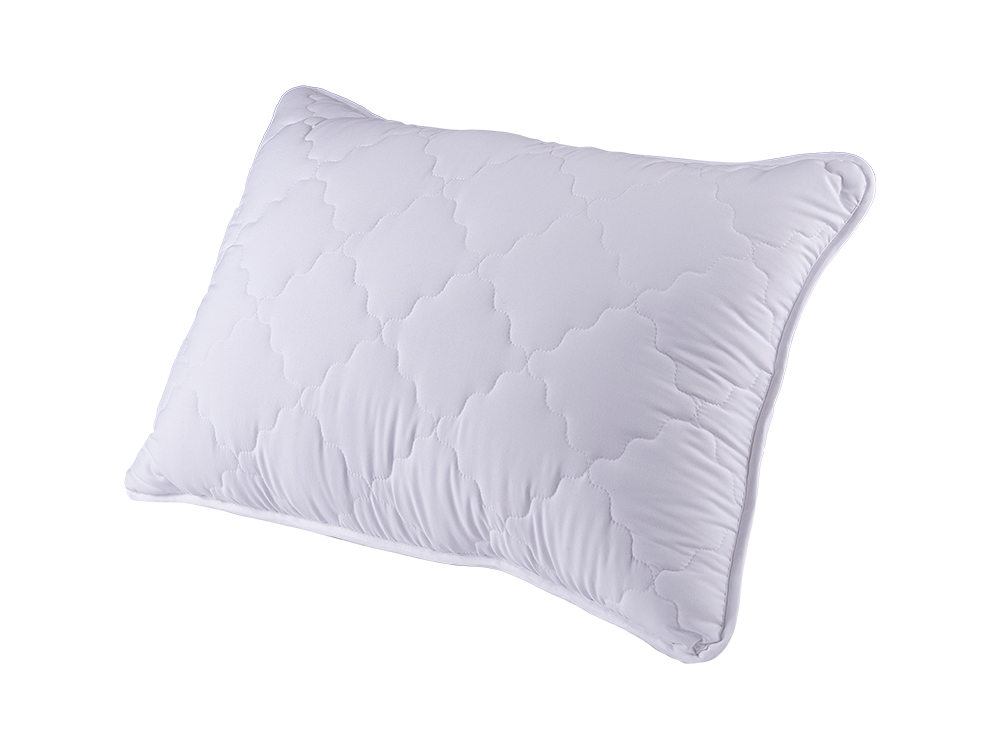
The Cotton Jacquard Fabric Mattress Protector is a premium quilted protector intended for customers who value both appearance and comfort. Its upper surface is made from cotton jacquard fabric, a textile known for woven decorative patterns and a more sophisticated visual effect than plain basic fabrics. The floral pattern is integrated into the textile design, helping the product maintain a refined appearance across the surface.
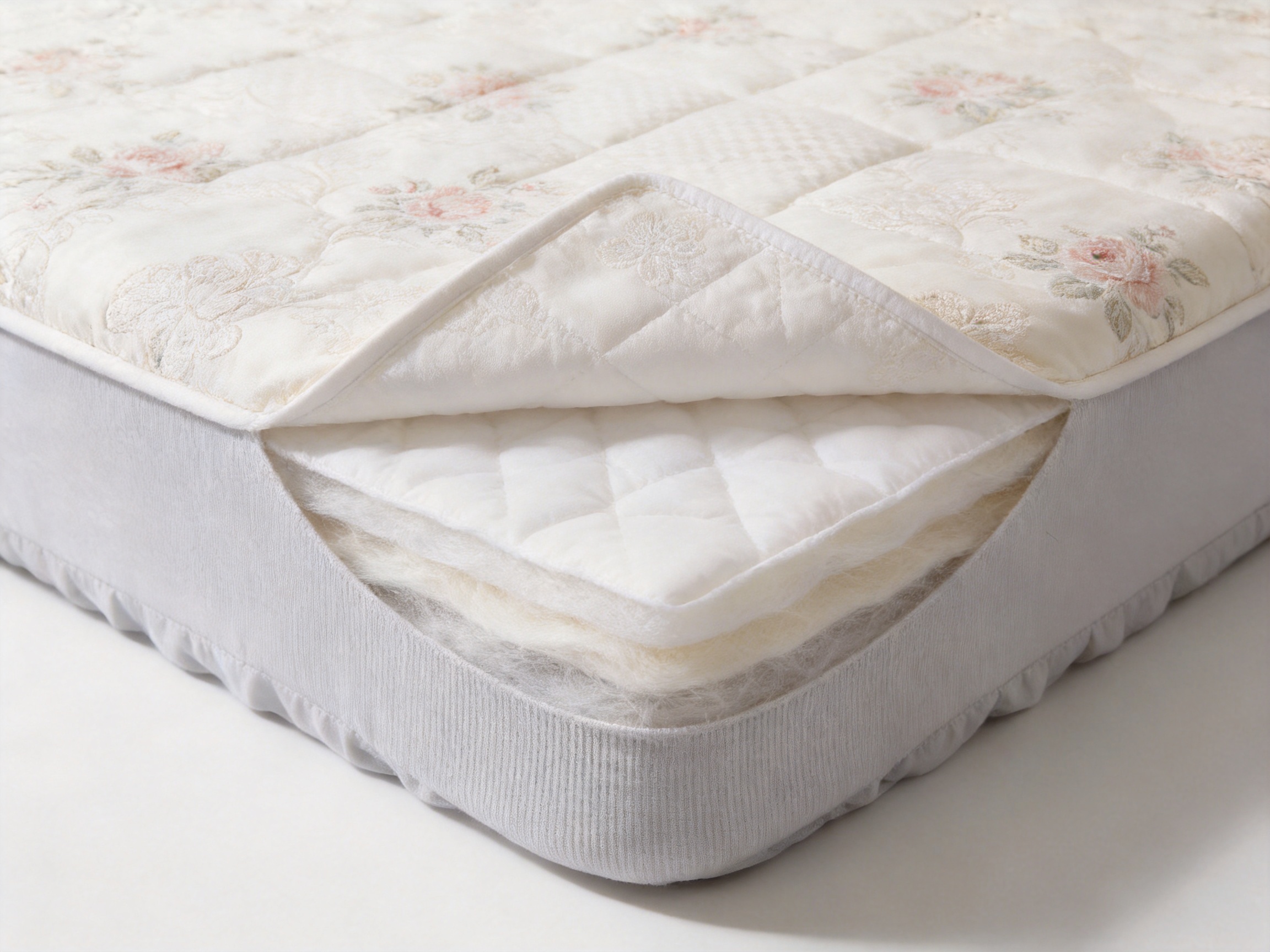
The front fabric is combined with an 80 gsm full polyester fabric on the back. Between these layers is a 400 gsm polyester filling, which provides body, cushioning, and softness. The mattress protector also includes a 90 gsm polyester knitted stretch fabric skirt. This stretch construction helps the skirt adapt to the sides of the mattress and supports a more secure fit than a loose, non-stretch side panel.
The standard listed size is 160 x 200 cm, while other sizes can be produced according to customer requirements. This flexibility is particularly useful because mattress dimensions vary between countries, regions, hotel projects, and furniture programs. Buyers can request suitable specifications for single beds, double beds, queen beds, king beds, custom hospitality beds, or other mattress formats.
The quilted construction is not only decorative. Quilting helps connect the top fabric, filling, and backing into a more stable layered structure. It can reduce the movement of the filling inside the protector and maintain a consistent distribution of softness. The selected floral quilting patterns can also support the product’s visual identity and contribute to a more premium presentation at retail or in a guest room.
| Product Element | Specification | Functional Contribution |
|---|---|---|
| Product type | Premium cotton mattress protector | Provides a soft, decorative, protective bedding layer |
| Front fabric | Cotton jacquard fabric | Creates a refined surface with woven decorative character |
| Back fabric | 80 gsm full polyester fabric | Supports the layered construction and overall stability |
| Skirt fabric | 90 gsm polyester knitted stretch fabric | Helps the protector adapt to mattress sides |
| Filling | 400 gsm polyester filling | Adds softness, thickness, and quilted comfort |
| Standard size | 160 x 200 cm | Suitable for a common mattress dimension |
| Customization | Size and quilted floral patterns can be customized | Supports private-label, retail, and project requirements |
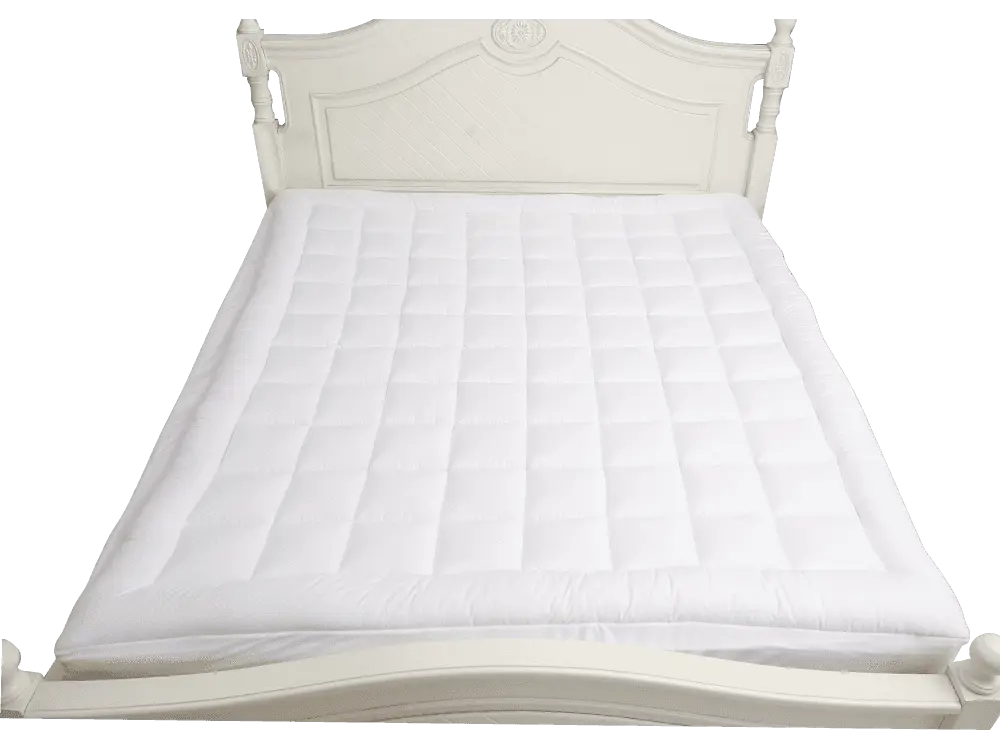
Cotton Jacquard Fabric Mattress Protector
3. Cotton Jacquard Fabric and Its Premium Appearance
The choice of cotton jacquard fabric is one of the product’s most distinctive advantages. Unlike a simple printed fabric, jacquard fabric is produced using a weaving process that creates patterns through the arrangement of yarns. This gives the surface a dimensional textile character and allows decorative motifs to become part of the fabric structure.
Floral jacquard designs are especially suitable for bedding because they create a decorative appearance without relying on an overly bright or temporary print. The pattern can look elegant in bedrooms, hotel rooms, furniture showrooms, and retail displays. It can also be coordinated with sheets, duvet covers, pillows, curtains, and other soft furnishings.
Cotton is valued in bedding because it has a familiar natural hand feel and a comfortable surface character. When used in a jacquard construction, cotton combines textile softness with an enhanced visual texture. This makes the protector more attractive to buyers who want a product that feels more substantial and refined than a basic polyester mattress pad.
The cotton jacquard top also creates an opportunity for product differentiation. In a competitive bedding market, many mattress protectors have similar shapes and basic white or plain-color appearances. A decorative jacquard surface helps a supplier offer something visually distinctive. Retailers can position the item as a premium home textile product rather than an ordinary functional accessory.
The fabric can be considered from both the consumer and commercial perspectives. Consumers may appreciate its comfortable touch and decorative appearance. Commercial buyers may value the ability to use a more premium fabric specification in product catalogs, hospitality proposals, bedding sets, and seasonal collections. The combination of fabric quality and customization can support different price levels and market segments.
3.1 Visual Value in Retail and Hospitality
Appearance affects purchasing decisions, particularly when bedding is presented online, in showrooms, or in a hotel room. A mattress protector with a floral jacquard surface can communicate quality before the customer examines the technical details. The woven pattern catches light differently across the surface, creating visual depth and making the product appear more carefully designed.
For hospitality applications, a well-presented bedding layer can support the overall impression of cleanliness, comfort, and attention to detail. Although the protector is normally placed beneath sheets, its construction still matters during room preparation, inspection, and laundering. A stable quilted appearance and consistent size help housekeeping teams prepare beds efficiently and maintain a professional standard.
3.2 Fabric Selection and Product Positioning
Different markets have different expectations for mattress protectors. Some buyers prioritize low purchase cost, while others seek improved comfort, better presentation, and a longer usable life. The cotton jacquard specification positions this product toward customers who want a premium appearance and a more carefully developed bedding component.
The product can be offered as an individual protector or included in a broader bedding program. It can complement quilts, pillows, cushions, blankets, mattress covers, and other products manufactured by the same supplier. This makes it possible for buyers to develop coordinated collections instead of sourcing every item from a separate factory.
4. Layered Construction for Comfort and Stability
A mattress protector performs best when each layer has a clear function. The Cotton Jacquard Fabric Mattress Protector uses a multi-layer structure composed of the front fabric, filling, backing fabric, and stretch skirt. These materials work together to create a product that is soft, stable, and suitable for regular bedding use.
The 400 gsm polyester filling is an important part of the design. Its weight gives the protector a fuller hand and a more substantial feel than a thin single-layer cover. The filling can add a layer of softness between the sleeper and the mattress while helping the surface maintain a quilted appearance. It also allows the product to feel more like a premium bedding article rather than a minimal protective sheet.
Polyester filling is widely used in home textiles because it can provide consistent loft, stable production results, and practical care performance. Its synthetic structure allows manufacturers to control weight and thickness according to the product specification. In this protector, the 400 gsm level provides a balance between comfort and manageable bulk.
The 80 gsm polyester backing supports the underside of the quilted body. It helps form a complete sandwich with the jacquard face and polyester filling. The backing also creates a neat internal surface and contributes to the strength of the finished article. When combined with appropriate quilting, the backing helps hold the filling in place and supports the overall shape.
The 90 gsm knitted stretch fabric skirt extends around the mattress sides. Its elasticity helps the protector accommodate variations in mattress thickness and shape. A stretch skirt is often more convenient than a rigid side panel because it can expand during installation and then return toward its original form after the mattress has been covered.
4.1 Benefits of Quilting
Quilting joins the surface materials and filling at planned intervals or pattern lines. This construction can help limit filling migration, maintain a more even surface, and make the protector easier to handle. It also provides a decorative element that can be adapted to customer preferences.
The floral quilting patterns mentioned in the product specification can be customized. This creates opportunities for buyers to select a design that matches a brand identity, interior style, seasonal collection, or customer demographic. A classic floral pattern may suit traditional bedding, while a more restrained arrangement may appeal to modern retail programs.
Quilting also contributes to visual consistency. A properly controlled quilt pattern makes the protector appear organized and finished. For large orders, consistent quilting is essential because differences between units can affect the perceived quality of the entire shipment.
4.2 Balance Between Softness and Practicality
A mattress protector should provide comfort without becoming difficult to install, store, or wash. Excessive thickness may cause fitting problems, while insufficient filling may produce a flat and unremarkable product. The 400 gsm filling specification offers a substantial surface while maintaining a practical construction for ordinary bedding applications.
The multi-layer structure can also support product durability during regular handling. The fabric layers protect the filling, the quilt pattern stabilizes the interior, and the skirt helps keep the protector in position. The final performance will depend on care instructions, mattress compatibility, stitching quality, and usage conditions, but the design provides a strong foundation for a dependable product.
5. Secure Fit Through a Knitted Stretch Skirt
A mattress protector that moves excessively can reduce comfort and require frequent adjustment. The skirt is therefore an important functional component rather than a purely decorative feature. The 90 gsm polyester knitted stretch fabric is designed to fit around the mattress sides and help hold the protector in place.
Knitted fabric is naturally more flexible than many woven constructions. Its looped structure allows it to stretch and recover, making it suitable for a product that must accommodate the mattress perimeter. The stretch skirt can simplify installation because the user can pull it over the mattress edges without handling a rigid, tightly measured panel.
A more secure fit can reduce bunching and shifting during sleep. It may also help the top quilted section remain centered on the mattress. For hotels and other professional users, easier installation can save time during room turnover and reduce the need for repeated bed adjustments.
The correct skirt depth should be confirmed according to the customer’s mattress thickness and application. Because the manufacturer accepts customized specifications, buyers can discuss the required size and construction details before production. This is particularly important for projects involving mattresses with unusual heights, pillow tops, or specialized foundations.
5.1 Suitable Applications for the Stretch Skirt Design
The protector can be used in private homes, rental properties, hotels, guesthouses, serviced apartments, dormitories, and furnished housing. It is also suitable for bedding retailers and wholesalers that serve customers with different mattress dimensions.
For households, the stretch skirt can make routine bedding changes more convenient. For commercial users, it can support standardized bed preparation. When the same construction is ordered in several sizes, a buyer can establish a consistent procedure for installation and care throughout a property or product range.
6. Customization for Different Markets
Customization is one of the strongest advantages of sourcing this mattress protector from an experienced manufacturer. The product specification allows the size and quilted floral patterns to be adjusted according to customer needs. This makes the protector more adaptable than a fixed, off-the-shelf item.
Size customization is important because global mattress dimensions are not uniform. A 160 x 200 cm protector may be appropriate for one market or bed format, while another customer may require a different width, length, skirt depth, or overall measurement. Custom production enables buyers to align the protector with their own mattress range instead of asking customers to adapt to a single factory standard.
Pattern customization can support brand differentiation. A buyer may request a particular floral style, a more contemporary quilting arrangement, or a pattern coordinated with an existing bedding collection. The design process should consider the relationship between the pattern, filling distribution, stitching density, fabric performance, and final appearance.
Customization can also support different sales channels. A retailer may request a design suitable for a premium bedroom collection. A hotel group may require a restrained appearance that matches its interior concept. A distributor may need several sizes with the same visual identity. A bedding brand may want a distinctive pattern that helps its product stand out from competing listings.
| Customer Requirement | Possible Product Response | Commercial Benefit |
|---|---|---|
| Different mattress dimensions | Customized length, width, and compatible skirt construction | Improves market suitability and reduces fitting problems |
| Distinctive visual identity | Customized floral quilting pattern | Supports brand differentiation |
| Premium retail positioning | Cotton jacquard face with substantial quilted filling | Creates a higher-value product presentation |
| Hospitality supply | Consistent specifications across multiple sizes | Supports standardized room preparation |
| Coordinated bedding collection | Matching design direction across home textile products | Enables broader product programs |
Before confirming a customized order, buyers should provide clear technical information, including mattress dimensions, mattress thickness, preferred fabric colors, pattern expectations, packaging requirements, labeling needs, and target market standards. A detailed product brief reduces misunderstandings and helps the factory prepare an accurate sample or production specification.
7. Manufacturing Capabilities and Factory Strengths
Tongxiang Xinlong Bedding Co., Ltd. was established in January 2002 and has developed long-term experience in the home textile industry. The company is located in Longxiang Industrial Park, Wuzhen Town, Tongxiang, Zhejiang Province, China. Its production site covers approximately 21,000 square meters, with a construction area of about 18,000 square meters.
The company has more than 320 employees and is equipped with various production machines and supporting facilities. This scale provides a foundation for organized manufacturing, quality management, product development, and order coordination. A factory with dedicated space and a substantial workforce can manage multiple stages of bedding production more systematically than a small trading operation that depends entirely on external subcontractors.
The company produces a broad range of home textile products, including silk cotton quilts, chemical fiber quilts, pillows, cushions, bedspreads, travel quilts, mattress protectors, blankets, quilt covers, pillowcases, shower curtains, and curtains. This product diversity is valuable because it demonstrates experience with different fabrics, fillings, sewing structures, quilting methods, and finishing requirements.
For buyers interested in mattress protectors, a broad product portfolio can create practical advantages. The supplier may be able to coordinate materials, colors, packing methods, and production schedules across several product categories. A buyer developing a complete bedding assortment can potentially reduce supplier complexity by discussing related items with one experienced manufacturer.
7.1 Professional Technical Personnel
Product development in home textiles requires more than cutting and sewing. The factory must understand fabric behavior, filling distribution, quilting balance, dimensional stability, edge finishing, and the relationship between design and production efficiency. The company has professional and technical personnel who support the development and manufacture of fashionable and functional household products.
Technical staff can help evaluate whether a proposed size is compatible with the intended mattress, whether a selected quilting pattern is suitable for the filling, and whether the final construction can be produced consistently. Their experience is particularly important for custom orders, where small changes in materials or measurements can influence the finished product.
Technical coordination also helps buyers translate commercial requirements into production specifications. For example, a customer may request a fuller hand, a more compact floral design, a deeper skirt, or a different balance between softness and weight. The factory can review these expectations and recommend a practical construction based on available materials and manufacturing processes.
7.2 Advanced Production Equipment
The company is equipped with various advanced production equipment to support its home textile manufacturing operations. In mattress protector production, equipment contributes to fabric preparation, cutting, quilting, sewing, edge finishing, inspection, and packing. Well-maintained machinery can improve repeatability and help maintain consistent dimensions across a production batch.
Quilting equipment is especially important for this product. A controlled quilting process helps maintain the selected floral pattern, stabilize the 400 gsm filling, and create a neat appearance. Cutting equipment supports accurate panel dimensions, while sewing machines help form secure seams and attach the stretch skirt to the quilted body.
Equipment alone does not guarantee quality. The best results come from the combination of suitable machinery, trained operators, clear work instructions, production inspection, and continuous technical improvement. The company’s stated focus on standardized operating procedures and technical development supports this integrated approach.
8. Quality Management and Production Control
Quality is a central consideration when purchasing bedding products for retail or commercial use. A mattress protector must meet expectations for appearance, dimensions, stitching, filling distribution, fabric condition, and overall finishing. Inconsistent quality can lead to customer complaints, returns, and difficulty maintaining a reliable product range.
Tongxiang Xinlong Bedding Co., Ltd. identifies quality as the life of the enterprise and emphasizes standardized operating procedures. This approach is important for repeat orders because a buyer needs confidence that future production will remain close to the approved sample and technical specification.
Quality control for the Cotton Jacquard Fabric Mattress Protector may include checks of fabric appearance, pattern alignment, panel size, filling weight, quilting consistency, skirt attachment, seam security, loose threads, stains, and packaging condition. The exact inspection system should be confirmed according to the order, customer requirements, and applicable market standards.
Measurement control is particularly important for mattress protectors. If the top panel is too small, it may not cover the mattress properly. If the skirt is too loose, the protector may shift. If the skirt is too tight or too shallow, installation may be difficult. Consistent cutting, sewing, and final inspection help reduce these issues.
Quilt pattern quality should also be monitored. The floral design should appear clear and balanced, with acceptable spacing and consistent stitching. The filling should remain reasonably distributed so that the surface does not develop noticeably thin or overly thick areas. These details influence both comfort and visual presentation.
8.1 Management Systems and Certifications
The company has passed international certifications and management assessments including ISO9001, ISO14001, OEKO-TEX-related standards, GRS, and BSCI, as stated in the company information. These certifications and assessments represent important elements of the company’s quality, environmental, material, and social responsibility framework.
ISO9001 is associated with quality management systems and process control. ISO14001 relates to environmental management practices. OEKO-TEX standards are commonly connected with textile safety and harmful substance testing requirements, subject to the specific certificate scope. GRS is associated with recycled material claims and related chain-of-custody requirements, where applicable. BSCI is related to social compliance and responsible workplace practices.
Buyers should always request current certificates and confirm their scope, validity, and relevance to the specific product and materials being ordered. Certification does not replace product inspection, but it can provide useful evidence of structured management practices and a supplier’s commitment to recognized industry requirements.
9. Environmental and Social Considerations
Modern home textile buyers increasingly evaluate products beyond appearance and price. They may also consider material sourcing, manufacturing conditions, environmental management, packaging, and social responsibility. A supplier’s management systems can support more informed purchasing decisions and help customers meet their own procurement policies.
The company’s stated ISO14001 and GRS-related credentials indicate attention to environmental management and recycled material systems within the relevant certified scope. The Cotton Jacquard Fabric Mattress Protector itself uses cotton jacquard fabric, polyester backing, polyester filling, and polyester knitted stretch fabric. Buyers should confirm the precise material composition and any recycled content claims required for a specific order.
Responsible production also involves reducing avoidable waste, improving cutting efficiency, controlling defects, maintaining equipment, and organizing production carefully. A factory with established procedures can identify opportunities to improve material utilization and reduce rework. These improvements may benefit both environmental performance and commercial efficiency.
Social responsibility is equally relevant when products are supplied to international markets. The company’s BSCI-related assessment provides a framework for buyers to consider workplace practices, although customers should obtain current documentation and conduct any additional verification required by their policies or clients.
10. Advantages Over Basic Mattress Protectors
The Cotton Jacquard Fabric Mattress Protector offers several advantages compared with a basic thin protector or a simple non-quilted mattress cover. Its most obvious advantage is the premium surface appearance. Cotton jacquard fabric and floral quilting create a richer visual effect than plain low-cost materials.
The second advantage is the 400 gsm filling. A thicker quilted structure can provide a softer and more substantial touch than a single fabric layer. It may also create a more comfortable transition between the sleeper and the mattress, particularly for customers who prefer a cushioned bedding surface.
The third advantage is the stretch skirt. Some basic protectors rely on loose edges or limited elastic sections that may not hold securely. The knitted stretch skirt is designed to adapt around the mattress sides and support a more stable fit.
The fourth advantage is customization. Many mass-market protectors are available only in fixed sizes and standardized patterns. This product can be adjusted in size and quilted floral design, allowing importers, brands, retailers, and hospitality buyers to develop a specification suited to their market.
The fifth advantage is manufacturing depth. The product is made by an established home textile factory with a substantial production site, professional technical personnel, various production equipment, a broad product range, and stated international management certifications. These capabilities can reduce the risks associated with relying on a supplier that has limited product experience or depends heavily on unverified subcontracting.
| Comparison Point | Basic Protector | Cotton Jacquard Fabric Mattress Protector |
|---|---|---|
| Surface appearance | Often plain and functional | Decorative cotton jacquard with floral character |
| Construction | May use a thin single layer | Quilted multi-layer structure with 400 gsm filling |
| Fit support | May have limited stretch or loose edges | Includes a 90 gsm knitted stretch skirt |
| Customization | Usually limited to fixed sizes | Size and quilted patterns can be customized |
| Product positioning | Entry-level functional accessory | Premium bedding and home textile product |
| Supplier capability | May be sourced from a narrow product operation | Produced by an experienced broad-range home textile factory |
11. Applications Across Different Customer Segments
11.1 Residential Bedding
For household use, the protector can help improve the comfort and appearance of a bedroom. The cotton jacquard surface offers a more decorative alternative to plain protectors, while the quilted filling adds softness. The stretch skirt supports easier placement on the mattress and can help keep the protector centered.
Home users may purchase the item as part of a bedroom renovation, a new mattress package, a seasonal bedding update, or a complete home textile collection. The product can also appeal to consumers who prefer a more substantial quilted feel rather than a very thin mattress cover.
11.2 Hotels and Guest Accommodation
Hotels, guesthouses, serviced apartments, and rental properties require bedding products that can be installed efficiently and present a consistent appearance. A mattress protector with a stable construction and stretch skirt can support housekeeping routines. Customized sizes allow the product to match the mattresses used in a specific property.
For hospitality projects, buyers should evaluate laundering requirements, replacement cycles, color standards, packaging, labeling, and delivery schedules. A factory with experience across quilts, pillows, blankets, and mattress protectors may be able to support a more coordinated procurement program.
11.3 Furniture and Mattress Retailers
Furniture retailers can offer the protector as an add-on product with mattresses or bedroom furniture. Its premium appearance may make it suitable for bundled packages and showroom displays. Retailers can also use customized patterns to create a coordinated accessory range.
Mattress brands may include the protector in promotional packages or premium product tiers. Because the size can be adapted, the protector can be developed for specific mattress models or collections. This may help the brand create a more complete ownership experience for its customers.
11.4 Wholesalers and Private-Label Brands
Wholesalers and private-label brands often require products that can be differentiated from generic imports. Customized floral quilting, selected sizes, packaging, and product presentation can help create a distinct assortment. The manufacturer’s ability to produce several home textile categories may also support the development of a broader private-label collection.
12. Manufacturing Process from Material to Finished Product
A professional mattress protector production process normally begins with the confirmation of the technical specification. This includes the front fabric, backing fabric, filling weight, skirt material, measurements, quilting pattern, color, packaging, and inspection requirements. Clear specifications are essential because each detail affects production planning.
12.1 Material Preparation
The cotton jacquard fabric, polyester backing, polyester filling, and knitted stretch skirt are prepared according to the approved order. Materials should be checked for color consistency, width, surface defects, weight, and usable condition. Proper material preparation helps reduce interruptions during cutting and sewing.
12.2 Cutting and Panel Formation
The top and backing fabrics are cut according to the required mattress protector dimensions. Cutting accuracy influences the final fit, particularly around the edges and corners. For customized orders, the cutting plan should reflect the approved size and any additional allowance needed for seams or attachment points.
12.3 Layer Assembly
The cotton jacquard face, 400 gsm polyester filling, and 80 gsm polyester backing are aligned to form the main quilted body. The layers must be positioned carefully so that the filling remains evenly distributed and the fabric pattern is presented correctly.
12.4 Quilting
The layered body is quilted according to the selected floral pattern or customer-approved design. Quilting must balance decorative appearance with practical stability. Stitching that is too sparse may allow excessive movement of the filling, while a pattern that is too dense may change the hand feel or create unnecessary stress on the fabric.
12.5 Skirt Attachment
The 90 gsm polyester knitted stretch skirt is cut and prepared for attachment around the quilted body. The skirt must be joined securely and positioned evenly around the perimeter. Corners and transition points deserve particular attention because they influence how easily the protector fits over the mattress.
12.6 Finishing and Inspection
After sewing, the finished protector is checked for loose threads, uneven seams, fabric damage, quilting inconsistencies, dimensional errors, and general appearance. The item is then folded, packed, and prepared for shipment according to the customer’s instructions.
This sequence demonstrates why a mattress protector is a product requiring coordinated technical control. The quality of the final item depends not only on the fabric specification but also on the accuracy of each manufacturing stage.
13. Product Development and Order Cooperation
Successful customized production begins with communication. Buyers should provide a clear description of the intended use, target market, mattress dimensions, desired appearance, technical standards, order quantity, and packaging expectations. The manufacturer can then evaluate the requirements and advise on practical options.
A sample or pre-production confirmation is useful when the product includes customized quilting, unusual dimensions, or a particular skirt depth. The sample allows the buyer to review the fabric, surface appearance, filling thickness, fit, stitching, and overall hand feel before bulk manufacturing.
Technical documents should identify the material composition and weight of each layer. For this product, the basic specification includes cotton jacquard fabric on the front, 80 gsm full polyester fabric on the back, 90 gsm polyester knitted stretch fabric for the skirt, and 400 gsm polyester filling. Any change to these materials should be confirmed before production because it may affect performance and cost.
Packaging also deserves attention. Retail products may require individual bags, inserts, barcodes, care labels, cartons, and outer shipping marks. Hospitality projects may prefer bulk packing to improve warehouse efficiency. The appropriate packaging method depends on the customer’s sales channel, storage conditions, and transportation plan.
14. Care, Handling, and Expected Use
The care method should be determined according to the final fabric composition, quilting construction, finishing treatments, and customer requirements. Buyers should request confirmed care instructions from the manufacturer rather than relying only on general bedding practices.
Users should follow the recommended washing temperature, detergent guidance, drying method, and ironing limitations. Improper washing or excessive heat can affect the dimensions, surface appearance, filling, or elastic recovery of the skirt. Professional users should establish a care procedure that matches their laundering equipment and replacement schedule.
The protector should be installed carefully by aligning the top section with the mattress and pulling the stretch skirt evenly over the sides. Avoiding excessive force at one corner can reduce stress on the seams and skirt. After installation, the surface should be smoothed so that the quilting lies evenly beneath the sheet.
Storage should take place in a clean, dry environment protected from excessive moisture, direct sunlight, dust, and compression. Retail packaging should remain intact until the product is prepared for sale. Commercial buyers should rotate inventory according to normal stock management practices.
15. Why Factory Experience Matters to Buyers
Factory experience is especially important when a product involves several material layers and customization. An experienced bedding manufacturer understands how face fabric, backing, filling, quilting, and elastic skirt materials interact. This knowledge can help reduce design errors and improve the consistency of repeated orders.
Long-term operation also provides experience in handling different customer requirements. A buyer may need a small sample run, a large hotel order, several sizes, a special floral pattern, or a coordinated selection of quilts and pillows. A factory with a broad product history is more likely to have established procedures for managing these variations.
The company’s operation since 2002 indicates more than two decades of involvement in home textile production. Its workforce, production site, technical resources, and certification framework provide a foundation for serving domestic and international customers. Buyers should still conduct their own due diligence, but these characteristics are relevant when evaluating potential manufacturing partners.
Another advantage is continuity. A stable factory can support repeat purchasing, future product development, and improvements based on customer feedback. This is valuable for brands that want to build a long-term bedding range rather than place a single one-time order.
16. Frequently Asked Questions
Q1: What is the main material on the top of the mattress protector?
The front surface is made of cotton jacquard fabric. It provides a soft textile feel and a decorative woven appearance with floral design potential.
Q2: What materials are used in the backing and skirt?
The back uses 80 gsm full polyester fabric. The skirt uses 90 gsm polyester knitted stretch fabric, which helps the protector adapt to the mattress sides.
Q3: How much filling does the protector contain?
The product uses 400 gsm polyester filling. This gives the protector a fuller quilted construction and adds softness between the sleeper and the mattress.
Q4: What is the standard size?
The listed standard size is 160 x 200 cm. Other sizes can be produced according to customer requirements.
Q5: Can the floral quilting pattern be customized?
Yes. The quilted floral patterns can be customized according to customer needs, subject to technical review and production confirmation.
Q6: Is this product waterproof?
The provided specification does not identify the protector as waterproof. Buyers requiring waterproof performance should request a separate waterproof construction, material specification, and testing confirmation.
Q7: Is the product suitable for hotels?
It can be suitable for hotels, guesthouses, serviced apartments, and other accommodation applications. Buyers should confirm the required size, laundering conditions, packaging, and durability expectations for the specific project.
Q8: What makes the product different from a thin mattress pad?
It combines cotton jacquard fabric, a 400 gsm filling, a quilted floral construction, an 80 gsm polyester backing, and a 90 gsm knitted stretch skirt. These features provide a more substantial and decorative product than a basic thin pad.
Q9: Can the product be developed for a private-label brand?
The customizable size and quilted pattern make it suitable for private-label development. Buyers should discuss labels, packaging, colors, design approvals, minimum order quantities, and other branding requirements with the manufacturer.
Q10: What quality systems does the manufacturer have?
The company states that it has passed international certifications and assessments including ISO9001, ISO14001, OEKO-TEX-related standards, GRS, and BSCI. Buyers should request current documentation and verify the specific scope applicable to the intended order.
Q11: What other products does the factory manufacture?
The company produces silk cotton quilts, chemical fiber quilts, pillows, cushions, bedspreads, travel quilts, mattress protectors, blankets, quilt covers, pillowcases, shower curtains, curtains, and other home textile products.
Q12: How should buyers begin a customized project?
Buyers should provide mattress dimensions, preferred materials, desired filling weight, quilt pattern expectations, skirt requirements, color preferences, packaging details, target quantity, and delivery needs. A sample or technical confirmation can then be arranged before bulk production.
17. Buyer Checklist for Product Evaluation
Before placing an order, buyers should confirm the complete specification rather than evaluating only the fabric appearance. The following points can help organize a product review.
First, confirm the mattress dimensions and thickness. The top panel and skirt should be appropriate for the mattresses on which the protector will be used. If several mattress models are involved, each size should be documented separately.
Second, verify the fabric composition and weights. The current specification identifies cotton jacquard fabric on the front, 80 gsm polyester on the back, 90 gsm polyester knitted stretch fabric for the skirt, and 400 gsm polyester filling.
Third, review the quilting pattern. Check the floral appearance, spacing, stitching quality, and relationship between the design and the filling distribution. Customized designs should be approved before bulk production.
Fourth, confirm the edge construction and skirt attachment. The skirt should be attached evenly and should provide a practical fit for the intended mattress dimensions.
Fifth, clarify inspection standards. Discuss acceptable tolerances for dimensions, color variation, loose threads, stitching, filling distribution, packaging, and visible defects.
Sixth, request care and testing information where required. The correct documentation depends on the destination market, customer type, and intended use.
Seventh, confirm production and logistics details, including sample timing, bulk lead time, minimum order quantity, packing method, carton information, shipping marks, and delivery terms.
18. Overall Product Assessment
The Cotton Jacquard Fabric Mattress Protector is a well-positioned product for customers who want more than basic mattress coverage. Its design combines a refined cotton jacquard face, a decorative quilted floral appearance, a substantial 400 gsm polyester filling, a stable polyester backing, and a flexible knitted stretch skirt.
Its strongest commercial advantages are its premium visual presentation, layered comfort, secure fit, and customization potential. These characteristics make it suitable for residential bedding, hospitality projects, furniture retailers, mattress brands, wholesalers, and private-label home textile programs.
The manufacturing background further strengthens the product proposition. Tongxiang Xinlong Bedding Co., Ltd. has operated since 2002, occupies a sizeable production site, employs more than 320 people, uses various advanced production machines, and maintains experience across a wide range of bedding and home textile products. Its technical personnel, standardized procedures, quality focus, and stated certification systems provide a solid foundation for customized production and long-term customer cooperation.
Buyers should evaluate each order according to its intended application and verify all technical, testing, care, packaging, and certification requirements. When the specification is clearly confirmed, this mattress protector can serve as a comfortable, attractive, and commercially adaptable addition to a bedding product range.
19. Conclusion
A premium mattress protector should protect the mattress while also improving the comfort and presentation of the bedding system. The Cotton Jacquard Fabric Mattress Protector achieves this through a balanced combination of materials and construction. Cotton jacquard fabric gives the surface a refined textile character, the 400 gsm polyester filling provides quilted softness, the 80 gsm polyester backing supports the layered body, and the 90 gsm knitted stretch skirt helps create a practical fit.
The ability to customize sizes and floral quilting patterns makes the product suitable for different markets and customer programs. It can be developed for homes, hotels, rental properties, furniture retailers, private-label brands, and coordinated bedding collections.
Behind the product is an established home textile manufacturer with extensive industry experience, a substantial production facility, professional technical personnel, broad manufacturing capabilities, advanced equipment, and recognized management and social responsibility frameworks. These strengths give buyers a stronger basis for evaluating the product not only as a finished mattress protector but also as part of a reliable long-term supply partnership.
For customers seeking a distinctive alternative to basic mattress covers, this cotton jacquard protector offers a practical combination of comfort, decorative value, customization, and manufacturing support.
References
1. Product specification supplied for the Cotton Jacquard Fabric Mattress Protector, including materials, filling weight, skirt construction, standard size, and customization information.
2. Company information supplied for Tongxiang Xinlong Bedding Co., Ltd., including establishment history, production site, workforce, product categories, equipment, and manufacturing capabilities.
3. General textile manufacturing principles concerning jacquard weaving, quilting construction, polyester filling, knitted stretch fabrics, and bedding product assembly.
4. ISO 9001 quality management system principles for process control and continual improvement.
5. ISO 14001 environmental management system principles for structured environmental performance management.
6. OEKO-TEX textile safety principles concerning the assessment of harmful substances in textile products, subject to the applicable certificate scope.
7. Global Recycled Standard principles concerning recycled material claims and supply-chain verification, where applicable.
8. Business Social Compliance Initiative principles concerning responsible workplace and social compliance assessment.


 +86-573-88798028
