



 Français
 Español
 Deutsch
Content
- 1 What Makes the Functional Pocket Quilt Different
- 2 Softness and Comfort Through Carefully Selected Materials
- 3 Multifunctional Design for Multiple Use Scenarios
- 4 Advantages Over Conventional Single-Purpose Quilts
- 5 Comfort Without Unnecessary Bulk
- 6 Manufacturing Expertise and Production Capability
- 7 Quality Management and International Certifications
- 8 Process Control from Material Preparation to Final Packing
- 9 Customization Opportunities for International Buyers
- 10 Applications in Residential and Commercial Settings
- 11 Retail and Merchandising Benefits
- 12 Why Manufacturing Location and Experience Matter
- 13 Product Positioning in the Modern Home Textile Market
- 14 Care, Presentation, and Buyer Communication
- 15 Quality Considerations for Buyers
- 16 Environmental and Social Responsibility
- 17 Ordering and Cooperation Considerations
- 18 Frequently Asked Questions
- 18.1 What is a Functional Pocket Quilt?
- 18.2 What is the standard size?
- 18.3 What fabrics are used?
- 18.4 Can the quilt be used as a cushion?
- 18.5 How is this product different from a standard blanket?
- 18.6 Is the product suitable for retail and wholesale orders?
- 18.7 Can colors and packaging be customized?
- 18.8 What manufacturing experience does the supplier have?
- 18.9 What certifications and management systems does the company have?
- 18.10 Where is the manufacturer located?
- 18.11 What should buyers confirm before placing an order?
- 19 Conclusion
- 20 References
- 21 Product: Functional Pocket Quilt
Modern bedding is expected to do more than provide warmth. Consumers increasingly look for products that combine softness, attractive appearance, easy storage, practical functionality, and dependable manufacturing quality. Retailers and distributors, meanwhile, need bedding products that are distinctive enough to stand out in a competitive market while remaining adaptable to different customer preferences. The Functional Pocket Quilt answers these requirements with a multifunctional design that allows one product to be used as a quilt, blanket, or folded cushion.
Designed in the microfiber quilt category, this product combines an ultra-soft fur front, a colorful brushed-fabric back, and a lightweight three-dimensional fiber filling. Its pocket construction enables the quilt to be folded into a cushion, making it suitable for bedrooms, living rooms, travel, guest rooms, dormitories, offices, and outdoor leisure settings. This combination of comfort and utility gives the product a clear advantage over conventional quilts that serve only one purpose.
Produced by Tongxiang Xinlong Bedding Co., Ltd., the Functional Pocket Quilt reflects the experience of a specialized home textile manufacturer with more than two decades of industry development. The company operates a substantial production facility, maintains a large workforce, uses professional production equipment, and follows internationally recognized quality and environmental management systems. These strengths support consistent product quality and flexible customization for different markets.
What Makes the Functional Pocket Quilt Different
A traditional quilt is generally designed to remain spread across a bed. Although it may be folded for storage, its construction does not normally transform it into another useful household item. The Functional Pocket Quilt is different because its design intentionally incorporates a pocket structure that supports multiple modes of use. When unfolded, it works as a warm and comfortable quilt or blanket. When folded and placed into its integrated pocket, it becomes a cushion that can be used on a sofa, chair, bed, or travel seat.
This multifunctional construction improves the value of the product in several ways. First, it helps reduce the need for separate bedding and decorative cushions. Second, it makes storage easier because the quilt can be compressed into a more compact form. Third, it creates a product that is suitable for gifting, promotional programs, seasonal retail, and lifestyle-oriented home furnishing collections. Finally, the design encourages everyday use rather than limiting the quilt to a single bedroom application.
The product is especially suitable for customers who value efficient use of space. In apartments, dormitories, guest rooms, and smaller homes, storage capacity can be limited. A quilt that converts into a cushion can be kept on a sofa or chair when not being used as bedding, eliminating the need for a separate storage location. For travelers, the folded form is also convenient to carry and use during rest periods.
Softness and Comfort Through Carefully Selected Materials
The front fabric is made from ultra-soft fur fabric. This material gives the quilt a smooth, plush, and comforting surface that is pleasant against the skin. The tactile quality of a bedding product strongly affects purchase decisions, particularly when customers are selecting products for relaxation, winter use, or family comfort. The silky feel of the fur surface helps create an inviting appearance and encourages consumers to use the quilt frequently.
The fur-like surface also adds visual depth. Rather than presenting a flat and ordinary appearance, it gives the product a richer texture that can complement bedrooms, sofas, reading corners, and living spaces. The surface is suitable for customers who want warmth and softness without choosing a heavy or overly structured comforter.
The back fabric uses 95gsm colorful brushed fabric. Brushed fabric is valued for its soft hand feel and practical everyday character. Its colorful presentation can support a variety of design directions, from bright and playful collections to coordinated home textile ranges. For wholesalers and retailers, this creates opportunities to offer different colors and patterns according to regional preferences, seasonal demand, or private-label requirements.
The contrast between the ultra-soft fur front and the colorful brushed back also gives the product a reversible visual character. Depending on how it is placed, either side can contribute to the appearance of a room. This versatility makes the quilt more suitable for decorative use than a basic single-surface blanket.
The lining contains 120gsm 3D fibre. Three-dimensional fiber construction is designed to provide loft and resilience while remaining relatively lightweight. It helps the quilt maintain a soft, comfortable structure and supports an even distribution of filling throughout the product. The result is a balance between warmth, flexibility, and ease of handling.
Material Structure at a Glance
| Component | Specification | Primary Function | Customer Benefit |
|---|---|---|---|
| Front fabric | Ultra-soft fur fabric | Provides a plush and silky surface | Enhances comfort, warmth, and visual appeal |
| Back fabric | 95gsm colorful brushed fabric | Offers a soft and attractive reverse side | Supports reversible use and varied design options |
| Lining | 120gsm 3D fibre | Creates loft and flexible insulation | Combines lightweight handling with comfortable coverage |
| Standard size | 140 x 200 cm | Provides practical personal coverage | Suitable for beds, sofas, travel, and everyday use |
| Product format | Quilt with integrated pocket | Allows conversion into a cushion | Improves storage efficiency and multifunctionality |
Multifunctional Design for Multiple Use Scenarios
The central selling point of the Functional Pocket Quilt is its ability to serve several purposes without requiring separate products. As a quilt, it can be placed over a bed for additional warmth or used as a practical layer during rest. As a blanket, it can be wrapped around the body while reading, watching television, relaxing, or working from home. As a cushion, it can support the back, decorate a sofa, or provide a comfortable surface for sitting.
This adaptability is valuable for both consumers and commercial buyers. Consumers receive greater practical value from one purchase. Retailers gain a product that can be promoted across several departments, including bedding, home décor, seasonal goods, travel accessories, and gift merchandise. Hotels, guesthouses, serviced apartments, and institutional buyers can also use the product in rooms where flexible bedding and seating accessories are useful.
The product is well suited to changing temperatures and different indoor environments. During colder periods, it can be used as a warm additional layer. In milder conditions, it may function as a lightweight sofa blanket. When not needed, it can be folded into its pocket and displayed as a cushion. This ability to adapt reduces the seasonal limitations that affect some conventional quilts.
The cushion function also adds an element of visual organization. Loose blankets often create an untidy appearance when left on a sofa or bed. By folding the quilt into its pocket, users can maintain a neater interior while keeping the item accessible. This is particularly relevant to modern consumers who want homes to appear organized without sacrificing comfort.
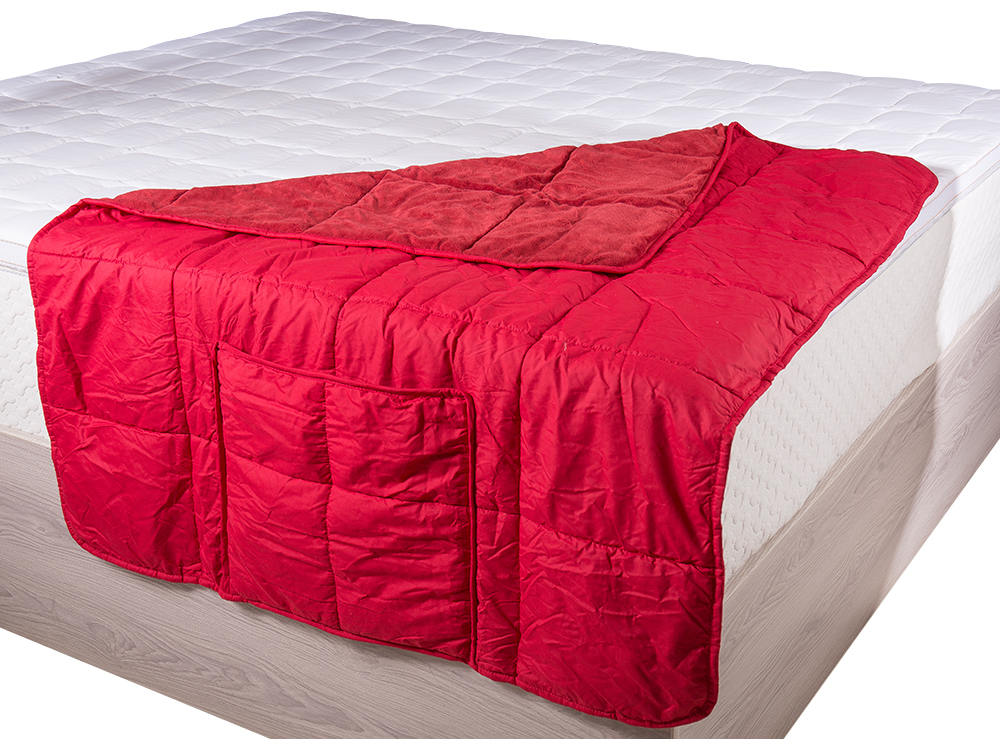
Functional Pocket Quilt
Advantages Over Conventional Single-Purpose Quilts
Many standard quilts are valued primarily for their filling weight and warmth. While these characteristics remain important, they do not address every need of contemporary consumers. A quilt that cannot be transformed, stored compactly, or integrated into living-room décor may have fewer practical applications. The Functional Pocket Quilt expands the product category by combining bedding performance with soft furnishing functionality.
One important advantage is space efficiency. A conventional quilt usually needs to be folded and stored in a cabinet, under-bed container, or linen closet. The Functional Pocket Quilt can remain in active use as a cushion when it is not spread out as bedding. This reduces the visual and physical burden of storage and makes the product more convenient in homes with limited space.
A second advantage is improved product utilization. Consumers may use a traditional quilt only at night or during cold weather. The pocket quilt can be used throughout the day as a blanket, cushion, decorative accent, or comfort accessory. More frequent use can increase the perceived value of the purchase and improve customer satisfaction.
A third advantage is merchandising flexibility. A conventional quilt is normally displayed in the bedding section. The pocket quilt can be shown on a bed, sofa, lounge chair, or travel display. Retailers can demonstrate its transformation from quilt to cushion, allowing customers to understand its functionality immediately. This creates stronger visual merchandising opportunities and can help distinguish the product from basic bedding products.
A fourth advantage is its suitability for gifting. Its multifunctional format gives it a practical and memorable character. It may be positioned as a housewarming gift, winter comfort gift, travel accessory, family gift, or promotional item. Because the product combines decoration and utility, it can appeal to a broad customer group.
Comfort Without Unnecessary Bulk
The Functional Pocket Quilt is designed around a balanced material structure. The 120gsm 3D fibre lining provides loft and softness, while the selected outer fabrics create a comfortable surface without making the product excessively rigid. This balance is important because an overly heavy quilt can be inconvenient to fold into a cushion, carry between rooms, or use during travel.
Lightweight construction also supports easier daily handling. Users can spread the quilt over a bed, fold it into a cushion, or move it from a bedroom to a living room without significant effort. For families, students, older users, and frequent travelers, simple handling can be a meaningful product advantage.
The flexible structure supports the pocket function as well. To transform into a cushion, the quilt must fold neatly and retain a comfortable shape. A product that is too stiff may be difficult to insert into the pocket, while one that lacks sufficient structure may not form an attractive cushion. The combination of soft fabrics and three-dimensional fiber is appropriate for achieving a practical balance between compressibility and form.
Because the product is available in a standard size of 140 x 200 centimeters, it provides useful personal coverage while remaining manageable when folded. This size can work well as a personal quilt, sofa blanket, guest blanket, or travel quilt. Custom sizing is also available, allowing buyers to develop versions for different bed dimensions, regional preferences, or specialized applications.
Manufacturing Expertise and Production Capability
The quality of a multifunctional quilt depends not only on its materials but also on the accuracy of its construction. The pocket must be correctly positioned and securely integrated with the quilt body. The layers must be handled consistently. The stitching must support repeated folding and unfolding. The surface fabrics must be assembled in a way that preserves appearance and comfort. These requirements call for organized production procedures and experienced personnel.
Tongxiang Xinlong Bedding Co., Ltd. was established in January 2002 and has developed extensive experience in the home textile industry. The company produces a broad range of products, including silk cotton quilts, chemical fiber quilts, pillows, cushions, bedspreads, travel quilts, mattress protectors, blankets, quilt and pillowcases, shower curtains, and curtains. This product diversity gives the company practical knowledge across multiple bedding and household textile categories.
The company is located in Longxiang Industrial Park, Wuzhen Town, Tongxiang City, Zhejiang Province, China. Its facility covers approximately 21,000 square meters, with a construction area of about 18,000 square meters. The scale of the site supports organized production, material management, equipment placement, quality inspection, and order coordination.
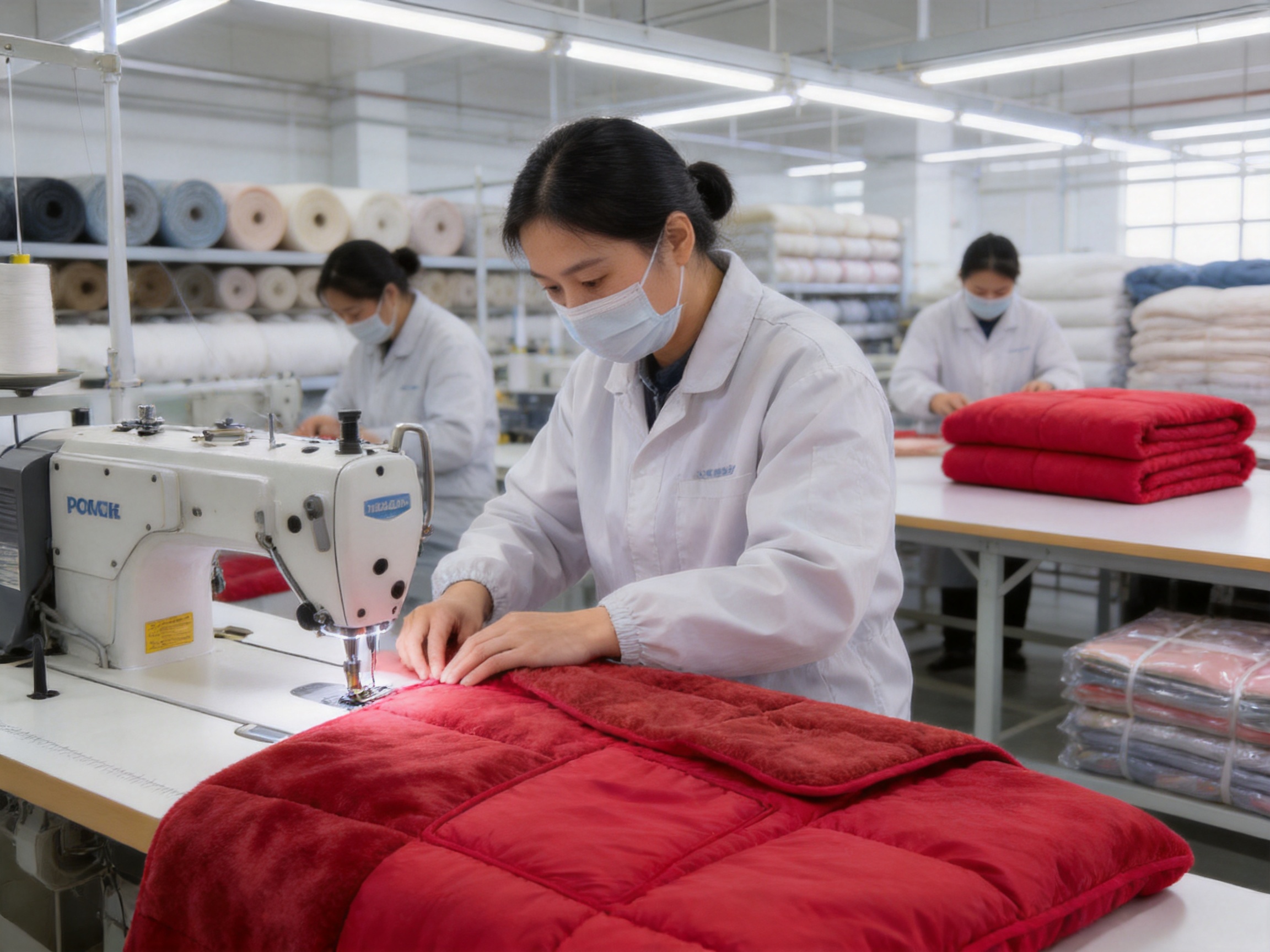
With more than 320 employees, the company has a substantial personnel base for production and operational activities. A large workforce can support different stages of manufacturing, including fabric preparation, cutting, quilting, sewing, filling, pocket construction, finishing, inspection, packing, and shipment preparation. Professional technical personnel also contribute to product development and manufacturing improvements.
The company is equipped with various advanced production machines and continues to invest in development and innovation. For a product such as the Functional Pocket Quilt, appropriate equipment can improve consistency in stitching, filling distribution, edge finishing, and overall product formation. Consistency is particularly important when producing customized orders or larger quantities for overseas markets.
Key Manufacturing Strengths
One manufacturing strength is the ability to coordinate multiple material layers. The quilt combines a fur front, a brushed-fabric back, and a three-dimensional fiber lining. Proper alignment and handling are necessary to maintain the intended feel and appearance. Experienced production teams can manage these layers through defined procedures that reduce variation between finished pieces.
Another strength is experience with different types of home textile products. Because the manufacturer produces quilts, pillows, cushions, mattress protectors, blankets, bedspreads, and related items, it has developed capabilities in sewing, filling, quilting, shaping, and finishing. These shared skills are valuable when producing a multifunctional item that combines features of a blanket and a cushion.
A further strength is product adaptability. The standard size is 140 x 200 centimeters, but the product can be customized. Customization may involve dimensions, colors, patterns, packaging, labeling, or other agreed specifications. The ability to support customized orders is important for distributors and brands seeking products that match their own market positioning.
Manufacturing experience also helps with repeat orders. Retail buyers need confidence that a successful product can be reproduced with consistent specifications in future seasons. A mature production organization, documented procedures, technical personnel, and quality systems can help support this continuity.
Quality Management and International Certifications
Quality management is a central part of the company’s operating philosophy. Tongxiang Xinlong Bedding Co., Ltd. states that quality is the life of the enterprise. This principle is reflected in its emphasis on standardized operating procedures, employee technical development, and continuous improvement of product quality.
The company has passed international certifications and management standards including ISO 9001, ISO 14001, OEKO-TEX Standard 100, OEKO-TEX STeP, GRS, and BSCI. Each certification or system relates to a different aspect of responsible and organized business operation.
ISO 9001 is associated with quality management systems. In practical manufacturing terms, a quality management system helps establish procedures for production control, documentation, corrective action, customer requirements, and continuous improvement. For a pocket quilt, such a framework can support consistency in materials, construction, inspection, and order fulfillment.
ISO 14001 relates to environmental management systems. Its relevance is especially clear in modern textile manufacturing, where buyers and consumers increasingly consider resource use, waste management, production impacts, and environmental responsibility. An environmental management approach helps a manufacturer identify and manage relevant operational issues.
OEKO-TEX Standard 100 is widely associated with testing textile products for harmful substances. For bedding and household textiles that come into close contact with users, attention to material safety is highly important. The OEKO-TEX STeP certification relates to sustainable textile and leather production processes, supporting a broader approach to responsible manufacturing.
GRS, or the Global Recycled Standard, is connected with recycled materials and responsible processing requirements where applicable. BSCI is associated with social compliance and responsible workplace practices. Together, these certifications and systems demonstrate that the company’s capabilities extend beyond basic product assembly to include quality, environmental, material, and social considerations.
Certifications do not replace product-specific testing or buyer requirements, and final specifications should always be confirmed for each order. Nevertheless, recognized management and compliance systems can provide a stronger foundation for cooperation with international customers and professional procurement teams.
Process Control from Material Preparation to Final Packing
The production of a high-quality pocket quilt begins with material preparation. Fabrics and filling materials must be received, checked, and organized according to the product specification. The front fabric, back fabric, and lining must correspond to the agreed composition, weight, color, and texture. Proper preparation reduces the possibility of material mismatches during assembly.
Cutting is another important stage. The fabric panels must be cut to the required dimensions while allowing for seams, edge finishing, and pocket construction. Accurate cutting helps ensure that the quilt remains symmetrical and that the pocket aligns with the folded form. For customized dimensions, cutting control becomes even more important because the production team must translate the buyer’s specifications into repeatable patterns.
During assembly, the outer fabrics and lining are brought together. The filling must be distributed so that the quilt provides an even hand feel and attractive appearance. Uneven filling can create thin areas, bulky sections, or an irregular cushion shape. Organized production procedures and appropriate machinery help improve the consistency of this stage.
Quilting or securing operations help maintain the relationship between the outer layers and the lining. The specific construction method may vary according to the final design and buyer requirements, but the objective is to keep the layers stable during normal use, folding, and storage. Since the product is intended to change form repeatedly, construction strength and flexibility are essential.
The pocket is a defining component of the product. It must be integrated in a position that allows the quilt to fold into a practical cushion. The pocket opening should be sufficiently functional for insertion and removal, while the surrounding seams should support regular handling. Careful sewing and inspection are needed to maintain a clean appearance and dependable use.
Finishing includes checking edges, trimming loose threads, reviewing seams, and confirming the overall appearance. The completed quilt should be evaluated in both unfolded and folded forms. Inspectors can verify whether it lies properly as a blanket and forms a balanced cushion when placed inside the pocket.
Finally, the product is folded, packed, labeled, and prepared for shipment according to the customer’s requirements. Packaging is particularly important for a multifunctional quilt because it should communicate the product’s identity and protect the soft surfaces during transportation and storage.
Customization Opportunities for International Buyers
The default size of the Functional Pocket Quilt is 140 x 200 centimeters, but customization is available. This flexibility allows buyers to adapt the product to different markets and use cases. A retailer may require a smaller size for children, a larger size for a single bed, or a specialized dimension for travel and hospitality applications.
Color customization is also valuable. The colorful brushed back can be developed to match seasonal collections, brand palettes, interior design trends, or customer preferences. A manufacturer with experience in home textile production can coordinate fabric selection and production planning according to the buyer’s approved samples and specifications.
Buyers may also consider packaging customization. The product can be positioned as a practical household item, an upscale comfort product, a promotional gift, or a travel accessory. Packaging design, folding presentation, labeling, and carton configuration can help communicate the intended market position.
Private-label buyers may request their own branding elements, subject to technical review and order requirements. Retailers and distributors can use customized product information to create a more distinctive assortment rather than competing only on standard specifications.
Customization should be discussed at the quotation and sampling stages. Important details include fabric composition, color standards, size tolerance, filling weight, stitching requirements, pocket dimensions, packaging, labeling, order quantity, and delivery schedule. Clear technical communication helps reduce misunderstandings and supports a smoother manufacturing process.
Applications in Residential and Commercial Settings
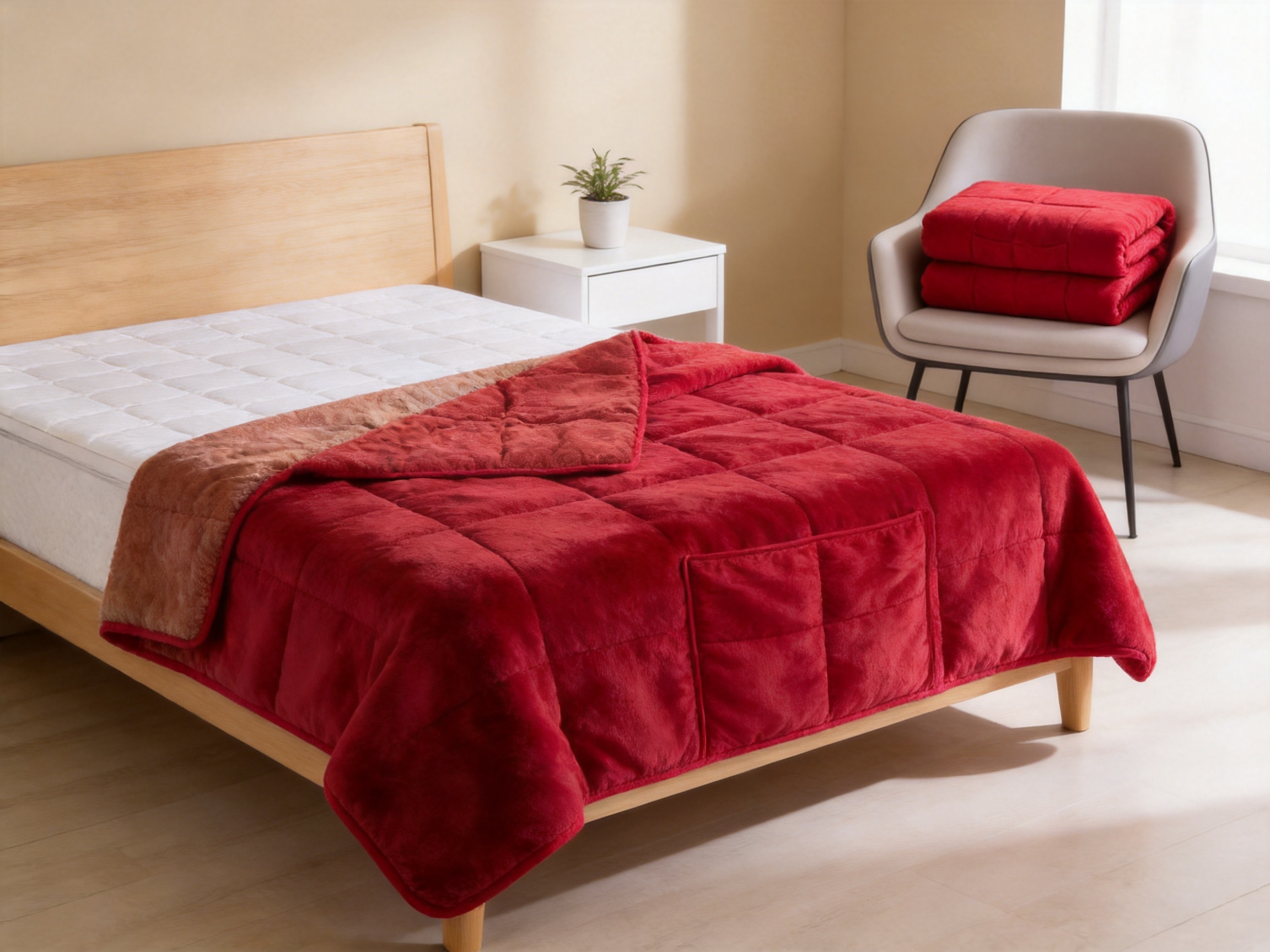
In residential bedrooms, the quilt can be placed at the foot of the bed as a decorative layer or used as an additional blanket when temperatures fall. Its soft surface makes it suitable for relaxing and resting, while its foldable format allows it to become a cushion during the day.
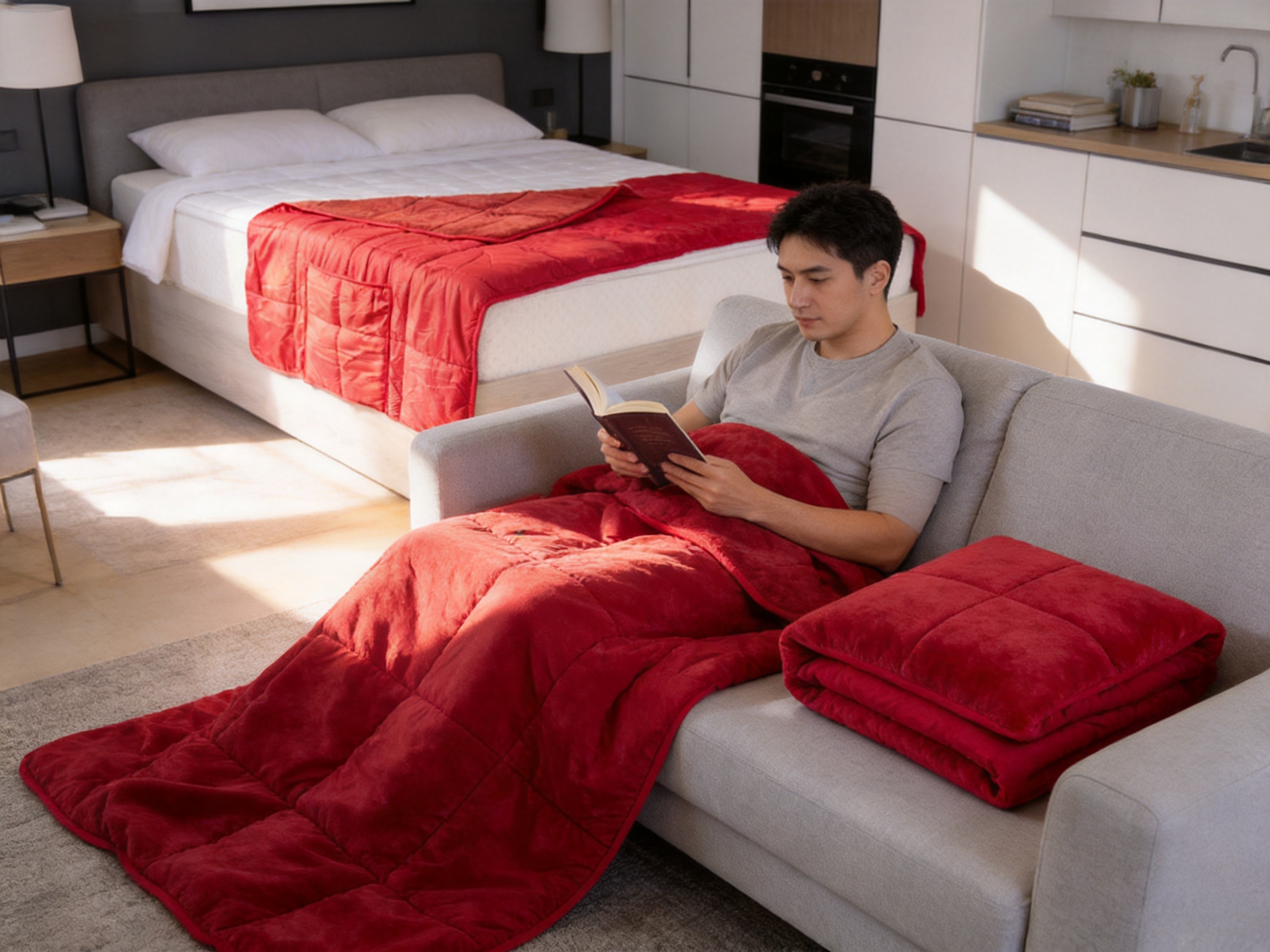
In living rooms, the product can be kept on a sofa or armchair. When folded into its pocket, it works as a decorative cushion. When needed, it can be opened into a blanket for reading, watching television, or taking a nap. This makes the product a natural fit for homes where comfort and visual organization are equally important.
In guest rooms, the quilt can serve as an extra layer of bedding without occupying excessive storage space. After use, it can be folded into a cushion and left available for guests. This is practical for households that need flexible bedding but do not want to dedicate large storage areas to infrequently used quilts.
In student housing and compact apartments, multifunctionality is especially valuable. A single product can support both sleeping and sitting areas. Students and young professionals can keep the folded quilt on a chair or sofa during the day and unfold it at night or during colder periods.
For travel, the quilt can be used in vehicles, recreational spaces, guest accommodations, or temporary sleeping areas. Its manageable size and flexible construction make it easier to transport than bulky bedding products. The cushion form may also be useful as a soft support during journeys, although the precise travel application should be selected according to user needs.
Hotels, serviced apartments, holiday rentals, and guesthouses may also find the product useful. It can enhance the appearance of a room while providing a practical comfort layer. The ability to fold into a cushion may simplify room presentation and storage between uses.
Retail and Merchandising Benefits
From a retail perspective, the Functional Pocket Quilt has a clear demonstration advantage. Staff can show customers how the product changes from a full-size quilt into a compact cushion. This transformation creates an immediate visual explanation of its added value and can help the product stand apart from ordinary blankets.
The product can be displayed in several ways. On a bed, it communicates warmth and bedding comfort. On a sofa, it demonstrates the cushion function. In a seasonal display, it can represent a practical cold-weather accessory. In a travel or gift section, its compact folded form can attract customers who may not initially be looking for a quilt.
Its broad application range can also support cross-category merchandising. A retailer may place it near cushions, throws, quilts, travel accessories, dormitory products, or seasonal home goods. This flexibility can increase exposure and create additional purchasing opportunities.
The product is also suitable for e-commerce presentation. Product pages can show the unfolded form, folded cushion form, surface textures, fabric details, dimensions, and lifestyle applications. Clear photography and concise descriptions can help online customers understand how the pocket works and why it is more versatile than a standard quilt.
For wholesale buyers, the product can be included in different collections without changing its fundamental construction. For example, a retailer may offer a neutral home collection, a colorful youth collection, a winter comfort collection, or a travel-oriented assortment. The same multifunctional concept can support different branding and visual directions.
Why Manufacturing Location and Experience Matter
Tongxiang is known as an important textile production area, and the manufacturer’s location in Wuzhen, Tongxiang City, Zhejiang Province, places it within an established textile industry environment. Access to a textile-oriented manufacturing network can support material sourcing, technical cooperation, production development, and industry knowledge.
Since its establishment in 2002, Tongxiang Xinlong Bedding Co., Ltd. has developed through changing consumer expectations and evolving home textile markets. Long-term industry experience provides valuable understanding of fabric behavior, filling materials, product construction, packaging, and international customer requirements.
The company’s broad product portfolio is another important strength. Experience in quilts, pillows, cushions, mattress protectors, blankets, bedspreads, curtains, and other household textile products allows the company to understand how different categories relate to one another. This can support customers who want to source multiple products from one manufacturing partner.
A single-source relationship may simplify communication, sampling, quality coordination, and shipment planning. Buyers developing a broader bedding range can discuss the Functional Pocket Quilt alongside pillows, cushions, blankets, mattress protectors, or other complementary items. This creates potential efficiency for customers seeking coordinated product lines.
The company’s more than 320 employees and substantial facility provide a foundation for organized production. Capacity should always be confirmed according to order size, material availability, customization, and delivery requirements, but the company’s established operating structure is appropriate for serving professional domestic and international buyers.
Product Positioning in the Modern Home Textile Market
The Functional Pocket Quilt fits several major trends in home textiles. One is multifunctionality. Consumers are increasingly interested in products that perform more than one role and provide greater value per purchase. Another is space efficiency, especially as urban homes and rental properties become more compact. A third is comfort-focused design, where soft textures and welcoming surfaces are central to the consumer experience.
The product also aligns with the growing connection between bedding and interior decoration. A quilt is no longer viewed only as a hidden sleeping accessory. It may be placed on a sofa, folded at the end of a bed, or used as a visible decorative layer. The fur front and colorful brushed back give the product enough visual character to participate in room styling.
Practical storage is another relevant market consideration. Products that can be folded, compressed, or transformed into attractive forms are appealing to consumers who want to reduce clutter. The integrated pocket directly addresses this preference by allowing the quilt to become a cushion instead of remaining as a loose folded textile.
For brands and distributors, the product offers a useful combination of broad appeal and customization potential. It can be sold as an everyday home textile or developed into a more specific collection through color, size, packaging, and branding decisions. This adaptability can help buyers respond to different market segments without changing the basic product concept.
Care, Presentation, and Buyer Communication
Product care instructions should be confirmed according to the final fabric composition, filling, construction, and labeling requirements. Retailers should communicate appropriate care information clearly so that customers can maintain the quilt’s softness, shape, and appearance. The finished product should be handled according to the manufacturer’s recommended washing, drying, and storage instructions.
When presenting the item, retailers should explain that the pocket is an intentional functional feature rather than a simple storage fold. Demonstrating the transformation can help customers appreciate the design. It is useful to show the complete quilt, the folding sequence, and the finished cushion form in both physical displays and digital content.
Product descriptions should highlight the ultra-soft fur fabric, colorful brushed reverse, 3D fibre lining, 140 x 200 centimeter default size, multifunctional format, and customization availability. Buyers should avoid making claims that are not supported by the final specification, particularly regarding temperature rating, washing performance, or medical benefits.
For wholesale orders, technical documents and approval samples should be used to confirm all relevant details. These may include color references, fabric weights, filling specifications, size measurements, pocket dimensions, seam construction, labels, packaging, and inspection requirements.
Quality Considerations for Buyers
Buyers evaluating the Functional Pocket Quilt should review the softness and appearance of the fur front, the hand feel and color consistency of the brushed back, and the loft and distribution of the 3D fibre lining. These characteristics influence the customer’s first impression and long-term satisfaction.
The pocket should be checked in both empty and filled conditions. It should allow the quilt to be folded into a cushion without excessive difficulty, and the completed cushion should maintain a useful shape. Seams around the pocket deserve particular attention because they may experience repeated stress during folding and unfolding.
Edge finishing should be clean and secure. Loose threads, uneven seams, or irregular corners can affect both appearance and durability. The quilt should also be reviewed when fully unfolded to confirm that the panels align correctly and that the surface remains attractive across the entire product.
For customized orders, buyers should approve a production sample before bulk manufacturing. The sample can confirm fabric color, texture, dimensions, filling feel, pocket performance, labels, folding method, and packaging. This approval process is especially important when the item is being developed for a private label or a specific retail program.
Environmental and Social Responsibility
Modern bedding procurement increasingly considers environmental and social performance in addition to product quality and price. The manufacturer’s ISO 14001, OEKO-TEX STeP, GRS, and BSCI-related credentials demonstrate attention to environmental management, sustainable textile production, recycled material standards where applicable, and social compliance.
Responsible manufacturing is a continuing process rather than a single product feature. It involves management systems, employee practices, material controls, production procedures, and ongoing improvement. For professional buyers, these systems can support supplier evaluation and contribute to broader responsible sourcing programs.
Environmental considerations may include the efficient use of textile materials, waste handling, production energy, packaging choices, and the selection of fabrics and fillings. The exact environmental profile of each Functional Pocket Quilt depends on the final materials and production specifications, so buyers should confirm order-specific details with the manufacturer.
Social responsibility is also relevant to long-term supplier relationships. Ethical workplace practices, employee training, standardized procedures, and safe production environments can support stable manufacturing performance. The company’s commitment to safety production standardization since 2016 reflects its attention to workplace and operational safety.
Ordering and Cooperation Considerations
Potential buyers should begin by defining the target market and intended use. A retailer selling the product as a winter home accessory may select a different color range and packaging style from a hotel supplier or a travel goods distributor. Clarifying the market early helps guide material selection, size, presentation, and quantity planning.
The next step is to confirm the technical specification. The current product uses a 140 x 200 centimeter default size, an ultra-soft fur front, a 95gsm colorful brushed back, and a 120gsm 3D fibre lining. Any changes to these specifications should be recorded in the quotation, sample, or purchase documentation.
Sample evaluation should cover both tactile and functional performance. Buyers should feel the fabric, inspect the stitching, fold the quilt into the pocket, assess the cushion form, and review the product after unfolding. If the item is intended for repeated commercial use, buyers may also establish internal durability and inspection criteria.
Packaging and shipment planning should be discussed before production. The folded cushion format may affect carton dimensions, unit packing, display presentation, and warehouse handling. Clear packing instructions can help maintain consistency throughout the supply chain.
Long-term cooperation can be supported by regular communication, documented approvals, production updates, and post-delivery feedback. Because the company produces a broad range of household textiles, buyers may also explore coordinated product development for pillows, blankets, mattress protectors, cushions, and related bedding items.
Frequently Asked Questions
What is a Functional Pocket Quilt?
A Functional Pocket Quilt is a multifunctional quilt designed to be used as a quilt or blanket and then folded into an integrated pocket to form a cushion. This allows one product to support bedding, relaxation, decoration, and space-saving storage needs.
What is the standard size?
The default size is 140 x 200 centimeters. Customized sizes can be discussed according to the intended market, application, bed dimensions, or buyer requirements.
What fabrics are used?
The front uses ultra-soft fur fabric, while the back uses 95gsm colorful brushed fabric. The lining contains 120gsm 3D fibre to support softness, loft, and flexible handling.
Can the quilt be used as a cushion?
Yes. The product includes a pocket construction that allows the quilt to be folded into a cushion. The cushion can be placed on a sofa, chair, bed, or other suitable surface.
How is this product different from a standard blanket?
A standard blanket is generally used as a covering and does not normally include a pocket for transformation into another product form. The Functional Pocket Quilt combines a blanket or quilt function with a cushion function, making it more versatile and easier to store attractively.
Is the product suitable for retail and wholesale orders?
Yes. Its multifunctional design is suitable for retail displays, wholesale assortments, seasonal collections, gift programs, hospitality applications, and customized private-label projects. Order quantities, packaging, and specifications should be confirmed with the manufacturer.
Can colors and packaging be customized?
Customization can be discussed for colors, dimensions, packaging, labeling, and other agreed requirements. Buyers should provide clear specifications and approve samples before bulk production.
What manufacturing experience does the supplier have?
Tongxiang Xinlong Bedding Co., Ltd. was established in January 2002 and produces a wide range of home textile products. Its product categories include quilts, pillows, cushions, bedspreads, travel quilts, mattress protectors, blankets, curtains, and other household textiles.
What certifications and management systems does the company have?
The company has passed or maintains certifications and systems including ISO 9001, ISO 14001, OEKO-TEX Standard 100, OEKO-TEX STeP, GRS, and BSCI. These relate to quality management, environmental management, textile safety, sustainable production, recycled material standards where applicable, and social compliance.
Where is the manufacturer located?
The company is located at No. 268 Xingfa Road, Wuzhen, Tongxiang City, Jiaxing, Zhejiang Province, China. Its facility covers approximately 21,000 square meters, with a construction area of approximately 18,000 square meters.
What should buyers confirm before placing an order?
Buyers should confirm size, fabric specifications, filling, colors, pocket construction, stitching, labels, packaging, quantity, inspection requirements, delivery schedule, and any customization. A pre-production sample is recommended for customized or private-label orders.
Conclusion
The Functional Pocket Quilt combines softness, warmth, visual appeal, and practical versatility in one adaptable home textile product. Its ultra-soft fur front creates a comfortable tactile experience, the colorful brushed reverse adds design flexibility, and the 120gsm 3D fibre lining supports a lightweight yet cozy structure. Most importantly, the integrated pocket transforms the quilt into a cushion, extending its usefulness beyond the bedroom.
This multifunctional format gives the product advantages over conventional single-purpose quilts. It saves space, supports more frequent use, creates stronger retail presentation opportunities, and fits a broad range of residential, travel, hospitality, and gifting applications. The default 140 x 200 centimeter size is practical for personal use, while customization allows buyers to develop versions for different markets.
The product is supported by the manufacturing experience and production capabilities of Tongxiang Xinlong Bedding Co., Ltd. Since 2002, the company has developed a broad home textile portfolio, a substantial production facility, a workforce of more than 320 employees, professional technical personnel, advanced equipment, and internationally recognized management and compliance systems.
For retailers, distributors, hospitality buyers, and private-label brands, the Functional Pocket Quilt offers a distinctive combination of comfort and utility. It is not simply a quilt that can be folded for storage; it is a deliberately designed product that changes function according to the user’s needs. With suitable customization, careful quality control, and clear product presentation, it can become a valuable addition to modern home textile collections.
References
1. Tongxiang Xinlong Bedding Co., Ltd. Product Specification: Functional Pocket Quilt.
2. Tongxiang Xinlong Bedding Co., Ltd. Corporate Information and Manufacturing Profile.
3. International Organization for Standardization. ISO 9001 Quality Management Systems: General Principles and Requirements.
4. International Organization for Standardization. ISO 14001 Environmental Management Systems: Requirements and Guidance for Use.
5. OEKO-TEX Association. Standard 100 and STeP Textile Safety and Sustainable Production Principles.
6. Global Recycled Standard. Recycled Material and Responsible Processing Framework.
7. Business Social Compliance Initiative. Social Compliance and Responsible Supply Chain Principles.
8. General textile manufacturing principles for microfiber fabrics, brushed fabrics, synthetic fiber fillings, quilting, sewing, and household bedding production.

 +86-573-88798028
