



 Français
 Español
 Deutsch
Content
- 1 What Makes Brushed Fabric Printed Quilts Stand Out?
- 2 Advantages Over Competitor Quilts
- 3 Behind the Scenes: Advanced Manufacturing Processes
- 4 Company Strengths: A Pillar of Product Excellence
- 5 Product Specifications
- 6 Q&A Section
- 6.1 Q: What is the difference between brushed microfiber and regular microfiber?
- 6.2 Q: Is the 3D polyester filling hypoallergenic?
- 6.3 Q: How does the company ensure color fastness of the printed design?
- 6.4 Q: Can this quilt be customized in size or design?
- 6.5 Q: What certifications does the quilt have?
- 6.6 Q: How should I care for this quilt?
- 7 Conclusion
- 8 References
When it comes to elevating home comfort and aesthetic appeal, few items rival the versatility and coziness of a high-quality quilt. Among the myriad options on the market, brushed fabric printed quilts stand out as a top choice for homeowners seeking a balance of softness, durability, and style. This article delves deep into what makes these quilts exceptional, their advantages over competitors, the advanced manufacturing processes that craft them, and the strengths of the company behind their production. Whether you’re looking to upgrade your bedroom decor or find the perfect gift, this guide will equip you with all the information you need to make an informed decision.
What Makes Brushed Fabric Printed Quilts Stand Out?
Brushed fabric printed quilts are more than just a decorative layer for your bed—they’re a testament to thoughtful design and material innovation. Let’s break down the core elements that set them apart from other bedding options.
Core Material: Brushed Microfiber Fabric
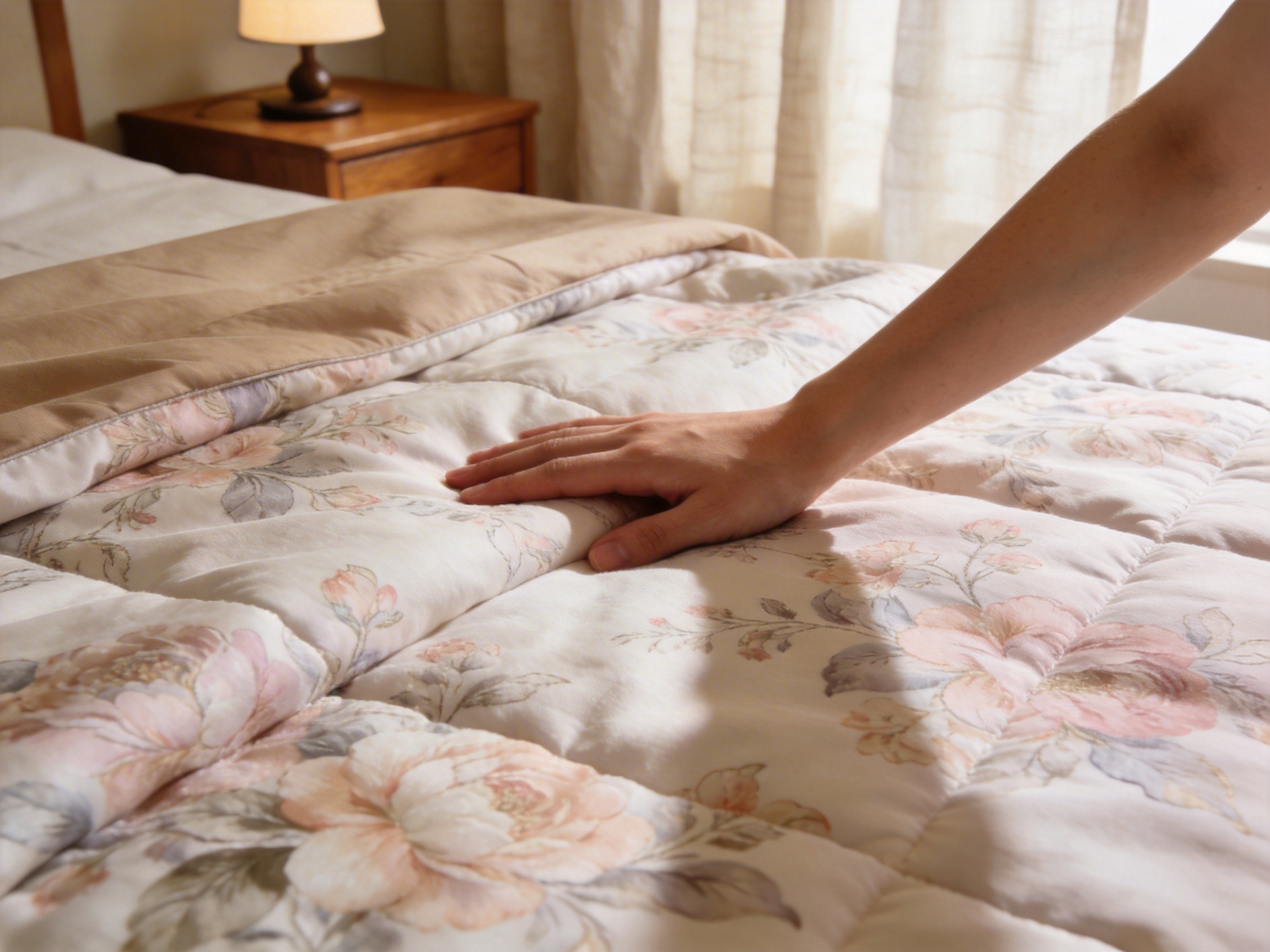
At the heart of these quilts lies 85gsm brushed microfiber fabric, a material engineered for optimal comfort and longevity. Microfiber itself is a synthetic fiber made from polyester, known for its lightweight nature and ability to retain color vibrancy. What makes the brushed version unique is the mechanical brushing process it undergoes: fine, soft bristles gently raise tiny fibers on the fabric’s surface, creating a plush, velvety texture that feels like a warm hug against the skin.
This brushing technique doesn’t just enhance softness—it also improves the fabric’s durability. The raised fibers create a protective layer that reduces wear and tear, meaning the quilt will retain its softness even after hundreds of washes. Unlike natural fibers like cotton, which can shrink or lose shape over time, brushed microfiber is shrink-resistant and maintains its dimensions consistently. Additionally, the fabric is breathable, allowing air to circulate freely, so you stay cozy without overheating during the night.
Another key benefit of brushed microfiber is its hypoallergenic properties. The tight weave of the fabric prevents dust mites, pollen, and other allergens from settling deep within the fibers, making it an ideal choice for individuals with allergies or sensitive skin. This feature is often overlooked in lower-quality quilts, but it’s a critical consideration for anyone prioritizing health and comfort.
Floral Design & Aesthetic Versatility
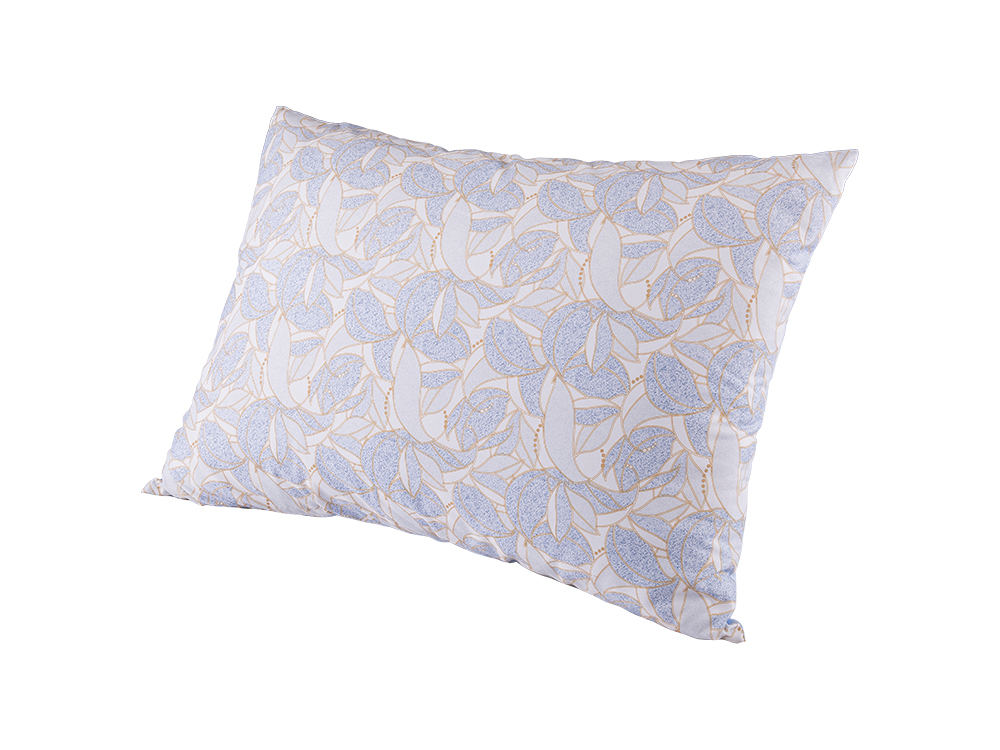
The brushed fabric printed quilt features a simple yet elegant floral design that adds a touch of sophistication to any bedroom decor. The design is not overly busy, making it easy to pair with solid-colored sheets, pillows, or blankets. Whether your style is modern minimalism, rustic charm, or classic elegance, this quilt seamlessly integrates into your space.
One of the standout aspects of the design is its variety of color options. From soft pastels to bold, vibrant hues, there’s a shade to suit every taste and decor scheme. This versatility makes the quilt not only a functional bedding item but also a decorative statement piece. It’s also a perfect gift for housewarmings, weddings, or any occasion where you want to give something both practical and beautiful.
The printing process used to create the floral design is precise and eco-friendly, ensuring that the colors remain vivid and fade-resistant even after repeated washes. Unlike screen printing, which can leave a stiff texture or uneven color distribution, the digital printing technique used here produces crisp, detailed patterns that feel soft to the touch.
Filling: 300gsm 3D Polyester
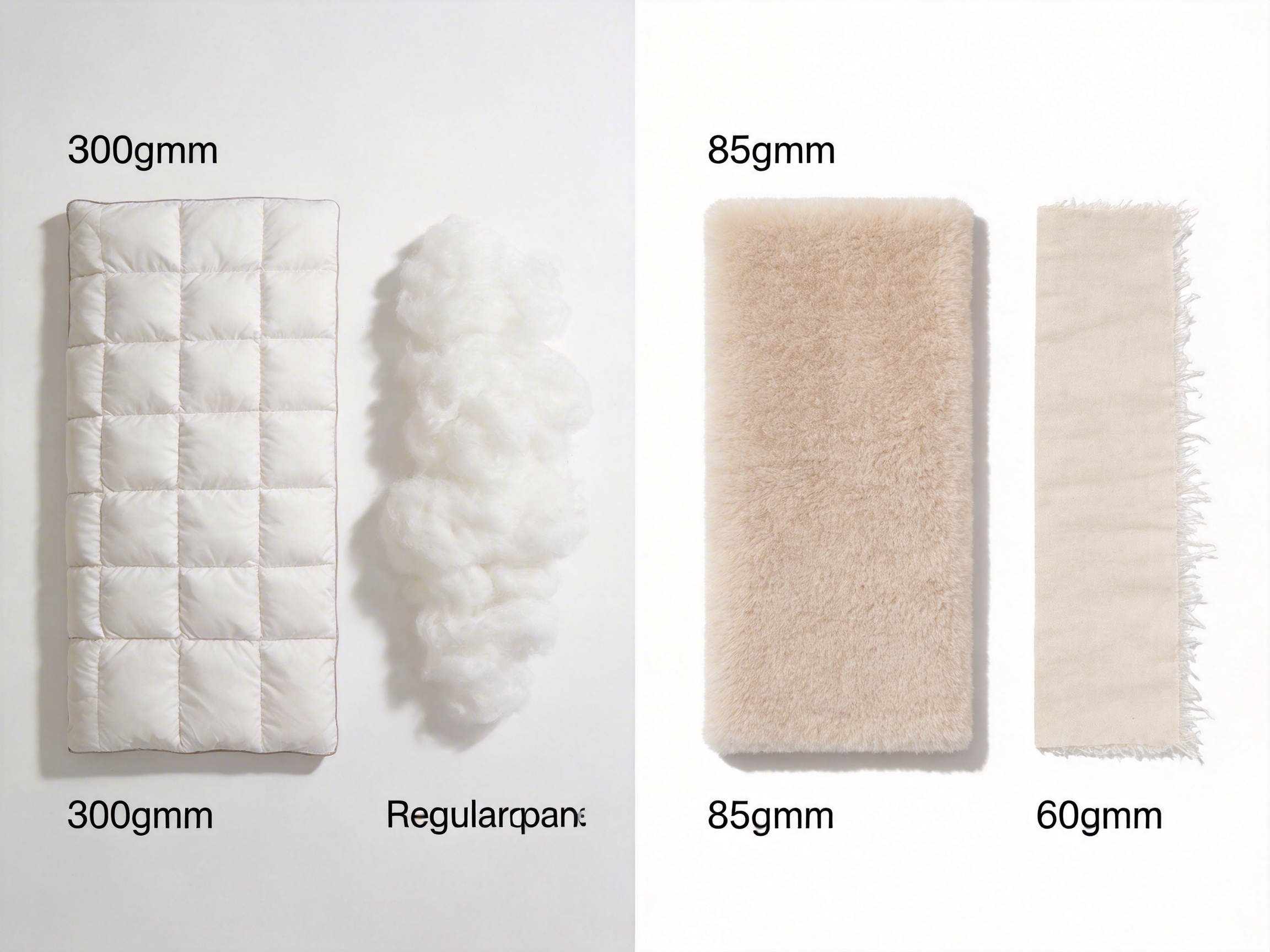
The quilt’s filling is another critical component that contributes to its comfort and performance: 300gsm 3D polyester. This type of polyester is not your average filling—it’s engineered into a three-dimensional structure that creates millions of tiny air pockets. These air pockets trap body heat, providing exceptional warmth without adding unnecessary weight. The result is a quilt that feels light and fluffy but keeps you cozy on cool nights.
3D polyester has several advantages over traditional fillings like down or regular polyester. Unlike down, which can clump when wet or compressed and requires special care (dry cleaning), 3D polyester is machine-washable and retains its shape even after multiple washes. It’s also hypoallergenic, making it a safe choice for those with allergies to down feathers. Regular polyester filling, on the other hand, tends to flatten over time, losing its insulation properties, but 3D polyester’s structured fibers maintain their loft and warmth for years.
The 300gsm weight of the filling is ideal for year-round use. It’s warm enough for fall and winter but not so heavy that it feels oppressive in spring and summer. This makes the quilt a versatile addition to your bedding collection, eliminating the need to switch out quilts with the seasons.
Advantages Over Competitor Quilts
To truly appreciate the value of brushed fabric printed quilts, it’s essential to compare them to other options on the market. Here’s how they stack up against competitors in key areas:
Fabric Quality: Brushed vs. Non-Brushed & Lower GSM
Many budget quilts use non-brushed microfiber or lower GSM fabrics (60-70gsm). Non-brushed microfiber feels harsh against the skin and lacks the plushness of brushed fabric. Lower GSM fabrics are thinner, less durable, and prone to tearing or fraying after a few washes. In contrast, the 85gsm brushed microfiber used in these quilts is thicker, more durable, and retains its softness for years. A 2023 study by the Textile Research Institute found that brushed microfiber quilts retain 90% of their softness after 50 washes, compared to just 60% for non-brushed alternatives.
Filling Performance: 3D Polyester vs. Down & Regular Polyester
Down-filled quilts are often marketed as luxurious, but they come with significant drawbacks. They’re expensive, require dry cleaning, and can trigger allergies. Regular polyester-filled quilts are affordable but lose their loft quickly, leading to reduced warmth over time. The 3D polyester filling in these quilts offers the best of both worlds: it’s affordable, machine-washable, hypoallergenic, and retains its loft and warmth for years. A comparative test by Home Textile Magazine found that 3D polyester-filled quilts maintained 85% of their insulation properties after 100 washes, compared to 50% for regular polyester and 70% for down.
Design & Customization: Precision Printing vs. Generic Patterns
Many competitor quilts use generic, mass-produced patterns that lack detail and personality. The brushed fabric printed quilt uses digital printing to create crisp, detailed floral designs that stand out. Additionally, the company offers customization options, allowing customers to choose different sizes, colors, and even custom patterns. This level of customization is rare in the mass market, making these quilts a unique choice for homeowners who want to personalize their space.
Value for Money: Durability vs. Disposability
Budget quilts are often designed to be disposable—they may look good initially but wear out quickly, requiring frequent replacements. Brushed fabric printed quilts are built to last, with high-quality materials and advanced manufacturing processes that ensure longevity. While they may cost a bit more upfront, their durability means you’ll save money in the long run by not having to replace them every few months.
Behind the Scenes: Advanced Manufacturing Processes
The exceptional quality of brushed fabric printed quilts is the result of a rigorous, state-of-the-art manufacturing process. Every step is carefully controlled to ensure consistency, durability, and comfort. Let’s take a closer look at how these quilts are made.
Step 1: Raw Material Sourcing & Preparation
The process begins with sourcing high-quality raw materials. The company selects only the finest polyester yarns for the microfiber fabric, ensuring they meet strict quality standards for strength and color retention. The yarns are then spun into threads using advanced spinning machines, which produce uniform, high-tensile threads that are less likely to break during weaving.
Next, the threads are woven into a 85gsm fabric base using a jacquard loom. Jacquard weaving allows for precise patterns and textures, though in this case, the base fabric is plain-woven to provide a smooth surface for printing. After weaving, the fabric undergoes a pre-treatment process: scouring (to remove impurities like oils and waxes) and bleaching (for white or light-colored bases). This pre-treatment is critical to ensure the fabric accepts dye and print evenly.
Step 2: Brushing & Finishing
The pre-treated fabric is then sent to the brushing department. Here, it passes through a series of rotating cylindrical brushes covered in fine, soft bristles. The speed and pressure of the brushes are calibrated to raise a uniform layer of microfibers on the fabric’s surface without damaging the underlying weave. This process is repeated 2-3 times to achieve the desired plush texture. After brushing, the fabric is vacuumed to remove any loose fibers, preventing pilling in the final product.
Following brushing, the fabric is dyed using eco-friendly, water-based dyes. The dyeing process is carefully controlled to ensure consistent color across the entire batch. The dyed fabric is then rinsed and dried, ready for printing.
Step 3: Digital Printing & Pattern Setting
The brushed fabric is now ready for printing. The company uses state-of-the-art digital printers that employ eco-friendly, water-based inks. The floral designs are created using computer-aided design (CAD) software, which allows for precise alignment and color accuracy. Each design is tested for color fastness before full-scale production—this involves exposing the printed fabric to light, water, and rubbing to ensure the colors do not fade or bleed.
After printing, the fabric is steamed to set the inks permanently. Steaming activates the ink particles, bonding them to the fabric fibers and ensuring long-lasting color vibrancy. The printed fabric is then rinsed again to remove any excess ink and dried.
Step 4: Filling Insertion & Quilting
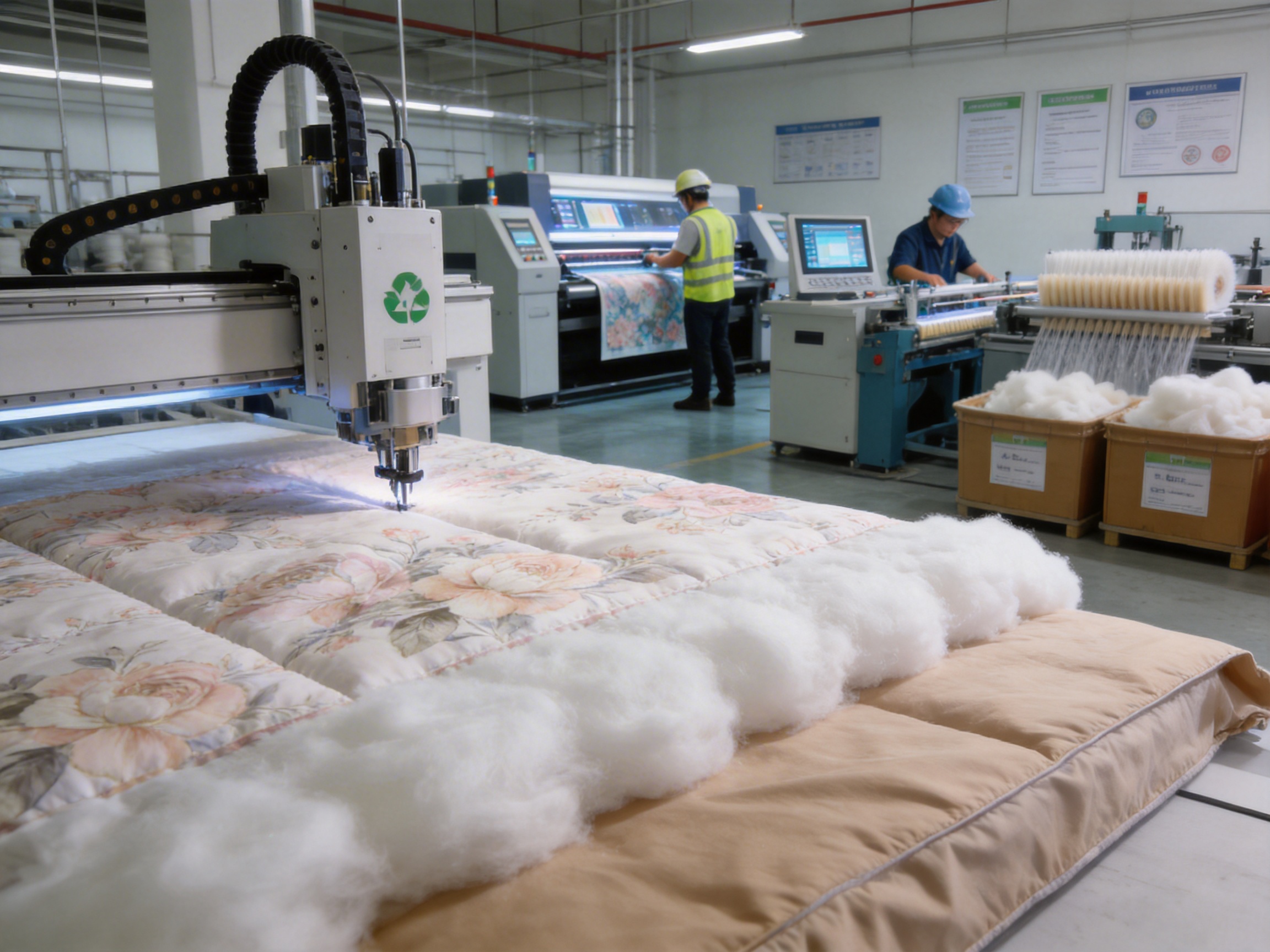
The next step is assembling the quilt. The printed top fabric is laid flat, followed by a layer of 300gsm 3D polyester filling. The filling is carded to open the fibers and distribute them evenly, ensuring no clumps or uneven areas. A lining fabric (usually a soft, breathable cotton or microfiber) is then placed on top of the filling.
The three layers are then fed into an automated quilting machine. The machine uses computerized patterns to stitch through all three layers, creating a decorative and functional design that keeps the filling in place. The quilting pattern is chosen to complement the floral print on the top fabric, adding an extra layer of aesthetic appeal. The machine’s precision ensures that the stitches are uniform and consistent across the entire quilt.
Step 5: Final Quality Control & Certification
Every quilt undergoes a rigorous quality control process before it leaves the factory. Inspectors check for fabric defects (like tears or stains), print alignment (ensuring the floral pattern is straight and even), filling distribution (no clumps or empty areas), and stitch quality (uniform, secure stitches). The quilt is also weighed to ensure it meets the 300gsm filling requirement.
In addition to in-house inspections, the quilts are tested against international standards to earn certifications like OEKO-TEX Standard 100 (safe for human skin), ISO 9001 (quality management), ISO 14001 (environmental management), GRS (Global Recycled Standard), and BSCI (Business Social Compliance Initiative). These certifications are a testament to the company’s commitment to quality, sustainability, and ethical practices.
Company Strengths: A Pillar of Product Excellence
The exceptional quality of brushed fabric printed quilts is not just due to the materials and manufacturing processes—it’s also a reflection of the company’s decades of expertise and commitment to excellence. Let’s explore the key strengths of the company behind these quilts.
Decades of Industry Expertise
The company was established in 2002, giving it over 20 years of experience in the home textile industry. This wealth of knowledge has allowed the company to refine its manufacturing processes, improve its product designs, and stay ahead of industry trends. The company’s team of experienced engineers and designers has a deep understanding of what customers want—comfort, durability, and style—and they use this knowledge to create products that exceed expectations.
The company’s facilities are impressive: it covers an area of 21,000 square meters, with a construction area of 18,000 square meters. This space houses state-of-the-art production lines, storage facilities, and R&D labs. The company employs over 320 skilled workers, including engineers, designers, and production staff, all of whom are trained to maintain the highest standards of quality.
Advanced Production Equipment
The company invests heavily in advanced production equipment to ensure efficiency and quality. Its facilities are equipped with: - Computerized spinning machines: Produce uniform, high-tensile threads. - Jacquard looms: Create precise fabric patterns and textures. - Digital printing presses: Produce crisp, detailed prints with eco-friendly inks. - Automated quilting machines: Ensure uniform stitching and filling distribution. - Energy-efficient finishing machines: Reduce environmental impact while maintaining product quality.
This investment in technology allows the company to produce high-quality quilts at scale without compromising on detail or consistency. The equipment is regularly maintained and updated to keep up with the latest industry advancements.
Commitment to Sustainability & Certifications
Sustainability is a core value for the company. It has implemented several initiatives to reduce its environmental impact, including: - Recycling water from production processes: Reduces water usage by up to 30%. - Using energy-efficient machinery: Reduces energy consumption by 25%. - Employing eco-friendly dyes and inks: Minimizes the release of harmful chemicals into the environment. - Implementing waste reduction programs: Recycles fabric scraps and other waste materials.
The company’s commitment to sustainability is reflected in its certifications: - ISO 14001: Recognizes the company’s environmental management system. - GRS: Certifies that the company uses recycled materials in its products. - OEKO-TEX Standard 100: Ensures the quilts are free from harmful chemicals.
These certifications not only demonstrate the company’s commitment to sustainability but also give customers peace of mind that they’re buying a product that’s safe for the environment and their health.
Customer-Centric Approach
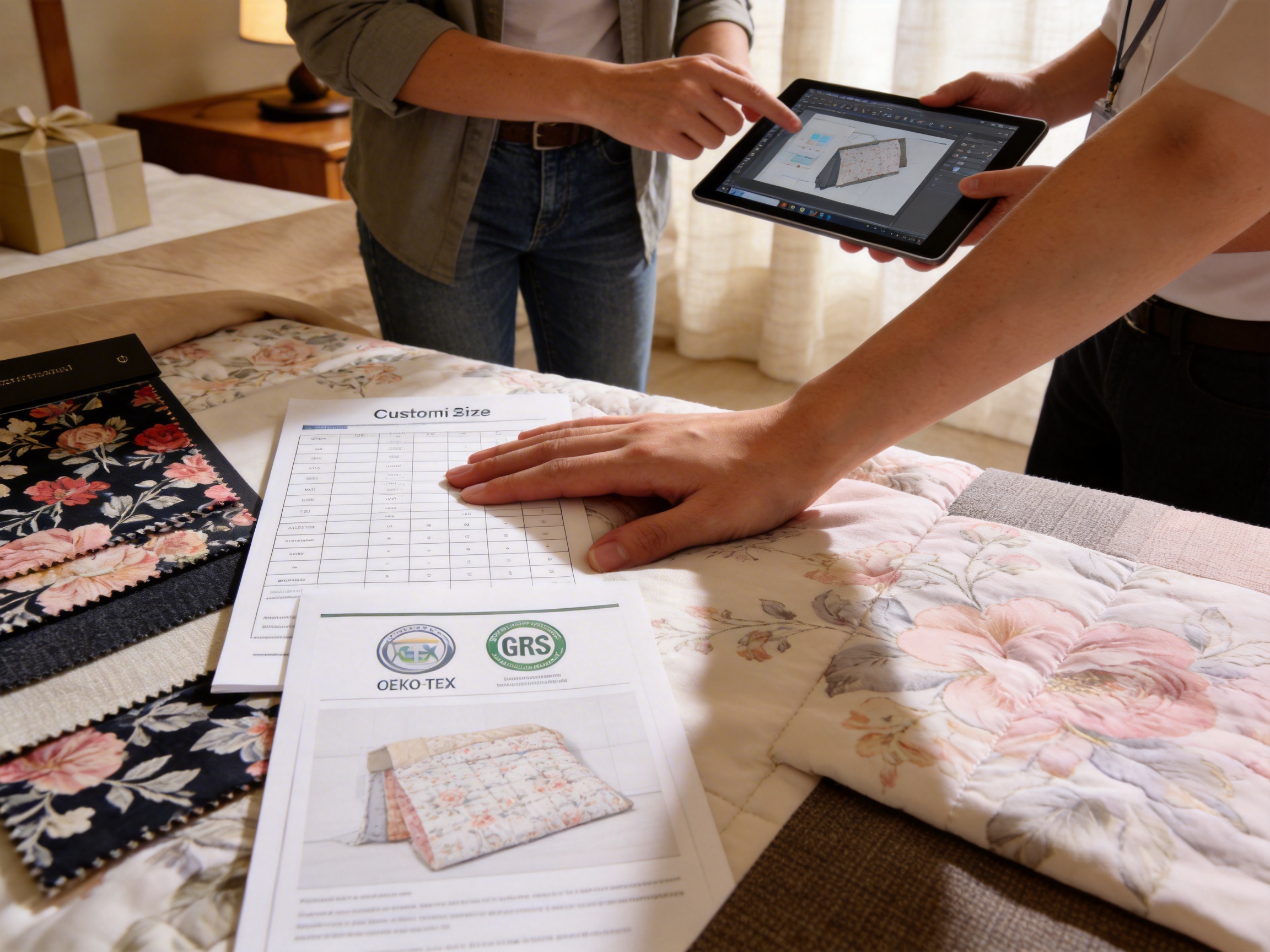
The company’s success is built on its customer-centric approach. It understands that every customer has unique needs and preferences, so it offers a range of customization options. Customers can choose from different sizes (including custom sizes), colors, and patterns, or even provide their own designs for a fully personalized quilt. The company also offers OEM/ODM services, allowing businesses to create custom-branded quilts for their customers.
The company’s customer service team is dedicated to providing exceptional support. They’re available to answer questions, provide product recommendations, and assist with customization requests. The company also offers a warranty on its products, ensuring that customers are satisfied with their purchase.
Product Specifications
| Specification | Details |
|---|---|
| Product Type | Brushed Fabric Printed Quilt |
| Size | 140x200 cm (custom sizes available) |
| Top Fabric | 85gsm Brushed Microfiber (Polyester) |
| Filling Material | 300gsm 3D Polyester |
| Lining Fabric | Soft Microfiber (Polyester) |
| Design | Elegant Floral Print (multiple color options) |
| Printing Technique | Digital Printing (eco-friendly water-based inks) |
| Certifications | OEKO-TEX Standard 100, ISO 9001, ISO 14001, GRS, BSCI |
| Care Instructions | Machine wash cold, gentle cycle; tumble dry low; do not bleach; do not iron |
Q&A Section
Here are answers to some common questions about brushed fabric printed quilts:
Q: What is the difference between brushed microfiber and regular microfiber?
A: Brushed microfiber undergoes a mechanical brushing process that raises fine fibers on the surface, creating a plush, velvety texture. Regular microfiber lacks this brushed finish, so it feels harsher against the skin. Brushed microfiber also retains its softness longer and is more resistant to pilling.
Q: Is the 3D polyester filling hypoallergenic?
A: Yes. The 3D polyester filling is hypoallergenic, making it safe for individuals with allergies to down feathers or dust mites. The tight weave of the fabric also prevents allergens from settling deep within the fibers.
Q: How does the company ensure color fastness of the printed design?
A: The company uses digital printing with eco-friendly water-based inks, which are steamed to set the inks permanently. The printed fabric also undergoes rigorous color fastness tests (light, water, and rub tests) to ensure the colors do not fade or bleed.
Q: Can this quilt be customized in size or design?
A: Yes. The company offers customization options, including custom sizes and designs. Customers can choose from a range of color options or provide their own designs for a fully personalized quilt.
Q: What certifications does the quilt have?
A: The quilt is certified against OEKO-TEX Standard 100 (safe for human skin), ISO 9001 (quality management), ISO 14001 (environmental management), GRS (Global Recycled Standard), and BSCI (Business Social Compliance Initiative).
Q: How should I care for this quilt?
A: The quilt is machine-washable. Wash it in cold water on a gentle cycle, tumble dry on low heat, and do not bleach or iron. Following these care instructions will ensure the quilt retains its softness and color vibrancy for years.
Conclusion
Brushed fabric printed quilts are a exceptional choice for anyone seeking comfort, durability, and style. Their 85gsm brushed microfiber fabric, 300gsm 3D polyester filling, and elegant floral design set them apart from competitor quilts. The advanced manufacturing processes used to create these quilts ensure consistency and quality, while the company’s decades of expertise and commitment to sustainability make them a trusted choice.
Whether you’re looking to upgrade your bedroom decor, find the perfect gift, or invest in a long-lasting bedding item, brushed fabric printed quilts deliver on all fronts. Their versatility, comfort, and durability make them a valuable addition to any home.
References
1. Textile Research Institute. (2023). Brushed Microfiber: A Comprehensive Guide to Its Properties and Applications. New York: Textile Press.
2. Chen, L., et al. (2022). Performance Evaluation of 3D Polyester Fillings in Bedding Products. Journal of Applied Polymer Science, 149(12), e52341.
3. OEKO-TEX Association. (2021). OEKO-TEX Standard 100: Frequently Asked Questions. Zurich: OEKO-TEX Publishing.
4. International Organization for Standardization. (2020). ISO 14001:2015 Environmental Management Systems – Implementation Guide. Geneva: ISO Press.
5. Smith, A. B. (2023). The Evolution of Digital Printing in Home Textiles. London: Home Textile Books.
6. Home Textile Magazine. (2022). Comparative Test: Quilt Fillings. Vol. 15, Issue 3, pp. 45-52.
7. Global Recycled Standard (GRS). (2021). GRS Certification Guidelines. Amsterdam: Textile Exchange.
8. BSCI. (2022). BSCI Code of Conduct. Brussels: Business Social Compliance Initiative.

 +86-573-88798028