



 Français
 Español
 Deutsch
Content
- 1 Product Overview: A Reversible Quilt with Practical Elegance
- 2 Why Dual Color Design Matters in Modern Bedding
- 3 Material Advantage: Soft 85gsm Microfiber Fabric
- 4 Filling Advantage: 300gsm 3D Polyester for Loft and Resilience
- 5 Comfort Across Different Living Environments
- 6 Competitive Advantages Over Ordinary Quilts
- 7 Manufacturing Strength: From Material Control to Finished Quilt
- 8 Advanced Production Capability and Factory Scale
- 9 Quality Systems and International Certifications
- 10 Customization Potential for Different Markets
- 11 Use Cases: Household, Hospitality, Retail, and Institutional Bedding
- 12 Design Simplicity as a Long-Term Value
- 13 Care, Handling, and Long-Term Performance
- 14 Why Manufacturer Experience Matters for Buyers
- 15 Q&A Section
- 15.1 What makes the Dual Color Polyester Quilt different from an ordinary quilt?
- 15.2 What size is the quilt?
- 15.3 What fabric is used on the quilt surface?
- 15.4 What type of filling does the quilt use?
- 15.5 Can both sides of the quilt be used?
- 15.6 Why is microfiber a good choice for this product?
- 15.7 Is the quilt suitable for retail and wholesale buyers?
- 15.8 What company strengths support the product’s quality?
- 15.9 Can the quilt be customized?
- 15.10 How should the quilt be cared for?
- 16 Conclusion: A Practical Quilt with Style, Comfort, and Reliable Manufacturing Support
- 17 References
- 18 Product: Dual Color Polyester Quilt
In modern home textiles, a quilt is no longer only a seasonal bedding item. It is part of the bedroom’s visual identity, a comfort layer for daily rest, and a practical product that must withstand repeated use, cleaning, storage, and changing interior styles. The Dual Color Polyester Quilt is designed for these needs. With contrasting colors on the front and back, a soft 85gsm microfiber shell, and 300gsm 3D polyester filling, it offers a balanced combination of style, comfort, durability, and easy care.
This quilt belongs to the microfiber quilt category and is made for consumers who want a bedding product that looks simple yet refined. Its dual-color construction gives users two styling options in one product, while the same fabric quality on both sides helps maintain a consistent feel whether the quilt is used on the front or reversed. The 140*200cm size makes it suitable for many single-bed, guest-room, dormitory, travel, and compact home bedding applications.
Compared with ordinary single-color quilts, the dual color design provides stronger decorative flexibility. Compared with quilts using rough or heavy outer fabrics, the microfiber surface creates a smoother, softer touch. Compared with flat, low-resilience fillings, the 3D polyester filling is designed to support a fuller, more comfortable loft. The result is a practical, attractive quilt that can serve everyday households, hotels, retailers, distributors, and customized home textile projects.
Behind the product is a manufacturing enterprise with long experience in home textile production. Tongxiang Xinlong Bedding Co., Ltd. was established in January 2002 and is located in Wuzhen, Tongxiang, Jiaxing, Zhejiang Province, China. The company manufactures a wide range of home textile products, including quilts, pillows, cushions, mattress protectors, blankets, bedspreads, quilt covers, pillowcases, travel quilts, shower curtains, and curtains. With a factory area of 21,000 square meters, a construction area of 18,000 square meters, more than 320 employees, advanced production equipment, and international certifications such as ISO9001, ISO14001, OEKO-related certifications, GRS, and BSCI, the company is positioned to provide reliable production for global bedding buyers.
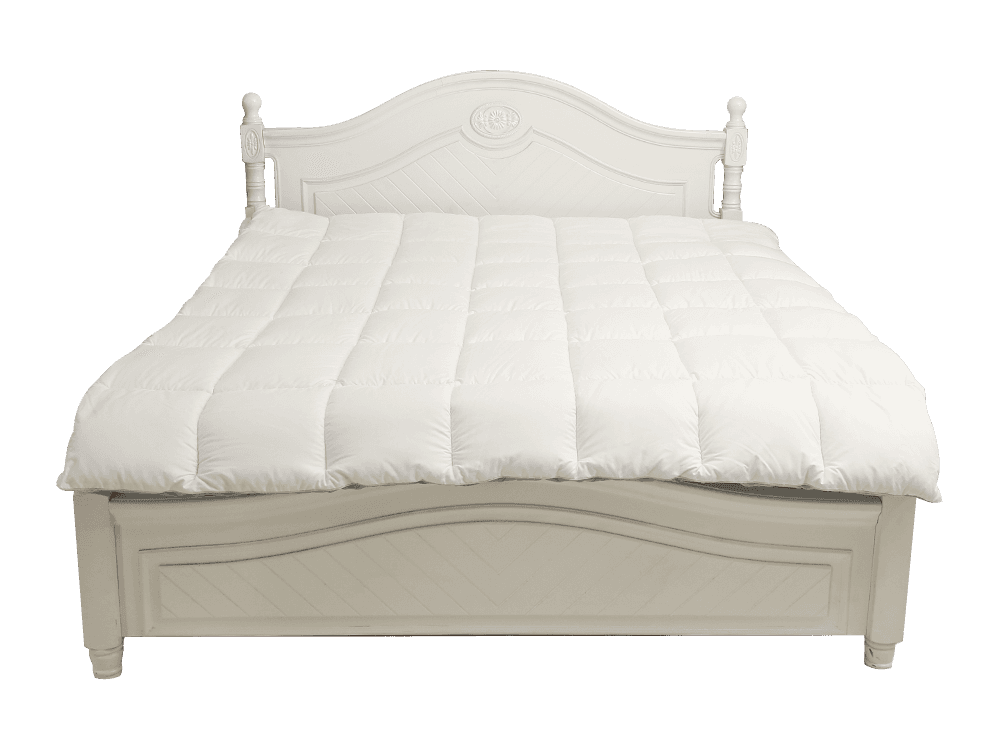
Product Overview: A Reversible Quilt with Practical Elegance
The Dual Color Polyester Quilt is built around a simple concept: one quilt, two visual expressions. The front and back are made with the same microfiber fabric quality, but each side uses a different color. This creates a reversible bedding item that can be adjusted according to room style, mood, season, or retail display needs. Instead of requiring two separate quilts for different looks, users can turn the quilt over and immediately refresh the bed presentation.
The fabric is 85gsm microfiber, a popular material in modern bedding because it is soft, lightweight, smooth, and suitable for daily use. Microfiber can provide a gentle hand feel while supporting efficient manufacturing, color variety, and consistent product appearance. For a quilt intended for household and commercial markets, these qualities are important because comfort, aesthetics, and cost-effectiveness must all be considered.
The filling is 300gsm 3D polyester. This type of filling is widely used in quilts because it can provide warmth, resilience, and a comfortable loft while remaining relatively easy to maintain. Polyester filling is also valued for its stable performance and suitability for large-scale production. The 300gsm weight gives the quilt a substantial yet manageable feel, making it useful across different seasons depending on climate, indoor temperature, and personal preference.
The size, 140*200cm, is versatile. It can serve as a single quilt, a guest quilt, a children’s or teen bedding option, a dormitory quilt, or an additional comfort layer for sofas and compact beds. For retailers and distributors, this size is practical because it is easy to package, ship, display, and sell. For consumers, it is large enough for comfort while remaining convenient for storage and handling.
| Product Element | Specification | Practical Benefit |
|---|---|---|
| Product Name | Dual Color Polyester Quilt | Provides two visual styles in one reversible bedding product. |
| Category | Microfiber Quilt | Combines soft hand feel, lightness, and daily-use practicality. |
| Size | 140*200cm | Suitable for single beds, guest rooms, dormitories, and compact spaces. |
| Fabric | 85gsm microfiber with contrasting colors on front and back | Creates a smooth surface and flexible room styling options. |
| Filling | 3D polyester 300gsm | Supports comfortable loft, resilience, and practical warmth. |
| Core Advantage | Reversible dual-color design | Improves decorative value compared with ordinary single-color quilts. |
Why Dual Color Design Matters in Modern Bedding
Many consumers choose bedding not only by warmth but also by appearance. A bed occupies a large visual area in a bedroom, and the quilt often becomes the most noticeable decorative layer. A single-color quilt can be attractive, but it may not adapt easily when curtains, wall colors, pillows, sheets, or seasonal decorations change. A dual color quilt solves this issue by giving two usable surfaces in one product.
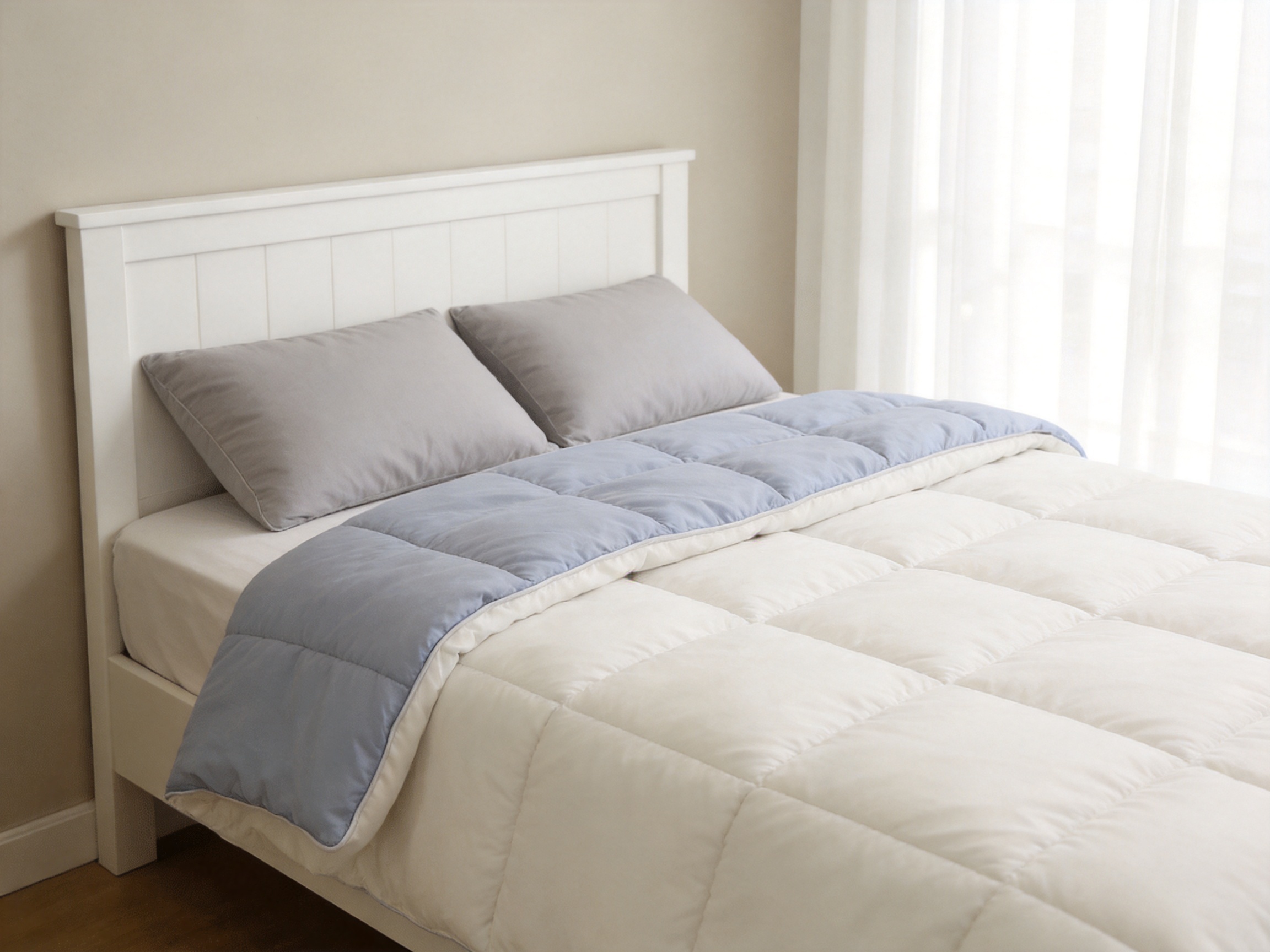
The contrasting color design makes the quilt especially useful for modern consumers who prefer flexibility. One side can create a calm, neutral look, while the other side can introduce stronger contrast or a warmer tone. Even when the colors are simple, the reversible feature adds depth to the bedding arrangement. Users can fold the quilt at the top to show both colors at once, creating a layered visual effect without adding another blanket or cover.
For retail buyers, dual color design creates additional selling points. A product that can be displayed in two colors has stronger shelf impact than a basic single-tone quilt. It may appeal to a wider range of customers because one side may match one style preference while the reverse side appeals to another. This can reduce hesitation at the point of purchase and increase product versatility in catalogues, showrooms, and online listings.
For hotels, rental apartments, dormitories, and institutional buyers, reversible color options can also support practical room management. A room can be refreshed by reversing the quilt rather than replacing the entire bedding set. In environments where budgets, storage space, and cleaning cycles are important, a reversible design offers an efficient way to maintain a clean and updated appearance.
Compared with competing quilts that use a printed surface on only one side and a plain backing on the other, the Dual Color Polyester Quilt offers more balanced usability. Both sides are intended to be visible and touchable. The same fabric quality on the front and back helps the quilt feel consistent, avoiding the common issue where the decorative face looks attractive but the reverse side feels less refined.
Material Advantage: Soft 85gsm Microfiber Fabric
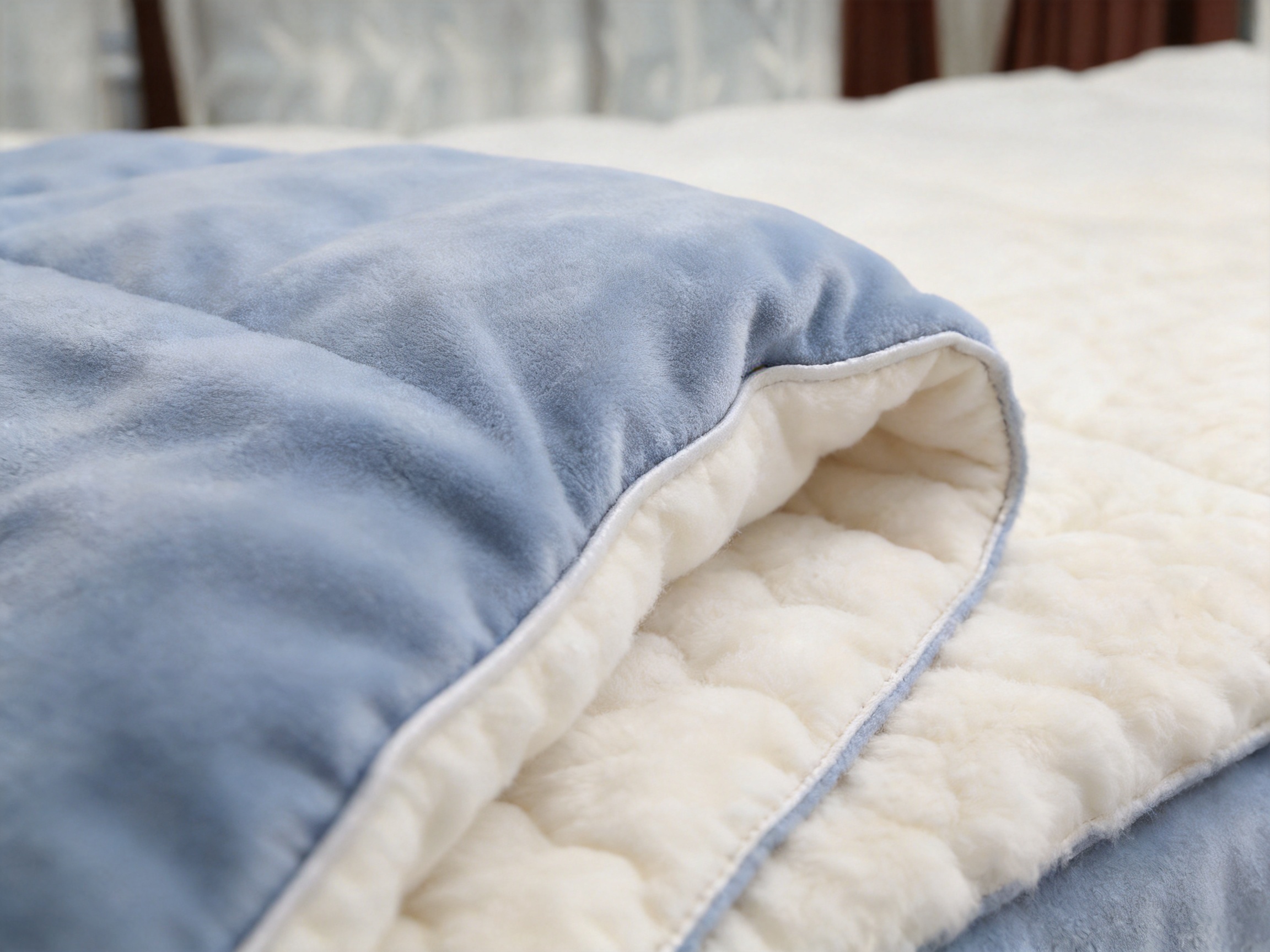
The outer fabric of a quilt strongly affects user experience. It is the part that touches skin, interacts with sheets and covers, and determines much of the product’s visible quality. The 85gsm microfiber fabric used in this quilt provides a smooth and comfortable hand feel. Its light weight helps keep the quilt easy to handle, fold, shake, and store, while still giving the surface a neat and finished appearance.
Microfiber is widely appreciated in bedding because its fine fibers can produce a soft surface without excessive heaviness. For daily use, this matters. A quilt that feels too stiff can reduce comfort, while a fabric that is too delicate may not support frequent handling. The 85gsm microfiber offers a practical middle ground. It is light enough for comfort and efficient drying, yet suitable for a product designed for repeated household use.
Another advantage of microfiber is its adaptability to color. Since the product uses contrasting colors on the front and back, color consistency and clean visual presentation are important. Microfiber can support attractive color expression, allowing manufacturers to produce different combinations for different markets. Retail buyers can request calm neutrals, fashionable contrasts, classic tones, or seasonal palettes depending on target customers.
Compared with some low-cost quilt fabrics that may feel coarse, noisy, or uneven, microfiber offers a smoother surface. This improves perceived quality immediately when the product is touched. In a bedding purchase, hand feel is one of the strongest decision factors. A customer may compare several quilts and choose the one that feels softer and better finished. The Dual Color Polyester Quilt is designed to compete well in that moment of comparison.
Compared with heavier cotton shells, microfiber can be easier to manage and often supports more convenient care. Cotton has many advantages, but it may wrinkle more easily and can become heavier after washing. Microfiber’s lighter structure helps make the quilt practical for consumers who want comfort without complicated maintenance. This is especially valuable for busy households, student housing, guest rooms, and hospitality supply.
The same microfiber fabric on both sides also helps maintain product harmony. Some reversible products use one attractive surface and one lower-grade backing, creating uneven comfort. This quilt avoids that issue by using the same fabric type for the front and back, with color as the primary difference. As a result, users do not have to sacrifice feel when they reverse the quilt.
Filling Advantage: 300gsm 3D Polyester for Loft and Resilience
The filling inside a quilt determines warmth, volume, drape, and recovery. The Dual Color Polyester Quilt uses 300gsm 3D polyester filling, which is designed to create a fuller and more resilient structure than flat, low-grade filling. The “3D” nature of the polyester refers to a fiber structure that can hold air and help maintain loft, giving the quilt a comfortable, cushioned feeling.
At 300gsm, the filling provides meaningful body without making the quilt overly heavy. This is important because modern consumers often prefer bedding that feels cozy but not burdensome. A quilt that is too light may not feel comforting enough, while one that is too heavy can feel restrictive. The 300gsm filling creates a balanced experience suitable for multiple use scenarios.
Polyester filling has practical advantages in large-scale bedding. It is stable, widely accepted, and suitable for consistent production. It can be engineered for softness and resilience, and it performs well in products designed for everyday home use. For consumers who want an affordable yet comfortable alternative to more delicate natural fillings, polyester is often a strong choice.
Compared with low-quality fillings that clump, flatten, or shift quickly, well-selected 3D polyester can help the quilt maintain a more uniform surface. When combined with appropriate quilting and finishing processes, the filling remains distributed across the body of the quilt. This improves long-term comfort and appearance, especially after repeated folding, airing, and use.
Compared with down-filled quilts, polyester quilts may be easier for many households to manage. Down can offer excellent warmth, but it often requires more careful maintenance and may not be suitable for all users. Polyester filling provides a more accessible and practical option, especially for markets requiring stable supply, competitive pricing, and easy-care bedding products.
The filling also supports the quilt’s decorative function. A quilt with good loft looks more inviting on a bed. It creates a soft, slightly raised profile that improves the bed’s visual comfort. In online product photos, showrooms, and retail displays, this fullness can help communicate quality before the consumer even touches the product.
Comfort Across Different Living Environments
The Dual Color Polyester Quilt is suitable for a wide range of living environments because its material combination is adaptable. In a mild climate, it can function as a main quilt for daily sleeping. In colder rooms, it can be layered with blankets, sheets, or additional bedding. In warmer seasons, it can be used as a lightweight comfort layer when heavy quilts are unnecessary.
For guest rooms, the quilt offers a clean and welcoming appearance. A guest quilt must satisfy different users, so neutrality and practicality are important. The soft microfiber surface and moderate polyester filling create a comfortable option that can serve many preferences. The dual color design also allows the room to be styled differently for different guests or occasions.
For dormitories and apartments, the 140*200cm size is especially practical. Students and renters often need bedding that is easy to store, easy to wash according to care instructions, and visually adaptable to small rooms. The reversible design helps them refresh their space without buying multiple quilts. The quilt’s manageable size also makes it easier to carry during moves or seasonal storage.
For family homes, the quilt can serve as a child’s bedding item, a sofa comfort layer, a travel quilt for short stays, or a spare quilt for visitors. Its appearance is simple enough to match different interiors, while the contrasting sides add interest. Families often need products that are versatile rather than overly specialized, and this quilt fits that requirement well.
For hospitality and rental markets, the quilt can help simplify inventory. A reversible quilt gives property managers more visual options without needing separate product lines. The microfiber and polyester construction also supports practical maintenance routines, making it appropriate for environments where bedding must remain clean, presentable, and cost-effective.
Competitive Advantages Over Ordinary Quilts
The bedding market includes many quilts with similar basic functions, so a product must distinguish itself through design, material, manufacturing consistency, and value. The Dual Color Polyester Quilt offers several advantages over many ordinary competitors. Its first clear advantage is the reversible contrasting color design. This feature improves visual flexibility and gives consumers more use value from one purchase.
Another competitive advantage is the consistent fabric quality on both sides. Many low-cost reversible products use a decorative front and a less attractive reverse. This can reduce real usability because customers may not want to expose or touch the lower-grade side. In this quilt, both front and back use the same 85gsm microfiber fabric, creating a more complete reversible experience.
The 300gsm 3D polyester filling also helps the quilt compete in comfort. Some budget quilts use thin filling that quickly appears flat, while others use uneven filling that creates cold spots or lumpy sections. A properly produced 3D polyester filling provides better loft and resilience, supporting a more pleasant sleep and relaxation experience.
The product’s simplicity is another strength. In a market filled with complex prints, patterns, and seasonal designs, a clean dual color quilt has broader appeal. Simple styling makes it easier to match with sheets, pillows, cushions, mattress covers, and blankets. It also reduces the risk of going out of fashion quickly, which benefits both consumers and retailers.
From a business perspective, the quilt is easy to present and customize. Buyers can adjust color combinations to suit different markets. They can position it as a guest-room essential, a student bedding product, a modern apartment quilt, or a practical retail item. The clear specifications also make communication easier across procurement, quality control, and sales teams.
Compared with products made by manufacturers without strong quality systems, this quilt benefits from the broader production capabilities of an experienced bedding factory. A product is only as reliable as the process behind it. With long-term experience, trained employees, advanced equipment, and certification-supported management systems, the manufacturer can support stable quality and consistent delivery.
Manufacturing Strength: From Material Control to Finished Quilt
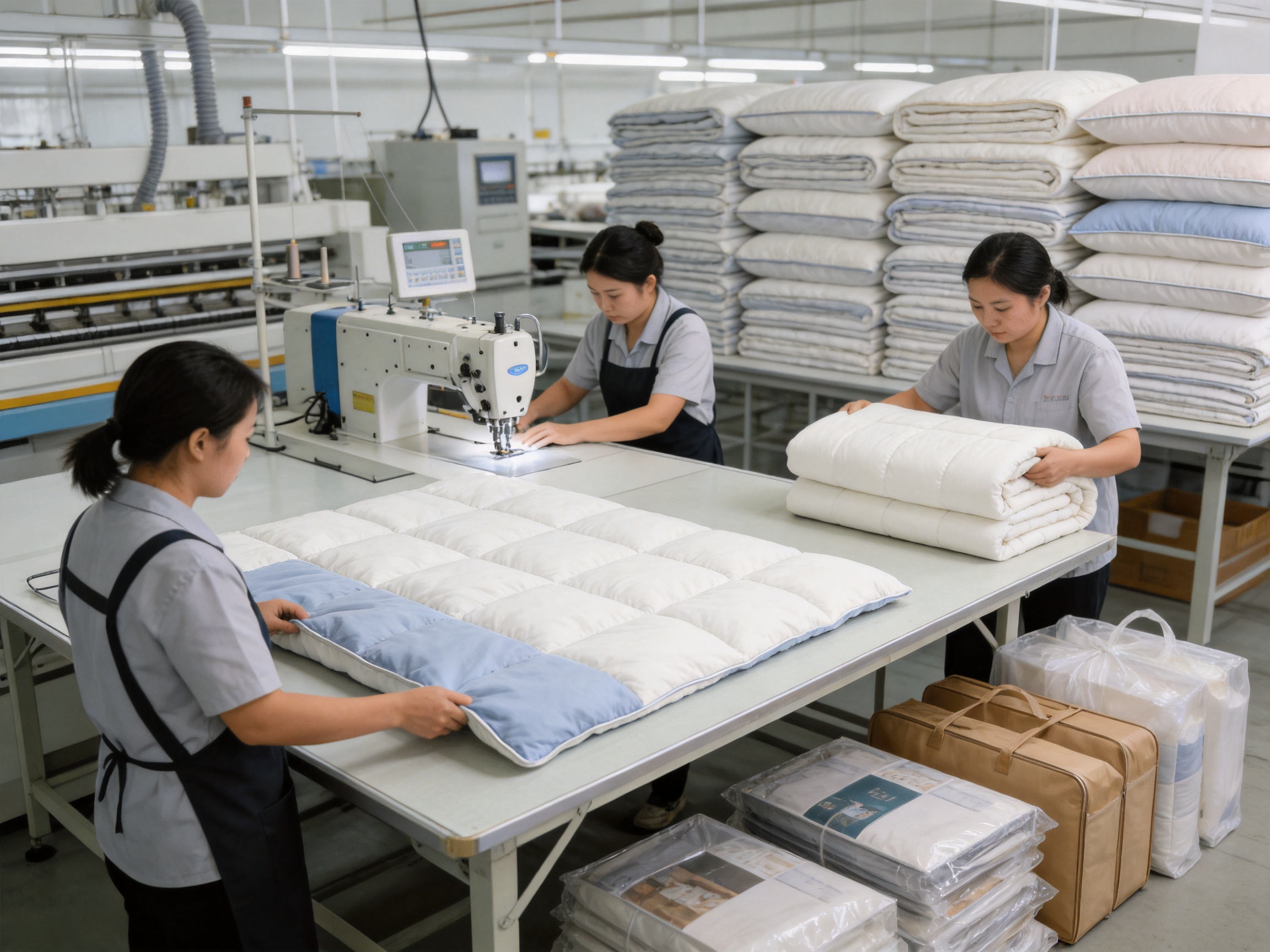
High-quality bedding depends on more than fabric and filling. It requires a controlled manufacturing process that transforms raw materials into a finished product with stable size, clean seams, even filling distribution, and reliable appearance. Tongxiang Xinlong Bedding Co., Ltd. has developed its production capability through many years of home textile manufacturing, supported by advanced production equipment and experienced workers.
The process begins with material selection and incoming inspection. Microfiber fabric must be checked for color, surface condition, weight, and consistency. Since the quilt uses contrasting colors, both sides must meet color requirements and match the intended design. Fabric defects such as stains, holes, uneven dyeing, or surface irregularities must be controlled before cutting begins.
The polyester filling must also be inspected. Proper loft, weight, cleanliness, and fiber distribution are important. If filling quality is inconsistent, the finished quilt may feel uneven or lose shape quickly. By controlling filling quality at the beginning, the factory reduces the risk of defects later in production.
After inspection, fabric is cut according to the quilt size and production tolerance requirements. Accurate cutting is essential because the finished quilt must maintain the specified dimensions of 140*200cm. Poor cutting can create skewed edges, uneven corners, or misaligned surfaces. Advanced cutting methods and skilled operators help improve precision and reduce material waste.
Next, the filling is prepared and placed between the fabric layers. The front and back microfiber panels must be aligned properly so the quilt maintains a clean reversible structure. Since each side has a different color, careful handling prevents mix-ups during production. Consistency at this stage affects the final appearance and user experience.
Quilting or stitching is used to secure the filling and fabric layers. This step is crucial because it helps prevent filling migration. A quilt that looks good at purchase but shifts after use will disappoint customers. Proper stitching patterns and tension control help maintain the quilt’s shape and support even warmth distribution.
Edge finishing is another important stage. Strong, neat edges improve durability and visual quality. Loose threads, uneven seams, or weak binding can reduce the product’s value and lead to customer complaints. Skilled sewing operations are therefore essential for a quilt intended to compete in domestic and international markets.
After sewing, the product goes through finishing and inspection. Workers check appearance, size, stitching, filling distribution, color accuracy, cleanliness, and packaging readiness. This final inspection helps ensure that the quilt delivered to buyers matches expectations. For bulk orders, quality consistency across cartons and batches is especially important.
Packaging is designed to protect the quilt during storage and transport. Bedding products must arrive clean, dry, and well-shaped. Efficient packaging also affects logistics costs, warehouse handling, and retail presentation. A manufacturer with experience in export and wholesale supply understands the need to balance protection, compactness, and presentation.
Advanced Production Capability and Factory Scale
The strength of a bedding product is closely connected with the strength of its manufacturer. Tongxiang Xinlong Bedding Co., Ltd. has been operating since 2002, giving it more than two decades of experience in the home textile field. This experience matters because bedding production requires constant adjustment to fabric trends, filling technologies, customer requirements, compliance standards, and market expectations.
The company covers an area of 21,000 square meters and has a construction area of 18,000 square meters. This factory scale supports organized production, material storage, equipment placement, inspection areas, and packaging operations. For buyers, factory scale is important because it indicates the ability to handle repeat orders, seasonal demand, and customized product programs.
With more than 320 employees, the company has the manpower needed for sewing, inspection, finishing, packaging, production planning, and technical development. Home textile manufacturing still requires skilled human judgment, especially in fabric handling, seam quality, appearance inspection, and custom order management. Experienced employees help maintain quality and reduce avoidable defects.
The company is equipped with various advanced production machines. In bedding manufacturing, equipment affects cutting accuracy, sewing efficiency, quilting consistency, and production capacity. Modern equipment can improve both quality and speed, helping the company deliver products that meet buyer expectations while remaining competitive in cost.
The manufacturer also continues to develop and innovate in response to changes in the home textile industry. Consumer preferences shift quickly, and successful manufacturers must adapt to new materials, new color combinations, new packaging methods, and new standards. Professional technical personnel support product design and production improvement, helping transform customer ideas into finished bedding products.
For the Dual Color Polyester Quilt, these strengths are visible in the ability to combine simple design with stable construction. A reversible quilt may look uncomplicated, but it requires reliable color control, fabric alignment, filling placement, and stitching. Factory experience reduces the risks of uneven results in mass production.
Quality Systems and International Certifications
Quality in bedding is not only about how a product feels on the first day. It includes consistency, safety, environmental awareness, social responsibility, and process control. Tongxiang Xinlong Bedding Co., Ltd. has passed international certifications including ISO9001, ISO14001, OEKO-related certifications, GRS, and BSCI. These certifications support the company’s ability to serve customers who require documented manufacturing standards.
ISO9001 is associated with quality management systems. For buyers, this indicates that the manufacturer has structured processes for managing quality, improving operations, and controlling production. In a competitive bedding market, documented quality systems help reduce uncertainty and improve cooperation between supplier and customer.
ISO14001 is associated with environmental management. Home textile manufacturing involves materials, energy, water, packaging, and waste control. Environmental management helps factories pay attention to responsible operations and continuous improvement. For brands and importers, this can be important when selecting long-term supply partners.
OEKO-related certifications are widely recognized in textile markets. They help address concerns about product safety and chemical management. Bedding products are used close to the skin, so customers and buyers increasingly care about responsible textile standards. Certification support gives additional confidence when positioning products in quality-conscious markets.
GRS relates to recycled materials and responsible supply chain practices where applicable. As sustainability becomes more important in home textiles, buyers often look for factories that understand recycled content requirements and documentation. Even when a specific product is not marketed as recycled, factory familiarity with such systems can support future development.
BSCI relates to social compliance and responsible business practices. Many international buyers require suppliers to demonstrate attention to labor conditions and ethical production. A manufacturer with BSCI-related compliance experience is better prepared to cooperate with customers who require social responsibility documentation.
Since 2016, the company has also been rated as a safety production standardization enterprise for several consecutive years. This reflects attention to production safety and organized factory management. Safe, standardized production environments help protect workers and support stable output.
These quality and compliance strengths create an advantage over competitors that may offer low prices but lack structured management systems. For serious buyers, the lowest price is not always the best value. Reliable quality, stable delivery, compliance readiness, and professional communication can reduce long-term risk and improve supply chain performance.
Customization Potential for Different Markets
The Dual Color Polyester Quilt is naturally suitable for customization because its main design feature is color contrast. Different markets prefer different colors. Some consumers prefer neutral combinations such as beige and gray, white and taupe, or navy and light blue. Others prefer warmer combinations such as pink and cream, green and beige, or burgundy and gray. Retailers can develop color groups for seasonal sales, children’s rooms, minimalist bedrooms, hospitality projects, or promotional programs.
Customization can also involve packaging. A quilt sold in a supermarket may require compact packaging with clear labels. A product for e-commerce may need packaging that protects it during parcel shipment. A hotel supply order may use simpler bulk packaging to reduce cost and waste. An experienced manufacturer can cooperate with buyers to choose practical packaging solutions.
The size may also be adjusted for different markets if required by order specifications. Although the provided product size is 140*200cm, bedding markets often require various sizes. A factory that produces quilts, blankets, mattress protectors, pillows, cushions, and other home textile items is better positioned to manage size variations and coordinated bedding programs.
For private-label buyers, the simple structure of the quilt is an advantage. It allows branding, color planning, packaging design, and product positioning to create differentiation without making the product too complicated. This can help wholesalers, retailers, and distributors develop exclusive bedding lines with controlled cost and broad consumer appeal.
Compared with highly decorative products that depend on complex prints, the dual color quilt is easier to adapt. It can fit modern, classic, Scandinavian, student, hotel, and family bedding themes. The reversible feature remains easy for sales teams to explain, making it useful for both online and offline marketing.
Use Cases: Household, Hospitality, Retail, and Institutional Bedding
In household use, the quilt can be used as a primary sleep quilt, a daytime bed cover, or an additional layer during cooler evenings. Its soft microfiber fabric supports comfortable contact, while the polyester filling provides cozy loft. The reversible color design makes it easy for homeowners to refresh the room without buying new bedding sets.
In guest rooms, the quilt can help create a welcoming appearance. Guest bedding must look clean, feel comfortable, and be easy to manage between uses. A dual color quilt allows hosts to change the look of the room quickly. If one side better matches a fresh set of sheets, the quilt can be reversed in seconds.
In hospitality settings, the product’s balance of comfort and practicality is valuable. Hotels, hostels, serviced apartments, and rental properties often need bedding that can maintain appearance under repeated use. While care instructions must always be followed, microfiber and polyester constructions are generally selected for practical maintenance and stable performance.
In retail channels, the quilt has strong display value. Showing both colors in folded form can immediately communicate the reversible feature. Retailers can merchandise it with matching pillows, cushions, blankets, and mattress protectors. Its clean design makes it suitable for multiple price points depending on packaging, color selection, and distribution strategy.
In institutional environments such as dormitories, training centers, and staff accommodations, the quilt provides a simple and efficient bedding solution. The size is manageable, the style is not overly personal, and the reversible color design adds practicality. Bulk buyers often prioritize durability, consistent supply, and easy handling, all of which align with this product concept.
Design Simplicity as a Long-Term Value
Fashion trends in bedding change quickly, but simple, functional products remain consistently useful. The Dual Color Polyester Quilt is not dependent on a complicated seasonal pattern. Its appeal comes from color, texture, softness, and reversibility. This gives it long-term value in markets where consumers want products that remain attractive after trends change.
A simple quilt is also easier to coordinate with other bedding items. It can be paired with printed sheets, solid pillowcases, textured blankets, decorative cushions, or mattress covers. If the room already has strong patterns, the quilt can provide balance. If the room is minimal, the contrast between the two sides can create subtle interest.
For buyers, simple design can reduce inventory risk. Highly specific prints may sell well for a short period but become outdated quickly. A reversible solid-color quilt has broader appeal and can remain relevant across seasons. This makes it suitable for basic bedding programs, promotional campaigns, and repeat-order product lines.
The product’s design also supports sustainability in a practical sense. A quilt that can be used in more than one visual way may stay in use longer. Consumers may be less likely to replace it simply because they want a different look. Extending product usefulness is an important but often overlooked aspect of responsible consumption.
Care, Handling, and Long-Term Performance
Proper care helps any quilt maintain its comfort and appearance. Users should follow the care label provided with the finished product, because washing and drying recommendations may vary depending on final specifications, packaging requirements, and buyer standards. In general, microfiber and polyester quilts are often selected because they can be practical for daily households when cared for correctly.
Regular airing can help maintain freshness. Shaking the quilt gently can restore loft and redistribute the filling after storage. When storing the quilt, it should be clean and dry, placed in a ventilated storage bag or area, and protected from moisture. Avoiding long-term compression can help preserve the filling’s volume.
Users should also avoid sharp objects, rough surfaces, or excessive pulling that may damage seams or fabric. Although the quilt is designed for everyday use, all textile products benefit from reasonable handling. In commercial environments, staff training on washing, drying, folding, and storage can improve product lifespan and reduce replacement costs.
Because the quilt is reversible, both sides should be used regularly. Alternating sides can help balance wear and maintain a fresh appearance. It also allows users to enjoy the full benefit of the dual color design rather than treating one side as only the back.
Why Manufacturer Experience Matters for Buyers
When purchasing quilts in quantity, buyers must evaluate more than the sample. A sample can show design and material quality, but long-term cooperation depends on consistent production. An experienced manufacturer understands batch control, material planning, inspection requirements, packaging details, shipping schedules, and communication needs.
Tongxiang Xinlong Bedding Co., Ltd. has been producing home textile products for many years and covers a broad range of bedding categories. This broad production experience is valuable because many buyers need coordinated product programs. A retailer may want quilts, pillows, mattress protectors, blankets, and cushions from one supplier. A hotel project may require multiple bedding layers with matching specifications. A factory with diverse capabilities can simplify sourcing.
The company’s business philosophy emphasizes quality as the life of the enterprise. This approach is important in bedding because customer satisfaction depends on repeated use. A quilt must not only look attractive in a photo; it must remain comfortable after the customer brings it home. Consistent operating procedures, employee skill improvement, and product quality control help support this goal.
Professional technical personnel also contribute to product development. When buyers request new colors, adjusted fillings, special packaging, or market-specific improvements, technical support can turn those ideas into production-ready specifications. This is especially important for custom home bedding projects where details must be clarified before mass production begins.
In global sourcing, trust is built through reliability. Certifications, factory scale, production experience, and product range all help buyers assess supplier capability. The Dual Color Polyester Quilt benefits from these background strengths, making it not only a comfortable product but also a practical choice for procurement programs.
Q&A Section
What makes the Dual Color Polyester Quilt different from an ordinary quilt?
The main difference is its reversible dual color design. The front and back use the same 85gsm microfiber fabric quality but in contrasting colors, giving users two styling options in one quilt. This makes it more flexible than ordinary single-color quilts.
What size is the quilt?
The quilt size is 140*200cm. This size is suitable for single beds, guest rooms, dormitories, compact bedrooms, and additional comfort layers in household or commercial settings.
What fabric is used on the quilt surface?
The quilt uses 85gsm microfiber fabric. Microfiber is valued for its soft hand feel, smooth surface, lightness, and suitability for daily bedding products.
What type of filling does the quilt use?
The quilt uses 300gsm 3D polyester filling. This filling supports loft, resilience, and practical warmth while keeping the quilt manageable for everyday use.
Can both sides of the quilt be used?
Yes. The quilt is designed to be reversible. Since both sides use the same microfiber fabric quality, users can enjoy a consistent touch and appearance whether the quilt is used on the front or back.
Why is microfiber a good choice for this product?
Microfiber provides softness, a smooth surface, color adaptability, and practical handling. It helps the quilt feel comfortable while supporting attractive dual-color styling and efficient maintenance.
Is the quilt suitable for retail and wholesale buyers?
Yes. Its simple design, reversible feature, clear specifications, and broad market appeal make it suitable for retailers, wholesalers, distributors, hospitality suppliers, and private-label bedding programs.
What company strengths support the product’s quality?
The product is supported by a manufacturer established in 2002 with a 21,000-square-meter factory area, 18,000-square-meter construction area, more than 320 employees, advanced production equipment, professional technical personnel, and international certifications such as ISO9001, ISO14001, OEKO-related certifications, GRS, and BSCI.
Can the quilt be customized?
The dual color concept is suitable for customization, especially in color combinations and packaging. Depending on order requirements and production planning, buyers may discuss market-specific options with the manufacturer.
How should the quilt be cared for?
Users should follow the care label provided with the finished product. Proper airing, gentle handling, clean and dry storage, and avoiding excessive compression can help maintain comfort and appearance.
Conclusion: A Practical Quilt with Style, Comfort, and Reliable Manufacturing Support
The Dual Color Polyester Quilt offers a strong combination of modern design and daily practicality. Its reversible contrasting colors give users more decorative freedom, while the 85gsm microfiber fabric provides a soft and smooth touch. The 300gsm 3D polyester filling supports comfortable loft and resilience, making the quilt suitable for households, guest rooms, dormitories, hospitality settings, retail programs, and customized bedding projects.
Its advantages over many competing quilts are clear. It provides two usable color surfaces instead of one, consistent fabric quality on both sides, practical warmth without excessive weight, and broad styling compatibility. For consumers, it is a comfortable and attractive bedding choice. For buyers, it is a marketable product with flexible positioning and customization potential.
The product is further strengthened by the manufacturer’s production background. With more than two decades of experience, large factory scale, advanced equipment, skilled employees, professional technical support, and internationally recognized certifications, Tongxiang Xinlong Bedding Co., Ltd. can support stable production and quality-focused cooperation. In an industry where comfort, appearance, compliance, and delivery reliability all matter, these strengths help the Dual Color Polyester Quilt stand out as a dependable home textile solution.
References
Textile Institute. Textile Terms and Definitions. Manchester: Textile Institute.
Saville, B. P. Physical Testing of Textiles. Woodhead Publishing.
ISO. ISO 9001 Quality Management Systems: Requirements.
ISO. ISO 14001 Environmental Management Systems: Requirements with Guidance for Use.
OEKO-TEX Association. Standard 100 by OEKO-TEX: General and Special Conditions.
Textile Exchange. Global Recycled Standard: Requirements and Implementation Guidance.
Business Social Compliance Initiative. BSCI Code of Conduct and Implementation Principles.
Gohl, E. P. G., and Vilensky, L. D. Textile Science: An Explanation of Fibre Properties. Longman Cheshire.


 +86-573-88798028