



 Français
 Español
 Deutsch
Content
- 1 Product Overview
- 2 Key Product Specifications
- 3 Design Appeal and Decorative Value
- 4 Soft and Skin-Friendly Brushed Fabric
- 5 3D and 6D Polyester Filling Performance
- 6 Everyday Comfort for Different Users
- 7 Advantages Over Common Competing Pillows
- 7.1 Advantage One: Better Visual Value Than Plain Commodity Pillows
- 7.2 Advantage Two: Softer Hand Feel Than Rough Basic Covers
- 7.3 Advantage Three: Balanced Filling Compared With Simple Low-Loft Fiber
- 7.4 Advantage Four: Practical Size for Market Compatibility
- 7.5 Advantage Five: Supplier Strength Behind the Product
- 8 Manufacturing Strength and Industrial Capability
- 9 Quality Management and Certifications
- 10 How the Pillow Can Be Produced With Process Control
- 11 Customization Potential for Different Buyers
- 12 Role in a Complete Bedding Collection
- 13 Comfort, Hygiene, and Care Considerations
- 14 Why Manufacturing Experience Matters
- 15 Market Applications
- 16 Sustainability and Responsible Production Considerations
- 17 How Buyers Can Evaluate This Pillow
- 18 Frequently Asked Questions
- 18.1 What is the main feature of this Polyester Printed Pillow?
- 18.2 What size is the pillow?
- 18.3 What fabric is used?
- 18.4 What filling does the pillow use?
- 18.5 How is this pillow different from ordinary plain pillows?
- 18.6 Is the pillow suitable for hotels or guest rooms?
- 18.7 Can the product be customized?
- 18.8 Why is brushed fabric beneficial for pillows?
- 18.9 What manufacturing strengths support this product?
- 18.10 What certifications does the manufacturer hold?
- 19 Conclusion
- 20 References
- 21 Product: Polyester Printed Pillow
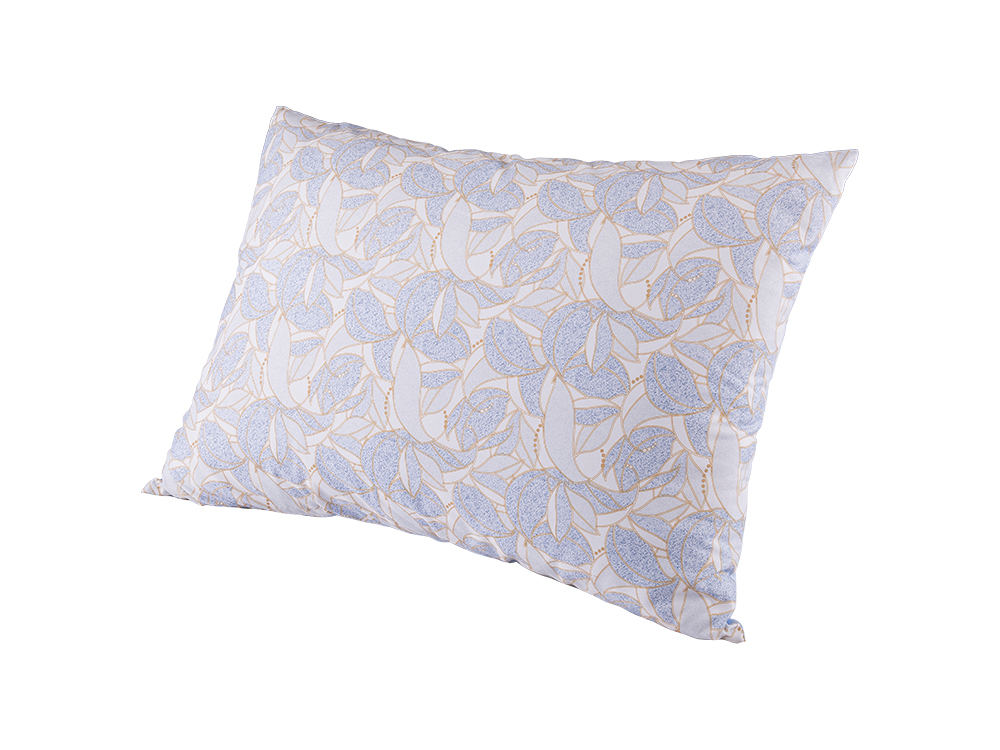
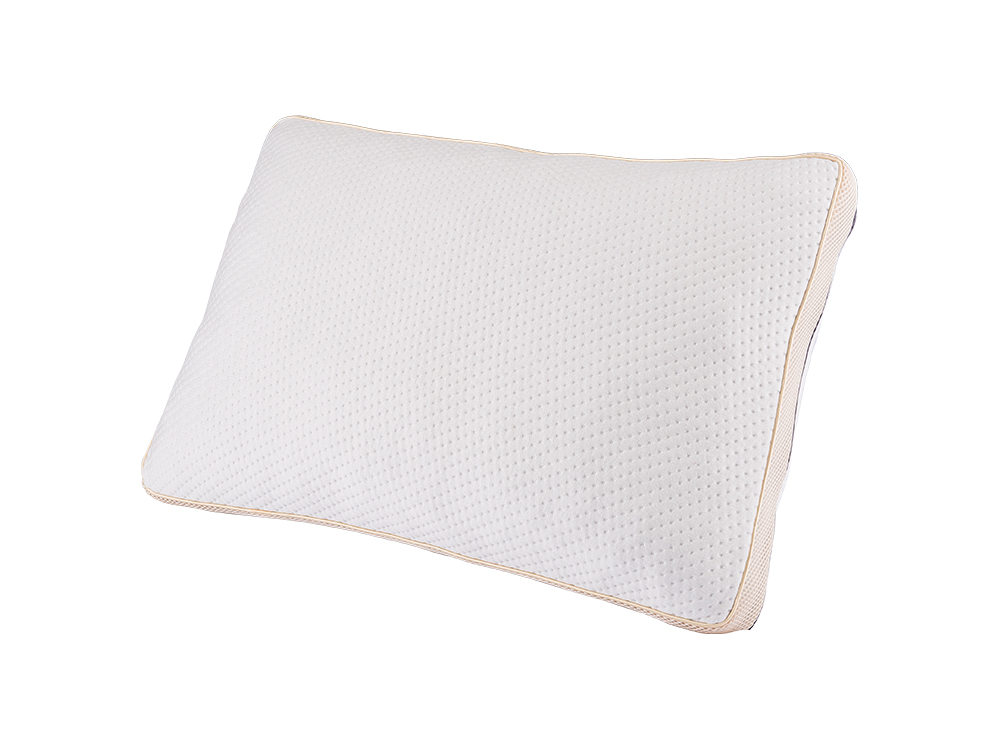
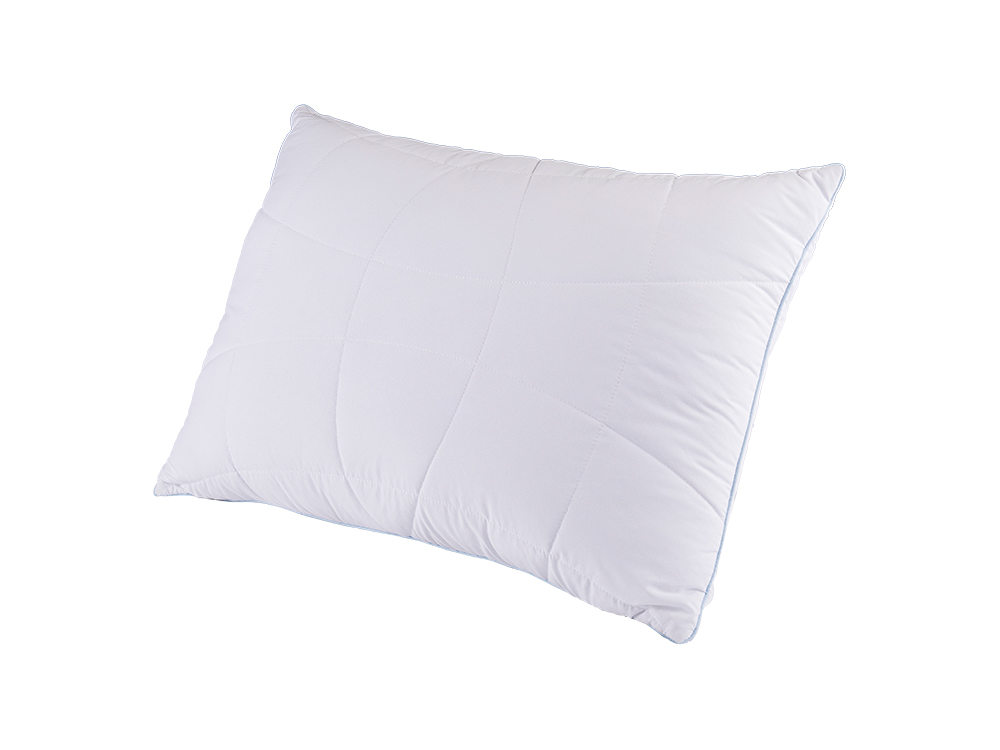
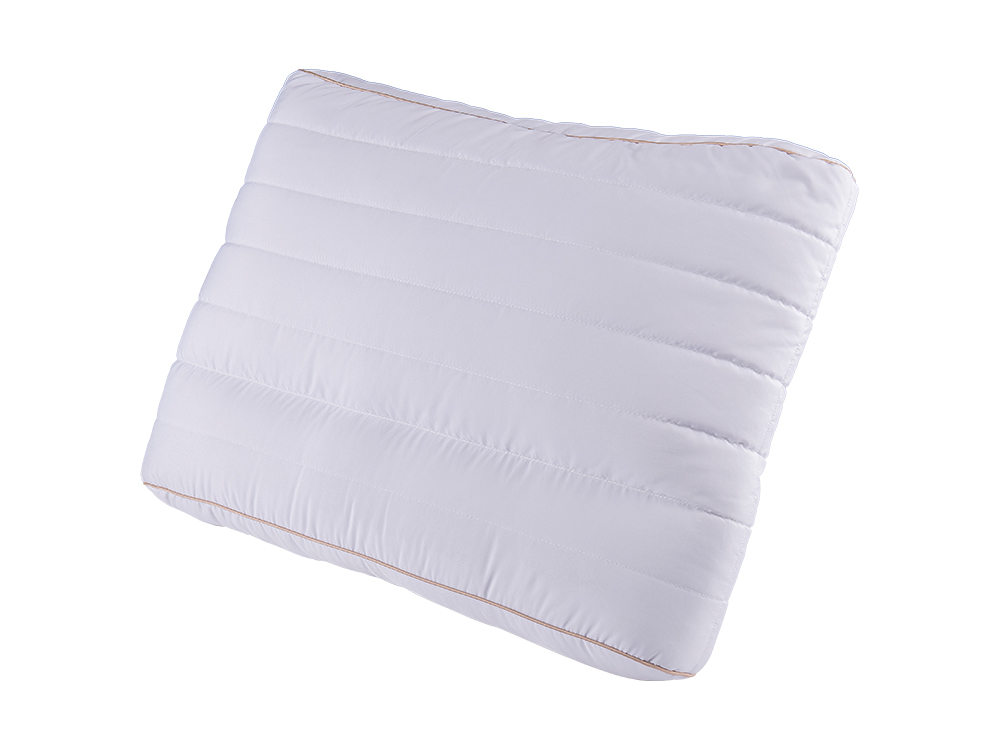
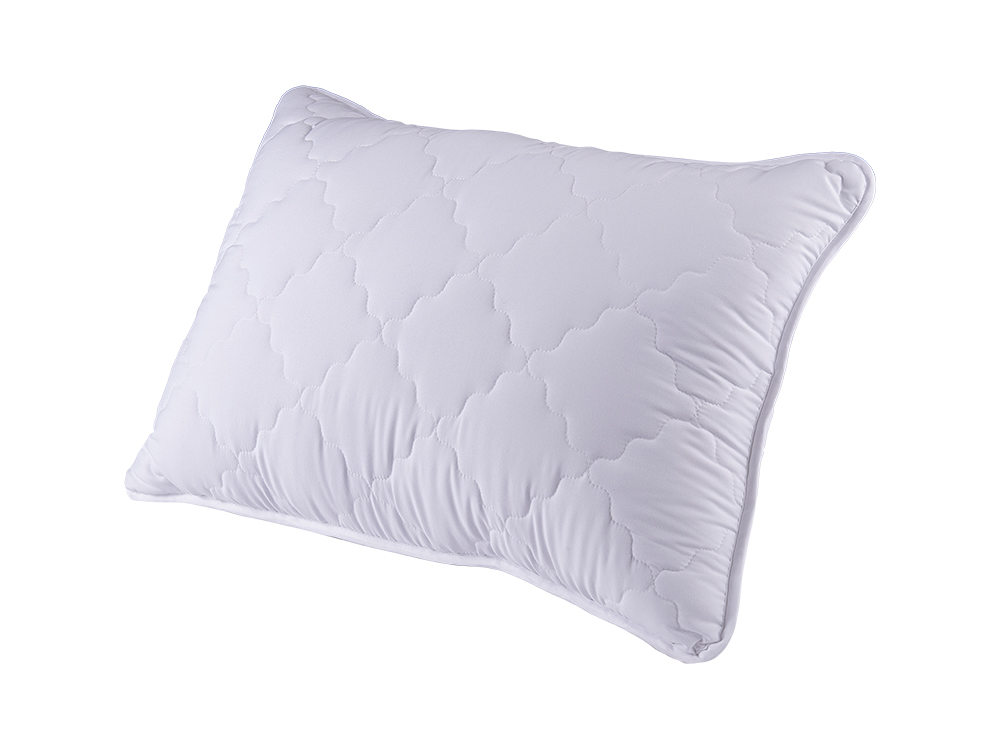
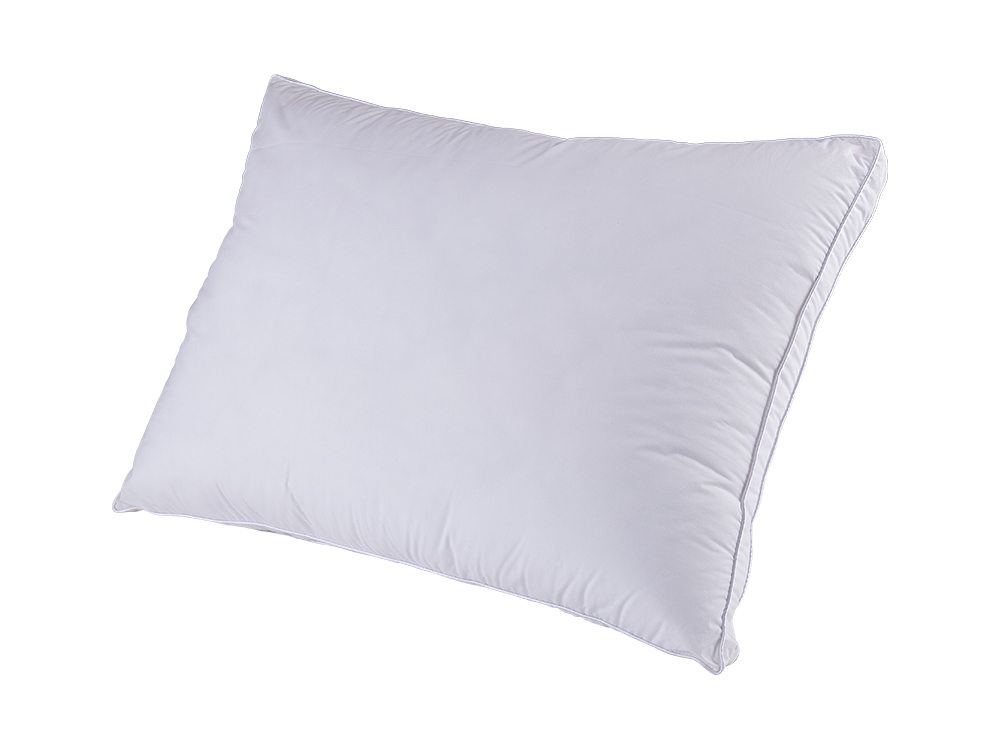
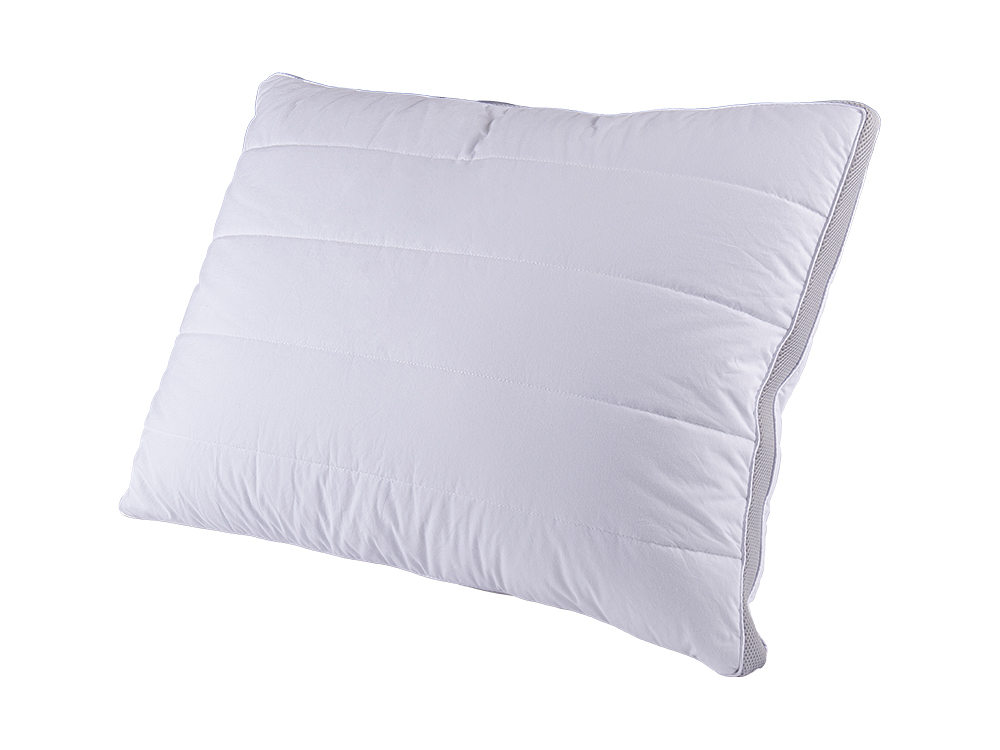
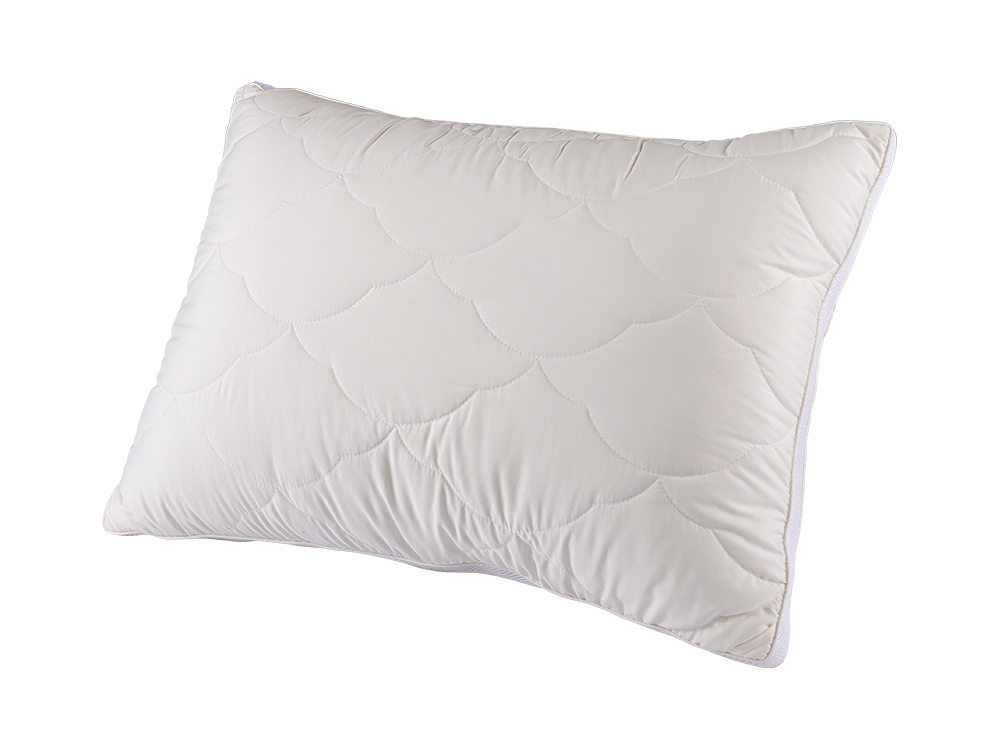
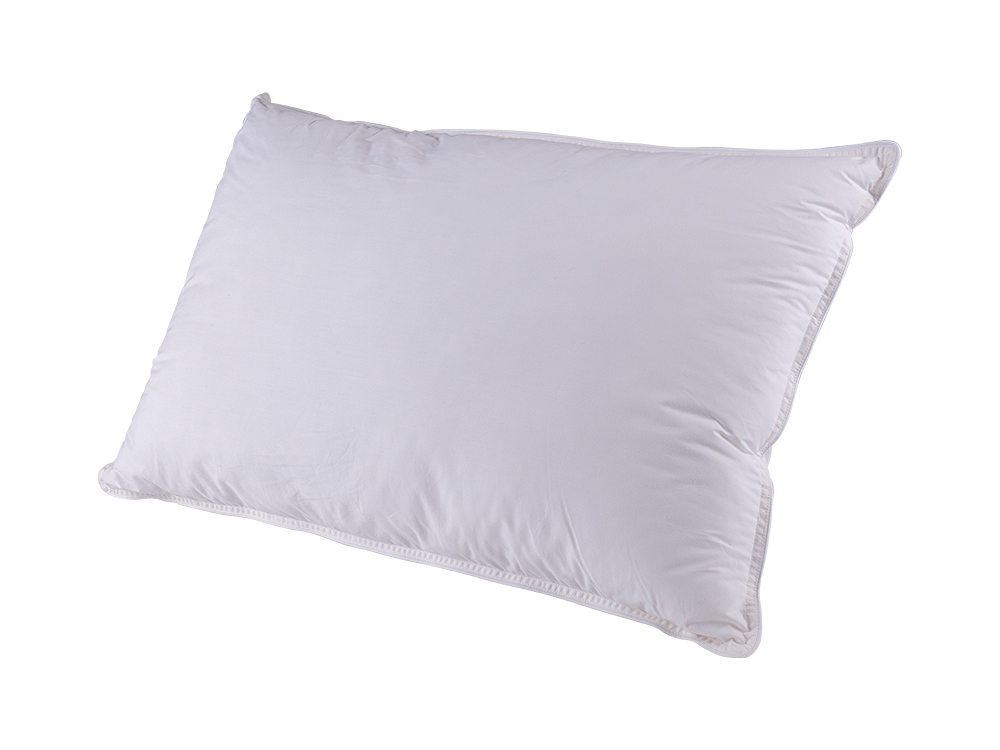
A well-made pillow is more than a simple bedding accessory. It is a daily comfort product, a decorative element, and a practical household necessity that influences sleep quality, bedroom appearance, and long-term user satisfaction. The Polyester Printed Pillow described here is designed around these three expectations: soft touch, attractive appearance, and dependable performance. With a 50 x 70 cm size, an 85gsm printed brushed fabric surface, an 85gsm plain brushed fabric backing, and a blended 3D plus 6D polyester filling, it offers a balanced combination of comfort, resilience, and visual appeal.
This pillow stands out because it is not limited to function alone. Its printed pattern is paired with a solid base fabric, creating a refined and elegant look suitable for many home textile styles. The brushed fabric provides a smooth and skin-friendly hand feel, while the polyester filling gives the pillow fullness and recovery. For families, hotels, dormitories, guest rooms, retailers, and bedding distributors, it provides a practical product that can satisfy both decorative and comfort-focused needs.
The product is manufactured by Tongxiang Xinlong Bedding Co., Ltd., a home textile manufacturer located in Zhejiang Province, China. Established in 2002, the company has built experience in producing pillows, quilts, mattress protectors, blankets, cushions, mattress covers, and other home bedding products. With a production site covering 21,000 square meters, an 18,000-square-meter construction area, more than 320 employees, advanced production equipment, and certifications including ISO9001, ISO14001, OEKO-related certifications, GRS, and BSCI, the company brings industrial strength and process discipline to this type of daily-use bedding product.
Product Overview
The Polyester Printed Pillow is developed for users who want a comfortable pillow with a polished visual design. Its printed brushed fabric side presents a decorative pattern, while the plain brushed fabric side offers a calm, solid-color contrast. This two-sided fabric concept allows the pillow to look more refined than a basic single-color pillow and more versatile than a heavily patterned item that may not match different interiors.
The 50 x 70 cm size is widely used in many bedding markets because it provides generous support for sleeping, resting, lounging, or decorative placement. It can be used on beds, guest beds, daybeds, and sofas. For homeowners, it creates a coordinated bedding atmosphere. For commercial buyers, it is a familiar and practical specification that can fit common pillowcases, packaging systems, and retail display requirements.
The fabric specification of 85gsm printed brushed fabric and 85gsm plain brushed fabric is important. Brushed fabric has a lightly raised surface created through finishing processes that improve softness. This soft surface helps create a gentle, pleasant touch against the skin. Compared with untreated or rougher woven surfaces, brushed fabric can feel warmer, smoother, and more comfortable during use.
The filling is a blend of 3D and 6D polyester fiber. In bedding terminology, different denier fibers help influence loft, resilience, softness, and structure. A combination of 3D and 6D polyester can create a filling that is soft but not lifeless, fluffy but not unstable, and supportive enough for general home use. This makes the pillow suitable for broad daily bedding applications.
Key Product Specifications
Item |
Specification |
Benefit |
Product Type |
Polyester Printed Pillow |
Combines comfort, decoration, and practical bedding function |
Size |
50 x 70 cm |
Suitable for common bedding use, guest rooms, hotels, and retail markets |
Face Fabric |
85gsm printed brushed fabric |
Soft touch with an attractive printed pattern |
Reverse Fabric |
85gsm plain brushed fabric |
Solid-color balance for a cleaner and more versatile appearance |
Filling |
3D plus 6D polyester |
Provides loft, resilience, softness, and daily-use support |
Application |
Home bedding, guest rooms, retail bedding sets, hotels, dormitories, and decorative use |
Flexible product for multiple customer groups |
Design Appeal and Decorative Value
The first visible advantage of this pillow is its printed appearance. Bedding products are often chosen not only for how they feel but also for how they contribute to the atmosphere of a room. A printed pillow can make a simple bed look more complete and coordinated. The pattern provides visual interest, while the plain brushed fabric balances the design so that the pillow does not appear overly busy.
Many ordinary pillows in the market use plain white or simple solid fabrics. These products may be functional, but they often require additional pillowcases or decorative covers to create a finished look. In contrast, the Polyester Printed Pillow already has an attractive surface. It can be placed directly on a bed or used as part of a bedding set, helping reduce the need for extra decorative layering.
The printed pattern also supports product differentiation in retail and wholesale channels. Bedding buyers frequently compare products by touch, appearance, packaging, price, and perceived quality. A pillow with a carefully selected print and soft brushed fabric can create a stronger first impression than a plain commodity pillow. This helps retailers present the product as a value-added bedding item rather than a purely basic pillow.
For hotels, guesthouses, and serviced apartments, decorative bedding can improve the visual impression of a room. A printed pillow can support a warm and welcoming environment, especially when matched with quilts, blankets, cushions, or mattress covers. Its elegant pattern and soft color coordination help create a sense of comfort before the guest even touches the product.
For home users, the pillow can be matched with neutral bedding, patterned duvet covers, or seasonal room themes. The printed side can be displayed for decoration, while the plain side can be turned outward when a calmer appearance is preferred. This simple two-surface design gives the product flexible styling value.
Soft and Skin-Friendly Brushed Fabric
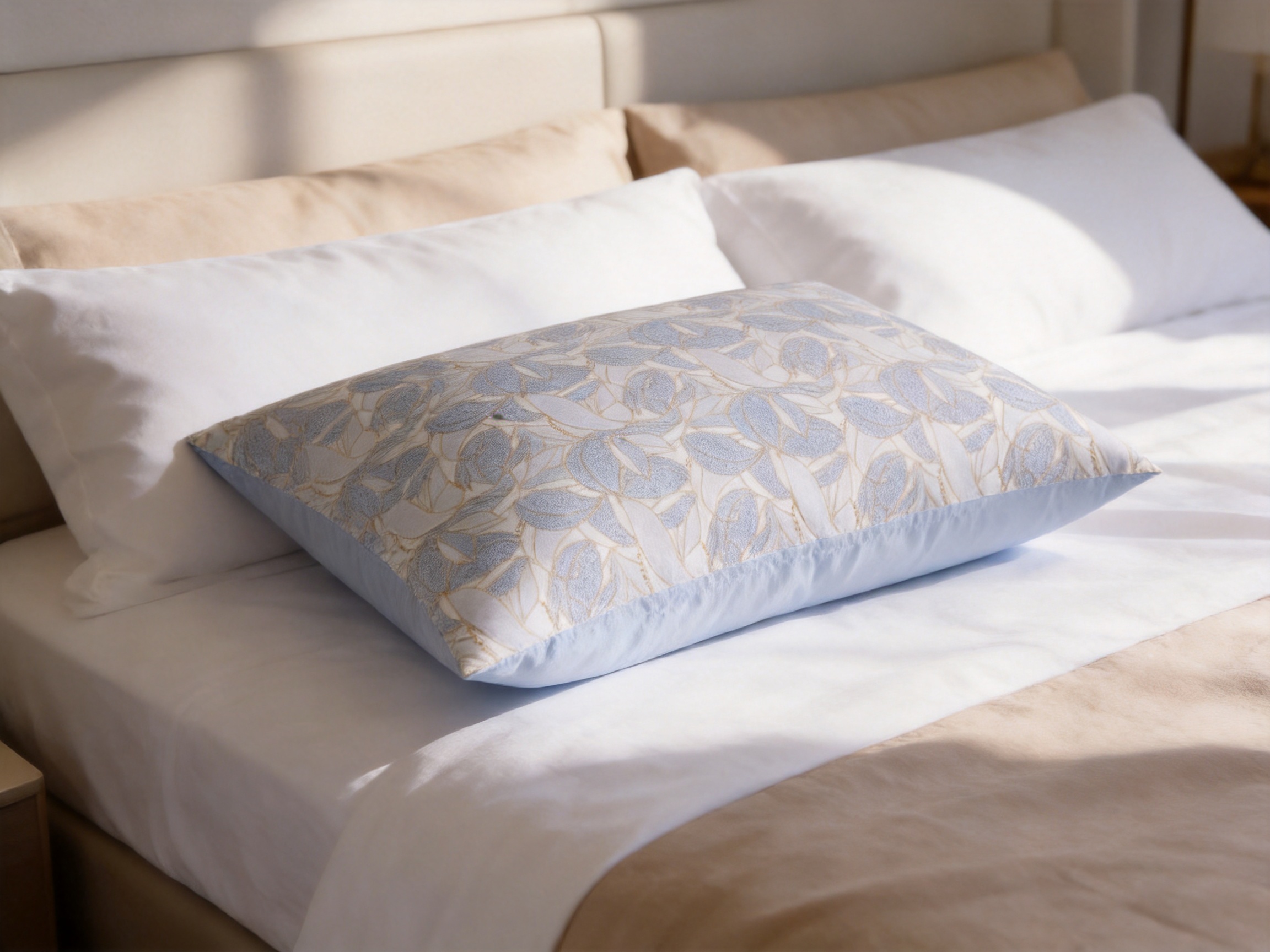
Comfort begins at the surface. Because pillows come into close contact with the face, neck, and shoulders, fabric feel is especially important. The use of brushed fabric gives this product a soft and skin-friendly texture. Brushing slightly lifts fibers from the surface of the fabric, producing a smoother and warmer hand feel compared with many flat, untreated materials.
The 85gsm fabric weight supports a balance between softness and practicality. Lightweight fabric can feel gentle and comfortable, but it must still be stable enough for sewing, filling, packaging, and regular handling. The selected fabric construction is suitable for a soft household pillow while keeping the product accessible for volume production and competitive market pricing.
Compared with coarse low-cost pillow fabrics, brushed fabric improves perceived comfort immediately. Consumers often judge bedding products by touching them. If the surface feels scratchy, thin, or stiff, the product may be considered low quality even if the filling is acceptable. A brushed surface helps the product communicate comfort from the first contact.
The printed brushed fabric also enhances the pattern’s visual softness. Printed designs on hard or shiny fabrics can sometimes appear harsh or overly artificial. On brushed fabric, the surface has a warmer and more textile-like appearance. This supports the high-end and elegant impression described in the product concept.
The plain brushed backing is equally important. It offers the same soft touch while providing visual contrast. The user can turn the pillow to either side and still experience comfort. This is a practical advantage over pillows that use decorative fabric only on one side and a noticeably lower-grade backing on the other.
3D and 6D Polyester Filling Performance
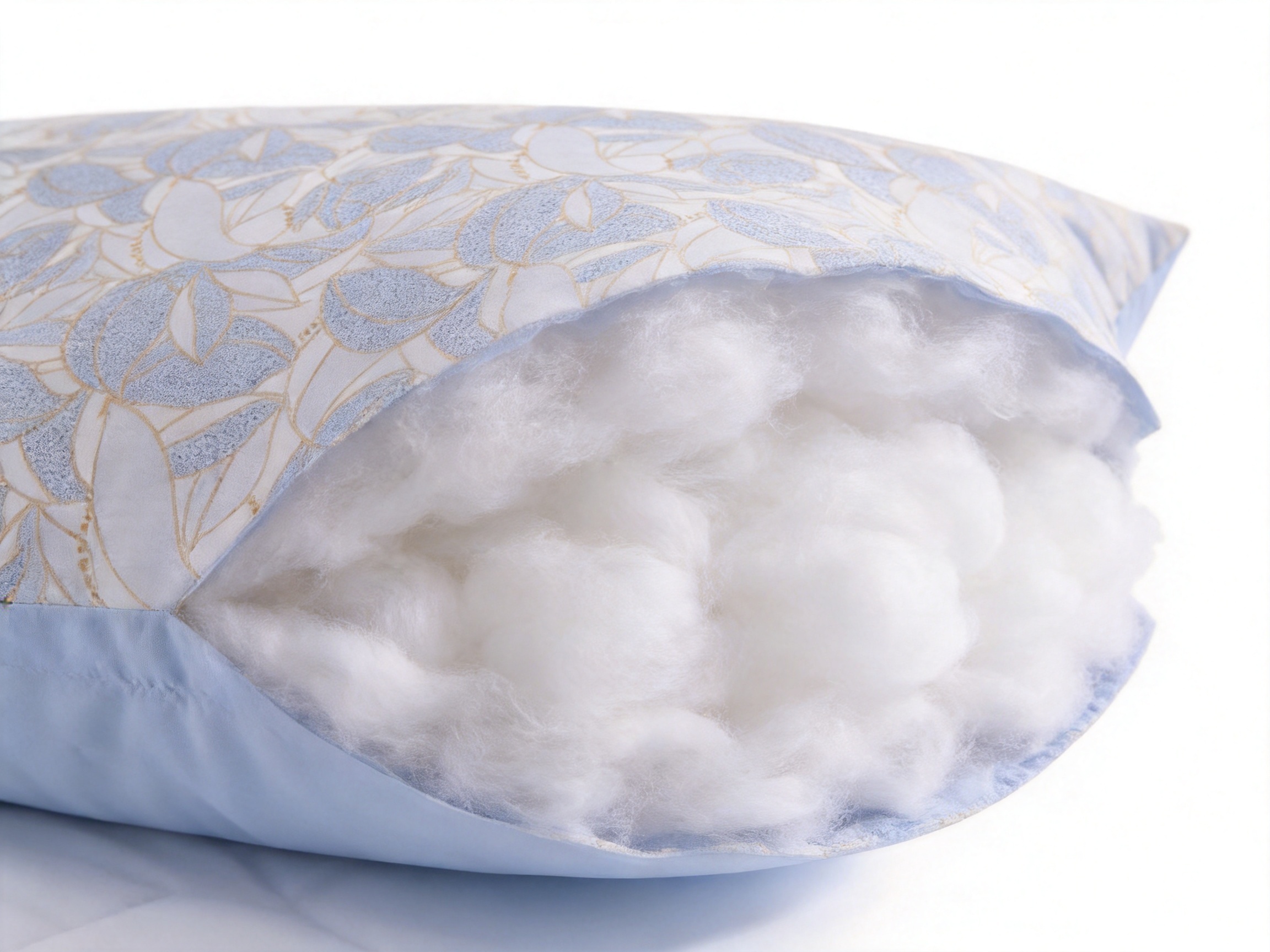
The filling of a pillow determines much of its loft, bounce, shape retention, and support. This product uses a 3D plus 6D polyester filling blend. Polyester fiber is widely used in bedding because it is lightweight, resilient, easy to process, and suitable for large-scale production. It can provide a fluffy structure while remaining practical for everyday care.
The combination of different polyester fiber types can create a more balanced filling than a single basic fiber. Finer or more flexible fibers can improve softness, while thicker or more structured fibers can help maintain loft and prevent the pillow from becoming too flat too quickly. By combining 3D and 6D polyester, the pillow can deliver softness and resilience at the same time.
Compared with low-grade flat polyester filling, a better fiber blend can improve recovery after compression. Pillows are repeatedly pressed by the head, packed for transport, and handled during display. If the filling lacks resilience, the pillow may lose volume and appear unattractive. A properly selected polyester blend helps the pillow recover shape and maintain a fuller appearance.
Compared with natural fillings such as down or feathers, polyester offers advantages in consistency, cost control, and accessibility. Natural fillings can vary by batch and may require more complex cleaning and sourcing management. Polyester filling can be produced and blended with predictable performance, making it suitable for orders requiring stable quality, consistent feel, and reliable supply.
Compared with memory foam pillows, this polyester pillow is generally lighter, softer in a traditional fluffy way, and easier to compress for shipping. Memory foam can provide contouring support, but it may feel too firm, heavy, or warm for some users. A polyester filled pillow offers a familiar comfort experience and can suit a wide range of sleeping and resting preferences.
Everyday Comfort for Different Users
The Polyester Printed Pillow is designed for broad daily use. It is suitable for adults, guest rooms, family spaces, student accommodation, and hospitality environments where comfort, appearance, and practical value must be balanced. The 50 x 70 cm size offers enough area for head and neck placement, while the soft fabric and polyester filling support relaxed use.
For side sleepers, a fluffy pillow can help create a cushioned surface between the head and mattress. For back sleepers, the resilience of polyester filling can provide gentle lift. For people who use pillows while reading, resting, or watching television, the product can also serve as a soft support cushion. While individual comfort needs vary, the pillow is versatile enough for many common situations.
Guest bedding requires special attention because different users have different preferences. A very firm or highly specialized pillow may satisfy some people but disappoint others. A soft polyester pillow offers a more familiar and generally acceptable comfort profile. This makes it useful for guest bedrooms, hotels, vacation rentals, and other shared sleeping environments.
For households, the pillow can be used as part of a full bedding arrangement. It can pair with quilts, blankets, mattress protectors, and cushion products. Because the manufacturer also produces a wide range of home textile items, coordinated product development and supply can be easier for buyers who require multiple bedding categories from one source.
Advantages Over Common Competing Pillows
In competitive bedding markets, many pillows appear similar at first glance. However, differences in fabric, filling, production control, design, and supplier capability can strongly affect the final user experience. The Polyester Printed Pillow offers several advantages over common competing products.
Advantage One: Better Visual Value Than Plain Commodity Pillows
Many basic polyester pillows use only white or plain fabric. These can be suitable as inserts, but they do not provide strong decorative value on their own. This printed pillow adds visual appeal through its patterned fabric and solid-color balance. It can function as both a comfort item and a decorative bedding component.
Advantage Two: Softer Hand Feel Than Rough Basic Covers
Low-cost pillows may use fabrics that are thin, stiff, or rough. The brushed fabric used here improves softness and skin contact. Since pillows are used close to the face, the surface feel can strongly influence satisfaction. A softer fabric can make the product feel more premium even before the user evaluates the filling.
Advantage Three: Balanced Filling Compared With Simple Low-Loft Fiber
Some economy pillows use low-resilience polyester that flattens quickly. The 3D plus 6D polyester filling blend is designed to provide better fullness and recovery. This helps the pillow maintain a more attractive shape during use, storage, display, and transport.
Advantage Four: Practical Size for Market Compatibility
The 50 x 70 cm size is suitable for many bedding programs. It can be integrated into retail bedding sets, household bedding collections, hospitality purchasing, or wholesale product lines. Market compatibility reduces development difficulty for buyers and supports easier inventory planning.
Advantage Five: Supplier Strength Behind the Product
A pillow is only as reliable as the production system behind it. Tongxiang Xinlong Bedding Co., Ltd. has long-term experience, a sizeable manufacturing base, skilled employees, advanced equipment, and international certifications. These strengths help support consistency, quality management, and the ability to handle custom home bedding requirements.
Manufacturing Strength and Industrial Capability
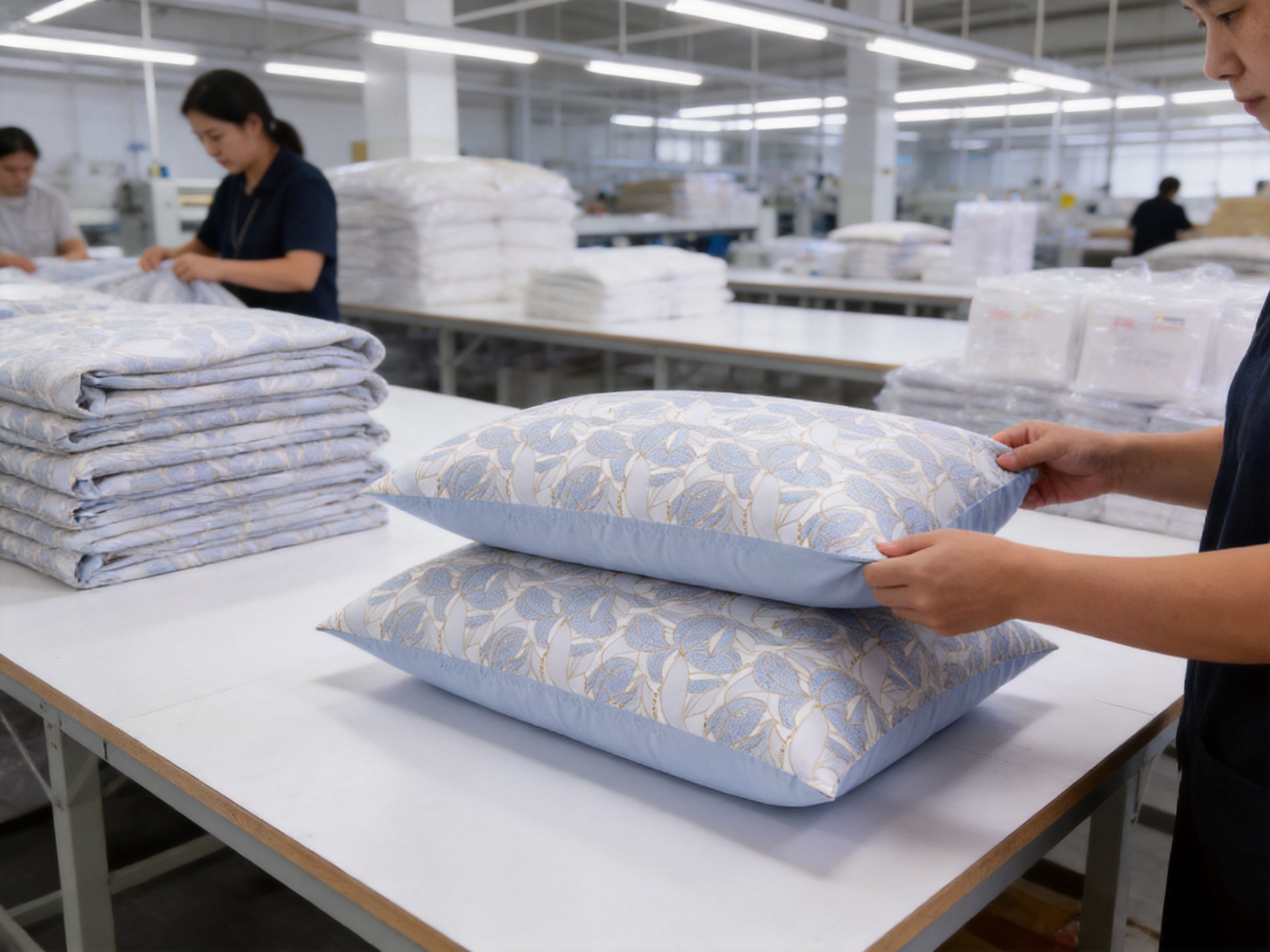
The quality of a textile product depends on design decisions and manufacturing execution. Tongxiang Xinlong Bedding Co., Ltd. was established in January 2002 and has developed into a home textile manufacturer with experience across many bedding categories. The company’s production range includes quilts, pillows, cushions, mattress protectors, blankets, bedspreads, travel quilts, pillowcases, shower curtains, curtains, and related household textile products.
The company covers an area of 21,000 square meters, with a construction area of 18,000 square meters. This scale supports organized production planning, material storage, cutting, sewing, filling, inspection, packing, and shipment. A larger and better-structured facility can help reduce disorder in production and improve workflow efficiency.
With more than 320 employees, the company has the labor force and technical staff needed for large and varied orders. Home textile manufacturing requires skilled workers at many stages: fabric checking, cutting, sewing, filling, edge closing, trimming, inspection, folding, packaging, and loading. Experienced employees help maintain consistency across batches.
Advanced production equipment is another important strength. Bedding products require stable sewing lines, filling machines, cutting systems, finishing tools, and inspection processes. Equipment influences production speed, product consistency, seam quality, filling distribution, and delivery reliability. A manufacturer that continues to invest in equipment is better positioned to meet modern home textile market requirements.
The company also emphasizes development and innovation. In the home textile industry, customer preferences change quickly. Print styles, fabric finishes, packaging formats, sustainability expectations, and retail requirements are continuously evolving. The ability to design and produce fashionable and warm household products allows the manufacturer to support different customers and market segments.
Quality Management and Certifications
Quality control is essential for bedding products because they are used daily and often purchased in quantity. A single product failure may affect consumer trust, while inconsistent quality can create problems for retailers and distributors. The manufacturer’s certifications and management systems are therefore important signs of production discipline.
ISO9001 relates to quality management systems. A manufacturer operating under quality management principles is expected to define processes, monitor performance, manage corrective actions, and pursue continuous improvement. For buyers, this can provide greater confidence that product quality is not left to chance.
ISO14001 relates to environmental management systems. In textile production, environmental awareness can include resource use, waste management, chemical control, and continuous improvement of environmental performance. This is increasingly important as retailers and consumers pay more attention to responsible manufacturing.
OEKO-related certifications are widely recognized in textile markets and focus on product safety and responsible textile production. Bedding products come into close contact with the body, so material safety and chemical control matter. Certifications can help buyers address customer concerns and meet compliance expectations.
GRS, the Global Recycled Standard, is relevant when recycled materials are involved in textile supply chains. It reflects the broader industry movement toward traceability and responsible material use. Even when a specific product order varies by material requirement, a manufacturer familiar with such certification systems is better prepared for modern procurement expectations.
BSCI relates to social compliance and responsible business practices. Many international buyers require suppliers to demonstrate awareness of labor conditions and ethical production. A manufacturer with BSCI experience is better aligned with global sourcing standards.
The company has also been rated as a safety production standardization enterprise for several consecutive years since 2016. Safety management supports stable production, protects employees, and reduces operational risks. In manufacturing, safe and standardized operations often contribute to better consistency and fewer disruptions.
How the Pillow Can Be Produced With Process Control
Although every order may have specific requirements, a well-managed polyester printed pillow production process generally includes material selection, fabric inspection, cutting, sewing, filling, finishing, inspection, packaging, and shipment. Each stage affects the final quality of the product.
Material Selection
The process begins with selecting suitable printed brushed fabric, plain brushed fabric, and polyester filling. Fabric must meet requirements for weight, softness, color, print appearance, and sewing performance. Filling must meet expectations for loft, cleanliness, resilience, and blend consistency. Strong supplier management and incoming checks help avoid problems before production begins.
Fabric Inspection
Before cutting, fabric can be inspected for defects such as stains, holes, printing irregularities, uneven brushing, color variation, or width problems. Early inspection prevents defective material from becoming finished products. This step is especially important for printed fabrics because pattern consistency affects appearance.
Cutting and Preparation
Fabric is cut to the required dimensions with allowances for sewing and finishing. Accurate cutting helps ensure the final 50 x 70 cm pillow shape is consistent. If cutting is inaccurate, the pillow may appear twisted, uneven, or difficult to pack neatly.
Sewing and Shell Formation
The printed and plain brushed fabric panels are sewn together to create the pillow shell. Seam quality is essential because the pillow must withstand filling pressure, compression, and repeated handling. Clean stitching also improves appearance and customer perception.
Filling Control
The 3D plus 6D polyester filling is inserted according to target weight and loft requirements. Filling must be distributed evenly so the pillow does not feel lumpy or hollow. Proper filling control is one of the most important differences between a comfortable pillow and a poor-quality one.
Closing, Trimming, and Finishing
After filling, the pillow is closed securely. Loose threads are trimmed, edges are checked, and the product is shaped. Finishing details may appear small, but they strongly influence the final retail impression. A neat pillow looks more trustworthy and premium.
Final Inspection
Finished pillows can be checked for size, appearance, seam strength, filling distribution, cleanliness, softness, and packaging readiness. Inspection helps ensure that customers receive products matching the approved standard.
Packaging and Shipment
Packaging protects the pillow during storage and transport. Polyester pillows can often be compressed or packed efficiently, which helps reduce shipping volume. However, packaging must also allow the product to recover properly when opened. The right packing method depends on the customer’s retail, wholesale, or e-commerce requirements.
Customization Potential for Different Buyers
The product information describes a specific Polyester Printed Pillow, but the manufacturer’s broader capabilities support custom home bedding for various customers. Customization can include fabric selection, print pattern, color combination, filling weight, packaging format, labeling, and order assortment. This is valuable for retailers and distributors that need products tailored to their brand positioning and target market.
For mass retailers, the pillow can be developed as an affordable but visually attractive bedding product. Price, packaging, and shelf impact are often key concerns. The printed design and soft brushed fabric help create value while polyester filling supports efficient production.
For hotel suppliers, customization may focus on durability, guest comfort, neutral design, and bulk packaging. A soft printed pillow can be used in decorative room settings, while plain or coordinated versions may be selected for operational bedding programs.
For online sellers, compressed packaging, clear product specifications, and attractive visual presentation are important. The pillow’s pattern, soft surface, and practical size can be highlighted through product photography and descriptive content. Consistency is especially important for online reviews, where buyers judge whether the received product matches the listing.
For regional distributors, the ability to adjust print styles and packaging languages can help match local market preferences. Bedding patterns that sell well in one region may not perform equally in another. A manufacturer with development experience can help buyers create suitable product assortments.
Role in a Complete Bedding Collection
A pillow is often purchased together with other bedding products. Because the manufacturer produces multiple home textile categories, the Polyester Printed Pillow can be integrated into broader bedding collections. It can coordinate with quilts, blankets, mattress protectors, mattress covers, cushions, and pillowcases.
For example, a bedding set may include a quilt with a related color palette, a printed pillow, and a matching cushion. A mattress protector can be added for hygiene and mattress care. A blanket can provide seasonal warmth. By sourcing related products from one experienced manufacturer, buyers may improve coordination and simplify communication.
Complete bedding programs are attractive to retailers because they encourage customers to purchase multiple items. A printed pillow can act as a visual highlight within such a program. Its pattern can connect different products and make the display more appealing.
For home users, coordinated bedding reduces the difficulty of decorating a room. A well-chosen pillow can make a bed appear more inviting, especially when paired with complementary colors and textures. The product’s solid reverse side also makes coordination easier because it can be used in either a decorative or subtle way.
Comfort, Hygiene, and Care Considerations
Polyester pillows are popular partly because they are practical. Polyester filling is lightweight and can be suitable for daily household use. Depending on final care label instructions and customer requirements, polyester pillows are often easier to maintain than more delicate natural-filled products. Practical care is important for families, hotels, dormitories, and other environments where bedding is used frequently.
The brushed fabric surface provides comfort, but care should still protect the softness and appearance of the fabric. Users should follow the care label provided with the final product. Gentle washing, proper drying, and regular airing can help maintain freshness and loft. Excessive heat, harsh chemicals, or rough handling may affect fabric feel and filling performance.
For hospitality and institutional buyers, care performance should be confirmed according to the intended laundering process. If a pillow will be washed frequently in commercial conditions, specifications may need to be adjusted accordingly. The manufacturer’s custom production experience can support discussions about fabric, filling, stitching, and packaging requirements for different care environments.
Hygiene is also connected to the use of pillowcases and protectors. While the printed pillow itself is attractive, using a removable pillowcase may help extend product life in high-use environments. For decorative use, the printed surface can be displayed; for sleeping use, a compatible pillowcase may be added depending on the user’s preference.
Why Manufacturing Experience Matters
In home textiles, product quality is not created by one factor alone. It is the result of material selection, technical knowledge, equipment, workers, process control, inspection, and continuous improvement. A manufacturer with more than two decades of experience can better understand how small decisions affect the final product.
For example, the softness of fabric must be balanced with sewing stability. Filling must be fluffy but not too uneven. Packaging must save space but not permanently damage pillow shape. Print designs must be attractive but suitable for production and market needs. These practical details are often learned through years of manufacturing experience.
The company’s business purpose emphasizes quality as the life of the enterprise. This principle is important in bedding because customers return to suppliers who deliver consistent products. A comfortable pillow may seem simple, but large-volume orders require repeatability. Each unit should match the approved sample as closely as possible.
The company also works to standardize operating procedures, improve employee technical levels, and improve product quality. Standardization helps ensure that workers follow consistent methods. Training helps employees identify and prevent defects. Continuous improvement helps the manufacturer adapt to new customer requirements and changing industry standards.
Market Applications
The Polyester Printed Pillow can serve multiple market applications. Its design and construction allow it to fit both consumer and commercial channels. This flexibility increases its value for buyers looking for a product that can be adapted to different sales strategies.
Home Bedding Retail
In retail stores, the pillow can be displayed as a soft, decorative, and affordable bedding product. The printed surface helps attract attention, while the practical size and polyester filling make it easy for consumers to understand and purchase.
Hotel and Guest Accommodation
Hotels and guesthouses can use printed pillows to add warmth and visual appeal to rooms. The product can be customized to match room colors or seasonal themes. Its polyester filling offers a practical comfort profile for different guests.
Dormitories and Apartments
Students and apartment residents often need bedding that is comfortable, affordable, and easy to handle. A printed polyester pillow provides both function and style without requiring complex care.
Promotional Bedding Programs
Retailers and distributors may include pillows in promotional bedding sets. Because the product combines decorative fabric with practical filling, it can increase the perceived value of a bedding package.
Seasonal Collections
Print patterns can be adjusted for seasonal themes, such as spring freshness, autumn warmth, or winter coziness. The manufacturer’s product development ability makes this type of seasonal planning possible.
Sustainability and Responsible Production Considerations
Modern bedding buyers increasingly consider environmental and social responsibility when choosing suppliers. While product comfort and price remain important, certifications and responsible production systems can influence purchasing decisions. The manufacturer’s ISO14001, OEKO-related, GRS, and BSCI certifications demonstrate awareness of these market expectations.
Polyester as a material can be used in many ways, including conventional and recycled options depending on customer requirements. When buyers require recycled content or traceability, a manufacturer familiar with GRS-related systems is better positioned to discuss suitable solutions. Responsible sourcing and documentation are becoming more important in international textile trade.
Environmental management is also connected to production efficiency. Efficient material use, waste reduction, organized storage, and controlled processes can reduce unnecessary loss. In textile manufacturing, small improvements across large production quantities can have meaningful impact.
Social responsibility is equally important. Bedding products are used in intimate home environments, and customers often prefer products made under responsible conditions. A supplier with BSCI experience can better support buyers who need social compliance documentation as part of their procurement process.
How Buyers Can Evaluate This Pillow
Professional buyers often evaluate pillows through sample testing, supplier review, specification confirmation, and packaging assessment. For this Polyester Printed Pillow, buyers may consider several practical evaluation points.
First, examine the fabric hand feel. The brushed surface should feel soft and pleasant. The printed side and plain side should both meet comfort expectations. The print should appear clean, attractive, and suitable for the target market.
Second, check filling distribution. A good pillow should not have obvious empty corners, hard lumps, or uneven zones. It should recover after light compression and maintain a pleasing shape.
Third, review sewing quality. Seams should be secure and neat. Edges should be properly finished, and loose threads should be minimized. Since pillows are frequently handled, seam reliability matters.
Fourth, confirm size and weight requirements. The listed size is 50 x 70 cm, but final order specifications should include acceptable tolerance, filling weight, packaging method, carton quantity, and labeling requirements.
Fifth, evaluate supplier capability. Certifications, production scale, experience, communication, sample development speed, and quality control systems should all be considered. A good product is more valuable when supported by a dependable manufacturer.
Frequently Asked Questions
What is the main feature of this Polyester Printed Pillow?
The main feature is its combination of decorative printed brushed fabric, plain brushed fabric, and 3D plus 6D polyester filling. It offers visual appeal, soft touch, and practical everyday comfort.
What size is the pillow?
The pillow size is 50 x 70 cm, a common and practical size for home bedding, guest rooms, hotels, and retail bedding programs.
What fabric is used?
The pillow uses 85gsm printed brushed fabric and 85gsm plain brushed fabric. The brushed finish helps create a soft and skin-friendly surface.
What filling does the pillow use?
The filling is a blend of 3D and 6D polyester fiber. This blend supports loft, softness, resilience, and shape recovery for daily use.
How is this pillow different from ordinary plain pillows?
Unlike many plain commodity pillows, this product has a decorative printed surface and a solid brushed reverse side. It provides both comfort and visual value, making it suitable for direct display as well as regular bedding use.
Is the pillow suitable for hotels or guest rooms?
Yes. Its soft feel, practical size, attractive appearance, and polyester filling make it suitable for hotels, guest rooms, serviced apartments, and other accommodation settings.
Can the product be customized?
Customization may be possible depending on order requirements. Buyers can discuss print patterns, colors, filling specifications, packaging, labeling, and related bedding products with the manufacturer.
Why is brushed fabric beneficial for pillows?
Brushed fabric has a softer surface than many untreated fabrics. Since pillows contact the face and neck, a soft surface improves comfort and perceived quality.
What manufacturing strengths support this product?
The manufacturer has more than two decades of home textile experience, a 21,000-square-meter site, an 18,000-square-meter construction area, more than 320 employees, advanced equipment, and multiple international certifications.
What certifications does the manufacturer hold?
The company has passed certifications including ISO9001, ISO14001, OEKO-related certifications, GRS, and BSCI. It has also been recognized as a safety production standardization enterprise for several consecutive years since 2016.
Conclusion
The Polyester Printed Pillow is a well-balanced bedding product that combines style, comfort, and manufacturing reliability. Its printed brushed fabric creates an elegant visual effect, while the plain brushed fabric adds versatility and balance. The 3D plus 6D polyester filling provides softness, loft, and resilience suitable for daily use. The 50 x 70 cm size makes it practical for many home and commercial bedding applications.
Compared with ordinary plain pillows, rough low-cost covers, or simple low-loft fiber products, this pillow offers stronger decorative value, a softer surface, a more balanced filling structure, and broader market appeal. It can be used in homes, hotels, guest rooms, dormitories, retail bedding sets, and coordinated textile collections.
Behind the product is a manufacturer with extensive home textile experience, strong production capacity, advanced equipment, skilled employees, and recognized certifications. Tongxiang Xinlong Bedding Co., Ltd. supports quality management, environmental responsibility, social compliance, safety production, and continuous product development. These strengths help transform a comfortable pillow into a dependable sourcing choice for buyers seeking consistent home bedding products.
For customers looking for a soft, attractive, and practical polyester pillow, this product provides a compelling combination of everyday comfort and commercial value. It is not simply a pillow for sleeping; it is a textile product designed to enhance the look, feel, and reliability of modern bedding.
References
International Organization for Standardization. ISO 9001 Quality Management Systems: Requirements.
International Organization for Standardization. ISO 14001 Environmental Management Systems: Requirements with Guidance for Use.
OEKO-TEX Association. Standard 100 by OEKO-TEX: General and Special Conditions for Textile Product Safety.
Textile Exchange. Global Recycled Standard: Implementation and Certification Guidance.
amfori. BSCI System Manual: Social Compliance and Responsible Supply Chain Practices.
Collier, B. J., Bide, M. J., and Tortora, P. G. Understanding Textiles. Pearson Education.
Kadolph, S. J. Textiles. Pearson Education.
Goswami, B. C., Martindale, J. G., and Scardino, F. L. Textile Yarns: Technology, Structure, and Applications. Wiley-Interscience.


 +86-573-88798028