



 Français
 Español
 Deutsch
Content
- 1 Product Overview
- 2 Why Decorative Cushions Matter in Interior Design
- 3 High Elasticity and Supportive Comfort
- 4 Advantages of 100% Polyester Printed Fabric
- 5 Design Flexibility for Different Markets
- 6 Manufacturing Strengths and Production Experience
- 7 From Material Selection to Finished Cushion
- 8 Quality Management and Production Reliability
- 9 Advantages over Lower-Quality Decorative Cushions
- 10 Applications in Residential Interiors
- 11 Applications in Commercial and Hospitality Spaces
- 12 Customization and Cooperation Opportunities
- 13 Responsible Manufacturing Considerations
- 14 How to Select the Right Cushion for a Project
- 15 Care and Use Recommendations
- 16 Why This Product Is a Practical Choice
- 17 Frequently Asked Questions
- 17.1 What is the standard size of the cushion?
- 17.2 What fabric is used for the cushion cover?
- 17.3 What type of filling does the cushion contain?
- 17.4 Is the cushion suitable for everyday use?
- 17.5 Can the cushion be used in a hotel or furnished apartment?
- 17.6 Can customers request a different size?
- 17.7 What are the main advantages of polyester filling?
- 17.8 What makes the printed cover useful for interior design?
- 17.9 What certifications and management systems does the manufacturer have?
- 17.10 Does the manufacturer produce other home textile products?
- 17.11 Where is the manufacturing company located?
- 17.12 How should customers begin a customized order?
- 18 Conclusion
- 19 References
- 20 Product: High Elastic Chemical Fiber Decorative Printed Cushion
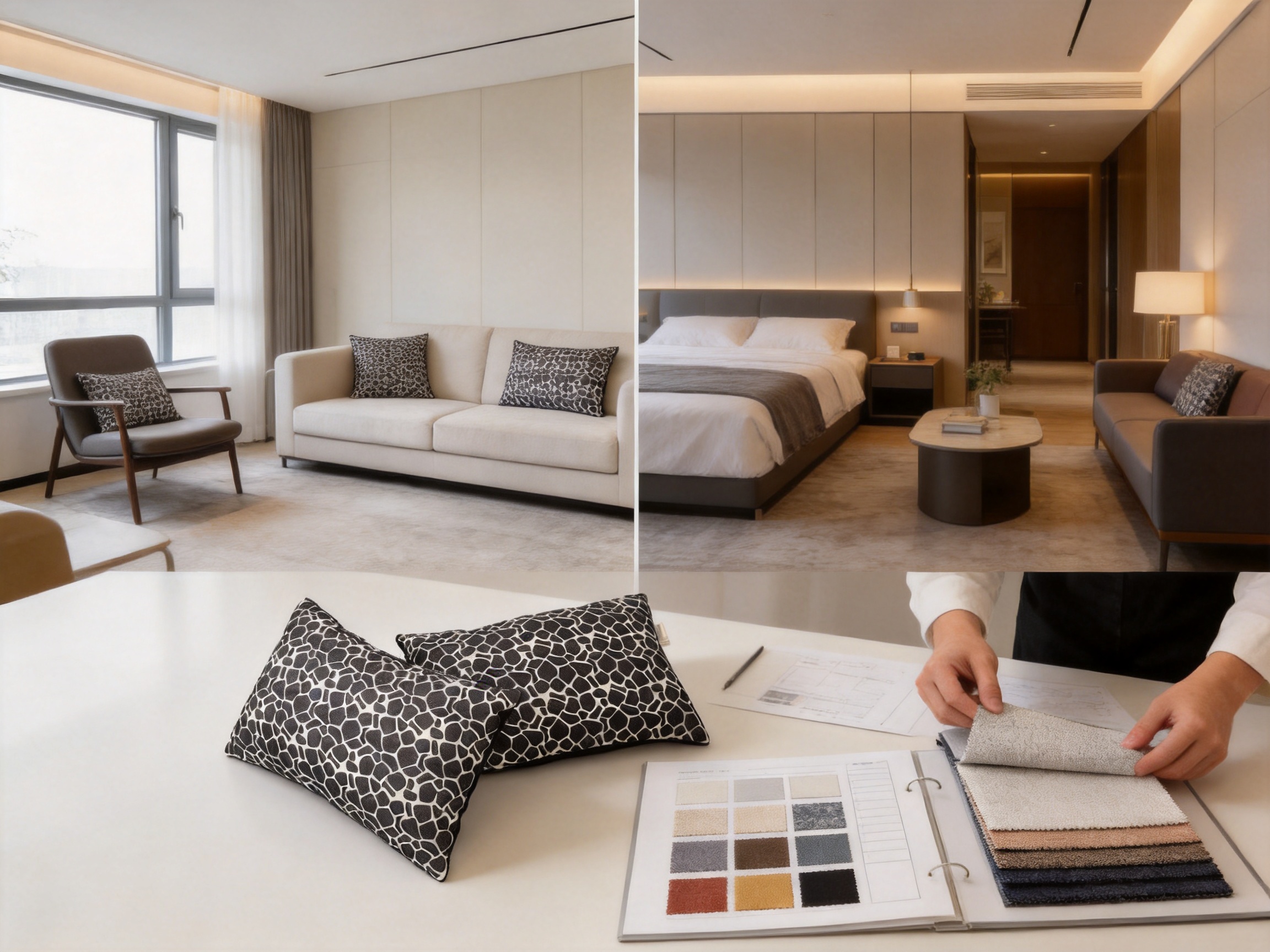
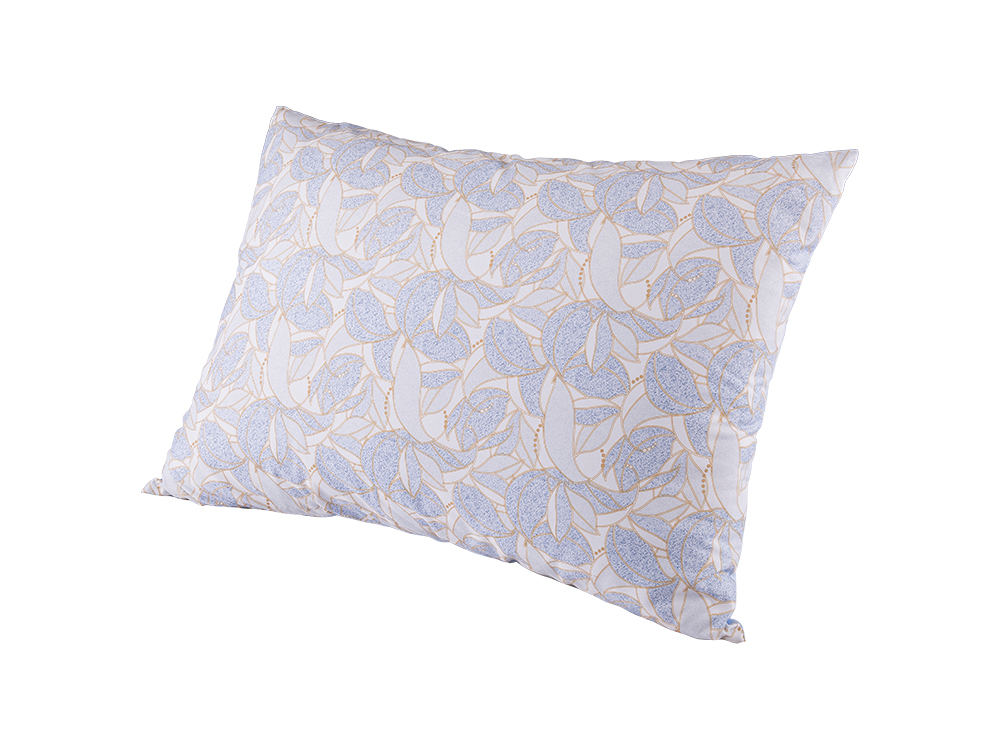
A well-chosen cushion can change the atmosphere of an entire room. It can add color to a neutral sofa, soften the appearance of a formal seating area, introduce visual rhythm to a bedroom, or give a simple interior a more welcoming and personal character. The High Elastic Chemical Fiber Decorative Printed Cushion is designed for precisely this purpose. Combining a 100% polyester printed fabric cover with high-support polyester filling, it offers a practical balance of decorative appeal, comfort, resilience, and manufacturing flexibility.
This cushion is especially suitable for simple-style homes, contemporary apartments, hospitality interiors, retail displays, furnished developments, and other spaces that require attractive textile accessories with dependable performance. Its printed surface provides an opportunity to coordinate with different interior themes, while its resilient filling helps the cushion retain a supportive and inviting form during regular use.
Unlike decorative cushions that focus only on appearance, this product is developed as both a visual accent and a functional comfort accessory. The fabric, filling, construction options, sizing flexibility, and professional production capabilities behind the product make it suitable for customers looking for dependable home textile solutions rather than short-term decorative items.
Product Overview
The High Elastic Chemical Fiber Decorative Printed Cushion has a standard size of 40 x 60 cm, while customized dimensions can also be produced according to customer requirements. This size is versatile enough for sofas, armchairs, beds, benches, reading corners, guest rooms, and decorative seating arrangements. Customers can also request a specified size when a project requires a different proportion, layout, or packaging configuration.
The outer fabric is made from 100% polyester printed fabric. Polyester is widely used in home textiles because it combines durability, dimensional stability, color design flexibility, and relatively easy maintenance. In a decorative cushion, these characteristics are valuable because the cover must remain visually attractive while handling repeated contact, movement, and routine household use.
The filling consists of high-support polyester filling. This type of filling is selected to provide a fuller, more resilient cushion profile. It helps the cushion feel comfortable while supporting the body or maintaining its decorative shape. The material is also suitable for products that must be produced consistently at commercial scale, because polyester filling can be processed and distributed with reliable uniformity.
The product is mainly intended to decorate a simple-style home environment while adding comfort. Its practical design enables it to function as a coordinated accessory rather than an isolated ornament. When used in groups, cushions in different prints or sizes can create layers of color and texture. When used individually, the cushion can provide a focused visual accent on an otherwise plain sofa or bed.
Product name |
High Elastic Chemical Fiber Decorative Printed Cushion |
Product category |
Decorative Cushion |
Standard size |
40 x 60 cm |
Customization |
Specified sizes available according to customer requirements |
Cover fabric |
100% polyester printed fabric |
Filling material |
High-support polyester filling |
Primary purpose |
Interior decoration and comfortable support |
Suitable applications |
Homes, bedrooms, living rooms, hotels, furnished apartments, retail projects, and interior decoration programs |
Why Decorative Cushions Matter in Interior Design
Interior design often depends on small elements that complete the visual language of a room. Large furniture establishes the structure of a space, but cushions help define its mood. A sofa without accessories may appear plain or unfinished, while a carefully selected cushion can introduce warmth, contrast, proportion, and comfort without requiring major changes to the room.
The printed surface of this cushion provides considerable design flexibility. A print can be used to echo wall colors, complement curtains, contrast with upholstery, or introduce a seasonal theme. In a simple home environment, a decorative cushion can prevent the room from feeling empty while preserving a clean and uncluttered appearance.
Cushions also provide a cost-effective method of updating an interior. Replacing a sofa or changing curtains requires a significant investment, while changing cushions can refresh the appearance of a room more quickly. For retailers, this makes decorative cushions attractive products for seasonal collections, coordinated home textile ranges, and impulse purchases.
In commercial interiors, cushions can contribute to brand atmosphere without requiring permanent structural changes. Hotels, serviced apartments, guesthouses, show homes, and furniture showrooms can use printed cushions to create a more comfortable and carefully styled environment. The availability of customized sizes further supports projects in which standard retail proportions may not be sufficient.
High Elasticity and Supportive Comfort
The defining functional feature of this product is its high-support polyester filling. A decorative cushion should not merely look full when first displayed; it should also provide an attractive and comfortable form after handling and normal use. High-support filling helps create a resilient internal structure that can recover more effectively after compression than weak or loosely formed filling.
For users, this means the cushion can offer a pleasant combination of softness and support. It can be placed behind the back, under the arm, or against the side of a sofa. It can also serve as a decorative bed cushion or as an accent on a reading chair. The product is not limited to a single position or room because its filling is designed to provide both comfort and shape.
Elasticity is particularly important for decorative cushions used in busy homes or hospitality environments. Repeated handling can cause low-quality filling to flatten, shift, or form irregular areas. A resilient polyester filling helps reduce this risk when the cushion is properly constructed and maintained. It also supports a more consistent appearance during display, storage, and transportation.
The balance between decorative fullness and practical support is one of the product’s strongest advantages. Some cushions are highly ornamental but provide little comfort, while others are comfortable but lack the visual structure required for coordinated interior styling. This product is intended to bridge that gap by combining a fashionable printed cover with a fuller, supportive interior.
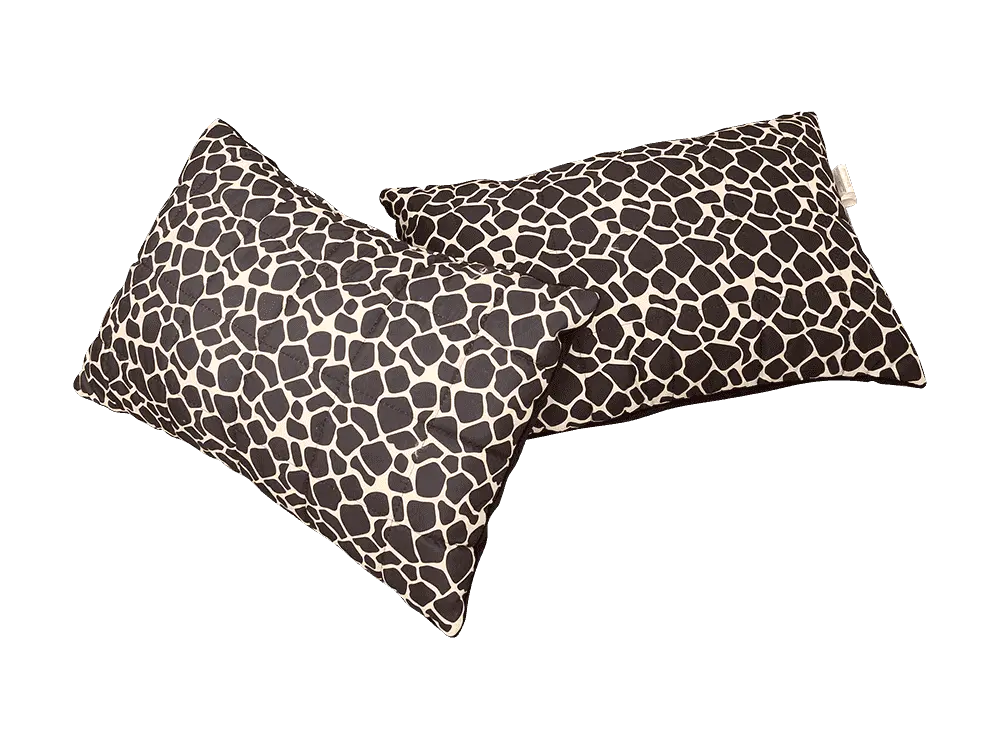
High Elastic Chemical Fiber Decorative Printed Cushion
Advantages of 100% Polyester Printed Fabric
The 100% polyester printed fabric used for the cover provides a strong foundation for a decorative home textile product. Polyester fibers are known for their resistance to everyday wear, dimensional stability, and compatibility with a wide range of printing techniques. These qualities allow manufacturers to develop cushions with varied patterns, tones, and visual effects.
Printed polyester is also suitable for customers who need consistent designs across a collection. A retailer may request several coordinated patterns for a seasonal range, or an interior project may require cushions that follow a particular color palette. The fabric can support these design objectives while maintaining a consistent material base across different production batches.
Another benefit is the fabric’s ability to maintain a stable shape. Decorative cushions need to preserve their proportions so that seams remain aligned and the finished product looks balanced. A stable polyester cover helps support accurate cutting, sewing, filling, and final inspection. It can also contribute to more efficient packing and improved presentation when the cushions are prepared for shipment.
The printed surface gives the product an advantage over plain cushions when visual impact is a priority. A plain cushion can be useful as a neutral base, but a printed cushion offers more immediate character. It can communicate a design theme through geometric arrangements, botanical impressions, abstract shapes, textured visual effects, or other patterns selected by the customer.
Polyester also allows the product to serve different market segments. It can be positioned as a decorative accessory for affordable home collections, a coordinated item for mid-range interior programs, or a customized component in project-based orders. The material’s flexibility helps manufacturers respond to different design and purchasing requirements without changing the entire production structure.
Design Flexibility for Different Markets
One of the main advantages of this cushion is its ability to adapt to different interior styles. Although it is particularly suited to simple and modern home environments, the printed fabric can be selected to complement traditional, Scandinavian, contemporary, transitional, hospitality, and eclectic settings.
Minimalist rooms often benefit from carefully controlled accents. A cushion with a restrained print can introduce pattern without disturbing the clean character of the space. A monochromatic print can add depth to a neutral sofa, while a subtle contrasting print can make a plain seating area appear more layered.
Contemporary interiors may benefit from stronger patterns or clearer color relationships. In this setting, a printed cushion can act as a focal accessory that connects furniture, wall decoration, floor coverings, and curtains. The cushion’s 40 x 60 cm format is suitable for rectangular arrangements and can be combined with square or lumbar cushions to create a structured composition.
Hospitality environments often require a balance between visual appeal and practical repeatability. A hotel or serviced apartment may use cushions to establish a welcoming atmosphere in guest rooms or lounges. A printed polyester cover can make the design more distinctive, while the high-support filling contributes to a comfortable experience for guests.
Retail customers can also use the product as part of a broader home textile assortment. It may be displayed alongside quilts, blankets, mattress protectors, bedspreads, curtains, or other soft furnishings. Because cushions are comparatively easy for customers to purchase and transport, they can serve as an accessible entry point into a larger home decoration collection.
Manufacturing Strengths and Production Experience
The product is manufactured by Tongxiang Xinlong Bedding Co., Ltd., a home textile enterprise established in January 2002. The company is located in Wuzhen Town, Tongxiang City, Zhejiang Province, an area associated with textile production and home furnishing manufacturing. Its long operating history provides experience in developing and producing multiple categories of household textile products.
The company’s product range includes silk cotton quilts, chemical fiber quilts, pillows, cushions, bedspreads, travel quilts, mattress protectors, blankets, quilt and pillowcases, shower curtains, and curtains. This broad product scope is important because it demonstrates experience across different materials, constructions, filling types, sewing requirements, and finishing expectations.
Experience in related products can strengthen the manufacturing process for decorative cushions. Knowledge of quilts and pillows supports expertise in filling preparation, distribution, loft management, and textile handling. Experience with bedspreads, mattress protectors, curtains, and other sewn products contributes to familiarity with fabric inspection, cutting accuracy, seam construction, and finishing control.
The company covers an area of approximately 21,000 square meters and has a construction area of approximately 18,000 square meters. Its workforce includes more than 320 employees, and the facility is equipped with various advanced production machines. These resources support organized production and help the company manage different product categories for customers with varied requirements.
A large and established production base can provide several benefits to buyers. It may support more consistent capacity planning, clearer process organization, improved coordination between departments, and better management of large or repeat orders. Customers purchasing decorative cushions often need stable quality and reliable repeatability, especially when products are being sold as part of a collection. Manufacturing scale can help address those requirements.
From Material Selection to Finished Cushion
Fabric Preparation and Inspection
The manufacturing process begins with the careful preparation of the printed polyester fabric. Before cutting, fabric should be checked for visual consistency, print alignment, surface condition, color uniformity, and other factors that may affect the final appearance. Proper inspection helps identify potential issues before the material enters later production stages.
For printed decorative products, visual quality is especially important. A small irregularity may become more noticeable when it appears on the front panel of a cushion. Organized fabric inspection therefore helps protect the product’s decorative value and reduces the likelihood of avoidable defects moving through the production line.
Pattern Planning and Cutting
After fabric preparation, production teams plan the cutting layout according to the selected cushion dimensions. The standard 40 x 60 cm format can be produced efficiently, while specified customer sizes require corresponding adjustments to patterns, seam allowances, and material consumption.
Accurate cutting helps maintain consistent finished dimensions. It also supports better matching between front and back panels, particularly when printed fabrics have directional patterns or repeated visual motifs. Efficient layout planning can reduce fabric waste while ensuring that the finished cushions meet the agreed specification.
Sewing and Cover Construction
The cut fabric components are assembled through controlled sewing operations. Seam quality is important because the cover must withstand regular handling, filling pressure, and repeated use. Straight seams, suitable thread tension, secure corners, and clean finishing all contribute to the cushion’s appearance and durability.
Construction methods may vary according to the customer’s design, packaging, and use requirements. Some projects may prioritize a particular closure style, while others may require a permanently sewn cover or a specific finishing detail. The manufacturer’s experience across many home textile products supports the ability to coordinate construction details with broader project needs.
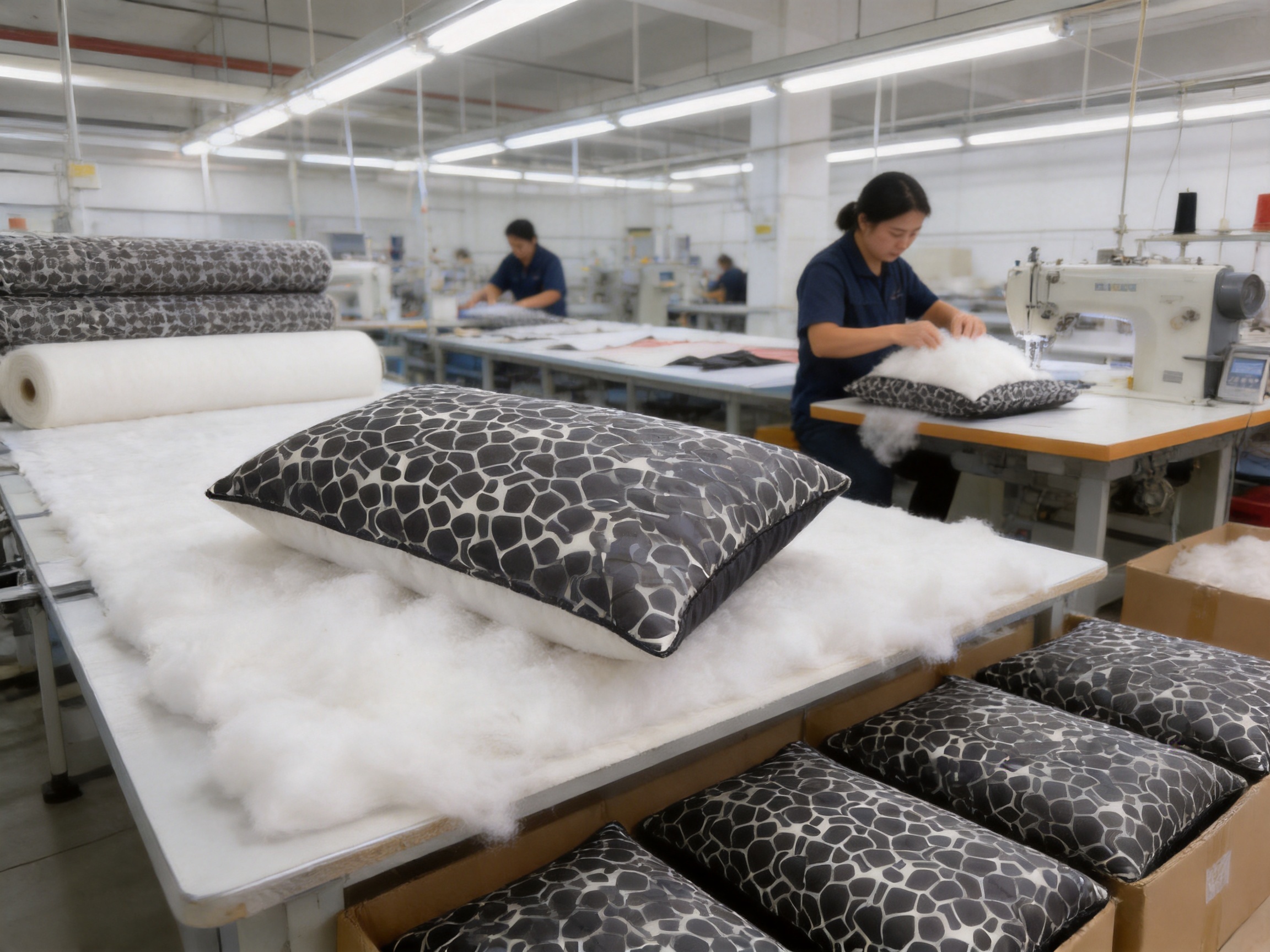
Filling Preparation and Insertion
The high-support polyester filling must be prepared and distributed to create a balanced internal structure. Uneven filling can cause thin areas, irregular corners, or an unattractive surface. Controlled filling operations help ensure that the cushion achieves a consistent level of fullness and support.
Filling quantity is an important part of product development. Too little filling may result in a flat appearance and insufficient support, while excessive filling may place unnecessary stress on the seams or make the cushion uncomfortable. The appropriate quantity depends on the cushion’s dimensions, cover construction, desired firmness, and intended application.
Shaping, Inspection, and Packing
After filling, the cushion is shaped and inspected. Production personnel can check the overall dimensions, print appearance, seam condition, filling distribution, surface fullness, and general presentation. This stage helps ensure that the product is not only technically complete but also visually suitable for display and delivery.
Packaging must protect the cushion during storage and transportation. Decorative printed products should be packed in a way that reduces unnecessary compression, contamination, moisture exposure, and surface damage. Proper packaging also helps buyers receive goods in an organized condition that supports efficient warehouse handling and retail presentation.
Quality Management and Production Reliability
Quality is a central consideration in home textile manufacturing because the products are used directly in household environments. Decorative cushions must satisfy expectations related to appearance, comfort, durability, consistency, and safety. A product that looks attractive but has irregular dimensions or poor seam quality may create customer dissatisfaction, even if its basic materials are appropriate.
The manufacturer’s stated certifications and management systems provide an important foundation for quality assurance. The company has passed international certifications and standards including ISO 9001, ISO 14001, OEKO-TEX Standard 100, OEKO-TEX STeP, GRS, and BSCI. These certifications relate to areas such as quality management, environmental management, textile safety, sustainable processing, and social responsibility.
Certification alone does not replace product inspection, but it demonstrates that the manufacturer has developed formal systems for managing important aspects of production. For international customers, this can increase confidence in supplier organization, documentation, process control, and responsibility across the manufacturing operation.
ISO 9001 is associated with quality management systems and continuous improvement. In the context of decorative cushions, a structured quality system can support clearer specifications, documented procedures, production monitoring, corrective actions, and improved consistency between batches.
ISO 14001 relates to environmental management. Home textile production involves fabric, filling, packaging, energy, water, and other resources. An environmental management framework encourages manufacturers to identify environmental impacts and improve operational control where possible.
OEKO-TEX-related certifications are relevant to textile safety and responsible production. For buyers and consumers, textile safety is important because cushions are used in close contact with people in homes, hotels, and other interior environments. Responsible testing and material management can contribute to greater confidence in the finished product.
GRS certification is associated with recycled materials and responsible chain-of-custody practices when applicable to certified products. BSCI is connected with social compliance and responsible business practices. Together, these certifications reflect the company’s commitment to operating according to recognized international expectations.
Advantages over Lower-Quality Decorative Cushions
The market contains many decorative cushions that may look similar at first glance. However, differences in materials, filling quality, manufacturing control, and supplier capability can become apparent after repeated use. This product offers several advantages over cushions made with weak filling, unstable fabrics, inconsistent dimensions, or limited quality management.
More Balanced Decorative and Functional Value
Some low-cost cushions are designed primarily for visual display and may not provide meaningful comfort. The high-support polyester filling used in this product gives it a more functional role. It can enhance an interior while also providing support behind the back, beside the body, or beneath the arm.
Improved Shape Retention
Low-quality filling may compress quickly or collect in uneven areas. High-support polyester filling is better suited to maintaining a fuller appearance when the cushion is used and handled regularly. Proper manufacturing and shaping further support the product’s ability to preserve an attractive form.
Greater Design Adaptability
A printed polyester cover allows more visual variety than a limited plain-fabric range. Buyers can select patterns and colors that support different collections, rooms, seasons, or markets. The ability to provide specified sizes adds another layer of flexibility for project orders.
More Consistent Production Capability
An established manufacturer with a large production facility, experienced employees, advanced equipment, and multiple certifications is better positioned to support consistent production than an informal or highly limited workshop. This is especially relevant for wholesalers, retailers, hospitality groups, and importers who need repeat orders with stable specifications.
Broader Home Textile Expertise
Because the manufacturer produces cushions alongside quilts, pillows, blankets, mattress protectors, curtains, and other textile products, customers may be able to coordinate several categories through one experienced supplier. This can simplify product development, communication, quality management, and shipment planning.
Applications in Residential Interiors
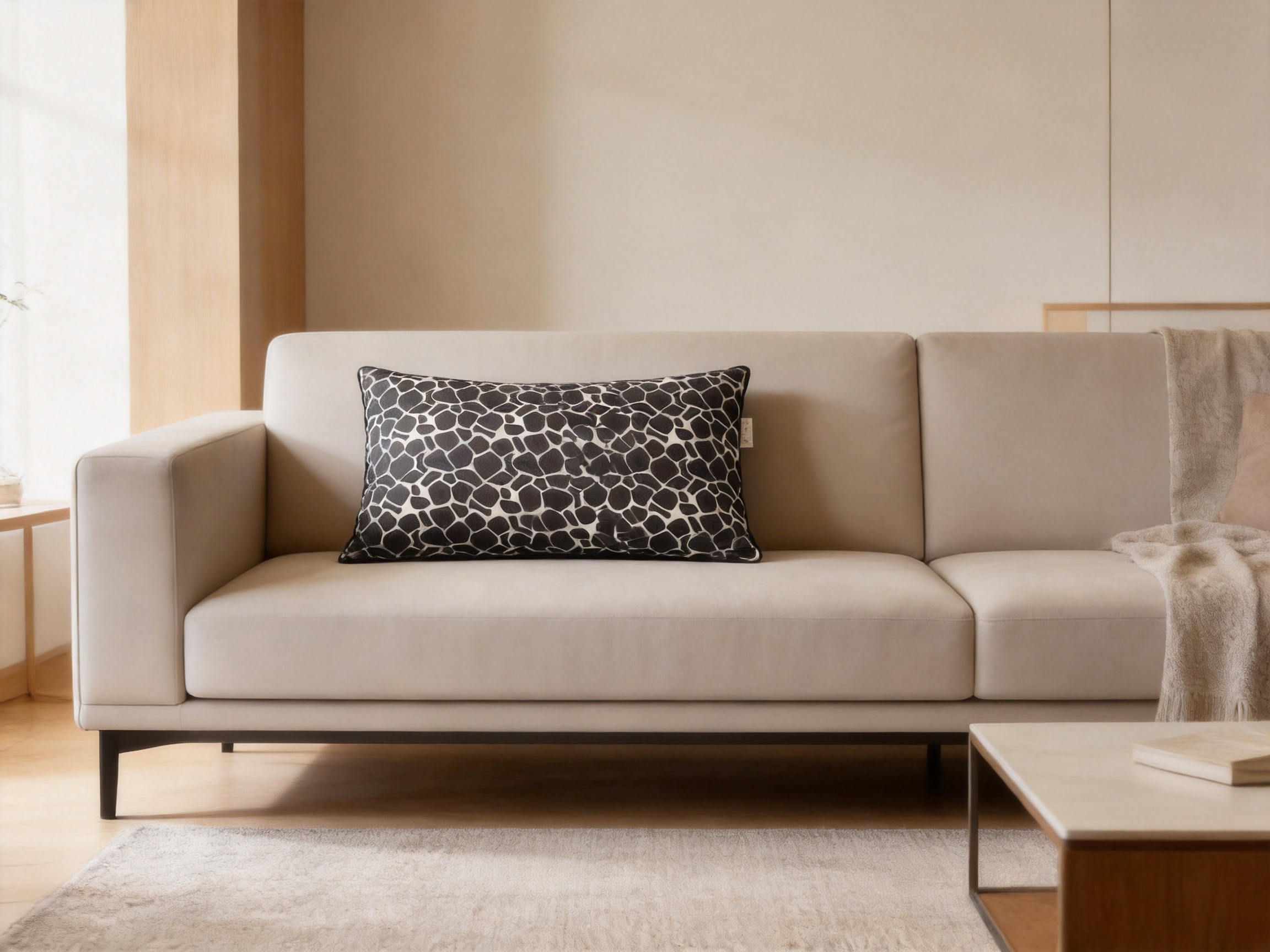
In living rooms, the cushion can be placed on a sofa, loveseat, armchair, window seat, or bench. Its rectangular 40 x 60 cm format works well as a central or side accent. It may be combined with cushions of different shapes to create a layered arrangement, or it may be used alone for a more restrained appearance.
In bedrooms, the cushion can be positioned in front of sleeping pillows or used as a decorative layer at the head of the bed. The printed fabric can coordinate with quilts, bedspreads, curtains, or wall decoration. Since the cushion is both decorative and supportive, it can also be moved to a reading chair or bench when required.
In home offices, a decorative cushion can soften a work or reading area. It may be placed on a lounge chair or daybed to make the space feel less formal. In entryways and hallways, a cushion can add comfort to a bench while contributing to a more complete interior design scheme.
For seasonal decoration, different prints can be introduced at different times of the year. Warm patterns can create a welcoming autumn or winter atmosphere, while lighter designs may support spring and summer collections. This flexibility makes the cushion useful for consumers who enjoy updating their interiors without replacing major furniture.
Applications in Commercial and Hospitality Spaces
Hotels and guesthouses can use decorative cushions to improve the visual comfort of guest rooms, lounges, reception areas, and suites. A well-selected printed cushion can make a room appear more finished and inviting. The standard size is suitable for many furniture formats, while custom sizes can support unique seating arrangements.
Serviced apartments and furnished rental properties may also benefit from this product. Property managers often seek accessories that create a comfortable atmosphere while remaining easy to coordinate across multiple units. A repeatable cushion design can help establish a consistent appearance throughout a property portfolio.
Interior designers can specify printed cushions as part of a complete soft furnishing plan. Because the product is available in customized dimensions, it can be adapted to project-specific furniture and layout requirements. Designers may select cushions that balance the color of upholstery, flooring, curtains, bedding, and decorative accessories.
Retail stores and showrooms can display cushions as part of room settings. The product can help create realistic lifestyle presentations that encourage customers to imagine how a room might look in their own homes. It can also be sold individually or as part of a coordinated textile collection.
Customization and Cooperation Opportunities
The availability of customer-specified sizing is an important advantage for buyers with specialized requirements. Although 40 x 60 cm is a practical standard, different projects may require square cushions, longer rectangular cushions, compact cushions for small furniture, or larger pieces for deep sofas and beds.
Size customization should be discussed together with fabric usage, filling quantity, seam construction, packaging, and shipping requirements. A change in dimensions can affect the product’s visual proportion and internal support. Professional production planning helps ensure that a customized cushion remains balanced rather than simply being scaled up or down without adjustment.
Customers may also discuss print direction, collection coordination, filling density, packaging method, labeling, and order quantities during product development. The manufacturer’s experience in producing various home textile products can support communication across these details.
For wholesalers and importers, coordinated product development can make it possible to build a broader home textile assortment. Decorative cushions may be matched with quilts, pillows, blankets, mattress covers, mattress protectors, bedspreads, or curtains. A unified assortment can make merchandising easier and strengthen the visual identity of a collection.
For project customers, supplier communication is especially important. A clear product specification should identify dimensions, fabric composition, print requirements, filling type, construction details, packaging expectations, inspection standards, and delivery arrangements. Early confirmation helps reduce misunderstandings and supports more efficient production.
Responsible Manufacturing Considerations
Modern buyers increasingly consider not only product appearance and price but also how goods are manufactured. Environmental management, textile safety, social responsibility, and traceability can influence supplier selection. The manufacturer’s stated ISO 14001, OEKO-TEX, GRS, and BSCI-related certifications demonstrate attention to several of these areas.
Responsible manufacturing can also contribute to long-term business value. More controlled processes may reduce material waste, improve production efficiency, and lower the risk of avoidable quality problems. Better planning can support more accurate use of fabric, filling, packaging, labor, and energy.
Textile safety is important for decorative cushions because they are used in close-contact environments. Customers may place them on beds, sofas, chairs, or children’s seating areas. Responsible material management and appropriate testing help support confidence in the finished product.
Social responsibility is another part of modern supply chain evaluation. Buyers may wish to work with factories that maintain structured employment practices, safer working conditions, and documented management systems. A supplier with recognized social compliance credentials can provide a more suitable foundation for responsible sourcing programs.
How to Select the Right Cushion for a Project
The first consideration is the intended use. A cushion for occasional decorative display may have different requirements from one used every day on a family sofa or in a hotel lounge. Customers should consider expected contact, frequency of movement, cleaning arrangements, and the level of support required.
The second consideration is size. The 40 x 60 cm format is versatile, but the correct size depends on the furniture and the desired visual effect. A large sofa may require several cushions, while a compact chair may look better with one smaller or customized cushion. Proportion should be reviewed before confirming the order.
The third consideration is print coordination. The selected design should relate to the surrounding interior rather than compete with every other visual element. A strong print can serve as a focal point, while a restrained print can support a calm and coordinated atmosphere.
The fourth consideration is filling performance. Customers seeking comfort should confirm that the cushion uses high-support polyester filling and that the filling quantity is appropriate for the specified size. Support, loft, softness, and recovery all contribute to the final user experience.
The fifth consideration is supplier capability. A customer should evaluate the manufacturer’s experience, production resources, quality systems, certifications, communication, customization options, and ability to handle repeat orders. These factors are particularly important when the cushion forms part of a larger commercial collection.
Care and Use Recommendations
To preserve the appearance of a decorative printed cushion, users should follow the care instructions supplied with the finished product. Care requirements may vary according to the specific fabric print, construction method, filling quantity, and packaging configuration.
The cushion should be protected from prolonged exposure to intense direct sunlight when possible. Although polyester fabric is valued for its stability, extended ultraviolet exposure may gradually affect some colors. Rotating the cushion or changing its position can help distribute normal wear.
Regular gentle reshaping can help maintain an even appearance. Users may lightly pat or adjust the cushion so that the filling remains distributed across the interior. This is particularly useful when the cushion is used frequently for support.
When the cushion is not in use for an extended period, it should be stored in a clean, dry, and ventilated environment. Excessive compression for long periods may affect its fullness. Appropriate storage helps protect the printed cover and preserves the product’s decorative presentation.
Why This Product Is a Practical Choice
The High Elastic Chemical Fiber Decorative Printed Cushion offers a combination of qualities that are valuable in both consumer and commercial markets. Its 100% polyester printed fabric provides design flexibility and a durable textile base. Its high-support polyester filling contributes to comfort, fullness, and resilience. Its 40 x 60 cm size suits many applications, while customer-specified sizing supports customized projects.
The product also benefits from the capabilities of an established home textile manufacturer. More than two decades of industry experience, a substantial production site, a workforce of more than 320 employees, advanced equipment, broad product expertise, and recognized international certifications create a strong manufacturing foundation.
Compared with basic decorative cushions that emphasize only appearance, this product is designed to provide a more complete value proposition. It can decorate a room, support users, maintain a fuller visual profile, and fit into broader home textile programs. These qualities make it relevant to households, retailers, hospitality companies, interior designers, distributors, and project purchasers.
For buyers seeking a reliable decorative cushion supplier, the product provides a useful starting point for customized development. Its materials and construction are practical, its applications are broad, and its manufacturing background supports professional cooperation. With suitable print selection, sizing, filling specifications, and packaging, it can become an effective component of a modern home textile collection.
Frequently Asked Questions
What is the standard size of the cushion?
The standard size is 40 x 60 cm. Customers may also request a specified size according to their furniture, interior project, packaging, or market requirements.
What fabric is used for the cushion cover?
The cover is made from 100% polyester printed fabric. This material supports varied decorative designs and offers useful characteristics for home textile applications, including dimensional stability and resistance to regular handling.
What type of filling does the cushion contain?
The cushion uses high-support polyester filling. The filling is intended to provide a fuller appearance, comfortable support, and improved resilience during ordinary use.
Is the cushion suitable for everyday use?
Yes. It is designed as both a decorative and functional cushion. It can be used on sofas, chairs, beds, benches, and other furniture in residential or commercial interiors. Actual service life depends on frequency of use, handling, care, and the specific construction selected.
Can the cushion be used in a hotel or furnished apartment?
Yes. The product is suitable for hospitality and furnished property applications. Its printed design can enhance guest rooms, lounges, reception areas, serviced apartments, and other spaces that require attractive soft furnishings.
Can customers request a different size?
Yes. The product information indicates that customer-specified sizes can be produced. Size requirements should be confirmed with the manufacturer so that the cover pattern, filling amount, seams, packaging, and production plan can be adjusted correctly.
What are the main advantages of polyester filling?
High-support polyester filling can provide resilience, consistent fullness, and practical comfort. It is also suitable for organized large-scale production because it can be processed and distributed with relatively consistent results.
What makes the printed cover useful for interior design?
A printed cover can introduce color, pattern, and visual interest more effectively than a plain cover. It can coordinate with curtains, bedding, upholstery, wall colors, floor coverings, and other decorative elements.
What certifications and management systems does the manufacturer have?
The manufacturer states that it has passed or holds international certifications and standards including ISO 9001, ISO 14001, OEKO-TEX Standard 100, OEKO-TEX STeP, GRS, and BSCI. These relate to quality management, environmental management, textile safety, responsible processing, recycled material systems when applicable, and social responsibility.
Does the manufacturer produce other home textile products?
Yes. Its product range includes quilts, pillows, cushions, bedspreads, travel quilts, mattress protectors, blankets, quilt and pillowcases, shower curtains, curtains, and other home textile products. This broader experience may support customers seeking coordinated product collections.
Where is the manufacturing company located?
The company is located on Xingfa Road in Wuzhen, Tongxiang City, Zhejiang Province, China. The region is known for textile and home furnishing manufacturing activity.
How should customers begin a customized order?
Customers should provide the desired size, print or design requirements, fabric expectations, filling preference, quantity, packaging details, delivery schedule, and any inspection requirements. The manufacturer can then evaluate the specifications and propose an appropriate production plan.
Conclusion
The High Elastic Chemical Fiber Decorative Printed Cushion is a versatile home textile product that combines decorative design with practical comfort. Its 100% polyester printed fabric provides visual flexibility, while high-support polyester filling contributes to shape, resilience, and everyday usability. The standard 40 x 60 cm size is suitable for many interiors, and customized dimensions extend its value for specialized projects.
Its advantages become more significant when considered together with the manufacturer’s production experience, equipment, workforce, product range, and international management certifications. These strengths support reliable development for retailers, wholesalers, hospitality customers, designers, and other professional buyers.
For simple-style homes and modern commercial interiors, the cushion offers an effective way to introduce color, pattern, softness, and comfort without making major changes to the surrounding furniture. It is a practical decorative accessory with the flexibility to serve both everyday residential use and larger coordinated home textile programs.
References
1. Product specification information supplied for the High Elastic Chemical Fiber Decorative Printed Cushion.
2. Company information supplied for Tongxiang Xinlong Bedding Co., Ltd., including production history, facility size, workforce, product range, and certifications.
3. ISO 9001 quality management system principles and continuous improvement guidance.
4. ISO 14001 environmental management system principles for manufacturing organizations.
5. OEKO-TEX textile safety and responsible textile production framework information.
6. Global Recycled Standard principles for recycled material claims and chain-of-custody management.
7. Business Social Compliance Initiative principles relating to responsible supply chain practices.
8. General textile manufacturing references concerning polyester fabrics, polyester filling, cushion construction, fabric inspection, sewing quality, and product finishing.


 +86-573-88798028
