



 Français
 Español
 Deutsch
Content
- 1 Why a Cushion Matters in Modern Home Interiors
- 2 Product Overview
- 3 Imitation Rabbit Fur for a Softer Home Experience
- 4 6D Chemical Fiber Filling and Cushion Performance
- 5 Advantages Compared with Basic Decorative Cushions
- 6 Suitable Applications Across Residential and Commercial Spaces
- 7 Manufacturing Strengths of the Supplier
- 8 Quality Management and Certifications
- 9 From Material Selection to Finished Cushion
- 10 Customization for Brand and Project Buyers
- 11 Care, Handling, and Product Presentation
- 12 Sustainability and Responsible Sourcing Considerations
- 13 How the Product Supports Different Market Positions
- 14 Why Choose an Experienced Home Textile Factory
- 15 Recommended Buyer Evaluation Checklist
- 16 Frequently Asked Questions
- 16.1 What is the standard size of the Comfortable Rabbit Fur Cushion?
- 16.2 What fabric is used on the cushion?
- 16.3 Does the cushion use genuine rabbit fur?
- 16.4 Is the surface likely to shed?
- 16.5 What type of filling is used?
- 16.6 Where can the cushion be used?
- 16.7 Can the cushion be customized?
- 16.8 Can the cushion be made as part of a larger home textile collection?
- 16.9 What manufacturing experience does the supplier have?
- 16.10 Which certifications or standards are associated with the factory?
- 16.11 How should the cushion be cleaned?
- 16.12 What should buyers inspect before approving production?
- 16.13 Is this cushion suitable for private-label sales?
- 17 Conclusion
- 18 References
- 19 Product: Comfortable Rabbit Fur Cushion
A cushion may be a small part of a room, but it has a significant influence on comfort, appearance, and everyday living. The right cushion can make a sofa more inviting, add warmth to a bedroom, support a relaxed reading corner, or provide a simple way to refresh an interior without replacing large pieces of furniture. The Comfortable Rabbit Fur Cushion is designed for these purposes, combining a soft imitation rabbit fur surface with resilient filling and a clean, versatile shape suitable for a wide range of home environments.
Developed for customers seeking attractive and practical home textiles, this cushion offers a balance of tactile comfort, visual appeal, and manufacturing flexibility. Its 230gsm imitation rabbit fur fabric creates a soft and welcoming surface, while the 6D chemical fiber filling helps provide a comfortable, full appearance. The standard size is 45 × 45 cm, although customized dimensions can be produced according to customer requirements.
Behind the product is Tongxiang Xinlong Bedding Co., Ltd., a Chinese home textile manufacturer established in January 2002. The company produces cushions, pillows, quilts, blankets, mattress protectors, mattress covers, bedspreads, travel quilts, quilt and pillowcases, curtains, shower curtains, and other household textile products. Its production capabilities, workforce, certifications, and experience allow it to serve customers looking for consistent quality and customized home textile solutions.
Why a Cushion Matters in Modern Home Interiors
Home interiors increasingly combine comfort, practicality, and personal expression. A cushion is one of the easiest products to use when adapting a room to a new season, color scheme, or lifestyle. Unlike a large item of furniture, a cushion can be changed, grouped, or repositioned quickly. This makes it valuable for residential interiors, hospitality projects, furniture retailers, interior design collections, and seasonal decoration programs.
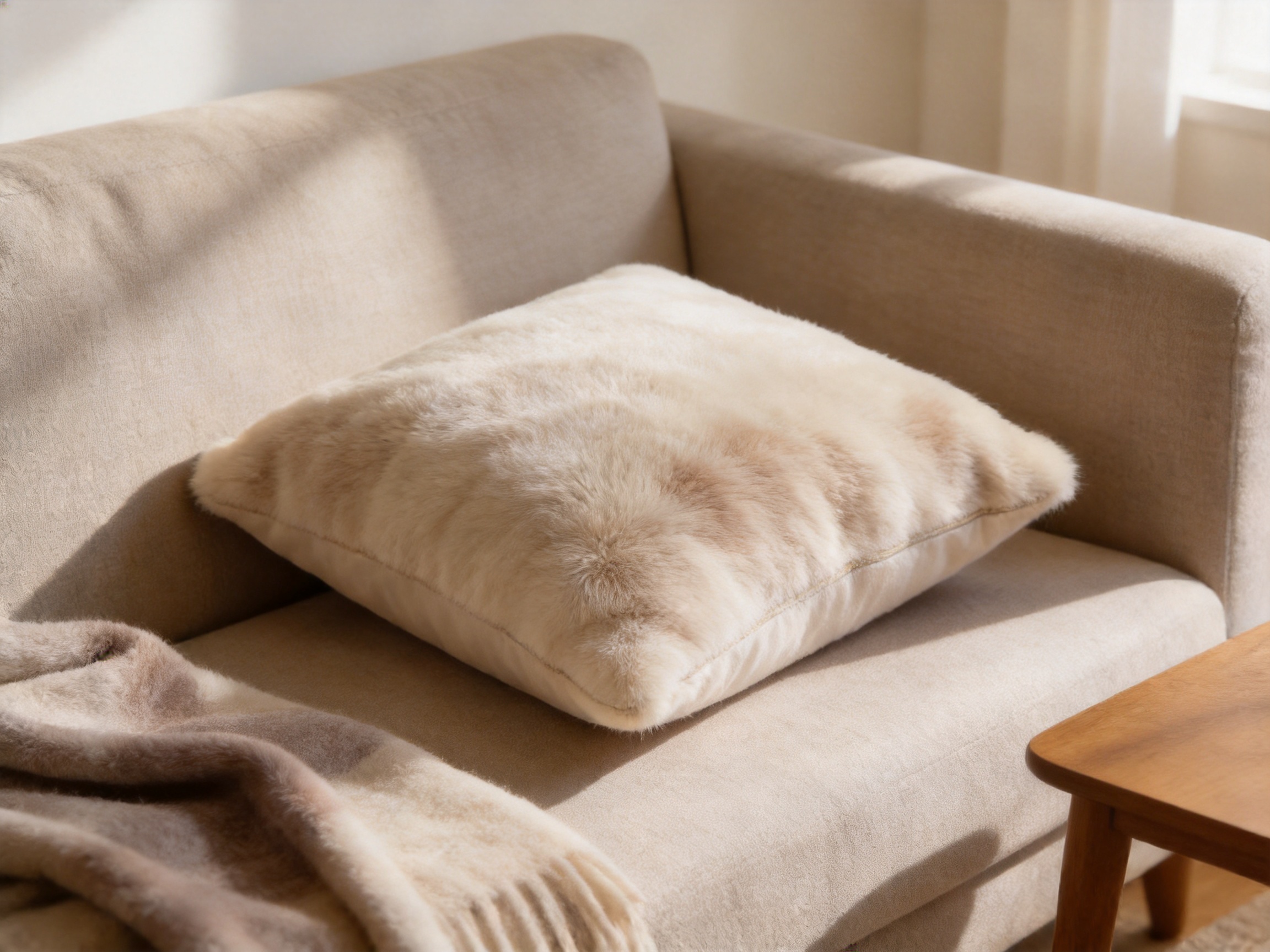
The Comfortable Rabbit Fur Cushion is especially suitable for spaces where a soft visual and tactile effect is desired. The imitation fur surface gives the cushion a plush appearance without requiring genuine animal fur. It can bring a warmer character to a modern sofa, soften the lines of a minimalist bedroom, or add texture to a lounge chair. Its simple square profile supports easy coordination with other cushions in different sizes, fabrics, and colors.
Comfort also depends on how a cushion feels during use. A surface can look attractive but fail to provide a pleasant experience if it is rough, excessively loose, or prone to shedding. This product uses imitation rabbit fur fabric selected for its comfortable hand feel and resistance to easy shedding. The result is a surface designed to remain attractive through regular decorative and everyday use when properly cared for.
Product Overview
Product name |
Comfortable Rabbit Fur Cushion |
Product category |
Home Cushion |
Standard size |
45 × 45 cm |
Customization |
Size and specifications can be produced according to customer requirements |
Surface fabric |
230gsm imitation rabbit fur fabric |
Filling |
6D chemical fiber |
Primary application |
Sofas, beds, chairs, reading corners, guest rooms, lounges, and decorative home settings |
The specifications present a straightforward product construction: a decorative imitation rabbit fur shell combined with a soft chemical fiber interior. This combination is appropriate for customers who want a cushion that looks luxurious while remaining suitable for scalable home textile production.

Comfortable Rabbit Fur Cushion
Imitation Rabbit Fur for a Softer Home Experience
The defining feature of this cushion is its imitation rabbit fur fabric. The material is designed to reproduce the soft, plush visual character associated with rabbit fur while offering a practical textile alternative for commercial home furnishing applications. It gives the cushion a smooth and comfortable surface that encourages touch and creates a more relaxed atmosphere.
At 230gsm, the fabric has a substantial textile presence without making the cushion unnecessarily heavy. Fabric weight influences how a product looks, feels, and performs. A very light fabric may appear less full or may not provide the desired plush impression. A heavier fabric can produce a richer appearance, but it may also increase material usage and handling requirements. The selected 230gsm construction offers a balanced option for cushions intended to combine softness, visual fullness, and manageable production.
The imitation fur surface can be used to introduce texture into rooms dominated by smooth materials such as leather, polished wood, glass, metal, or plain woven upholstery. Texture is an important element of interior design because it adds depth even when the color palette is simple. A neutral rabbit fur cushion can make a room feel warmer, while a stronger color can become an accent feature on a sofa or bed.
The material is also suitable for customers who prefer alternatives to genuine fur. It allows manufacturers, retailers, and consumers to achieve a fur-inspired appearance through a manufactured textile. This can make product planning more consistent because the fabric can be specified, reproduced, and integrated into a larger collection of home textile items.
Comfortable Hand Feel
A cushion is often touched more frequently than many other decorative products. It may be held while reading, placed behind the back, moved from one seat to another, or used as a decorative layer on a bed. The hand feel of the cover therefore contributes directly to the user experience. The imitation rabbit fur construction is intended to provide a soft, comfortable sensation rather than a coarse or rigid surface.
This focus on comfort gives the cushion an advantage over basic flat-woven decorative cushions that may provide color but little tactile interest. It also creates a more welcoming impression when the product is displayed in a showroom, hotel room, furniture store, or online product collection.
Resistance to Easy Shedding
Shedding is a common concern with fur-effect textiles. Loose fibers can affect appearance, create additional cleaning work, and reduce customer confidence. The product description emphasizes that this imitation rabbit fur fabric is not easy to shed. Although all textile products should be handled and cleaned according to their care instructions, the selected construction is intended to support a more stable surface during normal use.
This characteristic can be particularly valuable for retailers and project buyers. A cushion that retains its surface appearance more effectively can help reduce complaints related to loose fibers and support a more consistent presentation across a product range. For hospitality or furnished accommodation environments, reduced shedding can also make routine room care more convenient.
6D Chemical Fiber Filling and Cushion Performance
The internal filling is 6D chemical fiber. Filling plays a central role in the way a cushion supports the body, maintains its shape, and appears when displayed. The shell provides the touch and visual identity, but the filling determines whether the cushion looks full or flat and whether it feels pleasantly resilient.
Six-denier chemical fiber is commonly used in soft home textile products because it can provide a lightweight, flexible, and comfortable interior. In a decorative cushion, the filling needs to occupy the cover evenly and support a balanced form. It should also allow the cushion to be moved easily without making it excessively heavy.
The 6D chemical fiber filling complements the imitation rabbit fur fabric by creating a soft overall product rather than a stiff or overly structured cushion. This makes the product suitable for decorative placement and casual use. It can be positioned upright against a sofa arm, arranged in a group on a bed, or used as a comfort layer on a lounge chair.
Full Appearance and Everyday Adaptability
A well-filled cushion contributes to the visual quality of a room. Even when it is not being used, it should retain an attractive and inviting shape. The selected filling is intended to help create a fuller appearance, making the 45 × 45 cm square format useful for both individual display and coordinated arrangements.
The cushion can be combined with rectangular lumbar cushions, smaller accent cushions, plain velvet cushions, woven cushions, or other fur-effect designs. This adaptability supports buyers who want to build complete collections instead of selling a single isolated product. The square format is also convenient for packaging, arranging on shelves, and presenting in standard furniture settings.
Advantages Compared with Basic Decorative Cushions
Many decorative cushions compete primarily through color or printed patterns. While these features remain important, they may not be enough to create a distinctive product experience. The Comfortable Rabbit Fur Cushion adds a tactile dimension through its imitation fur surface. Customers can see the plush effect and feel it directly, which can increase the product’s perceived comfort and decorative value.
Compared with ordinary thin polyester covers, the 230gsm imitation rabbit fur fabric offers a more substantial and visually rich surface. Compared with genuine fur products, the imitation textile provides a manufactured alternative that can be specified for repeat production and incorporated into broader home textile programs. Compared with cushions filled with lower-quality loose material, the 6D chemical fiber filling is intended to provide a more comfortable and presentable interior.
Another advantage is the product’s simplicity. It is stylish without relying on complicated decorative details. There are no unnecessary ornaments that could limit its use in different interior schemes. This allows the cushion to work across contemporary, comfortable, Scandinavian-inspired, casual, guest-room, and seasonal design settings.
Comparison factor |
Comfortable Rabbit Fur Cushion |
Potential benefit for buyers |
Surface character |
Soft imitation rabbit fur texture |
Creates a richer tactile and visual experience |
Fabric weight |
230gsm |
Balances plush appearance with practical handling |
Fiber stability |
Designed not to shed easily |
Supports a cleaner and more consistent appearance |
Filling |
6D chemical fiber |
Provides a soft, full, and flexible cushion interior |
Format |
45 × 45 cm square design |
Easy to coordinate, display, package, and customize |
Manufacturing flexibility |
Customer-specified dimensions and requirements can be considered |
Supports private-label, project, and collection development |
The table describes practical product advantages rather than making absolute performance claims. Actual service life and appearance will depend on usage, cleaning, storage, construction details, and customer-selected specifications.
Suitable Applications Across Residential and Commercial Spaces
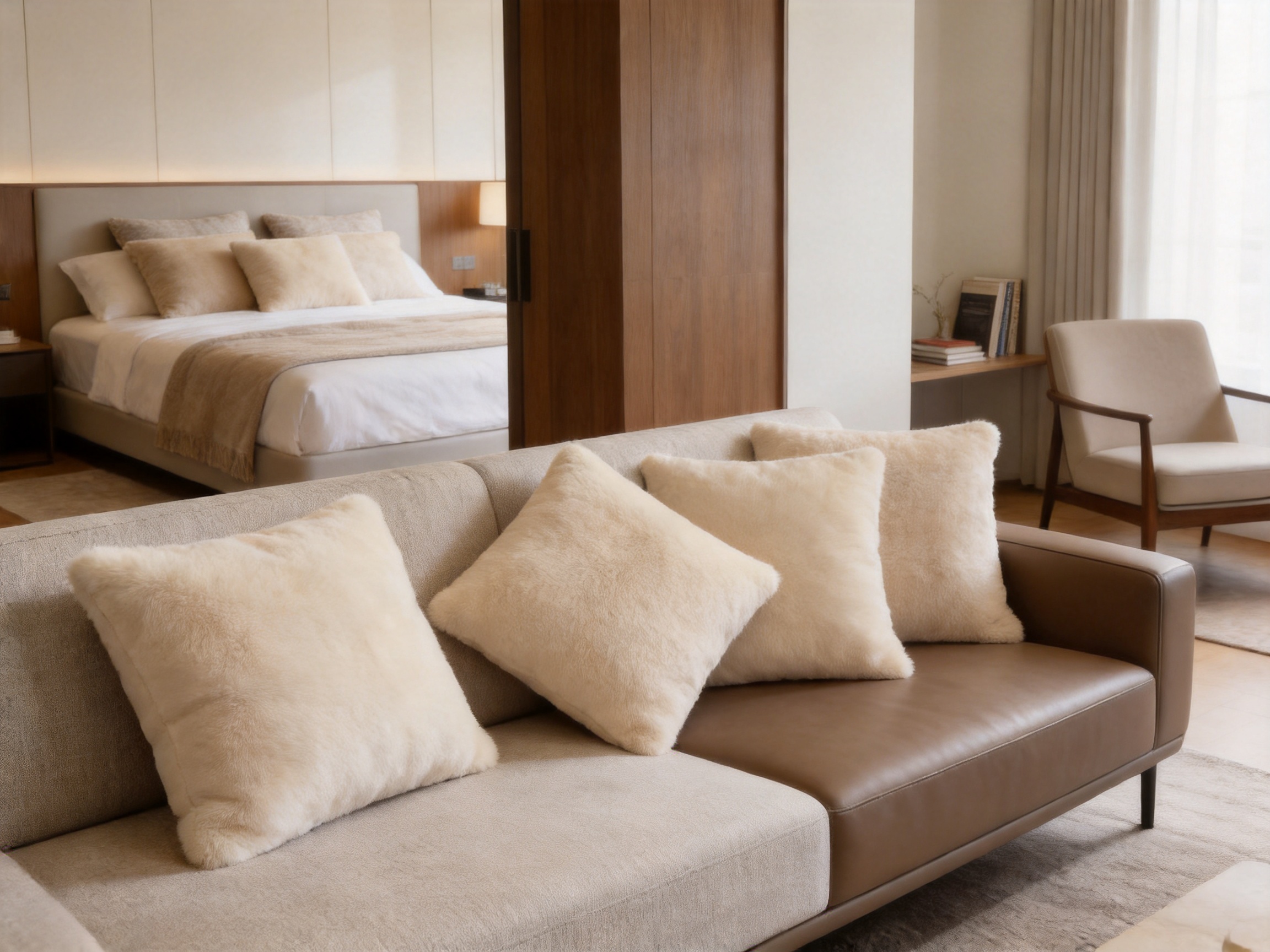
The product is designed primarily for the home, but its characteristics allow it to serve several commercial applications. In residential interiors, it can be used on sofas, armchairs, beds, benches, window seats, and reading chairs. It is particularly suitable for rooms where softness and warmth are important, including bedrooms, living rooms, family rooms, guest rooms, and relaxation areas.
For furniture retailers, the cushion can be displayed with sofas and beds to create a more complete lifestyle presentation. A well-chosen cushion can help customers visualize how a furniture item may look in their own home. The tactile surface also encourages interaction in physical showrooms, where customers can assess both appearance and comfort.
For hospitality buyers, the cushion may be used in hotel rooms, serviced apartments, lounges, reception spaces, boutique accommodation, and guest seating areas. Its simple style allows it to support different interior concepts. It can be used as a subtle comfort accessory in a neutral room or as a texture-focused accent in a more expressive design.
Interior designers and procurement teams may also select the cushion for residential development projects, model homes, short-term rental properties, or seasonal decorative programs. The availability of customized specifications creates opportunities to coordinate size, cover requirements, packaging, and product grouping with a project’s wider design plan.
Living Rooms and Sofas
On a sofa, the 45 × 45 cm size offers a practical balance between support and decoration. It can be placed individually to create a restrained look or arranged with multiple cushions to form a layered composition. The rabbit fur effect is particularly useful on smooth upholstery because it introduces contrast without requiring a bold print.
The cushion can also help soften a room that contains hard architectural lines. Used alongside a coffee table, shelving, flooring, or lighting in wood and metal, its surface adds a more comfortable visual note. This makes it useful for homes that combine modern construction with a desire for warmth.
Bedrooms and Guest Rooms
On a bed, the cushion can be placed in front of sleeping pillows or combined with larger European-style cushions. Its texture creates an additional layer and can make the bed appear more inviting. In guest rooms, a soft accent cushion can contribute to a welcoming environment while remaining easy to coordinate with neutral bedding.
Because the product is available in a standard square size and can be made to customer specifications, buyers may develop a complete bedroom accessory range around it. Matching or contrasting cushions can be produced in related fabrics, allowing a retailer or hospitality group to build a consistent visual identity.
Reading Corners and Lounge Areas
A reading chair or lounge corner benefits from products that provide both comfort and visual softness. The cushion can be placed behind the back, beneath the arms, or beside the user as a flexible support accessory. Its light, soft construction makes it easy to reposition as the seating arrangement changes.
Manufacturing Strengths of the Supplier
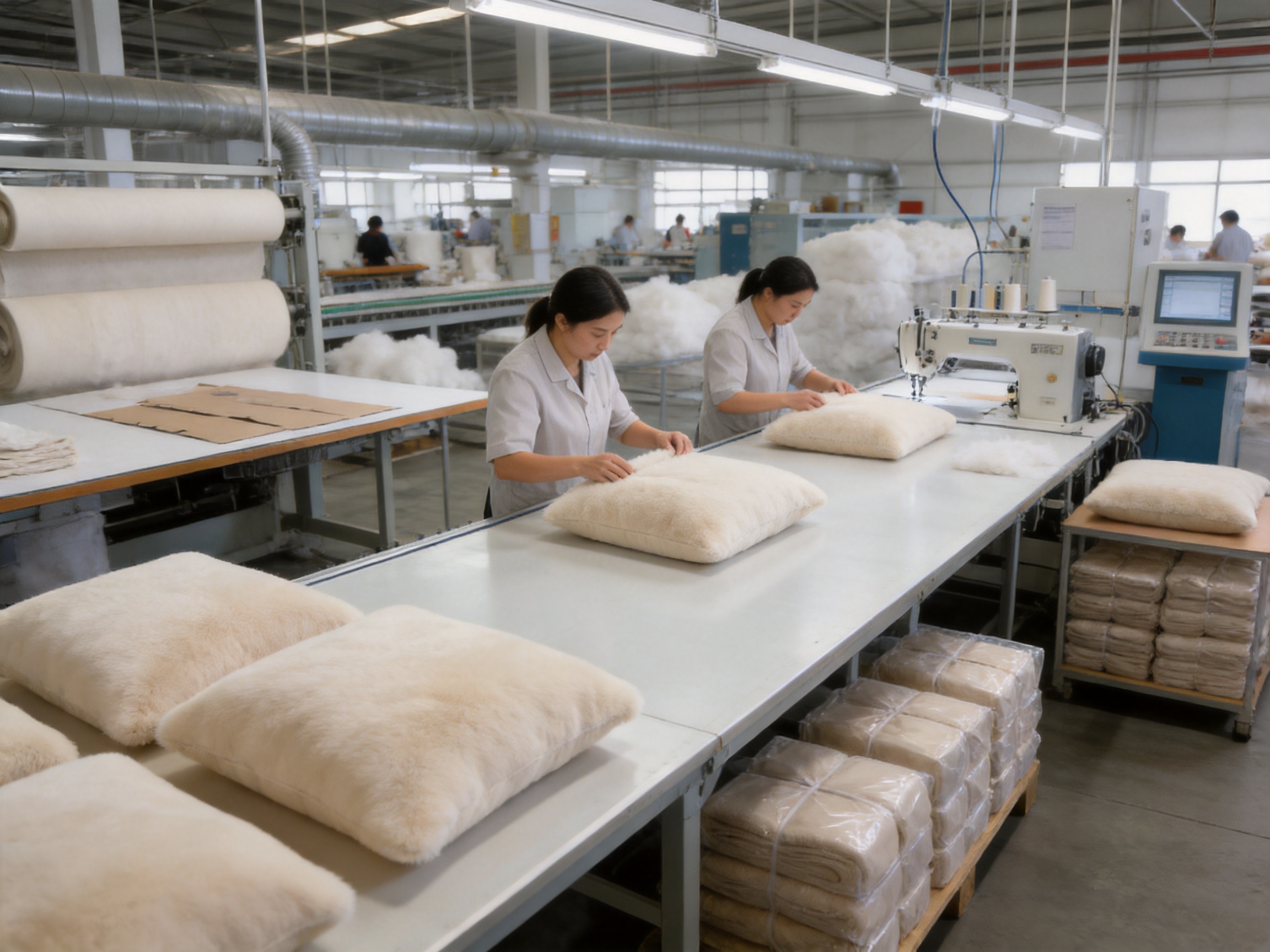
Product quality depends not only on the selected materials but also on the manufacturer’s ability to control processes, coordinate personnel, and maintain consistency. Tongxiang Xinlong Bedding Co., Ltd. has operated in the home textile sector since January 2002. This long period of industry experience gives the company a substantial background in producing textile goods for different customer needs.
The company is located in Longxiang Industrial Park, Wuzhen Town, Tongxiang, Zhejiang Province, China. It covers approximately 21,000 square meters, with a construction area of approximately 18,000 square meters. A production base of this scale can support organized material handling, manufacturing operations, quality management, product development, and order coordination.
More than 320 employees work for the company. A workforce of this size can support specialized responsibilities across product development, fabric management, cutting, sewing, filling, finishing, inspection, packing, and administration. Specialization is important in home textile production because a finished cushion is the result of multiple connected operations rather than a single manufacturing step.
Advanced Production Equipment
The company is equipped with various advanced production equipment. In cushion manufacturing, appropriate equipment helps improve cutting accuracy, sewing consistency, filling distribution, and finishing quality. Machinery also supports productivity and repeatability when products must be made in larger quantities or according to specific customer requirements.
For a rabbit fur cushion, process control is especially important. The surface fabric must be handled carefully so that its appearance remains attractive after cutting and assembly. The cover must be sewn with suitable seam control, the filling must be distributed evenly, and the final product must be checked for shape, surface condition, and overall presentation.
Advanced equipment does not replace skilled personnel. Instead, it gives trained employees the tools needed to carry out production more efficiently and consistently. The company’s combination of equipment, technical staff, and manufacturing experience supports its ability to produce a broad range of home textile products.
Design and Product Development
The home textile market changes continuously as consumers, retailers, and designers seek new fabrics, textures, sizes, and applications. The company continues to develop and innovate in response to these changes. Its professional and technical personnel help design and produce fashionable and warm household products for different customers.
This development capability is relevant to the Comfortable Rabbit Fur Cushion because buyers may not always want an off-the-shelf product. Some may require a different size, a revised specification, a particular packaging format, or a coordinated collection. A manufacturer with experience across cushions, quilts, pillows, mattress products, blankets, curtains, and other home textiles is better positioned to discuss product combinations and related sourcing needs.
Product development also supports seasonal planning. Plush and fur-effect cushions may be particularly attractive in autumn and winter collections, but they can also be used year-round in air-conditioned interiors, bedrooms, lounges, and comfort-focused spaces. By adjusting colors, dimensions, and coordinated products, buyers can use the basic cushion concept for different retail calendars.
Quality Management and Certifications
The company states that it has passed international certifications and management-related standards including ISO9001, ISO14001, OEKO-TEX standards, GRS, and BSCI. These certifications and assessments are relevant to customers evaluating manufacturing controls, environmental management, material considerations, and social responsibility.
ISO9001 is associated with quality management systems. In a home textile factory, a quality management system can help organize procedures for purchasing, production, inspection, corrective actions, and customer communication. Such systems are important for reducing avoidable variation and creating a more structured approach to quality control.
ISO14001 is associated with environmental management systems. Environmental management is increasingly important in textile manufacturing because buyers may evaluate energy use, waste handling, chemical management, and improvement procedures. Certification does not eliminate every environmental impact, but it indicates that environmental processes are addressed through a formal management framework.
OEKO-TEX-related standards are widely recognized in textile markets for testing and evaluating harmful substances in applicable products and materials. The exact scope of any certification should be confirmed for the specific product, fabric, filling, and order. Buyers should request current documentation when compliance with a particular standard is required.
GRS, or the Global Recycled Standard, is relevant to products or materials containing recycled content when the applicable requirements are met. Its relevance to a particular rabbit fur cushion depends on the materials specified for the product and the certification scope. Buyers requiring GRS content should confirm whether the selected fabric, filling, accessories, and production chain are covered.
BSCI is associated with social compliance assessment and responsible business practices in supply chains. For international buyers, social compliance can be an important part of supplier evaluation alongside product quality, delivery capability, and communication.
The company also reports that it has been rated as a safety production standardization enterprise for several consecutive years since 2016. Workplace safety is essential in a manufacturing environment containing cutting, sewing, filling, packing, and other equipment. Organized safety procedures help protect workers and support stable operations.
From Material Selection to Finished Cushion
The manufacturing process begins with product requirements. Before production, buyers and factory teams need to confirm the size, fabric, color, filling, construction, packaging, labeling, and inspection expectations. For the standard product, the key specifications are a 45 × 45 cm format, 230gsm imitation rabbit fur fabric, and 6D chemical fiber filling.
Material preparation follows specification confirmation. Fabric should be checked for width, weight, color consistency, surface condition, and visible defects. Imitation fur materials require attention to pile direction and surface appearance because the direction of the fibers can influence how the finished cushion looks. Proper preparation helps create a more uniform result across production batches.
Cutting is performed according to approved dimensions and construction details. Accuracy at this stage affects the final shape and seam alignment. If panels are cut inconsistently, the cushion may appear uneven or fail to achieve the intended size. Organized cutting procedures help reduce material waste and improve repeatability.
Sewing joins the cover components and creates the structure that holds the filling. Seam quality contributes to appearance, strength, and filling retention. Stitch density, seam allowance, thread selection, and finishing methods may be adjusted according to the fabric and customer requirements. Fur-effect fabrics should be handled carefully to preserve the visual quality of the surface around seams.
Filling is the next important operation. The 6D chemical fiber should be distributed sufficiently to create a soft and full cushion while avoiding excessive hardness or uneven areas. A consistent filling process helps ensure that cushions in the same order have a similar appearance and feel.
After filling, the cushion is closed and finished. The final inspection may consider dimensions, shape, seam condition, surface appearance, fiber distribution, cleanliness, labeling, and packaging. The product is then packed according to the buyer’s requirements. Depending on the order, packaging may be designed for retail display, bulk shipment, project delivery, or private-label distribution.
Process Control Benefits
Each manufacturing stage affects the next. Accurate specifications support accurate cutting. Accurate cutting supports cleaner sewing. Good sewing supports effective filling retention. Even filling supports a better shape. Careful finishing supports customer satisfaction and reduces avoidable quality issues.
This connected process is one reason an experienced home textile manufacturer can offer advantages over a supplier that handles only limited product types. Experience with pillows, quilts, cushions, mattress protectors, blankets, bedspreads, and related articles creates knowledge of different fabrics, fillings, constructions, and finishing requirements.
Customization for Brand and Project Buyers
The standard 45 × 45 cm size is suitable for many applications, but not every customer requires the same format. Furniture brands may need a cushion proportioned to a particular sofa. Hospitality groups may prefer a larger decorative size for beds. Interior designers may request a smaller cushion for accent arrangements. The product information allows production according to customer-specified dimensions and requirements.
Customization may involve more than dimensions. Depending on project discussions, buyers may consider fabric colors, surface effects, filling levels, labels, packaging, carton quantities, care instructions, and coordinated products. These details should be confirmed with the manufacturer before sampling or mass production.
Private-label buyers can use the cushion as part of a broader home textile collection. A coordinated assortment might include rabbit fur cushions, plain cushions, blankets, quilts, pillows, mattress protectors, and bedspreads. Offering related items from one experienced manufacturer can simplify communication and support a consistent quality standard across the collection.
For importers and wholesalers, customization can help create a product range with a clear market position. A soft rabbit fur effect may be used in a comfort-focused assortment, a winter collection, a gift-oriented home accessories program, or a premium-looking but practical decorative range.
Care, Handling, and Product Presentation
To maintain the appearance of the imitation rabbit fur surface, the cushion should be handled according to the final care instructions supplied for the selected construction. Buyers should confirm whether the finished article is suitable for machine washing, hand washing, spot cleaning, or professional cleaning. Care instructions can vary depending on the cover construction, backing fabric, closures, filling, labels, and customer-selected specifications.
Regular gentle handling can help preserve the surface. Excessive friction, sharp objects, high heat, unsuitable detergents, and improper drying may affect imitation fur fabrics. If a cushion becomes compressed during packing or transportation, gentle reshaping and airing may help restore its appearance, subject to the manufacturer’s recommendations.
Retail presentation also influences customer perception. Cushions should be displayed in a way that allows customers to see the fur texture and understand the product’s softness. In online retail, clear photographs should show the surface, size, shape, and use context. Product descriptions should communicate the fabric weight, filling, dimensions, and care requirements accurately.
Because imitation fur has a strong tactile identity, physical retailers may benefit from placing the product where customers can touch it. In a furniture showroom, it can be arranged on a sofa or bed. In a home accessories store, it can be grouped with complementary blankets and cushions. In a hospitality purchasing sample room, it can be shown in both decorative and functional positions.
Sustainability and Responsible Sourcing Considerations
Responsible textile purchasing involves evaluating the full product specification rather than focusing on one feature alone. Buyers may review the fabric composition, filling composition, dyeing and finishing requirements, packaging materials, durability expectations, waste management, and applicable certifications.
The use of imitation rabbit fur provides an alternative to genuine fur for customers who want a fur-inspired appearance through manufactured textile materials. This is relevant to brands that have policies concerning animal-derived materials. The exact fiber composition and certification status should be confirmed in product documentation before making specific marketing claims.
The supplier’s stated ISO14001, OEKO-TEX-related, GRS, and BSCI credentials may be relevant to responsible sourcing programs, but buyers should verify the current certificates and their scope. Responsible procurement works best when the product specification, factory documentation, testing requirements, and supply chain records are reviewed together.
Durability is also part of responsible consumption. A cushion that remains attractive and useful for a longer period may reduce the need for frequent replacement. The product’s comfortable surface, resistance to easy shedding, and resilient chemical fiber filling are intended to support practical use, although performance depends on construction, care, and conditions.
How the Product Supports Different Market Positions
The same cushion can be positioned in different ways depending on its color, packaging, photography, and sales channel. A neutral version can be presented as a calm home comfort accessory. A bold color can serve as an accent product. A set of coordinated shades can support a seasonal range. A customized version can be integrated into a furniture or hospitality project.
For mass-market retailers, the product offers a recognizable plush effect and a standard size that can be produced in volume. For mid-market home brands, the fabric weight, comfort description, and manufacturing support can contribute to a more refined product presentation. For project buyers, the ability to request specifications and coordinate with other home textiles may be more important than the individual cushion alone.
Its simple design also reduces the risk of becoming limited to one short-lived trend. While textures and colors may change, a soft square cushion remains a familiar home accessory. This gives buyers the opportunity to refresh the product through color and collection updates without redesigning the entire construction.
Why Choose an Experienced Home Textile Factory
Working with an experienced factory can provide advantages throughout the product development cycle. A specialized manufacturer understands the practical relationship between materials, construction, filling, sewing, finishing, packing, and quality inspection. This knowledge can help buyers identify potential issues before mass production.
Tongxiang Xinlong Bedding Co., Ltd. has been producing home textiles since 2002 and offers a broad product portfolio. Its products include silk cotton quilts, chemical fiber quilts, pillows, cushions, bedspreads, travel quilts, mattress protectors, blankets, quilt and pillowcases, shower curtains, curtains, and related household textile goods. This range demonstrates experience across multiple filling, covering, and finishing categories.
The company’s workforce of more than 320 employees and its production facilities provide a base for handling different orders and customer requirements. Its ongoing product development activities are intended to respond to changing market needs, while its stated certifications and safety standardization record support a more structured manufacturing environment.
For buyers, factory selection should still include sample approval, specification confirmation, testing where required, packaging review, production communication, and final inspection. A manufacturer’s capabilities create a foundation, but successful results depend on clear cooperation between the buyer and supplier.
Recommended Buyer Evaluation Checklist
Before placing an order, buyers should confirm the exact fabric composition and color, finished dimensions, filling weight or construction, seam details, closure method if applicable, labels, packaging, carton dimensions, order quantity, production schedule, and inspection standard.
For buyers serving regulated or highly specified markets, it is also advisable to request current documentation relating to relevant certifications, restricted substances, social compliance, recycled content, and environmental management. Documentation should match the product and production site being purchased.
Samples should be reviewed for surface feel, pile direction, appearance, fullness, shape retention, stitching, cleanliness, and packaging condition. If the product is intended for a large furniture program or hospitality project, it is useful to test how the cushion looks alongside the final upholstery, bedding, or interior materials.
Communication is particularly important for customized orders. Drawings, measurement tolerances, approved samples, color references, care labels, and packaging instructions should be documented clearly. This reduces the risk of differences between the development sample and mass-produced goods.
Frequently Asked Questions
What is the standard size of the Comfortable Rabbit Fur Cushion?
The standard size is 45 × 45 cm. Other dimensions can be discussed and produced according to customer specifications.
What fabric is used on the cushion?
The cushion uses 230gsm imitation rabbit fur fabric. It is designed to provide a soft and comfortable surface with a plush visual effect.
Does the cushion use genuine rabbit fur?
No. The product uses imitation rabbit fur fabric. The fabric is manufactured to create a rabbit fur-inspired appearance and hand feel.
Is the surface likely to shed?
The product description states that the imitation rabbit fur fabric is not easy to shed. Actual performance depends on fabric construction, use, handling, and care. Buyers should request product-specific testing or samples when shedding performance is a critical requirement.
What type of filling is used?
The filling is 6D chemical fiber. It is selected to provide a soft, flexible, and full cushion interior.
Where can the cushion be used?
It can be used on sofas, armchairs, beds, benches, reading chairs, lounge seating, guest room furniture, and other home or commercial interior settings.
Can the cushion be customized?
Yes. The product information indicates that sizes and specifications can be made according to customer requirements. Custom details should be confirmed with the manufacturer before sampling and production.
Can the cushion be made as part of a larger home textile collection?
Yes. The manufacturer produces a wide range of home textile products, including pillows, quilts, blankets, mattress protectors, mattress covers, bedspreads, curtains, and other related items. Buyers can discuss coordinated products, materials, colors, and packaging.
What manufacturing experience does the supplier have?
Tongxiang Xinlong Bedding Co., Ltd. was established in January 2002 and specializes in home textile manufacturing. It operates in Tongxiang, Zhejiang Province, has more than 320 employees, and is equipped with various production machines and technical resources.
Which certifications or standards are associated with the factory?
The company states that it has passed or obtained international certifications and assessments including ISO9001, ISO14001, OEKO-TEX-related standards, GRS, and BSCI. Buyers should request current certificates and confirm that they apply to the relevant product, materials, and production site.
How should the cushion be cleaned?
Cleaning instructions depend on the final construction and selected materials. Buyers should follow the care label or manufacturer’s instructions. They should not assume that every imitation fur cushion is suitable for the same washing or drying method.
What should buyers inspect before approving production?
Buyers should inspect the surface feel, fabric appearance, shedding behavior, dimensions, shape, filling distribution, seam quality, cleanliness, labels, packaging, and overall consistency with the approved sample.
Is this cushion suitable for private-label sales?
It can be considered for private-label programs subject to agreement on labels, packaging, minimum order quantities, customization, and production requirements. These commercial details should be discussed directly with the manufacturer.
Conclusion
The Comfortable Rabbit Fur Cushion combines a soft 230gsm imitation rabbit fur surface with 6D chemical fiber filling in a practical 45 × 45 cm format. Its main strengths are its comfortable hand feel, plush appearance, simple styling, flexible use, and suitability for customized home textile programs. The surface is designed not to shed easily, while the filling supports a soft and full cushion structure.
The product is suitable for residential rooms, furniture displays, hospitality interiors, guest rooms, reading areas, and broader decorative collections. It can serve as an individual accent item or as part of a coordinated assortment of cushions, bedding, blankets, quilts, mattress products, and other household textiles.
Its manufacturing foundation is supported by Tongxiang Xinlong Bedding Co., Ltd.’s experience since 2002, production facilities in Tongxiang, Zhejiang Province, a workforce of more than 320 employees, advanced equipment, technical personnel, and a broad home textile product range. The company’s stated ISO9001, ISO14001, OEKO-TEX-related, GRS, and BSCI credentials further provide points for buyer evaluation, subject to current documentation and product-specific verification.
For customers seeking a comfortable, stylish, and customizable fur-effect cushion, this product offers a practical combination of material appeal and manufacturing support. With clear specifications, approved samples, appropriate quality control, and well-defined customization requirements, it can become a reliable component of home furnishing, retail, hospitality, and private-label textile programs.
References
1. Product specification information supplied for the Comfortable Rabbit Fur Cushion, including dimensions, fabric weight, filling, category, and product description.
2. Company information supplied for Tongxiang Xinlong Bedding Co., Ltd., including establishment date, facility size, workforce, product range, equipment, certifications, and manufacturing capabilities.
3. ISO 9001, Quality Management Systems, International Organization for Standardization.
4. ISO 14001, Environmental Management Systems, International Organization for Standardization.
5. OEKO-TEX Standard 100 and related textile safety and sustainability standards, OEKO-TEX Association.
6. Global Recycled Standard, Textile Exchange.
7. amfori BSCI Code of Conduct and social compliance principles, amfori.
8. General textile product development and quality control principles for fabric selection, filling distribution, sewing, finishing, inspection, and packaging.


 +86-573-88798028
