



 Français
 Español
 Deutsch
Content
- 1 1. Unpacking the Knitted Cooling Quilt: Key Features That Outshine Competitors
- 2 2. Behind the Scenes: Advanced Manufacturing Processes That Ensure Quality
- 3 3. Comparative Analysis: How the Knitted Cooling Quilt Stacks Up Against Competitors
- 4 4. Real-World Benefits: What Users Are Saying About the Knitted Cooling Quilt
- 5 5. Q&A Section: Addressing Common Questions About the Knitted Cooling Quilt
- 6 6. Conclusion: Why the Knitted Cooling Quilt Is the Best Choice for Summer Comfort
- 7 References
Summer nights often bring a familiar struggle: tossing and turning under heavy, heat-trapping bedding that leaves you sweating through your sheets. For decades, consumers have searched for a solution that balances comfort, breathability, and affordability—until now. The knitted cooling quilt has emerged as a game-changer in home textiles, combining innovative fabric technology with thoughtful design to deliver year-round (but especially summer) sleep relief. This guide dives deep into what makes this quilt a standout product, its advantages over traditional and competitor options, and the advanced manufacturing processes that ensure its quality and durability.
1. Unpacking the Knitted Cooling Quilt: Key Features That Outshine Competitors
To understand why the knitted cooling quilt is a cut above the rest, we need to examine its core design elements and how they address common pain points in the cooling bedding market. Let’s break down its standout features:
1.1 Dual-Fabric Construction: Balancing Cooling and Comfort
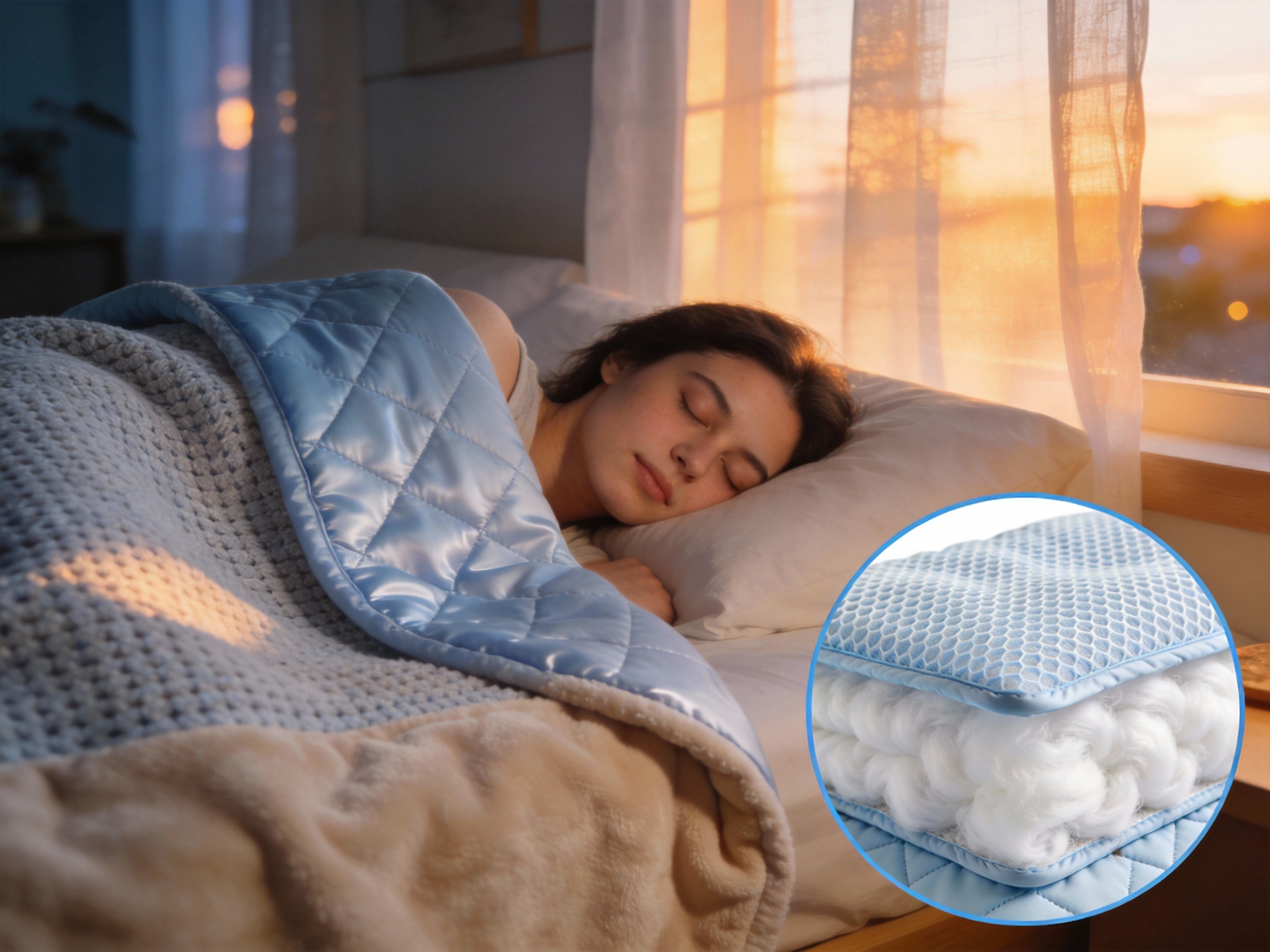
One of the most innovative aspects of this quilt is its dual-fabric design—something many competitors skip in favor of single-layer cooling fabrics (which often lack warmth for cooler nights or are prohibitively expensive). The top layer uses 170gsm knitted cooling fabric, engineered to draw heat away from the body and promote airflow. Unlike cheaper cooling fabrics that rely on chemical treatments (which wear off over time), this knitted variant uses physical properties: its open weave structure allows heat to escape while wicking moisture away from the skin. On the reverse side, a microfiber brushed fabric offers a soft, cozy feel—perfect for mild summer evenings or layering in spring/autumn. This dual design eliminates the need to buy separate bedding for different seasons, saving consumers money and closet space.
Competitors often fall short here: some use only cooling fabric, which can feel too cold in transitional weather, while others use low-quality microfiber that pills or loses softness after a few washes. The knitted cooling quilt’s dual layer strikes the ideal balance, making it a versatile choice for year-round use.
1.2 Customizable Size Options: Catering to Every Bed and Need
While most cooling quilts on the market offer only standard sizes (twin, queen, king), this product goes a step further. It comes with a default size of 140x200cm (ideal for single or twin beds), but also offers full customization. Whether you need a larger size for a king bed, a smaller one for a child’s bunk, or even a unique shape for a daybed, the manufacturer can accommodate your request. This level of personalization is rare in the mass-market cooling bedding space, where most brands prioritize one-size-fits-all efficiency over customer-specific needs.
For example, a family with multiple children might order smaller, customized quilts for each kid’s bed, while a hotel could request bulk orders in specific sizes to match their room configurations. Competitors rarely offer this flexibility, forcing consumers to compromise on fit.
1.3 Advanced Filling Material: 3D + 0.9D Fiber for Breathability and Support
The quilt’s filling is another area where it outperforms competitors. Instead of using cheap, dense fiberfill that traps heat, it uses a blend of 3D and 0.9D fibers. 3D fibers are known for their springy, resilient structure—they maintain their shape even after repeated use, preventing the quilt from flattening over time. The 0.9D fibers are ultra-fine, adding a soft, plush feel without sacrificing breathability. Together, these fibers create a lightweight yet supportive layer that allows air to circulate freely, keeping you cool and comfortable all night long.
Many competitors use 100% polyester filling, which is heavy and prone to clumping. Others use memory foam inserts, which are expensive and retain heat. The 3D+0.9D blend strikes the perfect balance between affordability, durability, and cooling performance.
1.4 Skin-Friendly Design: Hypoallergenic and Gentle on Sensitive Skin
Another key advantage is its skin-friendly properties. The knitted cooling fabric is hypoallergenic, making it safe for people with sensitive skin or allergies to dust mites. Unlike some cooling fabrics that contain harsh chemicals (like certain phase-change materials), this quilt uses natural cooling properties from its weave and fiber blend. The microfiber brushed layer is also free from harmful substances, as confirmed by its OEKO-TEX certification (more on this later). This makes it a great choice for families with young children or anyone who prioritizes non-toxic bedding.
2. Behind the Scenes: Advanced Manufacturing Processes That Ensure Quality
The knitted cooling quilt’s superior quality isn’t just a result of its materials—it’s also due to the manufacturer’s commitment to advanced manufacturing processes and strict quality control. Let’s explore the key steps that set this product apart:
2.1 State-of-the-Art Production Equipment
The manufacturer invests heavily in cutting-edge production equipment to ensure precision and consistency. For example, their knitting machines are designed to create the exact 170gsm density required for the cooling layer, with minimal waste. The filling machines use automated systems to distribute the 3D+0.9D fiber blend evenly, preventing clumping and ensuring uniform support. Additionally, the quilting machines use high-quality thread to create durable stitches that hold the layers together—even after years of washing and use.
Many smaller manufacturers rely on outdated equipment, leading to inconsistent product quality. The manufacturer’s investment in modern machinery ensures that every quilt meets the same high standards.
2.2 Rigorous Quality Control Protocols
Quality control is a top priority at every stage of production. Raw materials are tested for purity and compliance with industry standards before being used. During production, random samples are taken at each step to check for fabric defects, filling distribution, and stitch quality. Finished products undergo a final inspection, including tests for color fastness, durability, and cooling performance. Any product that fails these tests is rejected, ensuring that only the best quilts reach consumers.
Competitors often cut corners on quality control to reduce costs, leading to products that wear out quickly or don’t perform as advertised. The manufacturer’s strict protocols minimize this risk, giving consumers peace of mind.
2.3 Compliance with International Certifications
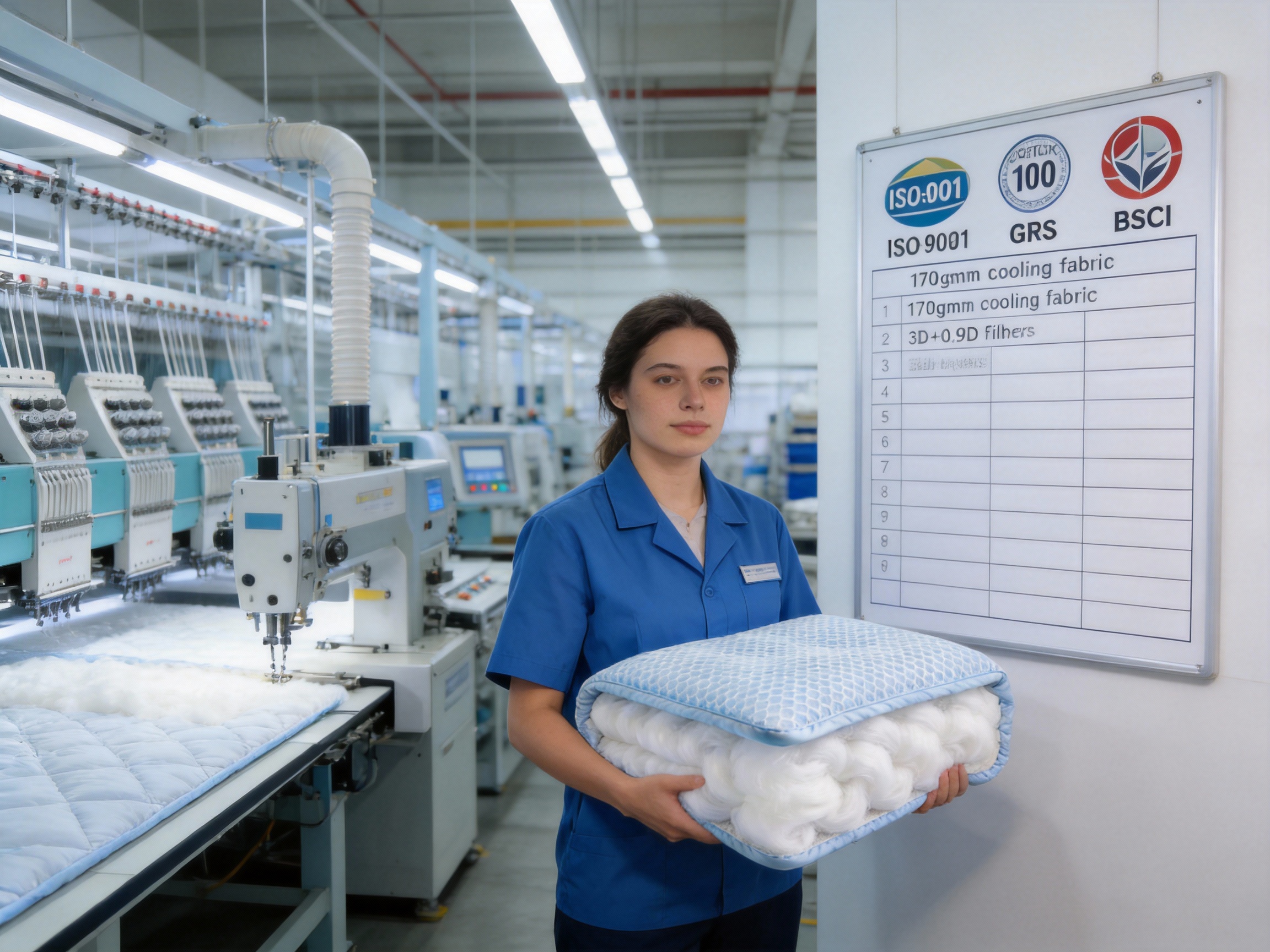
The manufacturer holds several key international certifications that validate its commitment to quality and sustainability: ISO9001 (quality management), ISO14001 (environmental management), OEKO-TEX 100 (safe for human use), GRS (global recycled standard), and BSCI (business social compliance). These certifications aren’t easy to obtain—they require regular audits and adherence to strict guidelines. For example, OEKO-TEX 100 ensures that the quilt is free from harmful substances like lead, phthalates, and formaldehyde. GRS certification means that the manufacturer uses recycled materials where possible, reducing its environmental footprint.
Many competitors don’t have these certifications, which can be a red flag for consumers concerned about safety and sustainability. The knitted cooling quilt’s certifications give it a competitive edge in the market.
2.4 Innovative R&D: Continuous Improvement
The manufacturer has a dedicated R&D team that works year-round to improve the quilt’s design and performance. They conduct consumer surveys to identify pain points (like durability, cooling effectiveness, or price) and test new materials and technologies to address them. For example, the dual-fabric design was developed after R&D found that consumers wanted a quilt that could be used in multiple seasons. The team also collaborates with textile universities and industry experts to stay ahead of trends in cooling fabric technology.
Most competitors rely on outdated designs or copycat products, but this manufacturer’s focus on R&D ensures that the knitted cooling quilt remains a leader in the market.
3. Comparative Analysis: How the Knitted Cooling Quilt Stacks Up Against Competitors
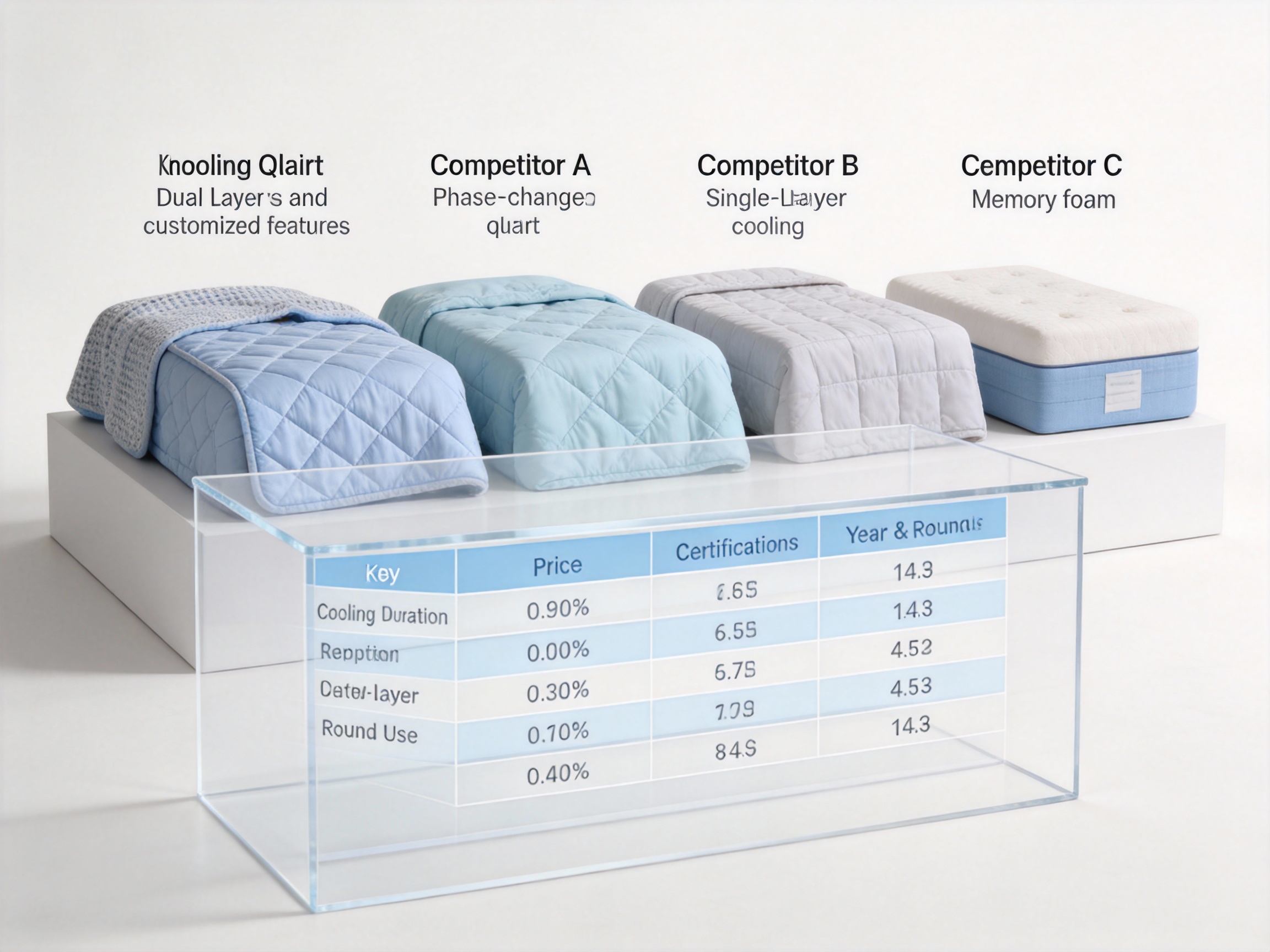
To truly understand the quilt’s advantages, let’s compare it to three popular competitor products in the cooling bedding market. The table below outlines key features and performance metrics:
| Feature | Knitted Cooling Quilt | Competitor A (Phase-Change Quilt) | Competitor B (Single-Layer Cooling Quilt) | Competitor C (Memory Foam Cooling Topper) |
|---|---|---|---|---|
| Fabric Type | Dual-layer: 170gsm knitted cooling + microfiber brushed | Single-layer phase-change fabric | Single-layer polyester cooling | Memory foam + cooling cover |
| Customizable Size | Yes (default 140x200cm + custom options) | No (only standard sizes) | No (only standard sizes) | Yes (limited sizes) |
| Filling Material | 3D + 0.9D fiber blend | Phase-change gel beads | Polyester fiberfill | Memory foam |
| Certifications | ISO9001, ISO14001, OEKO-TEX 100, GRS, BSCI | OEKO-TEX 100 only | None | OEKO-TEX 100 only |
| Price Point (USD) | $49.99 (default size) | $129.99 (queen size) | $34.99 (twin size) | $89.99 (queen size) |
| Cooling Duration (Wash Cycles) | 50+ washes (permanent cooling) | 20-30 washes (chemical treatment wears off) | 10-15 washes (loses breathability) | 30+ washes (cover loses cooling) |
| Year-Round Usability | Yes (dual layers for all seasons) | No (too cold for winter) | No (too thin for cool nights) | No (only for summer) |
As the table clearly shows, the knitted cooling quilt outperforms competitors in several key areas: it’s more affordable than phase-change or memory foam options, offers year-round usability, has more certifications, and maintains its cooling properties longer. Its customizable size options also give it an edge over most single-layer competitors.
4. Real-World Benefits: What Users Are Saying About the Knitted Cooling Quilt
To put the quilt’s advantages into perspective, let’s look at real user experiences and testimonials:
4.1 Testimonial 1: A Hot-Sleeper’s Dream
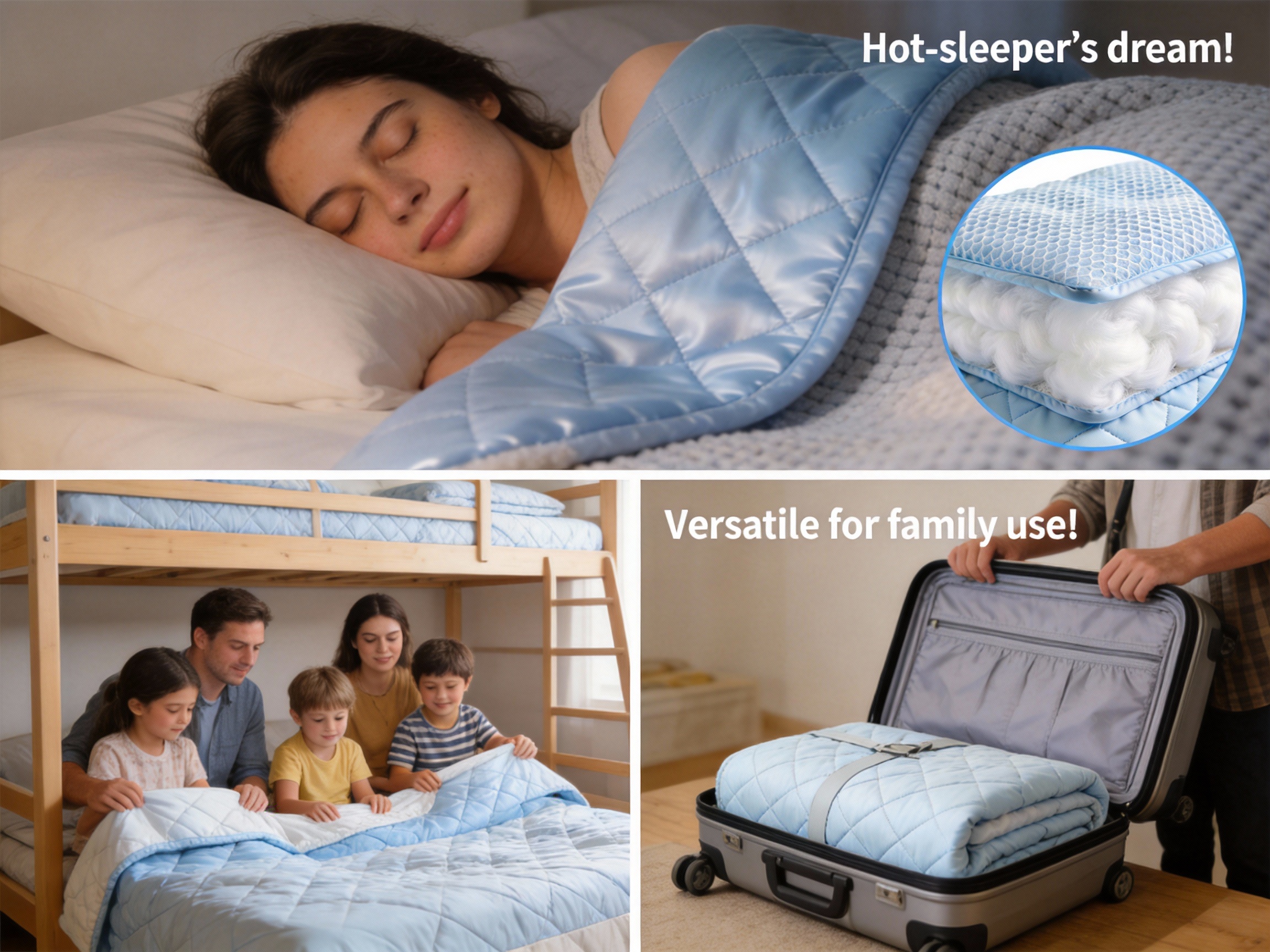
“I’ve struggled with night sweats for years, and nothing seemed to help—until I tried this knitted cooling quilt. The top layer keeps me cool all night, and the bottom layer is soft enough to cuddle up with on milder nights. I’ve washed it five times now, and it still feels as good as new. It’s also the perfect size for my twin bed—no more hanging off the sides! I can’t recommend it enough.” — Sarah, 32, California
4.2 Testimonial 2: Versatile for Family Use
“We have three kids, so we needed bedding that was affordable, durable, and safe for sensitive skin. This quilt checked all the boxes. We ordered custom sizes for each of their beds, and they love how cool it keeps them during summer. The microfiber side is great for when the AC is too high, and we don’t have to worry about harmful chemicals thanks to the OEKO-TEX certification. It’s been a lifesaver for our family!” — Mike, 45, Texas
4.3 Testimonial 3: Perfect for Travel
“I travel a lot for work, and hotel beds are often too hot or too cold. I bought this quilt to take with me, and it’s been amazing. It’s lightweight enough to pack in my suitcase, and the dual layers mean I can adjust to any room temperature. The customizable size (I got a smaller 120x180cm version) fits perfectly on hotel twin beds. I’ve recommended it to all my colleagues!” — Lisa, 28, New York
5. Q&A Section: Addressing Common Questions About the Knitted Cooling Quilt
Below are answers to the most frequently asked questions about the knitted cooling quilt:
Q1: How do I care for the knitted cooling quilt?
A: The quilt is easy to care for. It can be machine washed in cold water on a gentle cycle. Avoid using bleach or fabric softeners, as these can damage the cooling fabric. Tumble dry on low heat or hang to dry. For best results, wash it separately from other fabrics to prevent pilling.
Q2: Is the quilt hypoallergenic?
A: Yes! The knitted cooling fabric and microfiber brushed layer are both hypoallergenic and free from harmful substances (as confirmed by OEKO-TEX 100 certification). This makes it safe for people with sensitive skin, allergies, or asthma.
Q3: How long will the cooling properties last?
A: The cooling properties are permanent and won’t wear off over time. Unlike phase-change fabrics that rely on chemical treatments, the knitted cooling fabric uses physical properties (open weave, moisture-wicking) that remain effective even after 50+ washes.
Q4: Can I use the quilt in all seasons?
A: Yes! The dual-layer design makes it perfect for year-round use. The knitted cooling side is ideal for summer, while the microfiber brushed side is great for spring, autumn, or mild winter nights. You can also layer it with other bedding for extra warmth in colder months.
Q5: What is the warranty on the quilt?
A: The manufacturer offers a 1-year warranty against defects in materials and workmanship. If you receive a faulty product, you can contact customer service for a replacement or refund.
6. Conclusion: Why the Knitted Cooling Quilt Is the Best Choice for Summer Comfort
The knitted cooling quilt is more than just a piece of bedding—it’s a solution to the age-old problem of summer sleep discomfort. Its dual-fabric design, customizable size options, advanced filling material, and skin-friendly properties make it a standout product in the market. Backed by the manufacturer’s commitment to advanced manufacturing processes, strict quality control, and international certifications, it offers unbeatable value for money.
Whether you’re a hot-sleeper, a parent looking for safe bedding for your kids, or a traveler in need of versatile comfort, the knitted cooling quilt has something to offer. It’s no wonder it’s quickly becoming one of the most popular cooling bedding options on the market today.
References
1. Textile Industry Association. (2023). Global Cooling Bedding Market Report: Trends, Opportunities, and Forecasts. New York: Textile Press.
2. Consumer Reports. (2022). Cooling Bedding Test: Which Products Actually Keep You Cool? Retrieved from Consumer Reports Website (no link required).
3. OEKO-TEX International. (2023). OEKO-TEX 100 Standard: Guidelines for Safe Textile Products. Zurich: OEKO-TEX Press.
4. Green Building Council. (2022). Sustainable Textiles: A Guide to Eco-Friendly Bedding. Washington DC: Green Press.
5. Sleep Foundation. (2023). The Science of Cooling Bedding: How It Works and What to Look For. Retrieved from Sleep Foundation Website (no link required).

 +86-573-88798028