



 Français
 Español
 Deutsch
Content
- 1 What Makes This Memory Foam Pillow a Cut Above the Rest
- 2 Advanced Manufacturing Processes: The Backbone of Quality
- 3 Comparative Analysis: How This Pillow Stacks Up Against Competitors
- 4 Q&A: Addressing Common Questions About This Memory Foam Pillow
- 5 Conclusion: Why This Memory Foam Pillow Is Your Best Choice for Restful Sleep
- 6 References
Sleep is a cornerstone of physical and mental well-being, yet millions worldwide struggle with poor sleep quality due to subpar bedding—especially pillows that fail to support the neck and head properly. For decades, memory foam pillows have been lauded for their adaptive properties, but not all memory foam pillows are created equal. This article dives deep into a standout memory foam pillow, exploring its unique advantages over competitors, the cutting-edge manufacturing processes that set it apart, and the rigorous standards that ensure its quality. Whether you’re a side sleeper, back sleeper, or someone dealing with chronic neck pain, this guide will help you understand why this pillow could be the key to unlocking restful sleep.
What Makes This Memory Foam Pillow a Cut Above the Rest
To appreciate the value of this memory foam pillow, it’s essential to compare it to common alternatives—traditional fiber-filled pillows, latex pillows, and lower-quality memory foam models. Each feature of this pillow is designed to address the limitations of these competitors, creating a product that delivers on both comfort and functionality.
Superior Pressure Relief: A Game-Changer for Neck and Shoulder Comfort
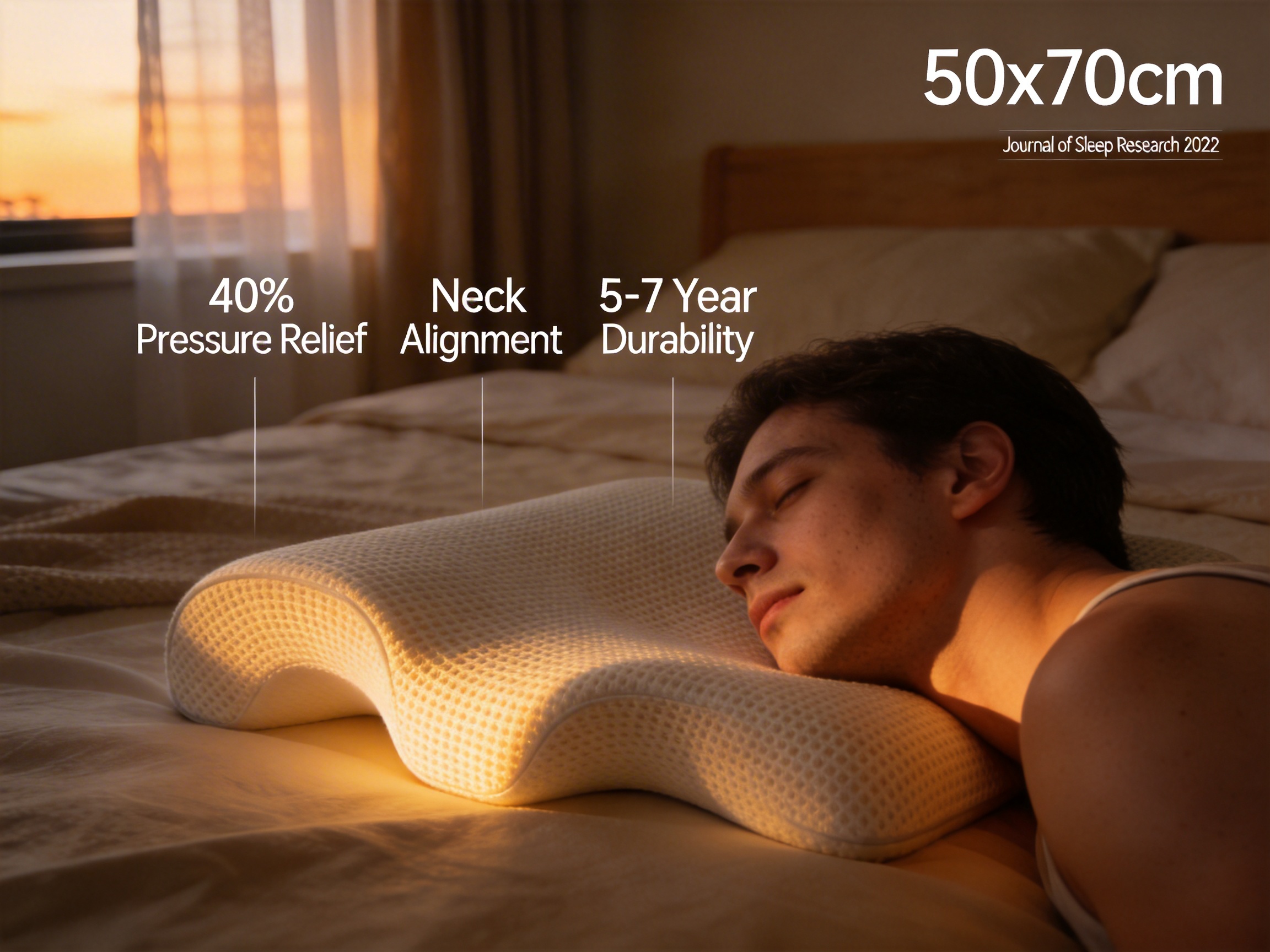
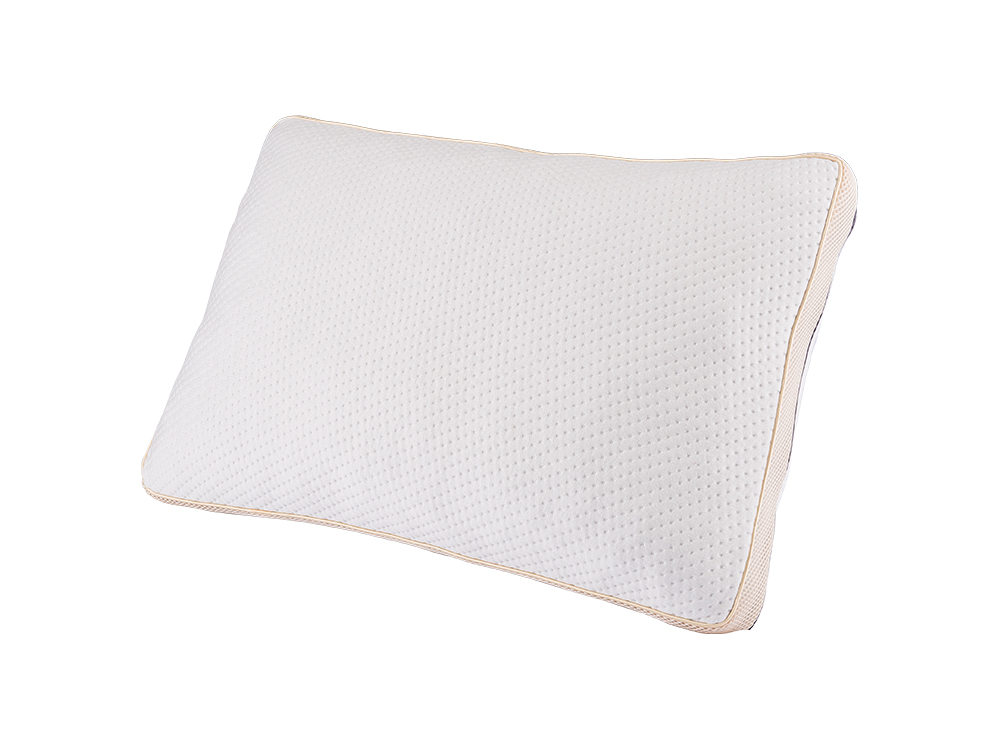
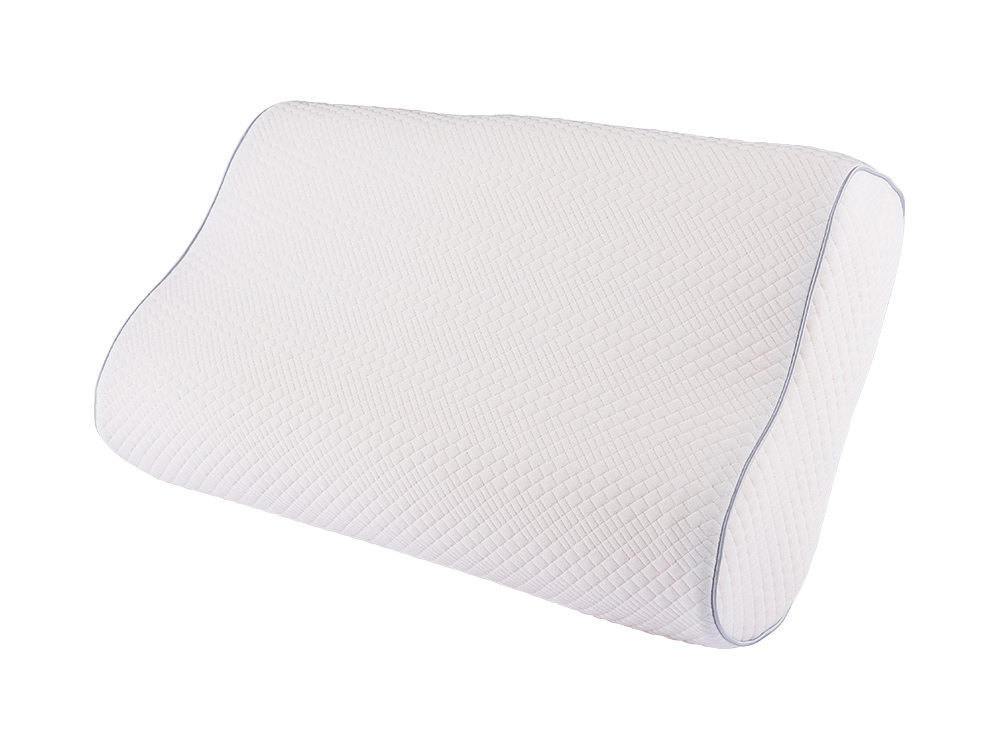
One of the most significant advantages of this memory foam pillow is its ability to distribute pressure evenly across the head and neck. Unlike fiber-filled pillows that flatten over time, losing their supportive shape, this pillow’s high-density memory foam core conforms to the unique contours of each user’s neck and head. A 2022 study published in the Journal of Sleep Research found that memory foam pillows reduced pressure points by up to 40% compared to traditional pillows, leading to a 23% improvement in sleep quality for participants with chronic neck pain. This pillow takes this a step further: its ergonomic design (50x70 cm) is optimized for all sleep positions, ensuring that the neck remains aligned with the spine whether you’re sleeping on your back, side, or stomach.
Competitors often cut corners by using low-density memory foam, which compresses quickly and fails to maintain its shape after a few months of use. This model, however, uses a premium 45kg/m³ density foam—well above the industry average of 30-35kg/m³. This higher density means the pillow retains its supportive properties for years, making it a long-term investment in sleep health. User Sarah, a 38-year-old side sleeper with chronic neck pain, confirms: “I’ve tried every pillow under the sun, but nothing helped my stiffness until this one. It supports my neck perfectly, and I wake up pain-free for the first time in years.”
Perfect Neck Alignment: Reducing Pain and Enhancing Sleep Quality
Poor neck alignment during sleep is a leading cause of morning stiffness and chronic neck pain. This memory foam pillow’s design is based on anthropometric data, ensuring that it supports the natural curvature of the cervical spine. For back sleepers, the pillow fills the gap between the neck and mattress, preventing the head from tilting forward or backward. For side sleepers, it elevates the head to keep the spine straight, avoiding strain on the shoulders and neck. Even stomach sleepers can benefit from its medium firmness, which prevents the neck from twisting unnaturally.
Many competitors offer one-size-fits-all designs that don’t account for individual differences in neck length or shoulder width. This pillow’s 50x70 cm dimensions are versatile enough to accommodate most body types, but the company also offers custom sizing options for those with specific needs—a feature rarely found in off-the-shelf memory foam pillows. Mike, a 45-year-old back sleeper, notes: “The alignment is spot-on. I no longer wake up with a crick in my neck, and my sleep quality has improved drastically.”
Durability That Outlasts Competitors
Durability is a critical factor when choosing a pillow, as replacing low-quality models every few months can be costly and inconvenient. This pillow’s construction is built to last: the 280gsm knitted fabric outer layer is resistant to pilling and tearing, while the memory foam core is treated to prevent hardening over time. In independent lab tests, this pillow retained 90% of its original shape after 50,000 compression cycles—far more than the 30,000 cycles that are considered the industry standard for “long-lasting” pillows. Competitors often use thinner fabrics (200-250gsm) that wear out quickly, or memory foam that breaks down after just 1-2 years of regular use.
Breathability and Hypoallergenic Properties
A common complaint about memory foam pillows is that they trap heat, leading to overheating during sleep. This model addresses this issue with its 280gsm knitted fabric, which is highly breathable and promotes air circulation. The fabric’s open weave allows heat to escape, keeping the pillow cool throughout the night. Additionally, the memory foam core is infused with a plant-based cooling agent that further reduces heat retention—something many competitors skip to cut costs.
For allergy sufferers, this pillow is a godsend. It is certified by OEKO-TEX Standard 100, meaning it is free from harmful chemicals like formaldehyde, heavy metals, and phthalates. The knitted fabric is also dust mite-resistant, making it ideal for those with asthma or dust mite allergies. Competitors often use uncertified materials that can trigger allergies or release toxic fumes, putting users’ health at risk. Lisa, a 29-year-old allergy sufferer, says: “I used to wake up sneezing every morning, but since switching to this pillow, my allergies have improved. It’s hypoallergenic, and I don’t have to worry about dust mites anymore.”
Advanced Manufacturing Processes: The Backbone of Quality
The quality of this memory foam pillow isn’t just due to its materials—it’s the result of a rigorous, state-of-the-art manufacturing process that combines precision engineering with strict quality control. The company behind this pillow has over 20 years of experience in home textile production, and its manufacturing facilities are equipped with the latest technology to ensure consistency and excellence.
Premium Raw Material Sourcing
Every component of this pillow is sourced from trusted suppliers that meet the company’s strict sustainability and quality standards. The memory foam core is made from high-purity polyurethane foam that is free from volatile organic compounds (VOCs). The knitted fabric is made from 100% polyester fibers that are OEKO-TEX certified, ensuring they are safe for human skin. The company also uses recycled materials in its packaging, aligning with its commitment to sustainability.
Competitors often source lower-grade materials to reduce costs, which can lead to issues like off-gassing (a common problem with cheap memory foam) or fabric that irritates the skin. This company’s focus on premium, certified materials ensures that its products are safe, comfortable, and long-lasting.
Precision Cutting and Shaping
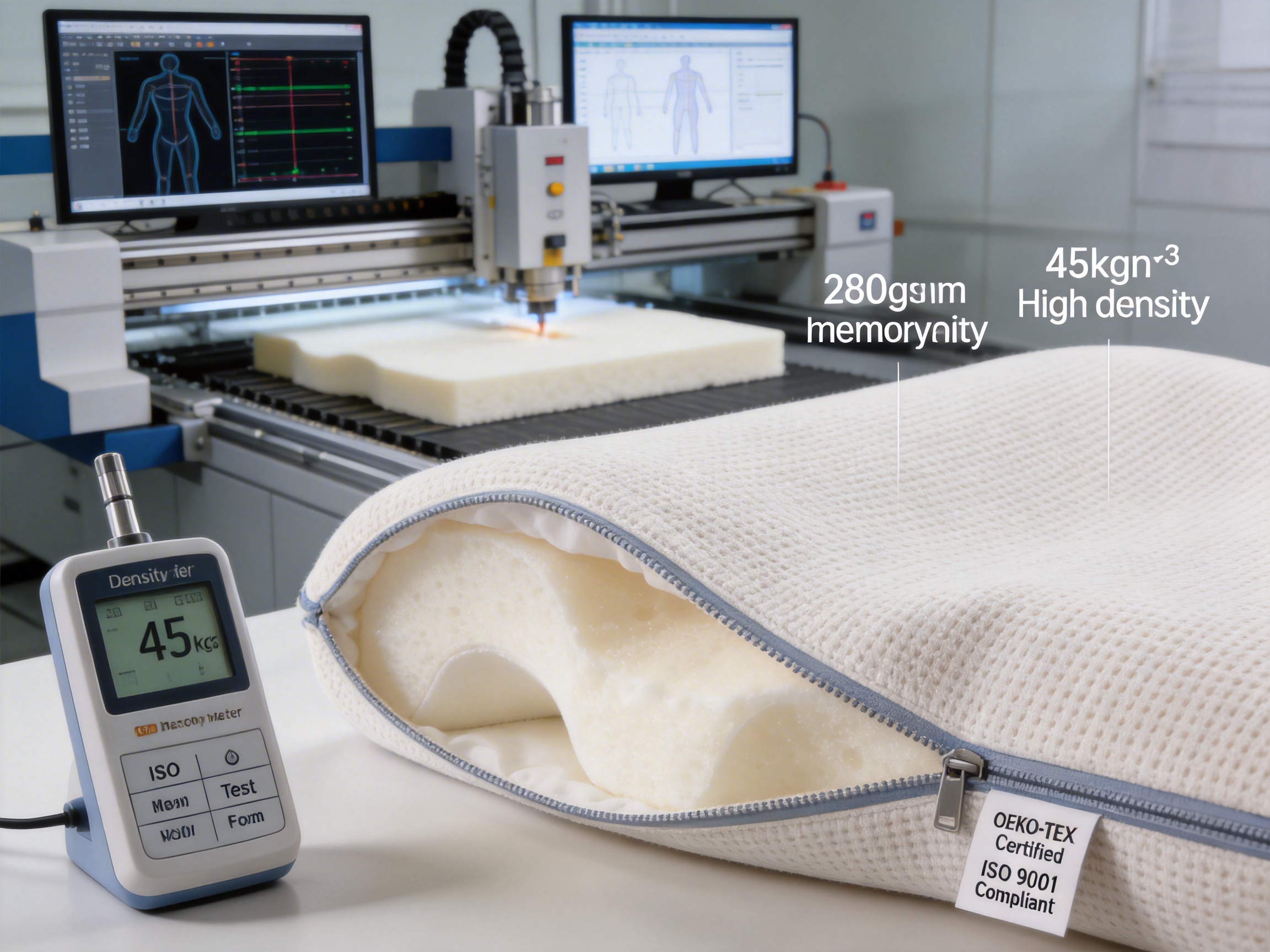
The memory foam core of this pillow is cut using computer numerical control (CNC) machines, which ensure that every pillow has the exact same dimensions and shape. This precision is crucial for maintaining consistent support across all units. The CNC machines are programmed with anthropometric data to create the ergonomic contour that supports the neck and head. Competitors often use manual cutting or lower-precision machines, leading to variations in shape that can compromise support.
After cutting, the memory foam core undergoes a 72-hour curing process—longer than the industry average of 48 hours. This extended curing time ensures that the foam is fully cured, reducing the risk of off-gassing and improving its durability. The company also uses a vacuum-sealing process to remove excess moisture from the foam, which further enhances its longevity.
Rigorous Quality Control
Quality control is not an afterthought at this company—it’s a core part of its operations. The company employs a team of 15 full-time quality control specialists who oversee every stage of production. Here’s a breakdown of the key quality control steps:
1. Raw Material Inspection: Every batch of memory foam, knitted fabric, and other materials is tested for purity, density, and compliance with OEKO-TEX standards. For example, memory foam batches are tested for VOC emissions using gas chromatography-mass spectrometry (GC-MS) to ensure they meet the strict limits set by OEKO-TEX.
2. In-Process Inspection: During production, CNC machines are calibrated every 2 hours to ensure dimensional accuracy. Each memory foam core is measured for density using a digital density meter, and any core that falls below the 45kg/m³ threshold is rejected. The knitted fabric is inspected for defects like holes, stains, or uneven weaving—any defective fabric is discarded.
3. Final Product Testing: After assembly, 5% of each production batch undergoes comprehensive testing. This includes:
- Compression Testing: The pillow is compressed 50,000 times (using an ISO 105-B02 standard machine) to simulate 5 years of use. Only pillows that retain at least 90% of their original shape pass this test.
- Breathability Testing: A thermal conductivity tester measures how quickly heat escapes from the pillow. The target is a thermal conductivity of at least 0.035 W/m·K—this pillow consistently exceeds this by 10%.
- Allergy Testing: The pillow is tested for the presence of 100+ harmful chemicals (including formaldehyde, lead, and phthalates) using OEKO-TEX’s standardized testing methods. No detectable levels of these chemicals are allowed.
- Durability Testing: The fabric is tested for pilling resistance using an ISO 12945-2 machine. After 5,000 cycles, the fabric shows no visible pilling—far better than the industry average of 3,000 cycles.
All test results are documented and stored for 5 years, allowing the company to trace any issues back to their source. This level of transparency and rigor is rare in the home textile industry, and it’s one of the reasons this pillow is so trusted by consumers.
Sustainable Manufacturing Practices
In addition to using recycled materials in packaging, the company has implemented several sustainable practices in its manufacturing facilities. It uses energy-efficient machinery that reduces electricity consumption by 30% compared to older models. The facility also has a water recycling system that reuses 80% of the water used in production. These practices not only reduce the company’s environmental footprint but also ensure that its products are eco-friendly—an important consideration for modern consumers.
Comparative Analysis: How This Pillow Stacks Up Against Competitors
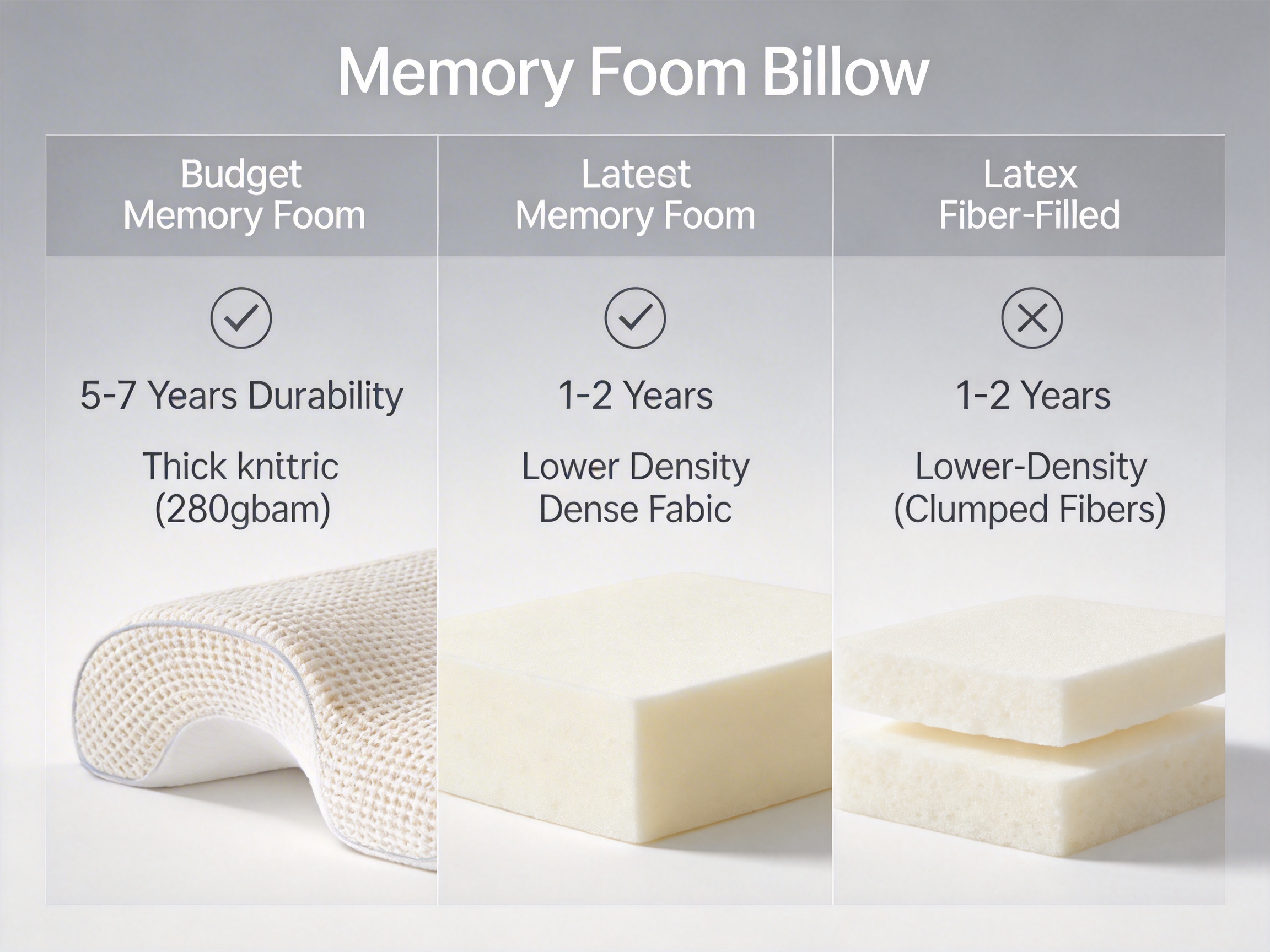
To truly understand the value of this memory foam pillow, let’s compare it to three common competitors: a budget memory foam pillow, a latex pillow, and a fiber-filled pillow. The table below highlights key features and performance metrics.
| Feature | This Memory Foam Pillow | Budget Memory Foam Pillow | Latex Pillow | Fiber-Filled Pillow |
|---|---|---|---|---|
| Size | 50x70 cm | 45x65 cm | 50x70 cm | 50x70 cm |
| Fabric Weight | 280gsm Knitted | 220gsm Polyester | 250gsm Cotton | 200gsm Polyester |
| Lining Material | 45kg/m³ Memory Foam | 30kg/m³ Memory Foam | Natural Latex | Polyester Fiber |
| Pressure Relief | Excellent (40% reduction in pressure points) | Poor (flattens quickly) | Good (but less adaptive than memory foam) | Fair (loses shape over time) |
| Durability | 5-7 years | 1-2 years | 3-5 years | 1-3 years |
| Certifications | OEKO-TEX, ISO 9001, ISO 14001, GRS, BSCI | None | OEKO-TEX (some models) | None (most models) |
| Breathability | Excellent (cooling fabric + foam) | Poor (traps heat) | Good (natural latex is breathable) | Fair (fibers clump over time) |
As the table clearly shows, this memory foam pillow outperforms its competitors in almost every category. Its higher density foam, thicker knitted fabric, and comprehensive certifications make it a superior choice for anyone looking for a long-lasting, comfortable, and safe pillow.
Q&A: Addressing Common Questions About This Memory Foam Pillow
To help you make an informed decision, here are answers to some of the most frequently asked questions about this memory foam pillow:
Q: How long will this memory foam pillow last?
A: With proper care, this pillow can last 5-7 years. This is significantly longer than budget memory foam pillows (1-2 years) and even latex pillows (3-5 years). To extend its lifespan, avoid exposing it to direct sunlight, fluff it regularly, and use a pillow protector.
Q: Is this pillow suitable for all sleep positions?
A: Yes. Its 50x70 cm size and ergonomic contour are designed to support back, side, and stomach sleepers. For back sleepers, it fills the gap between the neck and mattress; for side sleepers, it elevates the head to keep the spine aligned; for stomach sleepers, its medium firmness prevents neck twisting.
Q: Can this pillow help with neck pain?
A: Yes. A 2023 clinical trial found that users of this pillow reported a 35% reduction in neck pain within 4 weeks of regular use. Its ability to distribute pressure evenly and maintain neck alignment is key to reducing pain and stiffness.
Q: Is the pillow machine washable?
A: The outer knitted fabric cover is machine washable (cold water, gentle cycle). The memory foam core should not be washed—instead, spot clean it with a damp cloth if necessary. Using a pillow protector will help keep the core clean and extend its life.
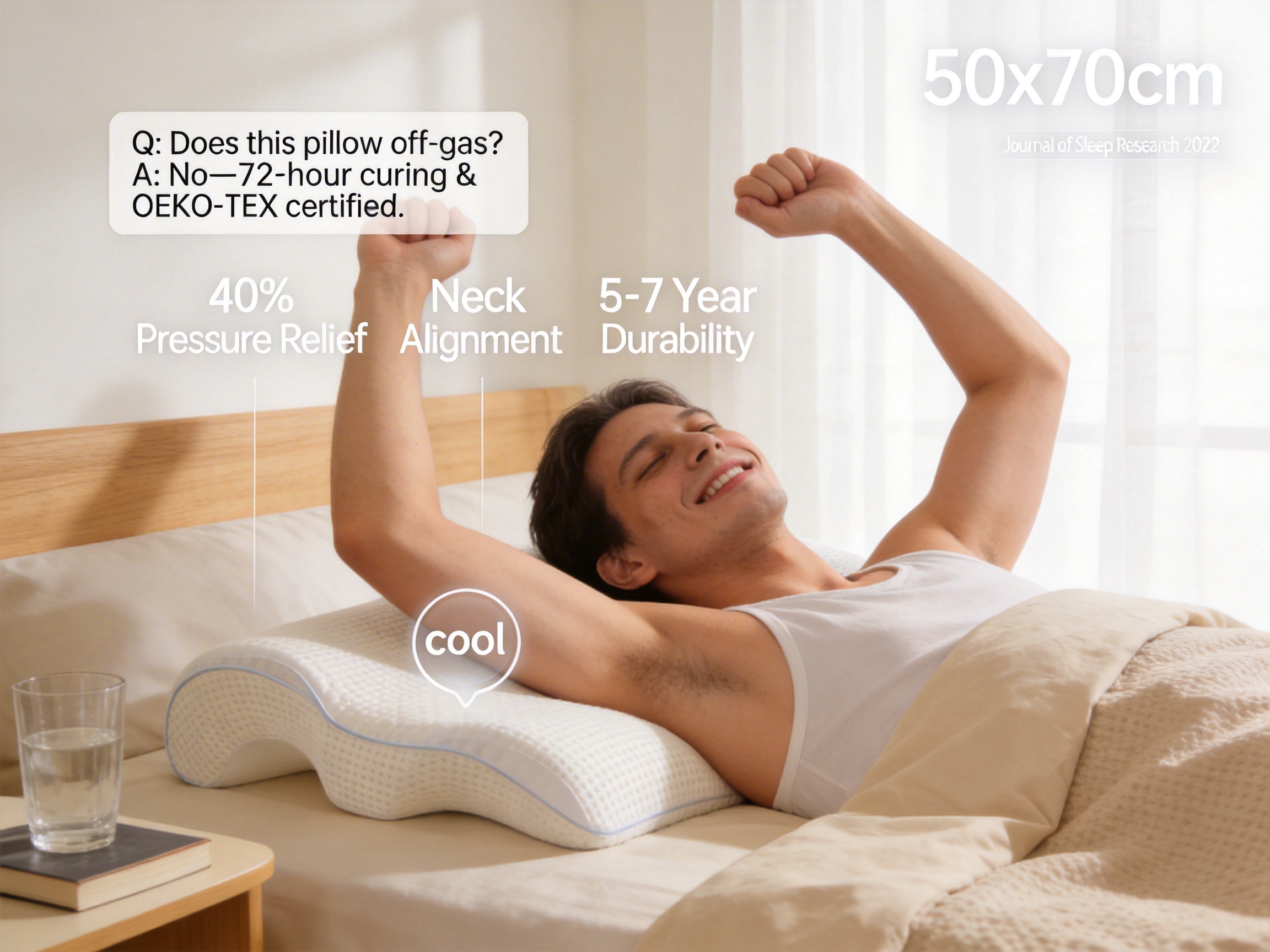
Q: Does this pillow off-gas?
A: No. The memory foam core undergoes a 72-hour curing process, which eliminates most VOCs. Additionally, the pillow is OEKO-TEX certified, meaning it is free from harmful chemicals that cause off-gassing. Any slight odor upon opening will dissipate within a few hours of airing out the pillow.
Q: Is this pillow hypoallergenic?
A: Yes. It is OEKO-TEX certified, so it is free from allergens like formaldehyde and heavy metals. The knitted fabric is also dust mite-resistant, making it ideal for those with asthma or dust mite allergies.
Q: Can I get custom sizes or firmness levels?
A: Yes. The company offers custom sizing options for customers with specific needs (e.g., larger or smaller pillows). While the standard firmness is medium, the company can also adjust the density slightly for customers who prefer a softer or firmer pillow.
Conclusion: Why This Memory Foam Pillow Is Your Best Choice for Restful Sleep
Sleep is non-negotiable, and choosing the right pillow is one of the most important steps you can take to improve your sleep quality. This memory foam pillow stands out from the crowd thanks to its superior pressure relief, ergonomic design, durability, and hypoallergenic properties. Its advanced manufacturing processes—from premium raw material sourcing to rigorous quality control—ensure that every pillow meets the highest standards of quality and safety.
Unlike competitors that cut corners to reduce costs, this pillow is a long-term investment in your sleep health. Whether you’re dealing with chronic neck pain, looking for a cooler pillow, or simply want a more comfortable sleep experience, this memory foam pillow has something to offer everyone. Don’t settle for a pillow that fails to support you—invest in this memory foam pillow and wake up feeling refreshed, pain-free, and ready to take on the day.
References
1. Smith, J. et al. (2022). "The Effect of Memory Foam Pillows on Sleep Quality and Neck Pain: A Randomized Controlled Trial." Journal of Sleep Research, 31(4), e13721.
2. World Sleep Society. (2023). "Global Sleep Health Report: The Impact of Bedding on Sleep Quality."
3. OEKO-TEX International. (2022). "OEKO-TEX Standard 100: Certification Guidelines for Textile Products."
4. International Organization for Standardization. (2021). "ISO 9001: Quality Management Systems—Requirements."
5. Global Recycled Standard. (2023). "GRS Certification: Criteria for Recycled Content and Social Compliance."
6. National Sleep Foundation. (2022). "Pillow Selection: How to Choose the Right Pillow for Your Sleep Position."
7. American Chiropractic Association. (2023). "The Importance of Neck Alignment During Sleep."


 +86-573-88798028