



 Français
 Español
 Deutsch
Content
- 1 What Makes a Breathable Pillow Important?
- 2 Product Construction and Material Specifications
- 3 Key Comfort Advantages
- 4 Advantages Compared with Common Competing Pillow Designs
- 5 Advanced Manufacturing Process
- 6 Quality Management and Manufacturing Strengths
- 7 Customization Opportunities for Different Markets
- 8 Applications of the Breathable Cotton Pillow
- 9 Care, Use, and Longevity Recommendations
- 10 How Buyers Should Evaluate This Product
- 11 Frequently Asked Questions
- 11.1 What is the main feature of this pillow?
- 11.2 What are the dimensions?
- 11.3 Is the filling natural down?
- 11.4 Why does the pillow use a mesh side wall?
- 11.5 Is the pillow suitable for hot climates?
- 11.6 Is this a high-profile pillow?
- 11.7 Can the product be customized?
- 11.8 What certifications are associated with the manufacturer?
- 11.9 What other products can the manufacturer produce?
- 11.10 How should a buyer check quality before mass production?
- 11.11 Who is this pillow best suited for?
- 12 Why Manufacturing Expertise Matters
- 13 Conclusion
- 14 References
- 15 Product: Breathable Cotton Pillow
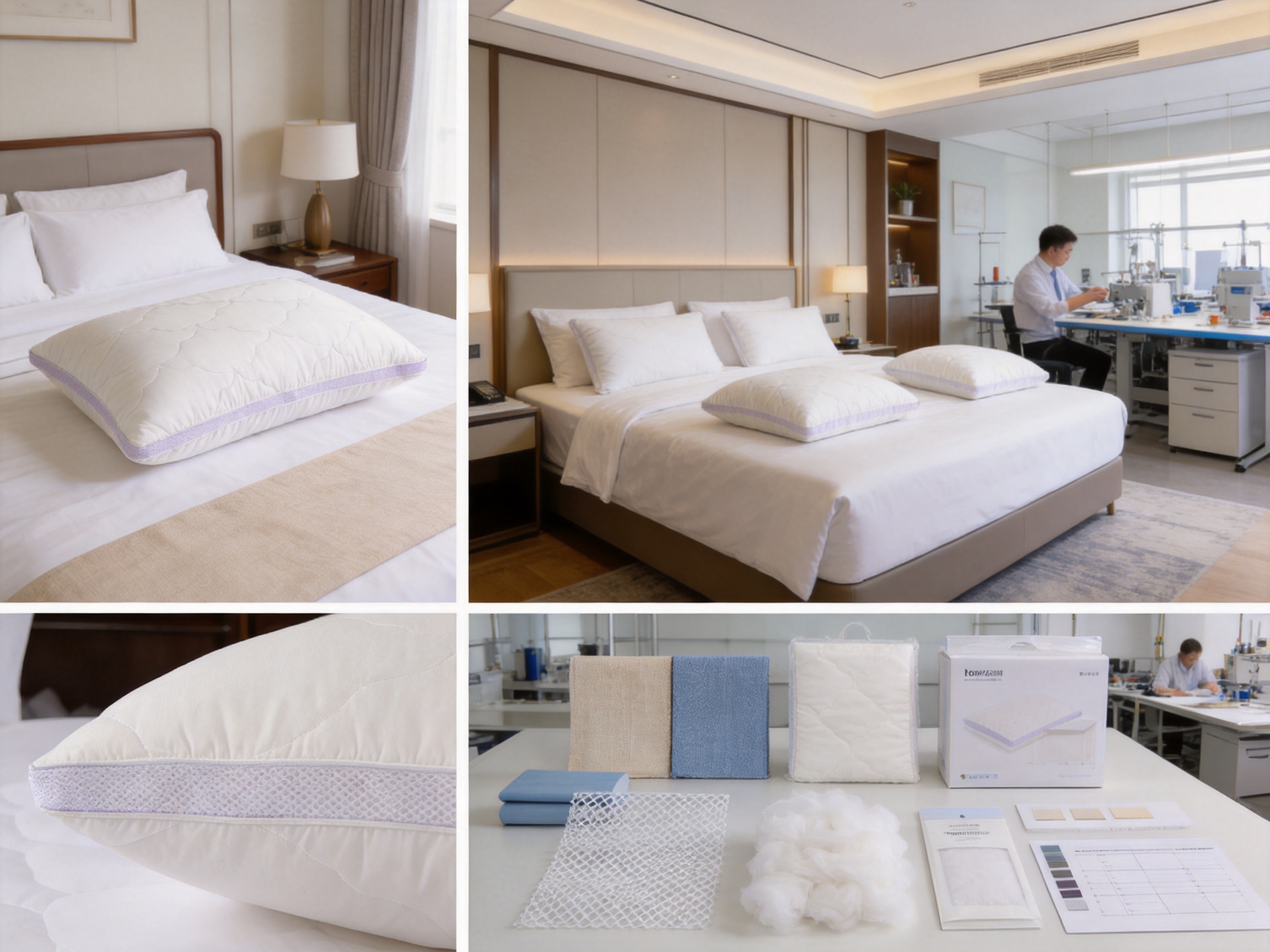
Breathable Cotton Pillow: A Practical Guide to Comfort, Airflow, Materials, and Advanced Bedding Manufacturing
A pillow is one of the most important components of a healthy sleep environment. It supports the head and neck, influences body alignment, affects heat retention, and can determine whether a sleeper wakes refreshed or uncomfortable. For this reason, buyers increasingly look beyond appearance and price. They want bedding products that combine softness, breathability, resilience, easy maintenance, and dependable manufacturing quality.
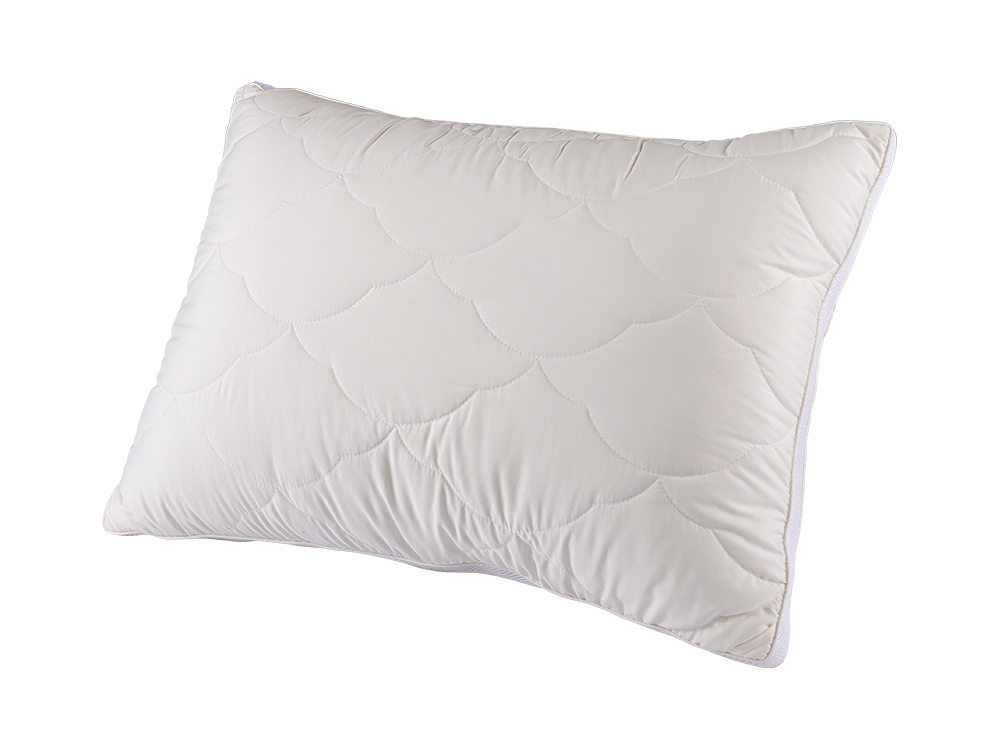
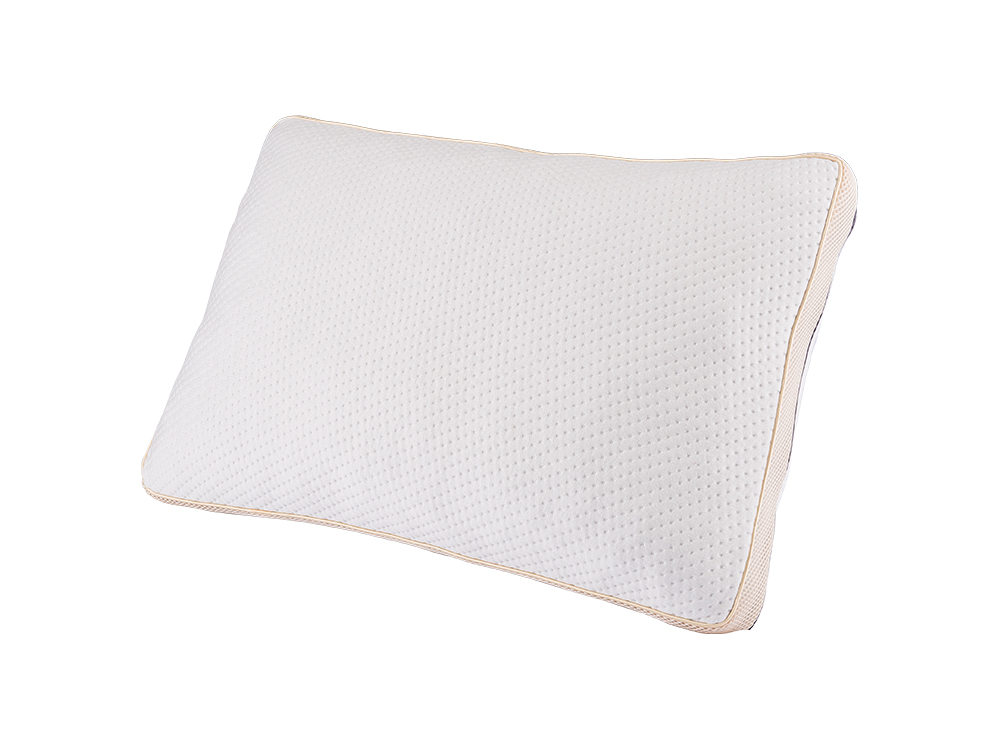
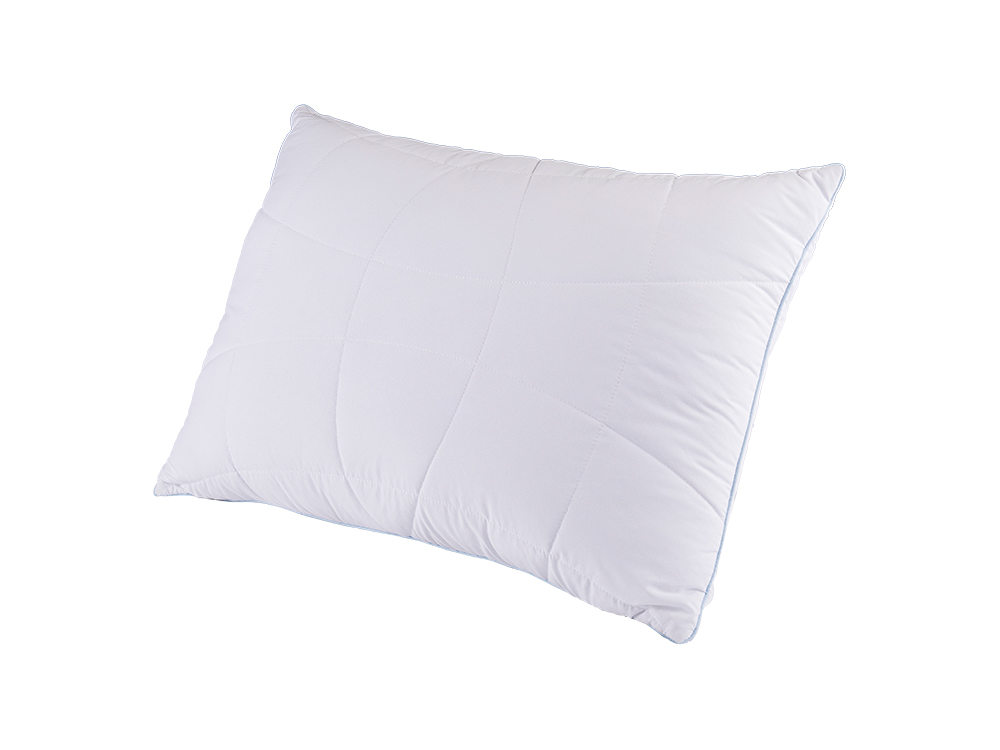
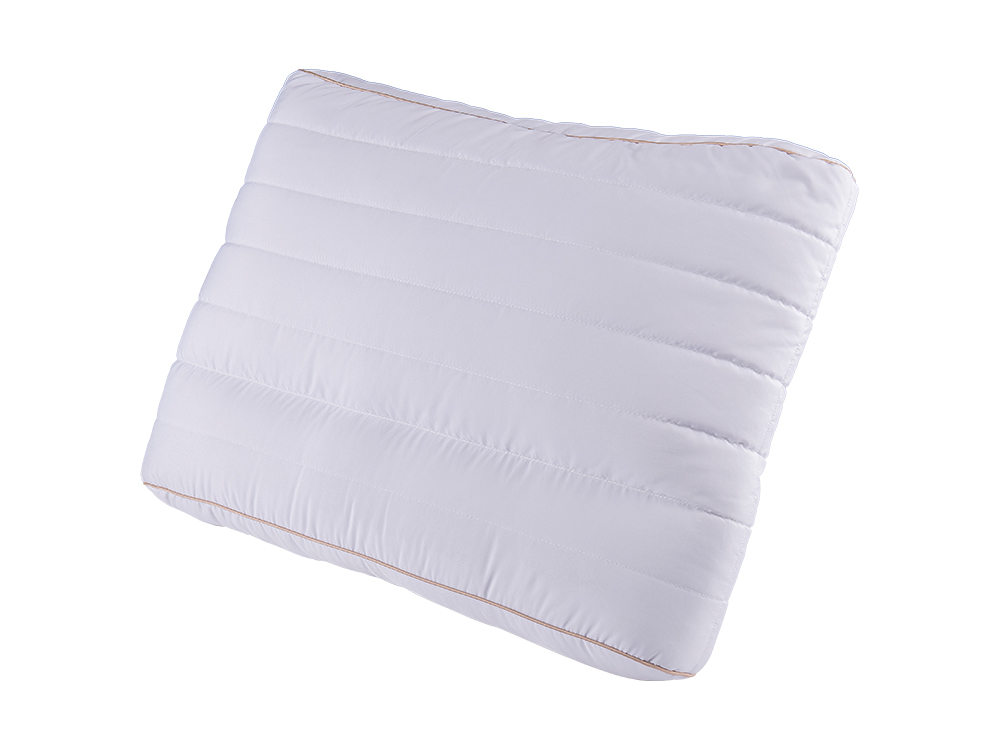
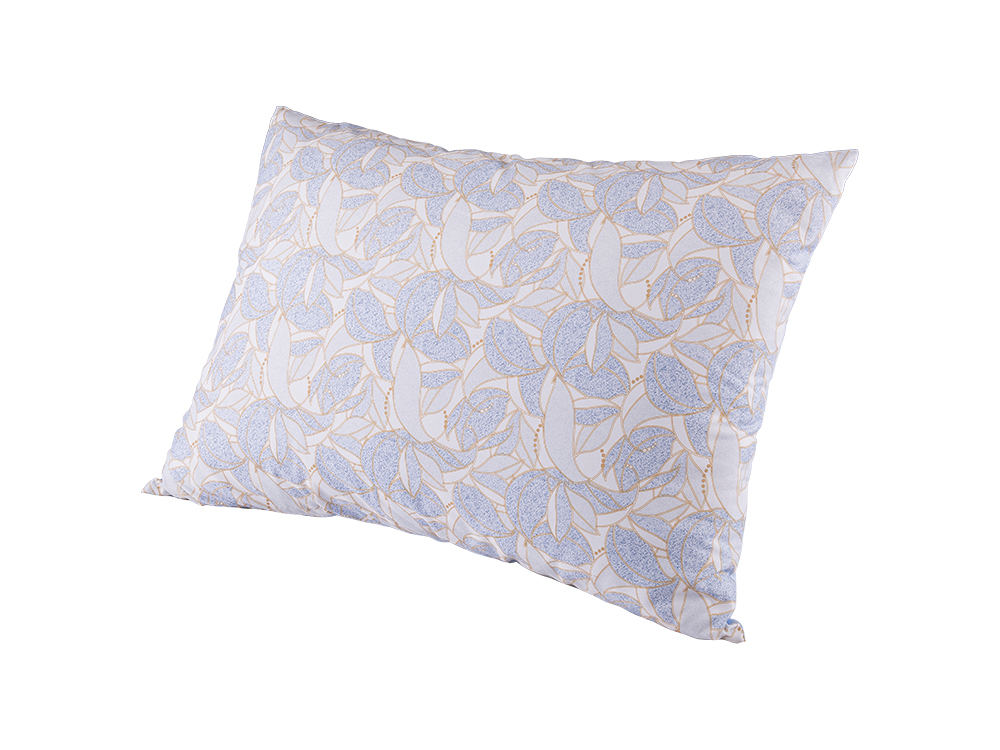
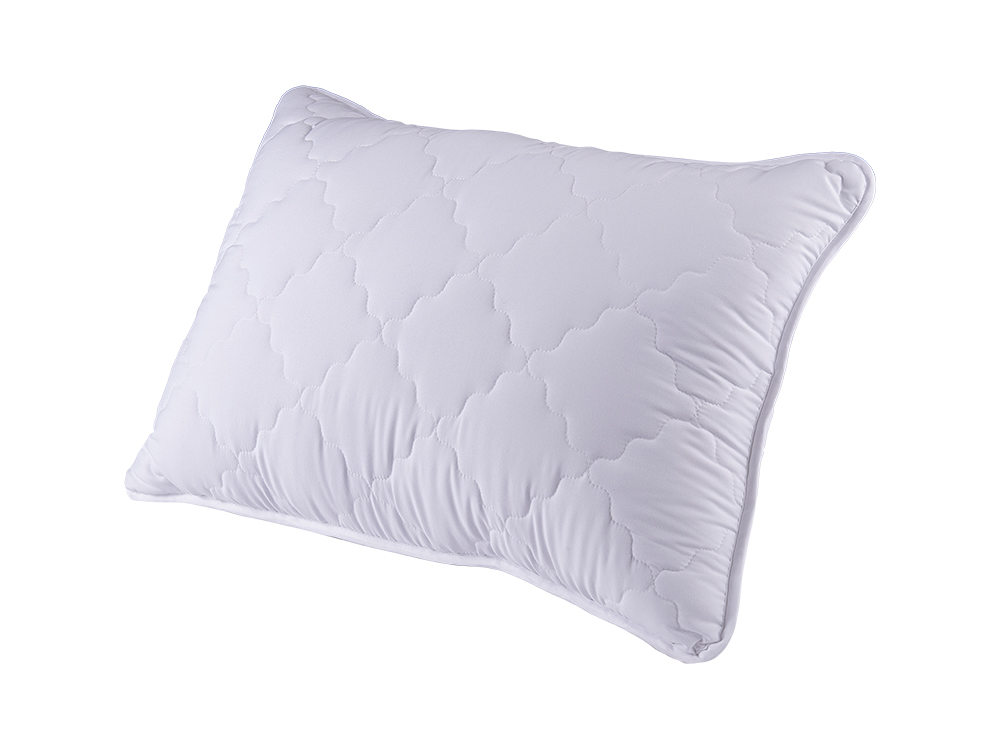
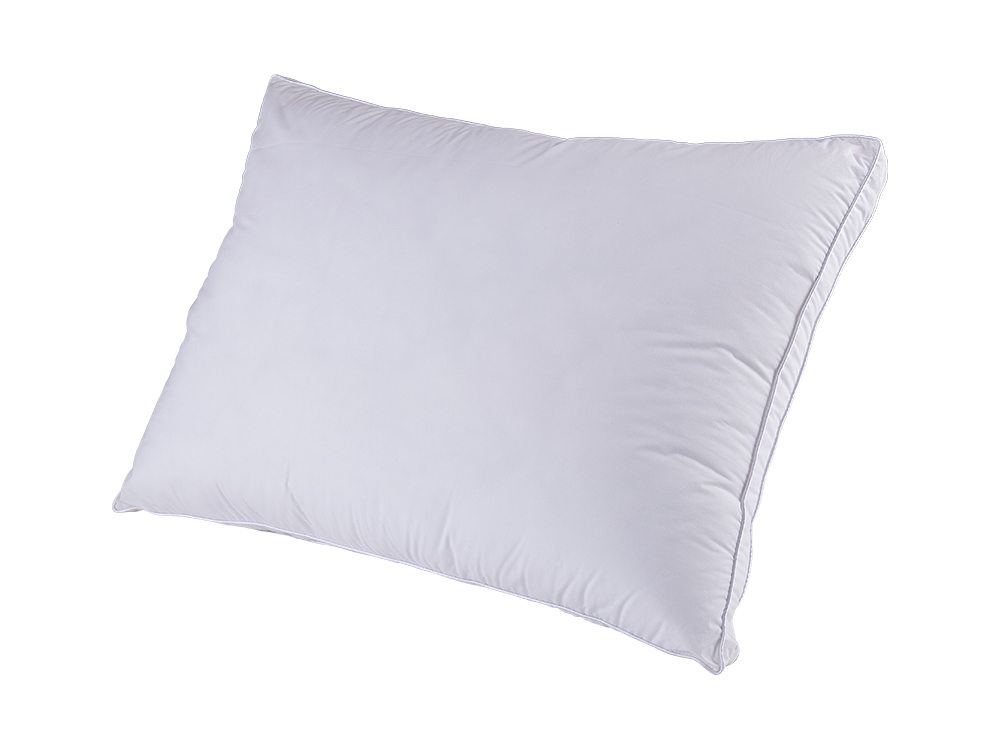
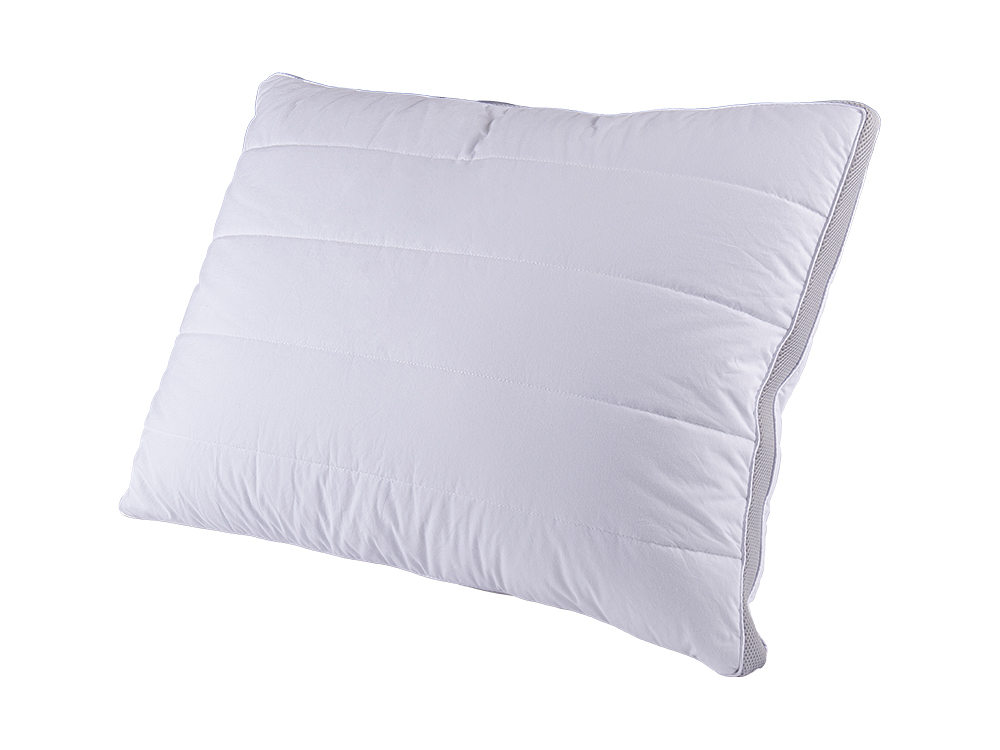
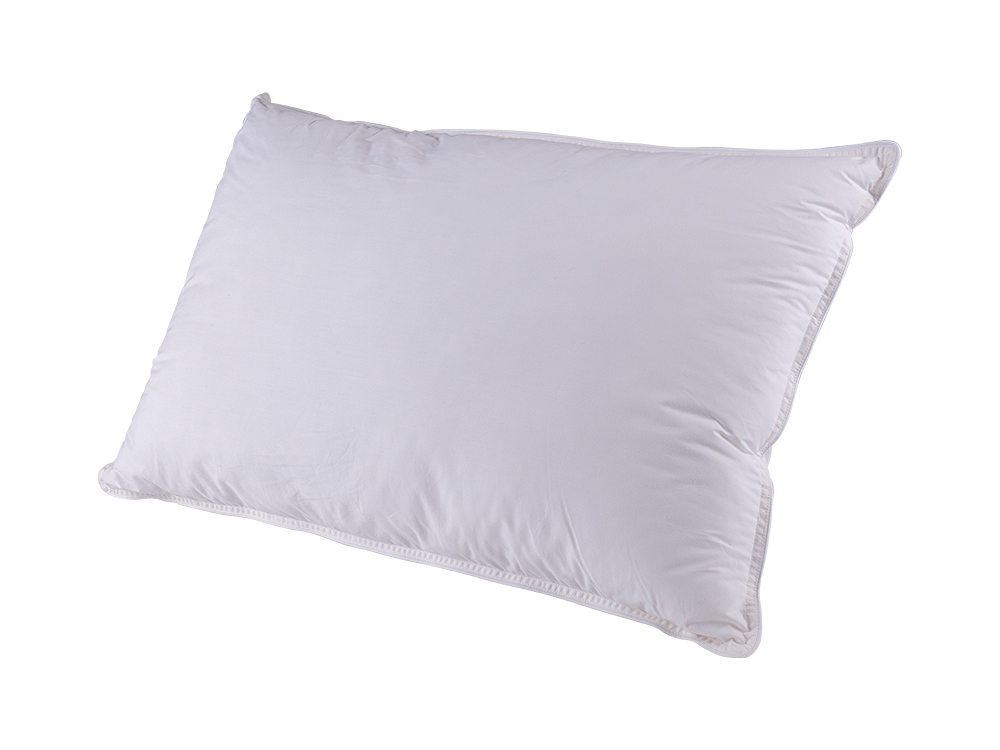
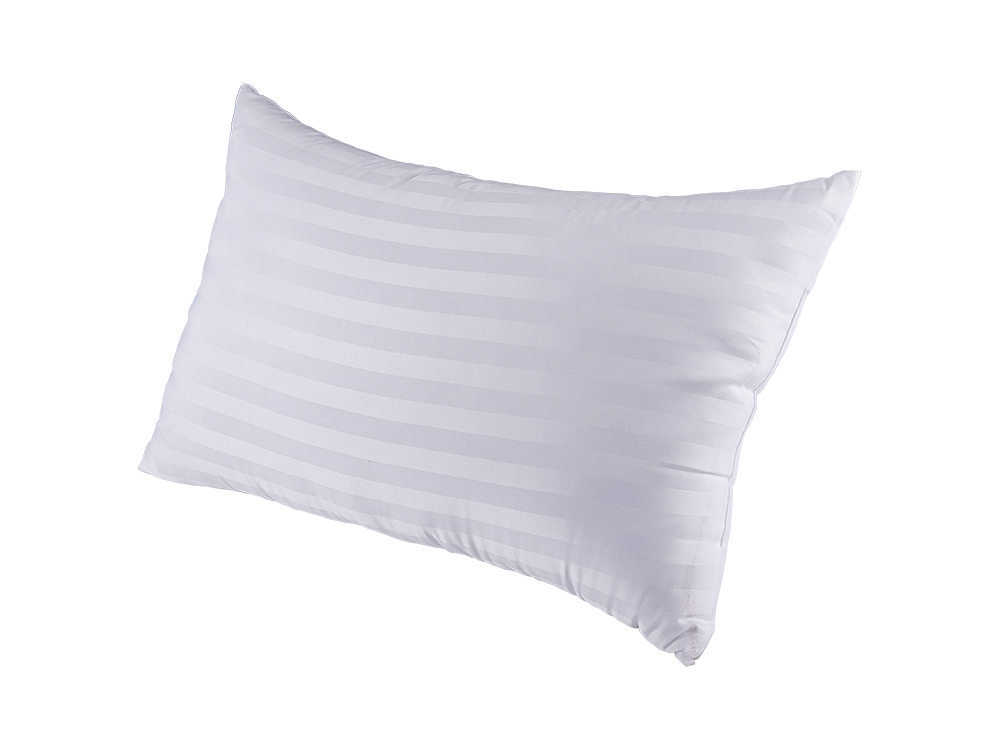
The Breathable Cotton Pillow described in this article is designed around those expectations. It combines a natural white 233-thread-count cotton shell with a white sandwich mesh side wall, a lightweight non-woven lining, and a blended 3D and 0.9D down-alternative polyester filling. The result is a pillow that is soft against the skin, sufficiently ventilated for everyday use, and structured to retain its usability over an extended period.
Its dimensions are 50 x 70 x 4 centimeters, a practical format for bedrooms, guest rooms, hospitality applications, and private-label bedding programs. While the pillow has a relatively slim profile, its filling construction is intended to provide a balanced combination of cushioning, air circulation, and flexibility. This makes it suitable for consumers who prefer a lower or moderate pillow height rather than a very high, heavily packed design.
Beyond the product itself, the pillow reflects the capabilities of a specialized home textile manufacturer. Consistent fabric selection, controlled filling distribution, reliable sewing, quality inspection, responsible production systems, and flexible product development all contribute to the final result. A pillow may look simple, but its performance depends on numerous manufacturing decisions made before it reaches the bedroom.
What Makes a Breathable Pillow Important?
During sleep, the body naturally releases heat and moisture. The head and neck are in close contact with the pillow for several hours, so a pillow that does not allow sufficient air movement may feel warm or damp. When a filling and outer fabric work together to promote ventilation, heat and moisture can move away from the sleeper more effectively.
Breathability is not created by one material alone. It depends on the relationship between the outer shell, side construction, lining, filling density, stitching, and overall thickness. A tightly woven cotton fabric may offer a smooth and comfortable surface, while a breathable side panel can help increase air exchange around the pillow’s perimeter. A resilient fiber filling can also create small spaces within the pillow, allowing air to move through the structure as the sleeper changes position.
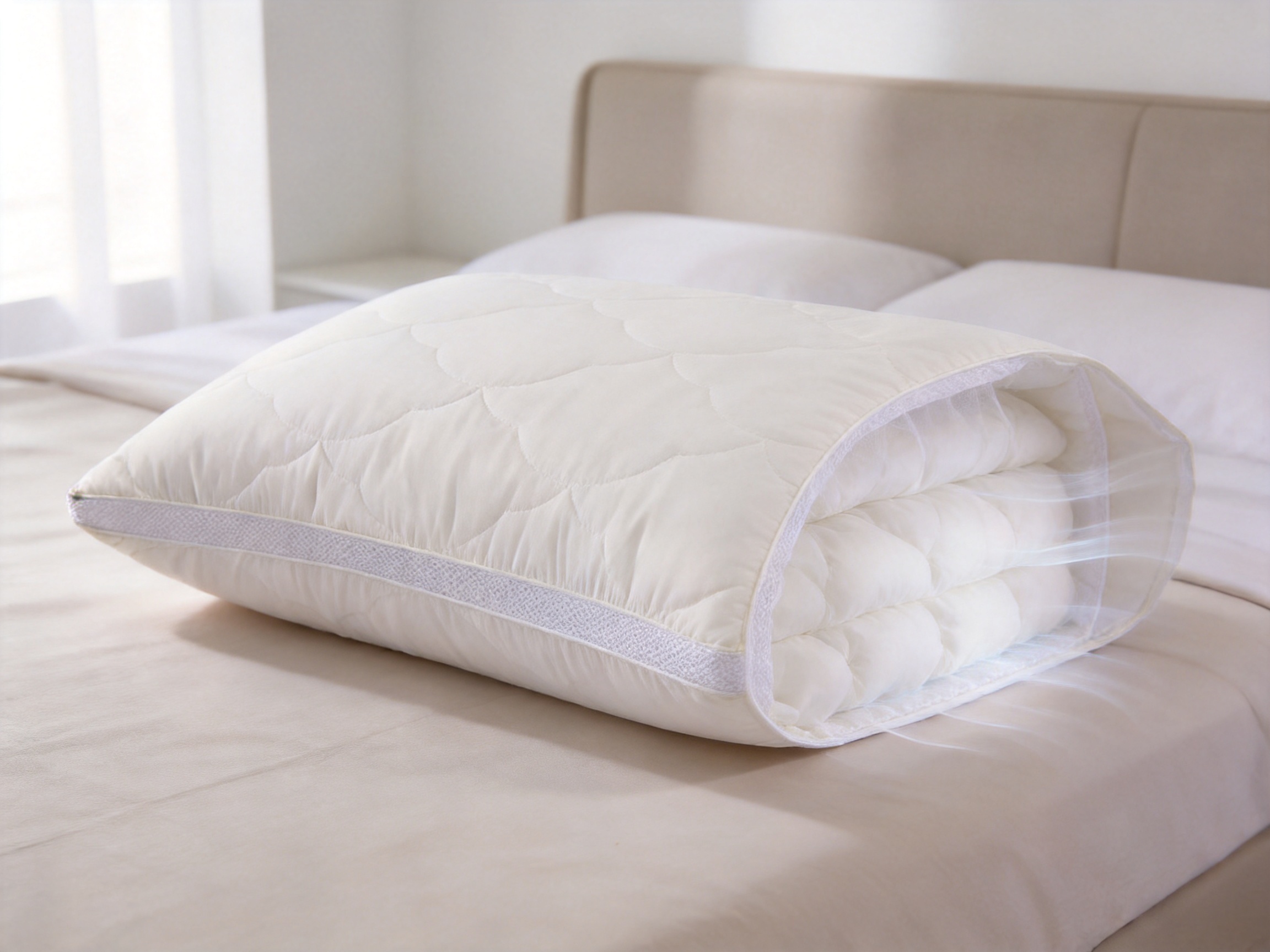
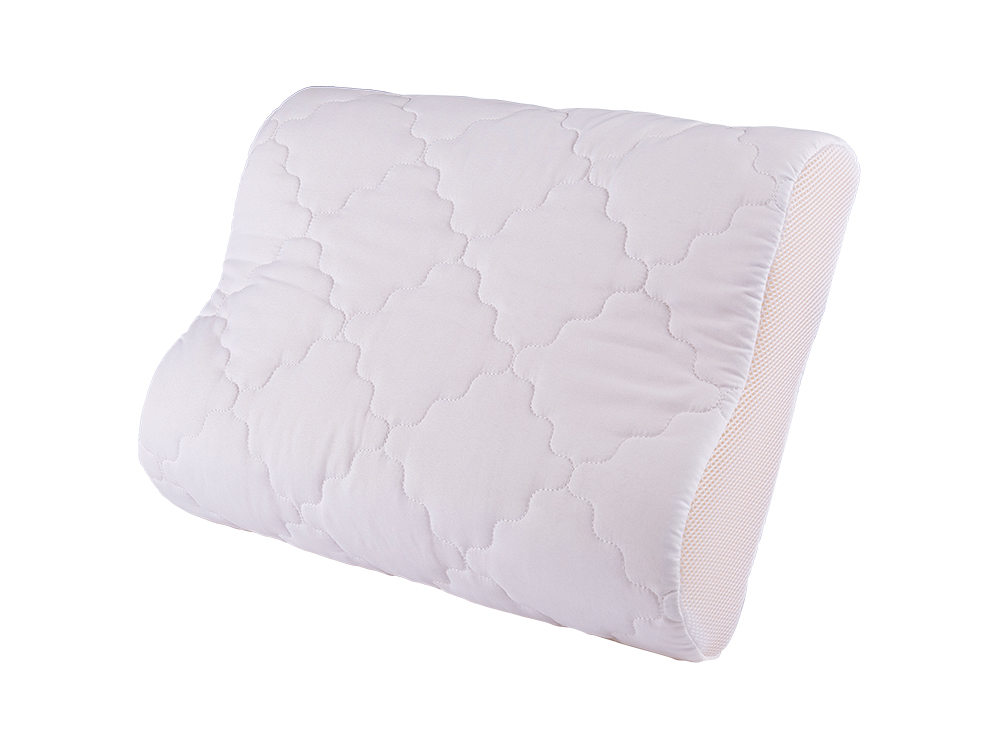
The Breathable Cotton Pillow uses a white sandwich mesh wall as a functional side element. This construction supports airflow around the pillow and helps reduce the closed-in feeling associated with fully sealed, densely packed designs. The side mesh is also visually clean and suitable for bedding collections that emphasize freshness, simplicity, and practical comfort.
For consumers in warm climates, breathability is especially valuable. In cooler conditions, it remains useful because it helps manage moisture and prevents the pillow from feeling stuffy. In commercial environments such as hotels, serviced apartments, dormitories, and furnished rentals, breathable bedding can improve the overall sleep experience for a wide range of users.
Product Construction and Material Specifications
Product Type |
Breathable Cotton Pillow |
Category |
Cotton Pillow |
Size |
50 x 70 x 4 cm |
Outer Fabric |
Natural White 233TC Cotton |
Side Wall |
White Sandwich Mesh |
Lining |
30gsm Non-Woven Fabric |
Filling |
3D and 0.9D Down-Alternative Polyester |
Reference Image Set |
DM6A5966 through DM6A5972 |
Natural White 233-Thread-Count Cotton
The cotton shell is the surface most directly experienced by the sleeper. A natural white 233-thread-count cotton fabric provides a clean appearance and a smooth, familiar hand feel. Cotton is widely used in bedding because it is comfortable, versatile, and capable of absorbing and releasing moisture more naturally than many fully synthetic surface fabrics.
The 233-thread-count specification indicates a balanced fabric construction. It is substantial enough for everyday pillow use while remaining suitable for a product that prioritizes airflow and a soft hand. The natural white color can coordinate easily with white bedding, neutral room designs, hotel linens, and retail packaging that communicates cleanliness and simplicity.
Cotton also offers strong commercial versatility. It can serve as the basis for standard bedding collections, premium hospitality programs, promotional products, and custom home textile ranges. Its familiar identity may be an advantage over products whose synthetic outer fabric feels less natural or less comfortable against the face.
White Sandwich Mesh Side Wall
The sandwich mesh side wall is one of the most distinctive structural features of this pillow. Instead of relying solely on a closed cotton shell, the design introduces a ventilated side section. This can help air circulate through and around the pillow when the user moves, presses down, or changes sleeping position.
Side-wall ventilation may also help the pillow recover after use. When pressure is released, the resilient internal fibers can expand, while the mesh allows the structure to exchange air. This supports a lighter and less compressed feel compared with some densely filled pillows that remain flattened after repeated use.
From a product-development perspective, the sandwich mesh is more than a decorative detail. It demonstrates an effort to address the practical relationship between comfort and airflow. The side wall must be cut accurately, aligned with the cotton shell, and sewn securely so that ventilation does not compromise durability. This requires suitable sewing equipment, trained operators, and inspection during assembly.
30gsm Non-Woven Lining
The 30gsm non-woven lining provides an additional internal layer between the outer shell and filling. A lining can help contain fibers, support the overall shape, and improve the neatness of the finished product. Its lightweight construction is consistent with the pillow’s emphasis on breathability and manageable weight.
Using an appropriate lining also helps production teams control the internal assembly. It can create a more stable working surface during filling and closing operations, reducing the likelihood of loose fibers escaping through seams. The lining must be handled carefully so that it supports the product without creating unnecessary stiffness or reducing the pillow’s flexibility.
3D and 0.9D Down-Alternative Polyester Filling
The filling combines 3D and 0.9D down-alternative polyester. Down-alternative polyester is often selected by bedding manufacturers because it can provide a soft, lofty feel without using natural down. It is suitable for consumers who prefer animal-free bedding materials or who want a filling with consistent composition and predictable manufacturing performance.
The use of different fiber specifications creates an opportunity to balance softness and resilience. Fine fibers can contribute to a smooth, cushioned hand, while three-dimensional fibers can support loft and help the pillow recover after compression. The final performance depends on the blending ratio, filling weight, fiber preparation, and distribution process.
Compared with low-cost fillings that may clump quickly or feel uneven, a properly prepared down-alternative blend can create a more uniform surface and a more stable sleeping experience. It is also suitable for scalable production because the manufacturer can control the material specification more consistently than with some naturally variable fillings.
Breathable Cotton Pillow
Key Comfort Advantages
Soft Skin Contact
The cotton shell is designed to feel soft and comfortable against the face. This is important because the pillow remains in contact with sensitive skin for a long period. A smooth shell can reduce the rough or plasticky sensation sometimes associated with inexpensive synthetic pillow covers.
Softness, however, should not be confused with excessive looseness. A pillow cover must be comfortable while retaining sufficient structure to protect the filling and maintain its shape. The selected cotton fabric and internal lining are intended to provide that balance.
Moisture Management
The product description emphasizes moisture-wicking and breathability. Cotton can absorb a portion of perspiration, while the mesh side wall and open fiber structure support moisture release. This combination may help the pillow feel fresher during extended use, especially when paired with regular laundering of the removable pillowcase used over it.
Moisture management is particularly relevant for warm sleepers, active households, children, and hospitality environments. A pillow that feels less damp can contribute to greater perceived cleanliness and comfort. Nevertheless, no pillow can eliminate moisture entirely, so proper bedroom ventilation, pillowcase care, and routine airing remain important.
Balanced Loft and Support
At 4 centimeters in stated product height, the pillow is designed for a relatively low-profile sleeping experience. This can suit users who prefer a flatter pillow, sleep on their back, or use a pillow as part of a layered bedding arrangement. It may also appeal to children, compact guest-room setups, and consumers who dislike the elevated feel of thick pillows.
The down-alternative filling provides cushioning while allowing the product to remain flexible. The pillow can conform moderately to the head without becoming rigid. Because sleeping preferences vary, buyers should consider personal posture, mattress firmness, and preferred neck position when choosing a pillow height.
Lightweight Airy Feel
The combination of mesh, non-woven lining, and polyester filling supports a lightweight construction. An airy pillow can be easier to handle, rotate, store, and package. In hotels and institutional settings, lower product weight may also simplify housekeeping and inventory movement.
A lighter pillow does not necessarily mean a weaker pillow. The important factors are seam strength, fabric suitability, filling recovery, and production consistency. When these elements are properly controlled, a pillow can remain light while still providing useful everyday performance.
Advantages Compared with Common Competing Pillow Designs
Many pillows in the market compete primarily through low cost or decorative appearance. The Breathable Cotton Pillow takes a more functional approach by combining surface comfort with airflow and internal resilience. Its advantages should be understood as design benefits rather than absolute claims that apply to every competing product.
Compared with Fully Enclosed Synthetic Pillows
Some fully synthetic pillows use polyester fabric on both the outside and inside. These products may be economical and durable, but their surfaces can feel warmer or less natural to certain users. The cotton shell of this pillow offers a more familiar textile touch, while the mesh side wall introduces a dedicated ventilation feature.
The combination may appeal to buyers who want the easy-care characteristics of a synthetic filling but prefer a natural-fiber surface. This hybrid approach is commercially useful because it combines the strengths of multiple materials rather than relying on one fiber type for every function.
Compared with Densely Packed Low-Cost Pillows
Densely packed pillows can initially appear substantial, but excessive filling may reduce airflow and create a firm or bulky feel. A controlled down-alternative blend with a ventilated side structure can provide a more flexible alternative. It is intended to remain comfortable without creating unnecessary heaviness.
The pillow’s design is also suitable for users who do not want an aggressively high profile. The 50 x 70 x 4 centimeter format offers a broad sleeping surface while keeping the height relatively restrained.
Compared with Natural Down Products
Natural down is valued for its loft and softness, but it may not suit every consumer. Some buyers prefer animal-free materials, while others seek easier specification control, consistent composition, or a lower price point. The down-alternative polyester filling provides a practical option for these requirements.
Polyester filling can also be attractive for businesses that need repeatable production across large orders. A standardized synthetic blend is easier to document and reproduce than a natural filling whose properties may vary according to source and grade.
Compared with Basic Cotton Pillows without Ventilation Features
A standard cotton pillow may offer a comfortable outer surface but lack specialized airflow construction. The sandwich mesh wall gives this product a clear functional point of difference. It supports the marketing message of breathability while contributing to the physical structure of the pillow.
For retailers, this distinction can make the product easier to position within a bedding collection. It can be described not simply as a cotton pillow, but as a cotton pillow developed with ventilation, moisture management, and a down-alternative internal system in mind.
Advanced Manufacturing Process
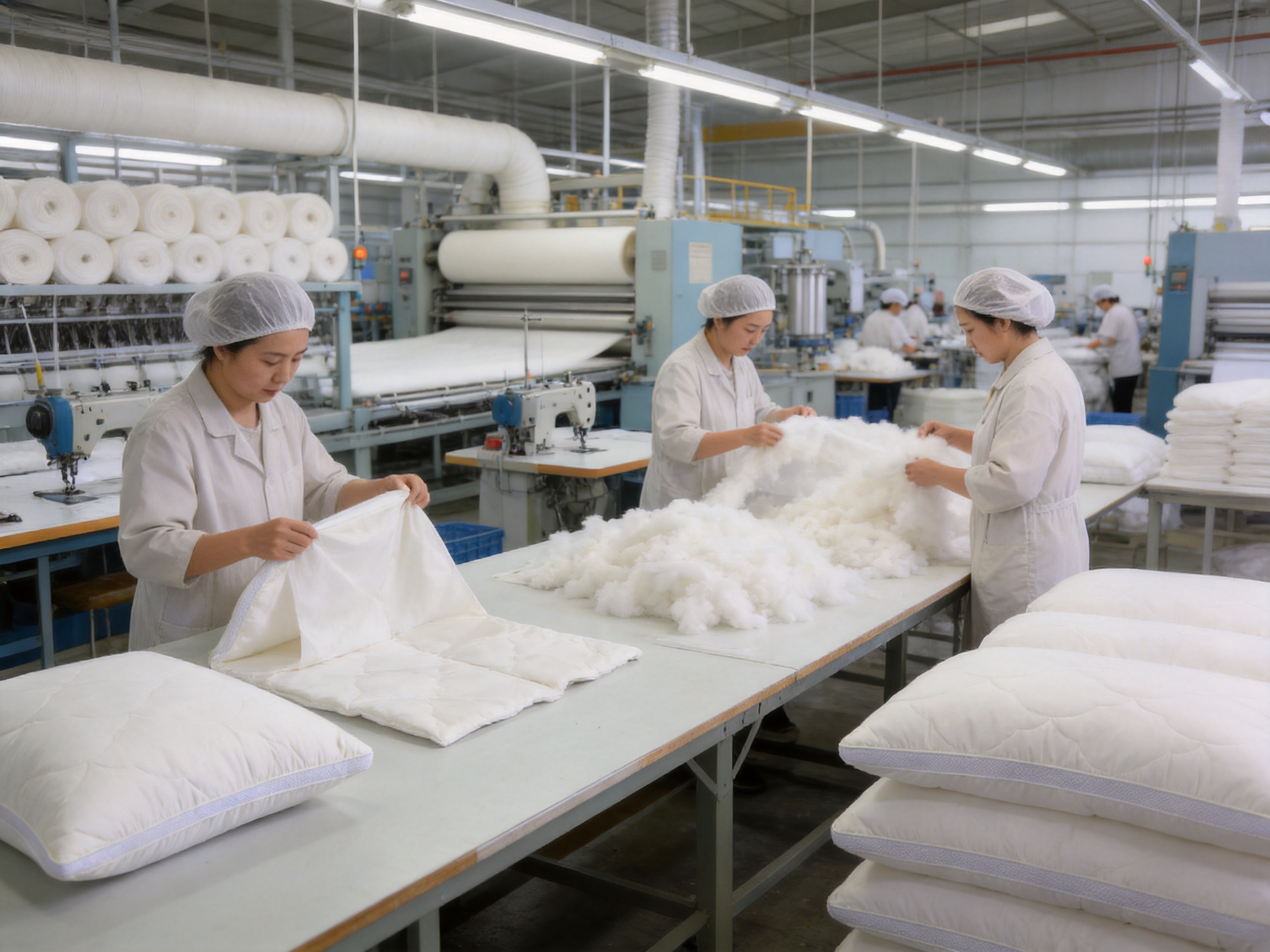
The final performance of a pillow is determined by the combined quality of its materials and manufacturing operations. A professional bedding factory must coordinate design preparation, fabric inspection, cutting, sewing, filling, shaping, finishing, and final quality control. Each stage can influence comfort and durability.
Product Development and Technical Preparation
Manufacturing begins with a clear technical specification. The product team must define the finished dimensions, fabric type, side-wall construction, lining, filling composition, filling amount, seam design, labeling, and packaging requirements. Accurate technical documents help ensure that production staff and quality inspectors are working toward the same target.
Before bulk manufacturing, a factory may prepare samples for appearance, hand feel, filling distribution, and dimensional review. Sample evaluation allows the manufacturer and customer to confirm whether the pillow is too soft, too firm, too flat, or insufficiently ventilated. It also provides an opportunity to check how the shell, mesh, and lining work together.
Fabric Inspection
Fabric inspection is an essential step in maintaining consistent quality. Cotton fabric should be checked for shade, weave irregularities, stains, holes, uneven density, and other visible defects. Mesh should be inspected for broken areas, inconsistent openings, and edge stability. The non-woven lining must also be checked for tears and contamination.
Because the product uses a clean white color, visible defects can be especially noticeable. Controlled inspection helps reduce the chance that discoloration, marks, or uneven panels will reach the sewing line. It also supports consistent appearance across a production batch.
Precision Cutting
Accurate cutting ensures that the cotton shell, mesh wall, and lining can be assembled correctly. If panels vary in size, the finished pillow may become distorted, seams may experience uneven tension, and the final dimensions may not match the specification.
Professional cutting teams use approved patterns and production markers to optimize material use while retaining sufficient seam allowance. Efficient cutting can reduce waste without compromising panel alignment. This is particularly important for manufacturers serving large-volume orders or customers seeking responsible resource use.
Mesh and Cotton Assembly
Joining the cotton shell to the sandwich mesh requires careful sewing control. Operators must align the layers, maintain a consistent seam allowance, and avoid excessive tension that could cause puckering. The mesh must remain open and functional rather than being crushed or folded into an unsuitable position.
Seam selection depends on the product’s intended use and the machinery available. A secure seam protects the filling while allowing the pillow to retain flexibility. Thread quality, stitch density, needle condition, and machine calibration all influence the final result.
Lining Installation
The non-woven lining is integrated into the construction before the filling is added or during a controlled assembly sequence. It must be positioned evenly so that it supports the internal structure without producing hard areas or excessive bulk.
Good production practice also requires operators to keep the lining clean and free from foreign materials. Since the lining is an internal component, problems may not be visible after closing, which makes process discipline especially important.
Filling Preparation and Distribution
The 3D and 0.9D polyester fibers should be prepared before filling. Fiber opening helps separate compressed material and supports a more even distribution. If filling enters the pillow in clumps, the finished product may contain hard spots, thin areas, or inconsistent loft.
Filling weight should be controlled according to the product specification. Too little filling can create a flat, unsupportive pillow, while too much can reduce flexibility and airflow. A controlled filling process helps maintain consistency between units, which is essential for retail and hospitality buyers.
After filling, the pillow may be shaken, adjusted, or shaped to distribute the fibers. Operators inspect the corners and edges to ensure that the material reaches the intended areas without creating excessive pressure on the seams.
Closing and Finishing
The closing seam must be secure enough to retain the filling during normal use. Finishing operations may include trimming loose threads, checking the shape, cleaning the surface, applying labels, and preparing the pillow for packing. White bedding products require careful finishing because loose threads, marks, and uneven edges can affect perceived quality.
Finished pillows are commonly checked for length, width, height, appearance, softness, filling balance, and seam integrity. Factories with established procedures can use inspection records to identify recurring issues and improve future production.
Quality Management and Manufacturing Strengths
Tongxiang Xinlong Bedding Co., Ltd. was established in January 2002 and operates in Wuzhen, Tongxiang, Zhejiang Province, China. The company’s experience in home textile production supports its ability to manufacture a broad range of bedding and household textile products, including quilts, pillows, cushions, bedspreads, mattress protectors, blankets, quilt covers, pillowcases, shower curtains, and curtains.
The company covers approximately 21,000 square meters, with a construction area of approximately 18,000 square meters, and has more than 320 employees. This scale provides a foundation for organized production, specialized labor, equipment investment, product development, and quality management.
A broad product portfolio can also strengthen manufacturing expertise. Different bedding categories require knowledge of woven fabrics, non-woven materials, filling systems, quilting, sewing, edge finishing, packaging, and dimensional control. Experience across these categories can help a factory understand how material choices affect comfort, appearance, durability, and production efficiency.
Certifications and Management Systems
The company has passed international certifications and assessments including ISO 9001, ISO 14001, OEKO-TEX Standard 100, OEKO-TEX STeP, GRS, and BSCI, according to the supplied company information. These systems and certifications represent different aspects of responsible manufacturing and management.
ISO 9001 is associated with quality management systems and structured approaches to consistent production. ISO 14001 focuses on environmental management. OEKO-TEX Standard 100 relates to testing textile products for harmful substances under the applicable certification requirements. OEKO-TEX STeP addresses sustainable textile and leather production processes. GRS is associated with recycled materials and chain-of-custody requirements, while BSCI is connected with social compliance and workplace standards.
Certification does not replace product-specific inspection, but it can provide an important framework for factory operations. Buyers should always confirm the current scope, validity, and product applicability of certificates for a particular order. Even so, the company’s stated certification portfolio demonstrates an effort to align production with quality, environmental, chemical-safety, recycled-material, and social-responsibility expectations.
Safety and Continuous Improvement
The company has reportedly been recognized as a safety production standardization enterprise for several consecutive years since 2016. Workplace safety is important not only for employees but also for manufacturing continuity. Organized safety procedures can reduce operational disruptions and support a more stable production environment.
The company also emphasizes continuous improvement, professional and technical personnel, and the development of fashionable and warm household products. These capabilities are relevant to buyers seeking custom bedding because successful customization requires more than copying an existing sample. It requires the ability to adapt materials, dimensions, colors, packaging, labels, and construction details while retaining consistent quality.
Customization Opportunities for Different Markets
The standard product specification provides a strong foundation, but bedding buyers may have different requirements. Retailers may request private labels, branded packaging, alternative dimensions, or seasonal color programs. Hotels may need bulk quantities, standardized replacement orders, and packaging optimized for housekeeping operations.
Potential customization areas may include shell fabric composition, thread count, color, printed labels, woven labels, filling weight, pillow height, mesh color, edge construction, packaging format, and carton marking. Any change should be evaluated through sampling because modifying one component can affect the comfort and performance of the entire pillow.
For example, increasing the filling weight may improve loft for some users but reduce airflow for others. Changing the fabric may alter softness, shrinkage, sewing behavior, and moisture management. A larger pillow size may require a different filling distribution method and stronger seam control. Professional product development helps buyers understand these relationships before bulk production.
The company’s experience with multiple home textile categories also makes it suitable for coordinated bedding programs. A customer may source pillows together with quilts, mattress protectors, blankets, cushions, or mattress covers, creating a unified product range from one manufacturing partner.
Applications of the Breathable Cotton Pillow
Residential Bedrooms
For household use, the pillow can serve as an everyday bedding item for adults, teenagers, and guests who prefer a low-profile design. Its white cotton surface fits easily into modern, traditional, minimalist, and hospitality-inspired bedrooms.
Guest Rooms
Guest rooms benefit from bedding that is comfortable, visually neutral, and easy to coordinate. The natural white shell and breathable construction make the pillow suitable for spare rooms, vacation rentals, and furnished apartments. Buyers should pair it with appropriately sized pillowcases and establish a regular cleaning and replacement schedule.
Hotels and Hospitality
Hospitality buyers often value consistency, replenishment capability, practical care, and a clean appearance. The 50 x 70 centimeter format is widely useful for bedding arrangements, while the moderate profile can accommodate guests with different preferences when combined with other pillow options.
Hotels may choose to provide several pillow types, including low, medium, and high profiles. This breathable cotton model can function as a lightweight or lower-profile option within such a program.
Retail Bedding Collections
Retailers can position the product around several clear selling points: cotton comfort, side-wall ventilation, down-alternative filling, moisture management, and a clean white appearance. These features are easy to communicate on product packaging and online product pages without relying on overly technical language.
Institutional and Furnished Accommodation
Student residences, healthcare accommodation, staff housing, and furnished rental properties may require dependable bedding in repeat quantities. A standardized pillow with a controlled material specification can support easier procurement and replacement planning.
Care, Use, and Longevity Recommendations
Correct care can help preserve the pillow’s comfort and appearance. The pillow should be used with a suitable pillowcase and, where appropriate, a protective pillow cover. A pillowcase reduces direct exposure to skin oils, perspiration, cosmetics, and dust, helping the cotton shell remain cleaner between maintenance cycles.
Users should follow the care instructions supplied with the final product because washing and drying requirements can vary according to the completed construction, labeling, and customer specifications. If machine washing is approved, balanced loading and a suitable cycle can help protect the seams and filling. Excessive heat or inadequate drying may affect fabric dimensions or leave internal moisture behind.
Regular airing can help reduce stale odors and restore the pillow’s loft. Gently shaking or patting the pillow after use may redistribute the down-alternative fibers. It should not be aggressively beaten, twisted, or compressed for extended periods because harsh handling may stress the seams and internal layers.
Consumers should inspect the pillow periodically for damaged seams, exposed filling, permanent flattening, or changes in shape. Commercial buyers may establish a replacement schedule based on usage intensity, cleaning frequency, and hygiene policy. No pillow should be expected to last indefinitely, but suitable materials and controlled manufacturing can support reliable everyday use.
How Buyers Should Evaluate This Product
When comparing pillows, buyers should consider more than the lowest quotation. Important evaluation points include fabric quality, filling composition, finished dimensions, filling weight, seam construction, mesh performance, color consistency, sample approval, packaging, quality inspection, and production capacity.
A pre-production sample is especially important. It allows the buyer to evaluate surface softness, pillow height, compression recovery, filling distribution, side-wall appearance, and overall workmanship. For large orders, a production sample or sealed reference sample can be retained for comparison during inspection.
Buyers should also clarify whether the stated size is measured before or after filling, whether tolerances apply, how the pillow is packed, and whether compression packaging is used. These details can affect the product’s appearance when opened and the time required for it to recover its intended shape.
For customers seeking customized products, communication should cover artwork, labels, packaging, testing, inspection standards, shipping marks, and required documentation. Clear specifications reduce misunderstandings and make it easier for the factory to provide a stable quotation and production schedule.
Frequently Asked Questions
What is the main feature of this pillow?
The main feature is the combination of a soft natural white cotton shell, a white sandwich mesh side wall, and a down-alternative polyester filling. The design is intended to support breathability, moisture management, and everyday comfort.
What are the dimensions?
The stated size is 50 x 70 x 4 centimeters. Buyers should confirm measurement tolerances and the exact measurement method with the supplier before placing a bulk order.
Is the filling natural down?
No. The filling is described as a blend of 3D and 0.9D down-alternative polyester. It is designed to provide a soft and resilient feel without using natural down.
Why does the pillow use a mesh side wall?
The sandwich mesh side wall is intended to improve air movement around the pillow and support a more breathable construction. It also creates a visible functional feature that distinguishes the product from a fully enclosed pillow.
Is the pillow suitable for hot climates?
Its cotton surface and ventilated side construction may make it suitable for warm environments and warm sleepers. Actual comfort depends on room temperature, humidity, bedding layers, personal preference, and proper care.
Is this a high-profile pillow?
The stated height is 4 centimeters, so it is better described as a low-profile or relatively slim pillow. Users who prefer thick, elevated support should compare it with a higher-fill version before ordering.
Can the product be customized?
Customization may be possible for areas such as fabric, color, filling weight, size, labels, packaging, and product combinations. Specific options should be confirmed through technical discussion and sample development.
What certifications are associated with the manufacturer?
The supplied company information lists ISO 9001, ISO 14001, OEKO-TEX Standard 100, OEKO-TEX STeP, GRS, and BSCI among the company’s certifications or assessments. Buyers should request current documentation and verify the scope relevant to their order.
What other products can the manufacturer produce?
The company produces a broad range of home textile products, including quilts, pillows, cushions, bedspreads, mattress protectors, blankets, quilt and pillowcases, shower curtains, curtains, and related bedding products.
How should a buyer check quality before mass production?
The buyer should approve a detailed sample, confirm the material specification, define acceptable tolerances, inspect appearance and dimensions, evaluate filling distribution, and agree on a final inspection standard. Keeping an approved reference sample is also useful for production comparison.
Who is this pillow best suited for?
It may suit consumers, retailers, hotels, guest houses, furnished accommodations, and institutional buyers seeking a soft cotton-surface pillow with a breathable construction and animal-free polyester filling. Individual suitability depends on preferred height and sleeping posture.
Why Manufacturing Expertise Matters
A pillow’s performance is the result of many small details. The cotton must be suitable for the intended hand feel and use. The mesh must be stable and correctly positioned. The lining must support the interior without making the pillow stiff. The filling must be opened, blended, weighed, and distributed consistently. Seams must be strong and neat. Finished units must be inspected and packed correctly.
A factory with experience in multiple bedding categories can coordinate these details more effectively. It can also help customers select practical materials, identify risks during sampling, and adapt designs for different markets. This is especially valuable when a buyer wants to develop a collection rather than purchase a single standard item.
The manufacturing capabilities described for Tongxiang Xinlong Bedding Co., Ltd. include a long operating history, a sizable production base, a workforce of more than 320 employees, advanced equipment, technical personnel, product-development experience, and international management or compliance certifications. Together, these strengths provide a foundation for producing the Breathable Cotton Pillow consistently and for supporting related custom bedding projects.
Conclusion
The Breathable Cotton Pillow is a functional bedding product built around comfort, airflow, and practical material selection. Its natural white 233-thread-count cotton shell provides a soft and familiar surface, while the white sandwich mesh side wall supports ventilation. The lightweight 30gsm non-woven lining helps organize the internal structure, and the 3D and 0.9D down-alternative polyester filling offers a flexible alternative to natural down.
Its 50 x 70 x 4 centimeter format makes it appropriate for low-profile sleeping preferences, guest rooms, hospitality programs, retail bedding collections, and furnished accommodation. Compared with basic fully enclosed or densely packed pillows, its design offers a clearer focus on breathability and balanced comfort. Compared with natural down products, its synthetic filling can provide consistent composition and an animal-free option.
The product is also supported by the broader strengths of an established home textile manufacturer. Experienced personnel, organized production, fabric and filling control, quality systems, certification experience, and the ability to develop related bedding categories all contribute to dependable supply capability.
For buyers, the best purchasing decision should be based on a complete evaluation of the sample, materials, construction, care requirements, inspection standards, certifications, packaging, and customization options. When these factors are clearly managed, the Breathable Cotton Pillow can serve as a comfortable and commercially versatile addition to a modern home textile collection.
References
1. Product specification supplied for the Breathable Cotton Pillow, including dimensions, fabrics, lining, filling, and construction details.
2. Company information supplied for Tongxiang Xinlong Bedding Co., Ltd., including production history, facility size, workforce, product categories, and manufacturing capabilities.
3. General textile manufacturing principles concerning fabric inspection, cutting, sewing, filling distribution, dimensional control, and final quality inspection.
4. General bedding care principles concerning pillow protection, airing, washing, drying, handling, and replacement planning.
5. General descriptions of ISO 9001 quality management, ISO 14001 environmental management, OEKO-TEX textile safety systems, GRS recycled-material requirements, and BSCI social-compliance assessment frameworks.

 +86-573-88798028