



 Français
 Español
 Deutsch
Content
- 1 Understanding the Dual Color Quilt Concept
- 2 Material Structure and Product Specifications
- 3 Comfort Advantages in Everyday Use
- 4 Advantages Over Single-Color and Heavily Patterned Alternatives
- 5 Functional Value for Different Markets
- 6 Manufacturing Strengths and Production Capability
- 7 Quality Management and Certification Strength
- 8 Inspection Considerations for the Finished Quilt
- 9 Why the Product Is Suitable for Custom Bedding Programs
- 10 Supply Chain and Commercial Benefits
- 11 Care, Handling, and Product Longevity
- 12 Environmental and Responsible Manufacturing Considerations
- 13 How to Evaluate the Quilt Against Competing Products
- 14 Recommended Product Positioning
- 15 Frequently Asked Questions
- 15.1 What is the main feature of the Dual Color Polyester Quilt?
- 15.2 What fabric is used on the outside?
- 15.3 What is the quilt filled with?
- 15.4 What is the size of the product?
- 15.5 Is the quilt suitable for all seasons?
- 15.6 How does it compare with a single-color quilt?
- 15.7 Is the quilt suitable for hotels and guest rooms?
- 15.8 Can the product be included in a custom bedding program?
- 15.9 What quality certifications are associated with the manufacturer?
- 15.10 What should buyers inspect before accepting an order?
- 15.11 How should the quilt be cared for?
- 16 Conclusion
- 17 References
- 18 Product: Dual Color Polyester Quilt
A quilt is more than a simple layer of bedding. It influences sleeping comfort, bedroom appearance, seasonal flexibility, laundering convenience, and the overall feeling of a home. For consumers, retailers, hospitality businesses, and professional sourcing companies, the ideal quilt must combine softness, warmth, durability, visual appeal, manageable production costs, and consistent quality. The Dual Color Polyester Quilt is designed to meet these requirements through a balanced combination of microfiber fabric, 3D polyester filling, contrasting colors, and practical construction.
This quilt belongs to the microfiber quilt category and is made with the same soft fabric on both sides while presenting a different color on the front and back. The reversible appearance gives users more than one styling option without requiring two separate products. Its straightforward design is contemporary, adaptable, and suitable for a wide range of bedrooms. At the same time, its polyester-based material structure makes it a practical choice for regular household use, guest rooms, dormitories, hotels, furnished apartments, and other environments where easy care and dependable performance are important.
With a standard size of 140*200 cm, the product offers a useful format for individual sleeping spaces and compact bedrooms. The shell uses 85gsm microfiber, while the filling consists of 300gsm 3D polyester. This construction creates a quilt that is soft to the touch, visually neat, and capable of providing comfortable coverage without becoming excessively heavy. The product is also supported by an experienced home textile manufacturing system, professional production personnel, modern equipment, quality management procedures, and internationally recognized certifications.
Understanding the Dual Color Quilt Concept
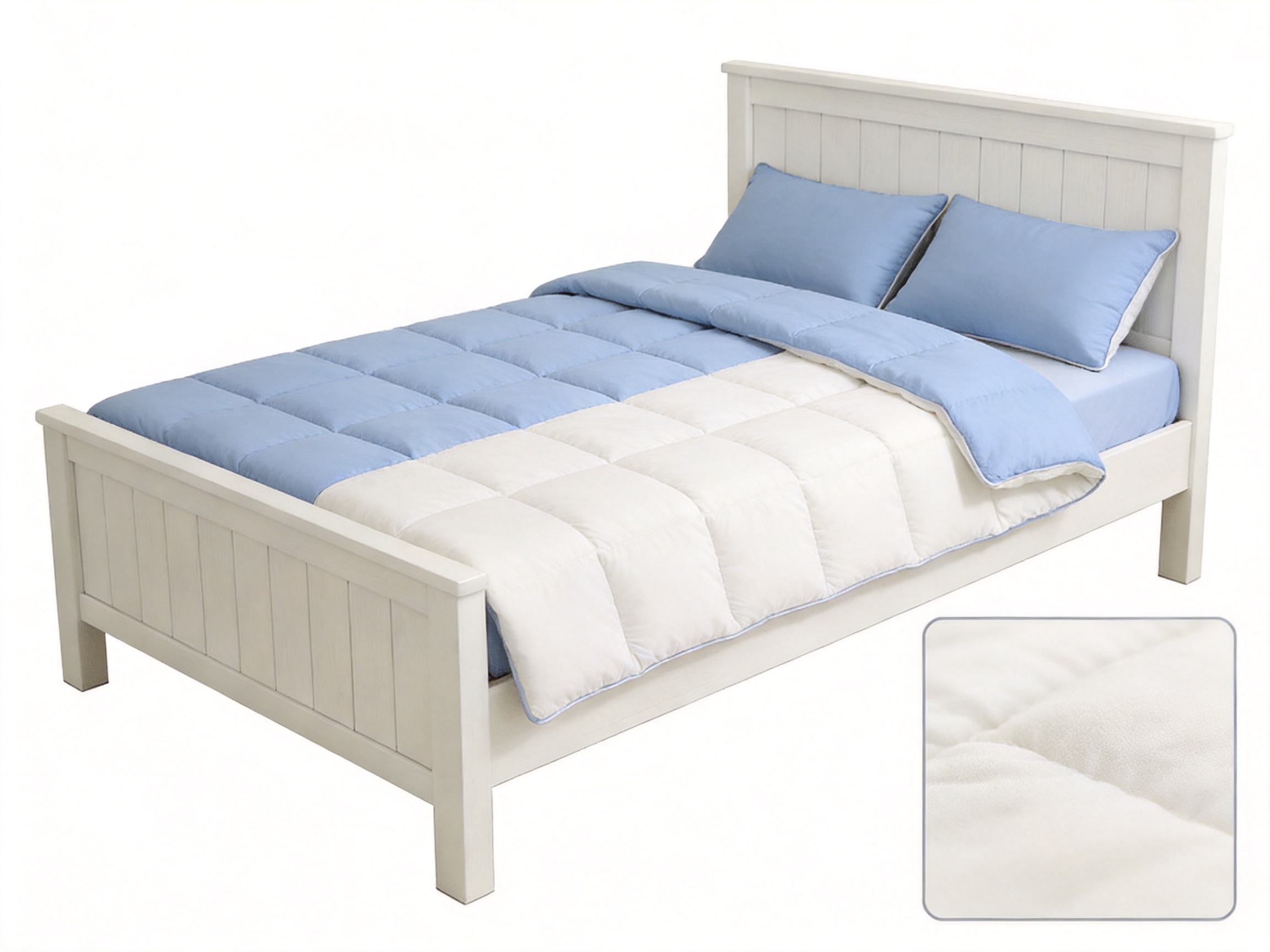
The defining characteristic of this quilt is its dual color design. The front and back use the same type of fabric, but each side has a different color. This approach creates a reversible product with a simple visual transformation. By turning the quilt over, a user can change the appearance of the bed without purchasing another quilt or replacing the entire bedding set.
Many bedrooms require bedding that can adapt to changing interior styles. One color may coordinate with curtains, rugs, cushions, or wall décor during one season, while the second color may be preferred at another time. A dual color quilt provides this flexibility in a direct and uncomplicated way. The design is especially suitable for customers who appreciate a clean aesthetic but still want more variety than a single-color product can provide.
Unlike highly patterned bedding, a two-tone quilt can complement a variety of decorative themes. It can be used in minimalist rooms, modern apartments, children’s rooms, guest bedrooms, student accommodation, and hospitality settings. Its simple appearance also makes it easier for retailers to present as a versatile basic product. Rather than depending on a short-lived print trend, the quilt emphasizes color coordination, fabric comfort, and everyday usability.
The same-fabric construction on both sides helps maintain a consistent tactile experience. Users do not need to choose between a soft side and a less comfortable reverse side. Whichever color is displayed, the quilt continues to offer the same type of microfiber surface. This balanced construction is an important practical advantage for a reversible product.
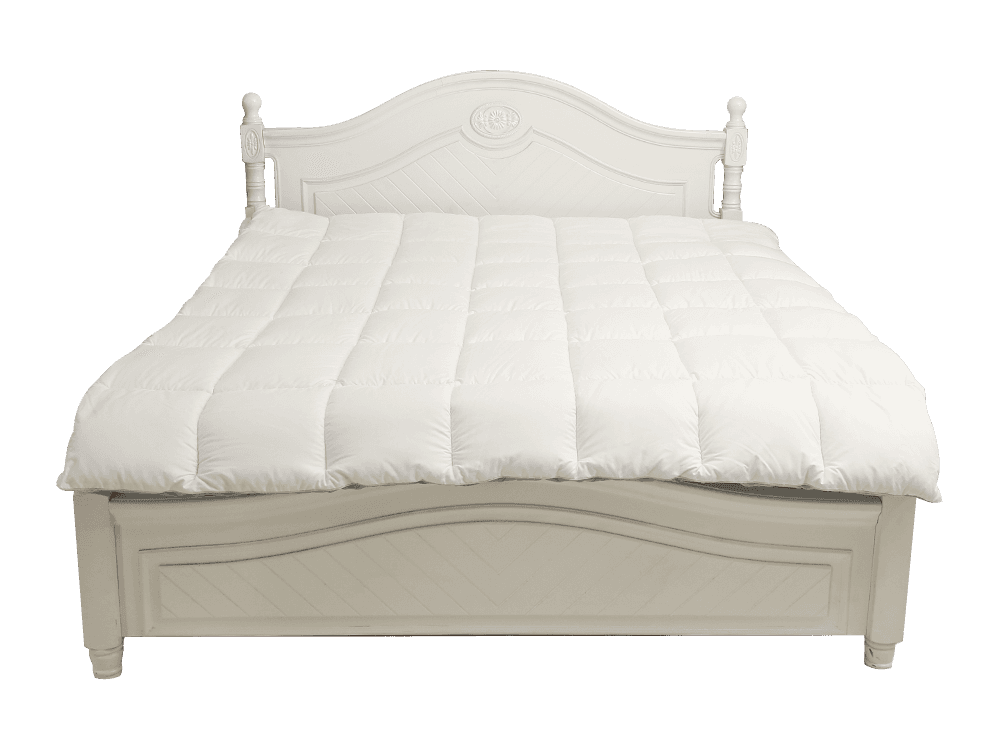
Dual Color Polyester Quilt
Material Structure and Product Specifications
The product is made with three essential material components: an 85gsm microfiber outer fabric, a 300gsm 3D polyester filling, and contrasting colors on the front and back. Each component contributes to the overall performance of the quilt.
Product Feature |
Specification |
Practical Benefit |
Product category |
Microfiber quilt |
Soft handle, practical maintenance, and broad market suitability |
Size |
140*200 cm |
Suitable for individual beds and compact sleeping spaces |
Outer fabric |
85gsm microfiber |
Lightweight, smooth, and comfortable against the skin |
Color design |
Contrasting colors on the front and back |
Reversible styling and greater visual flexibility |
Filling |
3D polyester, 300gsm |
Comfortable loft, balanced warmth, and practical resilience |
85gsm Microfiber Outer Fabric
Microfiber is widely used in modern home textiles because it can provide a smooth hand feel while remaining lightweight and practical. In this quilt, the 85gsm fabric forms the outer layer that comes into contact with the user and protects the inner filling. The fabric is designed to feel soft and comfortable, making the quilt suitable for regular sleeping use.
The relatively light fabric weight helps the quilt remain flexible rather than stiff. This flexibility makes it easier to fold, store, transport, and place on a bed. A soft, manageable shell also contributes to a more comfortable sleeping experience because the quilt can follow the shape of the body and bed instead of feeling rigid or cumbersome.
Microfiber fabric is also a useful choice for businesses seeking bedding with broad customer appeal. It has a clean appearance and can be produced in a range of colors. The dual color format takes advantage of this color flexibility, allowing the same basic product structure to deliver two distinct visual effects.
300gsm 3D Polyester Filling
The quilt contains 300gsm 3D polyester filling. The filling is responsible for creating loft, softness, and thermal comfort. Its three-dimensional structure helps produce a fuller and more resilient quilt profile than a flat layer of material. The result is a product that can provide a comfortable covering experience while maintaining a practical weight for everyday use.
Polyester filling is valued in the bedding industry for its stable supply, consistent processing characteristics, and suitability for large-scale production. It can be formed and distributed efficiently, helping manufacturers achieve repeatable product quality. For retailers and commercial buyers, this consistency is important because each batch needs to maintain a similar appearance, handle, and level of comfort.
A 300gsm filling weight represents a balanced specification for customers who want noticeable softness and coverage without selecting an extremely heavy winter quilt. Actual warmth can be influenced by room temperature, humidity, sleep preferences, clothing, and the use of additional blankets. This product can therefore function as a comfortable standalone layer in moderate conditions or as part of a flexible bedding system throughout the year.
Comfort Advantages in Everyday Use
Comfort is the most important reason people purchase bedding, and the Dual Color Polyester Quilt addresses comfort through the relationship between its outer fabric and inner filling. The microfiber shell offers a soft surface, while the 3D polyester filling provides a cushioned and lofted feel. Together, these materials create a quilt that is pleasant to use in ordinary sleeping environments.
The product is designed to offer a comfortable balance rather than an exaggeratedly heavy or bulky construction. Some thick quilts can restrict movement or become difficult to handle during laundering and storage. By contrast, a microfiber shell and polyester filling allow the quilt to remain relatively easy to fold and arrange. This makes it suitable for users who want warmth and softness but also value convenience.
The quilt can also support a tidy sleeping environment. Its simple color-blocked design avoids visual overload and allows the bed to appear coordinated with surrounding furniture. When the reverse side is displayed, the room receives a different color accent without any change to the quilt’s basic function. This combination of tactile comfort and visual adaptability gives the product a broader role than a purely utilitarian blanket.
For hospitality businesses, comfort consistency is especially important. Guests expect bedding to feel clean, soft, and dependable. A reversible quilt with a stable construction can help accommodation providers create a well-presented bed while maintaining practical inventory management. A single product can support multiple room color schemes or seasonal presentation plans.
Advantages Over Single-Color and Heavily Patterned Alternatives
The Dual Color Polyester Quilt has several practical advantages over conventional single-color quilts. A single-color quilt offers only one presentation option. If the room style changes, the quilt may no longer coordinate with the décor. The two-sided color arrangement solves this limitation by providing a second appearance within the same product.
Compared with highly patterned bedding, the dual color design offers a quieter and more adaptable visual effect. Elaborate patterns can be attractive, but they may appeal to a narrower audience and can become difficult to coordinate with other home textiles. Contrasting solid colors are easier to combine with pillows, sheets, mattress covers, curtains, and decorative cushions. This increases the product’s suitability for different customer groups and distribution channels.
The product also has an advantage in stock planning. Retailers can present it as a two-look quilt without holding two separate styles. Hospitality buyers may use one color in some rooms and the second color in others. Interior designers can select the most suitable side during installation. This flexibility can help reduce the need for multiple basic quilt designs while preserving customer choice.
From a user perspective, reversibility can extend the visual life of the product. When one color becomes less appealing, the quilt can be turned over to create a refreshed appearance. This does not replace proper cleaning or care, but it does give the product a practical styling benefit that a single-sided color design cannot offer.
The product also competes effectively with more complex quilt designs because it focuses on durable market fundamentals: comfort, clean appearance, broad compatibility, and manageable care. Instead of relying only on decoration, it provides value through its material configuration and reversible construction.
Functional Value for Different Markets
Household Use
For ordinary households, the quilt is suitable for individual beds and compact rooms. Its 140*200 cm format is convenient for users who need a personal quilt or a practical layer for a single sleeping space. The reversible colors allow household members to change the bedroom appearance according to preference, season, or interior arrangement.
The soft microfiber surface is appropriate for regular contact with the body, while the polyester filling offers a comfortable level of loft. Because the quilt is not dependent on complicated decoration, it can remain relevant as furniture or wall colors change. It can be used in a main bedroom, spare bedroom, child’s room, or study that occasionally serves as a guest room.
Student Accommodation and Rental Properties
Rental properties and student accommodation often require bedding that is attractive, functional, and easy to manage. The dual color design can help create a modern appearance without the cost or complexity of highly specialized bedding. A reversible quilt can also accommodate different room layouts and furnishing packages.
Property operators generally need products that can be purchased in quantities and replaced with minimal disruption. Polyester-based bedding is commonly selected for these environments because it supports standardized purchasing and consistent appearance. The quilt’s simple style can fit into rooms with different decorative themes, which is useful when one inventory is distributed across multiple properties.
Hotels and Guest Accommodation
In hotels, inns, serviced apartments, and guesthouses, bedding contributes directly to a visitor’s perception of quality. A quilt should look neat on the bed, feel comfortable, and support efficient housekeeping procedures. The clean two-tone appearance can be used to create coordinated room presentations, while the soft microfiber surface contributes to a welcoming tactile experience.
Hotels may also value the ability to use either side according to room décor or operating preferences. A reversible quilt can support visual differentiation without requiring separate products for every room category. It can be paired with plain sheets, patterned pillowcases, or coordinated mattress covers to create a complete bedding presentation.
Retail and E-Commerce
For retailers, a clear product story is important. The Dual Color Polyester Quilt offers several easy-to-communicate benefits: two colors in one quilt, soft microfiber fabric, 3D polyester filling, practical size, and versatile bedroom styling. These points can be presented clearly in product listings, packaging, store displays, and sales materials.
The design is also suitable for visual merchandising. Retailers can show both sides in product photography, demonstrating that the quilt provides two coordinated appearances. This feature can increase consumer understanding and help distinguish the item from standard single-color quilts. Its broad aesthetic appeal may also reduce the risk associated with highly seasonal or fashion-specific patterns.
Manufacturing Strengths and Production Capability
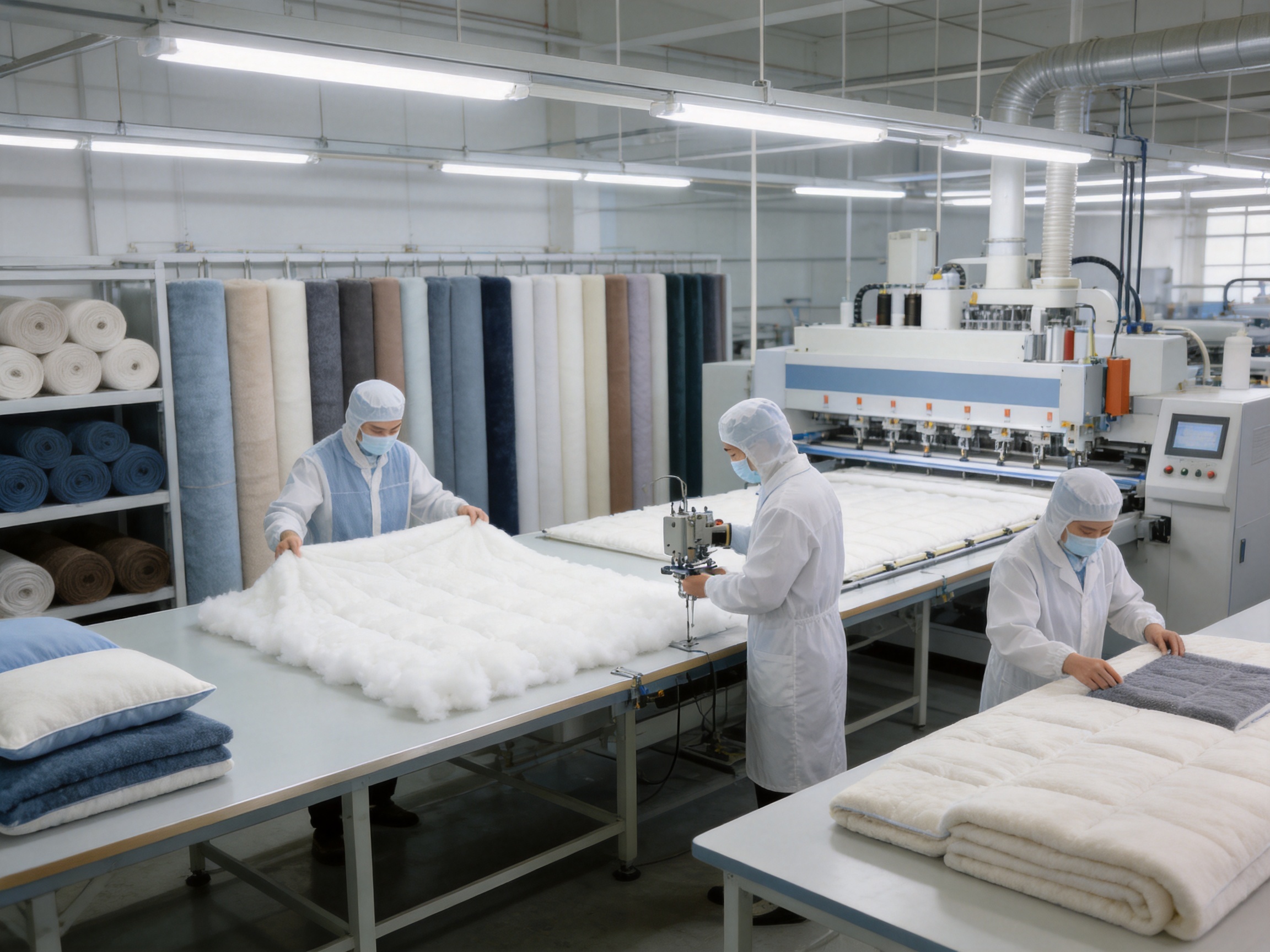
The quality of a quilt depends not only on its material specification but also on how consistently it is manufactured. Tongxiang Xinlong Bedding Co., Ltd. was established in January 2002 and has developed substantial experience in the home textile field. The company is located in Longxiang Industrial Park, Wuzhen Town, Tongxiang City, Zhejiang Province, China, an area associated with textile production and home furnishing industries.
The company covers approximately 21,000 square meters, including about 18,000 square meters of construction area. With more than 320 employees and various advanced production machines, it has the organizational and technical foundation to support the production of multiple home textile categories. This scale is important for buyers who require dependable supply, coordinated production planning, and professional communication throughout the purchasing process.
The company produces a broad range of home textile products, including silk cotton quilts, chemical fiber quilts, pillows, cushions, bedspreads, travel quilts, mattress protectors, blankets, quilt and pillowcases, shower curtains, and curtains. This product diversity provides valuable experience in handling different fabrics, fillings, sewing structures, finishing requirements, and packaging formats.
For the Dual Color Polyester Quilt, broad category experience can support better coordination between fabric preparation, filling handling, quilting, sewing, inspection, and final packing. A manufacturer that understands quilts, pillows, mattress protectors, cushions, and blankets can apply knowledge from related products to improve production efficiency and consistency.
Professional Material Preparation
Manufacturing begins with the preparation and inspection of fabrics and filling materials. The two fabric panels must be suitable for use as coordinated front and back surfaces. Their color appearance, width, surface feel, and general condition need to be checked before cutting or assembly. Proper material preparation helps reduce variation during later production stages.
The 3D polyester filling must also be handled carefully. It needs to be distributed in a manner that supports an even quilt profile. If filling is irregularly placed, some areas may appear flat while others become excessively thick. A professional production system uses controlled processes to reduce this risk and to help maintain a consistent 300gsm specification across the product.
Accurate Cutting and Panel Alignment
Accurate cutting is important for a reversible quilt because both sides must fit together correctly. The front and back panels need to be aligned so that the edges remain neat and the final dimensions are consistent. Proper cutting also contributes to efficient material utilization, which can help reduce unnecessary waste and support cost control.
Panel alignment is particularly important when a quilt uses contrasting colors. Uneven edges or incorrect positioning can affect the clean appearance of the finished item. Skilled operators and suitable production equipment help ensure that the two color panels are assembled with a professional and balanced appearance.
Filling Distribution and Quilting Control
The filling distribution process determines how the quilt feels and performs. The 3D polyester material must be placed evenly between the fabric layers, and the quilt structure must be secured so that the filling remains appropriately positioned during use. Controlled quilting or stitching processes help maintain the relationship between the outer shell and inner filling.
Good quilting control can reduce the possibility of filling movement, clumping, or uneven thickness. It also helps the product retain a neat appearance after folding and handling. The exact quilting pattern may vary according to production requirements, but the central objective remains the same: to create a stable, comfortable, and visually consistent quilt.
Edge Sewing and Finishing
The edges of a quilt require careful sewing because they connect the front fabric, back fabric, and internal filling. A clean edge finish helps protect the filling and contributes to the product’s durability. Consistent seam allowance, secure thread tension, and accurate corner construction are all important elements of professional finishing.
After sewing, the product should be checked for loose threads, uneven edges, surface marks, and other visible issues. Finishing work is often what separates a basic product from a dependable commercial product. Buyers expect the quilt to look neat when removed from its packaging and placed on a bed.
Quality Management and Certification Strength
Tongxiang Xinlong Bedding Co., Ltd. places quality at the center of its operating philosophy. The company states that it has passed international certifications and management standards including ISO9001, ISO14001, OEKO-100, OEKO-STEP, GRS, and BSCI. These certifications and systems represent important aspects of quality, environmental management, material responsibility, and social compliance.
ISO9001 is associated with quality management systems and emphasizes controlled processes, documented procedures, continual improvement, and customer satisfaction. For a quilt manufacturer, a quality management approach can support more consistent handling of specifications, production records, inspections, corrective actions, and customer requirements.
ISO14001 relates to environmental management. Although a certification does not mean that every environmental impact is eliminated, it indicates the presence of a structured framework for identifying and managing environmental responsibilities. This is increasingly relevant to home textile buyers who evaluate not only product performance but also the management practices behind production.
OEKO-related textile standards are associated with the evaluation of harmful substances and responsible textile production. GRS is connected with recycled materials and chain-of-custody requirements where applicable. BSCI is associated with social compliance and responsible working conditions. Together, these certifications can strengthen buyer confidence when conducting supplier evaluations and developing long-term sourcing relationships.
The company has also been rated as a safety production standardization enterprise for several consecutive years since 2016. This indicates continued attention to production safety and standardized operations. A safe, organized factory environment supports employee well-being and can contribute to more stable production performance.
Inspection Considerations for the Finished Quilt
A professional inspection program should evaluate the finished product from several perspectives. Dimensions should be checked to confirm that the quilt corresponds to the stated 140*200 cm size within the agreed production tolerance. Buyers may also review the finished weight, filling distribution, seam quality, fabric appearance, and packaging condition.
Color consistency is especially important for a dual color quilt. The two sides should present the intended contrast, while each individual color should remain consistent across the production batch. Color evaluation may involve comparison with approved standards or samples. Proper lighting and standardized inspection procedures help make these evaluations more reliable.
Surface inspection should identify stains, holes, excessive loose fibers, weaving defects, needle damage, uneven quilting, and loose threads. The quilt should also be examined for corners that are properly formed and edges that are securely finished. These checks help ensure that the product meets both functional and visual expectations.
Packaging inspection is another important stage. The quilt should be folded in a way that protects its appearance and makes the product easy to handle. Labels, cartons, polybags, inserts, and outer packaging should correspond to the buyer’s requirements. Clear packaging information can help retailers and end users understand the product specifications and care instructions.
Why the Product Is Suitable for Custom Bedding Programs
Home textile buyers often require more than a standard catalog item. They may need specific colors, packaging formats, labels, quantities, or coordinated products. A manufacturer with experience across multiple bedding categories is better positioned to discuss these requirements and identify practical production solutions.
The Dual Color Polyester Quilt provides a strong base for customization because its design is simple and clearly structured. Buyers may evaluate alternative color combinations, subject to fabric availability and production requirements. The basic concept can be adapted to different market preferences while retaining the essential advantages of a reversible quilt.
Custom packaging can also be considered for retail, promotional, hospitality, or private-label programs. Packaging may need to communicate size, fabric, filling, care information, folding method, and color options. The manufacturing partner can coordinate these details with the buyer’s sales channel and target customer group.
In addition, the quilt can be considered as part of a coordinated home textile collection. Since the company also produces pillows, cushions, mattress protectors, blankets, bedspreads, and related items, buyers may be able to develop complementary product lines through one experienced supplier. A coordinated range can simplify sourcing and create a more unified appearance across a bedroom collection.
Supply Chain and Commercial Benefits
For importers and distributors, stable supply is a major purchasing consideration. Factory scale, production experience, workforce capability, and equipment availability all influence the manufacturer’s ability to organize orders. A company operating for more than two decades can bring valuable experience to planning, production scheduling, inspection, and shipment preparation.
The Dual Color Polyester Quilt also has a practical commercial structure. Its materials are widely used in the home textile industry, and its design is understandable to consumers. The product does not depend on an unusually complicated construction or a highly specialized market. This can make it suitable for general bedding programs, seasonal promotions, accommodation projects, and regular replenishment.
The two-sided design may create additional merchandising value without requiring a fundamentally different production process from a standard quilt. The same quilt can be displayed in two ways, described as reversible, and positioned as a flexible décor product. This gives retailers a clear point of difference when comparing it with basic one-color alternatives.
For buyers managing several room styles, dual color products can also support more efficient inventory use. Instead of ordering separate quilts for every decorative scheme, a coordinated two-tone design may serve multiple purposes. The exact suitability depends on the chosen colors and the requirements of each project, but the concept provides useful flexibility from the beginning.
Care, Handling, and Product Longevity
Proper care is important for maintaining the comfort and appearance of any quilt. Users should follow the care instructions supplied with the final product and consider the recommended washing, drying, and storage methods. The specific care label should take priority because laundering requirements can depend on the final construction, packaging, and market regulations.
Before washing, the quilt should be checked for loose threads or damaged seams. If the product is machine washable according to its care label, the machine should have sufficient capacity to allow the quilt to move freely. Overloading can place unnecessary stress on the seams and may prevent effective cleaning.
Drying should be completed thoroughly before storage or regular use. A quilt that remains damp for an extended period may develop an unpleasant odor or lose its fresh feel. Gentle handling, adequate airflow, and complete drying can help preserve the filling and outer fabric. The quilt should be stored in a clean, dry place when not in use.
Regularly turning or rotating the quilt can help distribute normal wear across its surface. Since the product has two colors, users can also alternate the displayed side for visual variety. However, reversing the quilt is a styling option rather than a substitute for cleaning or proper care.
Environmental and Responsible Manufacturing Considerations
Modern bedding buyers increasingly consider the environmental and social aspects of manufacturing. Polyester and microfiber products offer practical performance, but responsible production also requires attention to resource use, waste management, chemical controls, workplace safety, and labor practices.
The company’s ISO14001, GRS, OEKO-related, and BSCI certifications demonstrate its engagement with recognized management and compliance frameworks. These systems can provide structure for environmental responsibility, material traceability where relevant, product safety evaluation, and ethical business practices. Buyers should still confirm the specific scope and validity of certifications for each order and product line.
Efficient production can also contribute to responsible sourcing. Accurate cutting may reduce material waste, while organized production planning can limit unnecessary rework. Consistent quality control can prevent defective products from requiring replacement or disposal. Careful packaging design may help balance product protection with material efficiency.
A durable and useful quilt can support more responsible consumption by remaining suitable for regular use over an appropriate service life. Product longevity depends on materials, construction, care, and usage conditions, but reliable manufacturing is an important starting point.
How to Evaluate the Quilt Against Competing Products
When comparing this product with competing quilts, buyers should evaluate more than the retail price. A meaningful comparison should consider the shell fabric, filling weight, filling structure, size, color design, stitching quality, certification status, factory capability, packaging, and after-sales communication.
A lower-priced quilt may use a lighter filling, less consistent fabric, weaker stitching, or a less controlled production process. These differences may not be obvious in a product photograph but can affect comfort, appearance, and customer satisfaction. The Dual Color Polyester Quilt offers a defined material specification that allows buyers to assess the product more objectively.
The 85gsm microfiber shell provides a clear description of the outer material, while the 300gsm 3D polyester filling establishes a reference for internal construction. The reversible color arrangement adds functional design value. Buyers can then compare these characteristics with alternative products to determine whether the overall value matches their market positioning.
Supplier capability should also be part of the comparison. A manufacturer with a broad product range, experienced employees, advanced equipment, quality systems, and certification experience may provide more dependable support than a supplier with limited production resources. This is particularly important for repeat orders, customized packaging, coordinated collections, and long-term business development.
Recommended Product Positioning
The quilt can be positioned as a practical reversible bedding product for customers who want softness, moderate loft, and simple style. Its strongest selling points are easy to understand: one quilt, two color options, microfiber comfort, 3D polyester filling, and flexible use in different bedroom settings.
For a value-focused retail line, the product can be presented as an everyday quilt with a modern appearance. For a home décor collection, it can serve as a color-coordinated reversible layer. For hospitality, it can be promoted as a neat and adaptable bedding solution. For promotional or seasonal programs, the dual color concept can provide visual interest without the complexity of a detailed print.
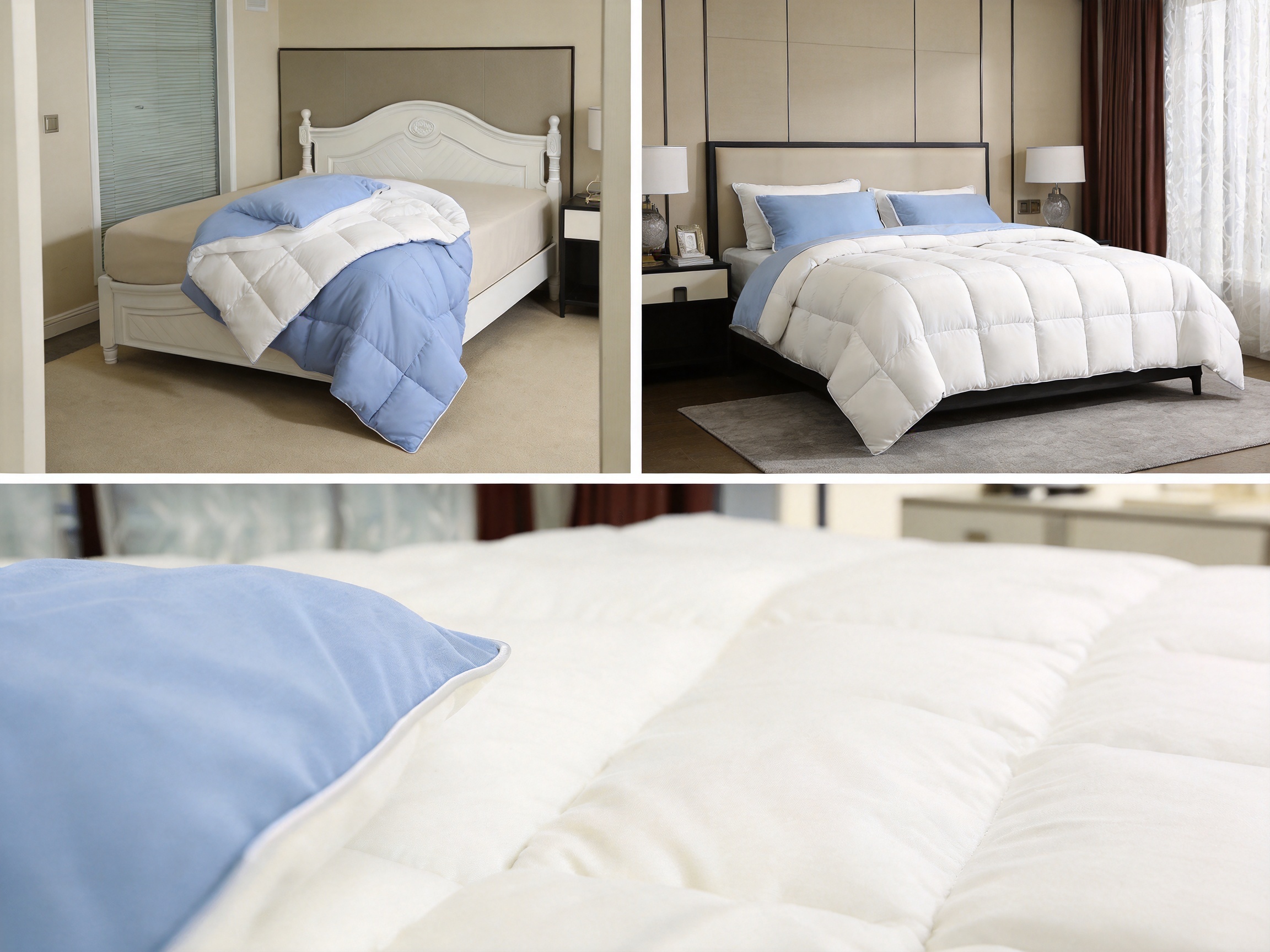
Product photography should show both the front and reverse sides clearly. Retail descriptions should include the 140*200 cm size, 85gsm microfiber fabric, 300gsm 3D polyester filling, and reversible color feature. If additional colors, packaging formats, or private-label details are available, those options should be confirmed with the manufacturer before publication.
Frequently Asked Questions
What is the main feature of the Dual Color Polyester Quilt?
The main feature is its reversible two-color design. The front and back use the same type of fabric but are made in contrasting colors, allowing the user to change the quilt’s appearance by turning it over.
What fabric is used on the outside?
The quilt uses 85gsm microfiber fabric on the outer surfaces. Microfiber provides a soft, smooth, and lightweight feel that is suitable for regular bedding use.
What is the quilt filled with?
The filling is 300gsm 3D polyester. This filling is designed to provide loft, softness, and comfortable coverage while remaining practical for handling and production.
What is the size of the product?
The listed size is 140*200 cm. This format is suitable for individual beds and compact sleeping spaces. Buyers should confirm size tolerances and any alternative dimensions before placing a production order.
Is the quilt suitable for all seasons?
The 300gsm filling offers a balanced level of coverage, but suitability depends on room temperature, climate, personal preference, and the use of other bedding layers. It can be used as a standalone quilt in moderate conditions or combined with other layers when additional warmth is needed.
How does it compare with a single-color quilt?
A single-color quilt provides one visual arrangement, while this product provides two contrasting color options. The reversible design can offer greater décor flexibility and may help retailers or hospitality operators use one product in more than one presentation style.
Is the quilt suitable for hotels and guest rooms?
Yes. Its neat appearance, soft microfiber surface, practical construction, and reversible color design make it suitable for hotels, guesthouses, serviced apartments, and other accommodation environments, subject to the buyer’s specific performance and care requirements.
Can the product be included in a custom bedding program?
The manufacturer offers custom home bedding for various customers and has experience producing multiple home textile categories. Buyers should discuss color requirements, labels, packaging, dimensions, quantities, and other customization details directly with the factory.
What quality certifications are associated with the manufacturer?
The company states that it has passed ISO9001, ISO14001, OEKO-100, OEKO-STEP, GRS, and BSCI-related certifications or standards. Buyers should request current documentation and confirm the applicable scope for their intended product and market.
What should buyers inspect before accepting an order?
Buyers should review dimensions, fabric appearance, color consistency, filling distribution, quilting, edge seams, loose threads, labels, packaging, and overall cleanliness. Pre-production samples and agreed inspection standards can help ensure that the finished order meets expectations.
How should the quilt be cared for?
The final care label should be followed. Users should use the recommended washing and drying method, avoid overloading washing equipment, dry the quilt thoroughly, and store it in a clean, dry location when it is not in use.
Conclusion
The Dual Color Polyester Quilt combines a practical material structure with a simple design advantage. Its 85gsm microfiber fabric creates a soft and manageable outer surface, while the 300gsm 3D polyester filling provides comfortable loft and coverage. The contrasting front and back colors turn a basic quilt into a reversible bedding solution that can adapt to different décor preferences, room styles, and commercial applications.
Its advantages over conventional single-color quilts include visual flexibility, easier coordination with bedroom furnishings, and greater merchandising potential. Compared with heavily patterned alternatives, its clean appearance can appeal to a wider range of customers and remain suitable across changing interior trends. The 140*200 cm format further supports use in individual bedrooms, rental properties, student accommodation, guest rooms, and other compact sleeping environments.
The product is strengthened by the manufacturing capabilities of Tongxiang Xinlong Bedding Co., Ltd. The company’s experience since 2002, factory area, workforce, advanced equipment, broad product portfolio, quality-focused management, and stated international certifications provide a solid foundation for commercial supply. Its ability to produce quilts, pillows, cushions, mattress protectors, blankets, bedspreads, curtains, and other home textiles can also support buyers seeking coordinated product development.
For consumers, the quilt offers softness, adaptability, and everyday practicality. For retailers, it provides a clear and marketable product story. For hospitality and professional sourcing buyers, it offers a flexible design backed by an established home textile manufacturing system. As a result, the Dual Color Polyester Quilt is a dependable option for customers seeking comfortable bedding with modern simplicity and useful reversible functionality.
References
1. Tongxiang Xinlong Bedding Co., Ltd. Product Specification Information for Dual Color Polyester Quilt.
2. Tongxiang Xinlong Bedding Co., Ltd. Corporate Profile and Manufacturing Capability Statement.
3. International Organization for Standardization. ISO 9001 Quality Management Systems: Requirements.
4. International Organization for Standardization. ISO 14001 Environmental Management Systems: Requirements with Guidance for Use.
5. OEKO-TEX Association. Textile Safety and Harmful Substance Assessment Principles.
6. Global Recycled Standard. Recycled Material Verification and Chain-of-Custody Principles.
7. amfori. Business Social Compliance and Responsible Supply Chain Guidance.
8. General Textile Product Evaluation Principles for Fabric, Filling, Stitching, Color Fastness, and Finished Bedding Inspection.

 +86-573-88798028