



 Français
 Español
 Deutsch
Content
- 1 Product Overview
- 2 Why an Extra Thick Mattress Protector Matters
- 3 Material Construction and Comfort
- 4 Advantages Compared with Basic Mattress Covers
- 5 Advantages Compared with Thin or Lightly Filled Protectors
- 6 Manufacturing Experience and Production Capability
- 7 Quality Management and Certification Strengths
- 8 Production Process from Material to Finished Product
- 9 Customization for Different Markets
- 10 Applications in Residential and Commercial Settings
- 11 Care, Handling, and Product Longevity
- 12 Purchasing Considerations for Professional Buyers
- 13 Why Work with an Established Home Textile Manufacturer
- 14 Environmental and Responsible Manufacturing Considerations
- 15 Value Proposition for Different Customers
- 16 Quality Checklist for Sample Evaluation
- 17 Frequently Asked Questions
- 17.1 What makes this mattress protector extra thick?
- 17.2 What is the standard size?
- 17.3 Can the quilting pattern be customized?
- 17.4 What materials are used?
- 17.5 Is the product suitable for winter?
- 17.6 Can it be used as a bedspread?
- 17.7 Does the product include waterproof protection?
- 17.8 What is the purpose of the stretch skirt?
- 17.9 Is polyester suitable for regular bedding use?
- 17.10 Can the product be supplied for private-label programs?
- 17.11 What should buyers verify about certifications?
- 17.12 How should the protector be evaluated before mass production?
- 18 Conclusion
- 19 References
- 20 Product: Extra Thick Comfortable Polyester Mattress Protector
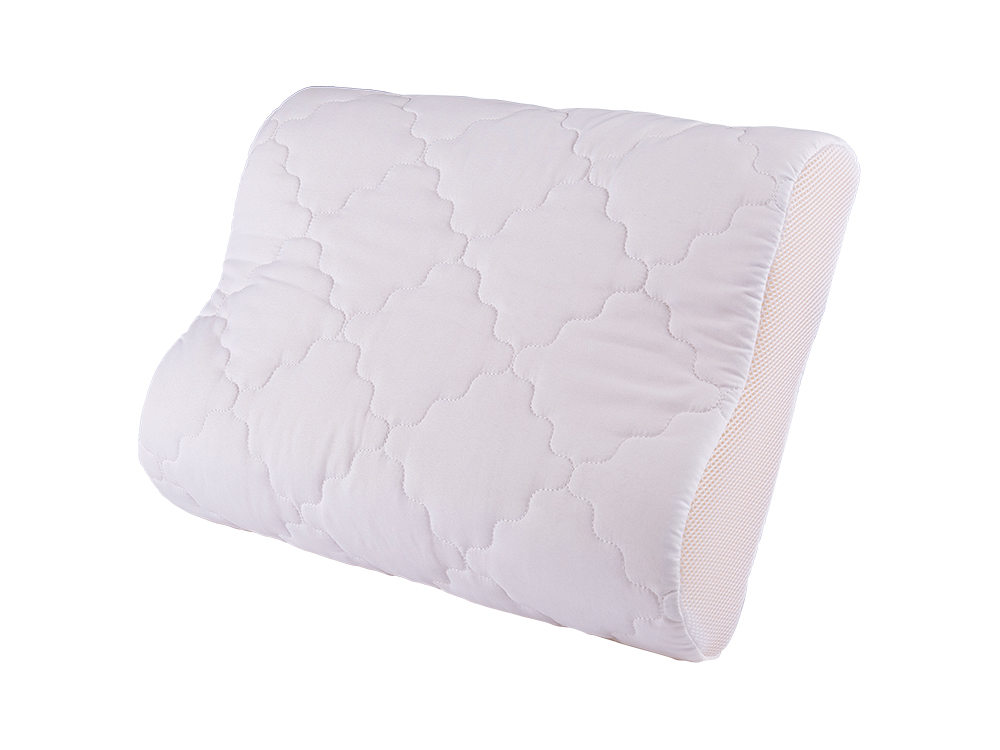
A mattress protector is more than a simple layer placed between a sleeper and a mattress. It can influence sleeping comfort, warmth, hygiene, mattress durability, bedroom appearance, and the overall value of a bedding system. The Extra Thick Comfortable Polyester Mattress Protector is designed as a substantial, quilted bedspread that combines a soft brushed surface, an elastic stretch-fabric skirt, and generous polyester ballfibre filling. This construction makes it especially suitable for cold winter conditions, guest rooms, hospitality projects, furnished apartments, and households seeking dependable all-season bedding support.
Unlike a thin mattress cover that provides only a basic protective barrier, this model is developed with an 800gsm filling weight. The generous filling creates a fuller, warmer, and more cushioned structure while retaining the practical benefits of polyester. Its surface uses 100% polyester brushed fabric at 90gsm, selected for a fine hand feel and comfortable contact with bedding. The skirt uses 100% polyester stretch fabric at 90gsm, helping the protector sit more securely around the mattress and adapt to different mattress dimensions.
The product is manufactured by Tongxiang Xinlong Bedding Co., Ltd., an experienced home textile producer established in 2002. The company operates from a substantial production site in Zhejiang Province, China, with a large workforce, advanced equipment, professional technical personnel, and established quality-management systems. Its manufacturing capabilities cover quilts, pillows, cushions, bedspreads, mattress protectors, blankets, curtains, shower curtains, and related textile products. This broad product experience supports consistent material selection, coordinated production, and flexible customization.
Available in a standard size of 160 x 200 centimeters or in customer-requested dimensions, the mattress protector can be adapted for different mattress specifications, market requirements, retail programs, and project orders. Customers may also request customized quilting patterns. This flexibility is important for wholesalers, importers, hotel suppliers, bedding brands, and retailers that need products adapted to regional bed sizes, packaging plans, or particular design programs.
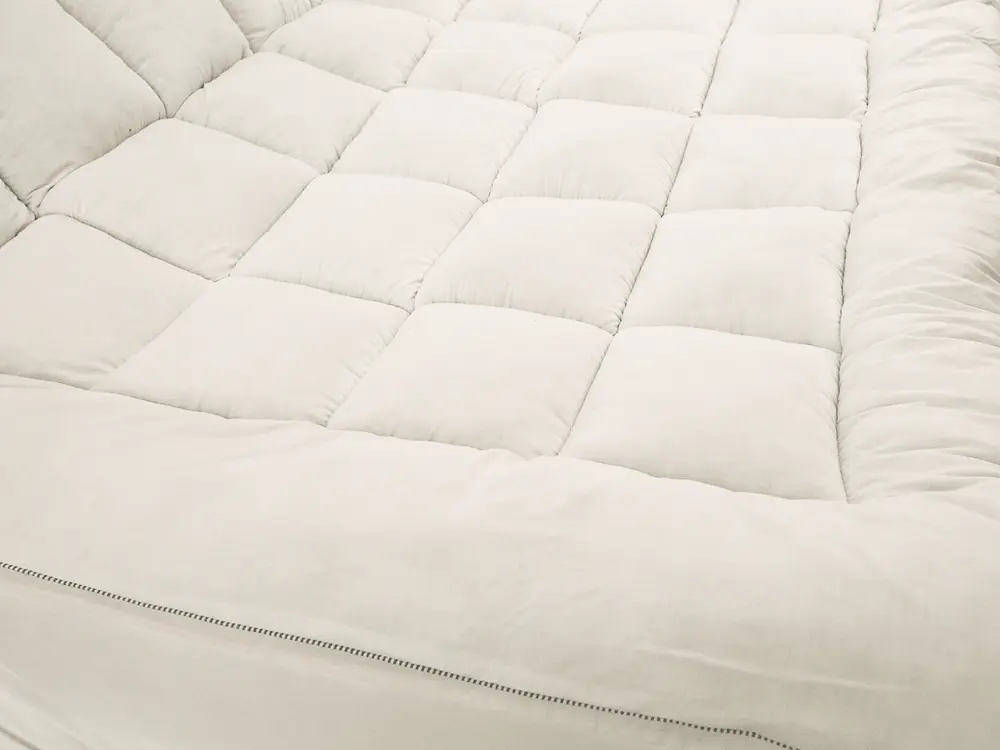
Extra Thick Comfortable Polyester Mattress Protector
Product Overview
The Extra Thick Comfortable Polyester Mattress Protector is a quilted bedding layer developed for comfort, warmth, and practical mattress coverage. It consists of three principal material areas: a brushed polyester top fabric, an elastic polyester skirt, and a thick polyester ballfibre filling. Each component serves a distinct purpose, and the combined construction creates a product that is more substantial than a lightweight protector or a simple flat bedspread.
The brushed fabric contributes a soft, fine surface that feels comfortable beneath sheets or directly against the skin when used as a top bedding layer. Brushing raises and refines the surface fibers, giving the material a warmer hand feel and a smoother appearance. Polyester is widely used in bedding because it offers stable performance, relatively easy care, good dimensional consistency, and suitability for large-scale production.
The 800gsm polyester ballfibre filling is the central feature of the design. A high filling weight provides loft and body, helping the product feel fuller and warmer than a lightly padded mattress cover. Ballfibre construction also supports a resilient, cloud-like texture. When correctly distributed and secured through quilting, the filling can provide even coverage across the sleeping surface while reducing the likelihood of excessive movement during ordinary use.
The skirt is made from 100% polyester stretch fabric at 90gsm. Its elasticity allows it to accommodate the sides of the mattress more effectively than a rigid woven fabric. A properly designed skirt helps the protector remain in position as the bed is made, sheets are changed, or sleepers move during the night. It also gives the product a neater finished appearance by covering the mattress edge and helping reduce exposed gaps between the mattress and bedding.
The product is categorized as a polyester mattress protector or bedspread. This dual positioning reflects its functional versatility. It can be used as a padded mattress protector beneath a fitted sheet, as a decorative bedspread, or as an additional warm layer in colder seasons. The exact use can be selected according to the customer’s bedding system, climate, and preferred room presentation.
| Product Attribute | Specification | Practical Benefit |
|---|---|---|
| Product type | Extra thick polyester mattress protector and bedspread | Combines mattress coverage, padding, warmth, and presentation |
| Standard size | 160 x 200 centimeters | Suitable for a common double-bed format |
| Customization | Other sizes and quilting patterns available | Supports private-label, retail, hospitality, and project requirements |
| Top fabric | 100% polyester brushed fabric, 90gsm | Provides a soft, fine, and comfortable surface |
| Skirt fabric | 100% polyester stretch fabric, 90gsm | Improves fit around the mattress sides |
| Filling | 800gsm polyester ballfibre | Creates thickness, warmth, loft, and cushioning |
| Primary seasonal use | Cold-weather and winter bedding | Adds insulation and a substantial hand feel |
Why an Extra Thick Mattress Protector Matters
Mattresses are substantial household investments, yet they are exposed to daily pressure, friction, perspiration, accidental spills, dust, and repeated contact with sheets and other bedding. A suitable protector provides an additional textile layer that can help reduce direct wear and support easier bedding maintenance. While no mattress protector eliminates every form of contamination or damage, a well-constructed padded layer can improve the practical management of the bed.
Thickness is particularly valuable in rooms where warmth and comfort are priorities. A thin protector may be sufficient in a warm climate or during summer, but it does not provide the same insulating sensation as a deeply filled product. The 800gsm filling in this design gives the mattress surface greater softness and volume. It can make a firm or ordinary mattress feel more welcoming without requiring the immediate replacement of the underlying mattress.
The extra thickness also creates a more finished appearance. A flat, thin cover can look basic when used as a visible bedspread, whereas a quilted, padded protector provides a fuller silhouette and more structured presentation. This makes the product useful in guest bedrooms, rental properties, serviced apartments, and hospitality environments where the bed is an important part of the room’s visual impression.
Another benefit is versatility. Consumers can use the protector below a fitted sheet for additional cushioning or place it over the bed as a visible spread. In colder conditions, it may be combined with a duvet, quilt, or blanket. In moderate conditions, it can serve as a comfortable stand-alone layer. This flexibility broadens the product’s appeal to different users and gives distributors more than one sales message.
Material Construction and Comfort
Brushed Polyester Surface
The top fabric is made from 100% polyester brushed fabric with a weight of 90gsm. Brushed polyester is valued for its smooth, refined feel and its ability to create a warmer surface sensation than many unbrushed lightweight fabrics. The brushing process improves the tactile character of the textile by raising fine fibers on the surface, allowing the material to feel softer and more inviting.
For a mattress protector intended for regular household use, the surface must balance comfort with practical durability. Polyester is suitable for this purpose because it can maintain a consistent appearance across production runs and is compatible with efficient laundering and finishing processes. It also offers broad color and pattern possibilities, which supports customized product collections and coordinated bedroom ranges.
The 90gsm surface fabric is light enough to maintain flexibility while working effectively with the heavier inner filling. This balance is important. A very heavy outer fabric could make the product stiff or unnecessarily bulky, while an overly light and weak fabric might not provide the desired finish. The selected fabric weight supports a comfortable outer layer without overwhelming the construction.
800gsm Polyester Ballfibre Filling
The filling is 800gsm polyester ballfibre, a specification that gives the product its extra-thick character. Ballfibre filling is formed from polyester fibers developed to create a resilient and lofty internal structure. Its rounded or ball-like fiber formation can help the filling recover after compression, contributing to a fuller appearance and a soft, springy feel.
High filling weight does not simply make a product heavier. It changes the product’s perceived comfort, insulation, and visual volume. In a winter bedspread, generous filling creates a comforting barrier between the sleeper and the mattress. It can also reduce the cold sensation sometimes associated with a minimally covered bed, particularly when the bedroom temperature falls during the night.
Quilting is important because the filling must remain distributed across the entire product. A carefully selected quilting pattern divides the surface into controlled sections, helping limit excessive migration of the fiber. The pattern can also create an attractive visual rhythm and reinforce the relationship between the outer fabric and inner filling. Since quilting can be customized, buyers may choose a design that matches a particular brand identity or market preference.
Stretch-Fabric Skirt
The skirt uses 100% polyester stretch fabric at 90gsm. A mattress protector that only covers the upper sleeping surface may shift more easily or leave the mattress sides exposed. The skirt extends coverage and works with the mattress shape to produce a more secure fit. Stretch construction is especially helpful when the product is used on mattresses with slightly different thicknesses.
The skirt also supports easier bed making. When the protector is positioned correctly, it can remain aligned while the fitted sheet is placed over it. This helps reduce the need for frequent repositioning and creates a smoother base for the rest of the bedding. The finished result is a cleaner and more orderly appearance, which is important for both private homes and commercial accommodation.
Because stretch fabrics must recover after repeated tension, material quality and sewing precision are important. The production process needs to control cutting, joining, and edge finishing so the skirt can perform consistently. The manufacturer’s experience with multiple home textile categories provides a practical foundation for managing these construction details.
Advantages Compared with Basic Mattress Covers
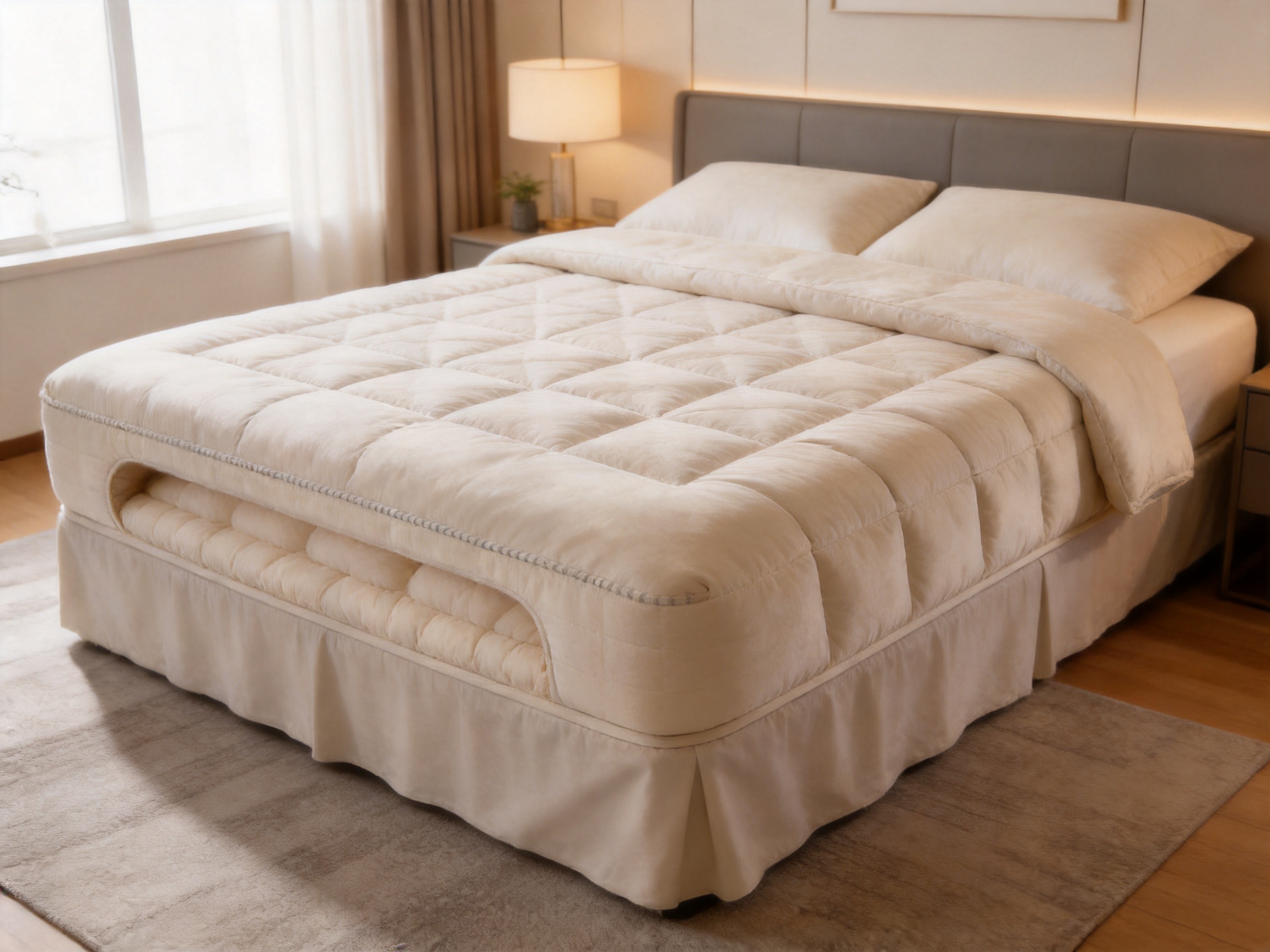
The most direct advantage of this product over a basic mattress cover is its depth. Many simple covers are designed primarily to separate the sleeper from the mattress and may use little or no padding. The extra-thick design adds warmth and cushioning, making it more suitable for winter and for users who prefer a fuller bed surface.
A second advantage is the combination of a soft brushed top and an elastic skirt. A flat woven cover may be easy to manufacture, but it can shift, wrinkle, or fail to cover the mattress sides. The stretch skirt improves the fit, while the brushed top gives the product a more comfortable and premium tactile quality.
A third advantage is multifunctional use. A standard protective cover is often hidden beneath the sheet and has limited decorative value. This quilted product can function beneath the sheet or as a visible bedspread. Distributors can therefore position it as a comfort product, a winter bedspread, a mattress-protection solution, or a coordinated home textile accessory.
The product also offers stronger customization potential than an off-the-shelf standard cover. Sizes can be made according to customer requirements, and the quilting pattern can be adjusted. This allows buyers to align the product with local mattress dimensions, packaging constraints, design trends, and broader bedding collections. Customization can be especially valuable for professional buyers who need differentiation in competitive retail channels.
Another point of comparison is production support. A supplier that specializes in a broad range of home textiles can coordinate the mattress protector with quilts, pillows, cushions, blankets, and related products. This creates opportunities for matching collections, consolidated sourcing, and more consistent quality expectations across multiple product lines.
Advantages Compared with Thin or Lightly Filled Protectors
Lightly filled protectors may be easier to handle, but they generally deliver less insulation and a less substantial feel. The 800gsm filling of this product is aimed at customers who prioritize warmth, softness, and a padded sleeping environment. In colder regions, this difference can be immediately noticeable when the bedding is placed on the bed.
The heavier filling can also improve the visual quality of the bed. A fuller surface is more likely to maintain a smooth, inviting appearance when properly quilted and arranged. For hospitality operators, this contributes to a more comfortable and carefully prepared room presentation. For retail consumers, it creates a sense of value because the product looks and feels more substantial in the home.
However, a thick protector must be manufactured carefully. Excessive or uneven filling can cause lumps, inconsistent thickness, or difficult laundering. The value of this model lies not only in the stated filling weight but also in the company’s ability to distribute, quilt, finish, inspect, and package the product properly. Manufacturing control is therefore a major part of the product advantage.
Manufacturing Experience and Production Capability
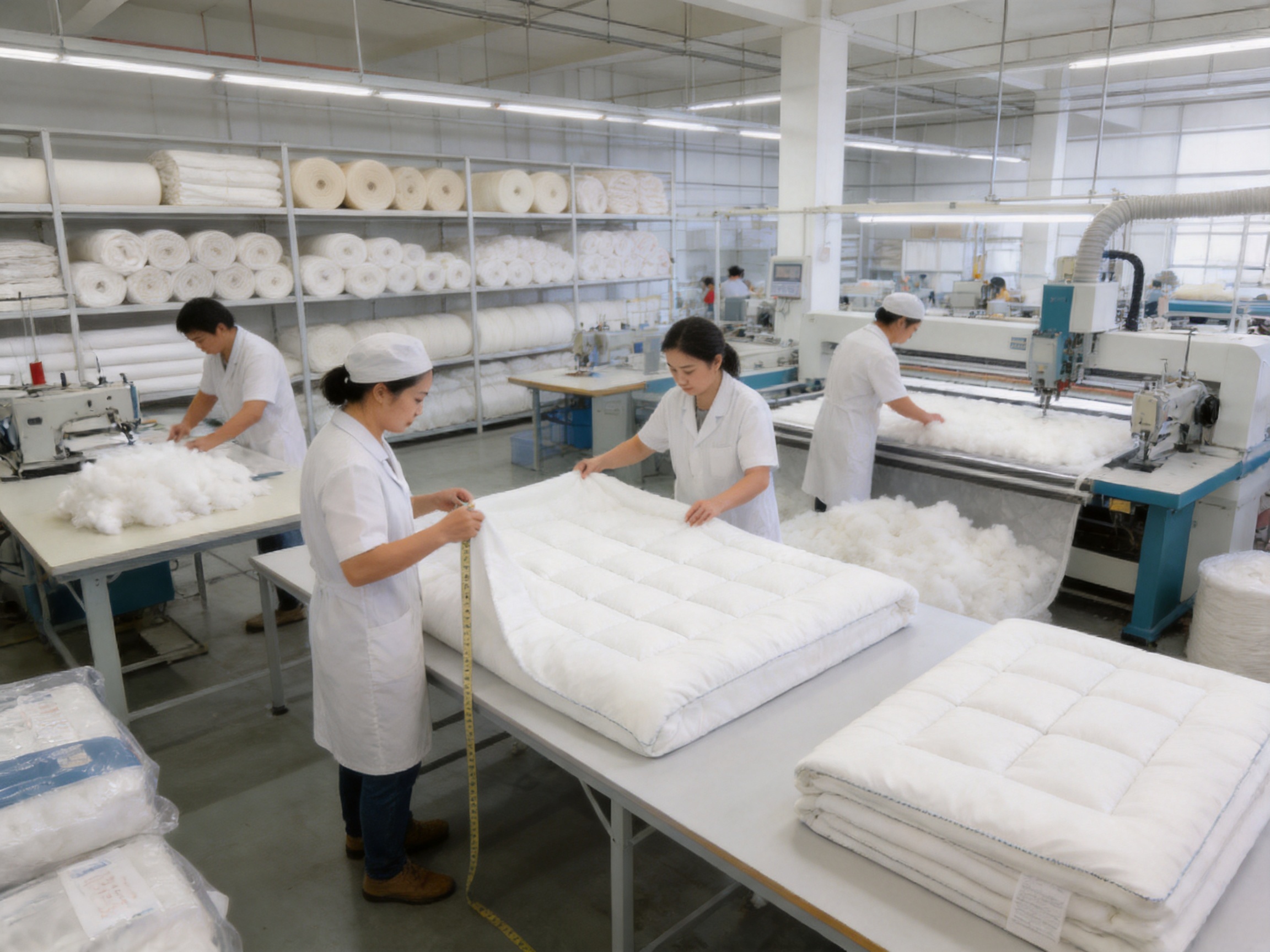
Tongxiang Xinlong Bedding Co., Ltd. was established in January 2002 and has developed long-term experience in the home textile industry. The company is located in Longxiang Industrial Park in Wuzhen Town, Zhejiang Province, an area associated with textile manufacturing and supply-chain activity. Its facility covers approximately 21,000 square meters, with a construction area of about 18,000 square meters.
The company employs more than 320 people and is equipped with various advanced production machines. A workforce of this scale supports specialized tasks across material preparation, cutting, filling, quilting, sewing, inspection, finishing, packing, and order management. In a product such as an extra-thick mattress protector, coordination among these stages is essential because the final result depends on the relationship between the surface fabric, filling distribution, quilting, skirt assembly, and final dimensions.
The manufacturer produces a wide range of home textile goods, including silk cotton quilts, chemical fiber quilts, pillows, cushions, bedspreads, travel quilts, mattress protectors, blankets, quilt covers, pillowcases, shower curtains, and curtains. This breadth demonstrates familiarity with different fabrics, fillings, sewing methods, dimensions, and finishing requirements. It also enables the company to understand how individual products function as part of a complete bedding program.
Product development is supported by professional and technical personnel. The company continues to develop and innovate in response to changes in the home textile market. For buyers, this can mean better communication about construction details, greater responsiveness to custom requests, and more practical support when adapting a standard product to a new market requirement.
A strong manufacturing system is particularly important for custom production. When a customer requests a different size or quilting pattern, the supplier must adjust cutting plans, quilting layouts, skirt dimensions, sewing sequences, packing methods, and inspection standards. Experience in producing multiple bedding categories helps the factory assess these interactions and reduce avoidable production problems.
Quality Management and Certification Strengths
The company has passed international certifications and management evaluations including ISO 9001, ISO 14001, OEKO-TEX Standard 100, OEKO-TEX STeP, GRS, and BSCI, according to the supplied company information. These certifications and assessments represent important elements of a structured production and management system. Buyers should always confirm the current validity, scope, and applicable product coverage of any certification during the purchasing process.
ISO 9001 is associated with quality-management systems. In practical manufacturing terms, a quality system encourages documented procedures, defined responsibilities, process monitoring, corrective actions, and continual improvement. For a mattress protector, this kind of structure can support more consistent control of materials, dimensions, stitching, filling distribution, and finished-product inspection.
ISO 14001 relates to environmental-management systems. Its relevance includes the systematic identification and management of environmental aspects connected with production. For home textile buyers, environmental management can form part of a broader supplier-evaluation program, particularly when customers are seeking responsible sourcing and more transparent production practices.
OEKO-TEX certifications are widely recognized in the textile sector for product-related safety evaluation and responsible manufacturing frameworks. OEKO-TEX Standard 100 focuses on harmful-substance testing for textile products and components. OEKO-TEX STeP addresses sustainable textile and leather production conditions. The specific certification scope should be checked for the exact product, components, and production site involved in an order.
GRS is associated with recycled-content claims and chain-of-custody requirements where applicable. It may be relevant when products or materials include certified recycled content. Since the supplied product specification identifies polyester materials but does not state that the filling or fabrics are recycled, buyers should request confirmation before making recycled-content claims for this mattress protector.
BSCI is a social-compliance framework used by many international buyers to assess workplace and supply-chain practices. Its inclusion in a supplier profile can be useful for customers whose purchasing policies include labor and ethical sourcing criteria. As with all assessments, current documents and the exact facility status should be verified during supplier qualification.
Production Process from Material to Finished Product
Material Selection and Incoming Inspection
Production begins with the selection and preparation of the brushed polyester fabric, stretch skirt fabric, sewing components, labels, packaging materials, and polyester ballfibre. Incoming inspection may include checking fabric width, color, weight, surface quality, elasticity, fiber condition, and visible defects. Proper material control is essential because defects in a large surface area can become more noticeable after quilting.
The filling requires particular attention. The supplier must ensure that the ballfibre is suitable for the specified construction and that its cleanliness, resilience, and consistency meet the intended quality level. Filling materials are commonly stored and handled in a way that protects them from contamination and excessive compression before use.
Cutting and Panel Preparation
After material inspection, the fabrics are prepared for cutting. Cutting accuracy influences the final size, symmetry, skirt fit, and quilting alignment. For customized orders, cutting plans must account for the requested mattress dimensions, seam allowances, quilting pattern, and any shrinkage or finishing considerations.
The upper panel and skirt components are cut according to the approved specification. If a customer requests a particular quilting pattern, the pattern must be translated into a production layout that remains attractive and technically practical at the selected size. Larger products may require careful pattern scaling so that the visual balance is maintained across the entire bed surface.
Filling Distribution and Quilting
The 800gsm polyester ballfibre is distributed between the textile layers. Uniform distribution is one of the most important production controls because uneven filling can affect comfort, appearance, and perceived quality. The filling should provide consistent loft throughout the sleeping area and should be positioned in a way that supports the selected quilting design.
Quilting then joins the surface layers and stabilizes the filling. The quilting pattern may consist of geometric sections, lines, grids, or another approved design. The correct quilting density must balance security and softness. If quilting is too sparse, the filling may move more readily. If it is too dense, the product may feel less flexible and may lose some of its loft.
Quilting also contributes to brand presentation, even when the brand is not visibly printed on the product. A clean, symmetrical pattern communicates attention to detail. Consistent stitch formation, controlled tension, and accurate pattern alignment are essential to achieving a professional finish.
Skirt Assembly and Edge Finishing
The stretch-fabric skirt is assembled after the primary quilted panel has been prepared or according to the factory’s optimized production sequence. The skirt must be joined securely to the upper section while retaining enough elasticity for mattress fitting. Seam strength, seam allowance, elastic recovery, and corner construction all influence the practical performance of the finished item.
Edge finishing prevents fraying and supports a clean appearance. The factory may use suitable overlocking, binding, hemming, or other sewing methods according to the product design. Corners should be shaped carefully so the protector can sit naturally around the mattress rather than bunching or pulling excessively.
Inspection, Finishing, and Packing
Finished products are inspected for visual and dimensional consistency. Typical checks may include surface appearance, quilting alignment, stitch quality, skirt attachment, filling distribution, size, labeling, and packaging accuracy. Additional checks can be specified by the customer as part of a purchase agreement or quality-control plan.
Once approved, the mattress protectors are folded, packed, labeled, and prepared for shipment. Packaging should protect the textile from moisture, dust, compression damage, and handling marks. For export orders, the packing method can be adapted to carton dimensions, container utilization, retail requirements, or individual polybag specifications.
Customization for Different Markets
Customization is one of the product’s strongest commercial features. The standard specification is 160 x 200 centimeters, but the product can be manufactured in other dimensions according to customer requirements. This is important because mattress sizes differ among countries, retailers, hotel groups, and furniture suppliers.
Size customization may involve more than changing the length and width. The skirt depth may need to correspond to mattress thickness, and corner construction may need adjustment for different mattress profiles. The quilting layout may also need to be scaled so that the pattern remains balanced and does not create unnecessary tension near the edges.
Customers can also request customized quilting patterns. A simple geometric pattern may suit a modern retail range, while a softer or more decorative pattern may be preferred for traditional bedding collections. Quilt design can influence both appearance and product hand feel, so it should be selected with the target consumer, climate, and intended use in mind.
Color and collection coordination can further expand the product’s market potential. Although the supplied specification does not list a fixed color range, polyester fabrics generally support a broad range of shades and printed or solid-color programs, subject to material availability and production approval. Buyers should confirm colorfastness, sample approval, minimum order requirements, and laboratory standards before finalizing a collection.
Packaging can also be customized. Retail customers may require individual labels, barcodes, inserts, folding methods, or branded cartons. Hospitality and project buyers may prefer efficient bulk packing. A supplier with experience in multiple home textile categories can help evaluate the relationship between product volume, carton size, shipping efficiency, and presentation requirements.
Applications in Residential and Commercial Settings
Household Bedrooms
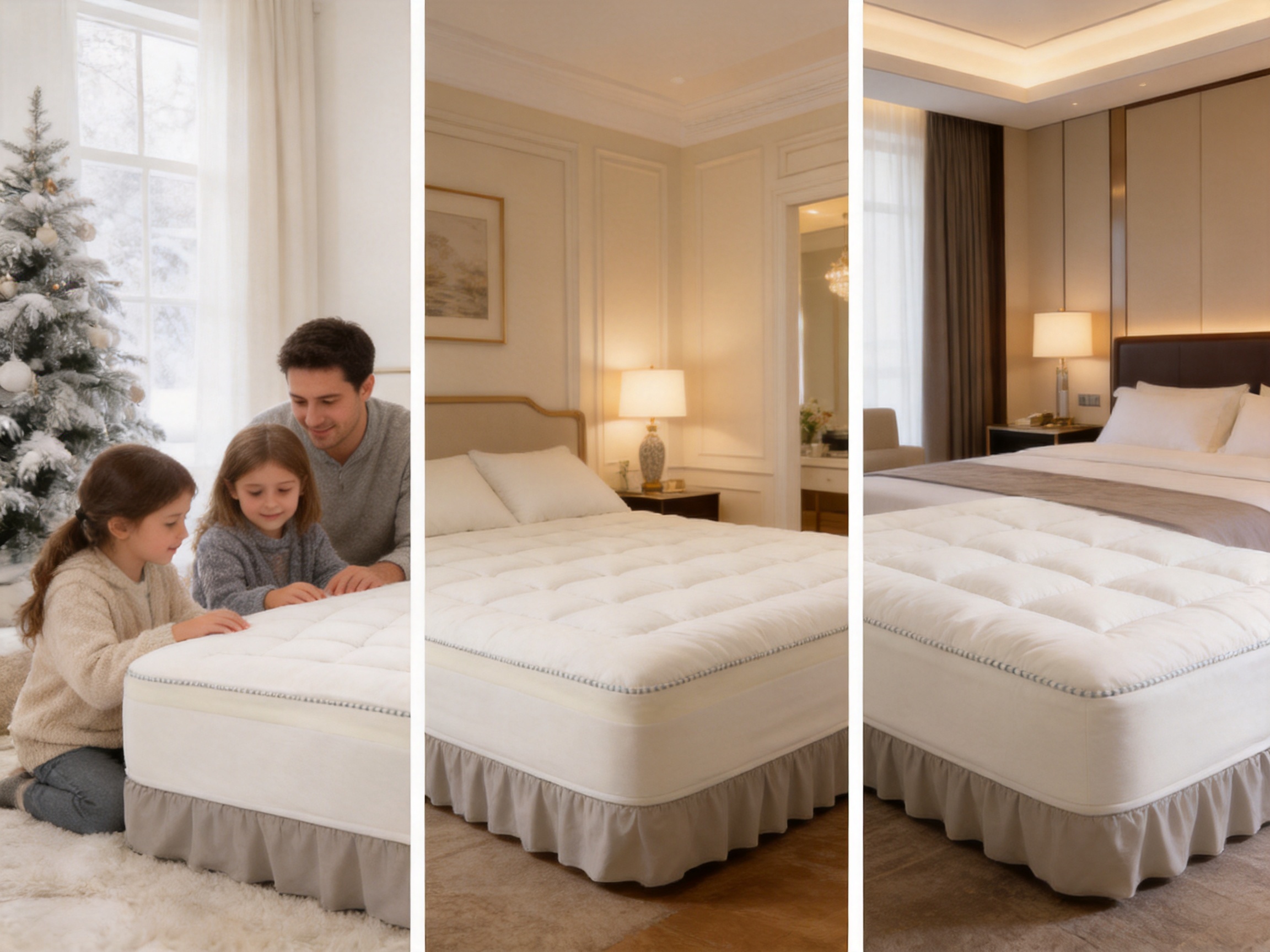
In the home, the protector is suitable for master bedrooms, guest rooms, children’s rooms, and seasonal bedding rotation. Its extra thickness makes it particularly attractive during cold weather, while its polyester construction supports practical household care. It can be placed under a sheet for a padded sleeping surface or used as a visible bedspread when the bedroom requires a more finished appearance.
Guest Rooms and Rental Properties
Guest rooms benefit from bedding that looks clean, comfortable, and well prepared. A quilted mattress protector can add a layer of protection to the mattress while improving the overall visual presentation. In rental properties and serviced apartments, the product may also help standardize the appearance of several bedrooms using the same size and design.
Hotels and Hospitality Projects
Hospitality buyers often require consistent dimensions, repeatable quality, efficient replacement, and reliable delivery. A customizable mattress protector can be incorporated into a broader bedding specification. The manufacturer’s experience with quilts, blankets, pillows, and other products may allow buyers to source related items from one supplier, simplifying communication and product coordination.
Retail and Private-Label Bedding
Retailers and private-label brands can use the product as a differentiated winter bedding item. Its combination of extra thickness, soft brushed fabric, stretch skirt, and customizable quilting provides several consumer-facing selling points. Product descriptions should present the specifications accurately and avoid unsupported claims about medical performance, waterproofing, or guaranteed temperature control unless separate testing confirms those features.
Care, Handling, and Product Longevity
Care instructions should be confirmed according to the final fabric, filling, quilting, label, and customer requirements. Polyester products are generally selected for practical maintenance, but a thick 800gsm article may require more space and care during washing and drying than a lightweight cover. Buyers should request validated care instructions before commercial release.
Regular airing can help maintain freshness between washes. The product should be stored in a dry, clean environment and protected from prolonged dampness. Excessive compression for long periods may reduce the loft of the filling, so suitable storage conditions are recommended when the protector is not in use.
During daily use, the mattress protector should be positioned evenly so that the skirt is not under unnecessary tension. A correct fit helps reduce pulling at the seams and supports a smoother sleeping surface. Users should also check the protector periodically for loose threads, damaged stitching, or displacement, particularly after washing or when used on a mattress with unusual thickness.
Long-term performance depends on many factors, including frequency of use, washing conditions, drying method, mattress dimensions, and handling. The product’s polyester materials and quilted construction are designed for practical use, but no textile product is immune to wear. Clear care labeling and appropriate user instructions can help preserve appearance and function.
Purchasing Considerations for Professional Buyers
Importers, distributors, and retailers should begin by confirming the intended market size. The 160 x 200 centimeter standard can be used as a starting point, but local mattress conventions should be reviewed before mass production. The mattress depth should also be considered because skirt dimensions influence fit.
Sample approval is recommended before placing a larger order. A sample allows the buyer to examine the softness of the brushed fabric, the loft of the filling, the quilting pattern, skirt elasticity, corner construction, stitching, packaging, and overall appearance. If the product will be sold under a private label, the sample should include the intended label and packaging format where possible.
Buyers should also clarify testing requirements. Depending on the market, these may include fiber composition, harmful-substance testing, colorfastness, dimensional stability, seam strength, filling composition, flammability, or care-label verification. Any certification or test report should correspond to the actual materials and production site used for the order.
Order planning should account for customized dimensions, fabric colors, quilting patterns, packaging, and minimum quantities. Changes introduced after production approval can affect lead times and costs. A clear technical specification helps reduce misunderstandings between the buyer and manufacturer.
Logistics should be reviewed because an extra-thick product occupies more volume than a thin mattress cover. Folding and compression may improve carton efficiency, but the method should be tested to ensure that the product recovers its intended loft and does not develop permanent creasing. Carton dimensions, container loading, moisture protection, and warehouse conditions should all be considered in the purchasing plan.
Why Work with an Established Home Textile Manufacturer
An established manufacturer can offer more than production capacity. Long-term experience provides familiarity with common bedding problems, including inconsistent filling, inaccurate dimensions, poor skirt recovery, uneven quilting, weak seams, and packaging damage. A supplier that has encountered and solved these issues over many years is better positioned to establish practical controls.
The company’s broad product portfolio is another advantage. Since it produces many categories of household textiles, it can support coordinated collections rather than treating the mattress protector as an isolated item. Buyers may be able to develop matching quilts, pillows, cushions, blankets, pillowcases, and bedspreads with related fabrics, colors, and packaging concepts.
Manufacturing scale can also support order flexibility. A facility with a large workforce and extensive equipment may be better equipped to manage repeat orders, customized products, and different product categories. Scale does not replace quality control, but when properly organized it can provide useful production resilience.
Continuous product development is important in a changing bedding market. Consumers increasingly evaluate softness, warmth, appearance, safety, environmental responsibility, and value together. The company’s stated commitment to development and innovation supports the creation of products that respond to these expectations while maintaining practical manufacturing feasibility.
The company’s quality purpose is to treat quality as central to enterprise development. Its stated approach includes standardized operating procedures, ongoing improvement of employee technical skills, and attention to finished-product quality. These principles are relevant to the mattress protector because its performance depends on many connected operations rather than one material alone.
Environmental and Responsible Manufacturing Considerations
Polyester is a widely used synthetic fiber with advantages in consistency, durability, and production efficiency. At the same time, responsible buyers should consider the full product life cycle, including material origin, production energy, packaging, care requirements, and end-of-life disposal. Environmental decisions should be based on verified information rather than general assumptions.
The company’s stated ISO 14001 and related certification profile indicates attention to structured environmental management. Buyers seeking specific environmental claims should request current documentation, production-site information, and evidence relevant to the exact product. If recycled polyester is required, the fiber source and chain of custody should be clearly specified and confirmed.
Product durability can contribute to responsible consumption because a bedding item that remains attractive and functional for longer may not need to be replaced as frequently. Proper filling distribution, secure quilting, reliable skirt construction, and suitable care instructions all support service life. Responsible manufacturing therefore includes not only material selection but also the quality of construction and the accuracy of user information.
Value Proposition for Different Customers
For consumers, the product offers a warmer and more comfortable bed surface, a fuller visual appearance, and flexible use across different bedding arrangements. The brushed fabric supports a pleasant tactile experience, while the thick filling creates cushioning and insulation. The stretch skirt helps maintain a neat fit around the mattress.
For retailers, the product provides multiple selling points that can be communicated clearly: extra thickness, 800gsm ballfibre filling, soft brushed polyester, elastic mattress coverage, winter suitability, and customization potential. These features help distinguish it from low-profile protectors that focus only on basic coverage.
For hospitality buyers, the product offers a practical way to combine protection and presentation. Its ability to be made in requested sizes and patterns can support standardized room specifications. The supplier’s broader product range may also help simplify sourcing for complete bedding programs.
For bedding brands, customization creates opportunities for exclusive designs, private labels, coordinated collections, and market-specific sizing. A brand can choose quilting patterns, colors, packaging, and product descriptions that reflect its target position, while relying on an experienced manufacturer for technical execution.
Quality Checklist for Sample Evaluation
When evaluating a sample, buyers should first inspect the surface fabric for softness, even brushing, color consistency, and visible defects. The fabric should feel comfortable and should present a clean, uniform appearance across the panel. Any unusual odor or contamination should be investigated before approval.
The filling should be assessed by touch across the entire product. Buyers can check whether the loft appears even, whether thin spots are present, and whether the protector recovers after gentle compression. The quilting should hold the filling consistently without creating excessive stiffness or harsh ridges.
The skirt should be tested on a mattress with dimensions close to the intended specification. Check whether the skirt covers the mattress side adequately, whether the corners sit correctly, and whether the elastic fabric returns after being stretched. The product should remain stable without excessive pulling or loose areas.
Stitching and edge finishing should be examined around the perimeter, corners, quilting intersections, and skirt attachment. Seams should be secure and free from skipped stitches, uncontrolled thread ends, and puckering that affects appearance or fit. Measurements should be taken after the sample has been finished and, when relevant, after a care test.
Packaging and labeling should also be reviewed. The package should identify the product accurately, provide appropriate fiber information, state the size, and include care instructions required for the target market. If certification marks are used, they must be supported by valid documentation and applied according to the relevant rules.
Frequently Asked Questions
What makes this mattress protector extra thick?
The product uses 800gsm polyester ballfibre filling. This high filling weight gives the protector greater loft, warmth, and cushioning than a lightly padded or unfilled mattress cover.
What is the standard size?
The standard listed size is 160 x 200 centimeters. Other dimensions can be produced according to customer requirements, subject to production confirmation and approved specifications.
Can the quilting pattern be customized?
Yes. The quilting pattern can be customized according to customer needs. Buyers should provide the desired design, dimensions, visual references, and any technical requirements during the sample-development stage.
What materials are used?
The top fabric is 100% polyester brushed fabric at 90gsm. The skirt is 100% polyester stretch fabric at 90gsm. The filling is 800gsm polyester ballfibre.
Is the product suitable for winter?
Yes. Its thick filling and soft brushed surface make it particularly suitable for cold winter conditions. Actual warmth depends on room temperature, sheets, blankets, clothing, mattress type, and individual comfort preferences.
Can it be used as a bedspread?
Yes. The product is categorized as both a polyester mattress protector and a bedspread. It can be used beneath a fitted sheet or displayed over the bed, depending on the customer’s preferred bedding arrangement.
Does the product include waterproof protection?
The supplied specification does not identify a waterproof membrane or waterproof treatment. It should therefore not be marketed as waterproof unless a separate waterproof construction has been developed, tested, and approved.
What is the purpose of the stretch skirt?
The stretch skirt helps the protector fit around the mattress sides and remain more securely positioned. It can also improve the appearance of the bed by covering exposed mattress edges.
Is polyester suitable for regular bedding use?
Polyester is widely used in bedding because it offers consistent quality, practical durability, flexible design possibilities, and relatively easy care. Final care performance depends on the exact construction and should follow the approved product label.
Can the product be supplied for private-label programs?
The product’s customizable size and quilting pattern make it suitable for private-label and collection-based programs. Labeling, packaging, color, quantity, and technical details should be agreed with the manufacturer before production.
What should buyers verify about certifications?
Buyers should request current certification documents and confirm that the scope covers the relevant factory, product, material, and production period. Certification claims should not be made solely from a general company profile.
How should the protector be evaluated before mass production?
Buyers should approve a sample and review fabric softness, filling distribution, quilting, dimensions, skirt fit, seams, labels, packaging, and care instructions. Testing should be completed according to the requirements of the destination market.
Conclusion
The Extra Thick Comfortable Polyester Mattress Protector is designed to meet the needs of customers seeking more warmth, softness, cushioning, and mattress coverage than a basic protector can provide. Its combination of 90gsm brushed polyester fabric, 800gsm polyester ballfibre filling, and 90gsm stretch-fabric skirt creates a balanced construction for cold-weather bedding and versatile home textile use.
Its main advantages include extra thickness, comfortable surface texture, secure mattress coverage, customizable size, customizable quilting, and suitability for use as either a protector or a bedspread. These features give the product a clear position between a simple mattress cover and a full winter bedding layer.
The manufacturer adds value through more than two decades of home textile experience, a large production facility, a workforce of more than 320 employees, advanced equipment, technical personnel, multiple product categories, and structured management systems. Its reported certifications and assessments provide additional points for professional supplier evaluation, subject to current-document verification and product-specific confirmation.
For retailers, distributors, hospitality suppliers, and bedding brands, the product offers a practical foundation for customized programs. With correct size development, quilting selection, material confirmation, quality inspection, and packaging planning, it can become a dependable addition to winter bedding collections and coordinated home textile ranges.
References
1. Product specification supplied for the Extra Thick Comfortable Polyester Mattress Protector, including fabric, skirt, filling, size, and customization information.
2. Company profile and manufacturing information supplied for Tongxiang Xinlong Bedding Co., Ltd., including establishment date, facility size, workforce, product categories, and production capabilities.
3. ISO 9001 quality-management system principles and supplier quality-control practices.
4. ISO 14001 environmental-management system principles for textile manufacturing.
5. OEKO-TEX Standard 100 principles concerning harmful-substance evaluation of textile products and components.
6. OEKO-TEX STeP principles concerning sustainable textile and leather production.
7. Global Recycled Standard principles concerning recycled materials and chain-of-custody verification.
8. Business Social Compliance Initiative principles concerning social-compliance assessment in global supply chains.
9. General textile manufacturing guidance concerning quilting, filling distribution, seam construction, care labeling, and finished-product inspection.

 +86-573-88798028
