



 Français
 Español
 Deutsch
Content
- 1 Product Overview
- 2 Why Flannel Is Suitable for Cold-Season Bedding
- 3 Softness and Skin Comfort
- 4 Construction of the Blanket
- 5 Advantages Compared with Basic Blanket Constructions
- 6 Warmth Without Excessive Bulk
- 7 Machine Washability and Everyday Convenience
- 8 Manufacturing Expertise and Factory Strengths
- 9 Quality Control from Material to Finished Product
- 10 Certifications and Responsible Operations
- 11 Customization for Different Markets
- 12 Applications in Residential and Commercial Settings
- 13 Care, Storage, and Service Life
- 14 Purchasing Considerations for Importers and Distributors
- 15 How the Product Supports a Bedding Collection
- 16 Environmental and Operational Considerations
- 17 Recommended Quality Checklist
- 18 Questions and Answers
- 18.1 What is a flannel blanket?
- 18.2 What is the standard size?
- 18.3 What materials are used in the product?
- 18.4 Is the blanket suitable for winter?
- 18.5 Can the blanket be machine washed?
- 18.6 Will the blanket lose its warmth after washing?
- 18.7 Does the flannel surface shed?
- 18.8 Is the blanket heavy?
- 18.9 Can the product be customized?
- 18.10 Who can purchase this type of blanket?
- 18.11 What manufacturing experience supports the product?
- 18.12 What certifications are associated with the manufacturer?
- 18.13 How should the blanket be stored?
- 18.14 What makes this product different from a simple fleece throw?
- 19 Conclusion
- 20 References
- 21 Product: Flannel Blanket
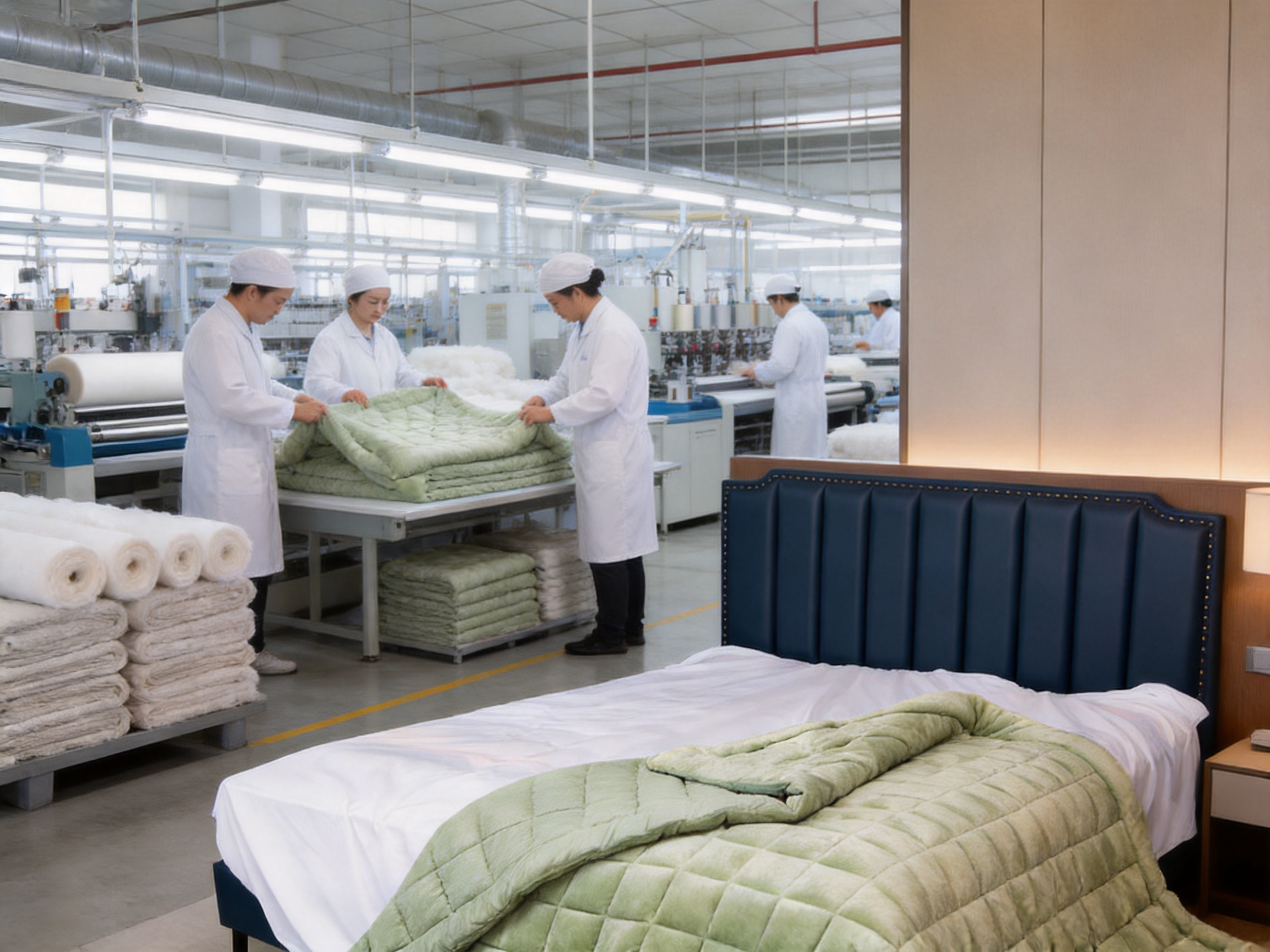
A flannel blanket is one of the most practical bedding products for homes, hotels, guest rooms, dormitories, care facilities, and seasonal accommodation. Designed to provide warmth without creating an overly heavy feeling, it combines a soft flannel surface, a brushed fabric base, and a lightweight three-dimensional fiber filling. This construction delivers comfort, insulation, durability, and easy maintenance in one versatile product.
The Flannel Blanket described in this article is designed with an 180gsm flannel fabric surface, a 90gsm brushed fabric backing, and 3D fiber filling. Its standard size is 140 by 200 centimeters, while customized sizes can be produced for different markets, bed dimensions, retailers, hospitality projects, and private-label programs. The blanket is intended to offer a dependable balance between softness, warmth, breathability, appearance, and washing performance.
Unlike ordinary single-layer throws, this type of flannel quilt uses multiple textile components to improve thermal performance and long-term comfort. The flannel surface creates a gentle hand feel, the brushed backing supports warmth and softness, and the fiber filling helps retain air between the layers. The result is a comfortable blanket suitable for use during cold seasons or as an additional layer throughout the year.
Product Overview
The main purpose of a flannel blanket is to keep the user warm while maintaining a soft, pleasant contact surface. Flannel is widely appreciated in bedding because its fibers can be brushed to create a fine raised surface. This surface feels smooth and warm to the touch and helps the blanket retain heat around the body.
The product includes a 180gsm flannel fabric on the face and a 90gsm brushed fabric as the base. The filling consists of 3D fiber, a synthetic fiber structure commonly used in quilts, blankets, pillows, and other home textile products. Three-dimensional fibers are designed to create loft and resilience, allowing the filling to hold air while maintaining a relatively light weight.
With a default size of 140 by 200 centimeters, the blanket is suitable for individual use, guest beds, sofas, lounge areas, travel applications, and many standard bedding arrangements. Custom dimensions can also be considered for different bed sizes and sales channels. Size customization is particularly useful for importers, bedding wholesalers, hotel suppliers, online retailers, and brands that need a product adapted to a specific market.
Product Name |
Flannel Blanket |
Product Category |
Flannel Quilt |
Standard Size |
140 by 200 centimeters |
Size Options |
Customizable according to project or market requirements |
Face Fabric |
180gsm flannel fabric |
Base Fabric |
90gsm brushed fabric |
Filling |
Three-dimensional fiber |
Care Method |
Machine washable under suitable care conditions |
Primary Use |
Cold-season bedding, home use, guest rooms, hospitality, and seasonal retail |
Why Flannel Is Suitable for Cold-Season Bedding
Cold-weather bedding must do more than simply add weight. It should provide warmth quickly, feel comfortable against the skin, resist excessive shedding, maintain its shape, and remain practical to clean. Flannel is well suited to these needs because its brushed surface offers a naturally warm hand feel. When a user first touches the blanket, the fabric does not feel excessively cold in the same way that some smooth, tightly woven materials may feel.
The raised surface of flannel creates small spaces between fibers. These spaces can help hold still air, contributing to a warmer sensation. The construction does not depend only on thickness. Instead, it combines surface texture, fabric weight, backing, and internal filling to create a balanced thermal experience.
The 3D fiber filling further supports insulation. Fiber clusters and lofted structures can retain air, and air is an important part of many insulating textile constructions. The filling also gives the blanket a fuller appearance and helps it feel more substantial without requiring an extremely heavy layer.
For many users, the most desirable winter blanket is not the heaviest blanket available. An excessively heavy product may restrict movement, feel uncomfortable during sleep, and become difficult to wash or store. A flannel blanket with moderate weight and effective loft can offer warmth while remaining easier to handle.
Softness and Skin Comfort
Softness is one of the most important purchase factors in home textiles. Blankets remain in direct or near-direct contact with the body for extended periods, so roughness, stiffness, or an uneven surface can reduce user satisfaction. The flannel face fabric is developed to provide a soft, gentle touch suitable for bedding applications.
The brushed construction helps produce a fine surface texture. When properly processed, the surface feels smooth and comfortable rather than harsh or abrasive. The base layer also contributes to the overall hand feel, giving the product a soft reverse side instead of leaving the user in contact with a coarse backing.
Comfort is not limited to the first touch. A well-made blanket should retain an agreeable hand feel after repeated use and washing. The product description emphasizes that the blanket is designed not to lose its warmth effect after washing. Maintaining surface softness and loft through normal care is important because bedding is expected to be used frequently.
Flannel is also visually associated with warmth and relaxation. Its lightly raised texture gives the blanket a cozy appearance, making it suitable for bedrooms, reading areas, lounge spaces, and hospitality settings where the atmosphere should feel inviting. The fabric can support a wide range of colors, patterns, and private-label designs depending on the customer’s program.
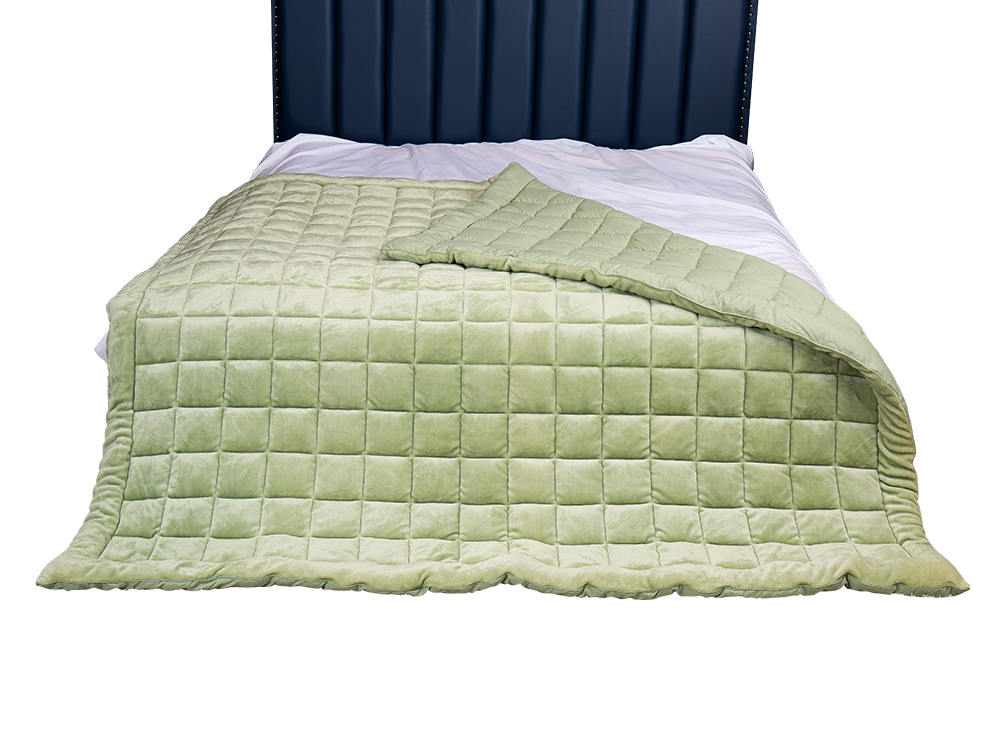
Flannel Blanket
Construction of the Blanket
180gsm Flannel Surface
The 180gsm flannel face is the primary contact surface and one of the key features of the product. Fabric weight affects the balance between coverage, softness, durability, and warmth. At 180gsm, the surface has enough substance to feel comfortable and substantial while remaining suitable for a practical, manageable blanket.
The flannel surface is brushed to create a soft raised finish. Brushing must be controlled carefully. If the process is too light, the surface may not provide the desired softness. If it is too aggressive, the fabric may experience unnecessary fiber disturbance or an uneven appearance. Consistent processing helps create a more uniform hand feel across the blanket.
90gsm Brushed Fabric Base
The 90gsm brushed fabric base supports the reverse side of the blanket. A brushed base improves comfort on both sides and contributes to the product’s warm hand feel. It also helps provide a stable foundation for the filling and finishing processes.
Using a separate base fabric rather than relying on a single surface layer allows the product to be designed as a coordinated bedding construction. The face and base can work together to provide softness, stability, and a finished appearance. The reverse side is also important for users who fold, turn, or layer the blanket in different ways.
Three-Dimensional Fiber Filling
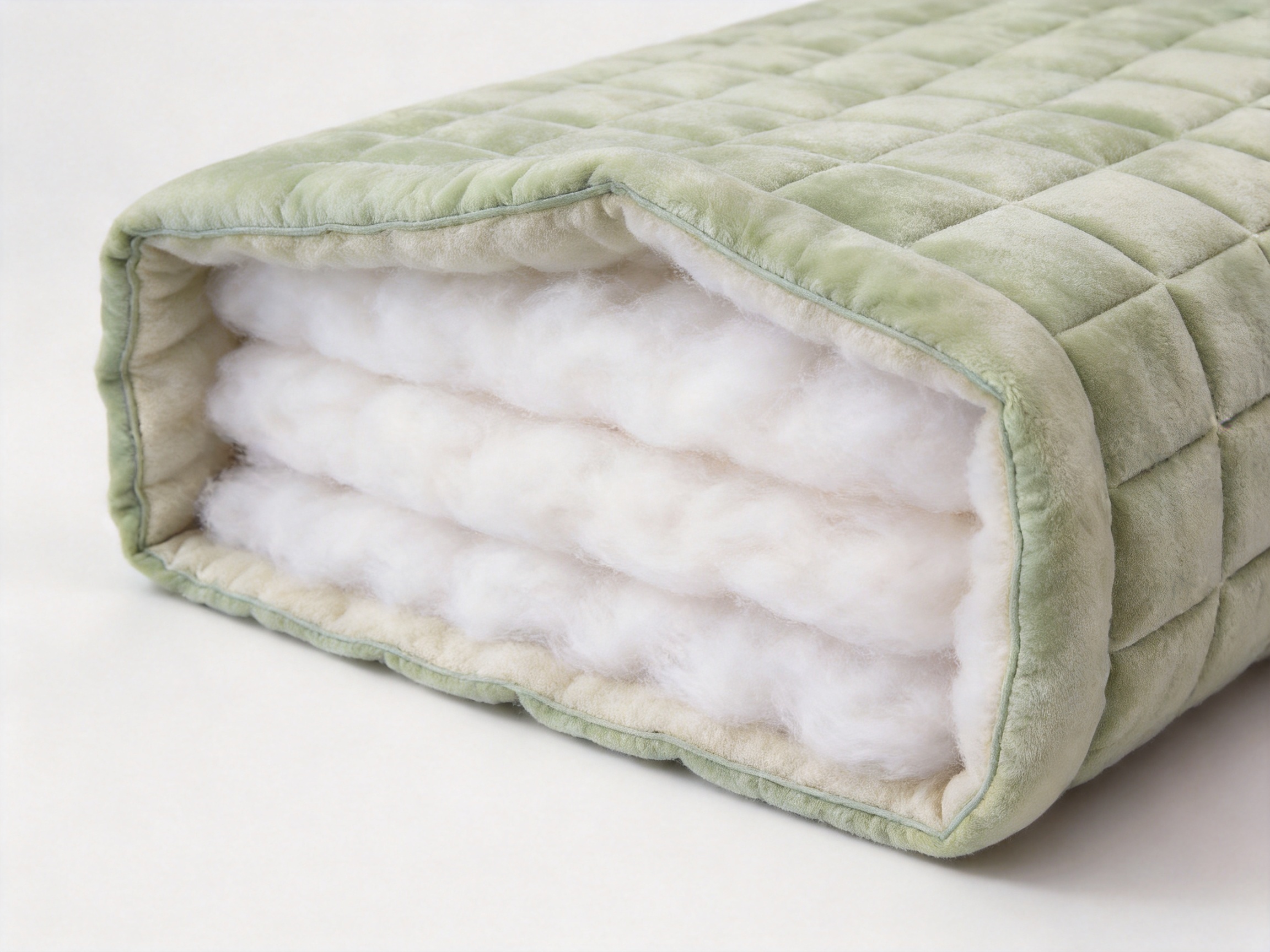
The 3D fiber filling gives the blanket internal loft. Its three-dimensional structure helps create a resilient, airy layer between the fabrics. This layer supports warmth retention and gives the blanket a fuller appearance without making it unnecessarily dense.
A good filling must be distributed consistently. Uneven filling can create cold spots, thin areas, or an irregular appearance. Professional manufacturing therefore requires careful preparation, spreading, alignment, and quilting or securing procedures. Maintaining an even internal structure is essential to the product’s comfort and durability.
Advantages Compared with Basic Blanket Constructions
Flannel blankets compete with many types of bedding, including thin fleece throws, single-layer printed blankets, heavy cotton quilts, and low-cost synthetic covers. Each type has its own market position, but a layered flannel quilt can provide a broader combination of benefits.
Compared with Single-Layer Blankets
A single-layer blanket may be lightweight and inexpensive, but it generally offers less structural depth than a product with a face fabric, a backing, and internal filling. The layered construction of this flannel blanket creates greater loft and a more substantial feel. This can make it more suitable for cold-season use.
The additional base fabric also gives the blanket a more finished appearance. It can reduce the impression of a thin, disposable product and support better presentation in retail packaging or hospitality supply programs.
Compared with Very Heavy Quilts
Heavy quilts can provide warmth, but their weight may be inconvenient for users who prefer easier movement or simpler bed making. They may also require more storage space and more effort during washing. The flannel blanket uses a warm surface and 3D fiber filling to deliver insulation without relying only on excessive weight.
This balance can be particularly valuable for children, older users, guest rooms, and customers who prefer lightweight bedding. It can also simplify handling for housekeeping teams and retail customers.
Compared with Smooth Synthetic Throws
Smooth synthetic throws may be easy to produce, but they do not always provide the same warm first-touch sensation as brushed flannel. The raised flannel surface gives the blanket a softer, more comfortable tactile identity. This is an important advantage in markets where consumers purchase bedding based on touch as well as appearance.
Compared with Low-Quality Brushed Products
Not all brushed blankets provide the same level of performance. Low-quality products may experience excessive shedding, uneven brushing, weak seams, filling migration, or loss of softness after washing. A professionally manufactured blanket benefits from controlled material selection, standardized processing, inspection, and production management.
The product is specifically described as non-shedding and designed to retain its warmth effect after machine washing. These characteristics can help distinguish it from less consistent alternatives, although actual care performance always depends on the final specification, testing, and washing conditions.
Warmth Without Excessive Bulk
The warmth of a blanket depends on several factors, including fabric type, surface structure, filling volume, air retention, construction, and the surrounding environment. A product that is thick but poorly constructed may not perform as effectively as a lighter product with better loft and more efficient air retention.
The flannel blanket uses three coordinated elements: a warm-feeling flannel face, a brushed base, and 3D fiber filling. This combination creates a layered thermal system. The fabrics provide surface comfort, while the filling adds internal loft. Together, they help the blanket feel warm soon after it is placed over the body.
Its moderate construction also makes it useful as an additional layer. In areas with changing temperatures, the blanket can be placed over a quilt, used on a sofa, or folded at the end of a bed. This flexibility broadens its market appeal beyond use as a standalone winter blanket.
Machine Washability and Everyday Convenience
One of the strongest practical advantages of a synthetic flannel quilt is its ease of care. Bedding products are exposed to skin oils, dust, perspiration, accidental spills, and repeated handling. A blanket that cannot be cleaned conveniently may be difficult to use in everyday life.
The product is designed to be machine washable. This supports convenient home care and can reduce the burden on hospitality staff, property managers, and commercial users. Machine washing can also make the product suitable for guest rooms and family households where frequent cleaning is important.
Proper washing instructions should always be followed. Recommended conditions may vary according to the final color, stitching, edge treatment, packaging requirements, and customer specification. In general, users should select a suitable cycle, avoid excessive heat when the care label does not permit it, use an appropriate detergent, and dry the blanket thoroughly before storage.
The ability to wash the blanket without significantly reducing its warmth effect is an important performance consideration. Loft recovery, surface softness, seam stability, and filling distribution should all be assessed during product development and quality control.
Manufacturing Expertise and Factory Strengths
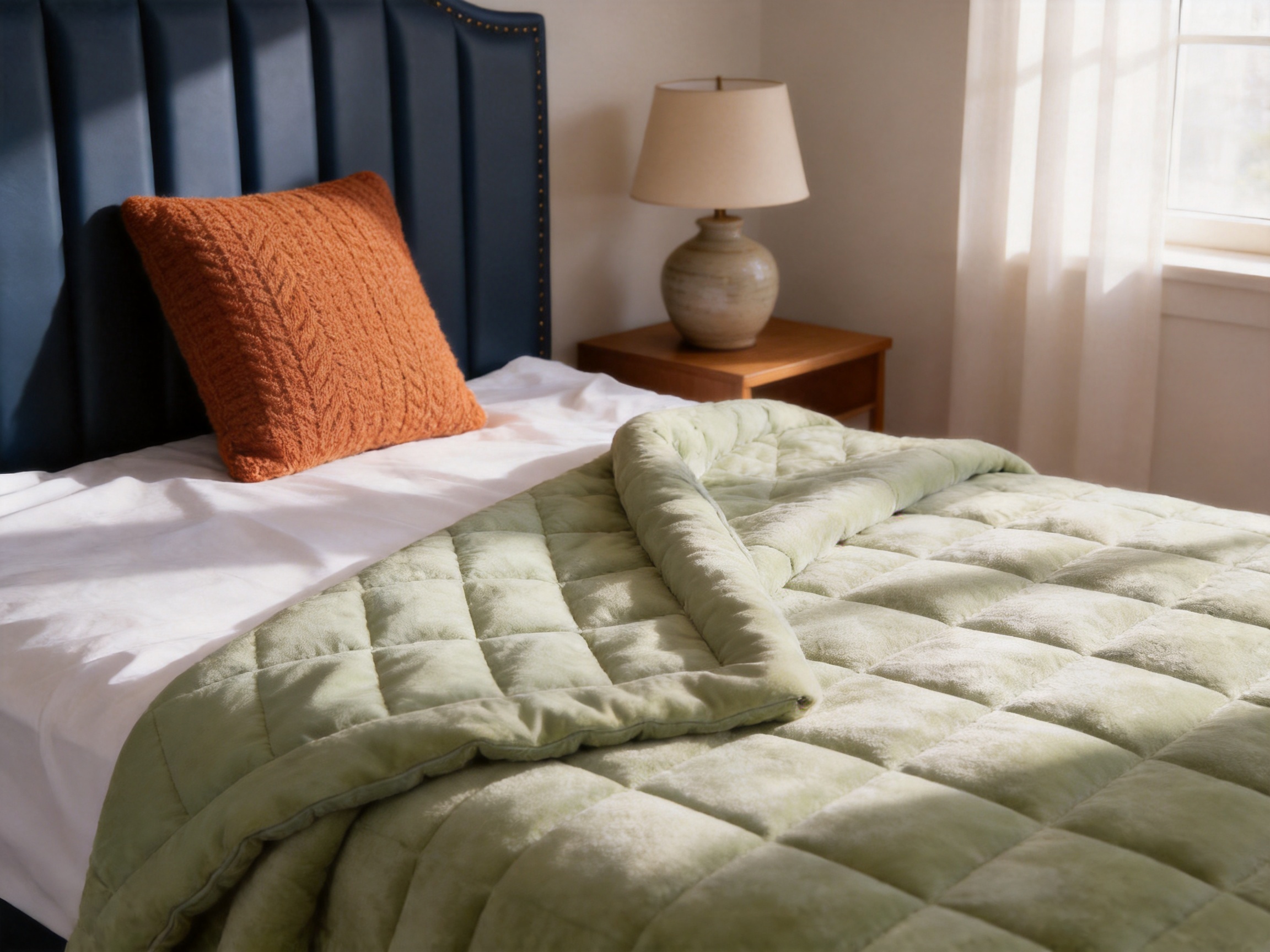
The manufacturer, Tongxiang Xinlong Bedding Co., Ltd., was established in January 2002. The company is located in Longxiang Industrial Park, Wuzhen Town, Tongxiang City, Zhejiang Province, China. Its location places the business within an important home textile manufacturing region with access to textile materials, production resources, skilled workers, and supply chain services.
The company covers approximately 21,000 square meters, including a construction area of approximately 18,000 square meters. It employs more than 320 people and is equipped with advanced production equipment. These resources support the production of diverse home textile products and provide the capacity needed to manage product development, manufacturing, quality control, and order fulfillment.
The company produces a wide range of home textile products, including silk cotton quilts, chemical fiber quilts, pillows, cushions, bedspreads, travel quilts, mattress protectors, blankets, quilt covers, pillowcases, shower curtains, and curtains. This broad product portfolio is valuable because manufacturing experience in related categories can support better understanding of filling behavior, fabric handling, stitching, finishing, packaging, and customer requirements.
Professional Production Equipment
Advanced equipment supports consistency in textile manufacturing. A flannel blanket requires the coordination of fabric preparation, cutting, layer assembly, filling distribution, quilting or securing, edge finishing, inspection, and packing. Each stage can affect the final appearance and performance of the product.
Modern equipment can improve repeatability in cutting and sewing, reduce variation between units, and help production teams maintain stable dimensions. Equipment alone does not guarantee quality, but it provides a strong foundation when combined with trained operators, documented procedures, and effective supervision.
Technical Personnel and Product Development
The company continues to develop and innovate in response to changes in the home textile industry. Professional and technical personnel contribute to the design and production of fashionable and warm household products. This capability is especially important for buyers who need more than a standard catalog item.
Product development may involve adjustments to size, fabric weight, color, pattern, filling, stitching, edge construction, packaging, and labeling. A manufacturer with experience across multiple bedding categories can often evaluate how these changes affect comfort, appearance, production efficiency, and cost.
Standardized Operating Procedures
Quality depends on the consistent execution of production steps. Standardized operating procedures help employees understand how materials should be inspected, how layers should be assembled, how stitching should be performed, and how finished products should be evaluated.
For a flannel blanket, procedures may address fabric direction, surface appearance, filling distribution, seam allowance, edge alignment, needle selection, thread tension, quilting density, label placement, and final folding. Documented procedures reduce avoidable variation and make it easier to identify and correct production issues.
Quality Control from Material to Finished Product
A reliable blanket begins with suitable raw materials. Fabric should be reviewed for color consistency, width, weight, surface condition, stains, holes, weaving defects, and unacceptable variation. Filling should be examined for cleanliness, resilience, uniformity, and suitability for the intended construction.
During production, quality personnel can check whether fabric layers are aligned, whether filling is evenly spread, and whether stitching secures the internal structure properly. Attention should also be given to skipped stitches, loose threads, puckering, uneven edges, and dimensional accuracy.
Finished product inspection should confirm that the blanket meets the agreed specification. Important checks may include size, weight, appearance, hand feel, seam quality, filling distribution, color, labeling, packaging, and general cleanliness. For export programs, inspection criteria can be aligned with buyer requirements and applicable market expectations.
The company takes quality as a central business principle and emphasizes the standardization of operating procedures, continuous improvement of employee technical skills, and enhancement of product quality. This approach is relevant to buyers seeking stable products rather than one-time production without reliable follow-up.
Certifications and Responsible Operations
The company has passed international certifications and assessment systems including ISO 9001, ISO 14001, OEKO-TEX, OEKO-TEX STeP, GRS, and BSCI, according to the supplied company information. Each certification or assessment framework addresses different aspects of business, quality, environmental management, material responsibility, or social compliance.
ISO 9001 is associated with quality management systems and structured approaches to customer requirements, process control, corrective action, and continual improvement. For a bedding buyer, a quality management system can provide greater confidence that manufacturing activities are managed through defined processes.
ISO 14001 relates to environmental management systems. Environmental management is increasingly important in textile manufacturing because customers and end users are paying greater attention to resource use, waste, chemical handling, energy consumption, and responsible production practices.
OEKO-TEX-related certifications and standards are widely recognized in the textile sector for testing and evaluating harmful substances under defined requirements. OEKO-TEX STeP focuses on sustainable textile and leather production facilities. GRS is associated with recycled materials and chain-of-custody requirements when applicable to the certified scope. BSCI is a social compliance initiative used by companies to assess working conditions and responsible supply chains.
Certification status, scope, validity, and applicability should always be confirmed for the specific order and production site. Nevertheless, the company’s stated certifications demonstrate a commitment to internationally oriented manufacturing systems and provide useful support for customers conducting supplier evaluations.
Customization for Different Markets
The standard 140 by 200 centimeter size provides a practical starting point, but many buyers require customized dimensions. Retailers may need sizes that match local bedding conventions. Hotels may request blankets for single, double, queen, or other bed formats. Promotional programs may require compact throws, while institutional customers may need standardized dimensions for efficient inventory management.
Customization can extend beyond size. Depending on order requirements, buyers may discuss fabric colors, printed designs, edge treatments, quilting patterns, labels, packaging, carton marks, and product combinations. A product can also be developed for a particular sales position, such as an entry-level seasonal blanket, a premium soft-touch blanket, a hotel supply item, or a private-label home textile collection.
Color and pattern selection should consider the target market, season, interior design trends, and brand identity. Flannel surfaces can support calm neutral shades, classic checks, modern geometric designs, seasonal motifs, or coordinated patterns for bedding collections.
Packaging is another important part of customization. A blanket may be folded into a polybag, reusable fabric bag, paper sleeve, retail box, or other customer-specified format. Packaging should protect the product from dust and moisture while presenting essential information such as size, fiber composition, care instructions, and country of origin where required.
Applications in Residential and Commercial Settings
Bedrooms
In residential bedrooms, the flannel blanket can be used as a primary cold-season cover or as an extra layer over a quilt or duvet. Its manageable size makes it suitable for individual sleepers, guest beds, and children’s rooms. It can also be folded at the foot of a larger bed for convenient use when temperatures fall.
Sofas and Living Areas
The soft surface and warm hand feel make the blanket suitable for sofas, chairs, reading corners, and family rooms. In these settings, it provides warmth during rest without requiring users to adjust the central heating or use a large bed quilt.
Guest Rooms
Guest accommodation benefits from bedding that is comfortable, washable, and easy to store. A machine-washable flannel blanket can provide an additional comfort layer for visitors with different temperature preferences. Its soft appearance can also help create a welcoming room environment.
Hotels and Hospitality
Hotels, serviced apartments, inns, and vacation properties often need dependable bedding that can withstand repeated handling. A flannel blanket can be supplied as an extra-room item, a seasonal blanket, or part of a complete bedding package. Its care convenience can help housekeeping teams manage routine laundering.
Dormitories and Institutional Housing
Dormitories, staff accommodations, care facilities, and other shared living environments may require practical blankets that offer comfort while remaining easy to clean. Customized sizes, labeling, and packaging can support organized purchasing and distribution.
Travel and Outdoor Leisure
The product category also connects with travel quilts and lightweight leisure bedding. Depending on the final size and packaging, a flannel blanket may be useful for road trips, temporary accommodation, recreational vehicles, and cold indoor environments. It should not be treated as a technical outdoor sleeping bag unless specifically designed and tested for that purpose, but it can serve as a convenient comfort layer.
Care, Storage, and Service Life
Correct care helps preserve the blanket’s softness, appearance, and loft. Users should review the final sewn-in care label because the precise instructions may differ according to the selected materials and finishing methods. Machine washing should be performed with sufficient space for the blanket to move freely, especially when using a household washing machine.
Overloading a washing machine may prevent proper cleaning and place unnecessary stress on seams. Mild detergent and suitable water temperatures can help preserve fabric color and surface condition. Strong bleach, excessive heat, or aggressive mechanical treatment should be avoided unless specifically permitted by the care instructions.
After washing, the blanket should be dried thoroughly. Remaining moisture can produce an unpleasant odor and may damage the textile over time. If tumble drying is permitted, an appropriate setting should be selected. If air drying is recommended, the blanket should be spread or hung in a clean, well-ventilated area.
For storage, the blanket should be completely dry and kept in a clean, dry place. Long-term compression may reduce loft temporarily, so the blanket can be gently shaken and allowed to recover before use. Avoid storing it in direct sunlight or in an area exposed to excessive humidity.
Purchasing Considerations for Importers and Distributors
Buyers evaluating flannel blankets should examine more than the listed fabric composition. They should consider the complete construction, including fabric weights, filling type, filling quantity, finished size, stitching method, edge finish, packaging, labeling, and care instructions.
Sample evaluation is important. A sample allows the buyer to review softness, warmth, weight, color, stitching, dimensions, filling distribution, and overall appearance. If the product will be sold under a private label, the sample should also be checked against packaging and branding requirements.
Buyers should clarify whether the quoted specification applies to the finished product or only to the raw materials. Fabric weight, filling weight, finished product weight, and tolerances should be clearly defined. This reduces misunderstandings during bulk production.
For larger programs, buyers may request inspection procedures, production schedules, carton specifications, testing documents, certification information, and shipment quantities. Clear communication at the beginning of the project supports more efficient production and helps prevent changes late in the manufacturing process.
Supplier experience is also important. A manufacturer producing quilts, pillows, cushions, mattress protectors, blankets, and related products may be able to support broader bedding programs. This can simplify sourcing for customers who want to develop coordinated collections rather than purchase one isolated item.
How the Product Supports a Bedding Collection
A flannel blanket can serve as an independent product or as part of a larger home textile range. It can be coordinated with mattress protectors, pillows, quilts, cushion covers, bedspreads, and pillowcases. Matching colors and packaging can create a consistent retail presentation.
For hospitality customers, the blanket can be paired with other room textiles to form a seasonal bedding package. For retailers, it can be positioned alongside duvet inserts, fleece products, decorative throws, and winter accessories. For online sellers, its softness, machine-washable construction, and cold-season purpose provide clear communication points for product descriptions.
The product is also suitable for tiered collections. A buyer may offer different sizes, colors, weights, or fabric combinations while retaining a consistent design concept. This allows the blanket to serve multiple price points and customer preferences.
Environmental and Operational Considerations
Synthetic bedding products should be evaluated through their entire use cycle. Durability and washability can contribute to longer service life, reducing the need for frequent replacement. A blanket that remains comfortable after repeated use may offer better practical value than a lower-priced product that quickly loses its surface quality or shape.
Responsible production also involves factory operations, resource management, quality control, worker conditions, and material traceability where applicable. The company’s stated ISO 14001, OEKO-TEX-related, GRS, and BSCI credentials indicate attention to several areas relevant to modern textile sourcing. Buyers should confirm the precise certification scope for the materials and facility involved in their order.
Packaging efficiency may also be considered. A blanket that can be folded and packed compactly may reduce storage requirements and improve shipment utilization. However, compression and packing methods should not damage the surface or permanently affect the filling’s loft.
Recommended Quality Checklist
Before approving a production order, buyers may review the following points:
1. Confirm the finished size and acceptable dimensional tolerance.
2. Confirm the face fabric composition, weight, color, and brushing standard.
3. Confirm the base fabric composition, weight, and reverse-side hand feel.
4. Confirm the type, weight, and distribution requirements of the 3D fiber filling.
5. Check whether the filling remains evenly distributed after handling and washing tests.
6. Review stitching, quilting, edge binding, corner shape, and thread security.
7. Evaluate softness, warmth, surface uniformity, and potential shedding.
8. Confirm machine-washing instructions and expected performance after laundering.
9. Review labeling, packaging, carton quantity, and shipping marks.
10. Confirm quality inspection procedures and documentation before mass production.
11. Verify certification information and its applicability to the specific product and facility.
12. Approve a final production sample before bulk manufacturing begins.
Questions and Answers
What is a flannel blanket?
A flannel blanket is a bedding product made with a brushed flannel surface designed to feel soft and warm. The product discussed here also includes a 90gsm brushed fabric base and 3D fiber filling, creating a layered quilt construction rather than a single thin fabric layer.
What is the standard size?
The standard size is 140 by 200 centimeters. Customized sizes can be discussed for different beds, retail programs, hospitality applications, and institutional requirements.
What materials are used in the product?
The specified construction includes 180gsm flannel fabric on the surface, 90gsm brushed fabric as the base, and three-dimensional fiber as the filling.
Is the blanket suitable for winter?
Yes. The soft flannel surface, brushed backing, and 3D fiber filling are designed to provide a warm hand feel and support heat retention during cold seasons. Actual warmth depends on room temperature, personal preference, clothing, and the complete bedding system.
Can the blanket be machine washed?
Yes. The product is designed to be machine washable. Users should follow the final care label and use suitable washing and drying conditions to protect the fabric, filling, stitching, and color.
Will the blanket lose its warmth after washing?
The product is designed so that its warmth effect is not significantly reduced after washing under suitable care conditions. Proper laundering, complete drying, and avoidance of excessive heat are important for preserving loft and softness.
Does the flannel surface shed?
The product is described as non-shedding under normal use. Surface behavior can depend on raw materials, brushing, washing conditions, and usage, so buyers should evaluate approved samples and conduct any required testing.
Is the blanket heavy?
The blanket is designed to provide warmth without depending on excessive bulk. Its actual finished weight depends on the final size, filling quantity, stitching, and customization requirements.
Can the product be customized?
Yes. Size customization is specifically available. Depending on the order and production requirements, buyers may also discuss colors, patterns, packaging, labels, edge finishes, and other specifications.
Who can purchase this type of blanket?
The product can serve home textile importers, bedding wholesalers, retailers, hotel suppliers, online brands, hospitality businesses, institutional buyers, and private-label customers.
What manufacturing experience supports the product?
The manufacturer has operated since 2002 and produces a broad range of home textile products, including quilts, pillows, cushions, bedspreads, mattress protectors, blankets, quilt covers, pillowcases, shower curtains, and curtains. Its production resources include a large facility, more than 320 employees, advanced equipment, and professional technical personnel.
What certifications are associated with the manufacturer?
The supplied company information states that the manufacturer has passed ISO 9001, ISO 14001, OEKO-TEX, OEKO-TEX STeP, GRS, and BSCI-related certifications or assessments. Buyers should confirm current validity, scope, and product applicability for each specific project.
How should the blanket be stored?
The blanket should be fully dry before storage and kept in a clean, dry, well-ventilated location. Avoid prolonged exposure to direct sunlight, excessive humidity, and heavy compression.
What makes this product different from a simple fleece throw?
The product uses a layered construction with an 180gsm flannel face, a 90gsm brushed base, and 3D fiber filling. This gives it a more structured quilt-like construction and a combination of surface softness, reverse-side comfort, and internal loft.
Conclusion
The flannel blanket is a practical and versatile bedding product designed to deliver softness, warmth, easy care, and reliable everyday performance. Its 180gsm flannel surface provides a gentle, warm-feeling touch, while the 90gsm brushed backing improves comfort on the reverse side. The 3D fiber filling adds loft and supports insulation without requiring excessive weight.
Compared with basic single-layer blankets, the layered construction offers greater substance and a more complete bedding experience. Compared with very heavy quilts, it can provide warmth with easier handling. Compared with smooth synthetic throws, its brushed flannel surface offers a more comfortable and inviting tactile quality. Its machine-washable design also supports convenient use in homes, guest rooms, hotels, dormitories, and institutional settings.
The manufacturer strengthens the product proposition through long-term experience, broad home textile capabilities, advanced production equipment, professional personnel, standardized processes, quality-focused management, and stated international certifications. Its ability to produce customized sizes and related bedding products makes it a suitable partner for importers, distributors, retailers, hospitality suppliers, and private-label customers.
For customers seeking a cold-season blanket that combines comfort, practical maintenance, flexible customization, and organized manufacturing support, this flannel quilt offers a well-balanced solution for modern home textile markets.
References
1. Product specification supplied for the Flannel Blanket, including fabric weights, filling, standard size, care performance, and customization information.
2. Company profile supplied for Tongxiang Xinlong Bedding Co., Ltd., including company history, facility size, workforce, equipment, product categories, and manufacturing capabilities.
3. ISO 9001 quality management system principles and textile manufacturing process-control practices.
4. ISO 14001 environmental management system principles for manufacturing organizations.
5. OEKO-TEX textile safety and harmful-substance evaluation framework.
6. OEKO-TEX STeP principles for sustainable textile and leather production facilities.
7. Global Recycled Standard principles for recycled materials and responsible supply-chain management.
8. Business Social Compliance Initiative principles concerning responsible working conditions and supply-chain assessment.
9. General textile engineering references concerning brushed fabrics, thermal insulation, fiber loft, washing durability, and bedding construction.

 +86-573-88798028