



 Français
 Español
 Deutsch
Content
- 1 Product Overview
- 2 The Advantages of Short Plush Fabric
- 3 Ultrasonic Embossing and Design Differentiation
- 4 Balanced Construction for Everyday Use
- 5 Advantages Compared with Conventional Blanket Options
- 6 Manufacturing Capabilities
- 7 Production Process from Concept to Finished Blanket
- 8 Quality Control Considerations
- 9 Customization for Private-Label and Wholesale Programs
- 10 Applications Across Different Settings
- 11 Why Work with an Experienced Home Textile Factory?
- 12 Purchasing and Development Recommendations
- 13 Care and Product Presentation
- 14 Sustainability and Responsible Production Considerations
- 15 Frequently Asked Questions
- 15.1 What is a Short Plush Ultrasonic Blanket?
- 15.2 What materials are used in the standard construction?
- 15.3 Can the embossed pattern be customized?
- 15.4 Can the blanket be produced in custom sizes?
- 15.5 Is this blanket suitable for winter use?
- 15.6 Can it be used as a bed sheet?
- 15.7 What makes short plush different from a plain polyester surface?
- 15.8 Is ultrasonic embossing the same as ordinary printed decoration?
- 15.9 Can this product be developed for private-label brands?
- 15.10 What should be reviewed before bulk production?
- 15.11 Where is the product manufactured?
- 15.12 What other products can be sourced from the manufacturer?
- 16 Conclusion
- 17 References
- 18 Product: Short Plush Ultrasonic Blanket
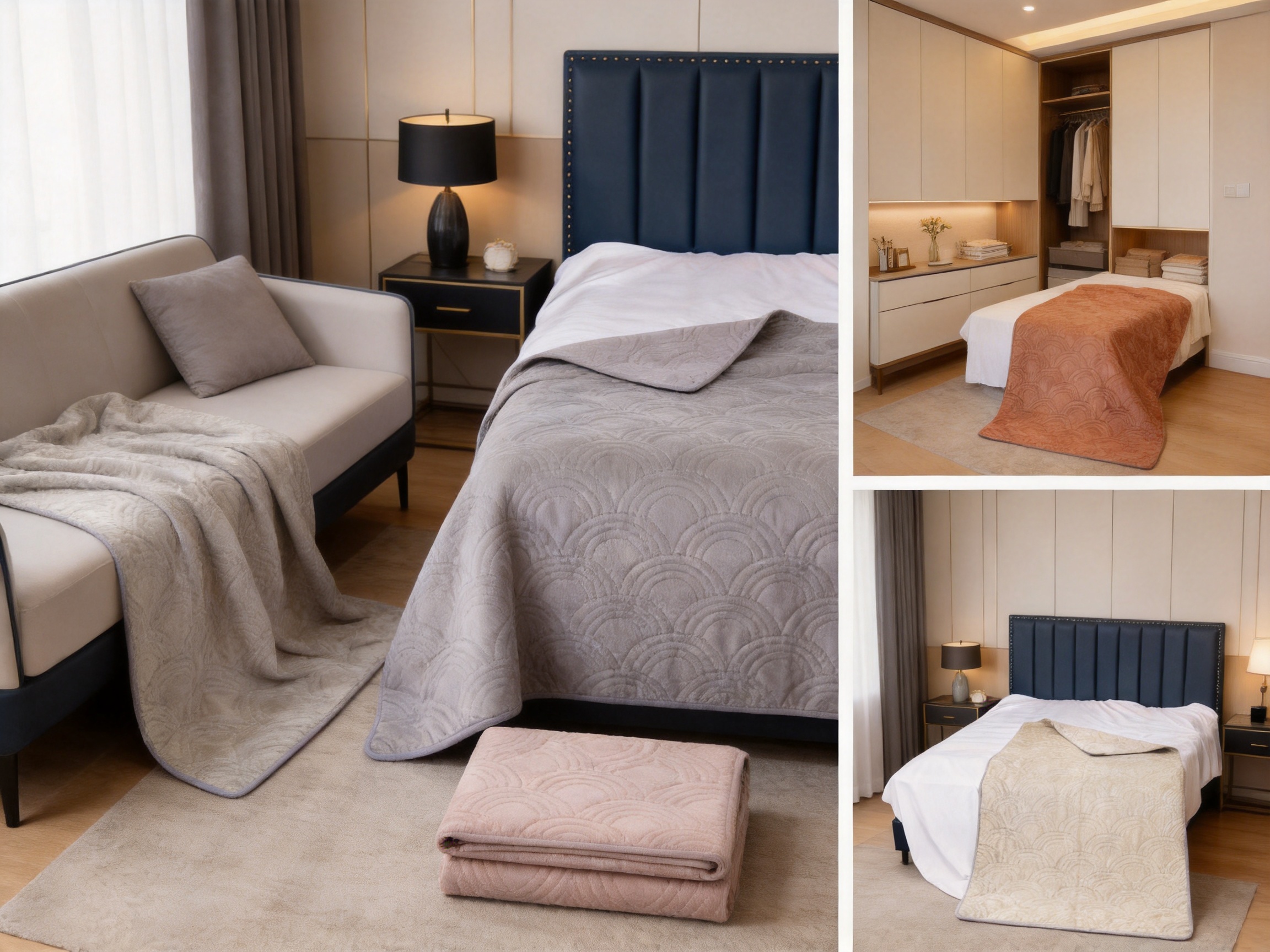
A blanket is more than a functional layer of warmth. It contributes to the appearance of a bedroom, the comfort of a living space, and the overall impression of a home textile collection. For retailers, importers, hospitality buyers, and private-label brands, the ideal blanket must combine attractive design, dependable construction, flexible customization, and efficient production. The Short Plush Ultrasonic Blanket is designed to meet these expectations through a soft front surface, a practical back fabric, bonded polyester filling, and an embossed pattern created with ultrasonic manufacturing technology.
This product is suitable for use as a lightweight blanket, bed sheet, decorative cover, or flexible bedding layer. Its construction offers a balanced combination of tactile comfort and visual refinement. The short plush front delivers a smooth and comfortable hand feel, while the reverse side uses polyester fabric to support practical everyday use. A 100gsm bonded polyester filling adds light insulation without making the blanket excessively heavy. Since the size and embossed design can be customized, the product can be adapted for different markets, seasons, room styles, and sales channels.
Manufactured by Tongxiang Xinlong Bedding Co., Ltd., the blanket reflects the capabilities of a specialized home textile factory with experience in quilts, pillows, cushions, mattress protectors, blankets, bedspreads, quilt covers, pillowcases, curtains, and related products. The company operates from a substantial production base in Wuzhen, Tongxiang City, Zhejiang Province, China, and combines product development, fabric selection, pattern design, production management, and quality control within one manufacturing organization.
The following article examines the product’s construction, benefits, customization opportunities, production process, quality advantages, applications, and purchasing considerations. It also explains why ultrasonic embossing and short plush fabric can provide a valuable alternative to more conventional blanket constructions.
Product Overview
The Short Plush Ultrasonic Blanket is a layered home textile product consisting of a 160gsm polyester short pile fabric on the front, an 80gsm polyester fabric on the back, and a 100gsm bonded polyester filling between the fabric layers. The combination produces a blanket with a soft surface, a moderate overall weight, and a clean decorative appearance.
The product is categorized as an ultrasonic blanket because its layers can be joined and decorated through ultrasonic processing. The manufacturing method can create an embossed pattern according to customer requirements. Instead of relying only on a plain surface or a standard printed design, the blanket can feature a raised or compressed decorative structure that adds visual depth and tactile interest.
The front short plush fabric is especially important to the product experience. Its short pile offers a soft, comfortable touch while maintaining a neater appearance than many long-pile fabrics. The surface can appear refined and contemporary, making the blanket suitable for modern bedrooms, guest rooms, living rooms, and hospitality environments. The fabric also provides an inviting tactile quality when used as a top layer or a casual comfort blanket.
The 80gsm polyester back fabric supports the structure while keeping the product suitable for flexible use. The back surface can function as a practical underside when the blanket is placed on a bed or sofa. The 100gsm bonded polyester filling contributes to warmth and loft, but the total construction remains appropriate for customers who prefer a thin blanket rather than a bulky winter comforter.
Sizes are customizable to any required dimension. This flexibility allows buyers to develop products for single beds, double beds, queen beds, king beds, children’s bedding, sofa throws, hospitality beds, travel use, or special promotional programs. Custom sizing also helps brands maintain consistency across collections when standard regional dimensions differ between target markets.
Product Attribute |
Specification |
Commercial Value |
Product type |
Short plush ultrasonic blanket |
Combines decorative embossing with soft, practical bedding performance |
Front fabric |
160gsm polyester short pile fabric |
Provides a comfortable hand feel and refined visual surface |
Back fabric |
80gsm polyester fabric |
Supports lightweight construction and everyday usability |
Filling |
100gsm bonded polyester |
Adds moderate warmth and body without excessive bulk |
Size |
Customizable to any size |
Allows adaptation for different markets and applications |
Pattern |
Custom embossed patterns |
Supports private-label differentiation and coordinated collections |
Primary uses |
Thin blanket, bed sheet, bed cover, sofa layer, guest bedding |
Suitable for residential, hospitality, retail, and promotional programs |
The Advantages of Short Plush Fabric
Fabric selection determines much of a blanket’s perceived quality. Short plush fabric is valued for its soft surface and smooth tactile character. Compared with rougher woven fabrics or very thin plain polyester layers, short plush can give the product a more comfortable and substantial first impression. This is particularly useful in retail environments, where customers often judge a blanket by touching the fabric before examining the label or technical specifications.
The short pile creates a surface that feels gentle against the skin. It can be used directly as a lightweight cover or placed over another bedding layer. Because the pile is short, the surface can also support embossed motifs without losing the clarity of the pattern. The result is a decorative textile that combines texture from the fabric itself with additional dimension from ultrasonic embossing.
Another advantage is visual versatility. Short plush can complement modern, minimalist, classic, or hospitality-oriented bedding designs. Depending on the selected color, pattern, and finishing details, it can appear warm and casual or polished and premium. This flexibility makes it appropriate for broad product ranges rather than a single narrow market segment.
The 160gsm front fabric also contributes to a balanced construction. It is sufficiently present to give the blanket a comfortable face, while the product remains more manageable than a heavily filled comforter. For stores and distributors, a moderately weighted blanket can be easier to fold, package, transport, and display. For end users, it can be convenient to move between bedrooms, sofas, guest rooms, and travel settings.
Short plush fabric can also support seasonal merchandising. In cooler months, the surface communicates warmth and softness. During transitional seasons, the relatively thin construction can serve as an additional layer without replacing the main duvet. In warmer climates or air-conditioned environments, it can function as a comfortable cover that does not create the weight of a thick quilt.
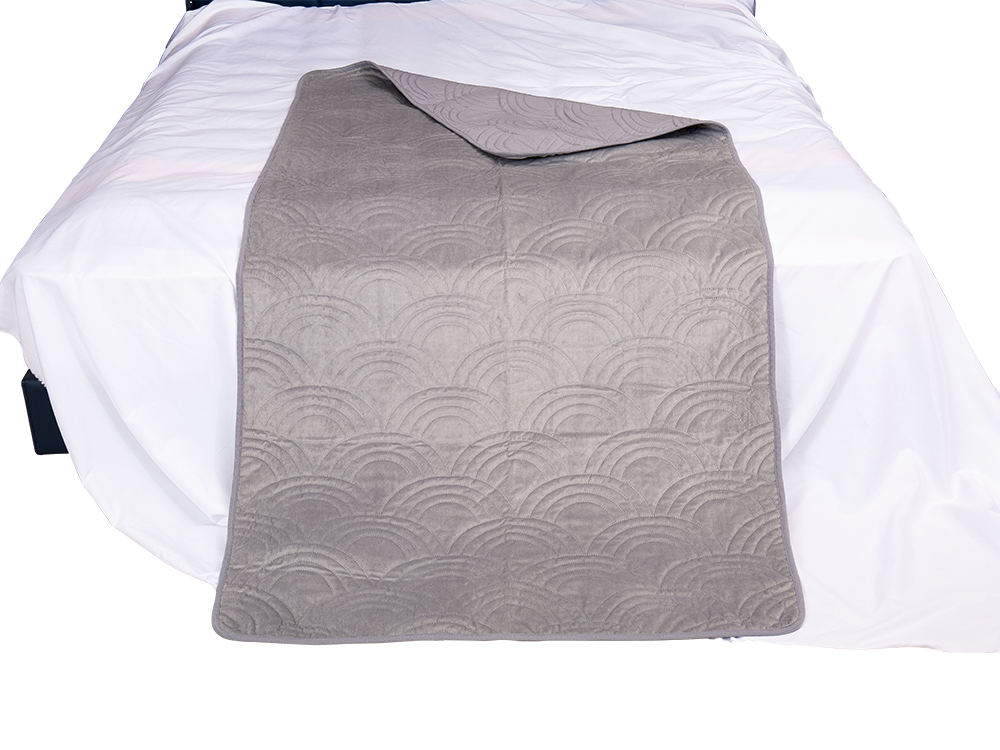
Short Plush Ultrasonic Blanket
Ultrasonic Embossing and Design Differentiation
The defining feature of this blanket is its ultrasonic construction and embossing capability. Ultrasonic equipment uses controlled energy and pressure to join or shape textile layers in selected areas. In this product category, the technology can be used to produce decorative embossed patterns based on a customer’s design requirements.
Embossing gives the surface a three-dimensional quality. A plain blanket may depend primarily on color or printed graphics for visual interest, while an embossed blanket allows pattern, light, shadow, and touch to work together. This can create a more distinctive appearance on shelves, in catalog photography, and in coordinated bedroom displays.
Custom pattern development is valuable for brands that want to avoid generic bedding. A buyer may request geometric lines, floral structures, abstract forms, repetitive motifs, borders, or other decorative concepts. The actual pattern must be evaluated against fabric behavior, scale, repeat size, and production requirements, but the availability of an in-house ultrasonic machine allows the manufacturer to discuss and develop suitable options rather than limiting buyers to a fixed catalog.
Ultrasonic embossing can also help a product communicate quality without depending on complicated surface additions. Traditional decorative methods may require separate sewing lines, trims, appliqués, or multiple production stages. An embossed construction can provide a clean and integrated appearance. This may help brands create a modern design language while keeping the blanket visually refined.
Pattern customization is particularly useful for private-label collections. A retailer may coordinate the blanket with pillowcases, cushions, quilt covers, curtains, or mattress protectors. A hospitality buyer may request a restrained motif that complements a room design. A promotional buyer may select a distinctive pattern that supports a seasonal campaign. The same basic construction can therefore be adapted to different commercial purposes.
The embossing process should be considered together with the fabric and filling selection. Pattern clarity depends on the relationship between the front short plush surface, the back fabric, the bonded filling, and the ultrasonic settings. A professional manufacturer can assess the proposed design and determine whether the pattern scale, depth, and repetition are appropriate for the selected materials.
Balanced Construction for Everyday Use
The three-layer construction is designed to balance comfort, warmth, flexibility, and appearance. The top layer provides the tactile experience. The filling gives the blanket body and moderate insulation. The back fabric completes the structure and helps create a practical underside. Each component supports a different part of the finished product’s performance.
At 100gsm, the bonded polyester filling is suitable for customers seeking a thin or medium-light blanket. It can provide a more cushioned feel than an unfilled sheet while remaining less bulky than many winter quilts. This makes the product useful as a bed layer, a decorative cover, or a supplemental blanket.
The filling also supports the embossed effect. When the layers are processed together, the filling can help give the surface pattern more definition. The exact appearance depends on the design, fabric characteristics, machine settings, and finishing controls. The manufacturer’s experience with different home textile products is important because the blanket must be evaluated as a complete construction rather than as separate fabric components.
The lightweight structure offers logistical benefits as well. Blankets that are easier to fold and stack can simplify warehouse handling and retail presentation. Buyers may also benefit from more efficient carton utilization, although final packaging performance depends on the selected size, folding method, packaging format, and order requirements.
For end users, a less bulky blanket can be easier to store when it is not in use. It can be folded at the end of a bed, placed in a closet, kept in a guest room, or carried between rooms. Its flexibility supports multiple applications that a heavier comforter may not handle as conveniently.
Because the product can be customized in size, the construction can be matched to the intended use. A smaller size may work as a sofa throw or child’s blanket. A larger size can cover a bed or act as a thin bedspread. Buyers can also request dimensions that match regional mattress standards or a brand’s own bedding system.
Advantages Compared with Conventional Blanket Options
Different blanket constructions serve different purposes, so the Short Plush Ultrasonic Blanket should not be viewed as a replacement for every heavy quilt or high-loft comforter. Its strength lies in the combination of a soft decorative surface, moderate filling, and customizable embossed design. Compared with a basic plain blanket, it offers more texture and visual identity. Compared with a very thick quilt, it offers greater lightness and flexibility.
A plain polyester blanket may be cost-effective, but it can be visually interchangeable with many competing products. Embossed patterns can help create a more recognizable product range. For retailers, this can improve the ability to organize collections by pattern, color, or room style. For brands, the surface can provide a stronger connection between the product and the overall identity of the collection.
Compared with blankets that use only printed decoration, embossing adds tactile dimension. Customers can see and feel the design. This may create a more premium impression, especially when the pattern is carefully matched to the short plush surface and the finishing is clean.
Compared with highly thick or heavily filled products, this blanket can be more suitable for transitional weather, air-conditioned rooms, guest bedding, and decorative layering. It does not need to be limited to a single season. Buyers can position it as a lightweight comfort product, a bed cover, or a practical home accessory.
Compared with products requiring extensive decorative stitching, ultrasonic processing can offer an integrated appearance. The pattern is formed as part of the textile construction rather than added only as an external ornament. This may support a cleaner design and give the product a distinct manufacturing story.
Comparison Point |
Basic Plain Blanket |
Heavy Winter Quilt |
Short Plush Ultrasonic Blanket |
Surface character |
Usually simple and uniform |
May be substantial but less focused on embossing |
Soft short plush surface with custom embossed pattern potential |
Weight and flexibility |
Often lightweight |
Usually heavier and bulkier |
Moderate, flexible, and suitable for layering |
Design differentiation |
Primarily based on color or print |
May depend on quilting, fabric, or filling |
Combines fabric texture, embossing, and customized patterns |
Primary positioning |
Basic everyday covering |
Cold-weather warmth |
Light comfort, decorative bedding, and adaptable home use |
Customization opportunity |
May be limited to color and size |
Often dependent on established constructions |
Size and embossed pattern can be developed for customer requirements |
Manufacturing Capabilities
Tongxiang Xinlong Bedding Co., Ltd. was established in January 2002 and has developed experience in the home textile sector over more than two decades. The company is located in Longxiang Industrial Park, Wuzhen Town, Tongxiang City, Zhejiang Province, China. Its facility covers approximately 21,000 square meters, including a construction area of approximately 18,000 square meters, and the company employs more than 320 people.
The scale of the organization provides a foundation for managing different types of home textile production. Its product range includes silk cotton quilts, chemical fiber quilts, pillows, cushions, bedspreads, travel quilts, mattress protectors, blankets, quilt covers, pillowcases, shower curtains, curtains, and other household textile products. This broader product experience is relevant to the Short Plush Ultrasonic Blanket because many of the same capabilities are required: fabric sourcing, filling control, cutting, layering, sewing or bonding, finishing, inspection, and packing.
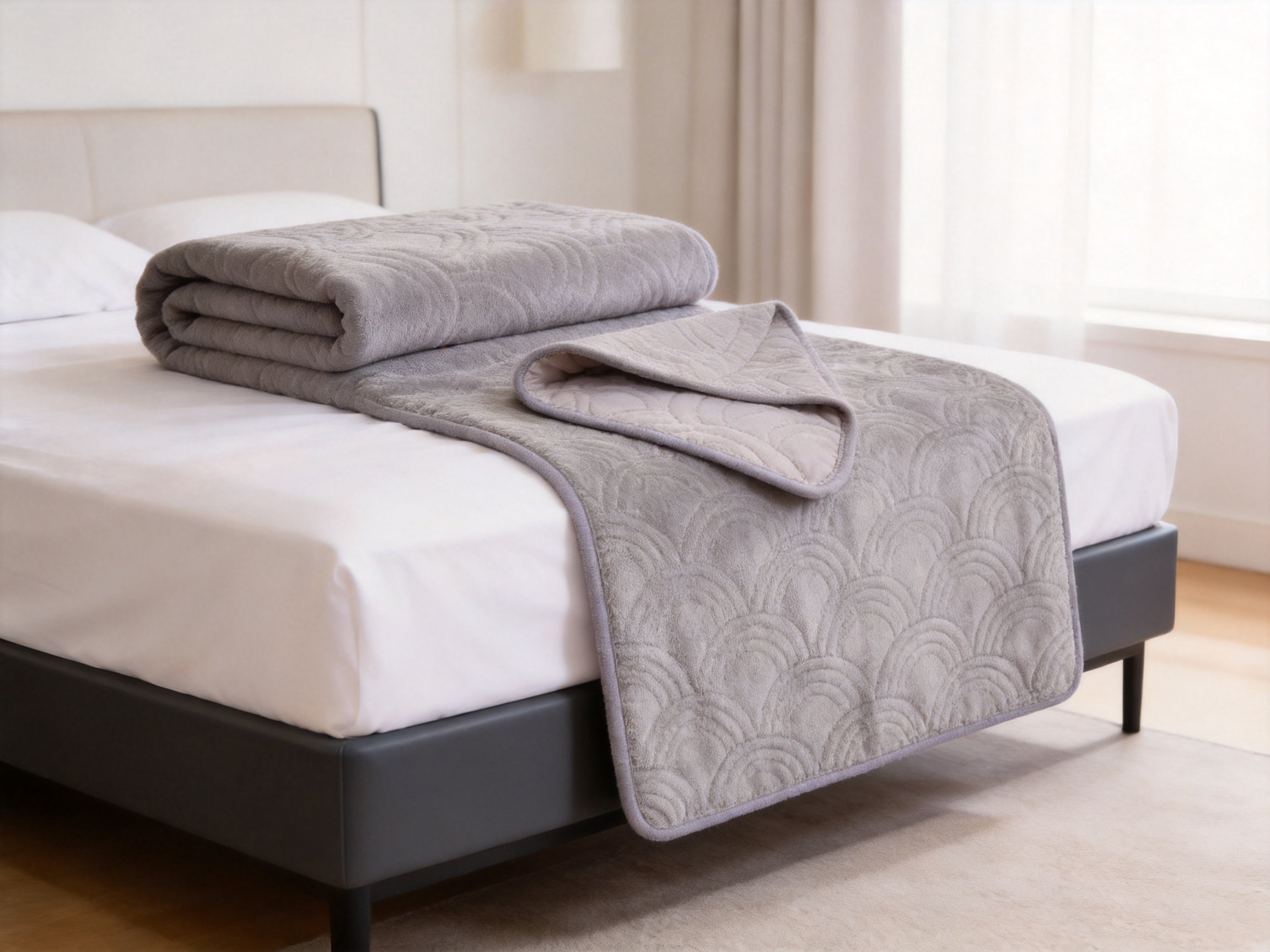
The company is equipped with various production machines and has developed professional and technical personnel to support product design and manufacturing. Its own ultrasonic machine is especially relevant to buyers seeking custom embossed blankets. Rather than outsourcing every decorative development step, the company can work directly with customers on pattern concepts and production feasibility.
In-house manufacturing capability can improve communication. Buyers can provide size specifications, material preferences, artwork, color references, packaging requirements, and target market information in a coordinated development process. The production team can then review the requirements against the available fabrics, filling, machine capabilities, and finishing methods.
Product development is not limited to copying a standard sample. The manufacturer states that it can make various embossed patterns according to customer requirements. This opens the possibility of creating differentiated collections for retailers, distributors, hotels, furniture companies, home furnishing brands, and promotional programs.
Quality management is supported by established operating procedures and ongoing technical improvement. The company identifies product quality as a central business purpose and emphasizes the standardization of operations, employee technical development, and continuous improvement. These principles are important for products in which surface appearance, layer alignment, filling distribution, and finishing consistency all influence customer satisfaction.
Production Process from Concept to Finished Blanket
Design Review and Specification Confirmation
The process begins with confirmation of the intended product specification. Buyers may provide the required finished size, fabric colors, embossed pattern, filling weight, packaging method, label information, and order quantity. It is important to confirm whether the blanket will be used as a bed cover, thin blanket, sofa throw, guest-room product, travel item, or another application because the intended use can influence the recommended dimensions and finishing details.
Pattern information should be supplied in a clear format whenever possible. A reference image, drawing, repeat layout, or physical sample can help the technical team understand the desired result. The manufacturer can then assess the pattern in relation to the short plush fabric and determine how the design may translate into an embossed surface.
Material Preparation
The stated standard construction uses 160gsm polyester short pile fabric on the front, 80gsm polyester fabric on the back, and 100gsm bonded polyester as filling. Before production, materials must be checked for color, width, surface condition, weight, and compatibility with the intended process. Proper preparation helps reduce variations between production lots.
Fabric selection may be adjusted for a particular program, subject to technical review and customer confirmation. A buyer may need a specific color palette, coordinated fabrics, or a different handle for a target market. Any material change should be evaluated because it can affect embossing clarity, softness, drape, appearance, and final weight.
Cutting and Layer Alignment
The fabric and filling are prepared according to the required dimensions and production allowances. Accurate cutting supports a clean finished edge and helps maintain consistent sizing across the order. The front, filling, and back layers must be aligned before the ultrasonic operation so that the decorative pattern is correctly positioned on the finished blanket.
For larger blankets, careful handling is particularly important. Misalignment can affect the placement of a border, central motif, or repeating pattern. Professional production planning helps ensure that the design remains balanced across the full surface.
Ultrasonic Embossing and Joining
The layered materials are processed with ultrasonic equipment according to the selected pattern and technical settings. The machine creates the desired embossed effect while joining or consolidating the layers in the designated areas. The appropriate pressure, energy, speed, and tooling depend on the material combination and pattern design.
Technical trials are valuable for confirming the appearance before full production. A trial can show whether the pattern is sufficiently visible, whether the surface retains its desired softness, and whether the filling and backing respond appropriately. It can also reveal whether the design should be enlarged, simplified, or adjusted for better consistency.
Edge Finishing and Inspection
After the primary construction is completed, the blanket receives its required edge finishing. The edge should be checked for alignment, smoothness, and overall appearance. Loose fibers, uneven areas, stains, or visible processing defects should be identified and corrected according to the agreed quality standard.
Inspection may include checking dimensions, weight, color, pattern placement, surface condition, layer integrity, and packaging presentation. The exact inspection plan can be agreed with the buyer based on the order requirements and destination market.
Folding and Packing
The finished blanket is folded and packed according to the customer’s requirements. Packaging may include a polybag, insert, retail box, branded label, or other format, subject to confirmation. A consistent folding method helps maintain a professional appearance and supports efficient storage and shipment.
Quality Control Considerations
Quality control for an ultrasonic blanket involves more than checking whether the product looks attractive in a photograph. The construction must be evaluated as a complete textile system. The surface, filling, back fabric, embossed pattern, edges, dimensions, and packaging all contribute to the final result.
Surface inspection should confirm that the short plush fabric has a consistent appearance and that the embossed design is visible and evenly formed. Any significant shading, pile irregularity, marks, or unwanted compression should be reviewed. Since short plush is a tactile fabric, both visual and hand-feel inspections are useful.
Dimensional control is also important. A blanket that is produced too small or too large may not fit the intended bed or packaging format. Buyers should confirm whether the specified size refers to the finished blanket, pre-finishing cut size, or another measurement convention. Clear technical documentation helps avoid misunderstandings.
Filling distribution should be checked to ensure that the blanket has a balanced hand feel across its surface. The 100gsm bonded polyester filling is intended to provide consistent body and moderate warmth. Uneven distribution could reduce comfort or affect the appearance of the embossed pattern.
Layer integrity is another essential consideration. The ultrasonic process should create a stable construction appropriate for the intended use. The manufacturer and buyer can agree on relevant inspection criteria, including visual examination, dimensional review, and any additional performance testing required by the customer or destination market.
Color control should be managed through approved samples or agreed color references. Polyester fabrics can appear different under various lighting conditions, so a production standard should be confirmed before bulk manufacturing. When the blanket is part of a larger bedding collection, coordination with other products becomes especially important.
Packaging inspection helps ensure that the correct labels, quantities, folding methods, and carton markings are used. Accurate packaging is essential for retailers and distributors because it supports warehouse identification and reduces handling errors.
Customization for Private-Label and Wholesale Programs
The ability to customize size and embossed pattern makes this blanket well suited to private-label development. A brand can select a pattern language that supports its market position, whether that means understated geometric lines, botanical motifs, soft repeating textures, or a more distinctive decorative surface.
Color customization can further strengthen a collection. Neutral shades may suit minimalist interiors, while deeper colors can create a more luxurious or seasonal appearance. Soft pastel tones may be appropriate for children’s products or spring collections. The final color range should be selected with attention to fabric availability, production consistency, and the buyer’s approved standards.
Custom sizing is useful for regional markets. Mattress and bedding dimensions vary between countries and commercial channels. A manufacturer that can produce blankets to customer-defined measurements allows the buyer to avoid compromising the fit or appearance of the product.
Retailers may also develop multiple sizes under one pattern family. For example, a small blanket can be offered for sofas or children’s rooms, while larger versions can be designed for single, double, queen, or king beds. Consistent pattern development across the range can create a coordinated visual presentation.
Hospitality buyers may request a practical size, restrained design, and packaging suitable for institutional purchasing. Furniture and home décor companies may use the blanket as part of a room package. Promotional distributors may prefer a lightweight blanket with customized labeling. The manufacturing process can be discussed around the requirements of each program.
When developing a customized order, buyers should provide as much information as possible regarding target customers, expected usage, climate, sales channel, packaging, and compliance requirements. This allows the factory to recommend a construction that is technically suitable and commercially appropriate.
Applications Across Different Settings
Bedrooms
In the bedroom, the blanket can be used as a thin top layer, decorative bed cover, or additional source of comfort. Its embossed surface can complement the room’s bedding design, while the soft front fabric adds a welcoming tactile element.
Guest Rooms
The moderate weight and adaptable sizing make the blanket suitable for guest rooms. It can be folded at the foot of the bed or stored for visitors. A customized pattern may help hotels and serviced apartments create a consistent room appearance.
Living Rooms
Used on a sofa or lounge chair, the product can function as a decorative throw and a practical comfort layer. A smaller customized dimension may be more appropriate for this purpose. The short plush surface can contribute to a warm and inviting living space.
Seasonal and Transitional Use
The blanket is suitable for spring, autumn, and other transitional periods when users need more warmth than a sheet but less bulk than a heavy quilt. It can also be useful in air-conditioned spaces where a lightweight cover improves comfort.
Travel and Portable Use
Depending on the selected size and packaging, the blanket can be developed for travel, guest use, or portable bedding. Its relatively flexible construction may make it easier to fold and carry than a thick comforter, although the final suitability should be evaluated against the intended dimensions and packaging.
Why Work with an Experienced Home Textile Factory?
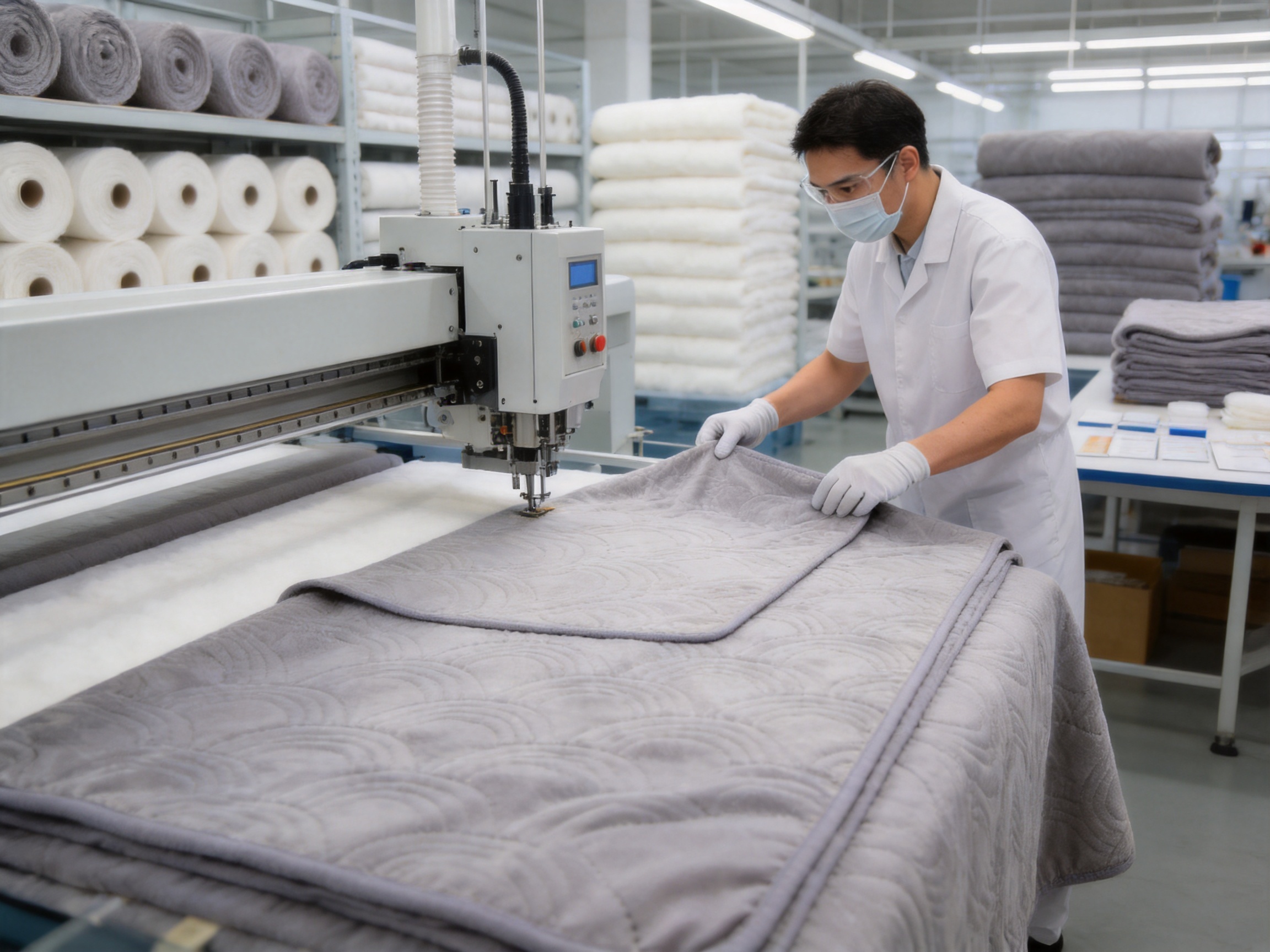
Product quality depends not only on the selected fabric or machine. It also depends on the manufacturer’s ability to coordinate materials, technical processes, labor, inspection, and delivery. A factory with experience across multiple home textile categories can often identify practical connections between products and recommend more coherent solutions.
Tongxiang Xinlong Bedding Co., Ltd. has experience producing a broad range of bedding and household textile items. This product knowledge can support buyers who are developing coordinated collections rather than purchasing one isolated blanket. For example, a short plush ultrasonic blanket may be combined with pillows, cushions, mattress protectors, bedspreads, quilt covers, or curtains within a broader home textile program.
The company’s workforce of more than 320 employees and its established production facility provide a basis for handling organized manufacturing programs. The stated certifications and management systems, including ISO9001, ISO14001, OEKO-related certifications, GRS, and BSCI, indicate attention to quality management, environmental management, social responsibility, and responsible textile production. Buyers should confirm the current validity, scope, and applicability of each certification for their specific order.
A factory’s willingness to develop patterns in accordance with customer requirements is also commercially important. Design differentiation can be difficult when a supplier offers only fixed standard products. Access to an ultrasonic machine and technical personnel creates more room for collaborative development.
Long-term manufacturing relationships can also improve efficiency. Once a buyer’s specifications, approved samples, packaging standards, and inspection procedures are established, repeat orders may be easier to coordinate. Consistent documentation and communication remain essential, but product familiarity can reduce unnecessary development time.
Purchasing and Development Recommendations
Buyers should begin by defining the intended use of the blanket. The required size, pattern density, surface appearance, packaging, and filling weight may vary depending on whether the product is intended for a bed, sofa, hotel room, travel set, or retail collection.
A physical sample or development sample should be reviewed before bulk production. The sample should be assessed for softness, drape, thickness, pattern appearance, color, dimensions, edge finishing, and general presentation. If the product is intended for sale under a private label, the label and packaging should also be reviewed at this stage.
Pattern approval deserves particular attention. A design that looks simple in a digital file may behave differently when translated into an embossed textile surface. Buyers should review the scale, repeat, border placement, and visible depth of the pattern. It is helpful to evaluate the sample under different lighting conditions and from different viewing distances.
Specifications should be documented clearly. The document may include fabric composition, fabric weights, filling type and weight, finished size, tolerance, color reference, pattern reference, edge finishing, label details, packaging, carton information, and inspection requirements. Clear documentation helps protect consistency between sample approval and bulk production.
Buyers should also discuss care labeling and destination-market requirements with the manufacturer. The correct care instructions depend on the finalized materials and construction. Any required testing, labeling, packaging, or import documentation should be confirmed before the order is placed.
Communication about production schedules is equally important. Material preparation, pattern development, sampling, bulk production, inspection, and packing each require time. Early confirmation of artwork, specifications, and packaging can help avoid delays.
Care and Product Presentation
The final care instructions should be based on the approved fabric and filling construction. Buyers should obtain the appropriate recommendations from the manufacturer and ensure that the care label matches the actual product. Instructions may address washing, drying, ironing, storage, and the use of detergents, but the exact guidance must be confirmed for the finished blanket.
Product presentation can emphasize the softness of the short plush surface and the dimensional character of the embossed pattern. Retail photography should show both the overall design and a close view of the surface. Packaging copy can explain that the blanket is suitable as a thin blanket, bed layer, or decorative cover, provided those claims accurately reflect the final approved product.
For wholesale catalogs and online listings, technical information should be presented together with lifestyle benefits. Buyers may want to know the fabric composition and filling weight, while end customers may respond more strongly to softness, flexibility, appearance, and intended use. A well-organized product presentation can communicate both aspects without overstating performance.
Sustainability and Responsible Production Considerations
Responsible textile purchasing involves reviewing materials, manufacturing processes, packaging, and supplier management as a complete system. The company reports certifications and management systems related to quality, environmental management, textile standards, recycled materials, and social responsibility. Buyers should request relevant documentation and confirm how each certification applies to the specific product and production site.
Polyester is widely used in home textiles because it can provide durability, color flexibility, and manufacturing versatility. However, responsible buyers should consider the full product life cycle, including fabric sourcing, filling selection, packaging materials, expected use, and disposal. If recycled polyester or other preferred materials are required, the material specification should be discussed during product development rather than after production begins.
Product durability can also contribute to responsible consumption. A blanket that remains attractive and functional through regular use may reduce the need for frequent replacement. Stable construction, appropriate care instructions, and accurate quality control all support the useful life of the product.
Packaging should be selected according to the sales channel and protection requirements. Avoiding unnecessary packaging while preserving product cleanliness and presentation may help improve overall efficiency. The final packaging solution should be evaluated for retail appearance, transport protection, storage convenience, and local requirements.
Frequently Asked Questions
What is a Short Plush Ultrasonic Blanket?
It is a layered blanket that uses short plush polyester fabric on the front, polyester fabric on the back, and bonded polyester filling between the layers. Ultrasonic processing can be used to join the layers and create customized embossed patterns.
What materials are used in the standard construction?
The stated construction includes 160gsm polyester short pile fabric on the front, 80gsm polyester fabric on the back, and 100gsm bonded polyester filling.
Can the embossed pattern be customized?
Yes. The manufacturer has an ultrasonic machine and can develop various embossed patterns according to customer requirements. Pattern feasibility should be reviewed against the selected materials, design scale, and production conditions.
Can the blanket be produced in custom sizes?
Yes. The product size is customizable to any required dimension, subject to production review and confirmation of the final specifications.
Is this blanket suitable for winter use?
The product is designed as a thin or moderately lightweight blanket with 100gsm bonded polyester filling. It may be suitable for transitional seasons, layering, guest rooms, and air-conditioned environments. Buyers seeking a heavy winter product should request a separate evaluation of filling weight and construction.
Can it be used as a bed sheet?
The product description identifies it as suitable for use as a thin blanket or bed sheet. The most suitable application depends on the selected size, fabric configuration, customer preferences, and care requirements.
What makes short plush different from a plain polyester surface?
Short plush fabric provides a softer, more tactile surface and can create a more refined appearance. It also works well with embossed designs because the fabric texture and surface pattern can complement each other.
Is ultrasonic embossing the same as ordinary printed decoration?
No. Printing primarily applies visual color or graphics, while ultrasonic embossing creates a physical surface structure through controlled processing. The finished blanket can therefore offer both visible and tactile pattern definition.
Can this product be developed for private-label brands?
Yes. Custom sizing, embossed patterns, fabric colors, labels, and packaging can be discussed as part of a private-label development program. Final options depend on technical review and order requirements.
What should be reviewed before bulk production?
Buyers should review the approved sample, finished dimensions, fabric and filling specifications, pattern placement, color, edge finishing, labels, packaging, care instructions, inspection standards, and any required testing or certification documents.
Where is the product manufactured?
The product is manufactured by Tongxiang Xinlong Bedding Co., Ltd. at its home textile production base in Wuzhen, Tongxiang City, Zhejiang Province, China.
What other products can be sourced from the manufacturer?
The company produces various home textile products, including quilts, pillows, cushions, bedspreads, travel quilts, mattress protectors, blankets, quilt covers, pillowcases, shower curtains, curtains, and related household textile products.
Conclusion
The Short Plush Ultrasonic Blanket offers a practical combination of comfort, decorative appeal, flexible sizing, and manufacturing customization. Its 160gsm short plush front creates a soft and refined surface, while the 80gsm polyester back and 100gsm bonded polyester filling support a lightweight yet substantial construction. The product can function as a thin blanket, bed layer, decorative cover, or adaptable home textile accessory.
Its strongest point of differentiation is the ability to create customized embossed patterns through ultrasonic processing. This gives buyers an opportunity to develop products with greater tactile and visual identity than many basic plain blankets. The same capability can support private-label collections, coordinated bedding programs, hospitality applications, seasonal ranges, and customized promotional products.
The manufacturing foundation further strengthens the product proposition. Tongxiang Xinlong Bedding Co., Ltd. brings experience in a broad range of home textile categories, a substantial production facility, professional technical personnel, an ultrasonic machine, and established quality and management systems. These resources support a development process that can move from design concept and material selection to sampling, production, inspection, and packaging.
For buyers seeking a blanket that is comfortable, visually distinctive, and adaptable to different markets, this construction provides a balanced solution. Careful specification, sample approval, pattern review, and communication with the factory will help ensure that the final product meets the intended quality, appearance, and commercial requirements.
References
1. Product specification information for the Short Plush Ultrasonic Blanket, including fabric weights, filling, size, product category, and intended uses.
2. Manufacturing information supplied by Tongxiang Xinlong Bedding Co., Ltd., including company history, facility scale, workforce, product range, production capabilities, and quality-management commitments.
3. General textile manufacturing principles concerning short pile polyester fabrics, bonded polyester filling, layered blanket construction, and ultrasonic textile processing.
4. General home textile product development practices concerning sampling, dimensional control, fabric inspection, pattern approval, packaging, and quality assurance.
5. General responsible sourcing considerations for textile materials, environmental management, social responsibility, product durability, and packaging efficiency.


 +86-573-88798028
