



 Français
 Español
 Deutsch
Content
- 1 What Makes This Children’s Bedding Multifunctional?
- 2 Key Product Specifications
- 3 Material Construction and Comfort
- 4 Advantages Over Conventional Single-Purpose Bedding
- 5 Manufacturing Strengths Behind the Product
- 6 Certification, Compliance, and Responsible Manufacturing
- 7 Applications in Homes, Travel, and Commercial Settings
- 8 Customization Possibilities for Different Buyers
- 9 Guidance for Product Evaluation and Ordering
- 10 Why Manufacturing Experience Matters
- 11 Product Value for Modern Families
- 12 Q&A
- 12.1 What is the product?
- 12.2 What is the default size?
- 12.3 What materials are used?
- 12.4 How does the product change from a sleeping bag into a quilt?
- 12.5 What are the main advantages of the two-in-one structure?
- 12.6 Is the product suitable for travel?
- 12.7 Can the product be customized?
- 12.8 Who manufactures the product?
- 12.9 Where is the manufacturer located?
- 12.10 What other products does the manufacturer produce?
- 12.11 What certifications and assessments are associated with the company?
- 12.12 Why is zipper quality important?
- 12.13 What should buyers confirm before placing a bulk order?
- 13 Conclusion
- 14 References
- 15 Product: Multifunctional Children's Sleeping Bag
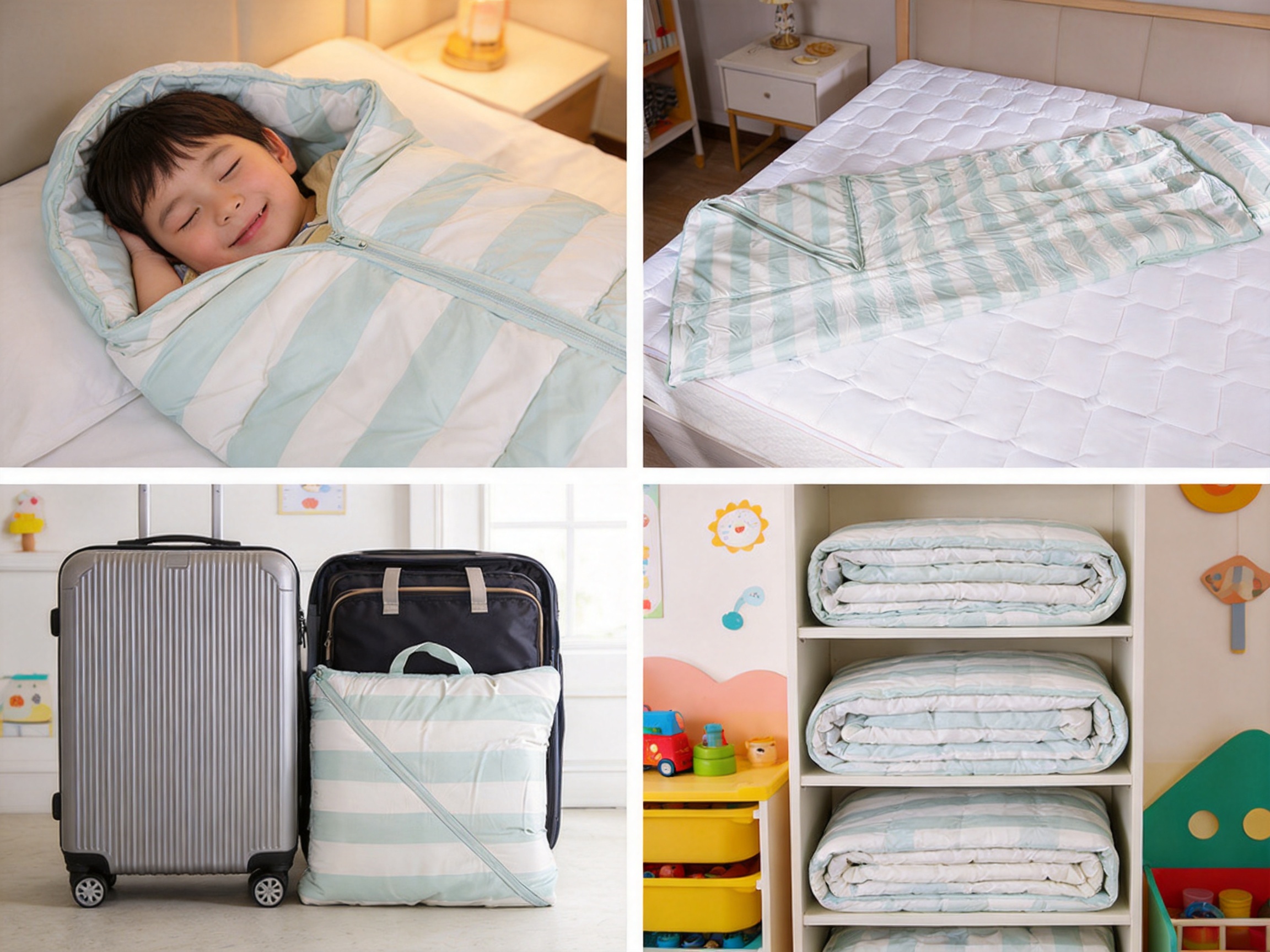
Children’s bedding must provide more than softness and warmth. It should also support convenient daily use, easy storage, flexible sleeping arrangements, and attractive visual appeal. The Multifunctional Children's Sleeping Bag is designed to meet these combined needs by bringing together the functions of a sleeping bag and a children’s quilt in one practical product. When folded and zipped, it becomes a compact sleeping bag. When the zipper is opened, it changes into a larger quilt suitable for use on a bed, sofa, floor mat, or during travel.
This two-in-one structure gives the product an important advantage over conventional single-purpose bedding. A traditional quilt is comfortable for covering a child but may be inconvenient to carry. A conventional sleeping bag is portable and secure but can restrict movement and may not provide the same flexibility as an open quilt. This product combines both formats, allowing parents, children, schools, hotels, travel organizers, and other buyers to select the configuration that best suits the situation.
Manufactured by Tongxiang Xinlong Bedding Co., Ltd., the product reflects the capabilities of an experienced home textile manufacturer with a broad product range, modern production equipment, professional technical personnel, and internationally recognized management and social compliance certifications. Its construction uses 90gsm printed brushed fabric on the outside and 150gsm 3D cotton as the lining. The default size is 130 x 150 cm, while custom sizing is also available for different market requirements.
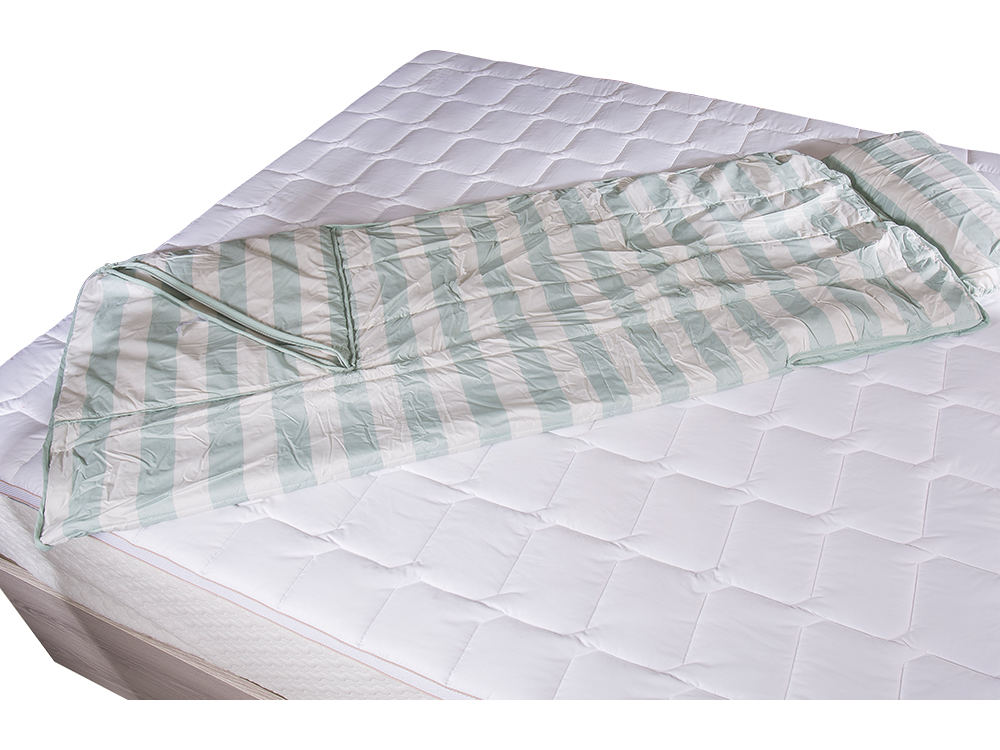
Multifunctional Children's Sleeping Bag
What Makes This Children’s Bedding Multifunctional?
The defining characteristic of the product is its convertible design. A zipper allows the bedding to change from a sleeping bag into a quilt. In sleeping bag form, the product creates an enclosed and comfortable space for rest. This format can be useful during travel, sleepovers, camping-style indoor activities, children’s events, and temporary sleeping arrangements. It also helps keep the bedding gathered around the child rather than spreading across the floor or bed.
When the zipper is opened, the product becomes a children’s quilt. In this configuration, the child can move more freely, and the bedding can cover a wider area. It may be placed over a mattress, used as an additional layer on a bed, spread across a sofa, or used as a soft resting surface during indoor activities. The conversion process gives families greater value from one item because it can replace or supplement separate bedding products.
The convertible design is especially useful in homes where space and organization are important. Instead of storing a sleeping bag and a separate quilt, parents can keep one multifunctional item ready for different uses. This can simplify packing, reduce storage requirements, and make it easier for children to participate in preparing their own sleeping area.
A Flexible Solution for Everyday Use
Children’s routines can change throughout the day. A child may sleep under the product at night, use it as a rest blanket during the day, and take it to a relative’s home or on a family trip at the weekend. The two configurations support these changing needs without requiring a different product for every activity.
For indoor use, the open quilt format is suitable for ordinary bedtime or quiet time. For travel and temporary accommodation, the zipped sleeping bag format provides a more compact and organized form. This flexibility is particularly valuable for families that frequently visit relatives, arrange sleepovers, or travel with children.
The product may also be suitable for institutional or commercial buyers. Kindergartens, childcare centers, children’s activity venues, hotels, guesthouses, and family-oriented travel providers may use multifunctional bedding where storage efficiency and flexible deployment are important. Custom sizes and production specifications can help buyers adapt the product to their particular operating environment.
Key Product Specifications
The product is categorized as a microfiber quilt and is designed as a multifunctional children’s sleeping bag blanket. Its materials are selected to create a balance between lightweight handling, comfortable contact, printed appearance, and useful warmth. The specifications supplied for the standard product are summarized below.
Product type |
Multifunctional children’s sleeping bag and quilt |
Category |
Microfiber quilt |
Default size |
130 x 150 cm |
Size option |
Custom size available |
Outer fabric |
90gsm printed brushed fabric |
Lining |
150gsm 3D cotton |
Primary function |
Converts between a sleeping bag and an open children’s quilt |
Product category applications |
Home bedding, travel bedding, children’s rest areas, sleepovers, and flexible temporary sleeping arrangements |
The 130 x 150 cm default size provides a practical starting point for children’s bedding programs and retail products. However, the availability of custom sizes gives buyers the opportunity to adjust the product for regional preferences, age groups, bed dimensions, promotional programs, or institutional requirements. Size customization can be particularly helpful for wholesale customers that serve different markets.
Material Construction and Comfort
90gsm Printed Brushed Fabric
The outer fabric is a 90gsm printed brushed fabric. Brushing gives the textile a softer surface texture than many plain woven fabrics, helping create a more comfortable hand feel for children. The printed surface also provides an opportunity to develop visually appealing designs that can make the product more attractive to children and more marketable to parents.
Printed bedding can support a wide range of design directions, including playful patterns, soft colors, educational themes, seasonal concepts, and coordinated children’s room collections. Visual design is important in children’s products because appearance can influence whether a child feels comfortable using the item and whether the product fits naturally into a bedroom or play area.
The 90gsm fabric specification also supports a relatively lightweight outer construction. Lightweight bedding is easier for children to handle, easier for parents to fold, and more convenient to pack for travel. At the same time, the outer layer contributes to the overall structure of the sleeping bag and quilt, helping protect the inner filling and lining during regular use.
150gsm 3D Cotton Lining
The lining uses 150gsm 3D cotton. This layer contributes to the product’s cushioning, softness, and insulating structure. A three-dimensional textile construction can provide loft and body, helping the bedding feel less flat while supporting a comfortable resting environment.
The lining is especially important in children’s bedding because it is close to the user and affects the overall tactile experience. A soft and comfortable inner surface can encourage children to use the product independently. It can also make the sleeping bag more pleasant during quiet time, overnight stays, or travel.
The combination of a printed brushed outer fabric and a 150gsm 3D cotton lining creates a balanced construction. The outer layer provides visual appeal and surface protection, while the lining supplies softness and a fuller feel. Together, these materials support the product’s purpose as both a practical sleeping bag and a comfortable quilt.
Advantages Over Conventional Single-Purpose Bedding
One Product with Two Main Functions
The strongest advantage is the ability to switch between two bedding formats. Buyers do not need to choose between the portability of a sleeping bag and the openness of a quilt. The zipper-based design allows both functions to be included in one product.
This versatility may reduce the number of separate items required in a household or business. A family can use the closed configuration for travel and the open configuration at home. A childcare facility can store the products compactly and open them when larger resting surfaces are required. A retailer can present the item as a value-added bedding product rather than a basic blanket.
Convenient Storage and Transport
A sleeping bag is generally easier to gather and transport than a loose quilt. Once the product is folded and zipped, it can be carried more conveniently between rooms or packed for a trip. This is useful for children who attend sleepovers, families who travel by car, and organizations that need to move bedding between activity areas.
The compact format can also make storage more orderly. In homes with limited closet space, the product can remain in sleeping bag form until it is needed as a quilt. For wholesale and institutional buyers, efficient storage may help simplify inventory handling and reduce clutter in sleeping rooms or linen areas.
Adaptable Sleeping Comfort
Some children prefer the enclosed feeling of a sleeping bag, while others prefer the freedom of a loose quilt. This product allows the same item to accommodate both preferences. The child can rest inside the sleeping bag configuration or use the opened format when more movement is desired.
This adaptability can also respond to changes in temperature, room arrangement, and activity. A zipped configuration may feel more organized during travel or cool indoor conditions. An open quilt may be better suited to use as a loose cover or resting layer. The product does not force the buyer to commit to a single mode of use.
Appealing Product Positioning
From a retail perspective, multifunctional design gives the product a clear selling point. It can be presented as a children’s quilt, a sleeping bag, a travel blanket, and a flexible bedding accessory. This creates more opportunities for product placement across home textile, baby and children’s goods, travel, and seasonal merchandise categories.
The product also has potential as a gift item. Parents and relatives often value children’s products that are both attractive and practical. A printed design combined with a convertible structure can make the item suitable for birthdays, holidays, family travel, and new-room furnishing projects.
Manufacturing Strengths Behind the Product
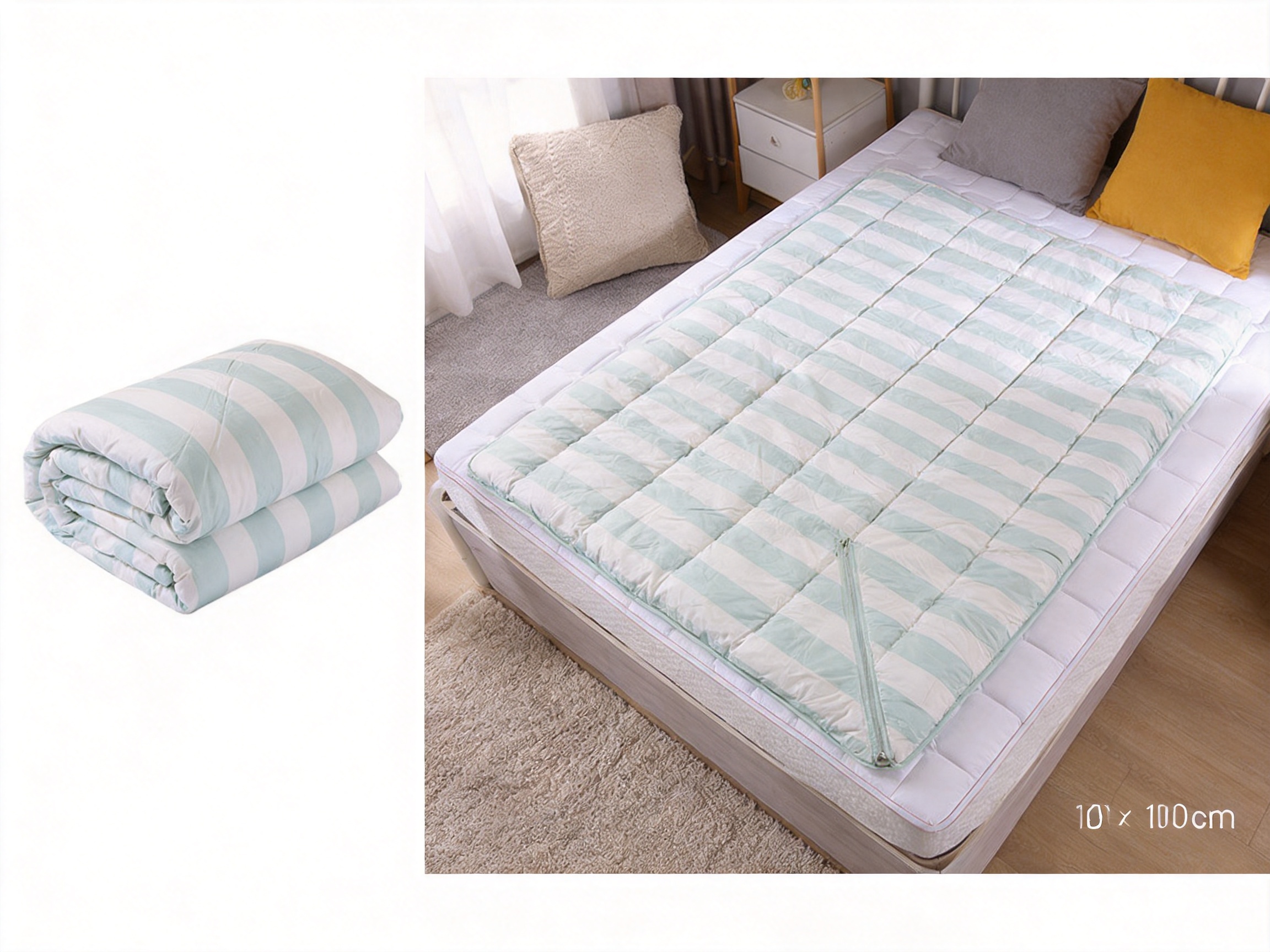
The quality and consistency of multifunctional bedding depend on more than the selected materials. Production planning, cutting accuracy, sewing control, zipper installation, filling distribution, finishing, inspection, and packaging all influence the final result. A convertible item has additional construction requirements because it must function correctly in both sleeping bag and quilt formats.
Tongxiang Xinlong Bedding Co., Ltd. was established in January 2002 and has developed long-term experience in home textile manufacturing. The company is located in Longxiang Industrial Park, Wuzhen Town, Tongxiang City, Zhejiang Province, China. Its facility covers approximately 21,000 square meters, including approximately 18,000 square meters of construction area. The company has more than 320 employees and is equipped with various advanced production machines.
This scale provides a foundation for organized manufacturing and larger production programs. It allows the company to coordinate material preparation, product development, production scheduling, quality control, and order fulfillment within an established home textile operation. Experience accumulated over many years can also support the handling of different fabric types, filling structures, sizes, and product categories.
Professional Product Development
Product development is an important strength for a bedding manufacturer serving different customer groups. Children’s products require attention to appearance, dimensions, usability, construction, and market positioning. The company’s professional and technical personnel support the design and production of fashionable and warm household products for a variety of customers.
For the multifunctional sleeping bag, development work includes more than selecting a pleasing print. The product must be designed so that the zipper, fabric panels, lining, and filling work together when the item is closed and opened. The sleeping bag must have a practical shape, while the opened version must provide a usable quilt surface. These two requirements need to be considered during pattern development and sample evaluation.
Production Process Considerations
A typical production process for this type of product begins with material preparation. Fabric and lining materials are checked, organized, and prepared according to the approved specification. Printed fabric must be handled carefully so that the visual pattern remains consistent across production lots and product panels.
The next stage involves cutting. Accurate cutting helps maintain the specified dimensions and supports proper alignment between the outer fabric, lining, filling, and zipper components. For a convertible product, dimensional accuracy is particularly important because the item must fold and open smoothly. Inaccurate panels can affect the appearance, comfort, and operation of the final product.
After cutting, the layers are assembled. The outer fabric, lining, and 3D cotton component are brought together according to the product construction. Sewing operations must create secure seams while maintaining a comfortable finish. Areas around the zipper require careful handling because they experience repeated movement during conversion between the two forms.
Zipper installation is a critical manufacturing step. The zipper should be positioned accurately and secured through appropriate stitching. Its operation should be checked to ensure that the product can be opened and closed without unnecessary resistance. A well-integrated zipper contributes directly to the product’s multifunctional performance.
Finishing processes may include thread trimming, shape adjustment, surface inspection, measurement verification, and packaging preparation. Quality personnel can inspect the product for sewing consistency, fabric appearance, zipper function, dimensional accuracy, and general workmanship. These controls help create a more reliable experience for both distributors and end users.
Quality as a Core Business Principle
The company identifies quality as the life of the enterprise and emphasizes standardized operating procedures, employee technical improvement, and continuous product quality enhancement. This approach is relevant to multifunctional bedding because the product contains several components that must work together over repeated use.
A sleeping bag that does not close properly, a quilt that loses its shape, or a seam that is not securely finished can reduce customer satisfaction. Consistent manufacturing procedures help lower the risk of such problems. Standardized work also supports more predictable results when producing custom sizes or larger wholesale orders.
Quality management is not limited to final inspection. It can begin with supplier coordination and incoming material checks, continue through production control, and end with finished product evaluation. When each stage is managed carefully, the manufacturer is better positioned to deliver bedding that meets the agreed specifications.
Certification, Compliance, and Responsible Manufacturing
Tongxiang Xinlong Bedding Co., Ltd. has passed international certifications and assessment systems including ISO 9001, ISO 14001, OEKO-TEX Standard 100, OEKO-TEX STeP, GRS, and BSCI, according to the supplied company information. These certifications and assessments represent important elements of the company’s quality management, environmental management, textile safety, resource-related, and social compliance efforts.
ISO 9001 is associated with quality management systems and structured processes for maintaining consistent products and services. For buyers of children’s bedding, a formal quality management framework can provide additional confidence that production activities are organized and monitored.
ISO 14001 relates to environmental management systems. While certification does not mean that every environmental impact has been eliminated, it indicates that environmental factors are addressed through a structured management approach. This is increasingly relevant for home textile buyers seeking suppliers with more developed environmental procedures.
OEKO-TEX Standard 100 is associated with testing textiles for harmful substances. For children’s bedding, textile safety is an important consideration because products are used close to the skin. Buyers should still confirm the exact certification scope and current validity for the specific product and materials being ordered.
OEKO-TEX STeP supports more sustainable textile and leather production conditions through assessment of facilities and processes. GRS is related to recycled materials and chain-of-custody requirements for products that fall within its certified scope. BSCI is a social compliance initiative used to assess working conditions and responsible business practices in supply chains.
These certifications and assessments can strengthen the company’s position when working with international customers, distributors, and private-label buyers. They also show that the manufacturer’s capabilities extend beyond basic sewing and assembly. Responsible production, documented procedures, and employee welfare are increasingly important considerations in global sourcing decisions.
Since 2016, the company has also been rated as a safety production standardization enterprise for several consecutive years, according to the provided information. Workplace safety standardization supports more orderly operations and demonstrates attention to the working environment in addition to product quality.
Applications in Homes, Travel, and Commercial Settings
Home Bedrooms
In a child’s bedroom, the product can function as regular bedding in quilt form. Its printed surface can complement a playful room design, while the soft construction provides a comfortable layer for rest. When the child wants a more enclosed arrangement, the quilt can be converted into a sleeping bag without requiring another item.
The product may be useful for children who enjoy creating a personal sleep space. The sleeping bag form can support imaginative play, indoor camping themes, and quiet reading areas when used under appropriate adult supervision. The open form can then be used for ordinary bedtime or rest.
Sleepovers and Family Visits
Sleepovers often require bedding that can be transported and arranged quickly. A child can bring the sleeping bag configuration to a friend’s home, while the host can use the same type of product for additional sleeping space. After the event, the bedding can be opened and used as a quilt at home.
The product is also practical for visits to grandparents or other relatives. Rather than carrying multiple bedding items, families can pack one convertible piece. Its multifunctional format can be especially helpful when the sleeping environment is different from the child’s usual bedroom.
Travel and Outdoor-Inspired Activities
Although the product is designed as children’s home textile bedding, its sleeping bag configuration may be suitable for indoor travel use, family trips, recreational vehicles, and indoor camping activities. Buyers should evaluate the product according to the intended climate and conditions because the supplied specifications do not define it as technical outdoor camping equipment.
For indoor travel, the sleeping bag format can provide a familiar personal bedding item. Children may feel more comfortable using their own printed sleeping bag when staying in a hotel, holiday apartment, or relative’s home. Once the family reaches its destination, the product can be opened for use on a bed or sofa.
Childcare and Activity Facilities
Childcare centers and activity facilities often need bedding that can be stored efficiently and deployed for naps or rest periods. The convertible format may help staff adapt the product to different room layouts. A sleeping bag can be arranged individually, while an opened quilt can cover a wider resting surface.
Institutional buyers should establish their own requirements for cleaning, hygiene, labeling, child age suitability, storage, and supervision. Custom dimensions may help facilities match the product to their available mattresses or rest mats. Bulk production can also support coordinated colors or printed themes for a specific organization.
Customization Possibilities for Different Buyers
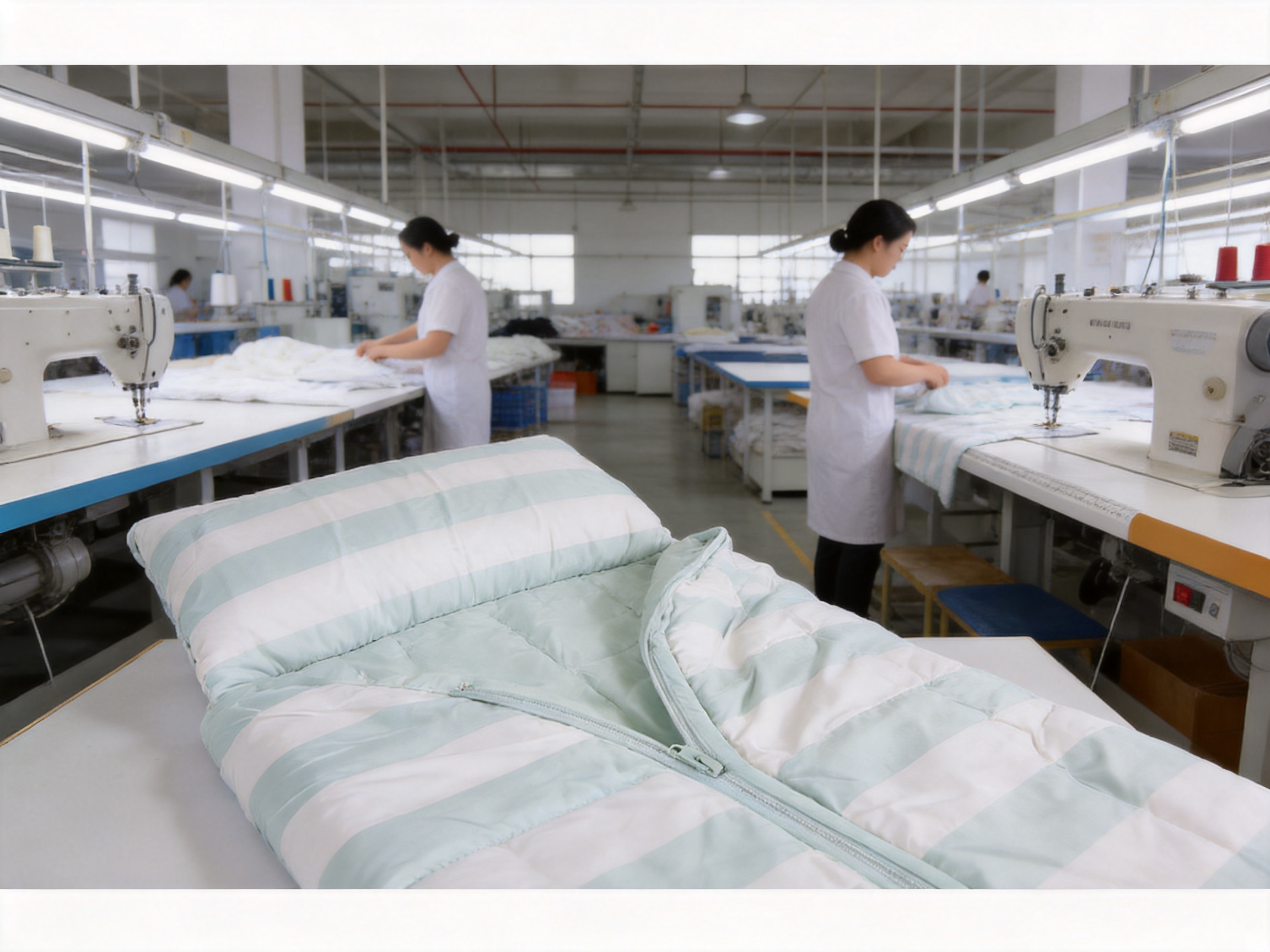
The default size is 130 x 150 cm, but custom sizing is available. This provides a useful starting point for importers, wholesalers, retailers, hospitality suppliers, and institutional purchasers that require product variations.
Size customization may be used to create smaller versions for younger children, larger versions for older children, or formats designed for particular bed and mat dimensions. Before confirming an order, buyers should communicate the intended user age, preferred finished dimensions, folded dimensions, packaging requirements, and expected use conditions.
Printed fabric also creates opportunities for product differentiation. Buyers may request designs that match a retail collection, seasonal campaign, children’s character concept, educational theme, or home décor program. Any custom print should be reviewed through an approved sample or artwork confirmation process before mass production.
Other project details may include packaging style, labeling, carton marks, folding method, care instructions, color assortment, and order quantities. Because requirements vary across markets, early technical communication is essential. A clear specification sheet can help align the buyer, product development team, production department, and quality inspection staff.
Private-Label and Wholesale Opportunities
The multifunctional construction is suitable for private-label programs because it offers a clear product story. A retailer can introduce it as a convertible children’s bedding item rather than simply another printed quilt. Packaging can explain the two configurations, show the conversion method, and highlight the material construction.
Wholesale buyers may also use the product in coordinated collections. A matching range could include children’s quilts, pillows, cushions, blankets, mattress protectors, mattress covers, and other home textile products. The manufacturer’s broader product experience supports conversations about product families and complementary bedding lines.
For seasonal sales, the product can be positioned for school holidays, family travel, indoor camping, sleepovers, birthdays, and winter home comfort. Its year-round functionality allows buyers to avoid limiting the product to one narrow sales period, although the most appropriate season will depend on the local climate, material specifications, and retail strategy.
Guidance for Product Evaluation and Ordering
Buyers evaluating this product should begin by defining the intended use. A home retailer may prioritize appearance, packaging, and consumer convenience. A childcare provider may focus on dimensions, cleaning routines, durability, and storage. A travel supplier may emphasize portability and compact handling. Each application may require a different balance of features.
Sample approval is recommended before bulk production. A physical sample allows the buyer to assess the fabric hand feel, printed appearance, lining comfort, zipper operation, sewing quality, dimensions, folding method, and general appearance. It also provides an opportunity to identify adjustments before manufacturing begins.
Buyers should confirm whether the requested materials, sizes, colors, certifications, labels, and packaging apply to the exact production order. Certification information can vary by facility, product, material, and validity period. The manufacturer should be asked to provide current documentation relevant to the specific order when required.
Care and cleaning instructions should also be agreed in advance. Children’s bedding may require regular cleaning, and the suitable care method depends on the final construction, filling, zipper, printed fabric, and finishing. Clear care labeling can help consumers maintain the product correctly and extend its useful life.
Important Quality Checkpoints
During inspection, buyers may review the following points:
1. Finished dimensions in both quilt and sleeping bag configurations.
2. Alignment and clarity of the printed fabric.
3. Softness and consistency of the brushed outer fabric.
4. Condition and loft of the 150gsm 3D cotton lining.
5. Smooth operation and secure attachment of the zipper.
6. Evenness of stitching and absence of loose threads.
7. Secure finishing around corners, edges, and stress points.
8. Correct folding, labeling, and packaging.
9. Compliance with the approved sample and written specification.
These checkpoints do not replace a formal quality inspection plan, but they provide a practical framework for reviewing a multifunctional bedding item. Since the zipper is central to the product’s operation, it deserves particular attention during both sample approval and production inspection.
Why Manufacturing Experience Matters
A multifunctional product can create more value than a standard item, but it can also require greater manufacturing coordination. The product must look attractive when open, close correctly when folded, remain comfortable against the child’s body, and withstand repeated conversion. Manufacturing experience helps the supplier identify and manage these requirements.
A company that produces multiple home textile categories may also have broader knowledge of fabrics, fillings, quilting structures, sewing techniques, finishing methods, and packaging formats. Tongxiang Xinlong Bedding Co., Ltd. produces various home textile products, including silk cotton quilts, chemical fiber quilts, pillows, cushions, bedspreads, travel quilts, mattress protectors, blankets, quilt and pillowcases, shower curtains, and curtains.
This product range indicates experience across different types of household textiles. Such experience can support material selection and production planning for buyers that want to develop coordinated bedding programs. It can also make the supplier a practical partner for customers that intend to source several home textile categories from one manufacturing base.
The company’s workforce of more than 320 employees and its production facility provide an industrial foundation for organized order handling. Large-scale production capability does not automatically guarantee a specific result, so product specifications and quality requirements must still be clearly defined. However, established facilities and experienced personnel can support more systematic execution than an informal or very limited production operation.
Product Value for Modern Families
Modern families often look for products that save space, support multiple activities, and deliver practical value. Children’s bedding is no exception. A product that serves as both a sleeping bag and a quilt can reduce duplication and make everyday routines easier.
The product’s value comes from the combination of function, material, design, and manufacturing support. Its zipper conversion gives it flexibility. The brushed printed fabric gives it a soft and attractive outer surface. The 3D cotton lining supports a fuller and more comfortable construction. The customizable size makes it adaptable to different buyers. The manufacturer’s production experience and certifications provide an additional foundation for business customers.
Compared with purchasing separate single-purpose items, a multifunctional product may offer a more efficient approach to children’s bedding. It is not simply a compromise between two products; it is designed to make the two formats work together. When properly manufactured and used according to its intended purpose, it can provide a convenient solution for sleeping, resting, traveling, and temporary bedding arrangements.
Q&A
What is the product?
It is a multifunctional children’s sleeping bag blanket that can be used as a sleeping bag when folded and zipped, or as a children’s quilt when the zipper is opened.
What is the default size?
The default size is 130 x 150 cm. Custom sizes are available for buyers with different requirements.
What materials are used?
The outer fabric is 90gsm printed brushed fabric, and the lining is 150gsm 3D cotton.
How does the product change from a sleeping bag into a quilt?
The product uses a zipper-based construction. When the zipper is closed and the bedding is folded, it forms a sleeping bag. When the zipper is opened, the bedding spreads into a quilt format.
What are the main advantages of the two-in-one structure?
The design provides flexibility, easier transport, more efficient storage, and two practical bedding functions in one product. It can be used at home, during sleepovers, while visiting relatives, and in other temporary sleeping situations.
Is the product suitable for travel?
Its sleeping bag configuration is convenient for indoor travel, family visits, sleepovers, and similar situations. Buyers should evaluate the product against the climate and conditions of their intended use because the supplied specifications do not define it as specialized technical camping equipment.
Can the product be customized?
Yes. Custom sizing is available. Buyers may also discuss print designs, packaging, labeling, and other production requirements with the manufacturer.
Who manufactures the product?
The product is manufactured by Tongxiang Xinlong Bedding Co., Ltd., a Chinese home textile manufacturer established in January 2002.
Where is the manufacturer located?
The company address is No. 268 Xingfa Road, Wuzhen, Tongxiang City, Jiaxing, Zhejiang Province, China.
What other products does the manufacturer produce?
The company produces various home textile products, including quilts, pillows, cushions, bedspreads, travel quilts, mattress protectors, blankets, quilt and pillowcases, shower curtains, and curtains.
What certifications and assessments are associated with the company?
The supplied company information lists ISO 9001, ISO 14001, OEKO-TEX Standard 100, OEKO-TEX STeP, GRS, and BSCI. Buyers should request current documentation and confirm the scope applicable to the specific product and order.
Why is zipper quality important?
The zipper is essential to the product’s conversion function. It must operate smoothly, remain securely attached, and support repeated opening and closing. Zipper installation and finishing should therefore be included in sample approval and quality inspection.
What should buyers confirm before placing a bulk order?
Buyers should confirm the finished size, fabric, lining, print, zipper construction, packaging, labels, care instructions, certifications, order quantity, delivery schedule, and inspection requirements. Approving a physical sample before mass production is also recommended.
Conclusion
The Multifunctional Children's Sleeping Bag is a practical two-in-one bedding product designed for children’s comfort, convenience, and flexible use. Its zipper conversion allows it to function as both a compact sleeping bag and an open quilt, giving families and organizations more options than a conventional single-purpose bedding item.
The 90gsm printed brushed fabric provides a soft and visually appealing outer surface, while the 150gsm 3D cotton lining contributes to the product’s comfortable structure. The default 130 x 150 cm size serves as a practical standard, and custom sizing expands the product’s usefulness for wholesale, private-label, retail, hospitality, and institutional programs.
Behind the product is an established home textile manufacturer with more than two decades of experience, a production facility covering approximately 21,000 square meters, more than 320 employees, advanced equipment, professional technical personnel, and a broad home textile portfolio. Its listed quality, environmental, textile safety, recycled-material, and social compliance certifications further support its position as an experienced international supplier.
For buyers seeking children’s bedding with a strong functional story, efficient storage, flexible application, and customization potential, this convertible sleeping bag and quilt offers a compelling solution. Careful sample approval, clear specifications, and appropriate quality controls can help ensure that the final product meets the requirements of its intended market.
References
1. Product specification information for the Multifunctional Children's Sleeping Bag, including dimensions, fabric, lining, product category, and functional description.
2. Company profile information for Tongxiang Xinlong Bedding Co., Ltd., including manufacturing history, facility size, workforce, product range, and production capabilities.
3. ISO 9001 quality management system principles and implementation guidance.
4. ISO 14001 environmental management system principles and implementation guidance.
5. OEKO-TEX Standard 100 textile safety framework and harmful-substance testing principles.
6. OEKO-TEX STeP sustainable textile production assessment principles.
7. Global Recycled Standard framework for recycled-material claims and chain-of-custody management.
8. Business Social Compliance Initiative principles concerning responsible supply chains and workplace conditions.
9. General home textile product development and quality inspection practices for quilts, blankets, sleeping bags, and children’s bedding.
10. General guidance for evaluating textile construction, zipper performance, dimensions, packaging, and care labeling before wholesale production.


 +86-573-88798028
