



 Français
 Español
 Deutsch
Content
- 1 1. The Purpose of a Mattress Protector
- 2 2. Product Construction and Material Specification
- 3 3. Main Advantages over Heavier or Less Flexible Alternatives
- 4 4. Suitable Applications and Target Markets
- 5 5. Manufacturing Capabilities and Company Strengths
- 6 6. A Typical Manufacturing Process
- 7 7. Quality Management and Responsible Production
- 8 8. Customization Options for International Buyers
- 9 9. Purchasing and Product-Approval Recommendations
- 10 10. Care, Storage, and Everyday Use
- 11 11. Sustainability and Product-Life Considerations
- 12 12. Why the Product Is Competitive
- 13 13. Frequently Asked Questions
- 13.1 Q1: What is the main purpose of this mattress protector?
- 13.2 Q2: Is the product thick like a mattress topper?
- 13.3 Q3: Can it be washed in a household washing machine?
- 13.4 Q4: What is the standard size?
- 13.5 Q5: What materials are used?
- 13.6 Q6: Does the skirt help keep the protector in position?
- 13.7 Q7: Is it waterproof?
- 13.8 Q8: Does the satin stripe affect comfort?
- 13.9 Q9: Can the product be customized for a private-label brand?
- 13.10 Q10: Who manufactures the product?
- 13.11 Q11: What certifications does the company report?
- 13.12 Q12: Is this protector suitable for hotels?
- 13.13 Q13: Can it fit different mattress thicknesses?
- 13.14 Q14: How should the product be evaluated before a large order?
- 14 14. Conclusion
- 15 References
- 16 Product: Satin Striped Mattress Protector
A mattress is one of the most important investments in a bedroom. It supports the body every night, contributes to sleeping comfort, and often remains in use for many years. However, mattresses are also exposed to perspiration, dust, skin oils, accidental spills, friction, and general household wear. Without a practical protective layer, cleaning and maintaining a mattress can be difficult. A mattress protector provides a simple solution by creating a washable barrier between the sleeper and the mattress surface.
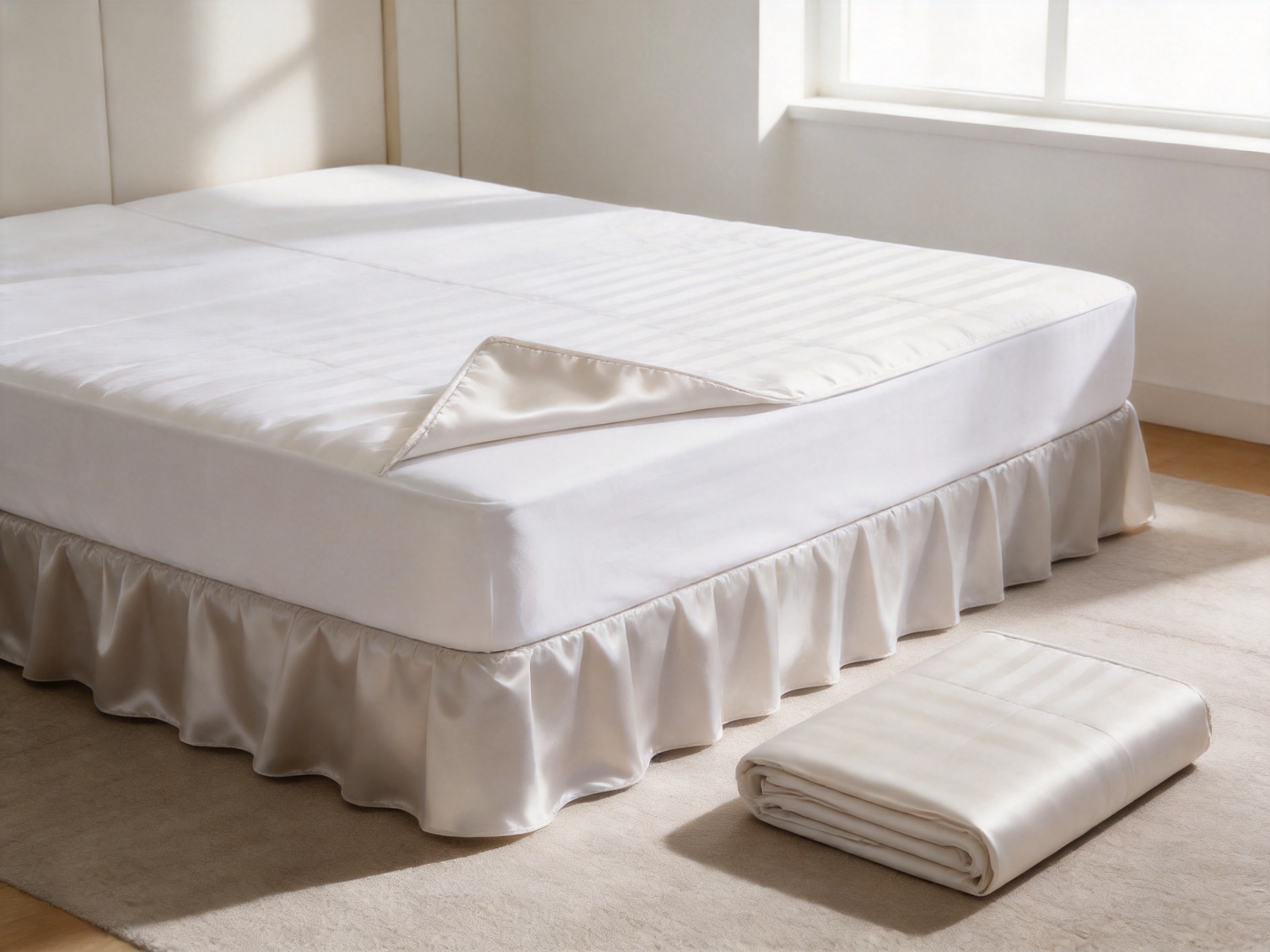
The Satin Striped Mattress Protector is designed for customers who want dependable mattress protection without the bulk of a thick topper. It combines a lightweight 100% polyester satin stripe surface, a stretch-fabric skirt, and a 200gsm polyester filling. This construction provides a useful balance of protection, softness, easy handling, and everyday practicality. Unlike a heavy padded mattress topper, the product is thin enough to wash in a household washing machine and convenient enough for regular use.
Manufactured by Tongxiang Xinlong Bedding Co., Ltd., the mattress protector is part of a broader home-textile product range that includes quilts, pillows, cushions, bedspreads, blankets, mattress covers, and other bedding articles. The manufacturer has developed its production capabilities over many years and operates a substantial facility with professional personnel, specialized equipment, and quality-management systems.
This article examines the product’s construction, benefits, applications, manufacturing strengths, customization potential, and quality considerations. It also explains why a thin satin-stripe mattress protector can be a competitive choice for bedding distributors, hospitality suppliers, retailers, importers, and customers looking for an efficient everyday protection layer.
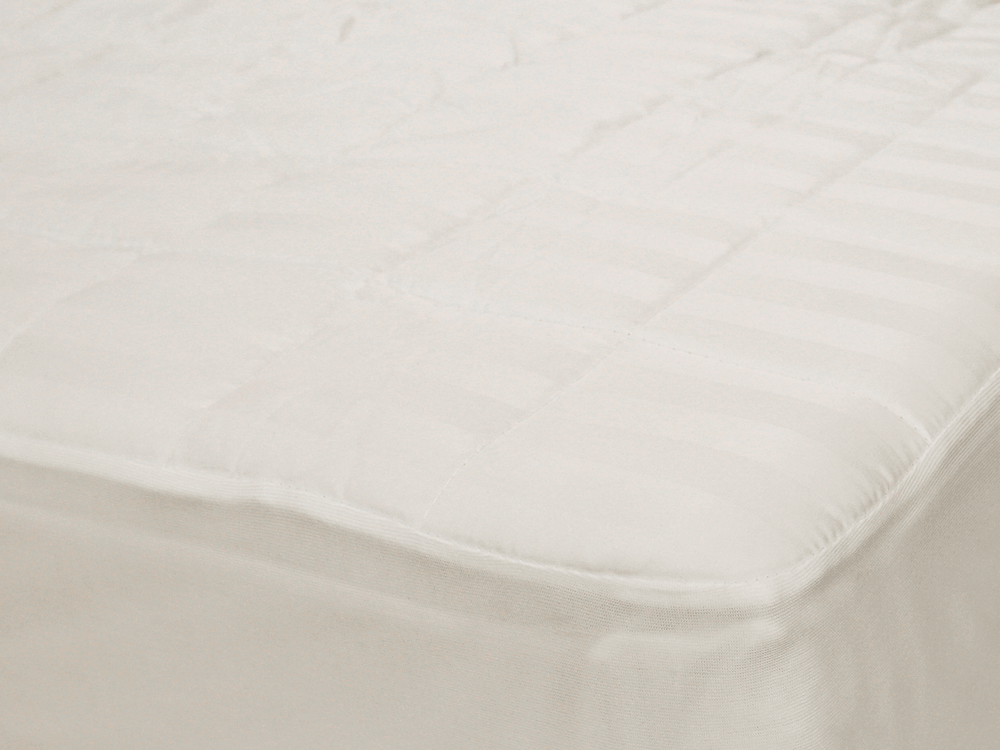
Satin Striped Mattress Protector
1. The Purpose of a Mattress Protector
A mattress protector is a textile layer placed over a mattress and beneath the bed sheet. Its primary purpose is to reduce direct exposure to moisture, dust, body oils, and accidental stains. It can also help reduce routine abrasion caused by repeated movement during sleep. By limiting contact between the user and the mattress, the protector makes the overall bedding system easier to maintain.
Mattresses are not normally designed to be placed inside a washing machine. Their large size, internal structure, and weight make deep cleaning inconvenient. Even when a mattress can be professionally cleaned, the process may require time and expense. A removable protector addresses this maintenance challenge by providing a washable surface that can be taken off quickly when needed.
The Satin Striped Mattress Protector is especially suited to this purpose because it is designed as a relatively thin and manageable product. Its lightweight construction can be handled more easily than a bulky mattress pad. Customers can remove it, place it in a suitable washing machine, dry it according to care instructions, and reinstall it without the logistical difficulty associated with cleaning a mattress itself.
A protector should not be confused with a mattress replacement, a therapeutic support product, or a very thick mattress topper. Its main function is protection and surface improvement. The product described here is intended to help keep the mattress cleaner while adding a modest layer of softness and visual refinement.
Protection against Everyday Exposure
Everyday bedding is exposed to many small sources of contamination. Perspiration is naturally released during sleep, while skin oils and loose fibers can gradually accumulate on the mattress surface. Drinks, cosmetics, children’s activities, pets, and accidental spills may also create unexpected stains. A washable protector gives the user an additional line of defense.
The value of this protection is particularly clear in guest rooms, rental properties, dormitories, hotels, serviced apartments, and family bedrooms. In these environments, bedding may be used frequently by different people or may need to be refreshed quickly between uses. A removable mattress protector makes routine housekeeping more manageable.
A Practical Layer between the Sheet and Mattress
The protector sits beneath the fitted sheet, so it does not need to replace the sheet’s comfort or appearance. Instead, it provides a stable intermediate layer. The satin stripe fabric creates a neat textile surface, the filling contributes light cushioning, and the stretch skirt helps hold the product around the mattress.
Because the product is not excessively thick, it is less likely to dramatically change the feel or height of the mattress. This is an advantage for users who already like their mattress and want protection without adding a substantial padded layer. It can also be useful for retailers seeking a versatile item that suits a broad range of mattress types and consumer preferences.
2. Product Construction and Material Specification
The performance of a mattress protector is strongly influenced by its fabric, filling, shape, and attachment method. The Satin Striped Mattress Protector uses a coordinated construction in which each component serves a specific function.
| Component | Specification | Function |
|---|---|---|
| Top fabric | 100% polyester satin stripe fabric, 90gsm | Provides a smooth, decorative, and lightweight surface |
| Skirt | 100% polyester stretch fabric, 90gsm | Helps the protector fit around the mattress and remain in position |
| Filling | 200gsm polyester filling | Adds a modest layer of softness and surface cushioning |
| Standard size | 160 x 200cm | Suitable for a common double-bed mattress format |
| Customization | Any size subject to production requirements | Supports different mattress dimensions and market needs |
| Product category | Polyester mattress protector or bedspread | Suitable for bedding distribution and home-textile programs |
100% Polyester Satin Stripe Fabric
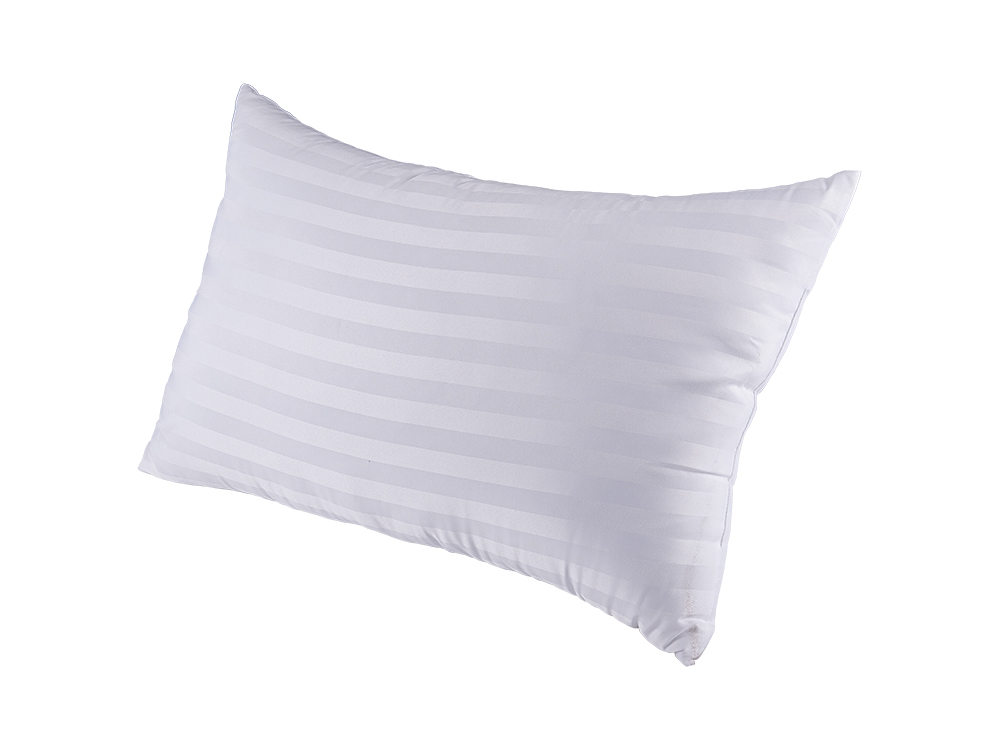
The top fabric is made from 100% polyester satin stripe fabric with a stated weight of 90gsm. Satin stripe fabric is recognized by its subtle alternating surface effect, which can create a refined visual appearance without requiring complicated decoration. The stripe structure gives the protector a clean and commercial look that can work across different bedroom styles.
Polyester is widely used in home textiles because it offers a practical combination of strength, dimensional stability, color performance, and ease of care. Compared with many delicate natural fabrics, polyester is generally more resistant to creasing and can be suitable for products that need frequent handling and washing. It is also available in a broad range of colors and can support consistent production for large bedding programs.
At 90gsm, the top fabric is lightweight rather than heavily constructed. This supports the product’s main positioning as a thin mattress protector. The fabric does not aim to create the deep loft of a thick quilted topper. Instead, it helps maintain a low profile while presenting a smooth textile surface and a tidy satin-stripe finish.
Stretch-Fabric Skirt
The skirt is made from 100% polyester stretch fabric with a stated weight of 90gsm. The skirt is an important part of the product because it helps the protector adapt to the mattress edges. A mattress protector that shifts or comes loose during sleep can be inconvenient, so an elastic or stretchable perimeter is valuable for maintaining a more stable fit.
The stretch construction also supports easier installation. Users can position the central panel over the mattress and pull the skirt over the sides. This is generally more convenient than fastening a flat protective sheet with separate straps or manually adjusting the corners every day.
For commercial buyers, a stretch skirt can make the product more user-friendly and reduce complaints related to poor fit. However, the final fit depends on the mattress dimensions, thickness, and the finished measurements selected during production. For this reason, buyers should confirm mattress-depth requirements and fitting preferences before placing a large order.
200gsm Polyester Filling
The product uses 200gsm polyester filling. This filling gives the protector more body than a single layer of fabric while keeping it lighter and thinner than a heavily padded mattress topper. It can make the sleeping surface feel slightly softer and can contribute to a more comfortable textile hand.
Polyester filling is commonly selected for bedding because it is lightweight, washable, and relatively easy to process. It can be distributed across the protector and secured through suitable quilting or stitching processes. Consistent filling distribution is important because uneven areas may affect both appearance and comfort.
The 200gsm specification offers a useful middle ground. A very thin unfilled cover may provide basic surface protection but little additional comfort. A high-loft product may feel softer but can become more difficult to wash, dry, store, and ship. The chosen filling weight supports the product’s practical emphasis on manageable care and everyday use.
3. Main Advantages over Heavier or Less Flexible Alternatives
The bedding market includes many types of mattress covers, mattress pads, quilted protectors, waterproof covers, and fitted sheets. The Satin Striped Mattress Protector competes most effectively in the segment where customers want light protection, easy washing, and a modest level of cushioning rather than a thick or highly specialized product.
Thin Construction for Easier Handling
One of the product’s clearest advantages is its thin construction. Heavy mattress toppers may be comfortable, but they can be difficult to fold, carry, store, and place inside a washing machine. A thin protector is more manageable for individuals, housekeeping teams, and retail customers.
Ease of handling has practical value beyond convenience. If a protective product is difficult to remove or wash, users may clean it less frequently. A lightweight design encourages more regular maintenance because it does not require the same physical effort or storage space as a thick padded product.
Machine-Washable Convenience
The product description emphasizes that a thin mattress protector can be washed in the user’s own washing machine. This is a strong selling point for modern households. Consumers increasingly value bedding products that can be cleaned at home rather than sent to a specialist cleaner.
Machine-washable bedding can also reduce operating costs for hospitality and rental businesses. A property manager may be able to process protectors through an existing laundry system, subject to the machine capacity and care instructions. This can simplify housekeeping routines and help maintain a consistent standard across rooms.
Buyers should always follow the final care label supplied with the product. Washing temperature, drying method, detergent choice, and load size can affect the useful life of any textile. Proper care helps preserve the fabric surface, filling distribution, skirt elasticity, and overall appearance.
Balanced Comfort without Excessive Bulk
The 200gsm polyester filling adds a modest comfort layer while preserving a relatively low profile. This balance may appeal to customers who do not want to alter the firmness or support characteristics of their mattress. The protector can provide a softer textile interface without becoming a replacement for the mattress itself.
In contrast, a thick topper may significantly change the sleeping feel and may not be suitable for every user. It may also require deeper fitted sheets, more storage space, and additional effort during washing. The lighter design of this protector is therefore a competitive option for customers prioritizing practicality.
Decorative Satin Stripe Appearance
Functional bedding does not need to look purely utilitarian. The satin stripe surface gives the product a subtle decorative character. It can appear more refined than a plain, basic protective cloth and may be suitable for bedding collections that emphasize clean presentation.
The stripe texture may also help create a coordinated product range. Retailers can position the protector alongside bedspreads, quilts, pillows, and other home-textile products. For hospitality buyers, a neat surface appearance can support a consistent room presentation even though the protector is normally placed beneath a sheet.
Flexible Sizing and Custom Production
The listed standard size is 160 x 200cm, while the specification also indicates that any size can be produced. This flexibility is important for international bedding markets, where mattress dimensions vary by country, retailer, hotel group, and product line.
Custom sizing can help buyers develop products for single, double, queen, king, extra-long, or other regional formats. It can also support private-label programs in which the dimensions must match an existing sheet or mattress collection. Before production, buyers should provide accurate mattress length, width, thickness, and desired skirt depth.
Polyester-Based Durability and Production Consistency
Both the surface and skirt use polyester, which creates a consistent fiber platform throughout the main components. Polyester is suitable for large-scale manufacturing because it can be processed in repeatable weights and finishes. It also supports practical handling during cutting, sewing, filling, packaging, and transportation.
For distributors, consistent specifications are important. A repeatable fabric weight and filling weight make it easier to establish product descriptions, packaging information, pricing, and quality-control standards. The use of defined materials also simplifies communication between the manufacturer and purchasing team.
4. Suitable Applications and Target Markets
The Satin Striped Mattress Protector can serve several customer groups. Its low-profile design and washable construction make it suitable for domestic bedding, hospitality, contract furnishing, retail distribution, and customized home-textile collections.
Household Bedrooms
In a family home, the protector can be used on master beds, guest beds, children’s beds, and spare mattresses. It helps create a cleaner and more manageable bedding routine. Since it is removable, households can wash it separately from bulky bedding such as comforters and quilts.
Families may find the product especially useful for guest rooms or children’s rooms, where mattresses may experience more frequent spills or changes of use. A protector can also be kept as a spare item, allowing the bed to remain covered while another protector is being washed.
Hotels and Guesthouses
Hotels, guesthouses, and serviced apartments require bedding products that are practical for repeated use. A mattress protector can help housekeeping staff maintain a more consistent room-cleaning process. The thin construction may be beneficial when staff need to remove and replace protectors quickly.
For hospitality buyers, fit and laundering performance are particularly important. The product should be ordered in dimensions that match the mattresses used in the property. Buyers should also evaluate sample products through repeated washing, drying, fitting, and inspection before approving a larger program.
Rental Housing and Student Accommodation
Rental properties and student residences often experience frequent occupant changes. A washable mattress protector offers a simple way to refresh the sleeping environment between tenants or academic terms. It can be supplied as part of a move-in package or included in a property’s standard bedding inventory.
The low-profile format can also help reduce storage requirements. Property operators may need to hold large quantities of spare bedding, so products that fold compactly and are not excessively heavy can make inventory management easier.
Retail and E-Commerce Bedding Collections
Retailers can position the protector as an accessible bedding-care product. It may be sold independently or as part of a coordinated home-textile collection. Its key selling messages include washable protection, lightweight construction, stretch fitting, satin stripe appearance, and optional sizing.
For e-commerce presentation, buyers can communicate the product benefits through clear specifications and practical lifestyle messaging. Product descriptions should state the dimensions, fabric composition, filling weight, skirt construction, and intended function accurately. Customers should also be informed that the protector is designed for protection and light cushioning rather than as a waterproof medical-grade barrier unless a separate waterproof layer has been specified.
Customized Bedding Programs
Furniture companies, mattress brands, department stores, and contract suppliers may require protectors in sizes that match their own mattresses. The manufacturer’s ability to produce different dimensions creates opportunities for coordinated programs.
Custom production may include adjustments to size, skirt depth, packaging, labeling, color, or selected fabric details, subject to technical review and order requirements. These details should be confirmed during sampling and quotation because changes can affect material usage, production methods, minimum quantities, and delivery schedules.
5. Manufacturing Capabilities and Company Strengths
Product quality depends not only on the material specification but also on how consistently the item is produced. Tongxiang Xinlong Bedding Co., Ltd. was established in January 2002 and has developed experience in the manufacture of home-textile products. Its product range includes silk cotton quilts, chemical-fiber quilts, pillows, cushions, bedspreads, travel quilts, mattress protectors, blankets, quilt covers, pillowcases, shower curtains, curtains, and related items.
The company is located in Longxiang Industrial Park in Wuzhen Town, Tongxiang City, Zhejiang Province, China. Its listed address is No. 268 Xingfa Road, Wuzhen, Tongxiang City, Jiaxing, Zhejiang Province. The company reports an area of approximately 21,000 square meters and a construction area of approximately 18,000 square meters.
A facility of this scale provides a foundation for organized material handling, production planning, quality inspection, and finished-goods management. The company also reports more than 320 employees and a range of advanced production equipment. These resources are relevant to mattress protector manufacturing because the product requires coordination between fabric preparation, cutting, filling, stitching, edge construction, fitting, inspection, and packing.
Experience across Multiple Home-Textile Categories
Manufacturing a range of bedding products can strengthen a company’s understanding of fabric behavior, filling control, quilting, sewing, and packaging. Experience with quilts and pillows is relevant to the use of polyester filling, while experience with bedspreads and mattress covers is relevant to larger textile panels and finished-bed presentation.
This broader product knowledge can help the manufacturer respond to different customer requirements. A buyer may need a mattress protector together with pillows, quilts, blankets, cushions, or bedspreads. Working with a supplier that already produces several related categories may simplify product development and purchasing coordination.
Professional and Technical Personnel
The company states that it is equipped with professional and technical personnel to support product design and production. Technical capability is important when a buyer requests a new size, a different skirt depth, a modified filling weight, or a change in fabric construction.
Technical personnel can assist with reviewing specifications, confirming production feasibility, developing samples, identifying sewing details, and controlling repeat orders. For customized products, the communication between the buyer’s design or purchasing team and the factory’s technical team can have a direct effect on the final result.
Investment in Production Equipment
Advanced production equipment can contribute to improved efficiency and greater repeatability. Mattress protectors contain large textile panels that must be cut accurately and assembled evenly. The filling must be distributed consistently, while stitching must be secure enough to withstand normal use and laundering.
Suitable machinery can support fabric cutting, panel alignment, quilting, sewing, edge finishing, and other processes. Equipment alone does not guarantee quality, but it provides the tools needed for a controlled manufacturing system. Equipment maintenance, operator training, process instructions, and inspection standards remain equally important.
6. A Typical Manufacturing Process
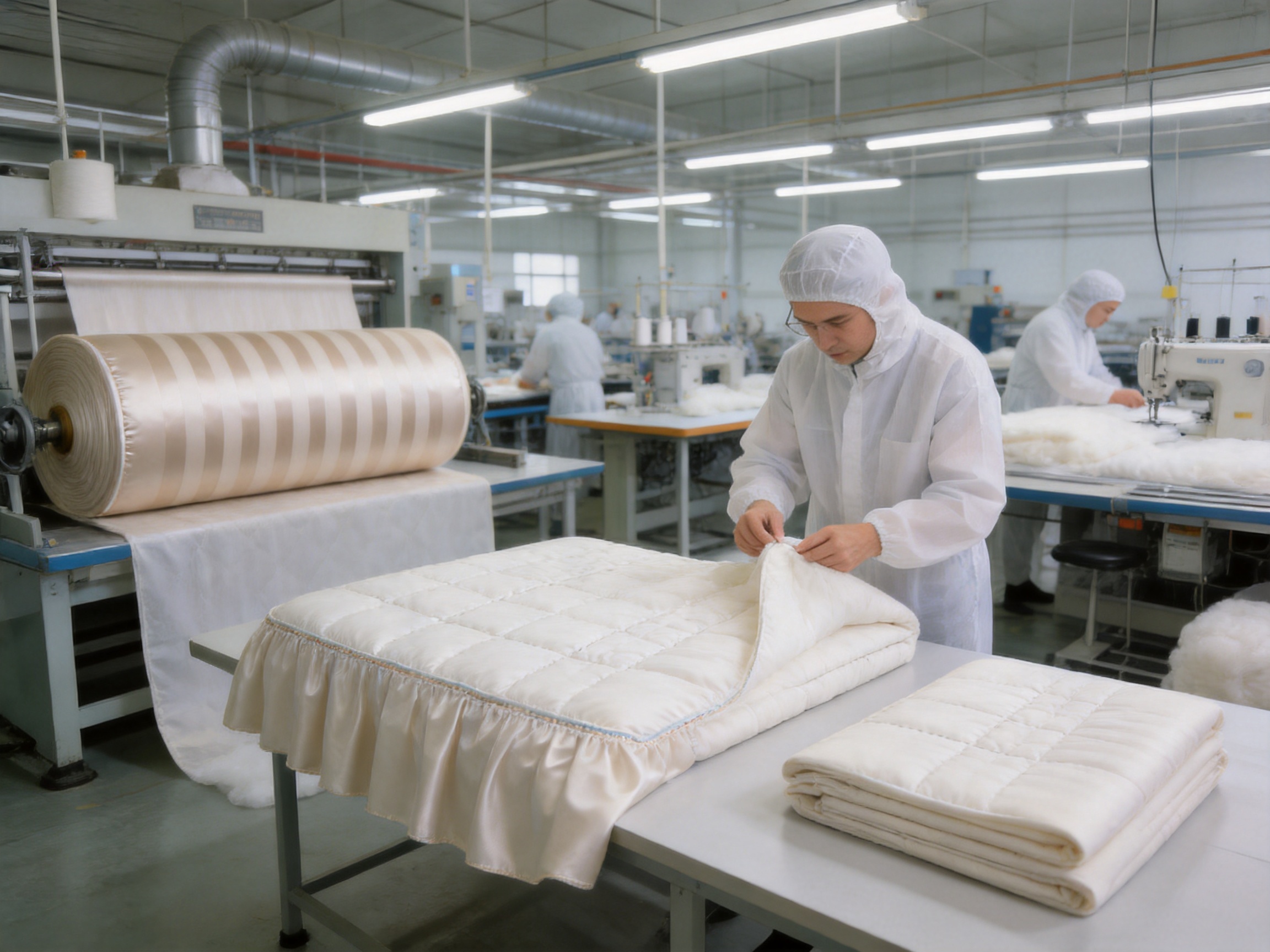
The exact production sequence may vary according to the final design, but a professional mattress protector program generally includes several controlled stages. Understanding these stages helps buyers evaluate a supplier and identify the points that influence product performance.
Material Selection and Incoming Inspection
Production begins with the selection and receipt of the specified materials. For this product, the main materials include 100% polyester satin stripe fabric, 100% polyester stretch fabric for the skirt, and 200gsm polyester filling.
Incoming inspection may include checking fabric composition, width, weight, color, stripe appearance, stretch behavior, surface defects, and packaging condition. The filling may be reviewed for cleanliness, consistency, loft, and distribution characteristics. Any material that does not meet the agreed specification should be identified before it enters mass production.
Pattern Planning and Cutting
Once materials are approved, the factory prepares cutting plans according to the confirmed size. Accurate cutting is essential because the central panel must match the mattress dimensions and the skirt must provide sufficient coverage around the sides.
Efficient cutting plans can reduce material waste and help maintain consistent piece dimensions. For custom sizes, the factory must use the approved technical file rather than relying on informal measurements. This is particularly important when a buyer is developing a coordinated bedding collection with matching sheets or bedspreads.
Panel Preparation and Filling Placement
The top fabric, filling, and supporting textile layers are aligned during panel preparation. The 200gsm polyester filling must be distributed evenly across the usable surface. Uneven filling can create thin areas, thick areas, or an irregular appearance.
Depending on the final construction, quilting or stitching may be used to hold the filling in place. The selected pattern should support stable distribution without creating excessive stiffness. The factory must also ensure that stitching is secure and that the finished panel remains flexible enough for normal folding, installation, and washing.
Skirt Assembly
The stretch-fabric skirt is cut and sewn to the main protector panel. This stage requires careful attention to seam strength, corner construction, and dimensional balance. The skirt should be attached evenly so that the protector sits correctly on the mattress rather than pulling disproportionately toward one side.
Corner areas often receive additional attention because they experience tension during installation. The seam allowance, stitch density, and edge finishing should be appropriate for the selected fabric. A well-assembled skirt improves the user experience and helps the product remain positioned beneath the sheet.
Finishing and Thread Inspection
After assembly, the product is checked for loose threads, skipped stitches, open seams, fabric marks, filling irregularities, and dimensional problems. Finishing may include trimming excess threads, correcting minor sewing issues, folding the product, and preparing it for final inspection.
Visual consistency is important for satin stripe fabric. The stripe direction and surface appearance should be reviewed so that the finished protector presents a neat and professional look. The skirt should also be checked for even stretch and attachment.
Final Quality Control and Packing
Final inspection may include confirming the product size, fabric composition, filling weight, workmanship, appearance, and packaging details. Samples from production lots can be measured and reviewed against the approved specification.
Packaging should protect the product during storage and transportation. Labels can include product name, size, material information, care guidance, quantity, and customer-specific details. For private-label orders, packaging and carton markings should be agreed in advance.
7. Quality Management and Responsible Production
The company reports that it has passed international certifications and standards including ISO 9001, ISO 14001, OEKO-TEX Standard 100, OEKO-TEX STeP, GRS, and BSCI. Certification status and scope should always be confirmed for the specific order, facility, product, and current audit period. Nevertheless, these systems and assessments indicate the manufacturer’s stated commitment to quality management, environmental management, textile safety, recycled-material processes, and social compliance.
ISO 9001 Quality Management
ISO 9001 is associated with a structured quality-management approach. In a bedding factory, such an approach can support documented procedures, responsibility assignment, corrective action, process monitoring, and continuous improvement. These principles are valuable for mattress protectors because consistent product dimensions and sewing quality are important across repeat orders.
A quality-management system can also improve communication between departments. Purchasing, production, inspection, and customer-service teams can work from approved specifications instead of relying on informal instructions. This helps reduce variation when a product is reordered after a period of time.
ISO 14001 Environmental Management
ISO 14001 relates to environmental-management systems. Textile manufacturing can involve fabric waste, packaging materials, energy use, water use, and production emissions. A systematic environmental approach encourages the factory to identify relevant impacts and establish procedures for managing them.
For buyers, environmental-management capability may be an important part of supplier evaluation. Many retailers and institutional customers now review not only product price and quality but also the supplier’s approach to responsible operations.
OEKO-TEX and Textile Safety Considerations
OEKO-TEX-related certifications are commonly associated with testing for harmful substances in textile products. Bedding comes into prolonged contact with skin, so material safety is an important consideration. Buyers should request current documentation and confirm the exact certification coverage for the fabric, filling, finished product, and intended market.
Product safety also depends on correct material sourcing, controlled production, appropriate labeling, and compliance with destination-market requirements. A certification can support a responsible sourcing program, but the buyer should still carry out its own approval procedures where required.
GRS and Material Transparency
The Global Recycled Standard is associated with recycled-material claims and chain-of-custody considerations. The listed company information states that the company has passed GRS-related certification. If a buyer intends to market a product as containing recycled polyester, the exact recycled content, certificate scope, transaction documentation, and labeling rules should be confirmed before making a claim.
BSCI and Social Responsibility
BSCI is associated with social-compliance assessment in global supply chains. Responsible working conditions, fair treatment, occupational safety, and ethical business practices are increasingly important to international buyers. The company’s stated BSCI certification provides a basis for further supplier due diligence and audit review.
8. Customization Options for International Buyers
The stated ability to produce 160 x 200cm or any size makes the product suitable for customized bedding programs. Size is the most important customization factor, but other details may also be discussed depending on the order requirements and production feasibility.
Size and Mattress Depth
Buyers should provide the exact mattress length and width, along with the mattress depth or required skirt drop. A protector can have the correct surface dimensions but still fit poorly if the skirt is too shallow or too loose for the mattress.
For a product intended for multiple mattress models, the buyer may need to select a flexible skirt dimension that accommodates a defined range. Samples should be tested on the thinnest and thickest mattresses in the planned range to ensure acceptable performance.
Fabric Appearance
The satin stripe effect provides a distinctive surface appearance, but buyers may wish to discuss stripe width, color, finishing, and coordination with other products. Color matching should be evaluated using physical samples because lighting, monitor settings, and screen displays can affect perceived color.
Filling Weight and Hand Feel
The standard specification uses 200gsm polyester filling. Some markets may prefer a lighter protector, while others may want more cushioning. Any change in filling weight can influence loft, washing behavior, drying time, shipping volume, and the overall hand feel.
It is advisable to approve a pre-production sample whenever the filling weight or fabric construction is changed. The sample should be assessed for comfort, dimensions, stitching, washability, and compatibility with the intended fitted sheet.
Packaging and Private Labeling
Retailers and brand owners may require customized packaging, labels, inserts, cartons, or barcodes. Clear packaging information helps consumers understand the product’s material composition, size, purpose, and care requirements.
Private-label orders should include an approved artwork file, packaging dimensions, label placement, language requirements, carton quantities, and shipping marks. These details should be finalized before bulk production to avoid delays or additional costs.
9. Purchasing and Product-Approval Recommendations
Before ordering a large quantity, buyers should request a sample in the intended size and material specification. A sample allows the customer to evaluate the satin stripe appearance, skirt elasticity, filling distribution, workmanship, packaging, and overall fit.
The sample should be tested on the actual mattress or a mattress with equivalent dimensions. The buyer should place the protector on the bed, fit the sheet over it, and observe whether the protector remains stable during normal movement. The thickness should also be checked to confirm that the fitted sheet remains secure.
Care testing is equally important. The product can be washed according to the proposed care instructions and then inspected for shrinkage, seam damage, surface change, filling movement, skirt recovery, and dimensional stability. Repeated washing provides more useful information than a single visual inspection.
Commercial buyers should also discuss production lead times, minimum order quantities, sample charges, payment conditions, inspection arrangements, export packaging, and shipping documentation. Although these factors are not visible in the product photograph, they directly affect the success of a bedding-supply program.
Important Specification Questions
Buyers may wish to confirm the following points before approval:
1. Is the final product size measured before or after washing?
2. What mattress thickness range does the skirt accommodate?
3. Is the 200gsm filling weight measured by finished product area or material specification?
4. What quilting or stitching method is used to secure the filling?
5. What washing and drying instructions will appear on the care label?
6. Are customized colors, labels, packaging, or sizes available?
7. Which current certifications apply to the specific materials and finished product?
8. What inspection standards are used for bulk production?
These questions help align the buyer’s expectations with the factory’s technical capabilities. Clear specifications reduce misunderstandings and make repeat orders more consistent.
10. Care, Storage, and Everyday Use
The main advantage of a thin mattress protector is that it can be removed and cleaned more easily than the mattress underneath. To obtain the best service life, users should follow the care instructions supplied with the finished product.
Washing
The protector should be washed in a machine with sufficient capacity for the selected size. Overloading the machine can prevent effective cleaning and may place unnecessary stress on seams and fabric. The protector should be washed with compatible bedding items and with a suitable detergent.
Harsh chemicals, excessive heat, or unsuitable bleach products may affect color, fabric finish, filling, or elastic performance. If the product has customized materials or special finishing, the final care label should take priority over general assumptions about polyester products.
Drying
Complete drying is important before the protector is placed back on the mattress. Residual moisture can create an undesirable environment for the mattress and may lead to odor. The appropriate drying method depends on the care instructions, available equipment, and product size.
Because the protector contains filling, users should ensure that the interior is dry as well as the surface. After drying, gently shaking or smoothing the product may help restore an even appearance.
Installation
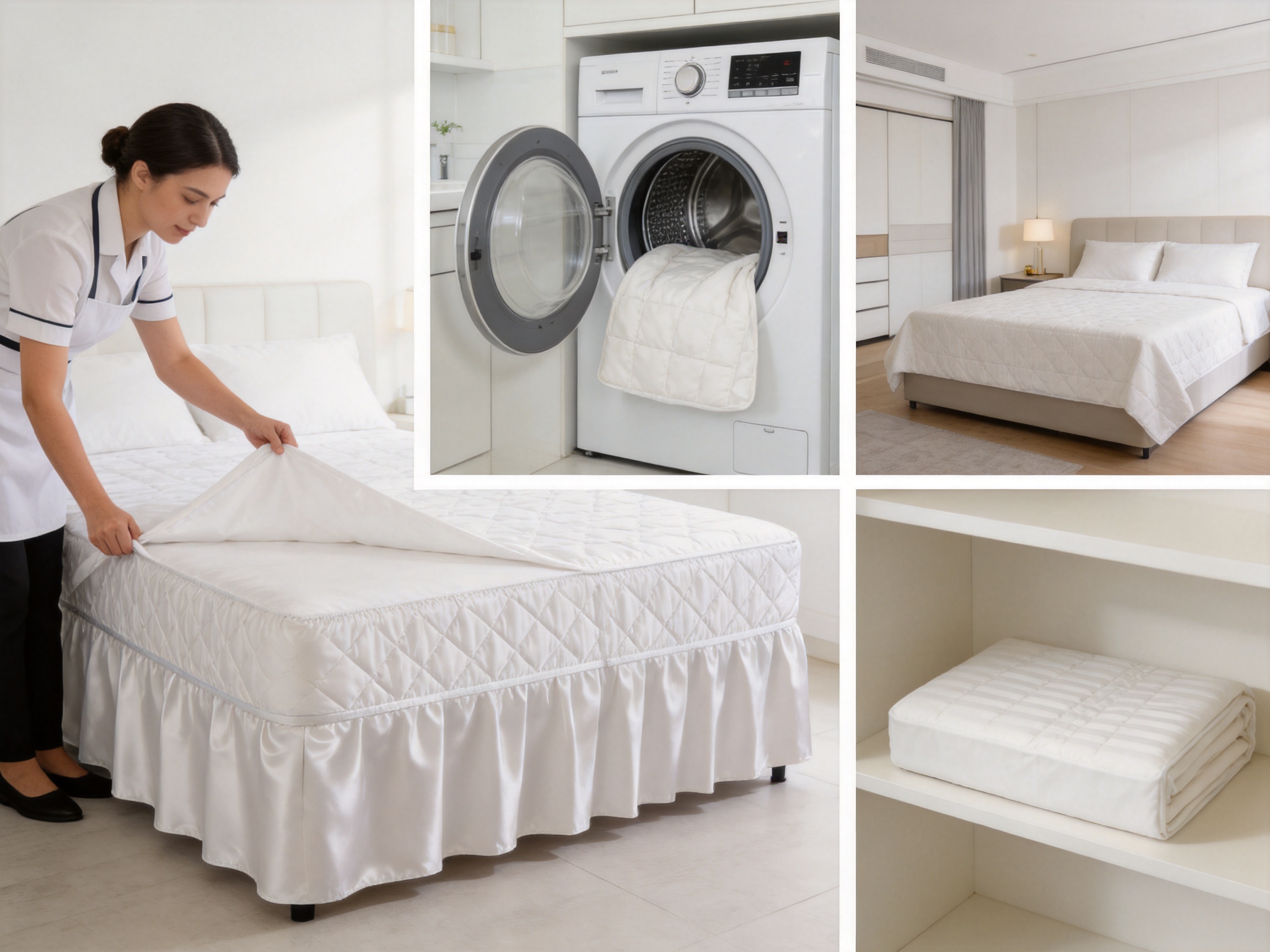
To install the protector, place the main panel centrally over the mattress and pull the stretch skirt evenly over the corners and sides. Avoid pulling excessively in one direction. If the protector is difficult to fit, confirm that its dimensions and skirt depth match the mattress.
The fitted sheet should then be installed over the protector. The sheet should not be so tight that it places unnecessary stress on the protector’s seams or skirt. Periodic inspection can identify loose threads, damaged seams, or other signs that the product needs repair or replacement.
11. Sustainability and Product-Life Considerations
A mattress protector can support more responsible household consumption by helping users maintain an expensive mattress for longer. Protecting the mattress from routine stains and wear may reduce the need for premature replacement. The protector itself is also removable and washable, which can make regular maintenance more practical.
Polyester is a synthetic fiber, so sustainability discussions should consider the complete product life cycle, including raw materials, manufacturing, washing, packaging, transportation, and end-of-life disposal. A durable and usable product can provide value over many washing cycles, but care practices and final disposal also matter.
Where recycled materials are used, buyers should request clear documentation regarding the percentage and source of recycled content. The company’s reported GRS certification may support relevant sourcing programs, but product-specific claims should be confirmed with current records.
Environmental responsibility also includes production efficiency. Accurate cutting can reduce fabric waste, while organized production planning can help reduce unnecessary rework. A documented environmental-management system can provide a framework for identifying and improving these areas.
12. Why the Product Is Competitive
The Satin Striped Mattress Protector offers a practical combination of features rather than relying on one single selling point. Its competitive position comes from the relationship between its thin construction, washable polyester materials, modest filling, stretch skirt, decorative appearance, and customizable sizing.
Compared with a basic flat sheet, it offers a more structured protective layer with filling and a mattress-fitting skirt. Compared with a thick mattress topper, it is easier to handle and less likely to change the mattress profile substantially. Compared with a purely decorative bedspread, it is designed specifically to sit close to the mattress and support routine protection.
For distributors, the product is also supported by a manufacturer with a broad home-textile portfolio and established production experience. This can create opportunities for product bundling, coordinated sourcing, and private-label development. Buyers may be able to build a wider bedding collection through one experienced supplier rather than managing unrelated sources for every item.
The product is not intended to solve every bedding requirement. Customers seeking a waterproof barrier, medical-grade protection, cooling technology, deep pressure relief, or a thick comfort topper may require a different specification. However, for ordinary mattress protection with easy maintenance and a clean textile appearance, this product presents a balanced and commercially useful option.
13. Frequently Asked Questions
Q1: What is the main purpose of this mattress protector?
Its main purpose is to create a removable, washable layer between the sleeper and the mattress. It helps reduce direct exposure to perspiration, dust, minor stains, and everyday wear while adding a modest amount of surface softness.
Q2: Is the product thick like a mattress topper?
No. It is described as a thin mattress protector. It includes 200gsm polyester filling, but it is designed to remain more manageable and lower profile than a thick padded topper.
Q3: Can it be washed in a household washing machine?
The product’s main stated advantage is that it can be washed in the user’s own washing machine. The machine must have adequate capacity for the selected size, and users should follow the final care label regarding temperature, detergent, and drying.
Q4: What is the standard size?
The listed standard size is 160 x 200cm. The manufacturer also indicates that other sizes can be produced according to customer requirements.
Q5: What materials are used?
The top fabric is 100% polyester satin stripe fabric at 90gsm. The skirt is 100% polyester stretch fabric at 90gsm. The filling is 200gsm polyester filling.
Q6: Does the skirt help keep the protector in position?
Yes. The stretch-fabric skirt is designed to fit around the mattress sides and help the protector remain in place beneath the sheet. Correct sizing and suitable mattress depth are important for the best fit.
Q7: Is it waterproof?
The supplied specification does not state that the product is waterproof. It should therefore be marketed as a textile mattress protector unless a separate waterproof membrane or waterproof construction has been specifically added and confirmed.
Q8: Does the satin stripe affect comfort?
The satin stripe fabric provides a smooth and decorative surface character. The 200gsm polyester filling adds a modest layer of softness. The final hand feel can also depend on quilting, finishing, fabric color, and the sheet placed over the protector.
Q9: Can the product be customized for a private-label brand?
Custom sizing is indicated, and additional options such as packaging, labeling, colors, and selected construction details may be discussed with the manufacturer. All customized details should be confirmed through technical specifications and sample approval.
Q10: Who manufactures the product?
The product is manufactured by Tongxiang Xinlong Bedding Co., Ltd., a Chinese home-textile manufacturer established in January 2002. The company produces mattress protectors and a wide range of related bedding products.
Q11: What certifications does the company report?
The company reports certifications or related compliance recognition including ISO 9001, ISO 14001, OEKO-TEX Standard 100, OEKO-TEX STeP, GRS, and BSCI. Buyers should verify the current certificates and confirm their scope for the intended product and order.
Q12: Is this protector suitable for hotels?
It may be suitable for hotels, guesthouses, serviced apartments, and other accommodation environments because it is removable, relatively thin, and designed for practical cleaning. Hospitality buyers should perform their own fit and laundering tests before bulk approval.
Q13: Can it fit different mattress thicknesses?
The stretch skirt is intended to assist with mattress fitting, but the exact supported thickness range depends on the finished skirt dimensions and elastic construction. Buyers should provide mattress-depth information and request confirmation from the manufacturer.
Q14: How should the product be evaluated before a large order?
Buyers should inspect a production-quality sample, test the fit on the intended mattress, place a sheet over it, wash and dry the protector according to the proposed care instructions, and check dimensions, filling distribution, stitching, skirt recovery, and appearance.
14. Conclusion
The Satin Striped Mattress Protector is a practical bedding product designed for customers who want everyday mattress protection without the weight and complexity of a thick topper. Its 100% polyester satin stripe surface provides a neat appearance, while the stretch-fabric skirt supports a more secure mattress fit. The 200gsm polyester filling adds modest cushioning without making the product excessively bulky.
Its strongest advantages are ease of handling, home-washing convenience, low-profile construction, flexible sizing, and suitability for a broad range of domestic and commercial applications. These features make it relevant to households, retailers, hospitality operators, rental-property managers, student residences, and private-label bedding programs.
The product is supported by a manufacturer with more than two decades of home-textile experience, a substantial production facility, a workforce of more than 320 employees, professional technical personnel, and a broad product portfolio. The company’s reported quality, environmental, textile-safety, recycled-material, and social-compliance certifications provide additional points for buyer evaluation, subject to current documentation and order-specific verification.
For buyers seeking a washable, lightweight, customizable mattress protector, this product provides a balanced foundation for a reliable bedding collection. Careful sample testing, accurate mattress measurements, clear technical specifications, and appropriate quality inspections can help ensure that the finished product meets the needs of its intended market.
References
1. Product specification supplied for the Satin Striped Mattress Protector, including size, fabric, skirt, filling, and product-use information.
2. Tongxiang Xinlong Bedding Co., Ltd. company information supplied for manufacturing history, facility size, employee numbers, product categories, and production capabilities.
3. ISO 9001 quality-management principles and supplier quality-control practices for textile manufacturing.
4. ISO 14001 environmental-management principles applicable to manufacturing organizations.
5. OEKO-TEX textile-safety framework and harmful-substance assessment considerations for bedding products.
6. Global Recycled Standard principles concerning recycled-material claims and supply-chain documentation.
7. Business Social Compliance Initiative principles concerning social responsibility and ethical supply chains.
8. General bedding-care and textile-maintenance practices for polyester fabrics and filled household products.


 +86-573-88798028
