



 Français
 Español
 Deutsch
Content
- 1 Introduction
- 2 Product Overview
- 3 Elegant Printed Design with a Coordinated Finish
- 4 Softness and Skin-Friendly Comfort
- 5 3D and 6D Polyester Filling
- 6 Manufacturing Strengths and Production Capability
- 7 From Material Selection to Finished Pillow
- 8 Quality Management and International Certifications
- 9 Advantages Over Competing Pillow Options
- 9.1 Advantage One: More Distinctive Than Plain Pillows
- 9.2 Advantage Two: More Practical Than Purely Decorative Cushions
- 9.3 Advantage Three: Consistent Synthetic Filling
- 9.4 Advantage Four: Broad Market Compatibility
- 9.5 Advantage Five: Support from an Integrated Home Textile Manufacturer
- 9.6 Advantage Six: Structured Quality and Compliance Systems
- 10 Commercial Applications
- 11 Customization and Product Development Opportunities
- 12 Responsible and Efficient Home Textile Production
- 13 Ordering Considerations for Buyers
- 14 Care and Long-Term Product Value
- 15 Why Choose an Experienced Home Bedding Factory
- 16 Frequently Asked Questions
- 16.1 What is the size of the Polyester Printed Pillow?
- 16.2 What fabric is used for the pillow?
- 16.3 What type of filling does the pillow contain?
- 16.4 What makes the design different from a plain pillow?
- 16.5 Is the product suitable for daily household use?
- 16.6 Can the pillow be used in hotels or guest rooms?
- 16.7 Can the pillow be matched with other home textile products?
- 16.8 Does the manufacturer support custom requirements?
- 16.9 What certifications and standards are associated with the manufacturer?
- 16.10 Where is the manufacturer located?
- 16.11 How can buyers contact the manufacturer?
- 17 Conclusion
- 18 References
- 19 Product: Polyester Printed Pillow
Introduction
A pillow is more than a simple bedroom accessory. It supports the head and neck, contributes to sleeping comfort, completes the visual appearance of a bed, and often becomes part of the overall atmosphere of a home, hotel, guest room, or furnished apartment. For these reasons, buyers increasingly look for pillows that combine softness, attractive design, practical durability, and consistent manufacturing quality.
The Polyester Printed Pillow is designed to meet these needs through a balanced combination of decorative fabric, comfortable filling, and dependable construction. Its printed upper fabric creates an elegant visual effect, while the matching solid-color base fabric provides a coordinated and refined appearance. The result is a pillow that can function both as a household necessity and as an attractive element of interior decoration.
Made with 85gsm printed brushed fabric and 85gsm plain brushed fabric, the pillow offers a soft, skin-friendly surface suitable for everyday use. Its filling consists of a blend of 3D and 6D polyester fibers, giving the pillow a pleasant touch and a supportive, resilient structure. With a standard size of 50 x 70 cm, it is suitable for a broad range of bedroom environments and bedding collections.
Behind the product is Tongxiang Xinlong Bedding Co., Ltd., a professional home textile manufacturer established in 2002. The company operates from Wuzhen, Tongxiang, Zhejiang Province, an important area for textile production in China. With a 21,000-square-meter site, an 18,000-square-meter construction area, more than 320 employees, advanced production equipment, professional technical personnel, and internationally recognized management certifications, the manufacturer is equipped to serve customers seeking dependable home bedding products.
This article examines the design, materials, comfort, manufacturing value, quality advantages, customization potential, and commercial applications of the Polyester Printed Pillow. It also explains why a well-made printed polyester pillow can offer advantages over basic single-color pillows, low-cost filling products, and decorative cushions that are not designed for practical daily use.
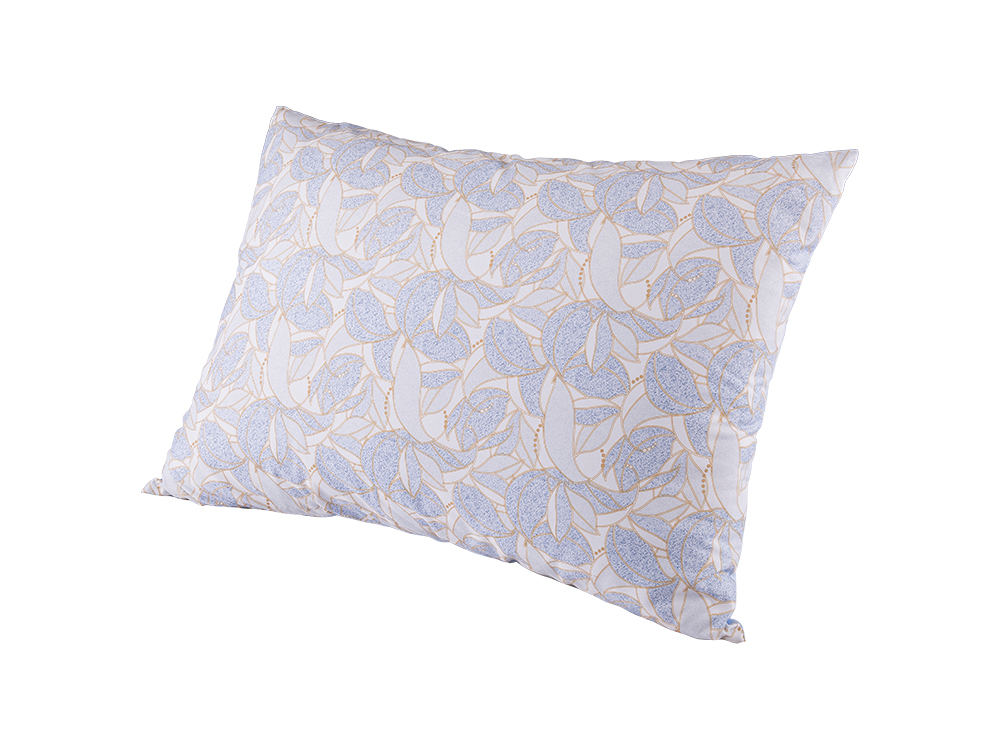
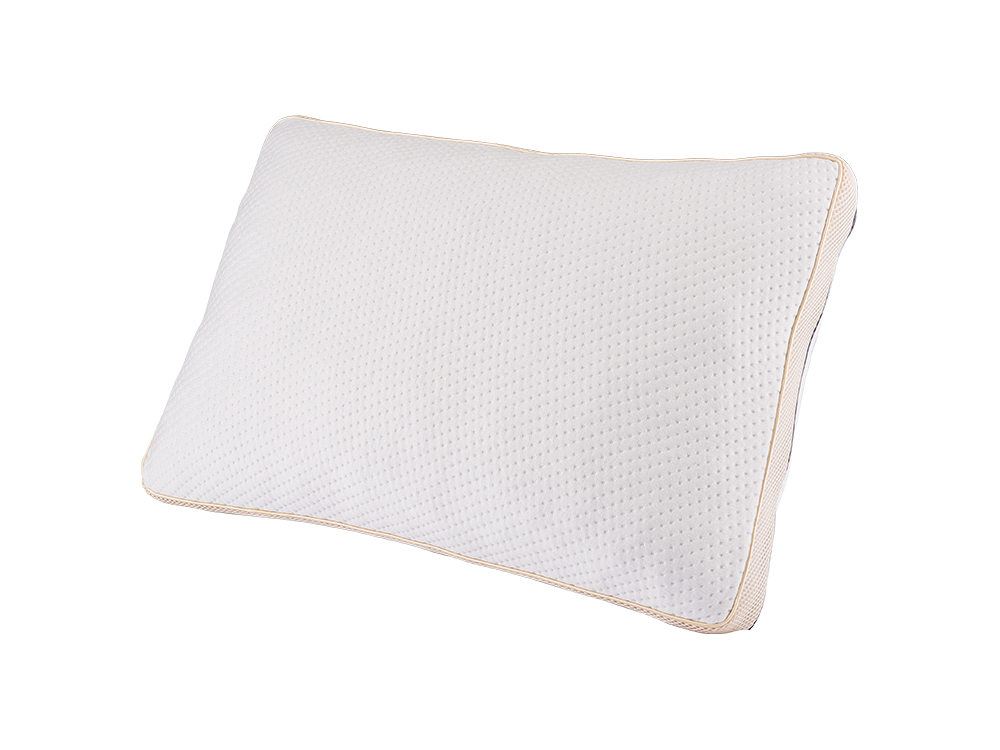
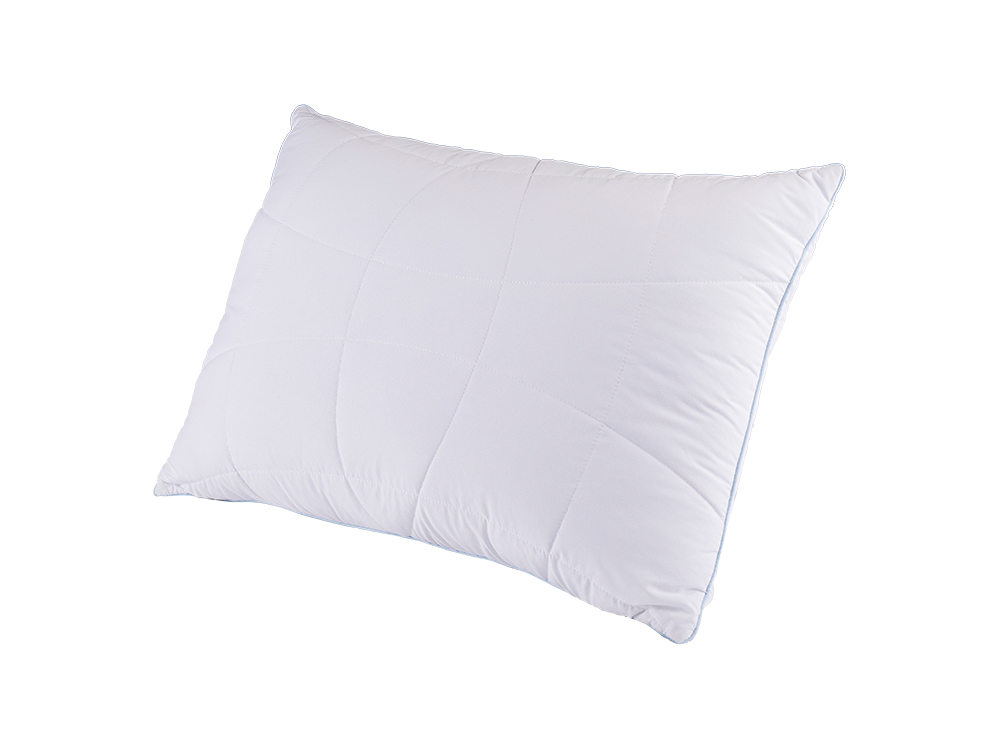
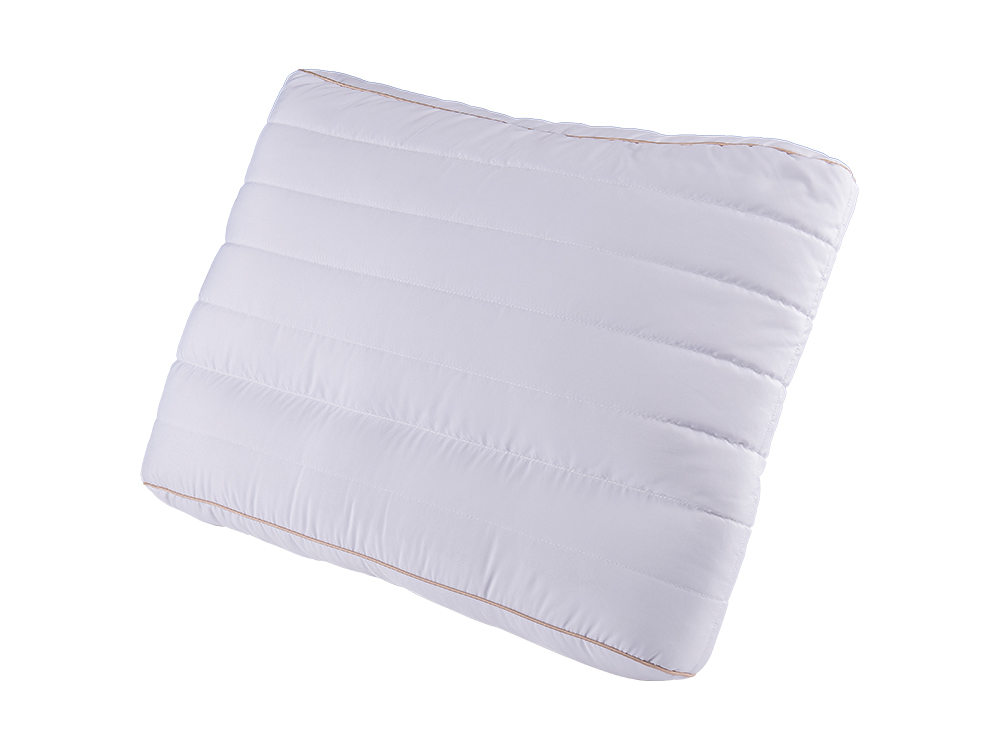
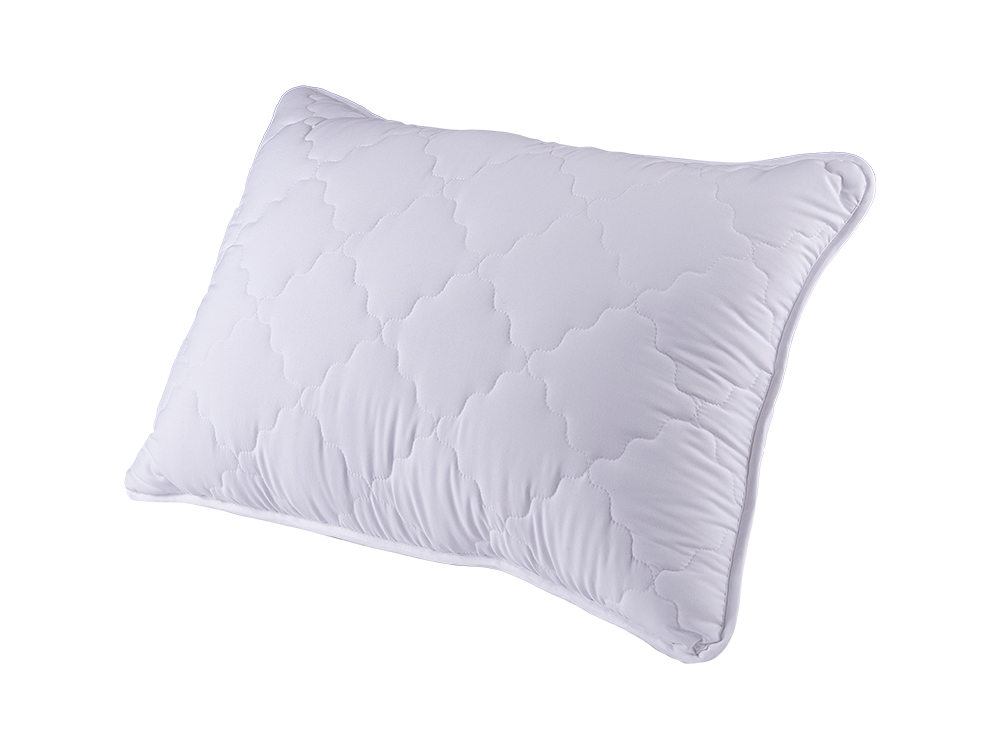
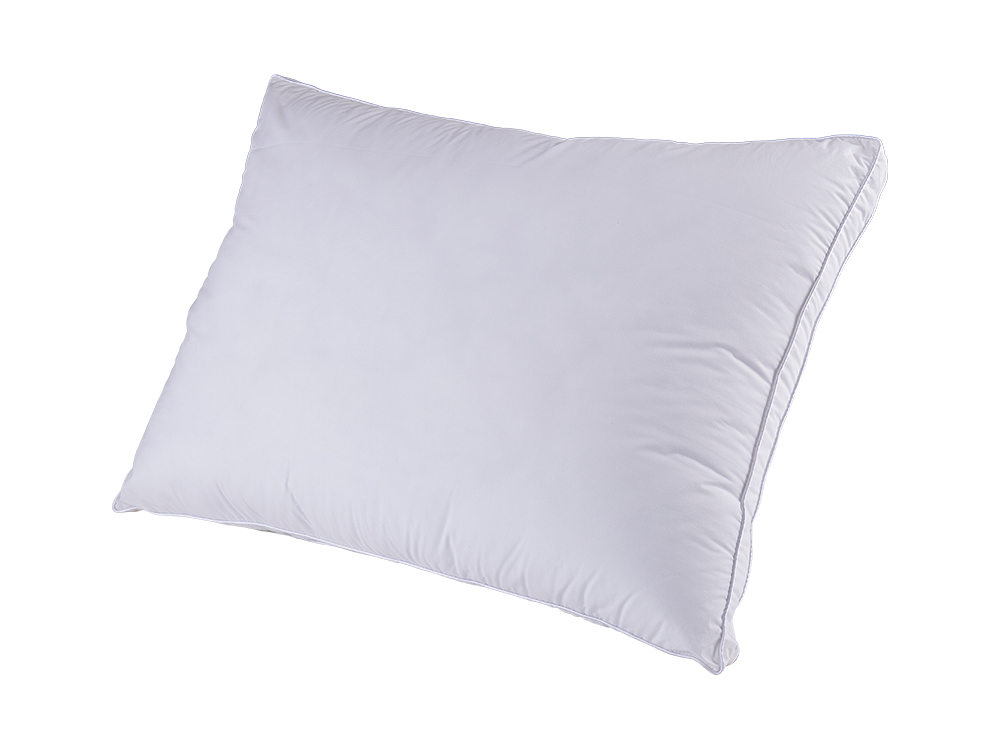
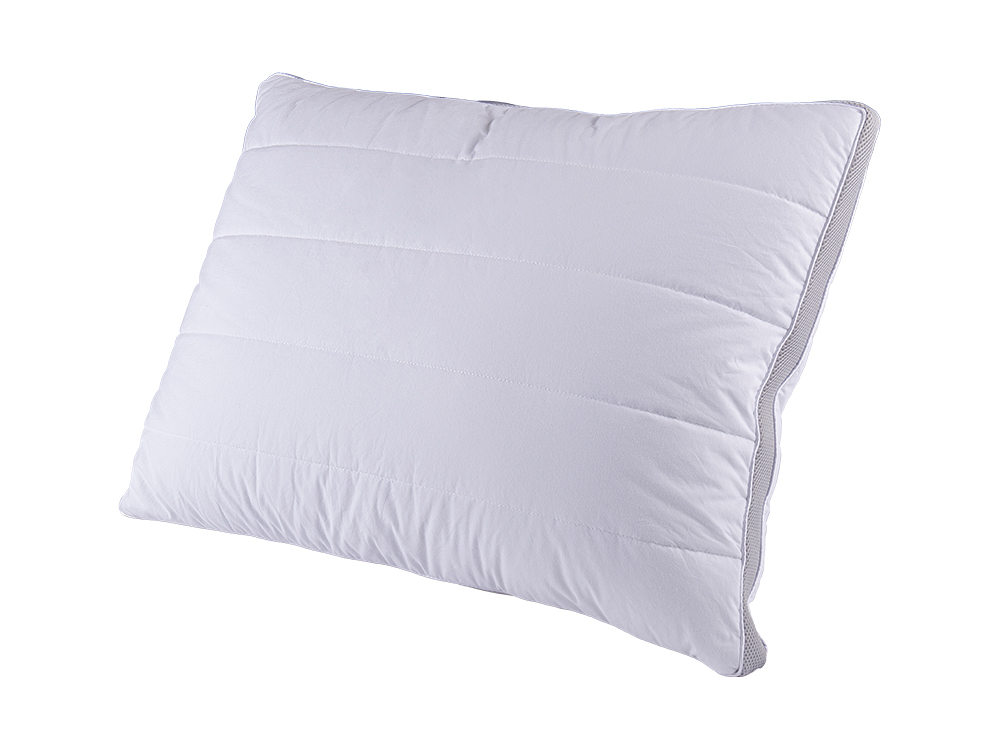
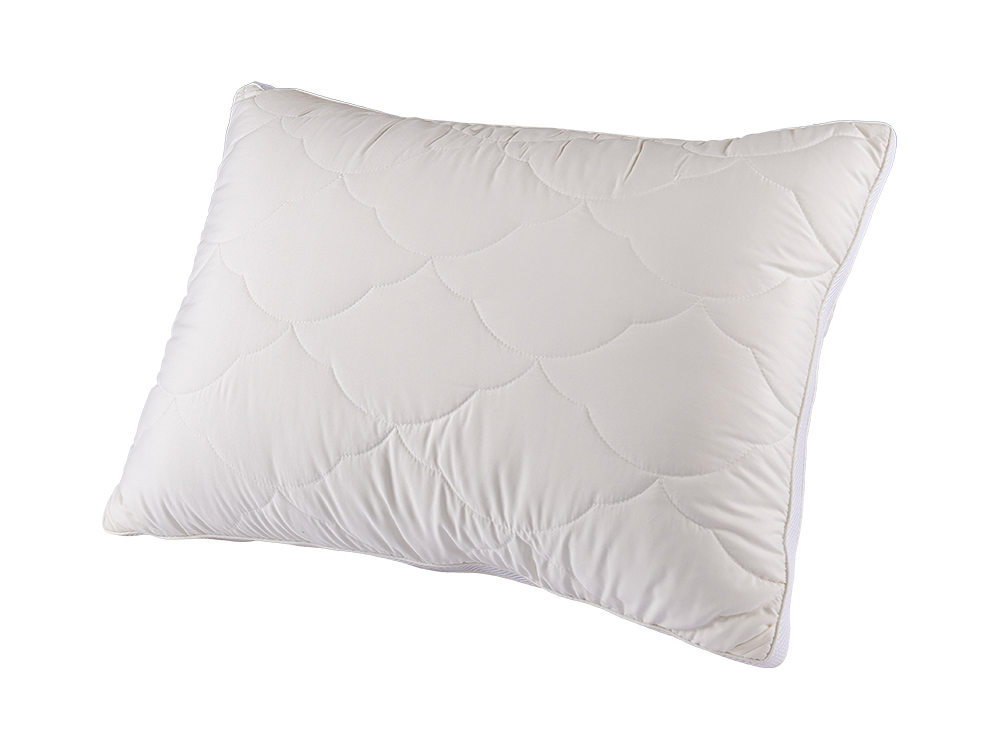
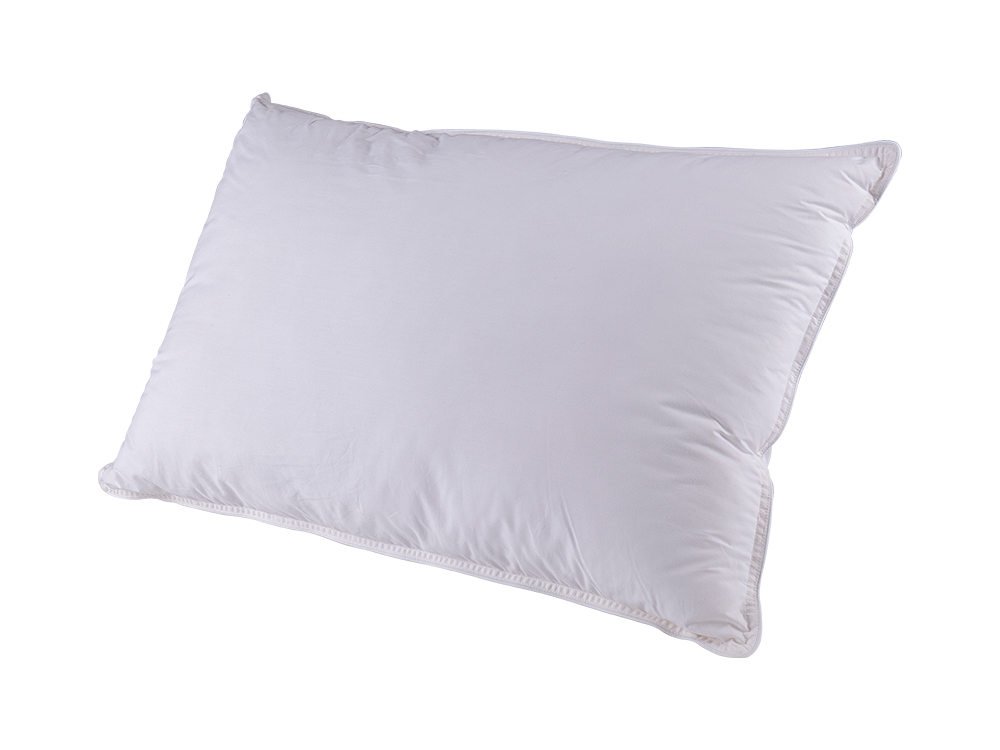
Polyester Printed Pillow
Product Overview
The Polyester Printed Pillow is a soft bedding product developed for comfort, visual appeal, and flexible use. Its defining feature is the relationship between the printed pattern and the solid-color base fabric. Instead of relying on a completely plain surface, the design introduces a decorative printed section that adds personality and style. The solid color balances the pattern and prevents the appearance from becoming visually overwhelming.
This combination makes the pillow suitable for different bedroom styles. It can complement contemporary rooms with neutral furniture, traditional interiors with warm textile accents, or hospitality settings where coordinated bedding is important. The design may also be used as part of a broader home textile collection, including quilts, mattress protectors, blankets, mattress covers, and cushions.
The product measures 50 x 70 cm. This practical size offers a useful balance between coverage and manageability. It is large enough to provide comfortable head and upper-body support while remaining easy to place, package, store, and transport. The standardized dimensions also make it convenient for buyers who are developing coordinated bedding ranges.
The surface fabrics are specified as 85gsm printed brushed fabric and 85gsm plain brushed fabric. Brushed fabric is valued for its soft hand feel because its surface is finished to create a gentle, slightly raised texture. This texture helps the pillow feel comfortable against the skin and contributes to a warmer, more inviting appearance.
The interior filling uses 3D and 6D polyester fibers. These synthetic fibers are commonly used in bedding because they are lightweight, resilient, and adaptable to different pillow constructions. A carefully prepared polyester filling can help the pillow retain loft, recover after compression, and provide a consistent level of softness.
The product is therefore not simply a printed fabric case filled with a generic material. It is a coordinated bedding article in which fabric selection, color matching, filling composition, sizing, and production control work together. This integrated approach is important for buyers who need products that look attractive in catalogs and showrooms while also performing reliably in actual use.
Core Product Specifications
| Specification | Product Detail |
|---|---|
| Product Type | Printed polyester pillow |
| Category | Polyester pillow |
| Size | 50 x 70 cm |
| Outer Fabric | 85gsm printed brushed fabric and 85gsm plain brushed fabric |
| Filling | 3D and 6D polyester |
| Primary Use | Household bedding, bedroom decoration, hospitality, and coordinated home textile collections |
| Surface Character | Soft, brushed, decorative, and skin-friendly |
Elegant Printed Design with a Coordinated Finish
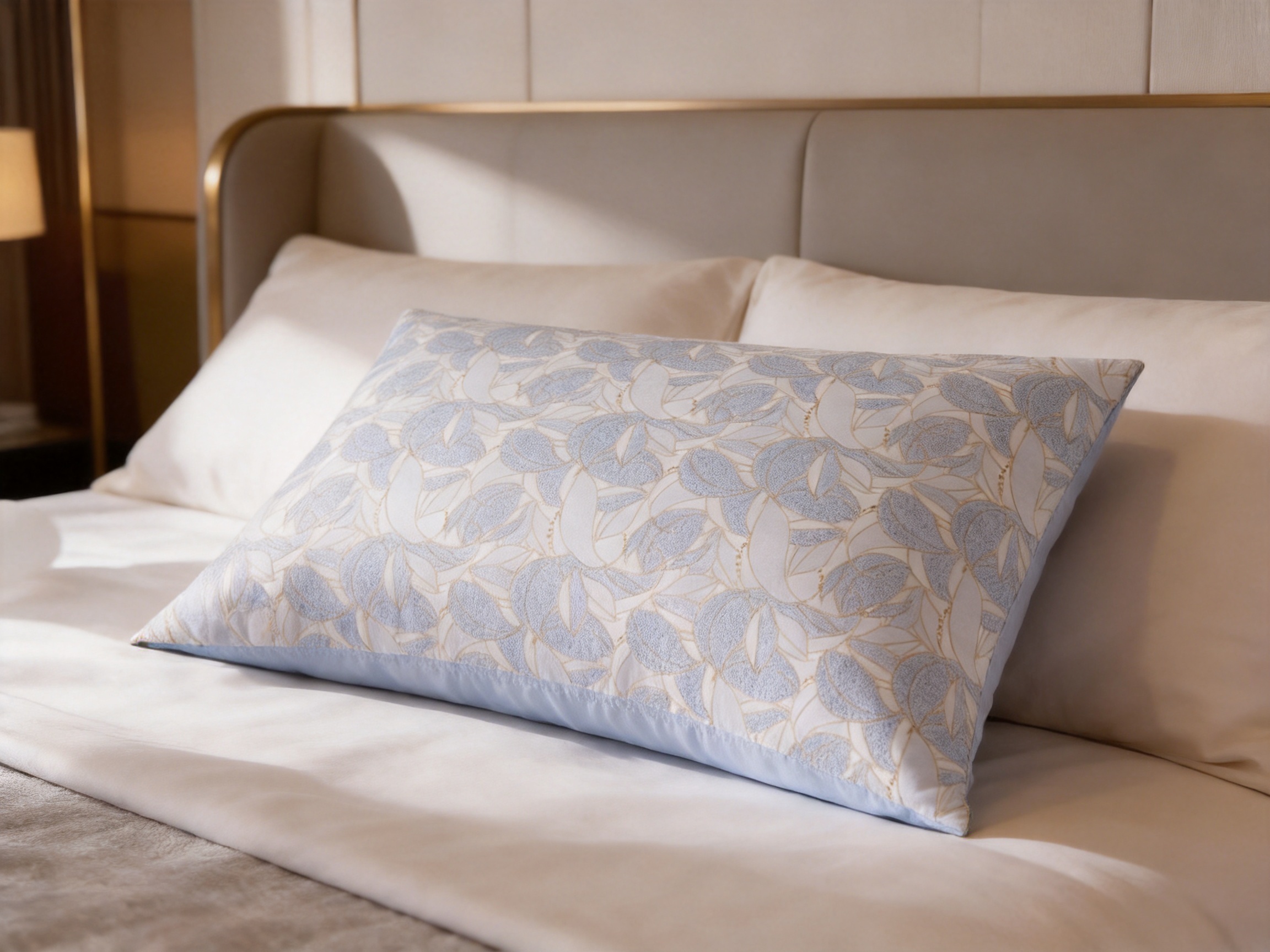
One of the strongest advantages of this pillow is its visual design. The printed pattern creates a more sophisticated appearance than a basic plain pillow, while the solid-color base fabric introduces balance and coordination. This design approach is particularly useful for buyers who want bedding to look complete and considered without choosing overly complex construction or expensive decorative details.
Printed patterns can help a pillow become part of a room’s visual composition. A carefully selected pattern may add warmth, movement, softness, or a seasonal feeling. It can also help coordinate the pillow with quilts, curtains, mattress covers, blankets, and other textile products. When the pattern is combined with a plain base, the overall product can fit into more interior styles than a heavily patterned item.
The solid-color component also supports a high-end impression. By combining two surface treatments rather than using one uncontrolled design across the entire product, the pillow gains a more structured and intentional appearance. This is valuable for retailers and bedding brands that want products with a clear design identity while maintaining broad market appeal.
Compared with a completely plain polyester pillow, the printed design offers stronger shelf appeal and greater visual differentiation. A plain pillow may provide practical value, but it can be difficult to distinguish in a crowded product range. The printed surface gives customers an immediate reason to notice the item and can support more attractive photography, showroom presentation, and online merchandising.
Compared with highly embellished decorative cushions, the Polyester Printed Pillow offers a more practical balance. It is designed as a usable bedding product rather than as an ornament that is uncomfortable or difficult to maintain. The soft brushed fabric and polyester filling allow it to remain functional while still contributing to bedroom decoration.
Softness and Skin-Friendly Comfort
Comfort begins with the surface that comes into contact with the user. The brushed fabric used for this pillow is selected for its soft hand feel and gentle texture. A brushed surface can make the product feel warmer and more inviting than a smooth, rigid, or coarse textile. This is particularly valuable for pillows because they are used close to the face and neck for extended periods.
The product description emphasizes an overall touch that is soft and skin-friendly. This quality supports everyday use in bedrooms, guest rooms, family homes, and hospitality environments. A pillow that feels comfortable from the first touch is more likely to create a positive impression during purchase, use, and repeat ordering.
Softness must be balanced with structure. If a pillow is extremely soft but quickly loses its form, it may provide an unsatisfactory experience. The use of 3D and 6D polyester filling helps create a fuller internal structure while maintaining a light and comfortable feel. The fibers are intended to provide resilience and volume without the excessive weight associated with some natural or dense filling materials.
The fabric and filling also work together to shape the product’s perceived quality. A pleasant outer surface can make the pillow feel more premium, while a balanced filling can help it feel substantial in the hands. This combination is important for buyers comparing similar products, because perceived quality is influenced by touch as well as appearance.
For manufacturers, distributors, and retailers, skin-friendly softness can be a meaningful selling point. Consumers often evaluate bedding products according to comfort, appearance, ease of use, and value. By addressing these factors in one product, the Polyester Printed Pillow can appeal to a broad customer base rather than being limited to a specific decorative niche.
Why Brushed Fabric Is Suitable for Pillows
Brushed fabric is particularly appropriate for bedding because its surface texture can create a soft and comfortable contact layer. It offers a more tactile experience than many untreated woven surfaces and can contribute to a cozy visual impression. The brushed finish also works effectively with printed patterns because it gives the colors a textile character rather than a hard, flat appearance.
The use of both printed and plain brushed fabric expands design flexibility. A manufacturer can coordinate color tones, pattern scale, and surface placement to create different product styles. This helps customers develop collections with a consistent construction platform but varied visual options.
For daily bedding, the material must also be practical for production and handling. Polyester-based brushed fabrics are widely used in home textiles because they can be produced in consistent specifications and integrated into efficient cutting, sewing, filling, and finishing processes. This supports stable product quality and repeatable orders.
3D and 6D Polyester Filling
The filling is a central component of pillow performance. The Polyester Printed Pillow uses 3D and 6D polyester, a combination selected to create a soft yet resilient interior. The terminology refers to the characteristics and structure of the polyester fibers, which are designed to provide loft, flexibility, and recovery.
A suitable pillow filling should distribute comfortably beneath the head, maintain a reasonably full profile, and resist immediate collapse. Polyester fiber fillings are widely valued because they are lightweight and can be engineered for different levels of loft and softness. They are also practical for large-scale bedding production, where consistent filling weight and even distribution are important.
The combination of 3D and 6D fibers can provide a more varied internal structure than a single basic fiber type. Different fiber characteristics may contribute to a balance between softness and resilience. The result is a pillow that feels comfortable without becoming excessively flat at the beginning of use.
Compared with inexpensive pillows filled with poorly distributed loose fiber, a carefully manufactured 3D and 6D polyester pillow can offer a more consistent user experience. Evenness matters because uneven filling may create hard spots, thin areas, or an uncomfortable sleeping surface. Professional production equipment and controlled filling procedures help reduce these risks.
Polyester filling also supports efficient logistics. It is relatively light, which helps reduce handling difficulty during production, warehousing, and transportation. Its resilience allows the pillow to be compressed or packed according to the customer’s requirements, subject to appropriate packaging and recovery procedures.
Balanced Loft for Everyday Use
The goal of the filling system is not simply to make the pillow as thick as possible. Excessive loft may be unsuitable for some users, while insufficient filling can make the product appear low-value. A balanced filling construction creates a more versatile pillow that can be used by different consumers and integrated into a range of bedding sets.
The 50 x 70 cm format gives the internal filling enough surface area to provide useful support while remaining suitable for standard bedroom arrangements. The shape can also work well in layered styling, where pillows are arranged with quilts, blankets, or decorative cushions to create a finished bed presentation.
Manufacturing Strengths and Production Capability
The quality of a bedding product depends not only on the material specification but also on how consistently the product is manufactured. Tongxiang Xinlong Bedding Co., Ltd. has been engaged in home textile production since January 2002. Over more than two decades, the company has developed experience in producing pillows, quilts, cushions, bedspreads, blankets, mattress protectors, mattress-related products, quilt and pillowcases, shower curtains, curtains, and other household textile articles.
This broad product experience is valuable because the Polyester Printed Pillow is part of a larger home textile ecosystem. A manufacturer that understands pillows, quilts, mattress protectors, blankets, and cushions can better support customers seeking coordinated collections. It can also apply knowledge from one product category to another, particularly in areas such as fabric selection, filling management, sewing construction, packaging, and quality control.
The company operates on a site covering approximately 21,000 square meters, with a construction area of approximately 18,000 square meters. This scale provides space for production operations, equipment, raw material handling, quality inspection, warehousing, and administrative functions. A properly organized facility can help improve workflow and reduce unnecessary movement between production stages.
More than 320 employees support the company’s operations. A substantial workforce allows the manufacturer to maintain specialized roles across design, technical development, fabric handling, cutting, sewing, filling, finishing, inspection, packing, and customer service. Human expertise remains important in home textile production because textile materials require careful handling and visual inspection in addition to machine-based processing.
The company is also equipped with various advanced production machines. Modern equipment can improve repeatability and efficiency in areas such as fabric preparation, cutting accuracy, sewing consistency, filling distribution, edge finishing, and product inspection. For buyers, this can translate into more consistent dimensions, cleaner workmanship, better appearance, and more reliable order fulfillment.
From Material Selection to Finished Pillow
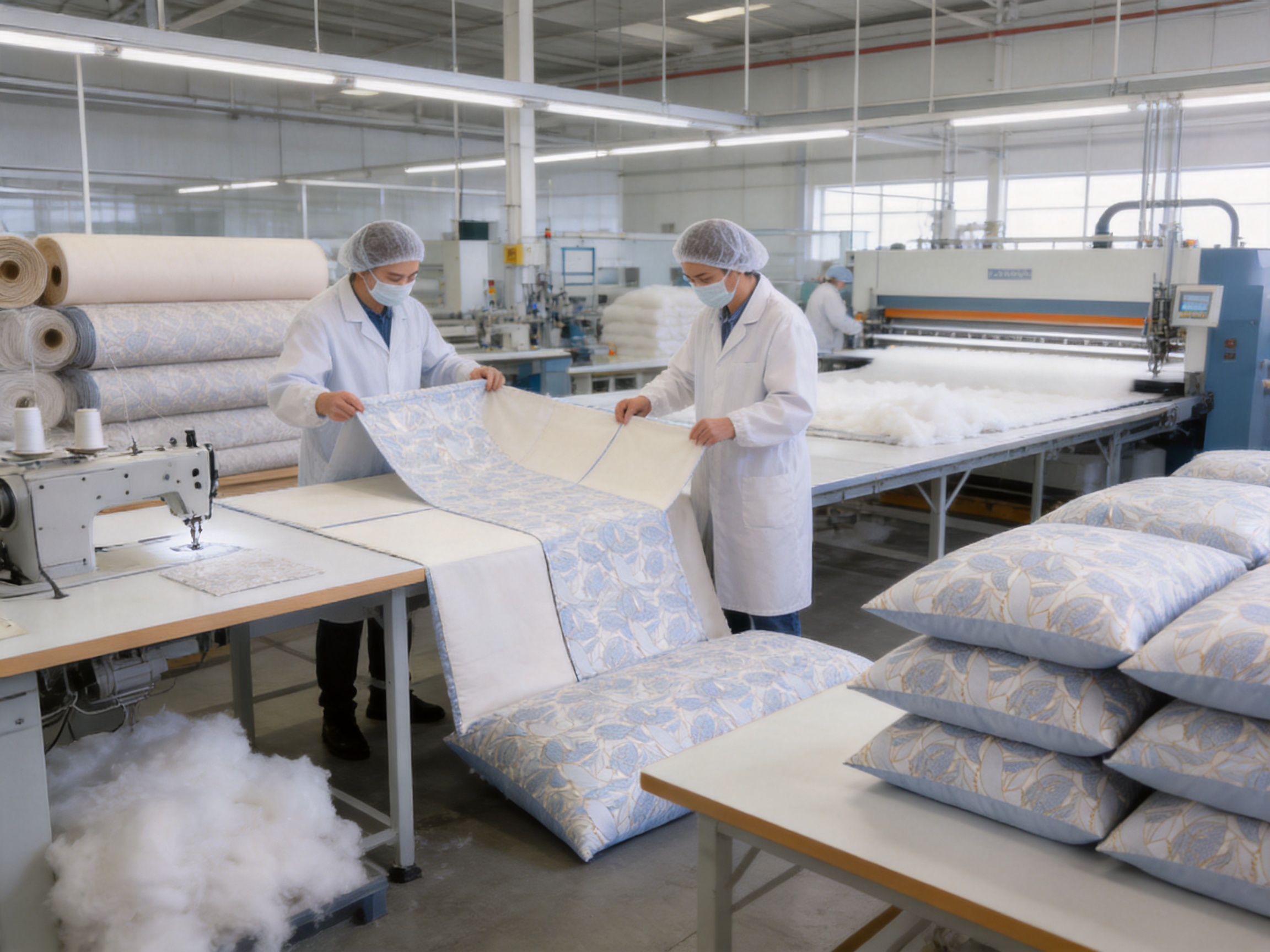
A professional pillow manufacturing process begins with material selection. The fabric must be appropriate for the intended use, visually compatible with the design, and suitable for cutting and sewing. For a printed pillow, attention is also required during print development and fabric inspection so that the pattern is presented clearly and consistently across production batches.
The brushed fabric is evaluated for its hand feel, surface appearance, color, and compatibility with the planned construction. The printed and plain components must work together in tone and texture. If the two fabrics appear mismatched, the finished product may lose the elegant effect intended by the design.
Design and Pattern Development
Pattern development is the stage where visual ideas are translated into a manufacturable product. The printed design must be positioned appropriately on the pillow surface, and the relationship between the printed area and solid-color base must be considered. Pattern scale, direction, repeat, color balance, and seam placement can all influence the finished appearance.
A thoughtful design process helps prevent common problems such as an awkward pattern interruption at the seam, unbalanced visual weight, or insufficient contrast between the printed and plain fabrics. It also supports the creation of coordinated collections in which several bedding products share related colors or motifs.
Fabric Inspection and Preparation
Before cutting, fabric should be inspected for visible defects, inconsistent color, printing irregularities, surface damage, and dimensional issues. Careful inspection is especially important for brushed and printed materials because surface defects may affect both appearance and touch.
Fabric preparation may include laying the material evenly, aligning the grain, and organizing the printed pattern according to the cutting plan. Accurate preparation supports efficient material usage and helps maintain consistent dimensions between pillow units.
Cutting and Component Matching
Cutting accuracy affects the final size, shape, and appearance of the pillow. The printed and plain fabric pieces must be cut according to the approved pattern, with attention to seam allowances and design alignment. Consistent cutting is important for repeat orders because customers expect the same product to look and fit the same way over time.
Component matching is also essential. The correct printed panel must be paired with the correct solid-color panel, and all pieces must be organized before sewing. Proper production management reduces the possibility of color mismatches, reversed components, or inconsistent pattern placement.
Sewing and Construction
Sewing converts the prepared fabric components into the outer pillow structure. Consistent seam allowance, balanced thread tension, secure stitching, and neat corners contribute to the quality of the finished product. The construction must be strong enough to withstand ordinary handling while remaining comfortable and visually clean.
For a soft bedding product, the seam should not create unnecessary stiffness or discomfort. At the same time, weak or irregular seams may affect durability and allow filling to escape. Professional operators and suitable sewing equipment help achieve the required balance between softness and structural reliability.
Filling and Distribution
After the outer structure is prepared, the 3D and 6D polyester filling is introduced. Filling quantity and distribution must be controlled so that the pillow achieves a consistent profile. An unevenly filled pillow may look irregular, feel uncomfortable, or lose its shape more quickly.
Advanced production equipment can support more consistent filling operations, while trained workers can check the product by touch and appearance. The filling stage is particularly important because small variations may be noticeable when the pillow is displayed or used.
Final Inspection and Packing
Finished pillows should be inspected for sewing quality, surface cleanliness, pattern appearance, dimensions, filling distribution, and overall presentation. Inspection helps identify defects before packing and shipping. It also provides feedback that can be used to improve upstream production stages.
Packaging protects the pillow during storage and transport. Depending on customer requirements, products may be packed individually, in sets, or as part of a coordinated bedding assortment. Proper packaging can also help preserve the product’s appearance and support retail presentation.
Quality Management and International Certifications
Tongxiang Xinlong Bedding Co., Ltd. has passed international certifications and management standards including ISO9001, ISO14001, OEKO-TEX-related standards, GRS, and BSCI. These certifications and assessments reflect a structured approach to quality management, environmental management, material responsibility, and social compliance.
ISO9001 is associated with quality management systems. In practical manufacturing terms, a quality management system encourages organizations to define procedures, control processes, document responsibilities, identify problems, and pursue continuous improvement. For buyers of bedding products, this type of system can support greater confidence in consistency and order management.
ISO14001 relates to environmental management systems. It indicates an organized approach to identifying and managing environmental responsibilities. Although certification does not eliminate every environmental impact, it demonstrates that environmental factors are considered within the company’s management framework.
OEKO-TEX-related standards are widely recognized in the textile sector for evaluating harmful substances and product safety requirements under applicable certification conditions. For products used close to the skin, material safety is an important consideration. Buyers should always confirm the specific certification scope and validity for the relevant product or production process.
GRS, or the Global Recycled Standard, is associated with recycled materials and related chain-of-custody requirements where applicable. This can be relevant to customers developing products with recycled content or sustainability-related purchasing goals. The exact applicability depends on the certified materials and product specifications selected for an order.
BSCI is associated with social compliance and responsible supply chain practices. For international buyers, responsible manufacturing conditions are increasingly important alongside product quality, delivery, and cost. A supplier with experience in social compliance assessments is better positioned to address the documentation and process expectations of global customers.
The company has also been rated as a safety production standardization enterprise for several consecutive years since 2016. Workplace safety is connected to operational stability. A safe and organized production environment can help protect employees, reduce disruption, and support more reliable manufacturing performance.
Advantages Over Competing Pillow Options
The Polyester Printed Pillow offers several advantages when compared with common alternatives. These advantages are not limited to appearance; they involve the relationship between design, comfort, material practicality, manufacturing capability, and commercial flexibility.
Advantage One: More Distinctive Than Plain Pillows
Plain pillows are easy to manufacture and can be useful as basic bedding products, but they may lack visual differentiation. The printed pattern used in this product gives retailers and brands a stronger design story. The coordinated solid-color base makes the appearance more refined and easier to integrate into different collections.
Advantage Two: More Practical Than Purely Decorative Cushions
Some decorative cushions are created mainly for visual display. They may include hard embellishments, rigid trims, or shapes that are unsuitable for regular sleeping use. The Polyester Printed Pillow is designed to retain practical bedding value. Its soft surface and polyester filling make it suitable for everyday comfort while still adding decorative appeal.
Advantage Three: Consistent Synthetic Filling
Natural fillings can offer specific performance characteristics, but they may also involve higher costs, greater variation, or particular care requirements. Polyester filling provides a practical alternative for buyers seeking a lightweight and consistent product. The use of 3D and 6D polyester supports a comfortable structure and enables efficient large-scale production.
Advantage Four: Broad Market Compatibility
The neutral product concept can be adapted to different customer groups. It may serve household consumers, retailers, online bedding stores, hospitality businesses, furniture projects, and home textile brands. The combination of a standard size, attractive surface, and practical filling makes it suitable for a broad range of sales channels.
Advantage Five: Support from an Integrated Home Textile Manufacturer
Customers purchasing pillows may also need quilts, mattress protectors, blankets, mattress covers, cushions, bedspreads, curtains, or pillowcases. A manufacturer with experience in these categories can help simplify sourcing and improve collection coordination. This may reduce the complexity of working with multiple suppliers for closely related products.
Advantage Six: Structured Quality and Compliance Systems
Certifications, production standards, employee expertise, and modern equipment can provide an advantage over informal or poorly organized manufacturers. Buyers often need more than a product sample; they need confidence that future orders will maintain acceptable quality and that the supplier can support documentation requirements.
Commercial Applications
The Polyester Printed Pillow can be used in several commercial and residential settings. Its appearance and construction allow it to function as a standard bedding product, a coordinated decorative item, or part of a broader home textile program.
Residential Bedding
For homes, the pillow provides a comfortable and attractive addition to bedrooms. It can be used with printed quilts, solid-color sheets, blankets, and mattress covers. The design makes it possible to refresh the visual style of a bedroom without replacing every textile item.
Hotels and Guest Accommodation
Hotels, guesthouses, serviced apartments, and holiday rentals require bedding that is comfortable, presentable, and practical to manage. A printed pillow can help create a more welcoming room atmosphere, particularly in properties that want a decorative identity beyond plain white bedding.
For hospitality buyers, the manufacturer’s broader product experience can be useful when sourcing multiple bedding categories. Coordinated pillows, quilts, mattress protectors, and blankets can help create a unified room concept.
Retail and E-Commerce
The product is suitable for retail presentation because the printed design creates immediate visual interest. In e-commerce, attractive patterns and clear material information can help the product stand out in search results and category pages. The combination of visual appeal and practical specifications also supports product descriptions, comparison charts, and collection-based merchandising.
Private Label and Custom Collections
Home textile brands may use this product concept as a foundation for private-label collections. Customization may involve pattern selection, color coordination, label requirements, packaging, set composition, and other customer-specific details. The feasibility of each customization should be confirmed according to order quantity, technical requirements, material availability, and production scheduling.
Customization and Product Development Opportunities
Customization is an important consideration for professional bedding buyers. The core construction of a 50 x 70 cm printed polyester pillow can serve as a starting point for different collections and market positions. While the listed specification defines the current product, customers may discuss alternative design and packaging requirements with the manufacturer.
Pattern customization is one possible direction. Different floral, geometric, natural, abstract, seasonal, or minimalist patterns can change the product’s market identity. A carefully selected pattern can be matched to the target customer, sales season, room style, or broader brand palette.
Color customization can also be considered. The printed section and plain base fabric should be coordinated so that the finished product maintains visual balance. Neutral shades may appeal to minimalist interiors, while warmer or brighter color combinations may be suitable for seasonal collections or children’s rooms, subject to the customer’s requirements.
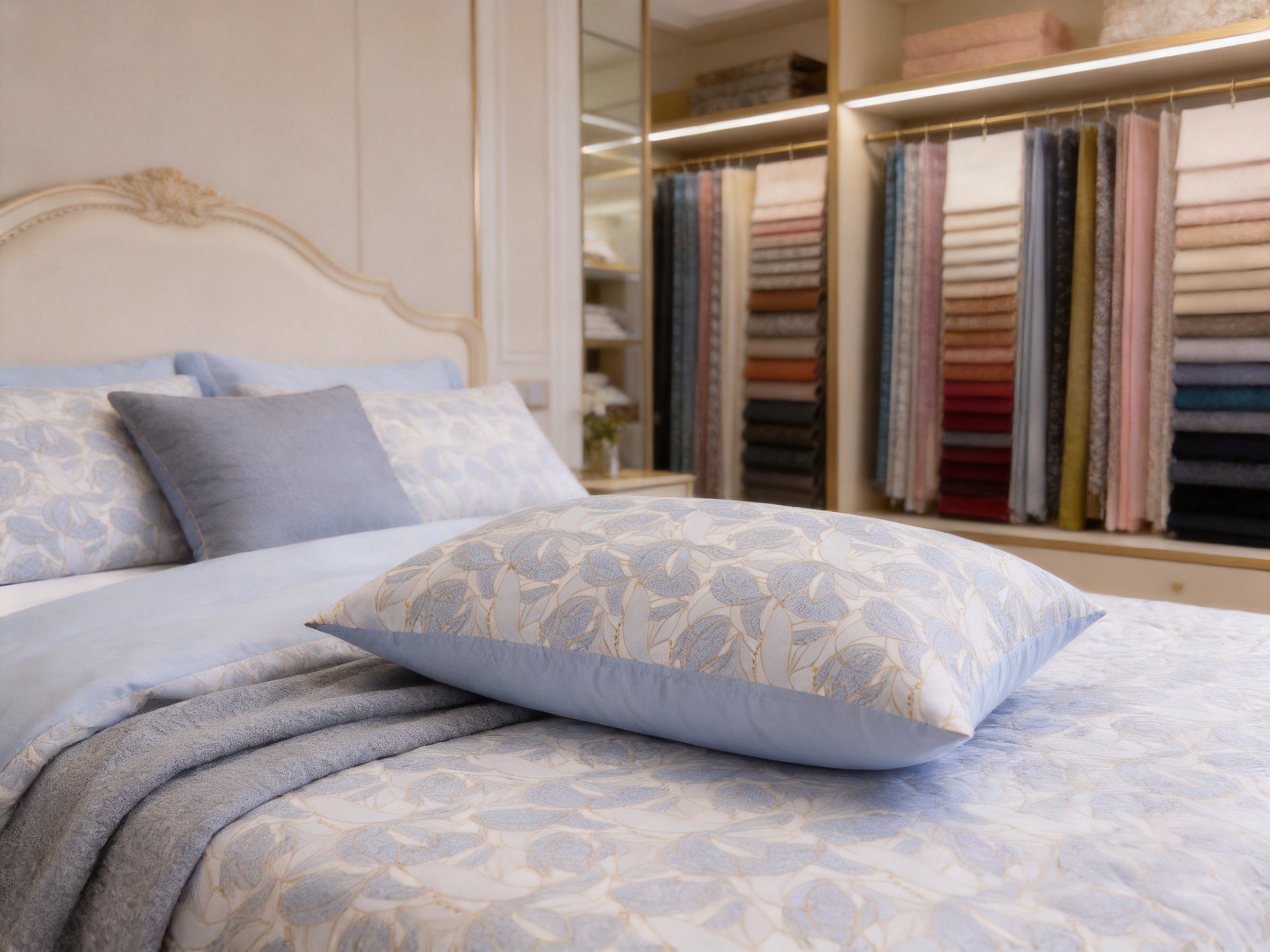
Collection development is another opportunity. A pillow can be designed to coordinate with quilts, bedspreads, blankets, mattress covers, mattress protectors, curtains, or cushions. Matching or complementary colors help customers create complete bedding presentations and may increase the value of each product range.
Packaging customization can support different sales channels. Retail packaging, bulk commercial packaging, and e-commerce packaging may require different approaches. Buyers may need product labels, care information, carton markings, barcodes, inserts, or set packaging. These details should be confirmed during the sampling and order-planning stages.
Responsible and Efficient Home Textile Production
Modern home textile manufacturing must consider not only product appearance and cost but also resource management, workplace safety, environmental procedures, and supply chain expectations. The company’s ISO14001, GRS, OEKO-TEX-related, BSCI, and safety standardization credentials indicate experience with several areas that matter to international customers.
Responsible production begins with organized processes. Accurate material planning can help reduce unnecessary waste, while efficient cutting layouts can improve fabric utilization. Stable production procedures can also reduce rework, rejected goods, and excess consumption of labor and materials.
Environmental management is increasingly relevant to home textile buyers. Customers may ask about fabric sources, recycled content, packaging materials, chemical controls, wastewater management, or factory procedures. The appropriate documentation depends on the specific order and certification scope, but an established management system provides a stronger foundation for responding to these questions.
Workplace safety and social compliance are equally important. A manufacturer that maintains structured safety practices and supports recognized social responsibility assessments is better positioned to work with international retailers, brands, and institutional buyers. Responsible operations can also contribute to long-term production stability.
Ordering Considerations for Buyers
Before placing an order, buyers should confirm the exact product specification. Important details include the 50 x 70 cm size, the selected printed and plain brushed fabrics, filling composition, color references, pattern placement, packaging method, labeling requirements, inspection standards, and delivery schedule.
Samples are valuable for evaluating appearance and performance. Buyers should review the print clarity, color balance, fabric softness, seam quality, dimensions, filling distribution, loft, and overall presentation. If the product will be used as part of a collection, the sample should also be compared with the related quilt, blanket, mattress cover, or cushion designs.
Order quantity and customization requirements may affect production planning. Printed fabrics, special packaging, custom labels, and coordinated product sets may require additional preparation. Clear communication at the beginning of the project helps reduce delays and supports more accurate quotations and production schedules.
Buyers should also discuss quality control procedures. These may include fabric inspection, size tolerance, appearance standards, filling weight, sewing requirements, packaging checks, and pre-shipment inspection. Written specifications help ensure that both the buyer and manufacturer have the same understanding of the expected result.
For international shipments, packaging and carton information should be confirmed in advance. The pillow must be protected during handling and transportation while remaining practical for warehousing and retail. Shipping documents, labeling, and compliance records should be prepared according to the destination market and customer requirements.
Care and Long-Term Product Value
Proper care supports the service life and appearance of a pillow. Specific care instructions should be based on the final construction, fabric, filling, and packaging specifications. Customers should follow the care label supplied with the finished product rather than relying on general assumptions.
Regular airing can help maintain freshness, while suitable washing and drying procedures can help preserve the fabric and filling. Excessive heat, harsh chemicals, or unsuitable mechanical treatment may affect printed surfaces, brushed texture, seams, or fiber resilience. Retailers and brands should provide clear care information to end users.
Good storage practices are also important. Pillows should be stored in a clean, dry environment and protected from moisture, dust, and compression beyond the recommended packaging conditions. If the product is compressed for transportation, it should be allowed to recover according to the supplier’s instructions before retail display or use.
The long-term value of a pillow is influenced by more than its initial price. A product that combines attractive design, comfortable materials, consistent construction, and reliable supply can create better value for retailers and consumers. It may support repeat purchases, positive reviews, coordinated collection sales, and stronger customer satisfaction.
Why Choose an Experienced Home Bedding Factory
Choosing a supplier for pillows involves evaluating more than one product sample. Buyers need to consider factory experience, production scale, technical capability, quality systems, certifications, communication, and the ability to support future product development.
Tongxiang Xinlong Bedding Co., Ltd. brings more than twenty years of home textile manufacturing experience to the production of pillows and related bedding products. Its product range covers multiple categories, allowing it to understand the practical relationships between different bedroom textiles.
The company’s facility size and workforce support a broad production operation. Advanced equipment helps improve manufacturing efficiency and repeatability, while professional and technical personnel contribute to product development and process management. This combination is useful for customers who require stable quality across repeated orders.
The company’s stated business purpose places quality at the center of its operations. Standardized operating procedures, employee technical development, and ongoing improvements are important elements in maintaining product consistency. These strengths are especially relevant for buyers who need a reliable long-term supplier rather than a one-time source.
Frequently Asked Questions
What is the size of the Polyester Printed Pillow?
The pillow size is 50 x 70 cm. This is a practical format for standard bedroom use and can also be incorporated into coordinated bedding collections.
What fabric is used for the pillow?
The product uses 85gsm printed brushed fabric together with 85gsm plain brushed fabric. The brushed surface is intended to provide a soft and skin-friendly touch.
What type of filling does the pillow contain?
The filling is made from 3D and 6D polyester. This combination is designed to provide a comfortable, lightweight, and resilient internal structure.
What makes the design different from a plain pillow?
The pillow combines a gorgeous printed pattern with a solid-color base fabric. This creates a more elegant and coordinated appearance than a basic single-color pillow while retaining practical bedding functionality.
Is the product suitable for daily household use?
Yes. It is described as a household necessity with a soft and skin-friendly overall touch. Its size, fabric, and polyester filling make it suitable for regular bedroom use, subject to appropriate care.
Can the pillow be used in hotels or guest rooms?
Yes. The product can be considered for hotels, guesthouses, serviced apartments, and other accommodation settings that need comfortable and visually appealing bedding. Commercial buyers should confirm specifications, packaging, and care requirements for their intended application.
Can the pillow be matched with other home textile products?
Yes. The printed and solid-color design can be coordinated with quilts, blankets, mattress protectors, mattress covers, cushions, bedspreads, curtains, and pillowcases. The manufacturer produces a broad range of home textile categories.
Does the manufacturer support custom requirements?
Customers may discuss pattern, color, packaging, labeling, and collection requirements with the manufacturer. The feasibility of customization depends on order volume, material selection, technical details, and production planning.
What certifications and standards are associated with the manufacturer?
The company has passed or maintained certifications and assessments including ISO9001, ISO14001, OEKO-TEX-related standards, GRS, and BSCI. The company has also been rated as a safety production standardization enterprise for several consecutive years since 2016. Buyers should confirm the current validity and scope of any certification relevant to a specific order.
Where is the manufacturer located?
Tongxiang Xinlong Bedding Co., Ltd. is located at No. 268 Xingfa Road, Wuzhen, Tongxiang City, Jiaxing, Zhejiang Province, China.
How can buyers contact the manufacturer?
Buyers can contact the company through its business email at [email protected] or by telephone at +86-573-88798028.
Conclusion
The Polyester Printed Pillow combines decorative appeal, soft comfort, practical materials, and dependable manufacturing potential. Its 85gsm printed brushed fabric and 85gsm plain brushed fabric create an elegant two-part appearance, while the 3D and 6D polyester filling provides a lightweight and resilient interior. The 50 x 70 cm size makes the pillow suitable for everyday bedrooms, hospitality projects, retail collections, and coordinated home textile programs.
Its advantages over basic competing products include stronger visual differentiation, a more refined appearance, comfortable skin-friendly handling, practical synthetic filling, and compatibility with broader bedding ranges. Unlike a purely decorative cushion, it remains a functional pillow. Unlike a basic plain pillow, it offers greater design value and merchandising potential.
The manufacturing foundation further strengthens the product. Established in 2002, Tongxiang Xinlong Bedding Co., Ltd. has extensive experience across multiple home textile categories. Its production site, workforce, technical personnel, advanced equipment, management systems, certifications, and safety practices provide support for consistent manufacturing and international customer requirements.
For buyers seeking a printed pillow that balances comfort, appearance, efficiency, and supply capability, this product represents a practical and versatile choice. It can serve as an individual bedding item, a retail product, a hospitality solution, or the foundation of a complete home textile collection.
References
1. Product specification information for the Polyester Printed Pillow, including size, fabric, filling, product description, and category details.
2. Company information for Tongxiang Xinlong Bedding Co., Ltd., including company history, facility size, workforce, product categories, certifications, and production capabilities.
3. General textile manufacturing principles relating to brushed fabrics, polyester fiber filling, cutting, sewing, filling distribution, inspection, and packaging.
4. General quality management concepts associated with ISO9001, ISO14001, OEKO-TEX-related standards, Global Recycled Standard, and BSCI assessments.
5. General home textile product development practices for pillows, quilts, blankets, mattress protectors, mattress covers, cushions, and coordinated bedding collections.


 +86-573-88798028
