



 Français
 Español
 Deutsch
Content
- 1 Product Overview
- 2 The Role of Brushed Microfibre Fabric
- 3 Understanding the 3D Polyester Filling
- 4 Advantages Compared with Common Quilt Alternatives
- 5 Comfort, Breathability, and Wrapping Performance
- 6 Manufacturing Capabilities Supporting Product Quality
- 7 Company Strengths and Industry Experience
- 8 Quality Management for Consistent Bedding Production
- 9 Environmental and Compliance Considerations
- 10 Applications for Different Customer Groups
- 11 Care and Maintenance Guidance
- 12 Purchasing and Sourcing Considerations
- 13 Frequently Asked Questions
- 13.1 What are the dimensions of the Brushed Microfibre Quilt?
- 13.2 What fabric is used for the outer shell?
- 13.3 What is the quilt filled with?
- 13.4 Is the quilt suitable for all seasons?
- 13.5 Is the quilt heavy?
- 13.6 What makes brushed microfibre different from ordinary microfibre?
- 13.7 Can the quilt be used with a duvet cover?
- 13.8 Is polyester filling suitable for customers who prefer animal-free bedding?
- 13.9 How should the quilt be washed?
- 13.10 Can the product be customized?
- 13.11 What should wholesale buyers request before ordering?
- 13.12 What other products can the manufacturer supply?
- 14 Conclusion
- 15 References
- 16 Product: Brushed Microfibre Quilt
A quilt is more than a layer placed over the body at night. It influences warmth, breathability, softness, ease of care, sleeping comfort, and the overall appearance of a bedroom. For manufacturers, producing a dependable quilt requires careful coordination between fabric selection, filling development, quilting construction, quality control, and customer-focused customization. The Brushed Microfibre Quilt presented in this article is designed around these requirements, combining a soft brushed microfibre shell with a lightweight three-dimensional polyester filling.
Measuring 140 x 200 cm, this quilt is suitable for a wide range of individual sleeping arrangements, guest rooms, seasonal bedding collections, and home textile programs. Its outer fabric is made from 90gsm brushed microfibre, while its filling uses 250gsm 3D polyester. This combination creates a product that is light, breathable, soft against the skin, and sufficiently insulating for use throughout the year.
The quilt is manufactured by Tongxiang Xinlong Bedding Co., Ltd., a home textile producer based in Wuzhen, Tongxiang, Zhejiang Province, China. Since its establishment in 2002, the company has developed experience in the production of quilts, pillows, cushions, mattress protectors, blankets, bedspreads, quilt and pillowcases, curtains, shower curtains, and related bedding products. Its manufacturing capabilities, production equipment, technical personnel, quality systems, and product development experience provide a foundation for supplying bedding to different customer groups.
This article examines the product in detail, explains the advantages of brushed microfibre and 3D polyester filling, compares its practical characteristics with common quilt alternatives, and discusses the production strengths that support consistent quality. It also considers care, sourcing, customization, and common purchasing questions.
Product Overview
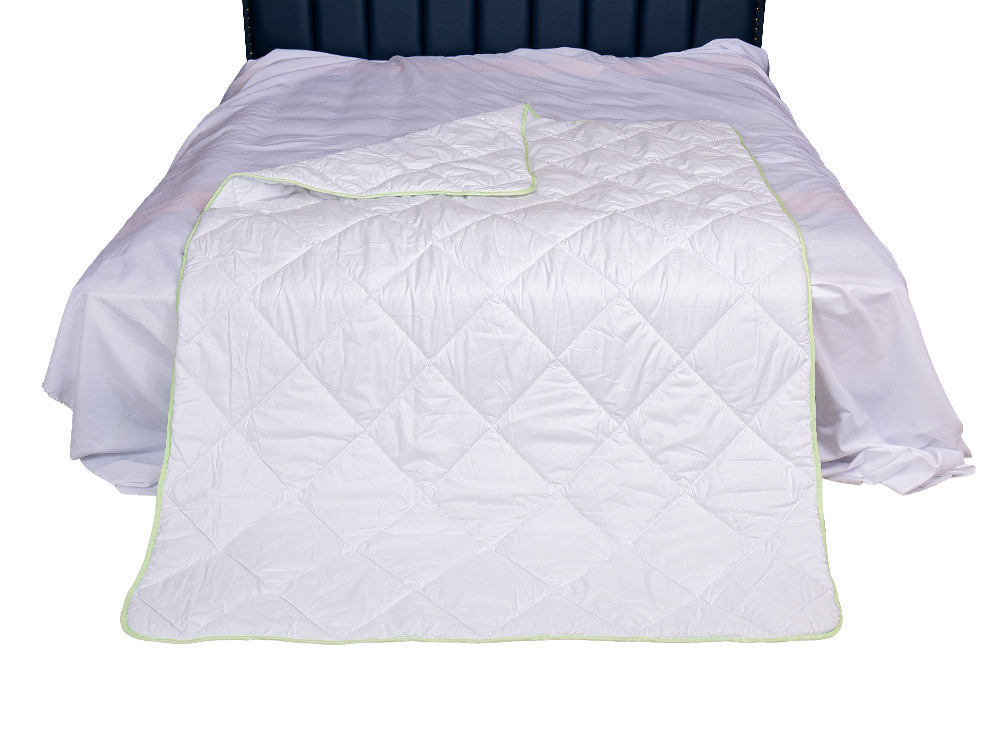
The Brushed Microfibre Quilt is a soft-filled bedding product intended to provide a comfortable covering without creating an unnecessarily heavy feeling. Its construction combines two principal materials: a 90gsm brushed microfibre fabric and a 250gsm three-dimensional polyester filling. The fabric forms the outer shell, while the filling provides loft, warmth, and a cushioning sensation.
| Product name | Brushed Microfibre Quilt |
| Product category | Microfiber Quilt |
| Size | 140 x 200 cm |
| Outer fabric | 90gsm brushed microfibre fabric |
| Filling | 250gsm 3D polyester |
| Primary characteristics | Lightweight, breathable, fluffy, soft, skin-friendly, durable, and suitable for all-season use |
| Product image reference | DM6A5843–DM6A5845 and associated product photography |
The 140 x 200 cm format offers a practical balance between coverage and manageability. It can be used as a single-person quilt, a guest-room quilt, or as part of a bedding set designed for compact bedrooms. Its dimensions also make it convenient for handling during washing, drying, storage, and distribution.
The product description emphasizes a light and breathable feel, a fluffy structure, soft skin contact, and strong wrapping properties. These characteristics are especially relevant to sleepers who prefer warmth without the restrictive weight sometimes associated with thick quilts. The quilt is also designed for durability, allowing it to remain useful across different seasons and household environments.
For retailers and professional buyers, the product offers a straightforward material specification that supports clear communication with customers. The fabric weight and filling weight can be used in product listings, packaging information, sourcing documents, and quality discussions. Transparent specifications also make it easier to compare this quilt with other bedding products in the same category.
The Role of Brushed Microfibre Fabric
Brushed microfibre is widely used in contemporary home textiles because it can provide a smooth, soft, and comfortable surface while remaining practical for regular household use. Microfibres are very fine synthetic fibers. When the surface is brushed, the fabric develops a softer hand feel and a more pleasant tactile finish than a basic unbrushed synthetic fabric.
In a quilt, the outer fabric has several functions. It holds the filling in place, protects the internal structure from everyday handling, creates the surface that comes into contact with bedding layers or the sleeper, and contributes to the visual appearance of the product. A suitable shell must therefore be comfortable, sufficiently strong, stable during laundering, and compatible with the filling.
The 90gsm brushed microfibre fabric used for this quilt is relatively light. A lighter shell helps preserve the product’s easy, flexible character. Instead of contributing excessive weight, the fabric allows the filling to remain the main source of loft and warmth. This is beneficial for users who want a quilt that can be folded, carried, or layered without becoming cumbersome.
Softness and Skin Comfort
Surface softness is one of the most noticeable qualities in bedding. A rough or rigid fabric can reduce comfort even when the filling is warm. Brushed microfibre is designed to create a soft surface that feels gentle during use. The brushed finish can help the quilt feel more inviting when placed directly over a sleeper or inside a duvet cover.
Softness is also important for guest accommodation, family bedding, and products intended for repeated daily use. A comfortable tactile finish can improve the perceived quality of a quilt and support a more pleasant sleeping environment. For product developers, this means that brushed microfibre can offer a useful combination of sensory appeal and cost-effective production.
Lightweight Construction
A light outer fabric allows the finished quilt to maintain a balanced weight. Heavy shell fabrics can add unnecessary mass and may reduce flexibility. By using 90gsm microfibre, the construction remains suitable for consumers who prioritize mobility and easy handling.
The lighter fabric is particularly useful when the quilt is folded for storage or packaged for shipment. It can also make routine care more convenient because the product is easier to place in a washing machine, remove from a drying area, and return to the bed.
Durability in Everyday Use
Although softness is important, bedding must also withstand repeated use. Quilts are folded, pulled, compressed, washed, dried, and stored many times during their service life. A practical microfibre shell can support this pattern of use when it is correctly woven, finished, cut, sewn, and inspected.
The product description identifies the fabric as wear-resistant and durable. This is an important advantage over delicate bedding materials that may require more specialized care. It does not mean that the quilt is immune to damage; rather, it indicates that the selected construction is intended for normal household use and repeated handling.
Understanding the 3D Polyester Filling
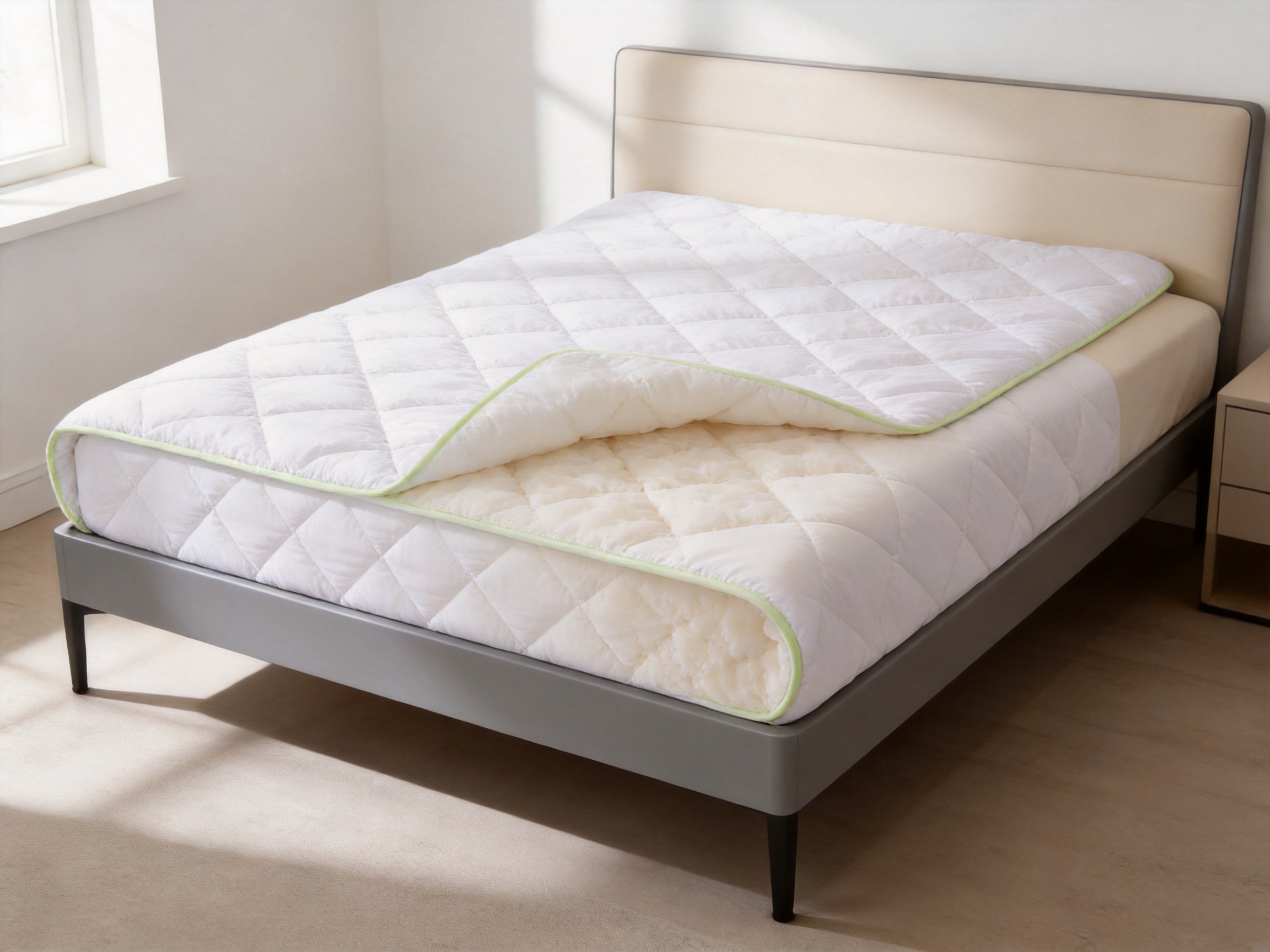
The filling is the central insulating component of a quilt. In this product, the filling is specified as 250gsm 3D polyester. The term “3D” generally refers to a three-dimensional fiber structure or lofty arrangement that helps create volume and resilience. Such a filling can produce a fluffy appearance and a comfortable layer of air within the quilt.
Air trapped among fibers contributes to thermal insulation. When the filling retains loft, it can help reduce the movement of heat away from the body. At the same time, a well-structured synthetic filling can remain relatively light compared with some dense natural fillings. This supports the product’s intended combination of warmth, flexibility, and manageable weight.
Fluffiness and Loft
Fluffiness affects both comfort and appearance. A quilt with adequate loft looks full and inviting, while a compressed or uneven quilt may appear less comfortable. The three-dimensional polyester filling is selected to create a soft, elevated structure that contributes to the quilt’s fluffy feel.
Loft can also improve the quilt’s wrapping properties. When the quilt conforms to the body and the edges remain reasonably close to the sleeper, it can help create a more enclosed sleeping environment. This may reduce drafts and enhance the feeling of warmth without requiring an extremely heavy construction.
Resilience After Handling
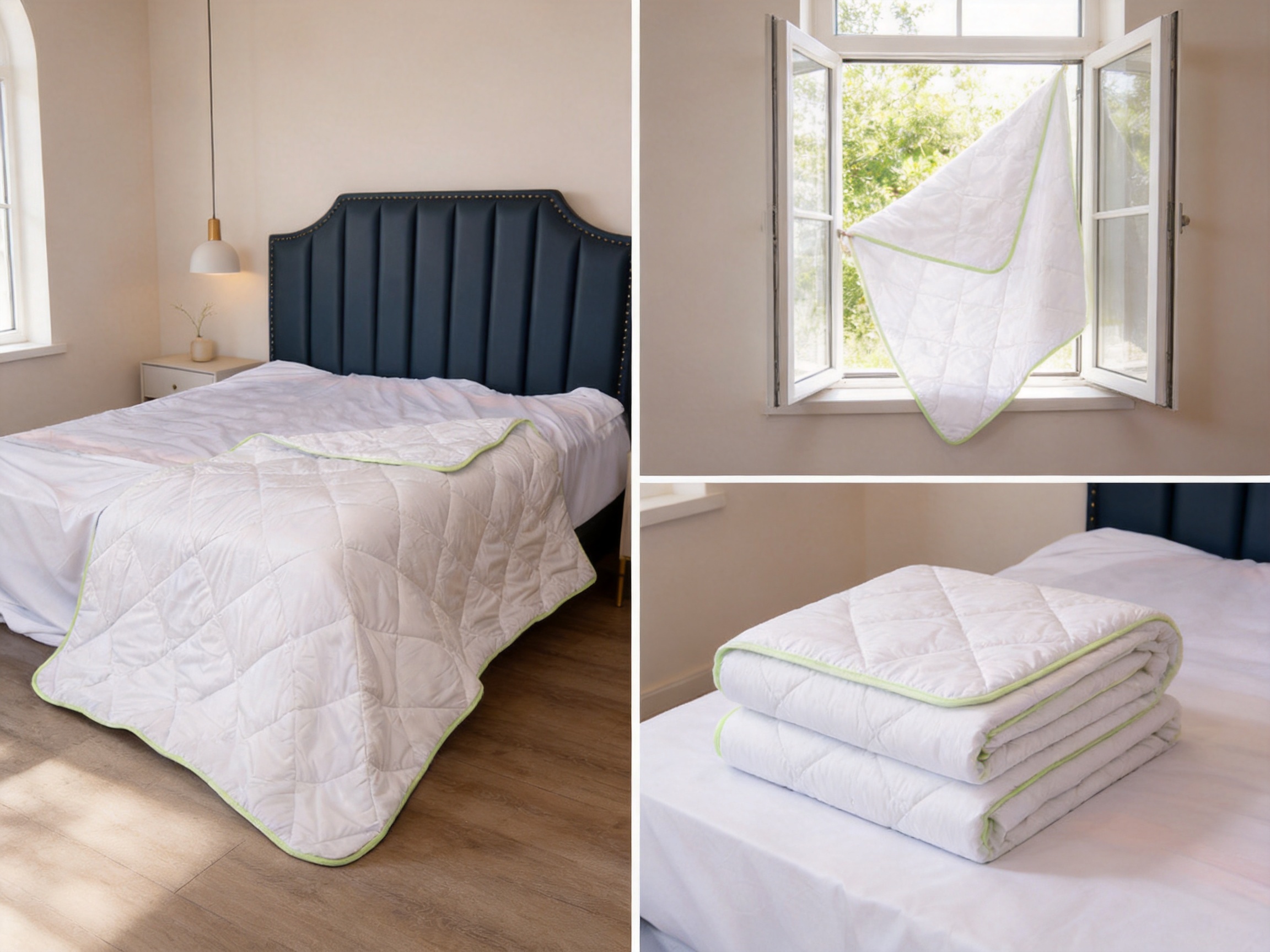
Bedding fillings must recover from compression. During storage, packaging, washing, or ordinary use, a quilt may be folded or pressed. A resilient polyester structure can help the product regain volume after being shaken, aired, or spread flat.
Recovery depends on several factors, including the quality of the fibers, the distribution of the filling, the quilting pattern, the shell construction, and care practices. For this reason, filling selection must be considered together with manufacturing controls rather than as an isolated material choice.
Suitability for Different Seasons
The 250gsm filling provides a moderate level of insulation. Combined with a lightweight brushed microfibre shell, it is intended to be versatile rather than limited to one narrow climate or season. In cooler weather, it can serve as a primary quilt for many indoor environments. In warmer periods, it can be used in air-conditioned rooms or layered with lighter bedding according to individual preference.
All-season suitability does not mean that one quilt will feel identical in every climate. Room temperature, humidity, personal sleeping habits, mattress properties, sleepwear, and the use of additional blankets all affect comfort. The advantage of a versatile quilt is that it gives households more options without requiring a separate product for every mild seasonal change.
Advantages Compared with Common Quilt Alternatives
Quilt performance should be evaluated in relation to the alternatives available in the marketplace. Different fillings and shell fabrics have different strengths. The Brushed Microfibre Quilt is not intended to replace every bedding type, but it offers several practical advantages for customers who value easy care, balanced warmth, softness, and reasonable weight.
Compared with Basic Flat Polyester Quilts
Basic polyester quilts can provide economical warmth, but some versions have a flatter appearance and a less substantial hand feel. The 3D polyester filling in this product is designed to create more loft and a fluffier structure. This can make the quilt feel more comfortable and visually fuller.
The brushed shell also offers a softer surface than a plain, unbrushed synthetic fabric. For customers comparing products by touch, this difference can be significant. A soft fabric and resilient filling may provide a more refined user experience without moving into the higher maintenance requirements associated with some luxury materials.
Compared with Heavy Cotton Quilts
Cotton-filled or thick cotton-shell quilts can provide a natural hand feel, but they may be heavier and slower to dry, depending on their construction and filling density. The microfibre and polyester combination is generally easier to handle and may dry more readily under suitable laundry conditions.
This lighter approach can benefit children, older users, hospitality operations, and households where frequent washing is important. It can also simplify storage and transportation. However, customers who specifically prefer the weight or natural fiber character of cotton may still select cotton-based products for personal preference.
Compared with Down or Feather Quilts
Down and feather quilts are often associated with high loft and premium warmth-to-weight ratios. They can be appealing to users seeking a natural filling and a specialized luxury experience. However, they may also involve higher purchase costs, specific care requirements, and concerns about feather leakage, odor, allergen sensitivity, or sourcing preferences.
A synthetic polyester-filled quilt provides an alternative for customers who prefer an animal-free filling or a simpler maintenance routine. It offers predictable material composition and can be produced in consistent weights and dimensions. For many homes, hotels, rental properties, and institutional users, practicality and repeatable specifications are more important than a premium natural filling.
Compared with Very Thick Winter Quilts
Extremely thick winter quilts may be appropriate for cold bedrooms, but they can feel excessive in moderate climates or heated rooms. They may also be difficult to wash, fold, and store. The Brushed Microfibre Quilt is designed as a more balanced option, offering moderate insulation and a light construction.
Customers can use it alone, combine it with a blanket, or place it inside a cover for additional warmth and design flexibility. This layered approach can be more adaptable than relying on one very heavy quilt throughout the year.
Compared with Delicate Luxury Fabrics
Some luxury bedding fabrics deliver a distinctive sheen or exceptionally smooth texture, but they may require more careful handling. Brushed microfibre emphasizes everyday comfort and practical durability. It is suitable for customers who want a soft product that can be integrated into normal household routines rather than reserved for occasional use.
Comfort, Breathability, and Wrapping Performance
Comfort is created by the interaction of several properties, including softness, warmth, airflow, weight, loft, and movement. The Brushed Microfibre Quilt is developed to balance these factors. The microfibre fabric contributes a soft surface, while the 3D polyester filling creates a light insulating layer.
Breathability is particularly important because excessive heat or moisture can disturb sleep. A quilt should provide insulation without creating an overly sealed or oppressive feeling. The lightweight shell and airy filling structure are intended to support a more comfortable microclimate around the sleeper.
Individual comfort varies. Some people naturally sleep warm, while others prefer a more enveloping quilt. The product’s moderate filling weight and soft structure provide a useful middle ground. The quilt can also be paired with different sheets, mattress protectors, blankets, and covers to adjust the final sleeping environment.
Strong wrapping properties refer to the quilt’s ability to surround the body with a continuous layer of material. A quilt that lies flat but remains flexible can reduce gaps at the sides and foot of the bed. This may help the user feel more securely covered while sleeping or resting.
A well-made quilt should also distribute its filling evenly. Uneven areas can create cold spots and reduce comfort. Manufacturing practices such as accurate cutting, controlled filling, quilting, edge finishing, and final inspection are therefore essential to preserving the intended performance.
Manufacturing Capabilities Supporting Product Quality
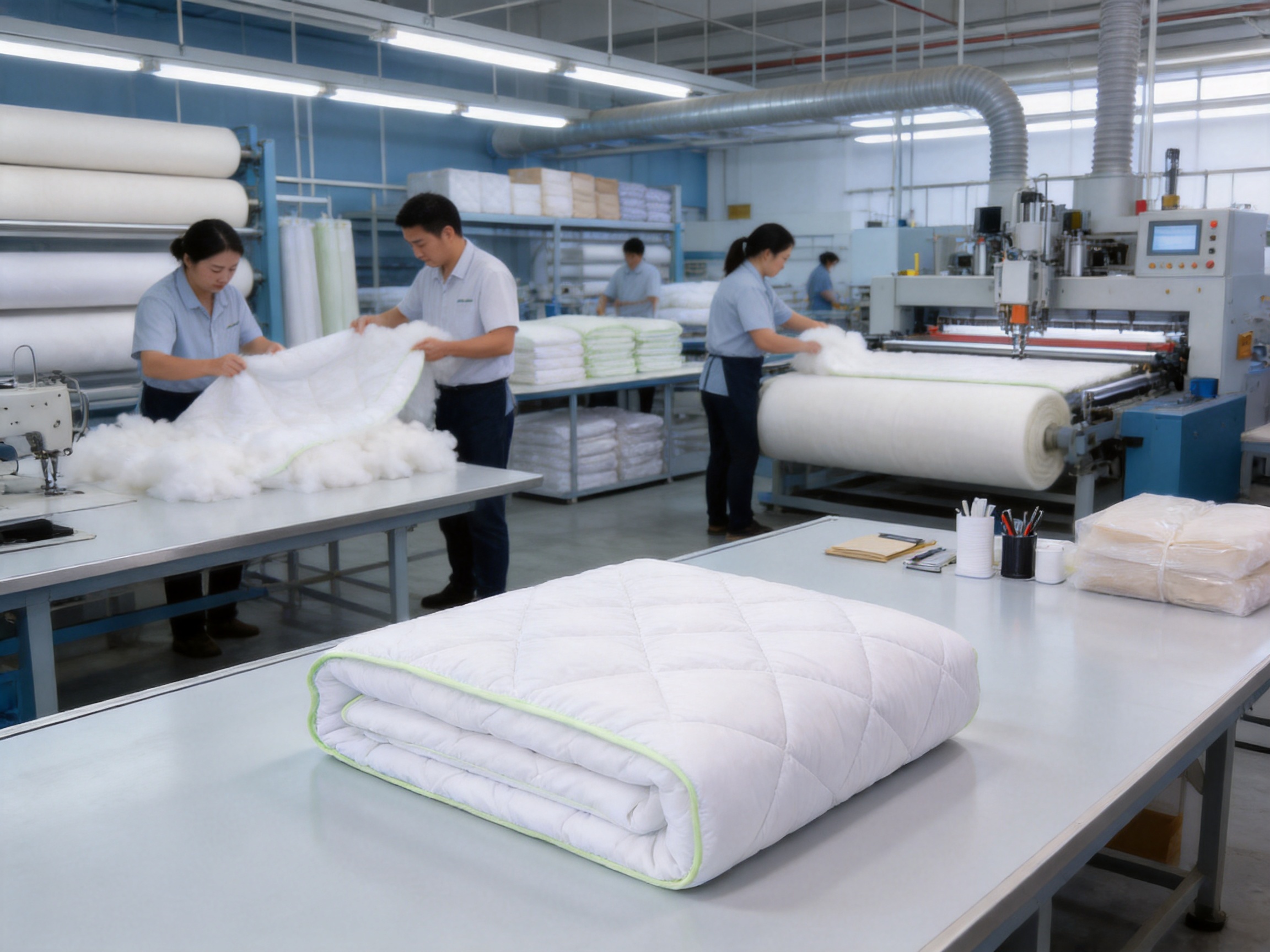
The performance of a bedding product is influenced not only by its materials but also by the manufacturing system used to transform those materials into a finished item. Tongxiang Xinlong Bedding Co., Ltd. was established in January 2002 and has developed a broad product portfolio within the home textile industry.
The company operates in Longxiang Industrial Park, Wuzhen Town, Tongxiang, Zhejiang Province. The supplied company information states that the facility covers approximately 21,000 square meters, with a construction area of approximately 18,000 square meters. It also reports a workforce of more than 320 employees and the use of various advanced production machines.
A facility of this scale can support specialization across product development, fabric preparation, filling, sewing, quilting, inspection, warehousing, and shipment preparation. For a product such as the Brushed Microfibre Quilt, coordinated production is important because the outer fabric and filling must work together in terms of weight, hand feel, dimensions, and durability.
Material Preparation
Manufacturing begins with the selection and preparation of fabric and filling materials. The microfibre shell must be inspected for surface consistency, color or appearance requirements, width, weight, and potential defects. The polyester filling must be assessed for loft, cleanliness, fiber distribution, and suitability for the required product weight.
Material preparation helps reduce variation before cutting and assembly. Consistent fabric panels support accurate dimensions, while stable filling characteristics make it easier to achieve a uniform quilt thickness. These early controls can have a direct effect on the finished product’s appearance and comfort.
Cutting and Dimensional Accuracy
For a 140 x 200 cm quilt, accurate cutting is essential. Panels that are too short, too narrow, or uneven can cause problems during sewing and may result in a distorted final shape. Controlled cutting helps maintain the specified dimensions and allows the shell to be assembled with appropriate seam allowances.
Dimensional accuracy is also important for retailers and bedding set developers. A quilt must fit expected beds, covers, packaging, and storage systems. Reliable sizing makes it easier for customers to select matching products and reduces avoidable returns caused by unclear or inconsistent dimensions.
Filling Distribution
The 250gsm 3D polyester filling must be spread consistently throughout the quilt. If too much material accumulates in one area, the quilt may feel bulky there and thin elsewhere. Controlled filling processes and visual or manual checks can help identify uneven distribution before the product is closed.
The selected filling weight provides a reference point for production. Monitoring the input and finished weight can support consistency from one production batch to another. It also gives buyers a measurable specification when they compare samples, production orders, and approved standards.
Quilting and Sewing
Quilting joins the outer layers and helps secure the filling. The quilting method and pattern influence how the filling stays in place during use and laundering. Stitching must be sufficiently secure without creating excessive compression that would reduce loft.
Edge sewing is equally important. The perimeter of a quilt receives frequent handling, especially when users pull it onto a bed, fold it, or place it in storage. Strong and neat edge finishing can help reduce fraying, seam opening, and filling migration at the borders.
Final Inspection and Packing
Before packing, finished quilts can be checked for size, appearance, seam quality, filling distribution, surface defects, cleanliness, and labeling requirements. Inspection helps identify problems that may not be visible during earlier stages of production.
Packaging should protect the quilt from dust, moisture, compression damage, and handling during transport. At the same time, it should be appropriate for the customer’s retail or wholesale requirements. Clear packaging information can communicate the product name, dimensions, materials, care instructions, and other relevant details.
Company Strengths and Industry Experience
Tongxiang Xinlong Bedding Co., Ltd. produces a wide range of home textile products rather than focusing on a single bedding category. Its reported product range includes silk cotton quilts, chemical fiber quilts, pillows, cushions, bedspreads, travel quilts, mattress protectors, blankets, quilt and pillowcases, shower curtains, and curtains.
This category breadth can create practical advantages for customers seeking multiple products from one manufacturer. A buyer may be able to coordinate quilts with pillows, mattress protectors, blankets, cushions, or bed linen through a common sourcing relationship. Such coordination can simplify communication, sampling, quality discussions, and shipment planning.
Experience across related products also supports material knowledge. Quilts and mattress protectors, for example, require attention to filling, shell fabrics, quilting, and finishing. Pillows and cushions require different shapes and filling distributions but involve similar principles of softness, resilience, and construction control.
The company reports that it has more than 320 employees and professional technical personnel. Technical staff can contribute to product development, construction improvements, production troubleshooting, sample preparation, and customer-specific requirements. In a competitive home textile market, the ability to adjust a product to different customer needs is an important manufacturing strength.
The company also reports certification and management credentials including ISO9001, ISO14001, OEKO-related certifications, GRS, and BSCI. Certification scope, validity, and applicable product or facility coverage should always be confirmed during a formal procurement process. Nevertheless, these reported systems indicate attention to quality management, environmental management, material-related standards, and social compliance.
Since 2016, the company states that it has been recognized for safety production standardization for several consecutive years. Workplace safety is relevant to production reliability because orderly processes, trained employees, maintained equipment, and controlled operating procedures can help reduce disruption and improve consistency.
Quality Management for Consistent Bedding Production
Quality in bedding is multidimensional. It includes not only whether a product looks attractive but also whether it maintains its dimensions, retains filling, feels comfortable, withstands handling, and matches the agreed specification. A responsible manufacturing process therefore uses quality control at multiple stages.
Incoming Material Control
Incoming fabric and filling should be checked against purchase specifications. For the Brushed Microfibre Quilt, relevant checks may include fabric weight, width, surface condition, color consistency, fiber characteristics, packaging condition, and documentation. Filling checks may include weight, cleanliness, loft, resilience, and distribution behavior.
Process Control
During production, operators and supervisors can monitor cutting accuracy, sewing quality, quilting appearance, filling distribution, and product dimensions. Process control is more efficient than relying only on final inspection because defects can be corrected earlier, reducing material waste and rework.
Finished Product Inspection
Final checks should confirm that the completed quilt corresponds with the approved sample or technical specification. A finished product review may consider size, weight, surface softness, stitching, edge finishing, visual cleanliness, filling consistency, packaging, and labeling.
For wholesale customers, documented inspection procedures can provide additional confidence. Buyers may also establish their own inspection standards, sampling plans, packaging instructions, and shipment approval procedures. Clear communication between the manufacturer and customer helps prevent misunderstandings.
Environmental and Compliance Considerations
Modern bedding buyers increasingly consider environmental management, recycled content, chemical safety, worker welfare, and supply chain transparency. Synthetic fiber products should therefore be evaluated not only by price and appearance but also by the manufacturer’s management practices and available documentation.
The company reports ISO14001 certification, which is associated with environmental management systems, as well as GRS certification. The exact meaning and scope of any certification should be verified for the relevant production site, material, and order. Buyers seeking recycled polyester, restricted substance compliance, or specific environmental claims should request current supporting documents before making a market statement.
OEKO-related certifications are also reported in the supplied company information. Buyers should confirm the exact certificate name, testing scope, product coverage, and validity period. Proper verification helps ensure that claims about textile safety are accurate and appropriate for the intended market.
BSCI is listed among the company’s reported credentials. Social compliance systems can help buyers assess workplace practices, ethical employment conditions, and supply chain expectations. As with all certifications, the precise audit status and scope should be reviewed during procurement.
Environmental responsibility also includes production efficiency. Accurate cutting can reduce fabric waste, controlled filling can reduce material loss, and durable products can remain in use longer. Appropriate packaging design may reduce unnecessary material consumption while still protecting the quilt during shipping.
Applications for Different Customer Groups
The Brushed Microfibre Quilt can serve several market segments because its specifications emphasize balanced comfort and practical handling.
Household Bedding
For residential use, the quilt offers a soft and manageable layer for everyday sleeping. Its moderate size suits individual use and can be integrated with existing sheets, covers, pillows, and mattress protectors. The all-season positioning gives households flexibility when room temperatures change.
Guest Rooms
Guest rooms benefit from bedding that is comfortable, easy to maintain, and simple to store between visits. The quilt’s synthetic filling and microfibre cover can support a practical housekeeping routine when washed according to the care instructions. Its soft surface can also create a welcoming first impression for guests.
Hospitality and Rental Accommodation
Hotels, serviced apartments, holiday rentals, and dormitory operators often need bedding that can withstand frequent handling. A lightweight quilt can reduce the physical effort involved in bed making, storage, and laundry management. Buyers in these sectors should confirm commercial laundering requirements before placing large orders.
Retail Bedding Collections
Retailers can position the quilt as a soft, lightweight, and versatile synthetic bedding product. Clear communication of the 140 x 200 cm size, 90gsm brushed microfibre shell, and 250gsm 3D polyester filling helps customers understand what they are purchasing.
Private-Label and Custom Programs
Manufacturers with broad technical capabilities may support private-label programs, subject to order quantity, design approval, packaging requirements, and production feasibility. Potential customization areas can include dimensions, fabric color, quilting pattern, labels, packaging, filling weight, and coordinated bedding products.
Care and Maintenance Guidance
Correct care helps preserve softness, loft, cleanliness, and dimensional stability. The specific care label supplied with the finished product should always take priority because washing and drying instructions can vary according to fabric finishes, stitching, packaging, and customer requirements.
Before washing, users should check the label, close any covers or fasteners, and avoid overloading the washing machine. A quilt should have enough space to move freely in water. Overloading may reduce cleaning effectiveness and place excessive stress on seams and the appliance.
Gentle washing conditions are generally appropriate for synthetic bedding unless the care label states otherwise. Mild detergent can help protect the fabric surface. Excessive bleach or harsh chemical treatment may affect color, softness, stitching, or filling performance.
Drying should be thorough. Residual moisture can create an unpleasant odor and may affect the product if it is stored while damp. The quilt can be spread evenly, shaken periodically, and dried according to the label. If tumble drying is permitted, the recommended temperature and cycle should be followed.
Regular airing can help refresh the quilt between washes. When storing it for a longer period, the product should be clean and completely dry. A breathable storage bag is generally preferable to prolonged compression in a tightly sealed container, unless the packaging instructions specify otherwise.
Purchasing and Sourcing Considerations
Professional buyers should evaluate more than a product photograph. A complete sourcing review may include material specifications, sample approval, size tolerance, filling weight tolerance, construction details, test reports, certification documentation, packaging, production capacity, lead time, minimum order quantity, and shipping terms.
Sampling is particularly valuable for quilts. Buyers can assess the hand feel of the brushed microfibre, the loft of the filling, the consistency of quilting, the accuracy of the dimensions, the appearance after laundering, and the behavior of the product during folding and storage.
Clear technical specifications reduce the risk of variation. A purchase specification may identify shell fabric weight, filling type, filling weight, finished dimensions, color, quilting method, label content, packaging style, carton quantity, and inspection requirements.
Customers should also discuss whether the 140 x 200 cm size is intended for a specific regional bed standard. Bed dimensions differ between markets, and the stated size may be used as a single quilt, a child or guest quilt, or a component of a larger bedding program.
For custom projects, buyers should request a development sample before bulk production. The approved sample should be retained as a reference for color, softness, construction, filling distribution, packaging, and general appearance. Any changes should be documented and approved in writing.
Frequently Asked Questions
What are the dimensions of the Brushed Microfibre Quilt?
The stated size is 140 x 200 cm. Buyers should confirm dimensional tolerances with the manufacturer when placing a commercial order.
What fabric is used for the outer shell?
The quilt uses 90gsm brushed microfibre fabric. The brushed finish is intended to provide a soft and comfortable surface.
What is the quilt filled with?
The filling is specified as 250gsm 3D polyester. This structure is designed to provide loft, light insulation, and a fluffy hand feel.
Is the quilt suitable for all seasons?
It is designed for all-season use because it combines a lightweight fabric with a moderate 250gsm filling. Actual comfort depends on room temperature, climate, personal preference, sleepwear, and whether additional bedding is used.
Is the quilt heavy?
The product is described as light and breathable. Its 90gsm shell and 250gsm filling are intended to provide a manageable construction rather than an excessively heavy winter quilt.
What makes brushed microfibre different from ordinary microfibre?
Brushing raises or softens the surface fibers, creating a softer hand feel. The precise result depends on the fiber, weave, finishing process, and manufacturing quality.
Can the quilt be used with a duvet cover?
It may be used with a suitable cover, provided that the cover is compatible with the 140 x 200 cm dimensions. A cover can provide an additional decorative layer and may simplify routine cleaning.
Is polyester filling suitable for customers who prefer animal-free bedding?
Polyester is a synthetic fiber and does not use down or feathers as the filling material. Buyers should still confirm the complete material composition and any specific animal-free documentation required for their market.
How should the quilt be washed?
Users should follow the care label supplied with the finished product. Washing instructions may vary according to the final construction, finishing, and packaging requirements.
Can the product be customized?
Potential customization may include size, color, filling weight, quilting pattern, labels, packaging, and related bedding products. Feasibility depends on the order quantity, materials, technical requirements, and production schedule.
What should wholesale buyers request before ordering?
Wholesale buyers should request a product sample, technical specification, quotation, packaging details, production lead time, minimum order quantity, certification documents, and quality inspection requirements. For larger programs, a pre-production sample and written approval process are recommended.
What other products can the manufacturer supply?
The company reports production of quilts, pillows, cushions, bedspreads, travel quilts, mattress protectors, blankets, quilt and pillowcases, shower curtains, curtains, and other home textile products.
Conclusion
The Brushed Microfibre Quilt offers a practical combination of softness, lightness, moderate insulation, and everyday durability. Its 90gsm brushed microfibre shell provides a comfortable surface, while the 250gsm 3D polyester filling creates loft and a fluffy, enveloping structure. The 140 x 200 cm size is suitable for individual use, guest rooms, hospitality applications, and retail bedding collections.
Compared with basic flat polyester quilts, the product emphasizes a softer surface and fuller structure. Compared with heavy cotton or thick winter quilts, it is easier to handle and more adaptable to moderate temperatures. Compared with down or feather products, it offers a synthetic alternative with predictable specifications and a potentially simpler care routine.
The product is supported by the manufacturing experience of Tongxiang Xinlong Bedding Co., Ltd., a home textile producer established in 2002. The company’s reported facility scale, workforce, technical personnel, broad product portfolio, production equipment, quality systems, environmental management credentials, and social compliance credentials provide a foundation for serving different customer requirements.
For individual consumers, the quilt provides a soft and versatile bedding layer. For professional buyers, it offers a clearly specified product that can be sampled, evaluated, customized, and integrated into broader home textile programs. As with any bedding purchase, customers should confirm final specifications, care instructions, certifications, packaging, and quality requirements before production or retail launch.
References
1. Product specification supplied for the Brushed Microfibre Quilt, including size, fabric, filling, and product characteristics.
2. Company information supplied for Tongxiang Xinlong Bedding Co., Ltd., including establishment date, facility area, workforce, product range, equipment, and certifications.
3. General textile manufacturing principles concerning microfibre fabric construction, polyester filling, quilting, dimensional control, and finished product inspection.
4. General home textile care principles concerning washing, drying, storage, and maintenance of synthetic quilts.
5. General quality management principles for textile production, including incoming material inspection, process control, final inspection, and sample approval.


 +86-573-88798028
