



 Français
 Español
 Deutsch
Content
- 1 What Makes the Short Plush Ultrasonic Thermal Blanket Different?
- 2 Product Structure and Material Composition
- 3 The Comfort Advantages of Short-Pile Fabric
- 4 Ultrasonic Embossing and Decorative Performance
- 5 Versatility in Everyday Use
- 6 Advantages Over Basic Competitor Blankets
- 7 Manufacturing Strength and Production Experience
- 8 Quality Management and Production Control
- 9 From Material Selection to Finished Blanket
- 10 Why Factory Experience Matters to Buyers
- 11 Applications in Retail and Hospitality
- 12 Custom Development and Order Planning
- 13 Care, Presentation, and Long-Term Use
- 14 Sustainability and Responsible Manufacturing Considerations
- 15 Commercial Value for Wholesale and Private-Label Buyers
- 16 Frequently Asked Questions
- 16.1 What is the main material of the blanket?
- 16.2 Is this a heavy winter blanket?
- 16.3 What does ultrasonic embossing do?
- 16.4 Can the embossed pattern be customized?
- 16.5 Can the blanket be produced in nonstandard dimensions?
- 16.6 Can the front and back colors be changed?
- 16.7 What are the main advantages over a plain fleece blanket?
- 16.8 Is it suitable for hotels and guest rooms?
- 16.9 Does the company offer products besides blankets?
- 16.10 What certifications does the company report?
- 16.11 What information should be included in an inquiry?
- 16.12 How can buyers evaluate a preproduction sample?
- 17 Conclusion
- 18 References
- 19 Product: Short Plush Ultrasonic Blanket
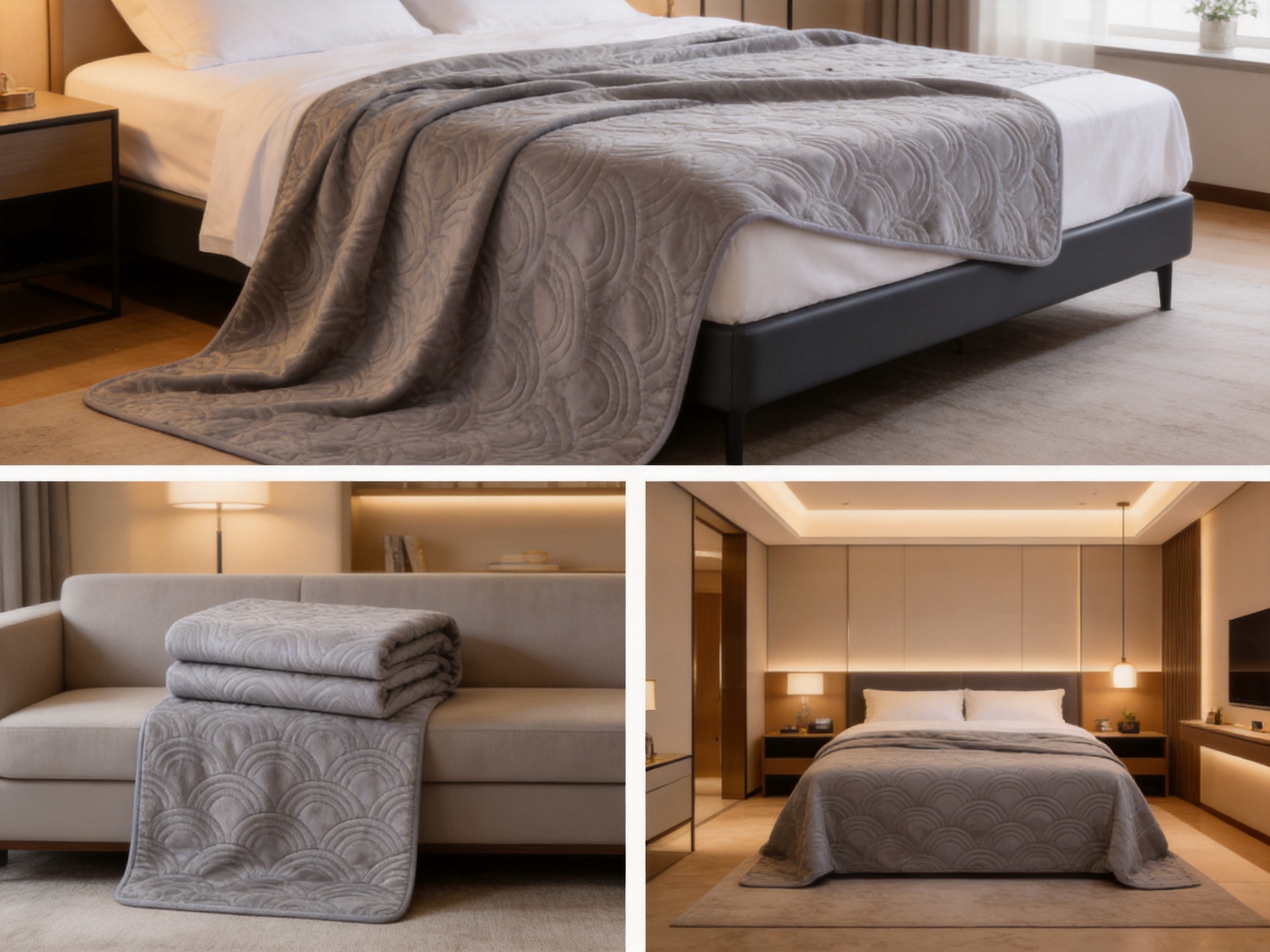
In modern home textiles, consumers and professional buyers increasingly seek bedding products that combine comfort, visual appeal, practical performance, and dependable manufacturing quality. The Short Plush Ultrasonic Thermal Blanket answers these requirements with a carefully engineered combination of soft short-pile polyester fabric, a lightweight bonded polyester filling, a durable backing fabric, and decorative ultrasonic quilting. Designed for use as a thin blanket or bed sheet, it offers a versatile solution for bedrooms, guest rooms, hotels, seasonal bedding collections, and custom home textile programs.
Unlike an ordinary flat blanket, this product is distinguished by its embossed surface patterns. Ultrasonic technology allows the fabric layers to be joined and decorated without relying exclusively on traditional thread stitching. The result is a clean, refined appearance with attractive relief patterns and a smooth overall finish. Because the manufacturer operates its own ultrasonic equipment, customers can request different embossed designs to suit specific collections, retail markets, hospitality projects, or private-label programs.
The blanket is produced by Tongxiang Xinlong Bedding Co., Ltd., an established home textile manufacturer based in Wuzhen, Tongxiang City, Zhejiang Province, China. The company specializes in a broad range of bedding and household textile products, including quilts, pillows, cushions, mattress protectors, blankets, bedspreads, quilt covers, pillowcases, curtains, and shower curtains. Its experience across multiple product categories supports a practical understanding of fabric selection, filling control, sewing, quilting, finishing, inspection, packaging, and customer-specific production.
What Makes the Short Plush Ultrasonic Thermal Blanket Different?
The product is designed around three primary qualities: tactile softness, decorative sophistication, and everyday versatility. The front uses 160gsm polyester short-pile fabric. This surface feels soft and comfortable against the skin while presenting a plush, high-end appearance. The short pile provides visual depth without the excessive bulk associated with long-pile fabrics, making the blanket suitable for users who want warmth and softness without a heavy winter comforter.
The reverse side uses 80gsm polyester fabric. This lighter backing helps maintain flexibility and keeps the product relatively easy to handle, fold, store, and transport. It also provides a practical supporting layer for the filling and embossed construction. Between the two fabric layers is 100gsm bonded polyester filling, which adds light insulation and a gently cushioned hand feel.
The final product is therefore more than a simple decorative throw. It can function as a lightweight thermal blanket, a soft bed covering, a bed sheet alternative, or an additional comfort layer over existing bedding. This multifunctional design can help retailers and wholesalers develop a broader product offering while reducing the need to source separate items for different usage occasions.
Product Structure and Material Composition
A blanket’s performance depends heavily on the relationship between its face fabric, backing, filling, and joining method. The Short Plush Ultrasonic Thermal Blanket is constructed with a balanced material combination intended to support comfort, appearance, flexibility, and practical use.
| Component | Material or Specification | Functional Contribution |
|---|---|---|
| Front fabric | 160gsm polyester short-pile fabric | Soft hand feel, plush appearance, comfortable surface, and decorative visual quality |
| Back fabric | 80gsm polyester fabric | Lightweight support, flexibility, and a smooth reverse surface |
| Filling | 100gsm bonded polyester | Light insulation, added body, and a gently padded feel |
| Joining and patterning | Ultrasonic embossed construction | Decorative relief patterns, clean appearance, and stable layer integration |
| Size | Customizable to any size | Adaptability for retail, hospitality, promotional, and project-based requirements |
The 160gsm front fabric offers a useful balance between softness and manageability. A fabric that is too light may lack the luxurious appearance expected from a premium blanket, while a fabric that is too heavy can make the finished product bulky and less flexible. The selected short-pile construction gives the product a comfortable surface while preserving the practical advantages of a lightweight design.
The 80gsm backing fabric complements rather than competes with the front surface. Its lower weight helps prevent unnecessary stiffness and supports a more fluid drape. This is important because the product is intended not only for use on a bed but also for folding, layering, and temporary use in different areas of the home.
The 100gsm bonded polyester filling adds thermal comfort without turning the blanket into a heavy cold-weather quilt. Bonded filling can help maintain a consistent layer during manufacturing and regular use. It also gives the blanket a fuller hand feel than an unfilled fabric panel, making it feel more substantial while remaining relatively easy to handle.
The Comfort Advantages of Short-Pile Fabric
Short-pile fabric is valued for its combination of softness, neat appearance, and practical maintenance characteristics. The fibers create a fine surface texture that feels pleasant when touched or placed against the body. At the same time, the pile is short enough to maintain a tidy, uniform appearance, reducing the overly shaggy look that may not suit every bedroom style.
The surface can contribute to a warmer sensory impression even when the blanket is designed for lightweight use. Soft texture influences perceived comfort, and the short plush face provides a welcoming feel for resting, reading, watching television, or sleeping. It is also visually suitable for modern bedding collections where a refined surface is preferred over a heavily textured or rustic appearance.
Another advantage is design flexibility. Short-pile polyester can display embossed or quilted patterns with clear visual definition. The relief produced by ultrasonic processing can appear more distinctive against the smooth, plush surface, allowing the blanket to become an attractive part of a coordinated bedroom design rather than merely a functional layer.
Polyester is also widely used in commercial home textiles because of its consistent availability, adaptable finishing properties, and suitability for large-scale production. When properly processed and inspected, polyester bedding can provide a reliable balance of aesthetic quality and practical value. This makes the product appropriate for buyers who need an appealing blanket at a manageable cost for repeat purchasing and collection development.
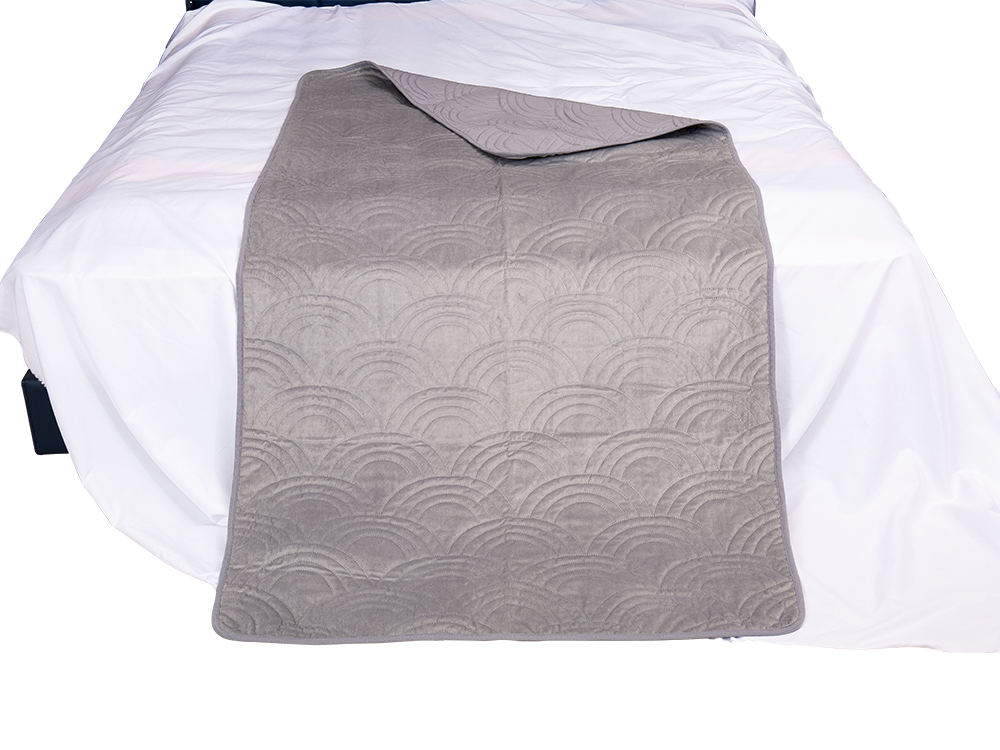
Short Plush Ultrasonic Blanket
Ultrasonic Embossing and Decorative Performance
The defining feature of this product is its ultrasonic construction. Ultrasonic equipment uses high-frequency vibration to create localized heat and pressure at selected points. In textile production, this process can bond or compress layers and create decorative patterns without depending entirely on conventional needle stitching.
For this blanket, the ultrasonic process contributes to a clean and contemporary appearance. The embossed lines or motifs can organize the surface visually, add dimension, and help distinguish the product from a plain fleece or basic polyester blanket. Depending on the customer’s design requirements, the pattern can be developed to support floral, geometric, wave, abstract, or other decorative concepts.
Because the manufacturer has its own ultrasonic machine, the production process can be coordinated internally rather than being entirely dependent on an outside processing partner. This provides several potential benefits. Design discussions can move more efficiently from concept to sample. Adjustments to pattern scale and placement can be evaluated directly during production development. The company can also better coordinate the embossing stage with fabric selection, filling arrangement, edge treatment, and final inspection.
Ultrasonic patterning may also reduce the visual interruption caused by extensive thread lines. Traditional quilting can create attractive results, but the thread color, stitch density, and seam layout become prominent elements of the design. Ultrasonic embossing offers another design language: clean relief, controlled compression, and a smooth surface that can appear more minimal and refined.
The process is particularly useful for customers who want a distinctive product without adding excessive weight. A carefully selected embossed pattern can make a lightweight blanket look more detailed and premium. This gives distributors and retailers an opportunity to position the item as an affordable luxury product, a seasonal home accessory, or a modern bedding essential.
Design Customization for Different Markets
Home textile preferences vary by region, customer group, and sales channel. Some buyers prefer understated geometric designs, while others look for expressive floral motifs or patterns that coordinate with children’s, hotel, or seasonal collections. A customizable ultrasonic production capability allows the same basic product concept to be adapted for several markets.
Customers may discuss pattern style, repeat size, placement, fabric color, edge appearance, dimensions, and packaging requirements during product development. The ability to customize size is especially valuable because standard bedding dimensions differ between countries and sales channels. A buyer may require a compact single-bed blanket, a larger cover for a double bed, a hotel-size layer, or a special promotional format.
Pattern customization can also support private-label programs. A retailer or distributor may wish to create a recognizable collection with a consistent visual identity. Embossed motifs can then be coordinated with packaging, labels, complementary cushions, mattress protectors, and other bedding products. This supports a more unified product range and may improve shelf presentation or online merchandising.
Versatility in Everyday Use
The product is described as suitable for use as a thin blanket or bed sheet. This dual-purpose character is one of its strongest commercial advantages. Many consumers appreciate bedding that can adapt to different temperatures and routines. During mild weather, it can be used alone. During colder periods, it can be placed over another blanket or under a heavier quilt as an additional layer.
As a thin blanket, it provides a soft covering for bedrooms, guest rooms, sofas, reading areas, and travel situations. Its light construction makes it easier to fold and store than a thick comforter. As a bed sheet or bed covering, it can add surface softness and decorative structure to the sleeping environment. The embossed design may also help create a finished appearance without requiring a separate decorative bedspread.
This versatility is useful in hospitality environments. Hotels, serviced apartments, guesthouses, and rental properties often need bedding that is comfortable, visually presentable, and suitable for repeated room turnover. A lightweight blanket can be easier for housekeeping personnel to handle, fold, and organize. Custom dimensions and coordinated designs can help accommodation providers maintain a consistent room style.
The item may also fit well within seasonal merchandise planning. In spring and autumn collections, a lightweight thermal blanket can occupy the space between a summer sheet and a heavy winter quilt. Retailers can present it as a transitional bedding product, a decorative layering piece, or a practical gift for home comfort.
Advantages Over Basic Competitor Blankets
The home textile market contains many basic blankets made from a single layer of fleece, plain polyester fabric, or minimally finished material. While such products may be economical, they do not always offer the same combination of tactile quality, visual interest, and construction flexibility.
The Short Plush Ultrasonic Thermal Blanket provides a more developed material structure. Instead of relying on one unfilled fabric layer, it combines a plush front, a supportive backing, and bonded filling. This layered approach gives the blanket additional body and a more comfortable hand feel. It can also make the product appear more substantial and premium than a thin, flat, single-layer alternative.
The embossed surface is another differentiating factor. Plain blankets may perform adequately but offer limited visual identity. A decorative relief pattern gives the product a stronger appearance on a retail shelf, catalog page, hotel bed, or online product listing. The pattern can be used to communicate elegance, modernity, warmth, or coordinated design depending on the selected motif.
Compared with heavily quilted or thick filled blankets, this product may offer easier handling and broader seasonal use. Its filling weight is 100gsm, so it is designed as a lightweight thermal layer rather than an extremely heavy winter quilt. This can make it more suitable for climates with moderate temperatures, air-conditioned interiors, transitional seasons, and consumers who prefer less weight over the body.
Compared with products made with longer pile, the short plush surface presents a neater and more controlled appearance. It can be easier to coordinate with contemporary furnishings and may be less visually overwhelming in smaller bedrooms. The shorter surface also supports a more precise presentation of embossed motifs.
Compared with products relying solely on external decorative stitching, ultrasonic processing can create a streamlined aesthetic. The absence of prominent thread decoration across the main surface can support a cleaner appearance and allow the fabric texture itself to remain the visual focus.
Comparison with Common Blanket Types
| Blanket Type | Typical Strength | Potential Limitation | Positioning of the Short Plush Ultrasonic Blanket |
|---|---|---|---|
| Plain single-layer fleece | Simple construction and low weight | Limited surface decoration and less padded body | Adds layered construction, filling, and embossed design |
| Long-pile plush blanket | Very soft and visually rich surface | Can appear bulky or difficult to coordinate with some interiors | Offers a neater short-pile look with refined relief patterns |
| Heavy winter quilt | Greater insulation and substantial warmth | Heavier, bulkier, and less suitable for mild conditions | Provides lightweight thermal comfort and flexible layering |
| Traditional stitched quilt | Familiar construction and broad design options | Thread lines may dominate the appearance and production may be less streamlined | Uses ultrasonic embossing for a clean, modern surface effect |
| Decorative bedspread | Strong visual presentation | May not provide the same softness or thermal function | Combines decorative appeal with practical blanket use |
Manufacturing Strength and Production Experience
The quality of a finished home textile product depends not only on its material specification but also on the manufacturer’s ability to manage the entire production chain. Tongxiang Xinlong Bedding Co., Ltd. was established in January 2002 and has developed extensive experience in the home textile sector. The company operates from Longxiang Industrial Park in Wuzhen Town, Tongxiang City, Zhejiang Province, a region associated with textile manufacturing and home furnishing production.
The company covers approximately 21,000 square meters, with a construction area of about 18,000 square meters. It has more than 320 employees and is equipped with a range of production equipment. This scale provides a foundation for handling product development, material preparation, manufacturing, quality control, and order fulfillment across multiple categories.
Its product range includes silk cotton quilts, chemical fiber quilts, pillows, cushions, bedspreads, travel quilts, mattress protectors, blankets, quilt covers, pillowcases, shower curtains, and curtains. This broad experience is relevant to the Short Plush Ultrasonic Thermal Blanket because many production principles are shared across these categories. Fabric behavior, filling distribution, dimensional control, seam quality, edge finishing, and packaging requirements must all be managed carefully in order to produce dependable bedding.
A manufacturer with experience across related categories can also help customers build coordinated product programs. For example, a blanket may be developed alongside cushions, mattress protectors, or pillow products using compatible colors and fabric themes. This can simplify sourcing and help a buyer create a complete home textile collection through one experienced production partner.
Internal Ultrasonic Capability
One of the company’s specific strengths is its own ultrasonic machine. Internal access to this equipment supports greater control over embossed blanket development. It can help reduce communication gaps between design requirements and production execution, especially when a customer requests a new pattern or a modified repeat size.
In a typical development process, the buyer communicates the desired product concept, dimensions, fabric preferences, color direction, and pattern requirements. The manufacturer then evaluates the combination of materials and determines how the design can be applied to the layered construction. Sampling allows the customer to review hand feel, visual relief, pattern scale, and overall appearance before bulk manufacturing.
Internal processing can also improve responsiveness when adjustments are required. Pattern density, border positioning, embossed depth, and overall layout may need to be reviewed after the first sample. A manufacturer with direct control of the relevant equipment can communicate more efficiently with technical and production teams and make informed adjustments within the factory environment.
Quality Management and Production Control
Consistency is essential for buyers ordering home textiles in commercial quantities. A product must maintain a stable appearance, reliable dimensions, acceptable filling distribution, and repeatable hand feel from one production batch to another. The company states that it has passed international certifications and management standards including ISO9001, ISO14001, OEKO-TEX Standard 100, OEKO-TEX STeP, GRS, and BSCI.
These certifications and standards represent different areas of organizational, environmental, chemical safety, social responsibility, and recycled-material management. They should not be interpreted as a guarantee that every specification is automatically fulfilled for every order; customers should confirm the relevant certification scope and product-specific requirements. Nevertheless, the company’s certification background indicates an established approach to formalized production management and responsible manufacturing practices.
ISO9001 is associated with quality management systems and structured approaches to process control. For a blanket manufacturer, this type of system can support documented procedures for incoming materials, production stages, inspection, corrective action, and continuous improvement. A controlled process is especially important when producing customized patterns or multiple sizes for different buyers.
ISO14001 relates to environmental management systems. In a modern textile supply chain, environmental management can influence production planning, resource use, waste control, and regulatory awareness. Buyers increasingly consider these issues when selecting suppliers for long-term cooperation.
OEKO-TEX-related standards are commonly associated with textile safety and responsible production conditions. Buyers should always verify current certificates and applicable product coverage, but the stated certifications demonstrate that the company recognizes the importance of chemical management and workplace production standards.
BSCI is connected with social compliance and responsible workplace practices. For international customers, this can be relevant when supplier evaluation includes labor conditions, ethical sourcing, and factory transparency.
The company also reports that it has been rated as a safety production standardization enterprise for several consecutive years since 2016. Safe production is important in a factory using textile machinery, ultrasonic equipment, cutting systems, filling processes, and packaging operations. A structured safety culture can support both employee welfare and operational continuity.
From Material Selection to Finished Blanket
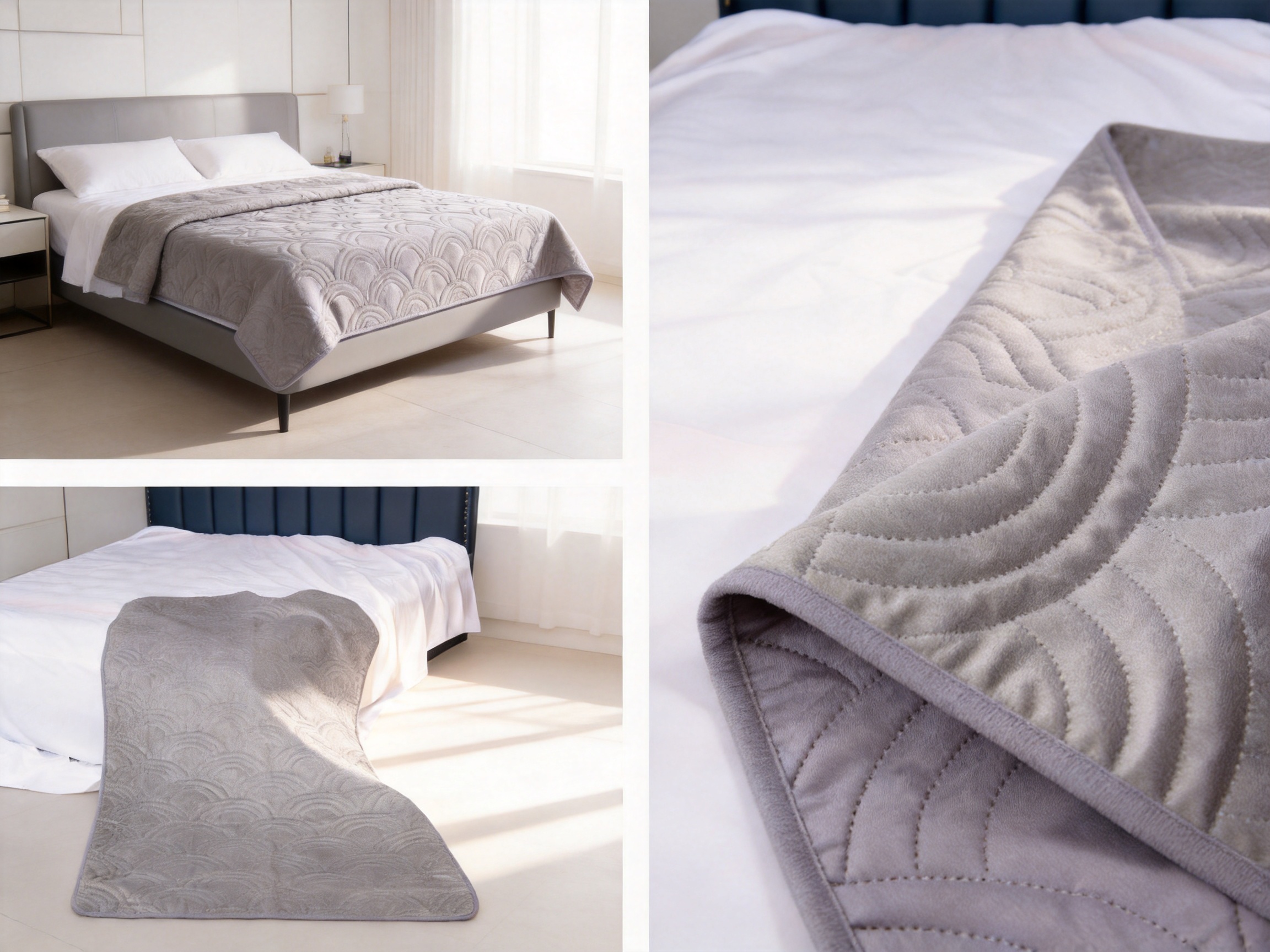
The production of an ultrasonic blanket involves multiple coordinated stages. The first stage is material planning. The front fabric, backing fabric, and filling must be selected according to the intended hand feel, visual effect, dimensions, color, and performance requirements. If the customer requests a special color or pattern, the factory must also consider how that color and pattern will interact with the short plush surface.
Material inspection is an important part of preparation. Fabric width, surface consistency, color uniformity, defects, weight, and physical condition should be reviewed before cutting or layering. Filling materials must also be checked for cleanliness, consistency, and suitability for the required product thickness.
Next, the fabric layers are prepared according to the requested size and design. Accurate cutting helps reduce variation between finished units and supports cleaner edges. For custom-size orders, cutting plans must be carefully arranged to balance dimensional accuracy with efficient material usage.
The front fabric, bonded polyester filling, and backing fabric are then aligned. Correct alignment is essential because shifting between layers may affect the appearance of the embossed pattern, the evenness of the finished blanket, and the final dimensions.
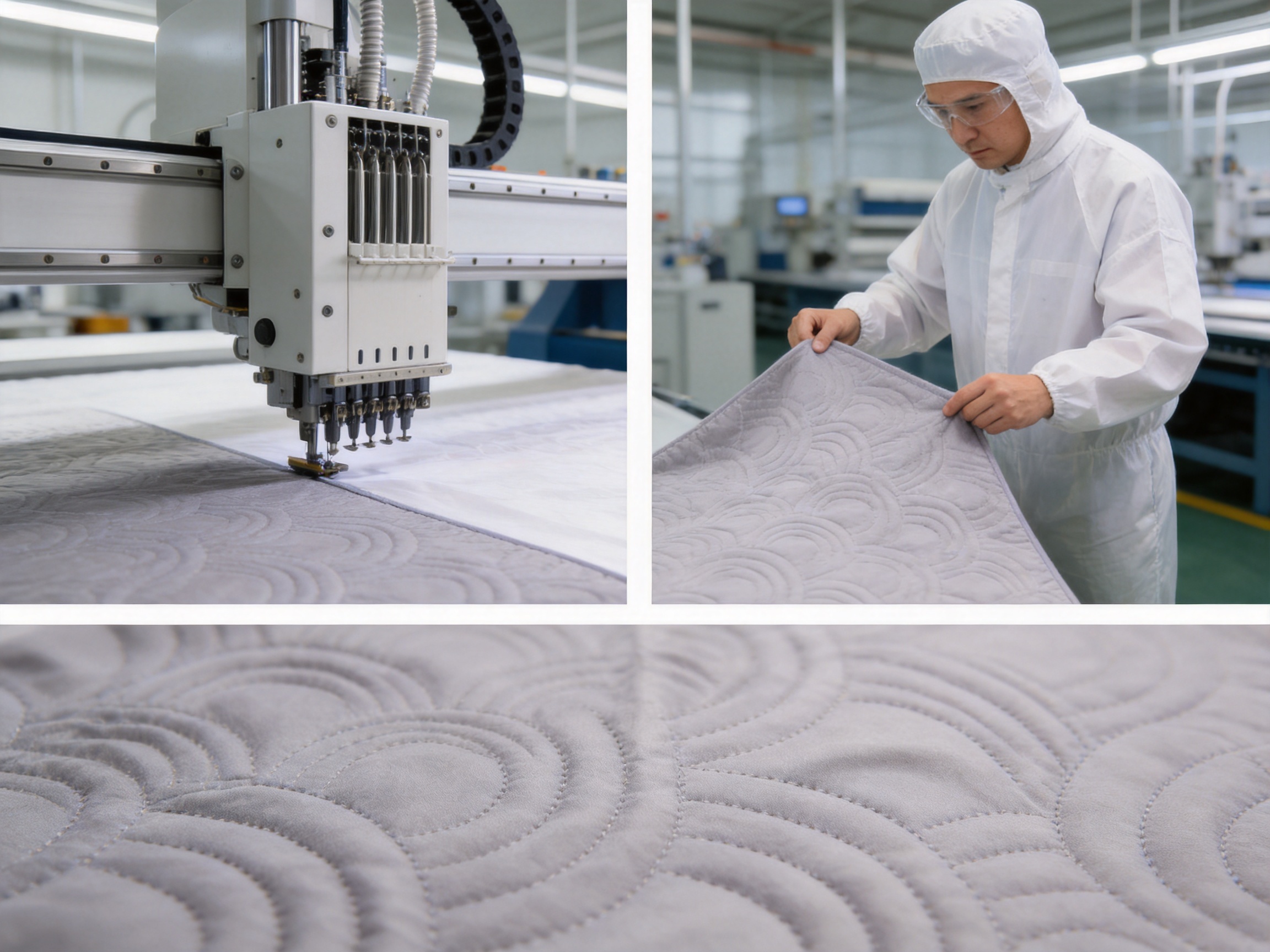
The ultrasonic machine applies the selected pattern through controlled pressure and high-frequency vibration. The process can join or compress the layers in specific areas while producing the desired decorative relief. The exact machine settings depend on fabric composition, thickness, pattern design, and production requirements. Experienced technical personnel are important because excessive heat or pressure could affect the fabric surface, while insufficient processing could produce an unclear or unstable pattern.
After the main ultrasonic stage, the blanket may undergo edge finishing and trimming. The edges should be reviewed for alignment, neatness, and durability. Any loose fibers, irregular margins, or visible defects should be identified before the product advances to final inspection.
Quality inspection can include dimensional measurement, visual review, pattern verification, surface assessment, filling evaluation, and packaging checks. If the product is being manufactured to a customer’s approved sample, the finished goods should be compared with the reference sample for color, size, hand feel, pattern placement, and overall construction.
Finally, the blankets are folded, packed, labeled, and prepared for shipment according to customer instructions. Packaging may be developed for retail display, wholesale cartons, hospitality distribution, or private-label programs. Correct folding and packaging help protect the embossed surface and maintain a neat presentation when the product reaches the customer.
Why Factory Experience Matters to Buyers
For importers, retailers, wholesalers, and hospitality buyers, selecting a factory is a strategic decision rather than a simple price comparison. A low unit price does not always represent the best commercial value if the supplier cannot maintain consistent quality, deliver customized designs, or respond effectively to production issues.
An experienced factory can help buyers evaluate whether a proposed design is suitable for the selected materials and production method. It may identify potential problems involving pattern scale, fabric direction, edge construction, filling thickness, or packaging before the order enters bulk production. Early technical communication can help prevent costly revisions later.
Manufacturing experience is also valuable when a customer wants to develop a larger collection. A blanket may be one item within a wider home textile range, and consistency among products is important. The same supplier may be able to coordinate fabric colors, surface styles, labeling, and packaging across quilts, cushions, mattress protectors, and related items.
Production scale can further support order planning. A factory with more than 320 employees and a substantial production site may be better positioned to organize different stages of work, manage larger orders, and maintain a stable supply relationship. Buyers should still confirm capacity for their specific program, but established infrastructure is an important starting point for cooperation.
Applications in Retail and Hospitality
The Short Plush Ultrasonic Thermal Blanket can be positioned in several market segments. In retail, it may be presented as a soft decorative blanket for bedrooms, living rooms, guest rooms, or seasonal gifting. The embossed surface gives it a visual feature that can be communicated clearly through product photography and in-store presentation.
In e-commerce, tactile benefits must often be translated into visual and written content. Close-up images can show the short plush texture and embossed relief, while product descriptions can explain the lightweight filling, reversible construction, and customizable dimensions. Clear information about intended use helps customers understand that the blanket is designed for light thermal comfort rather than the weight of a heavy winter comforter.
For hotels and serviced apartments, the product can be used as an additional bed layer or a decorative cover. Its custom-size capability may be useful when rooms use nonstandard mattresses or when the operator wants a particular overhang and presentation style. Coordinated patterns can support a consistent interior concept.
For furniture and home furnishing brands, the blanket can complement upholstered products, bedding sets, cushions, and bedroom accessories. The embossed pattern may be selected to echo details found in curtains, headboards, or decorative pillows. Because the product can be customized, it may serve as part of a broader design story rather than as an isolated item.
For promotional and corporate gifting programs, the lightweight construction and flexible sizing may support practical, branded home comfort products. Buyers should discuss labeling, packaging, color matching, and minimum order requirements with the manufacturer during the planning stage.
Custom Development and Order Planning
Customers interested in developing this product should prepare a clear specification brief. The brief may include the desired blanket dimensions, front and back fabric colors, pattern concept, filling preference, edge requirements, packaging format, label information, and target market. The more complete the brief, the more efficiently the factory can assess feasibility and prepare a sample.
Pattern references can be supplied as sketches, digital artwork, physical samples, or general design descriptions. The manufacturer’s technical team may need to adapt the proposed artwork to an ultrasonic repeat pattern. Not every graphic is equally suitable for embossing. Very fine details, excessively dense areas, or complex irregular layouts may require modification to achieve clear and stable results.
Customers should also define the intended use. A blanket designed for home retail may have different packaging and presentation requirements from one intended for hotel rooms. A product for mild climates may prioritize lightness, while a product for colder regions may require a different construction or a heavier filling specification.
Sampling is an essential part of the process. A sample allows the buyer to assess the actual surface, softness, thickness, drape, pattern clarity, color, and dimensions. It also gives the manufacturer an opportunity to confirm the practicality of the proposed design before bulk production.
Before confirming a large order, customers should discuss inspection standards, acceptable tolerances, carton dimensions, labeling, delivery schedules, testing requirements, and documentation. These details help establish a common understanding between the factory and the buyer.
Care, Presentation, and Long-Term Use
The care instructions for a finished blanket should be confirmed according to the final fabric finish, filling construction, edge treatment, and customer requirements. Buyers should request product-specific washing and drying recommendations rather than relying only on general polyester care assumptions.
In general, gentle handling can help preserve the softness of the short plush surface and the clarity of the embossed pattern. Excessive heat, harsh chemicals, or rough mechanical treatment may affect textile appearance over time. Retail packaging should include clear care information so that end users can maintain the product correctly.
Presentation also influences perceived value. The blanket should be folded in a way that shows the front fabric and, where possible, highlights the embossed design. Packaging that protects the surface from dust, moisture, and compression damage can help the item arrive in good condition. Buyers may choose transparent packaging for visual merchandising, recyclable packaging for sustainability goals, or branded packaging for a more premium presentation.
Because the blanket is lightweight and foldable, it can be stored conveniently in wardrobes, bedding cabinets, guest rooms, and retail stockrooms. Its manageable volume can also simplify handling during transportation and inventory organization, although actual shipping efficiency will depend on the final dimensions, packaging method, and order quantity.
Sustainability and Responsible Manufacturing Considerations
Sustainability in home textiles includes material selection, production efficiency, product durability, packaging, factory management, and responsible labor practices. No single feature can define a product as fully sustainable, but these elements can be considered together during procurement.
The company’s stated certifications, including ISO14001, OEKO-TEX STeP, and GRS, indicate attention to environmental management, responsible production, and recycled-material systems within applicable certification scopes. Buyers who have specific sustainability requirements should request current documentation and confirm whether the exact materials and production processes for their order are covered.
Ultrasonic construction may also support efficient decorative processing by integrating patterning and layer joining in one production approach. The practical environmental impact depends on machine settings, energy use, production planning, material waste, and factory management. Efficient cutting layouts and well-planned production batches can further help reduce unnecessary fabric waste.
Product longevity is another important consideration. A blanket that remains attractive and functional over repeated use can reduce the need for frequent replacement. Material quality, stable construction, appropriate care, and accurate customer instructions all contribute to useful service life.
Commercial Value for Wholesale and Private-Label Buyers
For wholesale buyers, the product offers several commercial advantages. Its combination of comfort and decorative design creates a clear sales story. It can be offered at different price points depending on size, packaging, design complexity, and order requirements. The ability to customize dimensions allows buyers to address regional bedding standards instead of being limited to one universal format.
For private-label customers, the product can become a signature item within a soft home collection. A distinctive embossed pattern may be associated with a particular brand aesthetic. Color combinations can be developed to match seasonal palettes, interior trends, or existing bedding products. Labels and packaging can then reinforce the brand’s positioning.
For distributors, the product’s multifunctional use may simplify assortment planning. A single blanket style can be marketed for bedrooms, sofas, guest rooms, transitional seasons, and light layering. This broad positioning can make it easier to serve different customer groups while maintaining a coherent product range.
For project buyers, including hospitality and furnishing companies, custom dimensions and design coordination are especially valuable. A product that is made to match a specific project can provide a more integrated appearance than a standard off-the-shelf blanket.
Frequently Asked Questions
What is the main material of the blanket?
The blanket uses 160gsm polyester short-pile fabric on the front, 80gsm polyester fabric on the back, and 100gsm bonded polyester filling between the fabric layers.
Is this a heavy winter blanket?
No. It is designed as a lightweight thermal blanket or bed sheet. The 100gsm bonded polyester filling provides light insulation and added body, but the product is not positioned as a thick, heavy winter quilt.
What does ultrasonic embossing do?
Ultrasonic embossing uses high-frequency vibration, pressure, and controlled heat to create decorative relief patterns and help integrate the fabric layers. It gives the surface a clean, modern appearance without relying entirely on conventional thread quilting.
Can the embossed pattern be customized?
Yes. The manufacturer operates its own ultrasonic machine and can develop various embossed patterns according to customer requirements. The final design should be reviewed for suitability with the selected fabric, filling, dimensions, and production method.
Can the blanket be produced in nonstandard dimensions?
Yes. The size is customizable to any required specification, subject to production feasibility and order details. Customers should provide the desired finished dimensions during the quotation and sampling stage.
Can the front and back colors be changed?
Color customization can be discussed with the manufacturer. Availability will depend on fabric sourcing, color matching requirements, minimum quantities, and the customer’s target production schedule.
What are the main advantages over a plain fleece blanket?
The Short Plush Ultrasonic Thermal Blanket combines a soft short-pile face, a backing fabric, bonded filling, and a decorative embossed pattern. This gives it more structure, visual interest, and design value than many basic single-layer fleece blankets.
Is it suitable for hotels and guest rooms?
It can be suitable for hotels, serviced apartments, guesthouses, and other hospitality environments. Its lightweight construction, customizable dimensions, decorative surface, and practical layering function can support hospitality applications. Buyers should confirm the required testing, care instructions, and durability standards for their project.
Does the company offer products besides blankets?
Yes. The company manufactures a broad selection of home textile products, including quilts, pillows, cushions, bedspreads, travel quilts, mattress protectors, quilt covers, pillowcases, curtains, and shower curtains.
What certifications does the company report?
The company reports certifications and standards including ISO9001, ISO14001, OEKO-TEX Standard 100, OEKO-TEX STeP, GRS, and BSCI. Customers should request current certificates and verify the scope applicable to their specific order.
What information should be included in an inquiry?
An inquiry should include the desired size, fabric colors, pattern direction, estimated order quantity, intended application, packaging preference, labeling requirements, delivery destination, and any testing or certification needs. Artwork or reference samples should be provided when available.
How can buyers evaluate a preproduction sample?
Buyers should review the sample’s dimensions, front and back fabric, softness, filling distribution, embossed pattern clarity, color, edge finishing, packaging, and overall appearance. The sample should be approved as the reference for bulk production whenever possible.
Conclusion
The Short Plush Ultrasonic Thermal Blanket is a versatile home textile product designed to unite comfort, decorative value, and practical functionality. Its 160gsm polyester short-pile front provides a soft and refined surface, while the 80gsm backing and 100gsm bonded polyester filling create a lightweight layered structure. The result is suitable for use as a thin blanket, bed sheet, decorative bed covering, or additional thermal layer.
Its strongest point of differentiation is the ultrasonic embossed construction. This process creates a clean relief pattern and allows customers to develop customized designs for different markets and collections. Because the manufacturer has its own ultrasonic equipment, it can manage pattern development and production coordination more directly.
The product is supported by the manufacturing experience of Tongxiang Xinlong Bedding Co., Ltd., a company established in 2002 with a substantial production site, more than 320 employees, broad home textile capabilities, and stated international certifications. Its experience in quilts, pillows, cushions, mattress protectors, bedspreads, curtains, and related products provides a foundation for coordinated sourcing and custom development.
For retailers, wholesalers, hospitality buyers, and private-label brands, this blanket offers a practical opportunity to combine soft comfort with distinctive visual presentation. Its customizable size, adaptable embossed design, lightweight construction, and broad application range make it suitable for seasonal collections, coordinated bedding programs, guest-room furnishing, and modern home textile assortments.
When developed through clear specifications, sample approval, documented quality requirements, and appropriate packaging, the Short Plush Ultrasonic Thermal Blanket can serve as a reliable and attractive addition to a professional bedding portfolio.
References
1. Product specification provided by the manufacturer: Short Plush Ultrasonic Thermal Blanket, including fabric, filling, size, product description, and ultrasonic production capability.
2. Internal product information supplied for the short plush blanket series, including listed front fabric, back fabric, bonded polyester filling, and customizable dimensions.
3. International Organization for Standardization. ISO 9001 Quality Management Systems: Requirements.
4. International Organization for Standardization. ISO 14001 Environmental Management Systems: Requirements with Guidance for Use.
5. OEKO-TEX Association. Standard 100 and STeP principles for textile safety and responsible textile production.
6. Global Recycled Standard. General principles for recycled-material verification and responsible processing.
7. Business Social Compliance Initiative. General principles for social compliance management in international supply chains.
8. General textile manufacturing references concerning polyester short-pile fabrics, bonded synthetic filling, ultrasonic textile processing, and bedding quality control.


 +86-573-88798028
