



 Français
 Español
 Deutsch
Content
- 1 Understanding the Product Construction
- 2 Key Benefits for Everyday Use
- 3 Advantages Compared with Common Alternatives
- 4 Product Specification Overview
- 5 Manufacturing Strengths and Production Capability
- 6 Quality Management and Compliance Orientation
- 7 How the Manufacturing Process Supports Product Performance
- 8 Customization Opportunities for Different Markets
- 9 Care, Handling, and Maintenance Considerations
- 10 Why Supplier Selection Matters
- 11 Recommended Evaluation Process for Buyers
- 12 Q&A: Common Questions About the Knitted Mattress Protector
- 12.1 What is the primary purpose of this product?
- 12.2 What is the standard size?
- 12.3 What is the front fabric made of?
- 12.4 What is used on the back?
- 12.5 What type of filling is included?
- 12.6 Is it waterproof?
- 12.7 Is it suitable for use under a fitted sheet?
- 12.8 Can the product be customized?
- 12.9 Is polyester a practical material for a mattress protector?
- 12.10 How should it be cleaned?
- 12.11 What makes the product different from a simple sheet?
- 12.12 What makes it different from a thick mattress topper?
- 12.13 Can it be included in a coordinated bedding collection?
- 12.14 What should commercial buyers confirm before ordering?
- 13 Conclusion
- 14 References
- 15 Product: Knitted Mattress Protector
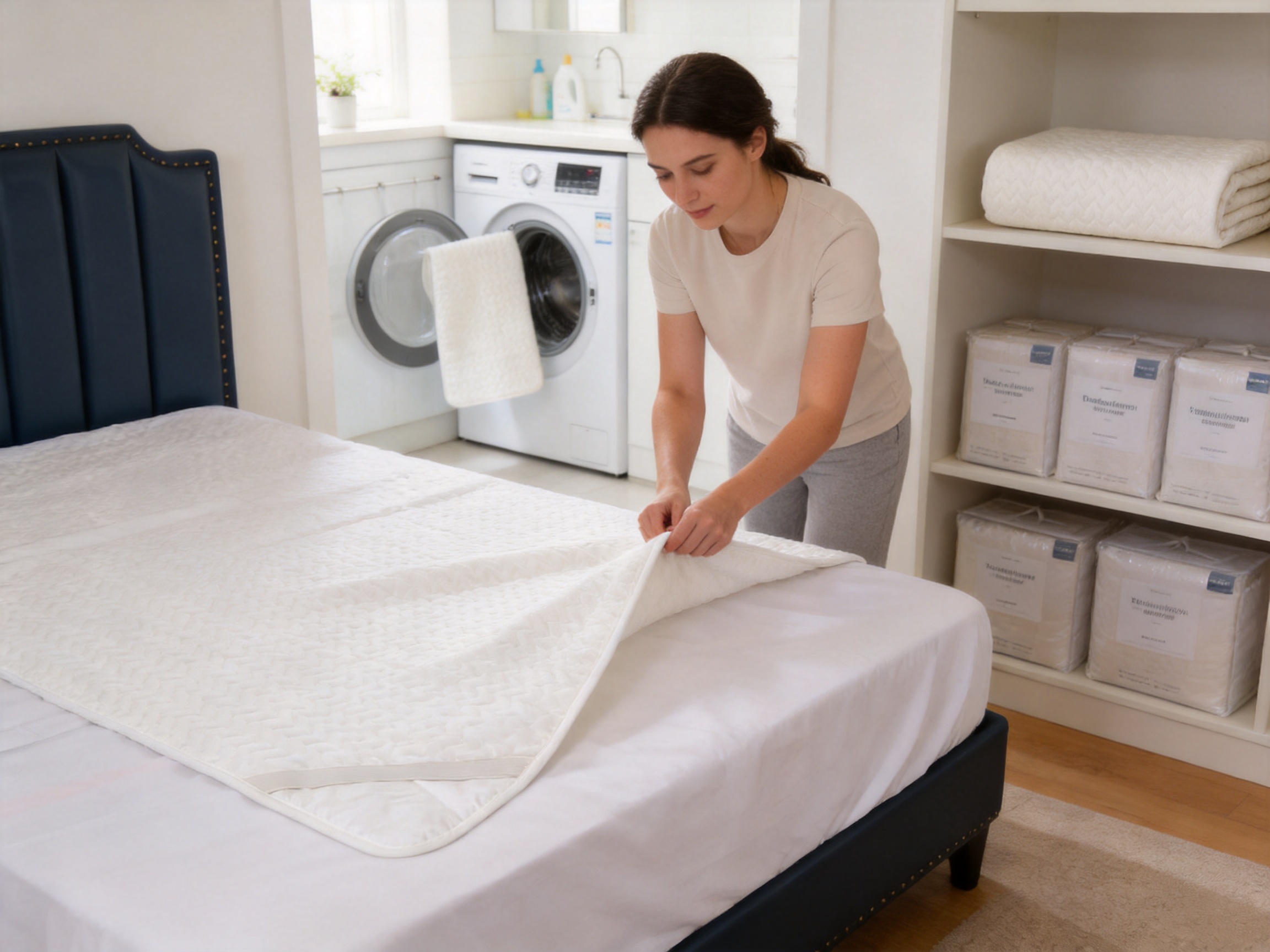
A mattress protector is one of the most practical layers in a complete bedding system. It sits between the sleeper and the mattress, helping protect the mattress from everyday dust, perspiration, accidental spills, friction, and general household use. At the same time, it can contribute to the visual appearance, comfort, and service life of the bed. The Knitted Mattress Protector described in this article is designed as a thin, easy-to-clean bedding layer that combines a fashionable knitted surface with a soft brushed backing and a lightweight polyester filling.
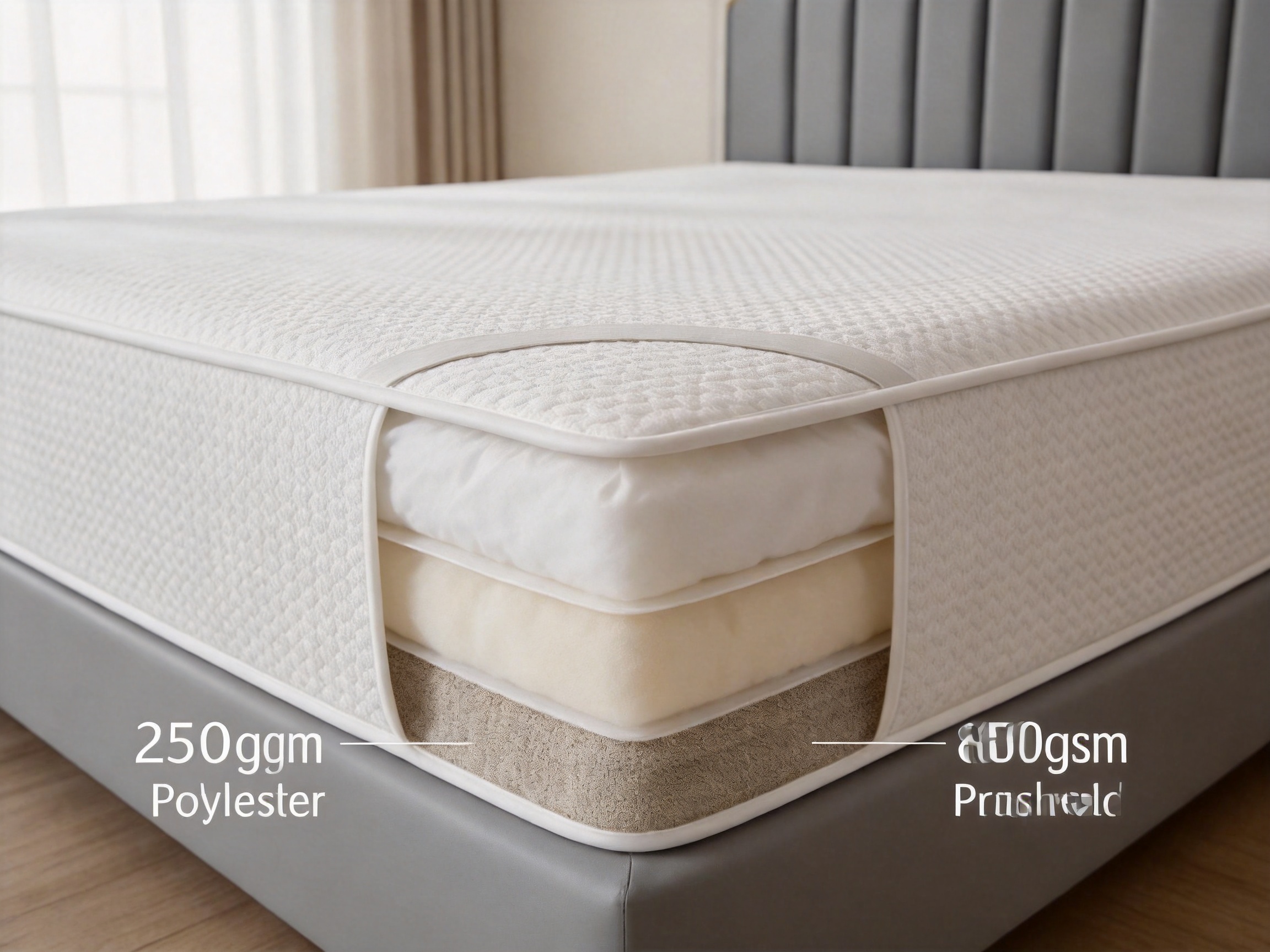
Unlike a basic plastic mattress cover or a very thin single-layer sheet, this construction is intended to provide a more balanced combination of surface appeal, protection, softness, and practical maintenance. Its front fabric uses 250gsm polyester knitted fabric, while the back uses 80gsm brushed fabric. Between these layers is 150gsm 6D polyester filling. The result is a mattress protector that adds a modest layer of cushioning without creating the excessive thickness associated with some heavily padded mattress toppers.
The product is available in a default size of 120x200cm or can be manufactured according to a customer’s requested dimensions. This makes it suitable for different sales channels, hospitality projects, furniture packages, bedding collections, and private-label programs. Its material selection, manufacturing flexibility, and relatively simple care requirements make it an attractive option for buyers seeking a dependable home textile product with broad market appeal.

Knitted Mattress Protector
Understanding the Product Construction
The performance of a mattress protector depends on the relationship between its surface fabric, backing, filling, stitching, finishing, and overall dimensions. Each component affects how the product feels, how it looks after washing, how easily it can be handled, and how well it performs during repeated use. The Knitted Mattress Protector uses a three-part textile construction that is both functional and visually appealing.
Knitted Polyester Surface
The front side is made from 250gsm polyester knitted fabric. Knitted fabric is formed by interlocking loops rather than by crossing yarns in the conventional woven structure. This gives the material a naturally flexible hand and allows it to conform more easily to the shape of the mattress. The knitted surface also creates a distinctive texture that can look more contemporary and decorative than a plain, flat fabric.
Polyester is widely used in bedding because it offers a useful combination of durability, color retention, dimensional stability, and easy care. A polyester knitted surface can withstand the repeated handling that a mattress protector receives when it is fitted, removed, washed, folded, stored, and installed again. For customers who prioritize a product that is attractive but not overly demanding, polyester is a practical fiber choice.
The 250gsm fabric weight gives the surface a substantial feel compared with very lightweight sheet materials. It helps the protector look fuller and more finished on the bed while providing a stable platform for the filling and backing. The knitted texture is also an important part of the product’s visual identity. It can be coordinated with bedroom textiles, bedspreads, blankets, cushions, and other home furnishing products.
Brushed Backing Fabric
The back of the protector uses 80gsm brushed fabric. Brushing raises fine fibers on the surface of the fabric, creating a softer touch than an untreated flat textile. In this product, the brushed backing is positioned toward the mattress, where it can provide a comfortable contact layer and help reduce the impression of a rough or overly technical underside.
The backing also supports the overall structure of the protector. It helps contain the filling and gives the product a finished reverse side. Although the backing is lighter than the knitted top fabric, its role is essential because it contributes to comfort, handling, and the clean appearance of the finished item. A well-selected backing can make the protector easier to place and remove while improving the tactile quality of the product.
Lightweight 6D Polyester Filling
The filling consists of 150gsm 6D polyester. The term 6D refers to the approximate fiber fineness classification used for the polyester filling. This type of synthetic fiber filling is commonly selected for bedding because it is lightweight, resilient, and suitable for products that need a soft, even internal layer without becoming excessively heavy.
At 150gsm, the filling provides gentle loft and a modest degree of cushioning. It is not intended to replace a thick mattress topper or alter the firmness of a mattress dramatically. Instead, it adds a comfortable textile layer between the sleeper and the mattress while helping the protector maintain a fuller appearance. This makes the product suitable for customers who want protection and softness without a bulky bedding item.
Key Benefits for Everyday Use
The principal advantage of this mattress protector is its practical balance. It is designed to protect the mattress while remaining easy to remove, clean, fold, and store. Many bedding buyers want a product that performs a useful protective function but does not feel complicated or difficult to manage. The thin construction directly addresses this need.
Protection for the Mattress
A mattress is a long-term household investment. It is exposed to pressure, movement, dust, moisture from normal sleeping, and occasional accidents. Once these contaminants enter the mattress structure, cleaning can be difficult. A removable mattress protector creates a washable textile barrier that can be maintained more easily than the mattress itself.
This product is intended to help shield the mattress from everyday use. It can reduce direct contact between the sleeper and the mattress surface, helping the mattress remain cleaner over time. While a standard textile mattress protector should not be described as a fully waterproof barrier unless a waterproof membrane is specifically included, it still offers a valuable layer of general protection against routine soiling and surface wear.
Easy Removal and Cleaning
Ease of removal is an important consideration for both households and commercial users. A protector that is difficult to remove may be washed less frequently, reducing its practical value. The relatively thin construction of this product makes it easier to handle than a heavy, deeply filled alternative.
It can be removed for routine cleaning and then folded for storage or returned to the mattress. Polyester materials are generally recognized for their convenient care characteristics, including relatively quick drying and good resistance to everyday wrinkling. Buyers should always follow the final care instructions provided for the specific finished product, since washing temperature, drying method, quilting, edging, and customer requirements can affect recommended maintenance procedures.
Comfort Without Excessive Bulk
Some mattress protectors are heavily padded and can change the feel of the bed substantially. That may be desirable for consumers seeking a mattress topper, but it is not ideal for every application. The product described here is thin and contains a moderate 150gsm filling, making it a better option for buyers who want a protective layer with light cushioning rather than a thick comfort pad.
The knitted front, brushed backing, and polyester filling work together to produce a softer bedding experience while preserving a relatively manageable profile. The protector can be used beneath sheets and coordinated with other bedding without creating excessive height. Its modest construction also makes it more convenient for packing, handling, and stock management.
Fashionable Appearance
Function is important, but visual appeal also influences bedding purchases. The knitted front fabric gives the protector a textured appearance that can look more refined than a plain utility cover. This makes it suitable for bedding ranges where consumers expect products to contribute to the overall bedroom aesthetic.
A textured knitted surface can coordinate effectively with plain sheets, patterned duvet covers, decorative blankets, and cushion collections. It may also be presented as part of a coordinated textile program. For retailers and brands, the product offers an opportunity to market mattress protection as part of bedroom styling rather than as a purely hidden accessory.
Advantages Compared with Common Alternatives
Every mattress protector category contains different constructions, and the best choice depends on the intended use. The Knitted Mattress Protector has several advantages when compared with common alternatives such as simple flat sheets, plastic-backed protectors, very thin nonwoven covers, and thick mattress toppers.
Compared with a Basic Flat Sheet
A flat sheet may provide a temporary layer between the sleeper and the mattress, but it is not specifically engineered as a mattress protector. It may shift during use, offer little padding, and fail to create the structured appearance associated with a finished bedding product. A dedicated protector uses coordinated layers and a defined textile construction, giving it a more professional presentation and a more consistent feel.
The 250gsm knitted face and 150gsm filling provide more substance than an ordinary sheet. The brushed reverse adds another comfort-oriented layer. As a result, the product can provide more than simple separation from the mattress; it can contribute to surface comfort, presentation, and long-term bedding maintenance.
Compared with a Plastic or Film-Based Cover
Plastic or film-based mattress covers may be selected when liquid resistance is the primary requirement. However, they can sometimes feel less textile-like, produce noise when the sleeper moves, or provide a less attractive appearance if the cover is visible. They may also offer limited softness unless combined with another fabric layer.
The Knitted Mattress Protector is a textile-based product designed to emphasize softness, visual appeal, and everyday comfort. It should not be positioned as a replacement for a specialized waterproof cover where complete liquid protection is essential. Instead, it is a strong choice for customers who value a comfortable, washable, and attractive textile layer for routine mattress care.
Compared with a Very Lightweight Nonwoven Cover
Nonwoven covers can be economical and lightweight, but they may not deliver the same surface feel or decorative quality as a knitted fabric. A 250gsm knitted face generally presents a more substantial and premium impression. The knitted structure can also offer greater flexibility and a more comfortable hand than an extremely thin disposable or semi-disposable material.
For brands that want to position a mattress protector as part of a quality bedding collection, the knitted construction provides a stronger product story. It allows marketing communication to focus on textile design, tactile comfort, easy maintenance, and coordinated bedroom styling.
Compared with a Thick Mattress Topper
A mattress topper is usually designed to change the comfort characteristics of a mattress by adding significant loft or cushioning. That can be useful, but it also increases product weight, package size, storage requirements, and cleaning effort. A thick topper may be more difficult to wash in a domestic machine and may require special handling.
The Knitted Mattress Protector serves a different purpose. Its 150gsm filling offers light cushioning while maintaining a thinner, more manageable form. This makes it more appropriate for customers whose main priority is mattress protection with a touch of softness. It can also be easier to include in bedding sets or sell as an additional accessory.
Product Specification Overview
The following table summarizes the primary construction details provided for this mattress protector. These specifications establish the basic product platform, while final dimensions, finishing methods, labeling, packaging, and quality requirements can be discussed for individual orders.
Item |
Specification |
Functional Contribution |
|---|---|---|
Product type |
Knitted mattress protector |
Provides a removable textile layer for mattress protection and comfort |
Default size |
120x200cm |
Suitable for the stated standard size and available for customization |
Front fabric |
250gsm polyester knitted fabric |
Adds texture, visual appeal, flexibility, and surface substance |
Back fabric |
80gsm brushed fabric |
Provides a soft reverse surface and supports the layered construction |
Filling |
150gsm 6D polyester |
Adds light loft and cushioning without excessive bulk |
Cleaning concept |
Removable and easy to clean |
Supports regular maintenance and improved bedding hygiene |
Manufacturing Strengths and Production Capability
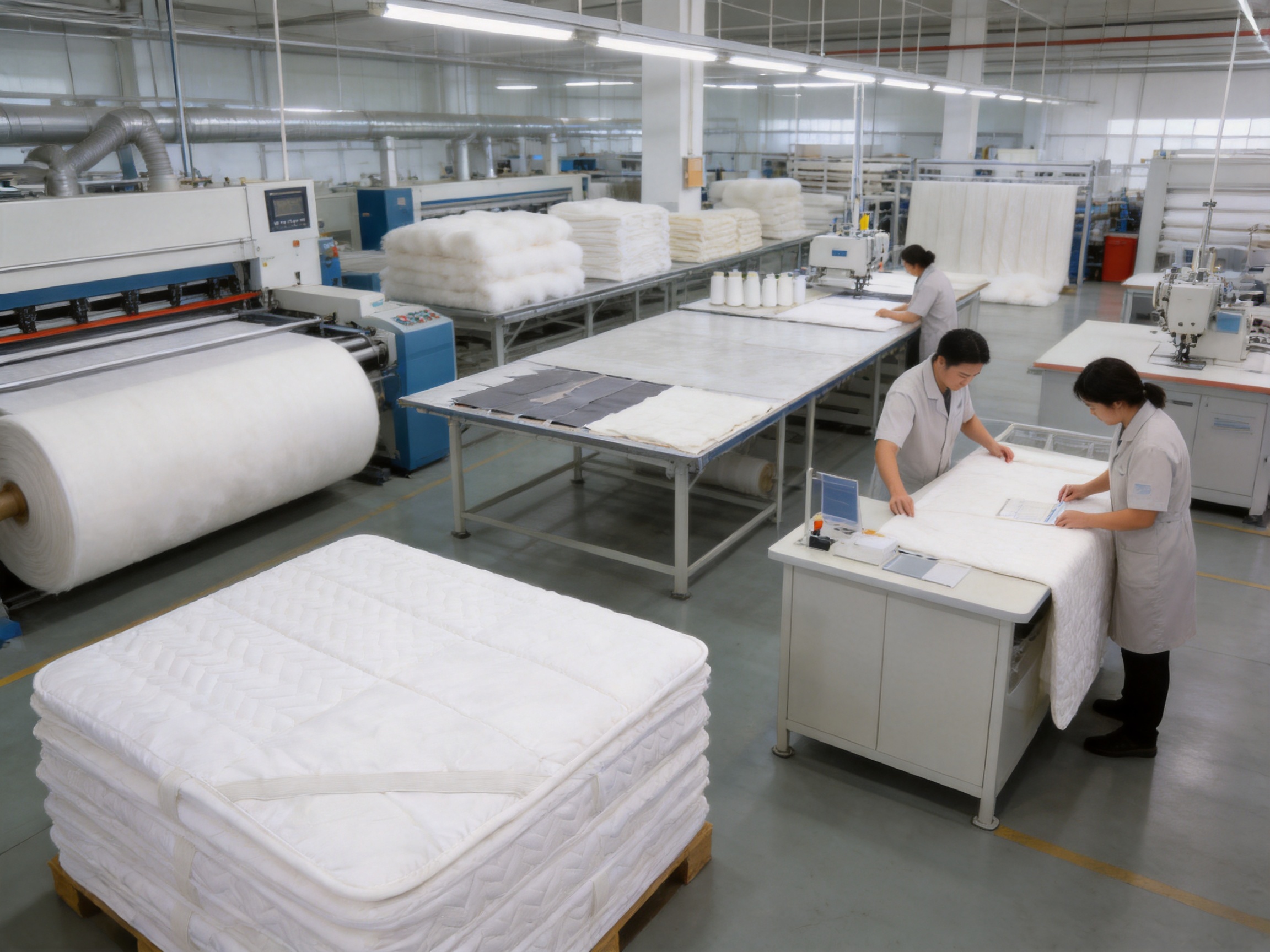
A quality product depends not only on the material specification but also on the capability of the manufacturer. Tongxiang Xinlong Bedding Co., Ltd. was established in January 2002 and operates in Wuzhen Town, Tongxiang City, Zhejiang Province, China. The company’s long operating history provides experience in the development and manufacture of home textile products, including quilts, pillows, cushions, bedspreads, blankets, mattress protectors, quilt covers, pillowcases, shower curtains, and curtains.
The company occupies an area of approximately 21,000 square meters, with a construction area of approximately 18,000 square meters. Its workforce includes more than 320 employees, and its production environment is equipped with various types of advanced manufacturing equipment. These resources support the production of textile products that require coordinated material preparation, filling, assembly, stitching, finishing, inspection, and packing.
Experience in Multiple Home Textile Categories
Manufacturing different types of home textiles can strengthen a company’s understanding of fabric behavior, filling distribution, sewing construction, edge finishing, and product presentation. Experience with quilts, pillows, cushions, blankets, and mattress protectors gives the manufacturer a broad technical base for developing products with different weights, shapes, dimensions, and performance requirements.
This category experience is particularly useful for customers seeking coordinated bedding programs. A buyer may require a mattress protector that matches or complements a quilt, cushion, blanket, or bedspread. A manufacturer familiar with multiple home textile categories can more easily discuss fabric coordination, filling options, size relationships, packaging formats, and overall collection development.
Integrated Process Control
A mattress protector passes through several important stages before it becomes a finished product. These stages may include fabric inspection, fabric preparation, cutting, filling preparation, layering, quilting or securing, edge finishing, dimension checking, appearance inspection, labeling, folding, and packing. Each stage can affect the final result.
Professional production management helps maintain consistency from one batch to another. Fabric inspection can identify visible defects before assembly. Accurate cutting supports dimensional consistency. Controlled filling preparation helps achieve a more even internal layer. Careful stitching and finishing can reduce loose threads, uneven edges, and movement between layers. Final inspection provides an additional opportunity to identify issues before shipment.
For buyers, this process discipline is important because bedding products are sold in quantities and often need to meet a consistent brand standard. A product may look satisfactory as an individual sample but reveal variation when produced in volume if the manufacturing process is not properly controlled. An experienced factory with established procedures is better positioned to support repeat orders and long-term supply relationships.
Professional and Technical Personnel
The company continues to develop products through professional and technical personnel. Technical involvement is important when adapting a standard mattress protector to a customer’s specific requirements. Changes in dimensions, fabric weight, filling, quilting pattern, edge treatment, labels, packaging, or application can influence the production process.
Technical staff can help evaluate whether a requested design is practical, how materials should be combined, and what adjustments may be needed for stability and appearance. This helps customers move from a general product concept to a more clearly defined specification. It also supports product development for different markets, consumer preferences, and sales channels.
Quality Management and Compliance Orientation
The company has passed international certifications and assessment systems including ISO9001, ISO14001, OEKO-TEX standards, GRS, and BSCI, according to the supplied company information. These certifications and systems represent an important part of the company’s quality, environmental, material, and social responsibility orientation. The exact scope and validity of each certification should be confirmed for the relevant production period and product order.
ISO9001 Quality Management
ISO9001 is associated with quality management systems. A quality management approach encourages organizations to define processes, document responsibilities, monitor performance, identify problems, and pursue continuous improvement. For home textile buyers, this type of system can support greater confidence in production consistency and order management.
In the case of a mattress protector, quality management may relate to material verification, production instructions, inspection procedures, corrective actions, and final release controls. A systematic approach is particularly valuable when the product is supplied to retailers, importers, hospitality groups, or private-label brands that require repeatable quality.
ISO14001 Environmental Management
ISO14001 is associated with environmental management systems. Textile manufacturing involves the use of materials, energy, packaging, water, and production resources. An environmental management framework encourages a company to identify relevant environmental impacts and establish procedures for improvement.
For customers increasingly concerned with responsible sourcing, an environmental management certification can be a positive part of supplier evaluation. It does not mean that every product is automatically environmentally harmless, but it indicates that the organization has adopted a structured approach to environmental management.
OEKO-TEX, GRS, and BSCI Considerations
OEKO-TEX-related certification is commonly associated with testing textiles for certain substances and supporting confidence in material safety within the applicable certification scope. GRS is associated with recycled materials and chain-of-custody requirements when the relevant certified materials and processes are used. BSCI is associated with social compliance and responsible working conditions within the applicable assessment framework.
These standards can help buyers evaluate a supplier beyond appearance and price. However, customers should confirm the current certificate details, certificate holder, product scope, transaction requirements, and documentation needed for a specific order. Certification is most useful when it is matched carefully to the materials, factory, production site, and commercial requirements involved.
How the Manufacturing Process Supports Product Performance
The product advantages of this mattress protector are closely connected to manufacturing control. A knitted front, brushed backing, and polyester filling must be combined in a way that preserves the intended hand feel and appearance. If the layers are not properly aligned, the product may feel uneven or look poorly finished. If the filling is not distributed consistently, the protector may lose its balanced appearance or comfort.
Material Inspection and Preparation
Fabric inspection is an important first step. The knitted surface should be reviewed for visible irregularities, color variation, stains, holes, knitting defects, and other issues that could affect the finished product. The brushed backing should also be checked for consistency, softness, and surface condition. Filling materials need to be stored and handled in a way that protects cleanliness and supports even processing.
Preparation also involves confirming the required dimensions and production specifications. Since the product can be manufactured in a custom size, accurate order information is essential. Mattress length, width, depth, attachment method, edge allowance, and packaging requirements should be clearly defined before production begins.
Layer Alignment and Assembly
During assembly, the knitted face, polyester filling, and brushed backing need to be aligned correctly. Consistent alignment helps maintain an even appearance and ensures that the soft brushed surface remains on the intended side. The assembly method should also support the product’s ability to be handled, folded, and cleaned.
Depending on the final design, quilting, stitching, binding, elastic, fitted corners, or other finishing details may be incorporated. The supplied product description identifies the fabric and filling structure but does not specify every finishing detail. Buyers should confirm these features when placing an order, especially if the protector is intended for a particular mattress profile or retail presentation.
Finishing and Inspection
Finishing can include trimming excess threads, checking seams, confirming dimensions, inspecting the appearance, and preparing the item for packing. A finished mattress protector should present a clean surface and a stable layered construction. Inspection helps verify that the production result corresponds to the approved sample or technical specification.
For large orders, inspection may include sampling plans, measurement checks, fabric weight verification, appearance standards, packing audits, and documentation review. These procedures are important for reducing variation and ensuring that products reach customers in an acceptable and consistent condition.
Customization Opportunities for Different Markets
The default size is 120x200cm, but custom sizing is available. Size flexibility is valuable because mattress dimensions differ across countries, regions, hospitality properties, furniture systems, and retail product lines. A buyer can discuss the required size based on the intended mattress rather than being limited to one standard format.
Customization may also involve fabric color, knitted texture, filling weight, quilting design, edge treatment, labels, packaging, and carton markings, subject to production feasibility and order requirements. These options allow the product to be positioned for different market segments. A basic version may focus on affordability and routine protection, while a more decorative version may emphasize texture and coordinated bedroom design.
Private-label buyers may request branded labels, care labels, barcode stickers, folding methods, paper inserts, polybags, cartons, or retail-ready packaging. Hospitality buyers may have requirements for bulk packing, easy storage, standardized dimensions, and efficient laundering procedures. Each application should be reviewed individually so that the final construction matches the customer’s operational needs.
Retail and E-Commerce Applications
For retail and e-commerce, the product’s visual texture can be an advantage. Consumers often make purchase decisions based on a combination of photographs, product descriptions, dimensions, material information, and perceived value. A knitted surface can photograph attractively and communicate a more substantial product impression than a plain lightweight cover.
Product listings should clearly explain that the protector is a thin protective bedding layer with light filling, not a waterproof mattress encasement or a thick mattress topper. Transparent descriptions help set accurate customer expectations and can reduce returns caused by misunderstanding.
Hospitality and Contract Applications
Hotels, guesthouses, serviced apartments, dormitories, and other accommodation providers use mattress protectors to support bedding hygiene and routine maintenance. A removable textile layer can be replaced or cleaned more easily than the mattress itself. The relatively manageable weight and thin profile can also be useful for housekeeping teams.
Contract buyers should evaluate the product according to their laundering systems, cleaning frequency, mattress dimensions, storage procedures, and durability expectations. Sample testing under actual operating conditions is recommended before finalizing a large program. The factory can then discuss any necessary adjustments to fabric, filling, finishing, labeling, or packing.
Care, Handling, and Maintenance Considerations
Correct care is necessary to preserve the appearance and performance of any textile product. The final care label should be based on the actual materials, construction, stitching, and finishing methods used in production. Polyester products are generally selected for convenient maintenance, but care instructions should not be assumed without confirmation.
Users should remove the protector carefully to avoid stressing seams or corners. Before washing, they should check the care label and close any applicable fasteners. Overloading a washing machine can restrict movement and reduce cleaning effectiveness. Adequate drying is also important because trapped moisture can affect the freshness of the textile layers.
When stored, the protector should be clean and completely dry. Folding it neatly helps reduce unnecessary creasing and makes it easier to install later. For commercial users, a rotation system can help ensure that clean protectors are available while used items are being laundered.
Buyers should also communicate any special care expectations before production. If a product will be washed at higher temperatures, processed in an industrial laundry, or exposed to frequent tumble drying, the material and construction should be evaluated for that specific environment. Laboratory testing and practical trial laundering can help confirm suitability.
Why Supplier Selection Matters
Choosing a mattress protector is not only a product decision; it is also a supplier decision. Material descriptions are important, but buyers must consider whether the factory can maintain quality, handle custom requirements, communicate clearly, and support repeat production.
Tongxiang Xinlong Bedding Co., Ltd. has operated since 2002 and has developed experience across a broad range of home textile categories. Its production scale, employee base, equipment, technical personnel, and certification background provide a foundation for serving different customer types. This can be especially valuable for buyers who want to build a broader bedding collection instead of sourcing one isolated item.
A capable supplier can help identify potential issues before mass production begins. For example, a requested fabric combination may require adjustment to the filling weight or edge construction. A custom size may need a revised packing method. A particular retail package may influence folding dimensions. Early technical discussion can prevent avoidable delays and reduce the risk of inconsistent results.
Supplier communication should cover product dimensions, fabric composition, material weights, filling type, quilting or stitching, edge finish, labels, packing, inspection standards, order quantity, delivery schedule, and certification documentation. Clear written specifications are beneficial to both the customer and the factory.
Recommended Evaluation Process for Buyers
Before placing a large order, buyers can follow a structured evaluation process. First, define the intended market and use environment. Decide whether the product is for household retail, e-commerce, hospitality, furniture packages, promotional bedding, or another application.
Second, confirm the required mattress dimensions. The default 120x200cm size may be suitable for one market but not another. If a custom size is required, provide accurate measurements and clarify whether the product should fit flat, sit beneath a sheet, or include any attachment features.
Third, review the material construction. Confirm the 250gsm polyester knitted front, 80gsm brushed back, and 150gsm 6D polyester filling, or discuss alternatives if the application requires a different balance of weight, softness, cost, or durability.
Fourth, request a sample and examine it under realistic conditions. Check the surface hand feel, appearance, dimensions, layer stability, stitching, edge finishing, folding behavior, and compatibility with the intended mattress. If regular washing is expected, carry out sample laundering according to the proposed care instructions.
Fifth, confirm inspection and documentation requirements. Buyers may need material declarations, test reports, certification copies, packaging specifications, and quality inspection records. These requirements should be agreed before production rather than introduced after goods are completed.
Finally, evaluate the supplier’s ability to support repeat orders. A successful first shipment is valuable, but long-term consistency is equally important. Ask how production records, approved samples, materials, inspection procedures, and change controls will be maintained for future orders.
Q&A: Common Questions About the Knitted Mattress Protector
What is the primary purpose of this product?
Its primary purpose is to provide a removable textile layer that helps protect a mattress from routine household use while adding light softness and visual appeal. It is designed as a thin mattress protector rather than a thick mattress topper.
What is the standard size?
The default size is 120x200cm. Custom dimensions can be discussed for different mattress sizes, markets, hospitality projects, and private-label requirements.
What is the front fabric made of?
The front uses 250gsm polyester knitted fabric. This provides a textured, flexible, and visually attractive surface with a more substantial feel than a very lightweight sheet.
What is used on the back?
The back uses 80gsm brushed fabric. The brushed surface is intended to provide a softer reverse side and support the comfort and finished appearance of the layered product.
What type of filling is included?
The protector includes 150gsm 6D polyester filling. This supplies light loft and cushioning while keeping the product relatively thin and manageable.
Is it waterproof?
The supplied specification describes a knitted fabric, brushed fabric, and polyester filling. It does not identify a waterproof membrane or liquid-proof coating. Therefore, it should not be marketed as fully waterproof unless an additional waterproof construction is specifically developed and confirmed.
Is it suitable for use under a fitted sheet?
It is intended to function as a mattress protection layer within a bedding system. Suitability under a fitted sheet depends on the final dimensions, mattress depth, edge construction, and customer requirements. These details should be confirmed through sampling before mass production.
Can the product be customized?
Yes. Custom size is specifically available. Other potential customization options, such as fabric color, filling weight, quilting, edging, labels, and packaging, should be discussed according to the order quantity and production feasibility.
Is polyester a practical material for a mattress protector?
Polyester is widely used in home textiles because it can offer durability, dimensional stability, color retention, and convenient care. In this product, polyester is used for both the knitted surface and the filling, creating a coordinated synthetic textile construction.
How should it be cleaned?
The final care label should be followed because the correct method depends on the finished construction. Users should avoid overloading the washing machine, ensure thorough drying, and store the protector only when it is completely clean and dry.
What makes the product different from a simple sheet?
It uses a specific layered structure consisting of a 250gsm knitted face, a 150gsm polyester filling, and an 80gsm brushed backing. This gives it more substance, texture, and light cushioning than an ordinary flat sheet.
What makes it different from a thick mattress topper?
It is designed to be thinner and easier to handle. Its filling provides modest cushioning rather than significantly changing the firmness or height of the mattress.
Can it be included in a coordinated bedding collection?
Yes. Its knitted appearance can be coordinated with quilts, blankets, cushions, bedspreads, pillow products, and other home textile items. Color, texture, and packaging can be planned as part of a broader collection.
What should commercial buyers confirm before ordering?
They should confirm size, material weights, filling, edge construction, washing requirements, labels, packaging, inspection standards, order quantity, lead time, and any certification or testing documentation required for the destination market.
Conclusion
The Knitted Mattress Protector offers a practical combination of mattress protection, light cushioning, attractive texture, and manageable maintenance. Its 250gsm polyester knitted front creates a fashionable surface, the 80gsm brushed backing contributes a soft reverse side, and the 150gsm 6D polyester filling provides modest loft without excessive bulk.
Compared with a simple sheet, it offers a more developed layered construction. Compared with a plastic cover, it provides a more textile-oriented and comfortable presentation. Compared with a thick mattress topper, it is lighter, thinner, and easier to handle. These characteristics make it suitable for household bedding, retail collections, e-commerce programs, hospitality applications, and custom private-label projects.
The manufacturing capability behind the product is equally important. Tongxiang Xinlong Bedding Co., Ltd. brings more than two decades of home textile experience, a substantial production facility, a workforce of more than 320 employees, advanced equipment, technical personnel, and a range of quality, environmental, material, and social responsibility certifications or assessments. This combination supports product development, custom sizing, coordinated bedding programs, and repeat-order management.
For buyers seeking a dependable mattress protector, the most effective approach is to review the sample, confirm the intended application, verify the construction, test the care process, and agree on quality and packaging requirements in advance. With these steps in place, the Knitted Mattress Protector can serve as a practical and marketable addition to a modern home textile range.
References
1. Product specification supplied for the Knitted Mattress Protector, including size, fabric construction, filling, and product description.
2. Company profile information supplied for Tongxiang Xinlong Bedding Co., Ltd., including establishment history, production area, workforce, product categories, and manufacturing resources.
3. International Organization for Standardization. Quality management systems: ISO9001 principles and process-based quality management guidance.
4. International Organization for Standardization. Environmental management systems: ISO14001 framework and continuous improvement principles.
5. OEKO-TEX Association. General information concerning textile testing and applicable product safety certification systems.
6. Global Recycled Standard. General principles concerning recycled material claims and supply-chain verification.
7. amfori. General information concerning social compliance assessment and responsible supply-chain practices.
8. General textile manufacturing practice covering fabric inspection, layered assembly, filling control, finishing inspection, care labeling, and product quality management.


 +86-573-88798028
