



 Français
 Español
 Deutsch
Content
- 1 1. The Design Concept Behind the Pillow
- 2 2. Material Advantages of the Outer Fabric
- 3 3. The Role of 6D+3D Open-Fibre Filling
- 4 4. Three-Dimensional Sandwich Mesh and Airflow
- 5 5. Satin Edging and Finished Appearance
- 6 6. Product Advantages Over Conventional Alternatives
- 7 7. Manufacturing Strengths Behind the Product
- 8 8. A Typical Controlled Manufacturing Workflow
- 9 9. Quality Management and Certifications
- 10 10. Sustainability Considerations
- 11 11. Applications Across Different Markets
- 12 12. How Buyers Can Evaluate the Product
- 13 13. Care and Performance Expectations
- 14 14. Why the Manufacturer Is a Strong Sourcing Partner
- 15 15. Q&A
- 15.1 Q1: What type of pillow is the Knitted Fabric Classic Pillow?
- 15.2 Q2: What are the listed dimensions?
- 15.3 Q3: Why does the pillow require more filling than a normal pillow?
- 15.4 Q4: Is the pillow suitable for side sleepers?
- 15.5 Q5: What does the 3D sandwich mesh do?
- 15.6 Q6: What is the purpose of the 900g 6D+3D open fibre?
- 15.7 Q7: What is the advantage of the polyester air-layer knitted fabric?
- 15.8 Q8: What is the satin edging used for?
- 15.9 Q9: Can the pillow be customized?
- 15.10 Q10: Does the company manufacture other home-textile products?
- 15.11 Q11: What quality systems or certifications does the company report?
- 15.12 Q12: Is the pillow made from recycled polyester?
- 15.13 Q13: Can the pillow be washed?
- 15.14 Q14: How does this pillow differ from a basic polyester pillow?
- 15.15 Q15: Who can purchase this product?
- 16 16. Conclusion
- 17 References
- 18 Product: Knitted Fabric Classic Pillow
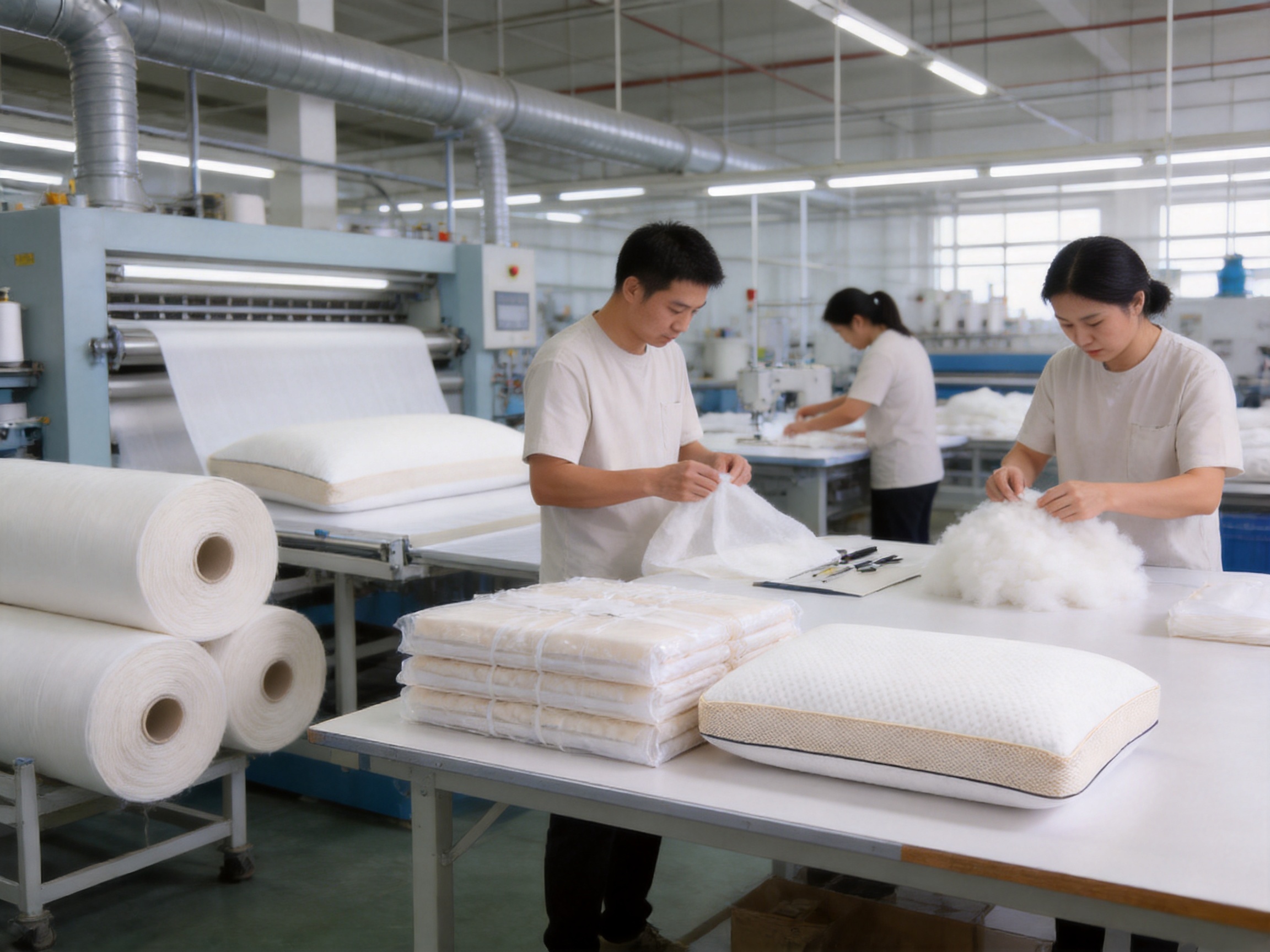
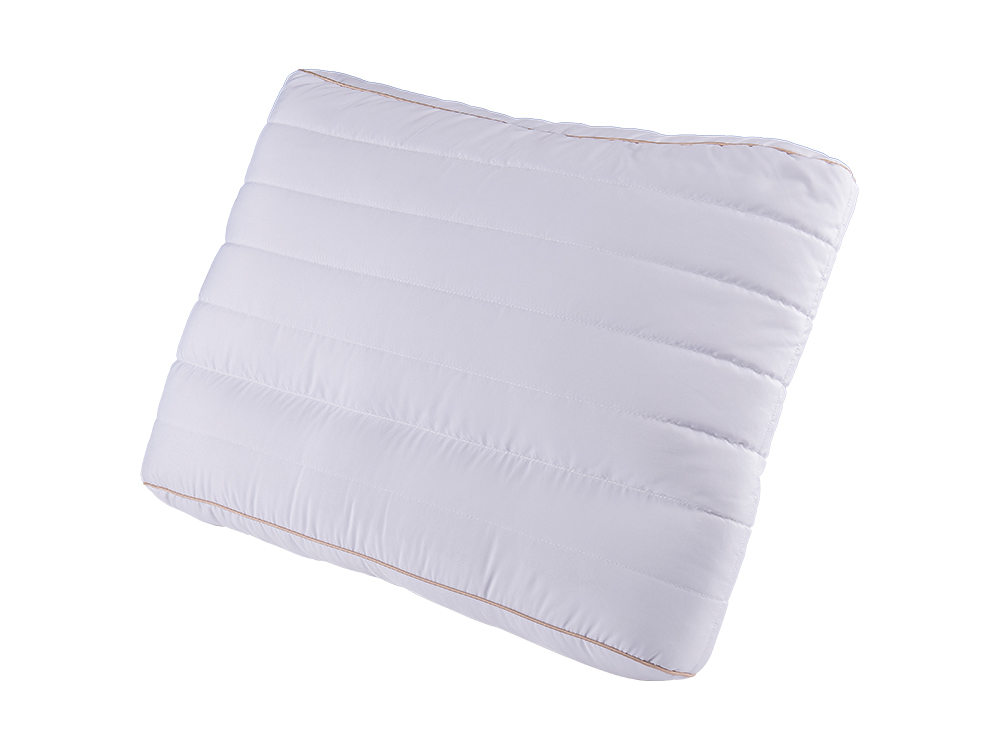
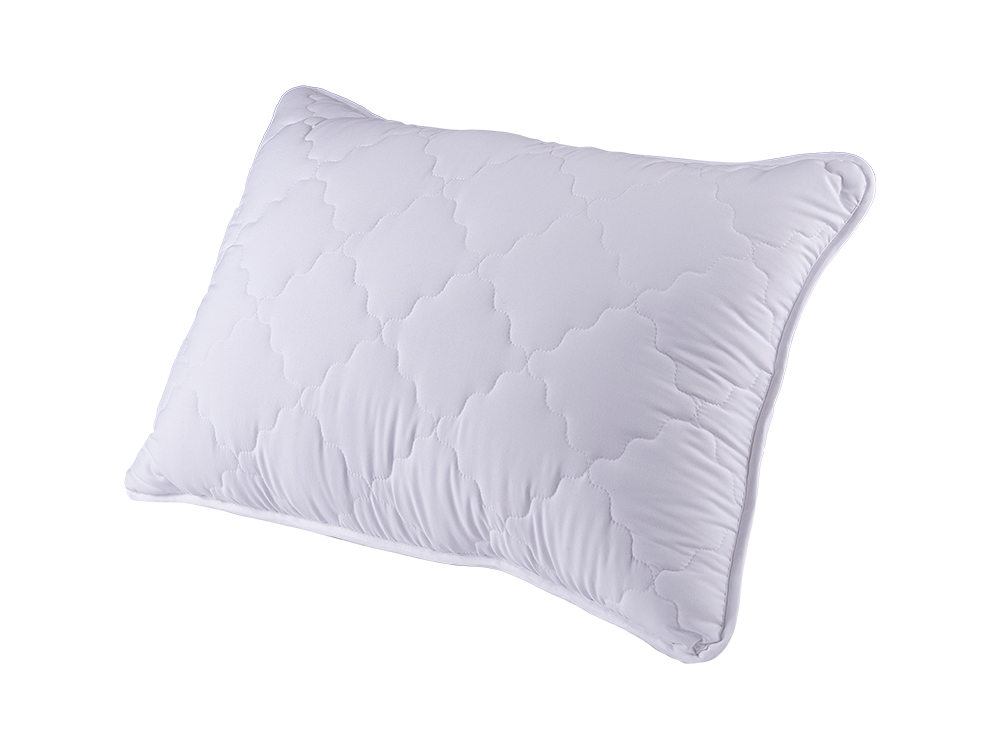
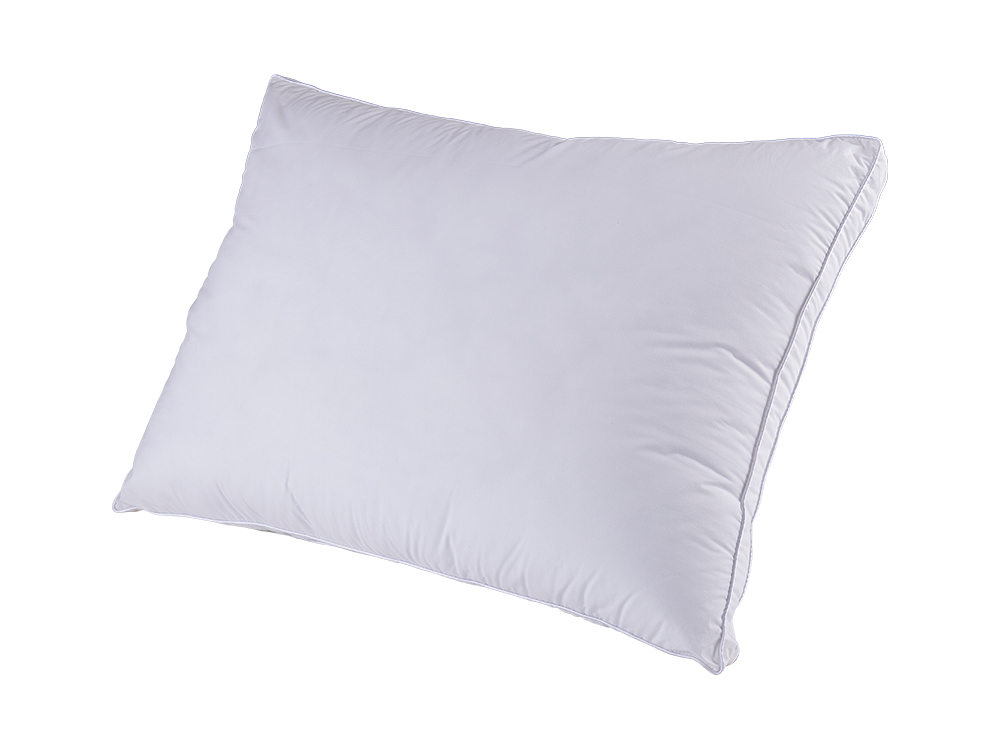
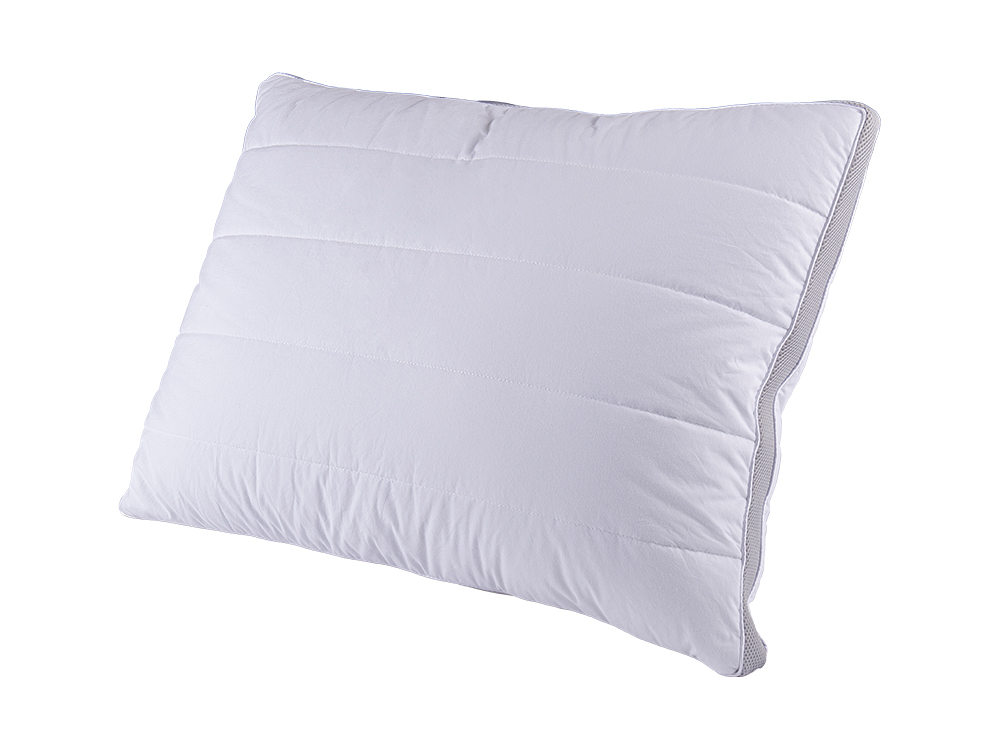
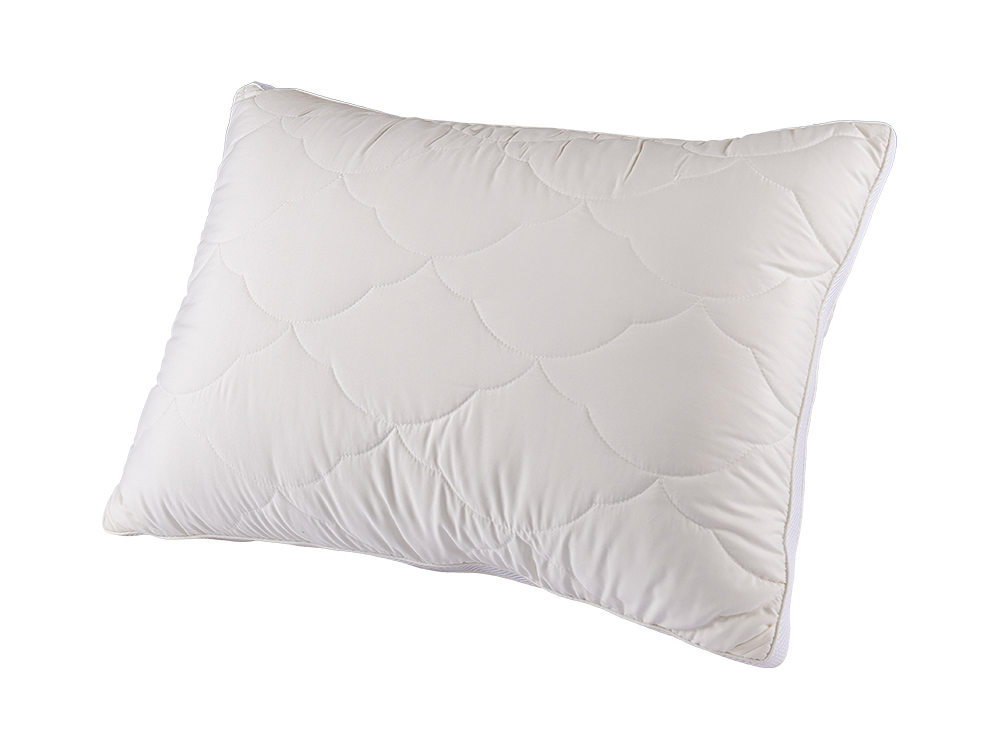
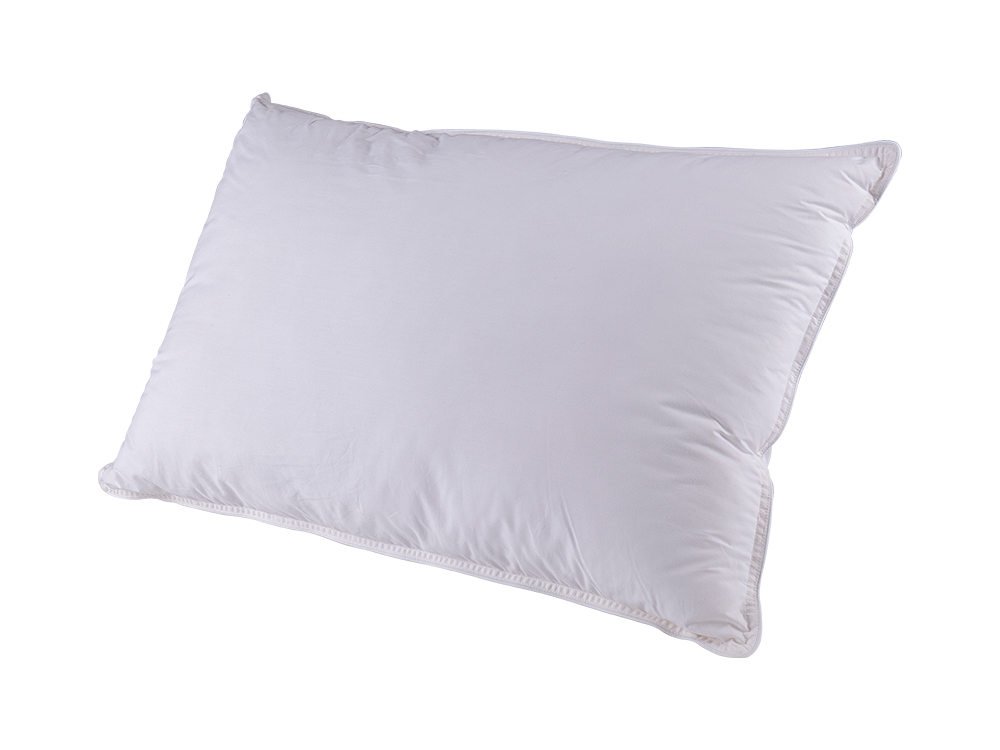
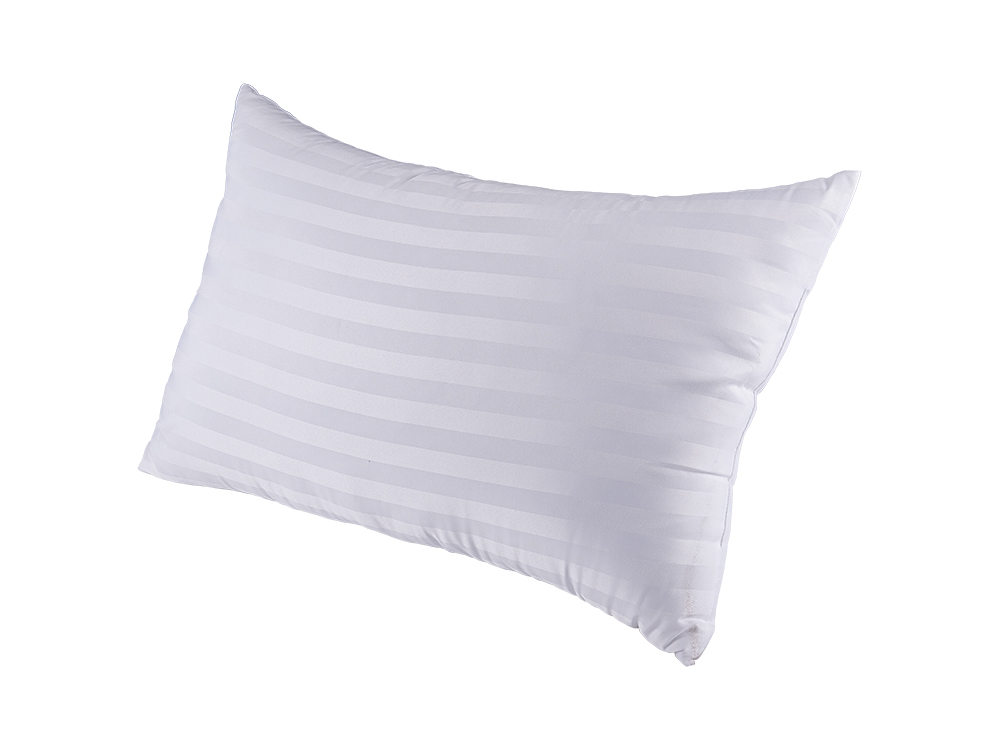
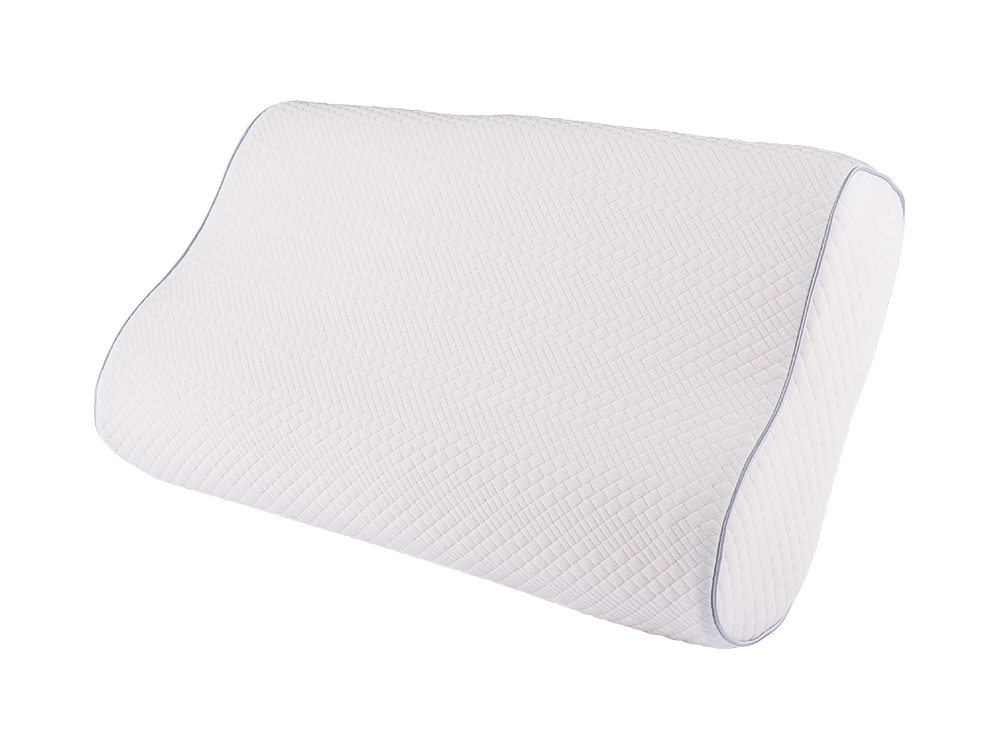
Choosing the right pillow is an important part of creating a comfortable and supportive sleep environment. A pillow must do more than feel soft when it is first touched. It should help maintain a natural sleeping posture, provide dependable loft, allow air to circulate, remain comfortable through changing temperatures, and retain its shape after repeated use. The Knitted Fabric Classic Pillow has been developed around these practical requirements, combining a soft polyester air-layer knitted fabric, a supportive 900g 6D+3D open-fibre filling, satin-fabric edging, and a three-dimensional sandwich-mesh structure.
This construction gives the pillow a distinct position in the home bedding market. Many conventional polyester pillows rely on a simple shell and a loosely distributed filling. Although this type of pillow may be inexpensive and initially comfortable, it can offer limited airflow, inconsistent height, or insufficient support for people who sleep on their sides. The Knitted Fabric Classic Pillow takes a more engineered approach. Its breathable mesh structure increases the internal and external height of the pillow, while the additional filling helps create a fuller and more supportive profile.
The product is designed in a 50 x 70 x 3 cm format and belongs to the polyester pillow category. Its construction is suitable for residential bedding collections, hospitality programs, retail ranges, private-label projects, and custom home-textile orders. Behind the product is Tongxiang Xinlong Bedding Co., Ltd., a professional home textile manufacturer with experience in quilts, pillows, cushions, mattress protectors, blankets, mattress covers, bedspreads, and related bedding products.
By combining product-focused design with an established manufacturing base, the company can support customers seeking dependable quality, flexible home-textile production, and a pillow that offers more than basic softness. The following discussion examines the product’s materials, structure, comfort advantages, manufacturing considerations, quality strengths, and potential applications.
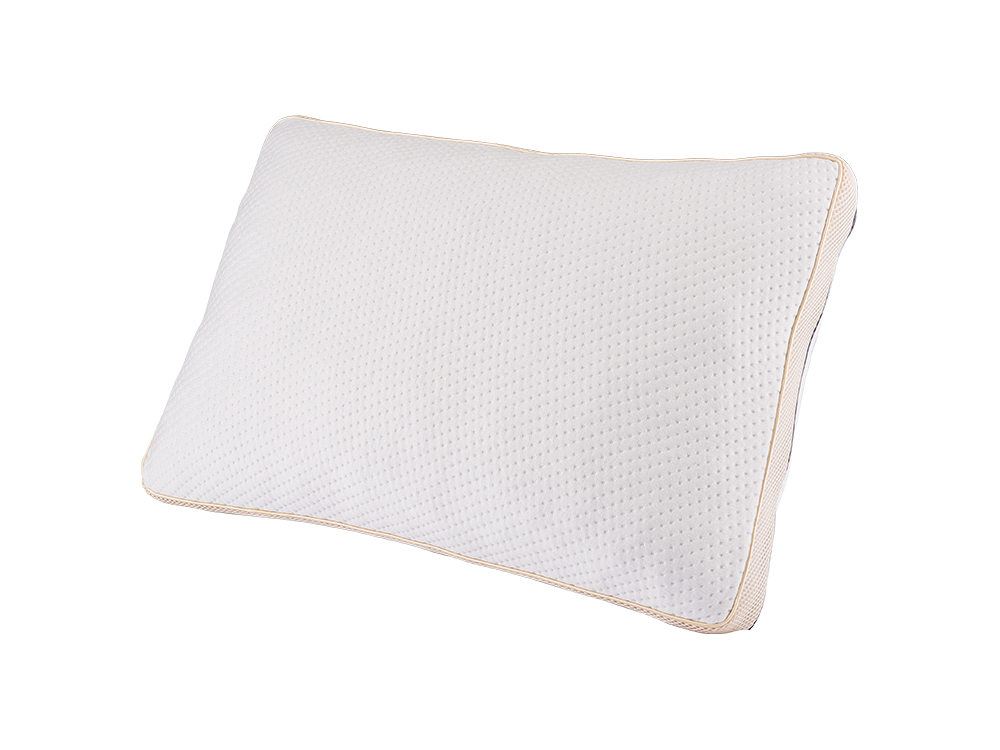
Knitted Fabric Classic Pillow
1. The Design Concept Behind the Pillow
A pillow has to balance several qualities that can sometimes conflict with one another. A very soft pillow may feel pleasant but collapse too easily. A firm pillow may provide support but feel uncomfortable. A densely packed pillow may offer fullness while trapping heat. A highly breathable pillow may lack sufficient resilience if the filling is not carefully selected and distributed.
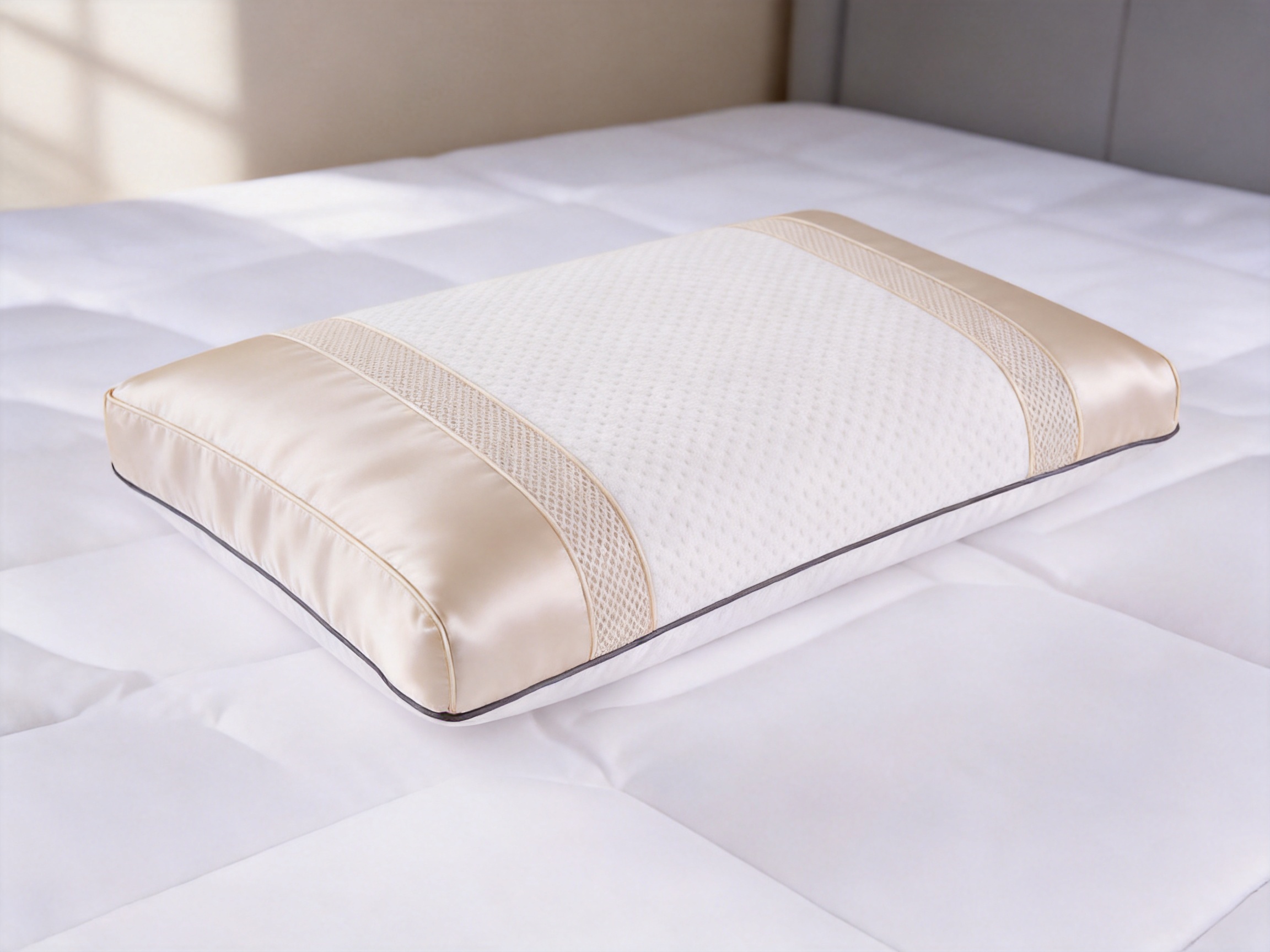
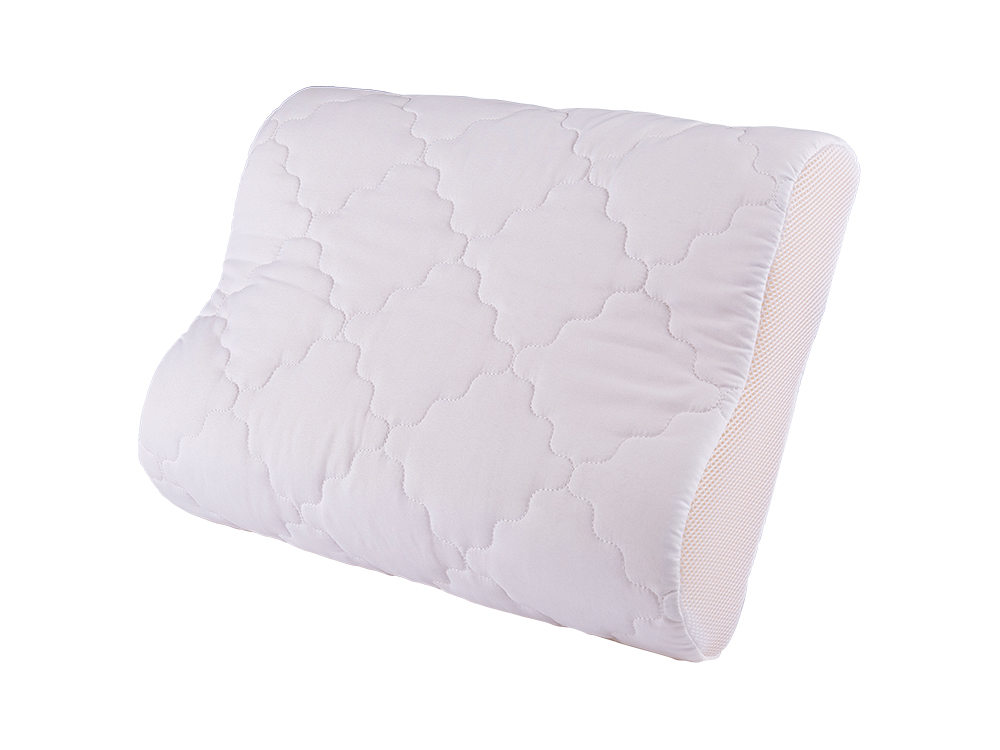
The Knitted Fabric Classic Pillow addresses these challenges through a layered design. Its outer fabric is a polyester air-layer knitted fabric, selected for a soft hand feel and breathable surface. The lining contains 900g of 6D+3D open fibre, creating a combination of loft, resilience, and cushioning. Along the edge, satin fabric with contrasting colors on both sides adds a finished appearance and reinforces the visual identity of the product. A three-dimensional sandwich-mesh fabric forms the breathable structure, helping air move through the pillow rather than remaining trapped inside a flat, compressed construction.
The product description specifically emphasizes that the pillow requires more filling than a normal pillow to achieve its intended fullness. This is an important design detail. The three-dimensional mesh increases the space inside and outside the pillow, so a lower filling weight could result in an underfilled appearance or insufficient support. The use of 900g of 6D+3D open fibre helps the pillow occupy its designed volume and maintain a fuller shape.
This approach differs from a basic pillow design in which the exterior shell, filling weight, and final shape are treated as separate elements. Here, the fabric structure and filling quantity work together. The mesh creates dimensionality, while the fibre fills that dimensional space. The result is a pillow that is intended to feel soft and comfortable while remaining sufficiently supportive for side sleepers.
1.1 A Practical 50 x 70 cm Format
The 50 x 70 cm size is a widely useful format for adult bedding. It offers enough surface area for the head and neck without becoming unnecessarily oversized. The rectangular shape also fits naturally within many standard pillowcase and bedding arrangements, subject to the buyer’s local size requirements and tolerance standards.
For manufacturers, retailers, and hospitality purchasers, a familiar rectangular format simplifies collection planning. The pillow can be presented as part of a coordinated bedding program that includes quilts, blankets, mattress protectors, mattress covers, cushions, and pillowcases. Its proportions also allow the product to be displayed, packed, and transported efficiently compared with unusually shaped or highly specialized pillows.
The listed 3 cm dimension is part of the product specification and should be confirmed with the buyer in relation to the finished pillow’s compressed or constructed measurement. Since pillow dimensions can be recorded in different ways by different markets, professional purchasing programs should approve a pre-production sample and a measurement method before bulk manufacturing.
2. Material Advantages of the Outer Fabric
The outer fabric is identified as polyester air-layer knitted fabric. Polyester is widely used in bedding because it offers a practical combination of durability, appearance retention, processing flexibility, and cost efficiency. Compared with some delicate natural fibres, polyester can be engineered for repeated household use while remaining suitable for modern textile production systems.
The air-layer knitted construction adds a further functional dimension. A knitted surface can provide softness and flexibility, while the layered arrangement can contribute to cushioning and air circulation. In a pillow, this is valuable because the surface is in direct contact with bedding materials and is frequently compressed by the sleeper’s head. A fabric that is soft but also capable of recovering from ordinary pressure helps create a more consistent user experience.
Breathability is particularly important in pillows. During sleep, body heat and moisture can accumulate around the head and neck. A conventional tightly packed pillow may restrict airflow and feel warm over time. The air-layer fabric and three-dimensional mesh are intended to support ventilation by creating pathways through the pillow structure. This does not mean that the pillow is climate-controlled or moisture-proof; rather, its construction is designed to avoid the completely flat, closed feel associated with some basic pillow shells.
The knitted surface also supports a comfortable tactile impression. Consumers often judge bedding by touch before they assess technical specifications. A soft, smooth, and flexible shell can improve the perceived quality of the product, especially when the pillow is used with a lightweight pillowcase or displayed as part of a premium bedding range.
2.1 Durability and Production Flexibility
Polyester fabric is compatible with a broad range of textile finishing and sewing processes. This gives manufacturers flexibility when developing colors, edge treatments, labels, packaging formats, and coordinated product collections. The material can also support consistent production across different batches when process controls are properly maintained.
For wholesale customers, consistency is as important as initial softness. A pillow collection must look and feel similar from one shipment to the next. The use of an established polyester fabric specification makes it easier to define a repeatable product standard. Buyers can evaluate the hand feel, color, fabric weight, mesh structure, and finished dimensions during sampling and then use those approved characteristics as the basis for bulk production.
The fabric is also suitable for a variety of commercial presentations. It can support a clean, modern appearance for direct-to-consumer bedding, a practical appearance for hotel supply, or a coordinated design for a home-textile assortment. The contrasting satin edging helps create a finished border that distinguishes the pillow from simple, untrimmed alternatives.
3. The Role of 6D+3D Open-Fibre Filling
The pillow’s lining contains 900g of 6D+3D open fibre. This filling specification is central to the product’s comfort and shape. The combination of fibre types is intended to create a balance between softness and support. Open fibre structures can help produce loft by allowing the filling to occupy volume, while different fibre configurations can contribute to resilience and recovery after compression.
For a side sleeper, support is especially important. When a person sleeps on the side, the space between the head and the mattress is generally greater than when sleeping on the back. If the pillow is too thin, the head may tilt downward toward the mattress, placing stress on the neck and shoulder area. A fuller pillow can help fill this space more effectively. The three-dimensional mesh design increases the pillow’s internal volume, and the 900g filling helps maintain the intended fullness within that volume.
The filling is described as both soft and supportive. These qualities are not identical. Softness concerns the initial feel when pressure is applied, while support concerns the ability of the pillow to resist excessive collapse and maintain a useful shape. The product’s filling quantity and fibre structure are intended to provide both characteristics rather than prioritizing only one.
Open fibre filling can also be distributed through the pillow to reduce the risk of large empty areas. Consistent filling distribution is important because uneven zones can create hard spots, thin areas, or unstable loft. In a professionally managed production process, filling weight, distribution, shell dimensions, and closing operations should be controlled together. This ensures that the finished pillow reflects the approved sample rather than merely meeting a nominal weight specification.
3.1 Fullness Compared with Basic Polyester Pillows
One of the product’s clearest advantages over simpler competitors is its deliberate use of a higher filling requirement for a three-dimensional construction. A basic polyester pillow may use a straightforward flat shell and a lower volume of fibre. Such a product can be light and economical, but it may not provide the same visual fullness or side-sleeping support.
The Knitted Fabric Classic Pillow is designed with the understanding that the mesh structure creates additional space. If that space were not filled adequately, the pillow could appear loose or lack firmness. By using 900g of 6D+3D open fibre, the manufacturer can create a more substantial product with a fuller profile and a more supportive response.
This is also a useful point for product education. Consumers may not immediately understand why two polyester pillows with similar exterior dimensions can feel very different. The difference may come from filling weight, fibre structure, shell construction, internal spacing, and finishing quality. Explaining these factors helps buyers understand that the pillow is not simply a standard fibre-filled product with decorative fabric.
4. Three-Dimensional Sandwich Mesh and Airflow
The breathable mesh component is described as sandwich mesh fabric in a 3D structure. This type of construction typically consists of layered textile surfaces connected by spacer elements. In a pillow, the spacer layer can help preserve an open internal structure rather than allowing the exterior layers to lie completely against one another.
This three-dimensional design contributes to the product in several ways. First, it increases the height and volume available inside the pillow. Second, it creates channels that can assist air movement when the pillow is compressed and released. Third, it adds a visible technical feature that helps distinguish the product from ordinary flat fabric pillows.
Airflow is not only a comfort issue; it can also influence the long-term user experience. A pillow that feels excessively warm may be used less comfortably, while a pillow that allows more movement of air can feel fresher during extended use. The mesh cannot eliminate all heat or moisture, because comfort also depends on room temperature, bedding layers, sleepwear, and individual physiology. However, the open structure is a sensible design response to the demand for more breathable bedding.
4.1 Support Through Structure, Not Excessive Firmness
The mesh also helps the pillow achieve support without requiring an excessively hard filling. A very firm pillow can resist compression but may create pressure around the head and neck. By combining a structured spacer fabric with resilient open fibre, the product can aim for a softer contact surface and a stable internal body.
This structural support is particularly relevant to side sleepers. A side sleeper often needs a pillow that remains sufficiently full through the night. If the filling shifts or collapses too quickly, the sleeper may need to fold or reposition the pillow. The three-dimensional construction and fuller fibre load are intended to reduce that problem under normal use, although the final experience will always depend on individual weight, sleeping posture, mattress firmness, and personal preference.
For retailers, the breathable mesh is also a strong product-story element. Customers increasingly look for bedding that combines comfort with functional materials. Terms such as air-layer fabric, open fibre, and 3D sandwich mesh can help explain why the pillow is different from an entry-level product. The feature is not merely decorative; it is connected to the pillow’s volume, ventilation, and support performance.
5. Satin Edging and Finished Appearance
The pillow includes satin fabric edging with contrasting colors on both sides. Edge construction has both aesthetic and practical importance. A clean, well-defined border gives the pillow a more finished appearance, while the contrast can create a recognizable visual signature within a product range.
In competitive bedding markets, presentation influences perceived value. Two pillows with similar filling may be positioned very differently depending on fabric selection, sewing quality, edge treatment, and packaging. The satin border gives the product a refined appearance that can support premium or mid-to-high positioning without changing the essential polyester-based construction.
Contrasting colors on both sides can also add design versatility. The pillow may be coordinated with different bedding colors, used as an accent product, or included in a collection where trim colors distinguish product sizes or filling levels. Buyers can discuss approved color standards, edge width, labeling, and packaging with the manufacturer when developing a private-label or customized version.
From a production perspective, edging requires accurate alignment and secure stitching. If the border is uneven, twisted, or poorly joined at the corners, the pillow may appear less attractive and may not fit smoothly inside a pillowcase. Professional sewing and inspection are therefore essential to maintain the intended appearance throughout a production run.
6. Product Advantages Over Conventional Alternatives
The pillow’s competitive advantages arise from the interaction of several features rather than from a single material claim. Its most important differences include a breathable three-dimensional structure, a higher filling requirement, a soft air-layer knitted exterior, a supportive open-fibre interior, and a finished satin edge.
Product feature |
Practical benefit |
Competitive significance |
Polyester air-layer knitted fabric |
Soft surface feel with a layered, breathable construction |
More developed than a basic flat polyester shell |
900g 6D+3D open fibre |
Fullness, loft, cushioning, and supportive recovery |
Helps the pillow remain substantial for side sleeping |
3D sandwich mesh |
Additional internal space and improved air circulation potential |
Creates a technical advantage over closed, flat constructions |
Satin contrasting-color edging |
Neat finishing and stronger visual appeal |
Supports a more premium presentation |
50 x 70 cm format |
Practical rectangular size for adult bedding |
Easy to integrate into standard product assortments |
Compared with a low-fill polyester pillow, this product is more likely to offer a substantial, full appearance. Compared with a tightly packed pillow, its mesh and air-layer components are intended to improve ventilation. Compared with a very soft pillow that collapses quickly, the combination of fibre weight and three-dimensional construction aims to provide stronger support. Compared with a plain pillow without decorative finishing, the satin edge improves presentation and collection identity.
These advantages should be communicated accurately. The pillow is not presented as a medical device, orthopedic treatment, or guarantee of improved sleep for every user. Instead, it is a thoughtfully constructed home-textile product designed to offer softness, fullness, breathability, and support in a practical format.
7. Manufacturing Strengths Behind the Product
A well-designed pillow depends on consistent manufacturing. Even high-quality materials cannot create a reliable product if fabric panels are cut inaccurately, filling is distributed unevenly, seams are insecure, or final dimensions are not controlled. The manufacturer’s broader production capabilities are therefore an important part of the product value.
Tongxiang Xinlong Bedding Co., Ltd. was established in January 2002 and is located in Wuzhen, Tongxiang, Zhejiang Province, China. The company operates in the home-textile sector and produces a broad selection of products, including silk cotton quilts, chemical-fibre quilts, pillows, cushions, bedspreads, travel quilts, mattress protectors, blankets, quilt and pillowcases, shower curtains, and curtains.
The company covers approximately 21,000 square meters, with a construction area of approximately 18,000 square meters, and has more than 320 employees. This scale provides a substantial foundation for organized production, product development, quality management, and order coordination. It also allows the company to understand how pillows fit into larger bedding collections rather than treating them as isolated products.
7.1 Experience in Multiple Home-Textile Categories
Experience across multiple bedding categories can be valuable when developing a pillow. Quilts, mattress protectors, blankets, cushions, and pillow products all require knowledge of fabric behavior, filling materials, sewing, finishing, packing, and inspection. A manufacturer that works across these categories can apply broader technical experience to individual product programs.
For customers, this creates the possibility of coordinated sourcing. A buyer may be able to develop a pillow alongside mattress protectors, blankets, quilts, or cushions, helping maintain consistent colors, trims, packaging language, and quality expectations. Consolidating related products with one experienced supplier may also simplify communication and product management.
The company’s product-development approach is described as responsive to changing home-textile requirements. It maintains professional and technical personnel and continues to develop and innovate in order to design fashionable and warm household products. For the Knitted Fabric Classic Pillow, this development capability is reflected in the combination of fabric layers, mesh construction, filling selection, and decorative edging.
7.2 Advanced Production Equipment
The manufacturer is equipped with various advanced production equipment. While the exact equipment list may vary by production line and should be confirmed for each project, modern bedding manufacturing generally depends on coordinated machinery for fabric preparation, cutting, filling, sewing, quilting or attachment operations where applicable, edge finishing, inspection, and packing.
Equipment alone does not guarantee quality. Its value depends on appropriate settings, trained operators, preventive maintenance, documented procedures, and inspection checkpoints. The company’s stated emphasis on professional personnel and standardized operating procedures suggests an organized approach to turning material specifications into repeatable finished products.
For this pillow, process control is particularly important in five areas: fabric alignment, mesh attachment, filling weight, filling distribution, and edge stitching. Each area influences the final appearance and comfort. A small variation in mesh positioning can change the pillow’s symmetry. An inconsistent filling weight can change support. Weak or uneven edging can affect both appearance and durability.
8. A Typical Controlled Manufacturing Workflow
The following workflow describes the key production considerations for a pillow of this construction. Specific steps, machinery, and inspection standards should be confirmed with the manufacturer during product development and order approval.
8.1 Material Inspection
Production begins with the inspection and preparation of incoming materials. The polyester air-layer knitted fabric should be checked for color consistency, surface defects, width, hand feel, and dimensional stability. The sandwich mesh should be examined for uniform three-dimensional structure, open areas, and visible damage. Satin edging should be checked for color, width, sheen, and consistency. The 6D+3D open fibre should be evaluated for cleanliness, fiber condition, and packaging integrity.
Material inspection protects the finished product from avoidable variation. If fabric rolls differ noticeably in shade or structure, the pillow may not match approved samples. If the mesh has irregular thickness, the finished pillow may have an uneven profile. If the filling is inconsistent, the product may not achieve the intended loft even when the nominal weight is correct.
8.2 Cutting and Panel Preparation
After material approval, the fabric components are prepared according to the approved pattern. Accurate cutting is necessary to maintain the 50 x 70 cm format and to create balanced edges. The cutting plan should account for seam allowances, mesh placement, edging requirements, and any labels or identification marks.
Good panel preparation also improves material efficiency. Efficient cutting can reduce waste while maintaining the correct grain, stretch direction, and alignment of knitted fabrics. Since knitted materials may behave differently from woven fabrics, operators need to understand how tension and relaxation affect the final dimensions.
8.3 Assembly of the Air Layer and Mesh
The air-layer fabric and three-dimensional sandwich mesh must be assembled so that the intended structure remains open and symmetrical. The mesh should not be excessively compressed during sewing, because flattening it could reduce the available internal space and compromise the designed appearance. At the same time, the attachment must be secure enough to withstand normal handling and use.
Alignment at the corners and along the long sides is especially important. A pillow with uneven mesh placement may have different support levels from one side to the other. Consistent assembly helps ensure that the product looks balanced and performs more predictably.
8.4 Filling and Weight Control
The filling stage is one of the most important process points. The specification calls for 900g of 6D+3D open fibre. Each pillow should be filled according to the approved tolerance, with the fibre distributed throughout the available space rather than concentrated in one area.
Weight control should be combined with visual and tactile inspection. A pillow may meet a target weight but still feel uneven if the filling is poorly distributed. Operators and inspectors should check the corners, edges, central area, and transition around the mesh. The objective is to create a consistent, full pillow that reflects the approved sample.
8.5 Closing and Edge Finishing
Once the filling has been distributed, the pillow is closed and finished with satin edging. The edge should be straight, secure, and visually consistent. Contrasting colors on both sides should be positioned correctly, and corner turns should be smooth rather than sharply puckered or twisted.
Stitch density, seam allowance, thread quality, and tension all contribute to durability. The final product should be inspected for skipped stitches, loose threads, open seams, fabric damage, and irregular border width. These details are particularly visible when the pillow is displayed without a pillowcase.
8.6 Final Inspection and Packing
Final inspection should verify appearance, dimensions, filling weight, shape, edge quality, cleanliness, labeling, and packaging. The pillow may also be checked after compression or packing to confirm that it can recover its intended form within the agreed handling conditions.
Packaging requirements vary by market and customer. Options may include individual polybags, reusable fabric packaging, cartons, retail packaging, or bulk export cartons. The packaging should protect the pillow from dust and moisture during transport while allowing the product to recover from ordinary compression. Buyers should approve packaging dimensions and packing ratios before mass production.

9. Quality Management and Certifications
The company states that it has passed international certifications and assessment systems including ISO9001, ISO14001, OEKO-related standards, GRS, and BSCI. Certification scope, current validity, product coverage, and audit status should always be confirmed directly for a specific order. Nevertheless, these systems indicate the importance the company places on quality management, environmental management, material responsibility, and social compliance.
ISO9001 is generally associated with quality-management principles and documented processes. For a pillow manufacturer, this type of system can support consistent handling of specifications, production records, corrective actions, and customer requirements. ISO14001 is associated with environmental-management practices, encouraging organizations to identify and manage relevant environmental aspects.
OEKO-related certifications are commonly considered in relation to textile product safety and harmful-substance control, while GRS is associated with recycled-material claims and chain-of-custody requirements when applicable. BSCI is commonly associated with social-compliance assessment. The precise meaning of each certification depends on the certificate, scope, issuing body, and current status.
The company also states that it has been rated as a safety production standardization enterprise for several consecutive years since 2016. Workplace safety is relevant to manufacturing stability because organized, safe production environments support better training, clearer procedures, and more reliable operational continuity.
For buyers, certification information should be treated as part of a broader due-diligence process. Product testing, factory evaluation, sample approval, inspection plans, restricted-substance requirements, packaging standards, and contractual specifications should all be aligned before production begins.
10. Sustainability Considerations
Polyester bedding can provide durability and efficient production, but responsible sourcing requires attention to material origin, manufacturing practices, product life, and end-of-life considerations. A durable pillow that remains usable for a longer period may reduce the need for frequent replacement, although actual service life depends on use, care, compression, humidity, and individual expectations.
The company’s stated ISO14001 and GRS-related credentials may be relevant to customers with environmental-management or recycled-material requirements. However, buyers should confirm whether a particular Knitted Fabric Classic Pillow uses recycled polyester, whether the filling contains recycled content, and what documentation supports any environmental claim. The product information provided identifies polyester materials but does not state that the pillow is made from recycled fibres.
Manufacturing efficiency can also contribute to responsible production. Accurate cutting reduces unnecessary fabric waste, controlled filling reduces material variance, and suitable packaging can reduce transport volume. These benefits depend on actual factory procedures and should be measured where environmental reporting is required.
Customers may also discuss options such as recycled polyester fabric, recycled filling, packaging reduction, carton optimization, or product-care instructions. Any change to the material specification should be tested because it may affect softness, loft, breathability, color, weight, and durability.
11. Applications Across Different Markets
The Knitted Fabric Classic Pillow is suitable for several commercial applications. In retail, its soft hand feel, technical mesh, full profile, and satin edging can support a product story focused on comfort and breathable construction. In hospitality, the familiar rectangular format and polyester-based materials may be useful for guest-room bedding programs, provided that the buyer confirms laundering, durability, and packaging requirements.
For private-label brands, the pillow offers a clear base specification that can be adapted through color, trim, labeling, packaging, and coordinated products. The 50 x 70 cm format can fit within established bedding collections, while the mesh and edge treatment give the product distinct visual and functional features.
For distributors, the product may be positioned as an upgraded polyester pillow rather than an entry-level commodity. Its additional construction elements provide reasons for differentiation in catalogs and sales presentations. The product can be grouped with mattress protectors, quilts, blankets, cushions, and pillowcases to create a complete bedroom assortment.
For institutional or project buyers, the manufacturer’s broader product range may simplify sourcing. A buyer furnishing accommodations, dormitories, serviced apartments, or residential developments may prefer a supplier capable of producing several types of home textiles under consistent quality and communication requirements.
12. How Buyers Can Evaluate the Product
Professional buyers should evaluate the pillow using both measurable specifications and practical handling tests. The first sample review should confirm dimensions, fabric composition, filling weight, mesh construction, edging, color, workmanship, and packaging. The sample should also be evaluated by touch and compression to understand how the pillow responds to pressure.
When checking the pillow, buyers can consider the following questions:
Does the fabric feel soft and consistent across the entire surface?
Is the three-dimensional mesh evenly positioned and free from visible damage?
Does the pillow have a balanced shape when placed on a flat surface?
Is the filling distributed evenly through the corners, edges, and central area?
Does the product recover appropriately after being compressed?
Are the satin edges straight, securely stitched, and consistent in color?
Does the finished product match the approved dimensions and weight tolerance?
Are labels, care instructions, and packaging applied according to the order requirements?
These checks help prevent confusion between a visual prototype and a production-ready standard. Buyers should record the approved sample and agree on acceptable tolerances for dimensions, weight, color, stitch quality, and packaging. For larger orders, an inspection plan can define when inspections occur and how nonconforming products are handled.
13. Care and Performance Expectations
Care instructions should be determined according to the final fabric, filling, edging, and customer requirements. Since the product information does not specify a universal washing method, buyers should obtain confirmed care instructions from the manufacturer before printing labels or marketing materials. Washing, drying, compression, and storage requirements can affect the pillow’s shape and service life.
Consumers should generally protect pillows with a suitable pillowcase and keep them dry and clean. Regular airing may help maintain freshness, while excessive or improper compression may affect the three-dimensional structure. If machine washing is approved, the recommended cycle, temperature, detergent, spin setting, and drying method should be followed carefully.
It is also important to communicate realistic performance expectations. The pillow is designed to offer softness, fullness, breathability, and support, but no pillow is suitable for every sleeper. Personal preferences vary according to body size, sleeping position, mattress firmness, neck shape, and desired height. The product is particularly described as suitable for side sleepers who need additional support, but individual testing remains the best way to confirm comfort.
14. Why the Manufacturer Is a Strong Sourcing Partner
The company’s strength is not limited to one pillow specification. Its history since 2002, broad home-textile product range, 21,000-square-meter site, approximately 18,000-square-meter construction area, workforce of more than 320 employees, and investment in production equipment provide a substantial platform for customer cooperation.
Its location in Wuzhen, Tongxiang, Zhejiang Province, places the business within a major Chinese textile-manufacturing region. This industrial environment can support access to textile materials, skilled labor, production services, logistics, and related supplier networks. For international customers, location within an established textile region can be useful when developing new fabrics, trims, fillings, and packaging solutions.
The company’s stated business purpose emphasizes quality as the life of the enterprise. It describes standardized operating procedures, continuous improvement of employee technical skills, and ongoing efforts to improve product quality. These principles are relevant to pillow production because repeatability depends on both equipment and people. Operators need clear instructions, inspectors need defined standards, and managers need systems for responding to deviations.
The company also emphasizes design and innovation in response to changing home-textile requirements. The Knitted Fabric Classic Pillow demonstrates this orientation through its combination of soft knitted fabric, 3D mesh, open-fibre filling, and contrasting satin edging. It is a practical example of how familiar polyester bedding can be upgraded through structure and finishing.
15. Q&A
Q1: What type of pillow is the Knitted Fabric Classic Pillow?
It is a polyester pillow designed with a polyester air-layer knitted fabric exterior, a 900g 6D+3D open-fibre filling, and a three-dimensional sandwich-mesh structure. It is intended to provide a soft yet supportive feel.
Q2: What are the listed dimensions?
The listed size is 50 x 70 x 3 cm. Buyers should confirm how the 3 cm measurement is defined, including whether it refers to a particular constructed section, profile, or measurement condition, before final production.
Q3: Why does the pillow require more filling than a normal pillow?
The three-dimensional sandwich mesh increases the space inside and outside the pillow. More filling is therefore needed to create the intended fullness and support. The stated lining specification is 900g of 6D+3D open fibre.
Q4: Is the pillow suitable for side sleepers?
Yes, the product is described as suitable for side sleepers because its fuller construction can provide additional support between the head and mattress. Comfort remains personal and depends on body proportions, mattress firmness, and individual preference.
Q5: What does the 3D sandwich mesh do?
The mesh creates a three-dimensional spacer structure that adds internal volume and can support air circulation. It also helps the pillow maintain a more structured profile than a simple flat-shell design.
Q6: What is the purpose of the 900g 6D+3D open fibre?
The filling is intended to provide softness, loft, cushioning, and support. Its quantity helps fill the additional space created by the mesh and contributes to the pillow’s fuller appearance.
Q7: What is the advantage of the polyester air-layer knitted fabric?
It offers a soft surface feel and a layered construction associated with flexibility and breathability. Polyester also provides practical durability and production consistency for home-textile applications.
Q8: What is the satin edging used for?
The satin edging provides a neat finished border and adds visual contrast. It can improve product presentation and help the pillow coordinate with a broader bedding collection.
Q9: Can the pillow be customized?
Customization possibilities should be discussed with the manufacturer. Potential areas may include fabric colors, edge colors, labels, packaging, care instructions, and coordinated bedding products. Any customization should be confirmed through approved samples and written specifications.
Q10: Does the company manufacture other home-textile products?
Yes. The company produces products including quilts, pillows, cushions, bedspreads, travel quilts, mattress protectors, blankets, quilt and pillowcases, shower curtains, curtains, and other home-textile items.
Q11: What quality systems or certifications does the company report?
The company reports certifications or assessments including ISO9001, ISO14001, OEKO-related standards, GRS, and BSCI, as well as safety-production standardization recognition. Buyers should verify current certificates, scopes, and applicability to each order.
Q12: Is the pillow made from recycled polyester?
The provided product information identifies polyester materials but does not state that the pillow is made from recycled polyester. Buyers seeking recycled content should request confirmation and supporting documentation before making a recycled-material claim.
Q13: Can the pillow be washed?
Care instructions should be confirmed with the manufacturer because the correct method depends on the final fabric, filling, edging, and construction. Buyers should obtain approved washing and drying instructions before preparing consumer labels.
Q14: How does this pillow differ from a basic polyester pillow?
It combines a three-dimensional sandwich mesh, a higher filling requirement, 6D+3D open fibre, an air-layer knitted fabric, and satin contrasting-color edging. These elements are intended to provide a fuller, more breathable, more supportive, and more visually finished product.
Q15: Who can purchase this product?
The pillow may be suitable for importers, retailers, hospitality suppliers, private-label brands, distributors, and project buyers. The manufacturer can discuss specifications, order quantities, packaging, customization, and product coordination according to the customer’s requirements.
16. Conclusion
The Knitted Fabric Classic Pillow represents a considered upgrade from a simple fibre-filled pillow. Its design combines a soft polyester air-layer knitted fabric with a three-dimensional sandwich-mesh structure and 900g of 6D+3D open fibre. The mesh creates additional internal space and supports airflow, while the increased filling helps achieve the fullness required for a supportive, comfortable profile. This makes the product particularly relevant to side sleepers and to buyers seeking a more developed polyester pillow construction.
The satin edging adds a refined finishing detail, and the 50 x 70 cm format makes the product practical for many adult bedding collections. Its advantages are based on the relationship between fabric, structure, filling, and finishing rather than on a single feature. Compared with conventional flat-shell or low-fill pillows, it offers a stronger product story centered on breathability, support, fullness, and presentation.
These product qualities are supported by the manufacturer’s broader capabilities. Established in 2002, the company operates a substantial home-textile facility, employs more than 320 people, uses advanced production equipment, and manufactures a wide range of bedding products. Its stated commitment to standardized procedures, technical improvement, quality management, environmental management, and social-compliance systems provides a foundation for professional customer cooperation.
For buyers, the best next step is to review a production-representative sample, confirm the dimensional interpretation, approve fabric and trim colors, verify filling weight and distribution, establish care instructions, and agree on inspection and packaging standards. With these controls in place, the Knitted Fabric Classic Pillow can serve as a dependable component of retail, hospitality, private-label, and coordinated home-textile programs.
References
1. Product specification supplied for the Knitted Fabric Classic Pillow, including size, fabric, lining, edging, breathable mesh, and product description.
2. Company information supplied for Tongxiang Xinlong Bedding Co., Ltd., including establishment date, facility area, employee count, product categories, and manufacturing capabilities.
3. General textile engineering principles concerning knitted fabrics, spacer fabrics, polyester fibres, filling distribution, and bedding construction.
4. ISO 9001 quality-management system principles and related manufacturing process guidance.
5. ISO 14001 environmental-management system principles for textile and home-goods manufacturing.
6. General product-safety and restricted-substance considerations applicable to textile bedding products.
7. General social-compliance and responsible-sourcing principles applicable to international home-textile supply chains.


 +86-573-88798028
