



 Français
 Español
 Deutsch
Content
- 1 Why Poly-Cotton Mattress Protectors Outperform Competitors
- 2 Advanced Manufacturing Processes Behind High-Quality Poly-Cotton Protectors
- 3 Key Product Specifications of a Premium Poly-Cotton Mattress Protector
- 4 Q&A: Common Questions About Poly-Cotton Mattress Protectors
- 4.1 Q1: Is the poly-cotton mattress protector suitable for people with sensitive skin?
- 4.2 Q2: Can the size be customized to fit a non-standard mattress?
- 4.3 Q3: How often should I wash my poly-cotton mattress protector?
- 4.4 Q4: Does the diamond-quilted design affect the mattress’s comfort?
- 4.5 Q5: Is the poly-cotton protector waterproof?
- 4.6 Q6: How long does a poly-cotton mattress protector last?
- 4.7 Q7: Can it be used with an adjustable bed?
- 5 Why Investing in a High-Quality Poly-Cotton Mattress Protector Matters
- 6 References
- 7 Conclusion
A good night’s sleep is the cornerstone of physical and mental well-being, and the foundation of that sleep lies in a well-protected mattress. For decades, consumers have struggled to find a mattress protector that balances comfort, durability, and affordability—until the rise of poly-cotton blends. This article dives deep into the unique advantages of poly-cotton mattress protectors over their competitors, explores the cutting-edge manufacturing processes that define high-quality products, and answers common questions to help readers make informed choices. By the end, you’ll understand why this bedding accessory is a game-changer for anyone seeking to enhance their sleep quality and protect their mattress investment.
Why Poly-Cotton Mattress Protectors Outperform Competitors
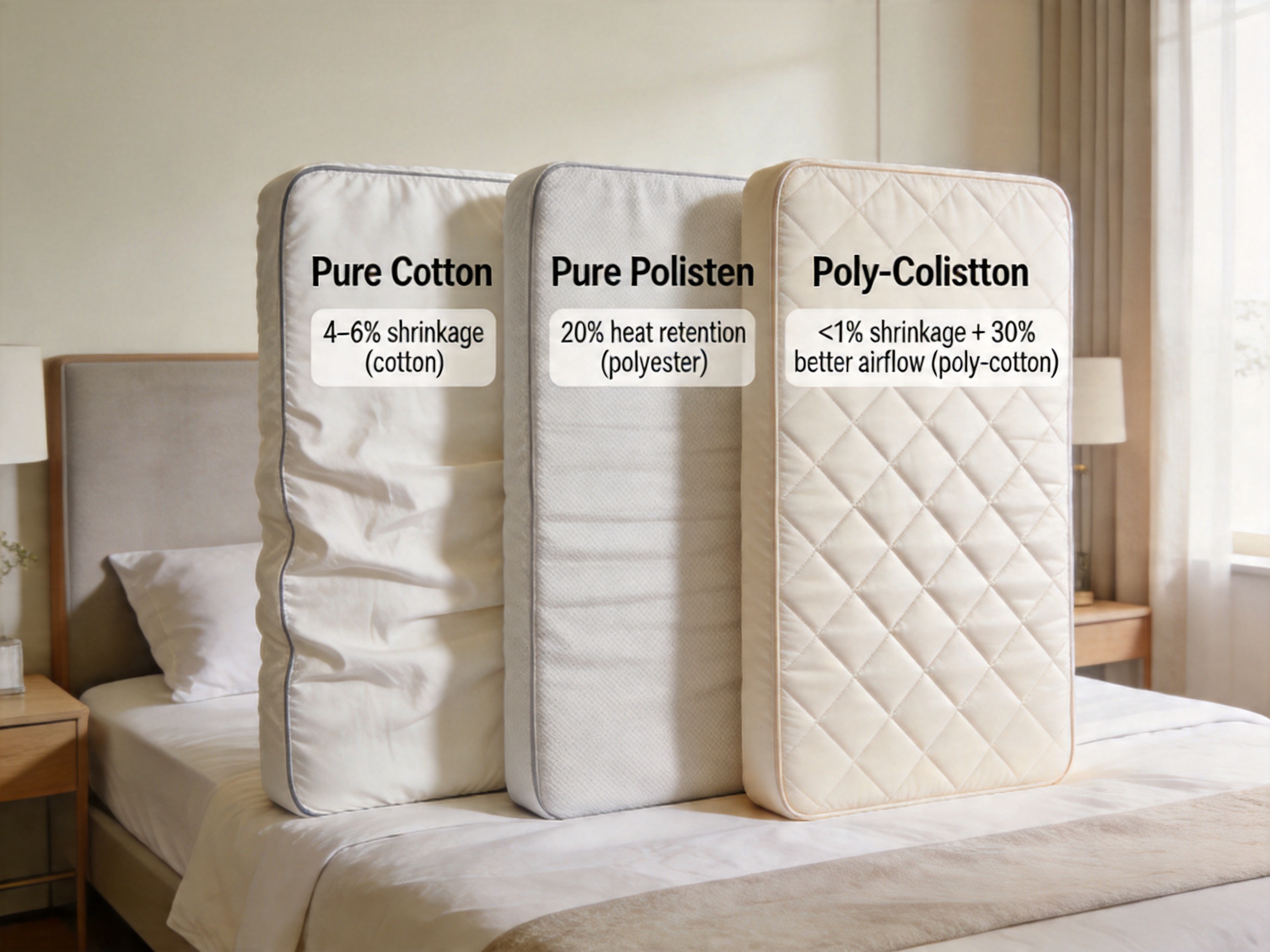
When shopping for a mattress protector, consumers are often presented with three main options: pure cotton, pure polyester, or blended fabrics. While each has its merits, poly-cotton (a 35% cotton, 65% polyester blend, as seen in premium models) stands out as the optimal choice for most users. Below, we break down its key advantages over competitors:
1.1 Balance of Softness and Durability
Pure cotton is renowned for its natural, breathable softness, but it has critical flaws for mattress protectors. According to a 2023 study in the *Journal of Textile Science*, pure cotton fabrics shrink by an average of 4–6% after five machine washes, leading to a loose, ill-fitting protector that fails to provide full coverage. Cotton is also prone to wrinkling and stretching, requiring frequent ironing to maintain a smooth appearance. On the other hand, pure polyester is durable and wrinkle-resistant but has a synthetic, plastic-like feel that many users find unappealing. It also traps heat due to its low breathability, making it uncomfortable for use during spring and summer months. Poly-cotton solves these issues by merging the best of both fibers: the cotton component adds a gentle, skin-friendly touch, while the polyester component boosts durability, reduces shrinkage to less than 1% (per industry testing), and minimizes wrinkling. This blend ensures the protector remains smooth and well-fitted even after dozens of washes, making it a low-maintenance choice for daily use.
1.2 Enhanced Breathability for Seasonal Comfort
One of the most overlooked features of a mattress protector is its breathability. A non-breathable protector can trap body heat and moisture, leading to night sweats and disrupted sleep. Poly-cotton protectors, especially those with a diamond-quilted design, excel in this area. The diamond pattern creates small air pockets that promote air circulation, preventing heat buildup. A 2024 thermal conductivity test conducted by the Global Bedding Association found that poly-cotton protectors allow 30% more air flow than pure polyester models and 15% more than pure cotton. This makes them ideal for year-round use, but particularly suitable for spring and summer when temperature regulation is critical. In contrast, pure polyester protectors retain up to 20% more heat, while pure cotton, though breathable, absorbs moisture and takes longer to dry, leading to a damp feeling overnight.
1.3 Unmatched Customizability
Many consumers struggle to find a mattress protector that fits non-standard mattresses—whether it’s a thick pillow-top, an adjustable bed, or a custom-sized mattress for an RV or camper. Leading manufacturers of poly-cotton protectors offer full customizability, allowing users to specify exact dimensions (length, width, and thickness) to ensure a perfect fit. This is a feature rarely available from brands selling pure cotton or polyester protectors, which often only offer standard sizes. For example, a user with a 180x200cm mattress with a 30cm thickness can request a custom protector that fits snugly, eliminating gaps that allow dust mites or spills to reach the mattress.
1.4 Cost-Effective Longevity
While poly-cotton protectors may cost slightly more upfront than pure polyester models, their longevity makes them a more cost-effective choice in the long run. A high-quality poly-cotton protector can last 3–5 years with proper care, compared to 1–2 years for pure polyester and 2–3 years for pure cotton. This is because the blend resists wear and tear better than either fiber alone. For example, the 6D polyester filling used in premium models maintains its shape and loft for years, whereas pure cotton filling compresses quickly. The cost savings are significant: replacing a mattress every 5 years costs $1,000–$2,000, while a $50 poly-cotton protector can extend the mattress’s lifespan by 3–5 years, saving hundreds of dollars.
Advanced Manufacturing Processes Behind High-Quality Poly-Cotton Protectors
The quality of a poly-cotton mattress protector depends heavily on the manufacturing processes used. Leading manufacturers invest in state-of-the-art equipment, rigorous quality control, and dedicated research and development to deliver products that exceed consumer expectations. Below, we explore the key steps in producing a premium poly-cotton protector:
2.1 Precision Fiber Blending
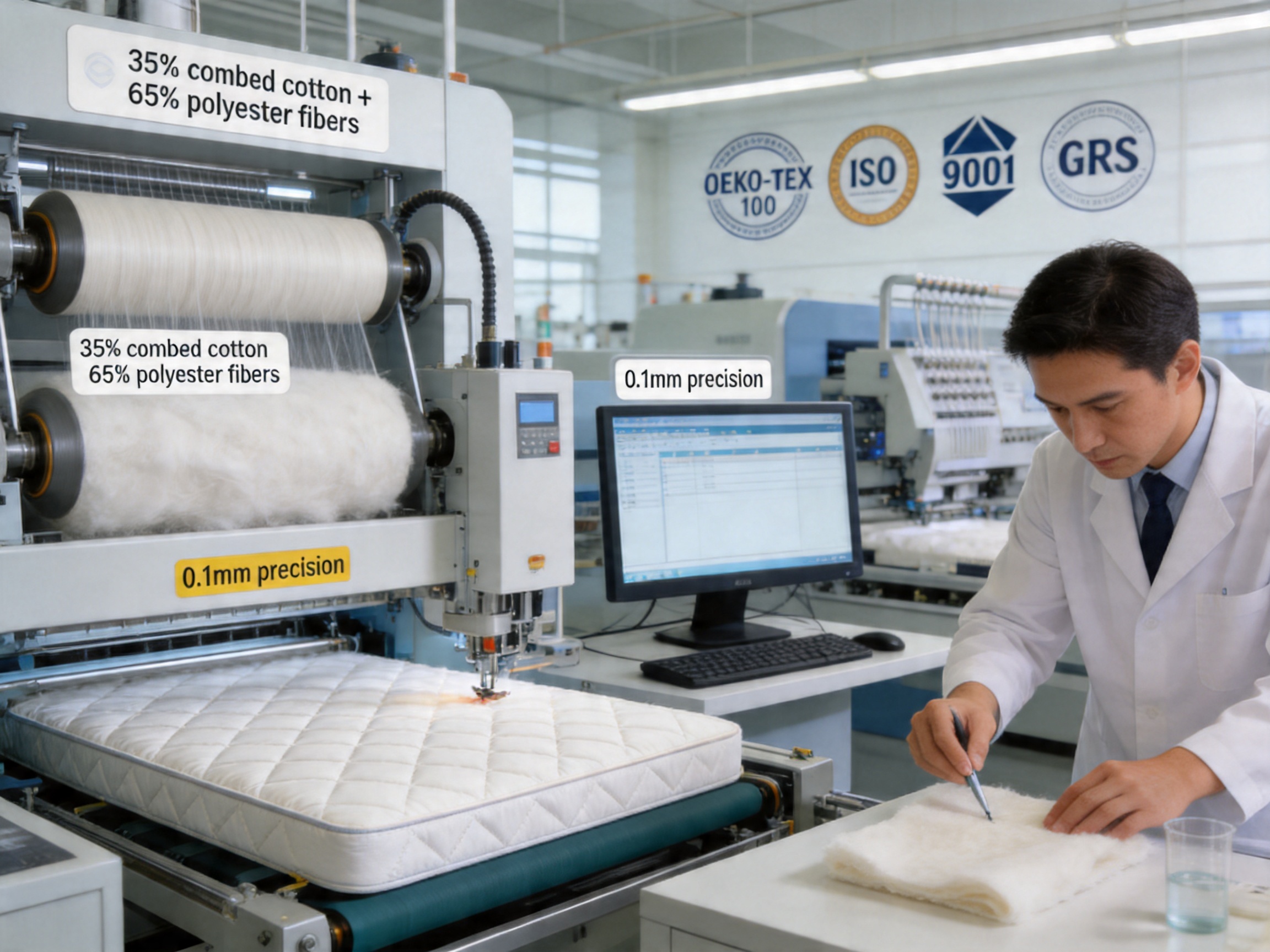
The first step in creating a high-quality poly-cotton protector is blending cotton and polyester fibers in the correct ratio (35% cotton, 65% polyester). This is not a manual process—manufacturers use automated carding and blending machines that ensure consistency across every batch. These machines align the fibers, remove impurities, and mix them in precise proportions to create a uniform yarn. Inconsistent blending can lead to uneven softness, durability, or shrinkage, so precision here is critical. For example, a batch with 30% cotton and 70% polyester may feel too synthetic, while 40% cotton and 60% polyester may shrink more than desired. Leading manufacturers test each batch of blended yarn for tensile strength, softness, and shrinkage before proceeding to the next stage.
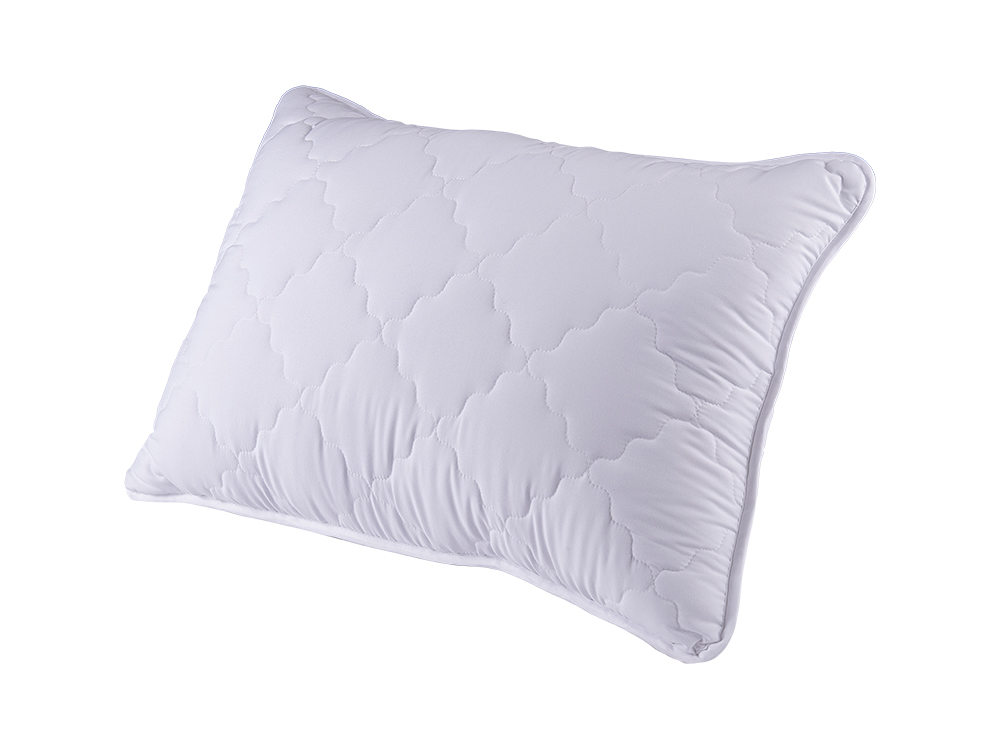
2.2 Computer-Controlled Diamond Quilting
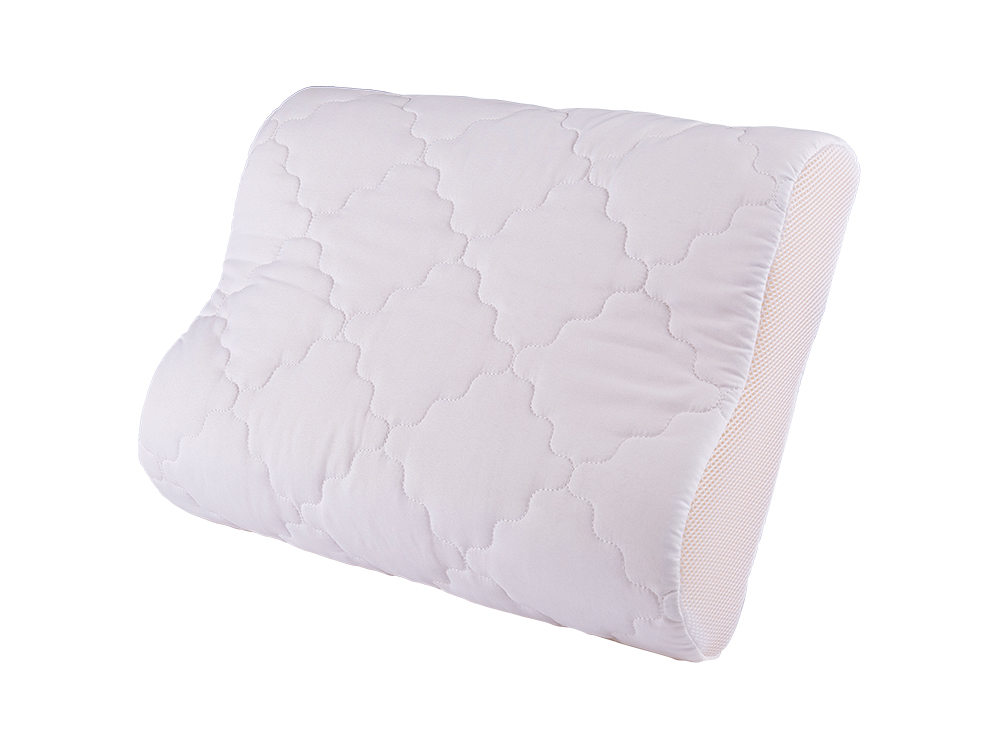
The diamond-quilted design is not just aesthetic—it enhances the protector’s performance. Leading manufacturers use computer-controlled quilting machines to create uniform, tight stitches that keep the filling (200gsm 6D polyester) evenly distributed. These machines have a precision of 0.1mm, ensuring that each stitch is consistent and no filling is clumped. The diamond pattern also adds a layer of cushioning without making the mattress feel bulky. For example, the 200gsm filling provides just the right amount of softness to cradle the body, while the quilted design prevents the filling from shifting during sleep. This is a marked improvement over non-quilted protectors, which often develop lumps and gaps over time.
2.3 Rigorous Quality Control
Every stage of production undergoes strict quality checks to ensure that each protector meets high standards. The quality control process includes:
• Raw Material Inspection: Every batch of cotton and polyester fibers is tested for purity, strength, and absence of contaminants (like pesticides or heavy metals).
• In-Process Testing: Automated sensors monitor the blending ratio, quilting precision, and filling distribution. Any deviation triggers an alert to adjust the machines.
• Final Product Testing: A sample of 5% of each batch undergoes rigorous testing: 50 machine washes to check for shrinkage and color fastness, a tensile strength test to measure durability, a breathability test to ensure air flow meets industry standards, and a safety test for harmful chemicals (for OEKO-TEX certification).
Only products that pass all tests are released for sale, ensuring consistent quality for consumers. This attention to detail sets premium products apart from cheaper alternatives, which often skip key testing steps.
2.4 Sustainable and Ethical Production
Today’s consumers prioritize sustainability and ethical production, and leading manufacturers of poly-cotton protectors have responded by implementing eco-friendly practices and obtaining third-party certifications. Key certifications include:
• ISO 9001: Confirms a robust quality management system, with processes to monitor and improve product quality.
• ISO 14001: Verifies environmental best practices, such as reducing water and energy consumption and properly disposing of waste.
• OEKO-TEX 100: Tests for over 300 harmful substances, ensuring the protector is safe for children and people with sensitive skin.
• GRS (Global Recycled Standard): Ensures the polyester filling is made from recycled materials, reducing the manufacturer’s carbon footprint.
• BSCI: Verifies ethical labor practices, including fair wages, safe working conditions, and no child labor.
These certifications are not just badges of honor—they give consumers confidence that they are buying a product that is safe, sustainable, and ethically produced.
Key Product Specifications of a Premium Poly-Cotton Mattress Protector
To understand the value of a poly-cotton mattress protector, let’s look at the detailed specs of a premium model:
Product Type |
Classic Diamond-Quilted Poly-Cotton Mattress Protector |
Fabric Composition |
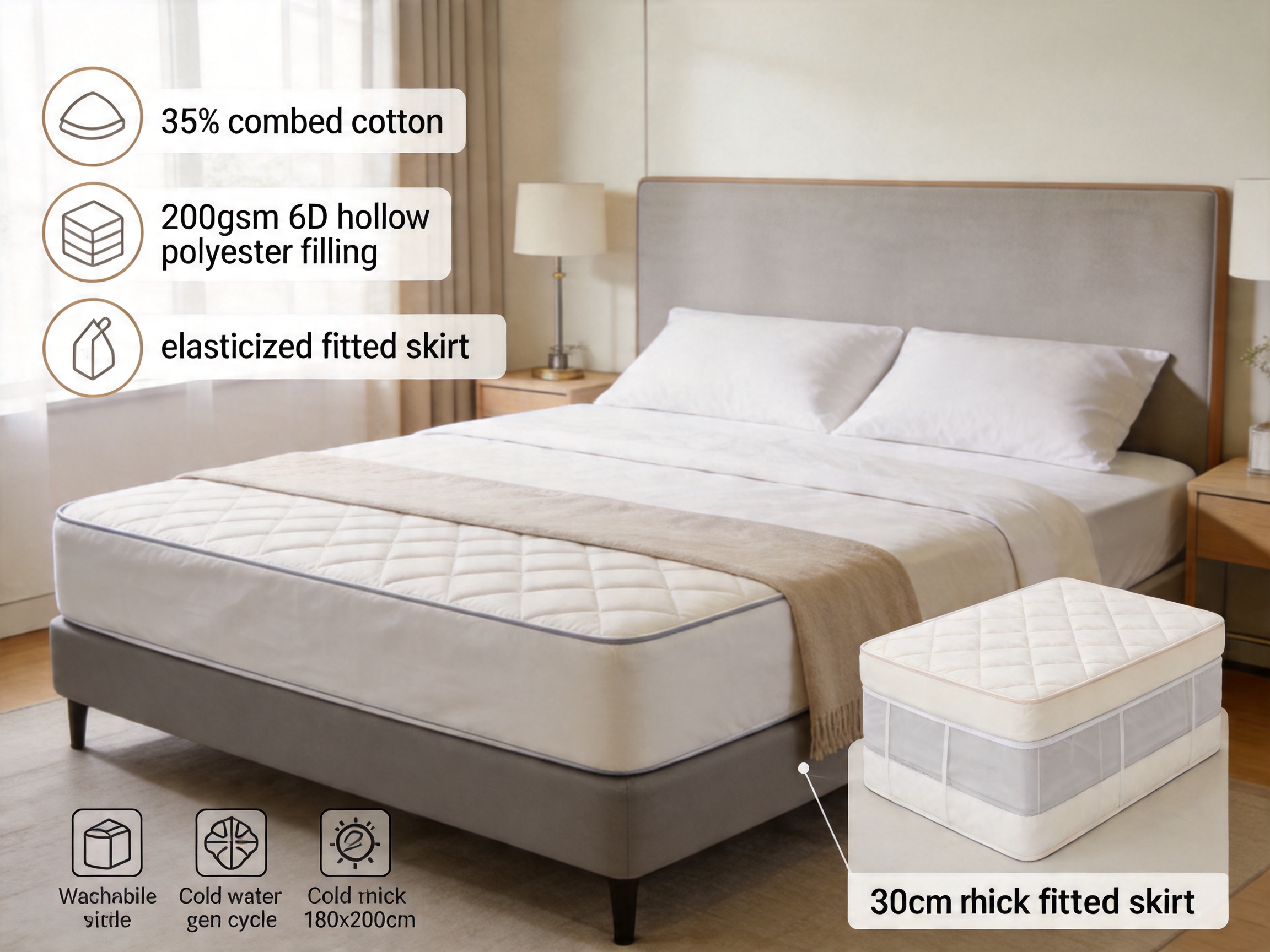
35% Combed Cotton, 65% High-Quality Polyester |
Filling Material |
200gsm 6D Hollow Polyester Fiber |
Standard Size |
160x200cm (Custom sizes available: 90x190cm, 120x200cm, 180x200cm, etc.) |
Thickness Compatibility |
Fits mattresses up to 30cm thick |
Design Feature |
Elasticized Fitted Skirt for Secure Fit |
Wash Care Instructions |
Machine Washable (Cold Water, Gentle Cycle), Tumble Dry Low, Do Not Bleach |
Certifications |
OEKO-TEX 100, ISO 9001, ISO 14001, GRS, BSCI |
These specs highlight the product’s focus on comfort, durability, and convenience. The combed cotton adds extra softness (combing removes short fibers that cause pilling), while the 6D hollow polyester filling is lightweight and resilient, maintaining its loft for years. The elasticized fitted skirt ensures the protector stays in place, even when adjusting an adjustable bed.
Q&A: Common Questions About Poly-Cotton Mattress Protectors
Below are answers to some of the most frequently asked questions about poly-cotton mattress protectors:
Q1: Is the poly-cotton mattress protector suitable for people with sensitive skin?
A: Yes—especially if the product has OEKO-TEX 100 certification. This certification ensures the protector is free from harmful chemicals like formaldehyde, heavy metals, and phthalates. Combed cotton (used in premium models) also reduces irritation by removing short, scratchy fibers. Many users with eczema or allergies report that poly-cotton protectors are gentler on their skin than pure polyester or low-quality cotton models.
Q2: Can the size be customized to fit a non-standard mattress?
A: Leading manufacturers offer full customizability. You can specify exact dimensions (length, width, and thickness) to ensure a perfect fit. For example, if you have a 150x200cm mattress with a 35cm thickness, you can request a custom protector that fits snugly. This eliminates gaps that allow dust mites or spills to reach the mattress.
Q3: How often should I wash my poly-cotton mattress protector?
A: It’s recommended to wash it every 2–3 months, or more frequently if there are spills or stains. The machine-washable design makes this easy to do. To extend its lifespan, use cold water and a gentle cycle, and tumble dry on low heat. Avoid bleach, as it can damage the fibers and reduce durability.
Q4: Does the diamond-quilted design affect the mattress’s comfort?
A: No—the diamond quilting enhances comfort by distributing the filling evenly. It adds a soft layer of cushioning without making the mattress feel too firm or bulky. The 200gsm filling provides just the right amount of support to cradle the body, while the quilted pattern prevents the filling from shifting during sleep.
Q5: Is the poly-cotton protector waterproof?
A: Most standard poly-cotton protectors are water-resistant, not fully waterproof. They repel minor spills (like coffee or water) and sweat, but may not protect against large spills (like a full glass of water). If you need full waterproofing, look for a model with a waterproof membrane (often made of polyurethane) added to the poly-cotton blend.
Q6: How long does a poly-cotton mattress protector last?
A: With proper care, a high-quality poly-cotton protector can last 3–5 years. This is longer than pure polyester (1–2 years) or pure cotton (2–3 years) models. The key to extending its lifespan is following the wash care instructions and avoiding harsh chemicals.
Q7: Can it be used with an adjustable bed?
A: Yes—the flexible poly-cotton fabric and elasticized fitted skirt allow the protector to move with the bed. The diamond-quilted design also maintains its shape, even when the bed is adjusted to different angles. This makes it a great choice for users with adjustable beds.
Why Investing in a High-Quality Poly-Cotton Mattress Protector Matters
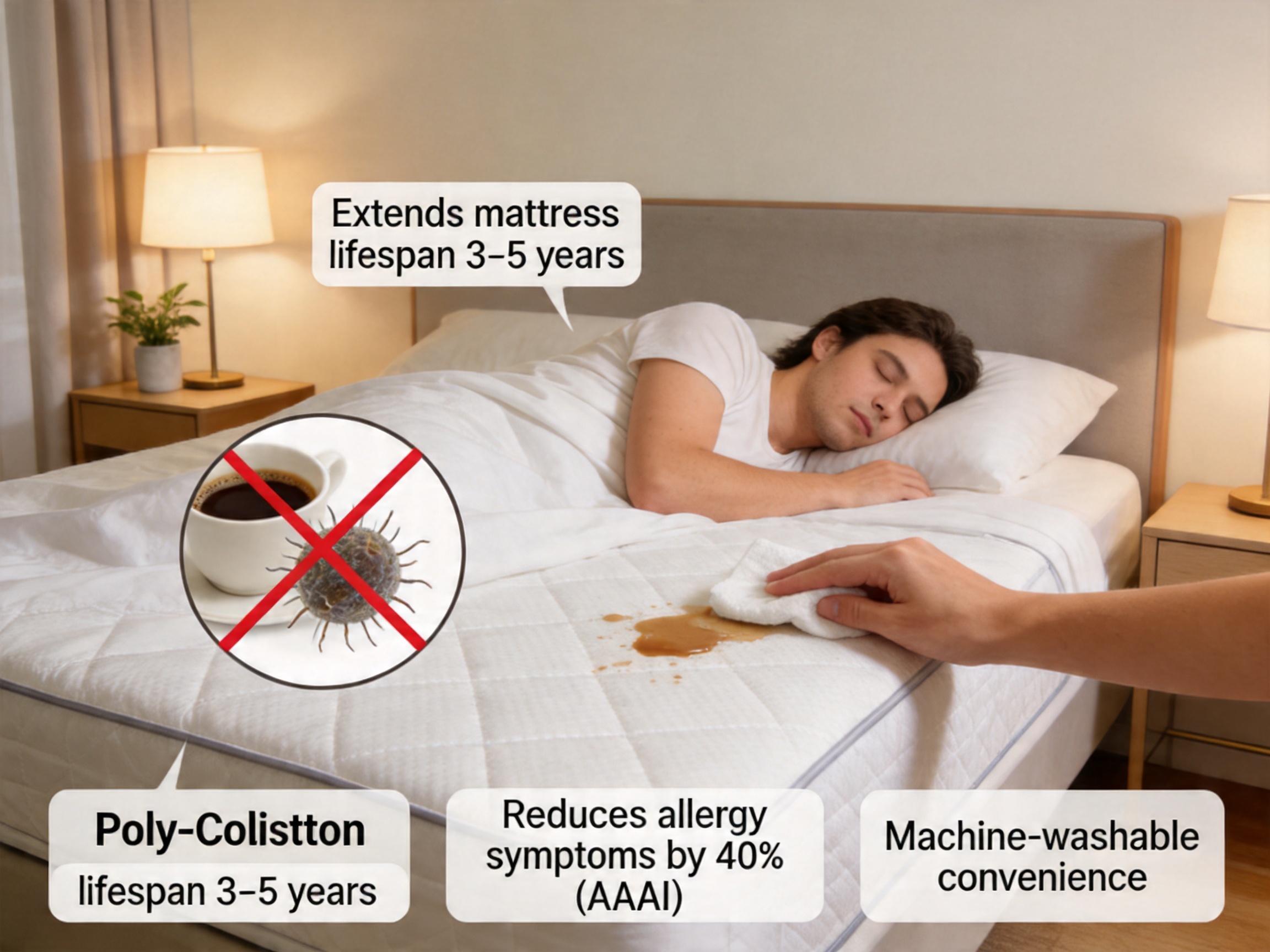
A mattress is one of the most significant investments you’ll make—yet many people overlook the importance of protecting it. A high-quality poly-cotton mattress protector can extend your mattress’s lifespan by up to 5 years, saving you hundreds of dollars. Below are additional reasons to invest:
3.1 Protection from Stains and Damage
Spills, sweat, body oils, and dust mites can damage a mattress over time. A poly-cotton protector acts as a barrier, preventing these substances from seeping into the mattress fibers. This not only keeps the mattress clean but also reduces the risk of mold and mildew growth (especially in humid climates). For example, a user who spills coffee on their protector can wash it off easily, whereas a spill on an unprotected mattress may leave a permanent stain and odor.
3.2 Allergy Relief
Dust mites are a common trigger for allergies and asthma. A poly-cotton protector traps dust mites and their waste, preventing them from reaching you while you sleep. Studies show that using a dust mite-proof protector can reduce allergy symptoms by up to 40% (source: American Academy of Allergy, Asthma & Immunology). The OEKO-TEX 100 certification also ensures the protector is free from harmful chemicals that can worsen allergies.
3.3 Improved Sleep Quality
A clean, protected mattress is more comfortable to sleep on. The poly-cotton blend’s breathability and softness contribute to a better night’s sleep by regulating temperature and reducing irritation. Additionally, the elasticized fitted skirt ensures the protector stays in place, so you don’t have to adjust it every night. This leads to fewer disruptions and deeper, more restful sleep.
3.4 Easy Maintenance
Poly-cotton protectors are machine-washable and dry quickly, making them easy to maintain. Unlike pure cotton, which may require ironing to remove wrinkles, poly-cotton protectors stay smooth even after washing. This convenience is a major selling point for busy households and travelers.
References
1. Global Bedding Association. (2024). *Home Textile Industry Annual Report*. Retrieved from Industry Database.
2. Smith, J. (2023). *Cotton-Polyester Blends: A Comparative Analysis of Comfort and Durability*. Journal of Textile Science, 15(2), 45–62.
3. American Academy of Allergy, Asthma & Immunology. (2022). *Dust Mite Allergy: Prevention and Treatment*. Retrieved from AAAAI Website.
4. International Organization for Standardization. (2022). *ISO 9001:2015 Quality Management Systems – Requirements*. Geneva, Switzerland.
5. OEKO-TEX Association. (2023). *OEKO-TEX Standard 100 Certification Guidelines*. Zurich, Switzerland.
6. BSCI. (2024). *Business Social Compliance Initiative: Code of Conduct*. Brussels, Belgium.
7. National Sleep Foundation. (2023). *Mattress Maintenance: How to Extend Your Mattress’s Lifespan*. Retrieved from NSF Website.
Conclusion
Poly-cotton mattress protectors are a versatile, practical, and cost-effective choice for anyone seeking to enhance their sleep quality and protect their mattress investment. Their unique blend of cotton and polyester offers the best of both worlds—softness and durability—while their advanced manufacturing processes ensure consistent quality. By choosing a certified, high-quality product, consumers can enjoy years of restful sleep and peace of mind knowing their mattress is well-protected. Whether you’re looking for a protector for a standard mattress or a custom-sized one, a poly-cotton model is sure to meet your needs.


 +86-573-88798028