



 Français
 Español
 Deutsch
Content
- 1 Introduction
- 2 Product Overview
- 3 Ergonomic Support Through a Wavy Memory Foam Core
- 4 Soft Quilted Comfort at the Sleeping Surface
- 5 Advantages Compared with Conventional Pillow Designs
- 6 Manufacturing Strengths and Production Capabilities
- 7 Advanced Manufacturing Process
- 8 Quality Systems and Responsible Manufacturing
- 9 Customization and Commercial Applications
- 10 Care, Handling, and Product Longevity
- 11 Why Choose an Experienced Home Textile Manufacturer?
- 12 Q&A
- 12.1 What makes this pillow different from a basic polyester pillow?
- 12.2 What does the 5/7 cm size specification mean?
- 12.3 Is the pillow suitable for side sleepers?
- 12.4 Can back sleepers use the pillow?
- 12.5 What is the purpose of the brushed fabric?
- 12.6 What does the 3D polyester quilted layer contribute?
- 12.7 Does the floral design affect performance?
- 12.8 Is the memory foam core removable?
- 12.9 How should the pillow be cleaned?
- 12.10 Can the product be customized?
- 12.11 What certifications does the manufacturer report?
- 12.12 Where is the manufacturer located?
- 13 Conclusion
- 14 References
- 15 Product: Multifunctional Memory Foam Pillow
Introduction
A pillow is one of the most important elements in a healthy and comfortable sleep environment. It supports the head, cushions the neck, helps maintain a natural sleeping posture, and influences how relaxed the body feels after several hours of rest. Although pillows may look simple, their performance depends on the relationship between the outer fabric, inner filling, shape, height, resilience, breathability, and manufacturing quality. A well-designed pillow should offer more than softness. It should respond to movement, support the neck appropriately, maintain its structure, and remain comfortable through repeated use.
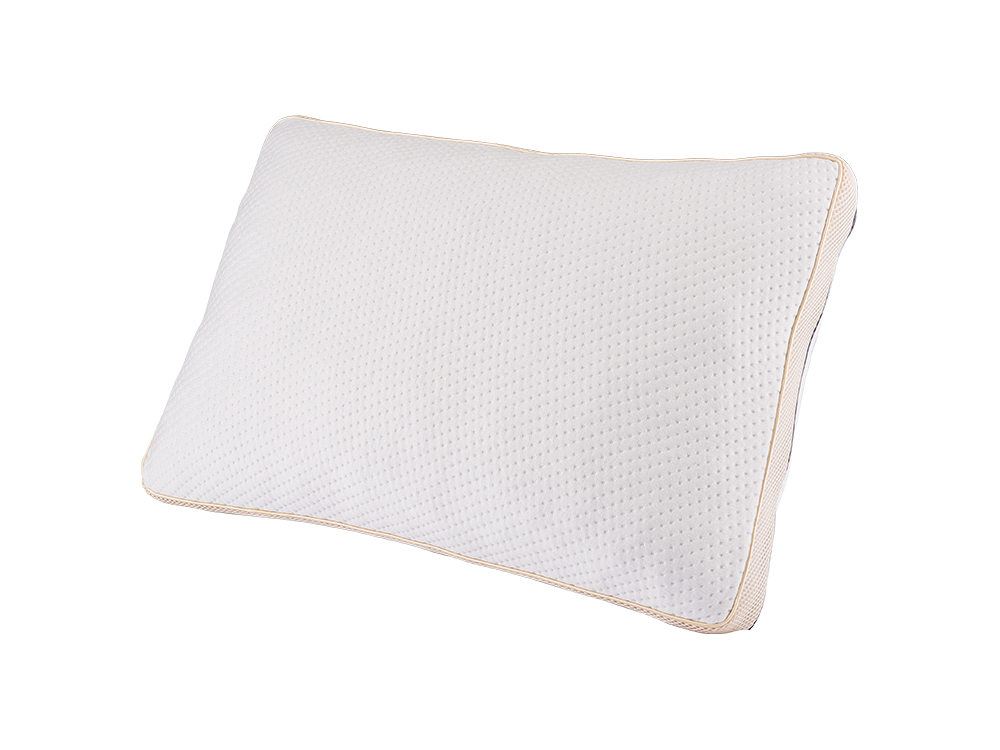
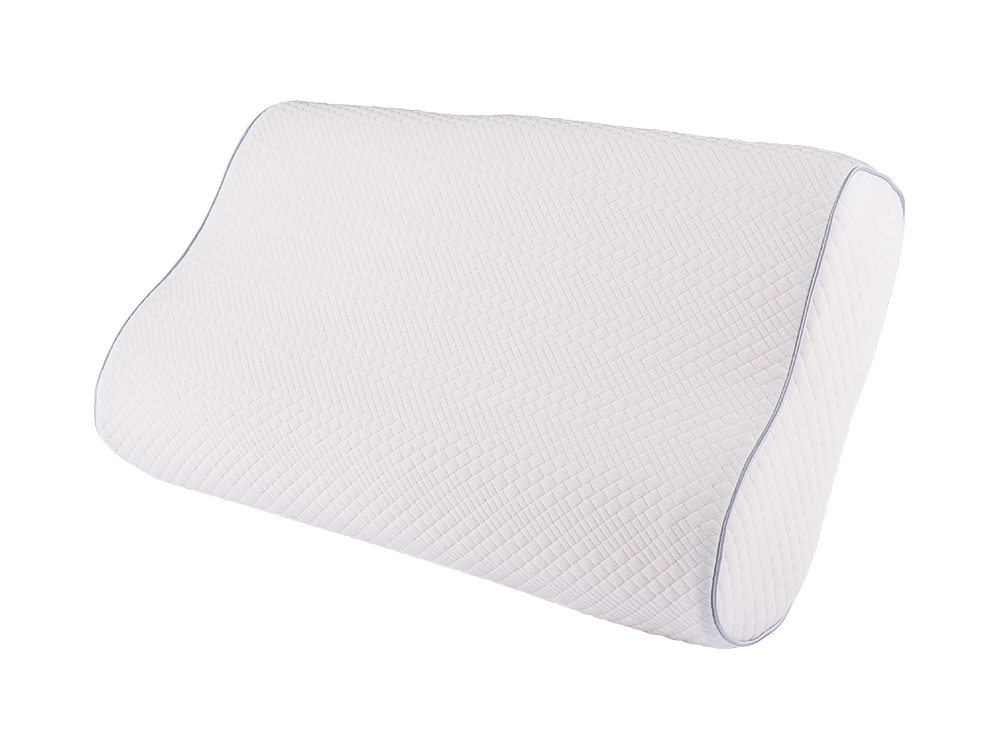
The Multifunctional Memory Foam Pillow combines a soft quilted shell with a wavy slow-rebound memory foam core. Its design is intended to balance surface comfort with supportive performance. The quilted layer gives the pillow a gentle, skin-friendly touch, while the shaped memory foam interior follows the curve of the neck and helps distribute pressure. With a size of 60 x 70 x 5/7 cm, the pillow provides a broad sleeping surface while retaining a contoured height suitable for users who prefer structured support.
This product is manufactured by Tongxiang Xinlong Bedding Co., Ltd., an established home textile producer with experience in quilts, pillows, cushions, mattress protectors, blankets, bedspreads, curtains, and related household products. The company’s production capabilities, technical personnel, quality systems, certifications, and extensive manufacturing facilities support the development of home bedding products for different markets and customer requirements.
In comparison with a conventional flat fiber pillow, this memory foam design offers a more deliberate approach to ergonomic support. In comparison with a hard or excessively rigid support pillow, its quilted exterior and resilient foam construction are designed to provide a softer first contact. The result is a multifunctional bedding product that can serve retail, hospitality, private-label, and customized home textile programs.
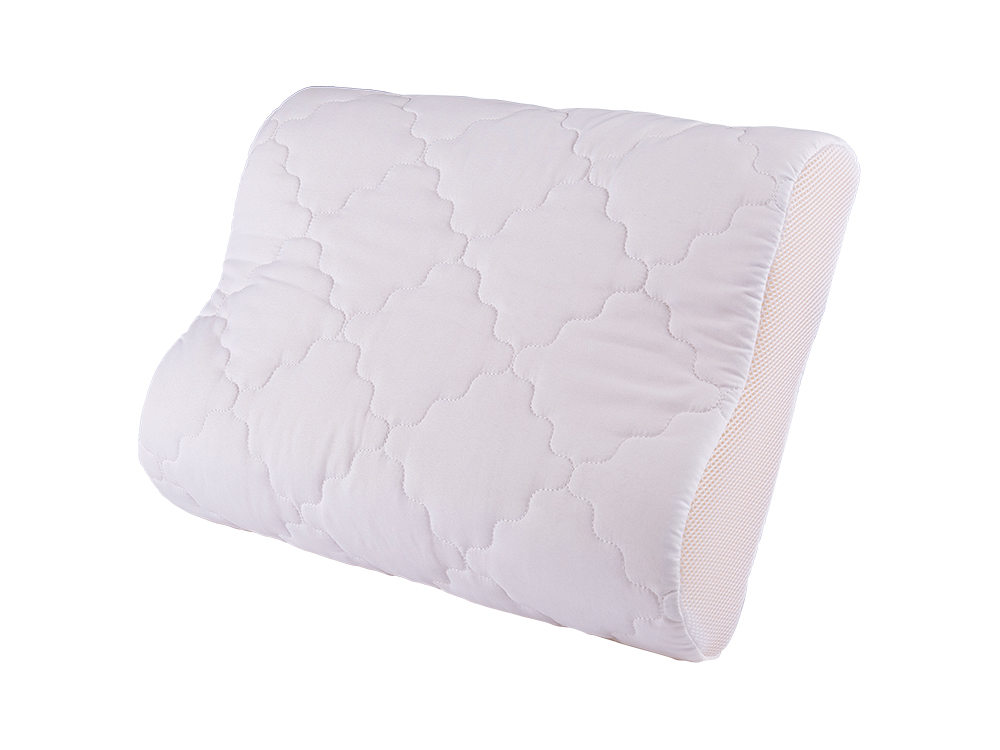
Multifunctional Memory Foam Pillow
Product Overview
The Multifunctional Memory Foam Pillow is built around two primary comfort zones. The first is the outer pillow shell, which provides the immediate tactile experience. The second is the internal memory foam core, which supplies the structural support beneath the surface. These two elements work together rather than functioning as separate components.
The outer shell uses 95gsm brushed fabric. Brushed fabric is valued in bedding applications because its surface has a soft, gently raised feel. This type of finish helps reduce the coarse sensation that can sometimes be associated with plain woven textile surfaces. For a pillow that remains close to the face and neck for extended periods, surface softness is particularly important. The fabric is also suitable for the quilted construction, allowing the cover to maintain a comfortable appearance while helping protect the inner components.
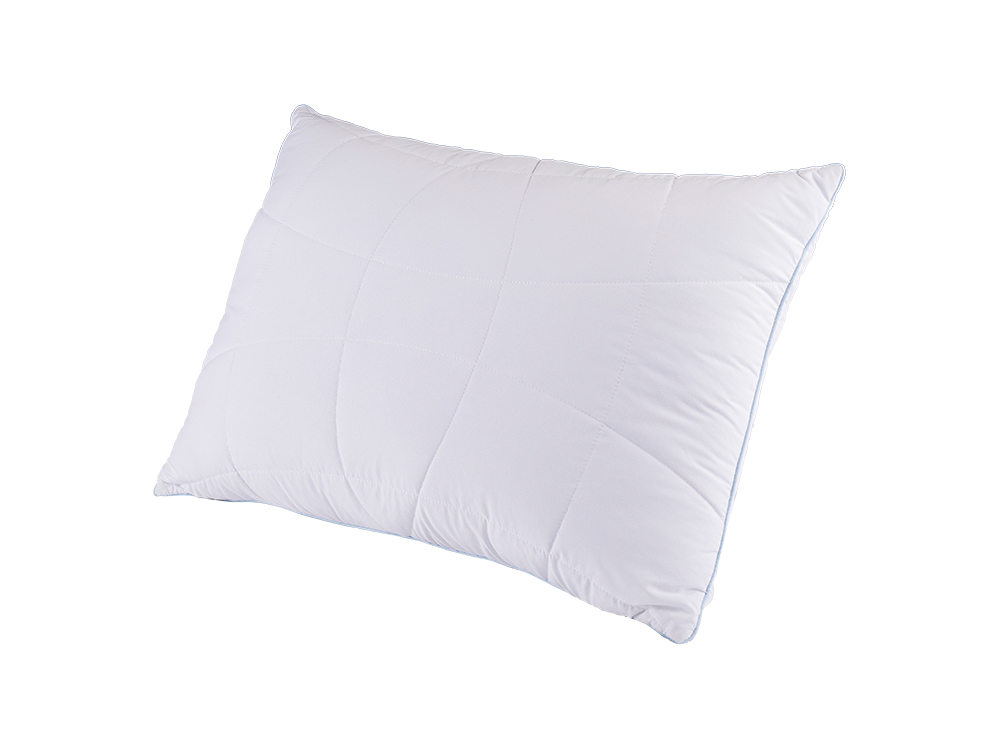
Under the outer fabric is a quilted layer filled with 3D polyester. This layer creates additional loft between the user and the memory foam core. It contributes to the pillow’s soft hand feel and gives the product a fuller appearance than a bare foam support pillow. The quilted structure can also help distribute contact pressure across the surface, creating a gradual transition from the soft shell to the firmer core.
A 30gsm non-woven fabric lining is included as part of the shell construction. The lining supports the internal quilted materials and provides an additional layer between the cover and the core. Careful selection and assembly of textile layers are important because the outer shell must remain stable while the pillow is handled, packed, transported, and used repeatedly.
The inside of the product contains a memory foam core. Memory foam is known for its slow-rebound behavior. When pressure is applied, the material gradually responds rather than immediately returning to its original shape. This response allows the pillow to conform to the head and neck area. When pressure is removed, the core progressively recovers, helping the pillow retain its intended form for the next use.
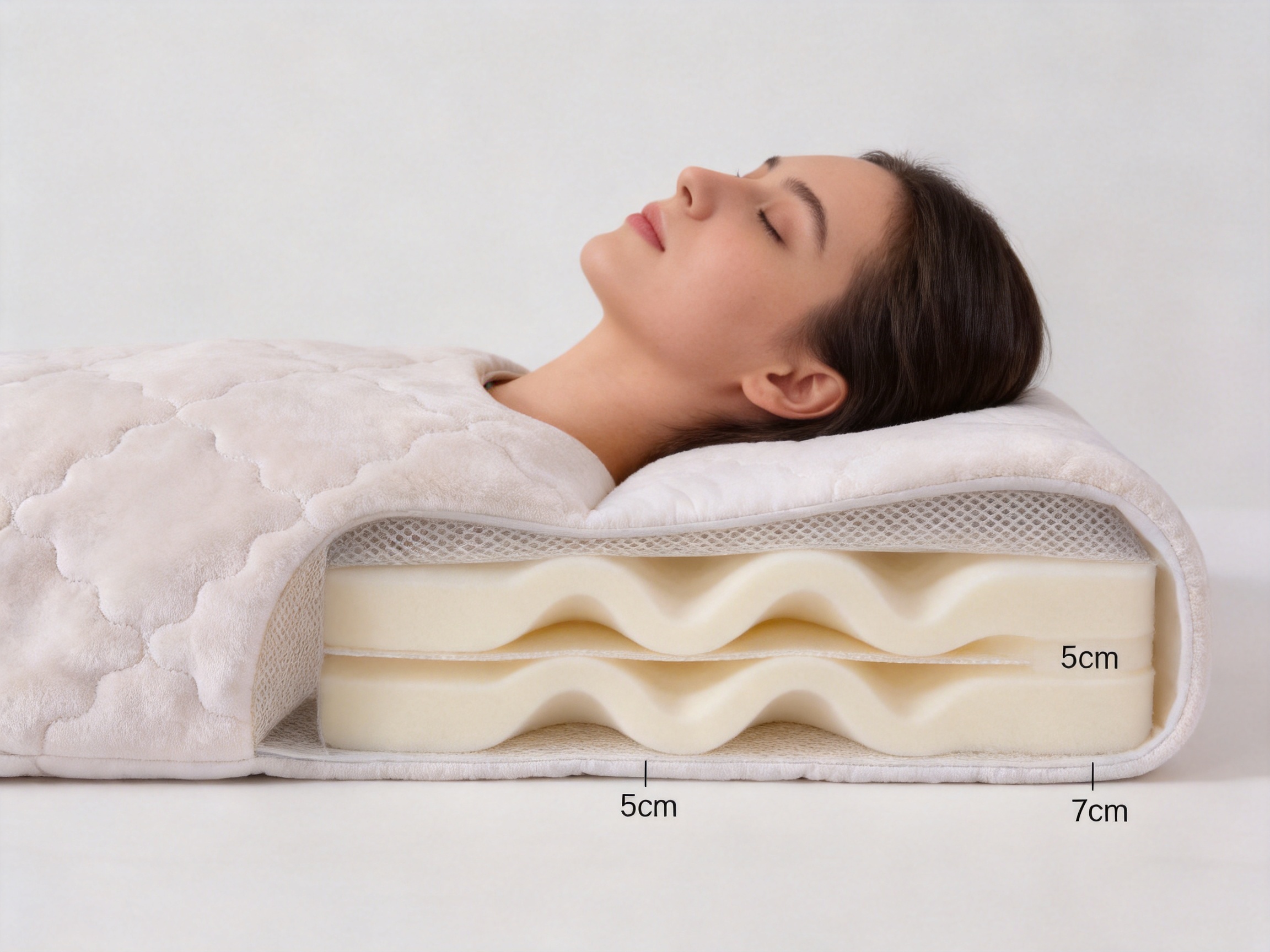
The core uses a wavy design rather than a completely flat block. This structure is intended to follow the natural curve of the neck more effectively. The higher and lower areas of the wave pattern can create differentiated support zones, while the overall shape helps the pillow respond to the relationship between the head, neck, and shoulder. The design is especially useful for consumers who want the pressure-relieving characteristics of memory foam without sacrificing the soft feel of a quilted pillow.
Key Product Specifications
| Specification | Product Detail | Functional Contribution |
|---|---|---|
| Product type | Multifunctional memory foam pillow | Combines surface softness with structured neck support |
| Size | 60 x 70 x 5/7 cm | Provides a broad sleeping area with differentiated height |
| Outer fabric | 95gsm brushed fabric | Creates a soft, comfortable surface feel |
| Lining | 30gsm non-woven fabric | Supports the quilted shell construction |
| Quilted layer filling | 3D polyester | Adds loft, cushioning, and a fuller hand feel |
| Internal support | Memory foam core | Provides slow-rebound support and pressure distribution |
| Core shape | Wavy slow-rebound design | Helps follow the neck curve and create contoured support |
Ergonomic Support Through a Wavy Memory Foam Core
The central performance advantage of this pillow is the combination of memory foam and a contoured wavy structure. A conventional pillow filled only with loose fiber may feel soft when first used, but its fill can shift under pressure. This movement may create uneven support and require frequent reshaping. A solid memory foam core provides a more stable foundation and reduces the extent to which the internal support changes position during sleep.
The slow-rebound response of memory foam allows the core to adapt gradually to the user’s body weight. Instead of compressing and recovering immediately, the material forms a temporary impression around the head and neck. This can help create closer contact and may reduce the feeling of gaps between the neck and the pillow. The effect is particularly relevant for sleepers who prefer a pillow that feels supportive rather than loose or overly mobile.
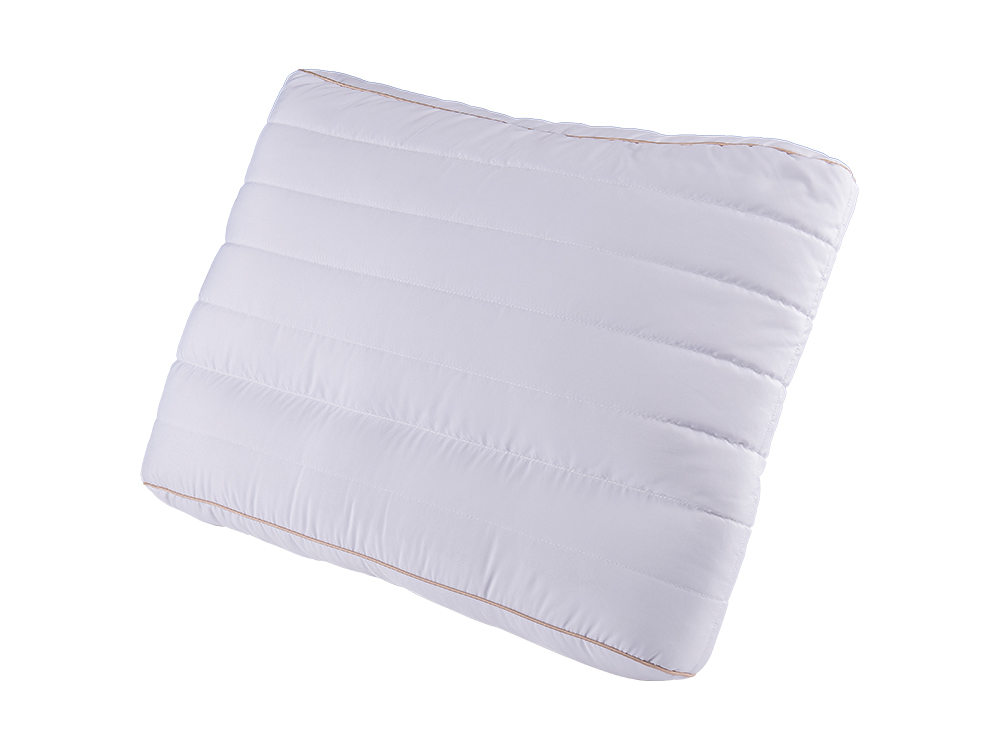
The wavy profile adds another dimension to the design. A flat foam slab can provide consistent support, but it does not necessarily account for the different heights required by the head, neck, and shoulder region. The wavy construction is intended to provide a more anatomical relationship between these areas. Its 5/7 cm height specification indicates a dual-height profile, giving the pillow a lower and higher side for users with different preferences or sleeping positions.
Support should not be confused with hardness. A pillow can be firm but poorly shaped, or soft but unable to maintain adequate elevation. The product’s design seeks to combine controlled support with a cushioned surface. The memory foam core supplies resistance beneath the body, while the 3D polyester quilted layer reduces direct contact with the foam. This layered approach can make the pillow feel more welcoming than an exposed orthopedic foam pillow.
When a pillow supports the neck appropriately, the head is less likely to tilt excessively upward or downward. A more neutral position can help the sleeper feel less strain in the neck and upper shoulder area. Individual comfort will always vary according to body shape, mattress firmness, sleeping position, and personal preference, but the contoured core gives the product a clear ergonomic purpose rather than relying only on decorative styling.
Support for Different Sleeping Preferences
The broad 60 x 70 cm format provides sufficient surface area for users who move during the night. A larger pillow can make it easier to remain supported when changing position, provided that it is used with a compatible mattress and bed size. The dual-height 5/7 cm profile allows the user to choose the side that feels most suitable. The lower side may be preferred by users who want a more moderate elevation, while the higher side can offer additional lift for those who prefer a more substantial contour.
Side sleepers often need enough height to fill the space between the shoulder and head. A contoured pillow can help address this requirement more effectively than a very flat cushion. Back sleepers may prefer a lower profile that supports the natural curve of the neck without pushing the head too far forward. The two-height configuration gives the pillow a practical degree of versatility.
People who alternate between side and back sleeping may also appreciate a pillow that does not have only one fixed position. The multifunctional concept refers not only to the materials but also to the flexibility of use. The pillow can be oriented according to the user’s desired elevation, and its wide surface allows movement without immediately losing contact with the support zone.
As with any ergonomic product, users should allow time to adjust to the feel of memory foam. Traditional fiber pillows can feel immediately familiar because they compress quickly. Slow-rebound foam responds differently and may initially seem more structured. With regular use, many consumers value the way it maintains a stable support profile instead of flattening rapidly.
Soft Quilted Comfort at the Sleeping Surface
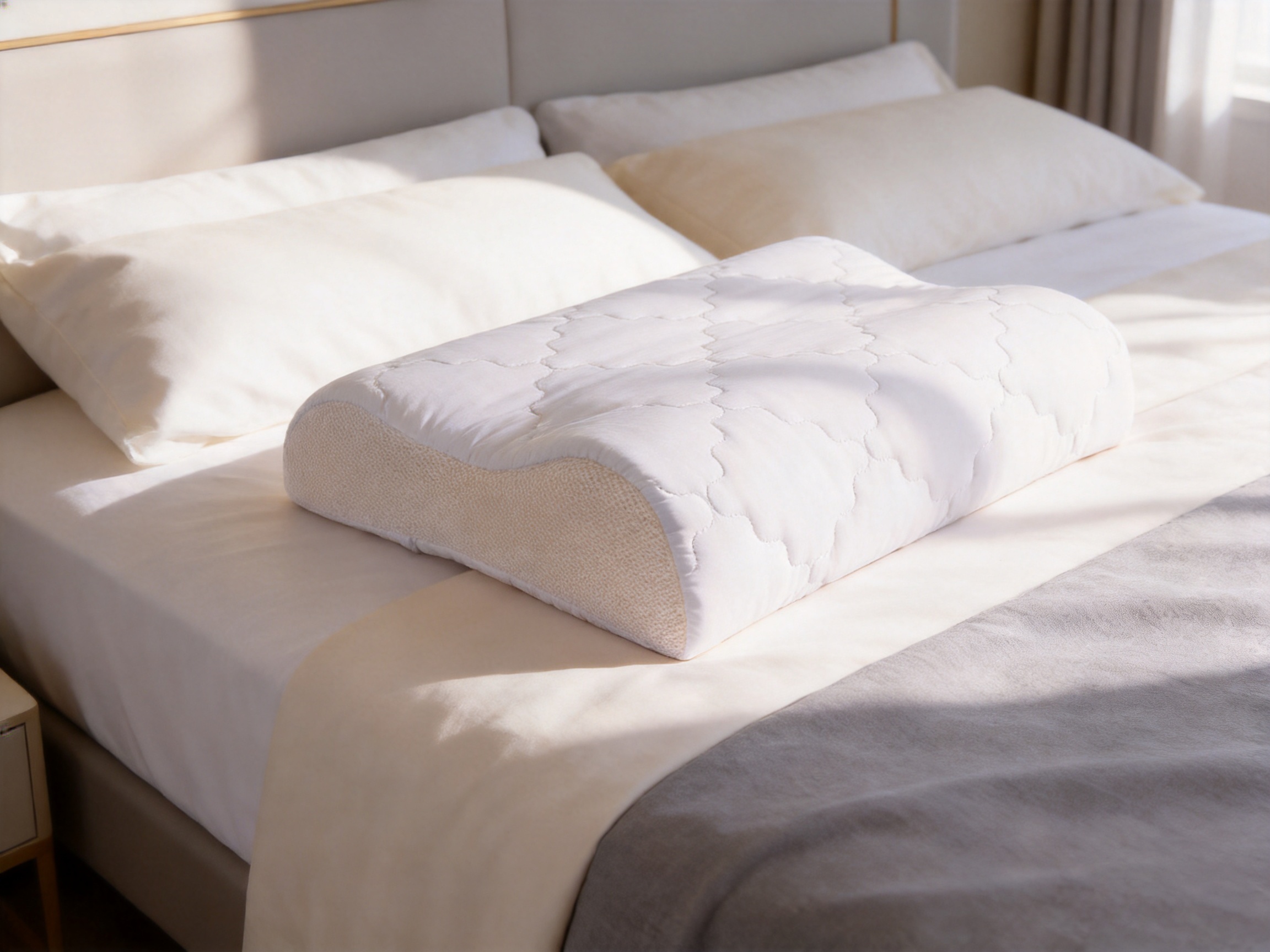
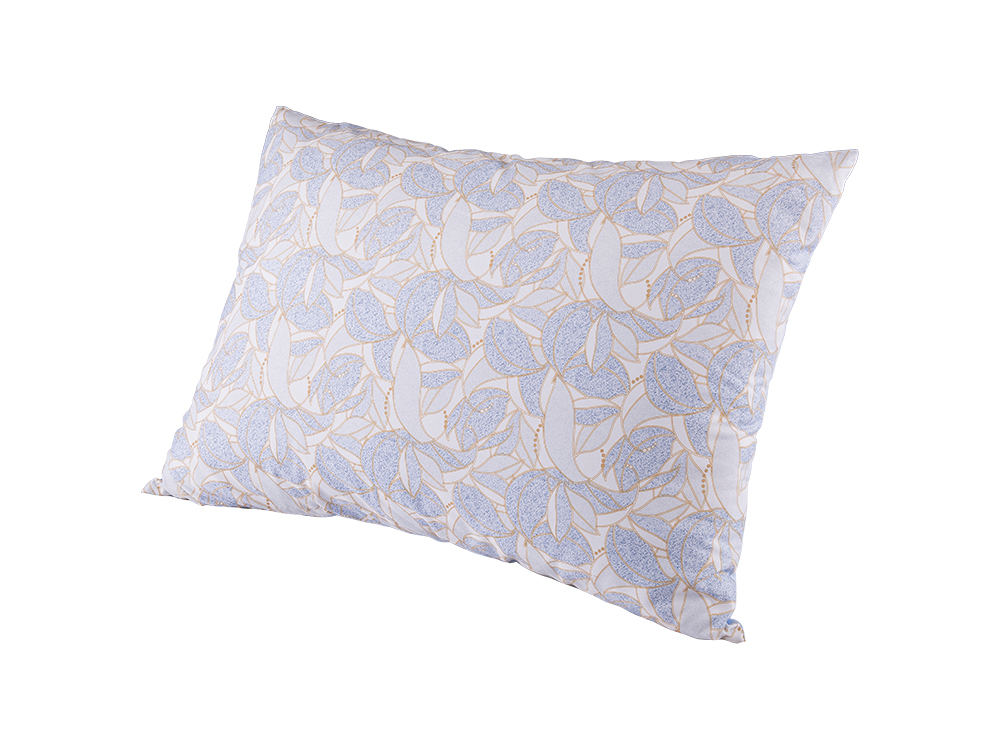
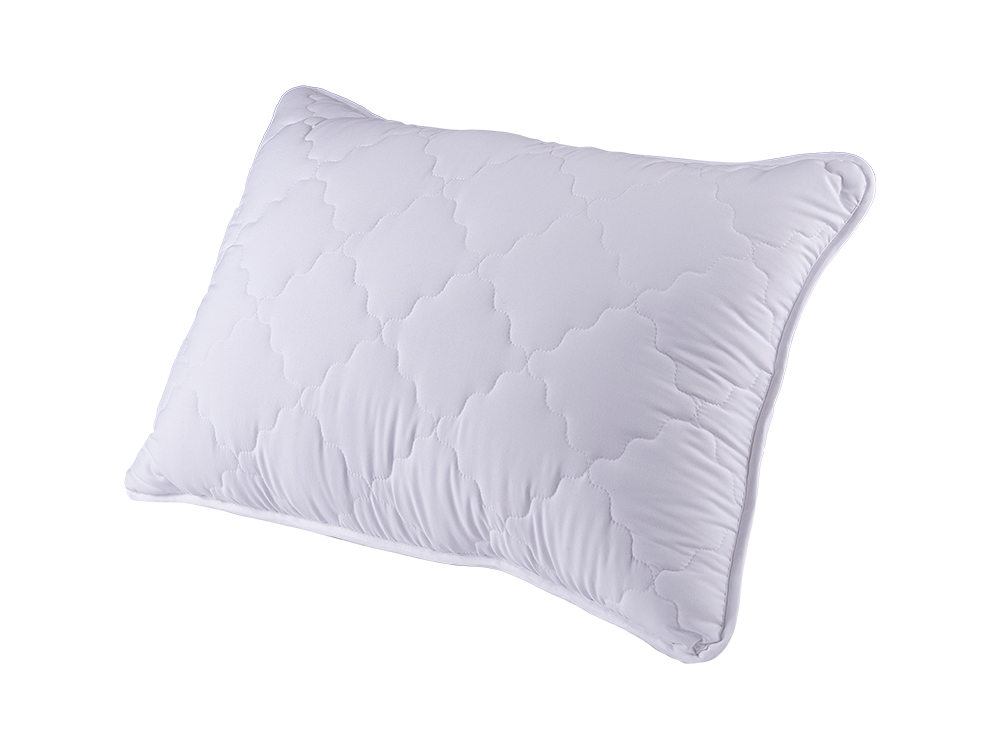
Support is only one part of pillow performance. Because the face and neck remain in contact with the product for hours, the surface must also feel comfortable. The simple floral design of the shell gives the pillow a refined home textile appearance, while the soft quilted construction adds tactile depth. The floral pattern is decorative without overwhelming the overall style, allowing the product to coordinate with a variety of bedding collections.
The 95gsm brushed fabric provides the immediate surface touch. Its gently brushed finish is intended to feel soft and close to the skin. This quality is especially valuable in a pillow because the user may notice small differences in texture more readily than on a distant bedding surface. A comfortable fabric can make the transition to a supportive foam core feel less rigid and more inviting.
The quilted layer filled with 3D polyester adds a resilient cushion above the core. Three-dimensional polyester filling is commonly used in bedding because it can create volume while remaining relatively lightweight. In this product, the filling supports the quilted appearance and provides an intermediate comfort layer. It also helps the pillow maintain a fuller visual profile than a plain foam insert covered only by a thin fabric sleeve.
Quilting is not simply a decorative technique. By joining the fabric, lining, and filling at controlled points, quilting helps keep the internal layer distributed across the shell. This reduces the likelihood of large empty areas or concentrated clumps. The regular pattern can also help the cover hold its shape during handling and presentation in retail packaging.
The relationship between the quilted layer and the memory foam core is an important competitive distinction. Some support pillows expose the characteristics of the foam very directly, which may appeal to users seeking a firm technical feel but may be less attractive to consumers who prioritize softness. This product offers a more familiar textile experience while retaining the functional characteristics of a shaped foam interior.
Balanced Comfort Rather Than Excessive Softness
A pillow that is too soft may compress significantly under the head and fail to maintain the desired neck position. A pillow that is too hard may create pressure points and feel uncomfortable when used for a full night. The layered construction aims to provide balance: the quilted polyester layer supplies softness at the surface, and the memory foam core supplies controlled resistance underneath.
This balance can be useful for bedding retailers seeking products that appeal to a wide range of consumers. The pillow has a visible textile character that fits naturally into a bedding collection, yet it also offers a clear functional story based on memory foam support. This combination makes it suitable for customers who may not want an aggressively technical pillow but still expect more than a basic filling.
Advantages Compared with Conventional Pillow Designs
Conventional pillows remain popular because they are familiar, affordable, and available in many sizes. However, different constructions create different performance limitations. A standard loose-fiber pillow may require frequent fluffing, while a basic foam pillow may lack surface softness. The Multifunctional Memory Foam Pillow addresses these gaps through a layered structure.
Compared with Loose-Fiber Pillows
Loose-fiber pillows generally depend on the distribution and resilience of the filling to provide support. Over time, the filling may move toward the edges or compress in the areas receiving the most pressure. Users may need to shake or reshape the pillow to restore its loft. By contrast, the memory foam core is a defined support component that remains in place within the shell.
The product does not eliminate the comfort benefits associated with textile filling. Its 3D polyester quilted layer provides a soft, padded surface while the foam core maintains a more stable internal foundation. This gives the product a familiar pillow feel with more controlled support than many fully fiber-filled alternatives.
Compared with Flat Foam Pillows
A flat foam pillow can provide consistent support but may not accommodate the differing needs of the head and neck. Its uniform height may also limit the user’s ability to adjust the pillow to a preferred sleeping posture. The wavy core and 5/7 cm dual-height profile create more variation and allow the user to select the side that feels most comfortable.
The quilted outer layer is another important difference. A flat foam pillow with a thin cover can feel dense or technical. The soft brushed fabric and 3D polyester layer add a more traditional textile experience. This makes the design suitable for consumers who want the functional benefits of foam without giving up the softness associated with a quilted pillow.
Compared with Basic Decorative Pillows
Decorative pillows may enhance the appearance of a bed but are not always designed for sustained ergonomic use. The floral quilting of this product adds visual appeal, yet the main structure is functional. The product is designed to support sleeping comfort rather than serve solely as an ornamental accent.
This distinction can be valuable for retailers and hospitality buyers. A pillow that combines an attractive appearance with practical support can reduce the need to separate decorative and functional product ranges. It can be presented as part of a coordinated bedroom collection while still offering a clear comfort benefit to the end user.
Compared with Single-Height Support Pillows
A single-height pillow offers one fixed elevation. While this may work well for some users, it may be less adaptable for households in which people have different body shapes, sleeping positions, or comfort preferences. The 5/7 cm profile offers two height options within one product. This improves versatility and can make the pillow easier to position in different sleep environments.
Manufacturing Strengths and Production Capabilities
Tongxiang Xinlong Bedding Co., Ltd. was established in January 2002 and operates in Wuzhen, Tongxiang, Zhejiang Province, China. The company’s long operating history provides experience in the development and production of home textile products. Its product range includes silk cotton quilts, chemical fiber quilts, pillows, cushions, bedspreads, travel quilts, mattress protectors, blankets, quilt and pillowcases, shower curtains, curtains, and other household textile products.
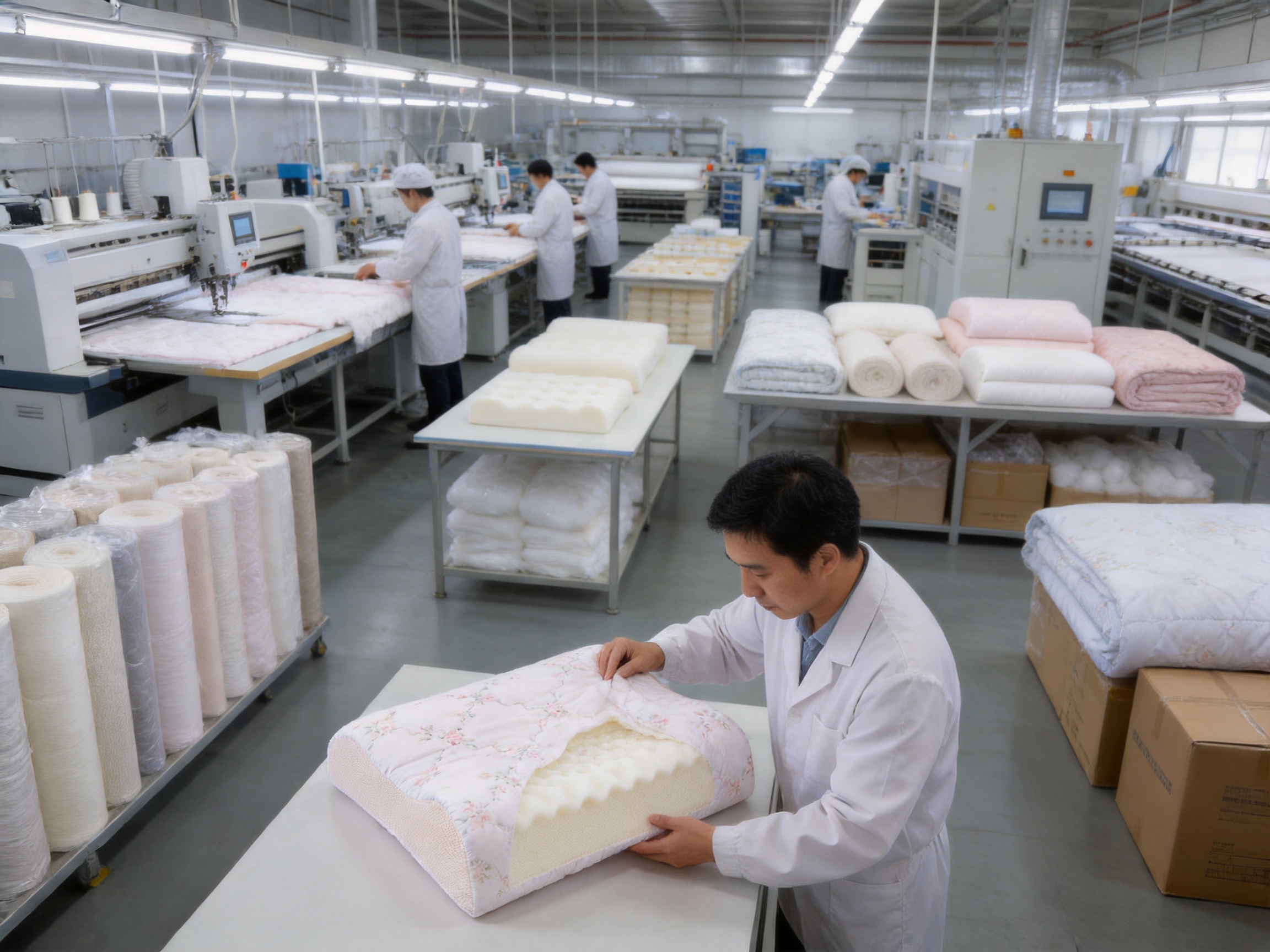
The company covers approximately 21,000 square meters, with a construction area of approximately 18,000 square meters. It has more than 320 employees and is equipped with various production machines and supporting facilities. A manufacturing base of this scale can support coordinated processes across material preparation, quilting, sewing, filling, assembly, inspection, packing, and shipment.
Experience across multiple bedding categories is also relevant to the production of a memory foam pillow. Knowledge gained from quilts and mattress protectors can contribute to fabric selection, filling control, quilting stability, and finished-product inspection. Experience with cushions and other padded articles can support the development of three-dimensional forms and layered constructions.
The company continues to develop and innovate in response to changing home textile requirements. Professional and technical personnel are involved in the design and production of household products for different customers. This capability is important for buyers seeking more than a standard catalogue item. It supports discussions about dimensions, materials, surface patterns, packaging, labeling, filling specifications, and other product requirements.
Advanced Manufacturing Process
Material Selection and Incoming Inspection
The manufacturing process begins with the selection of suitable raw materials. For this pillow, the principal components include brushed fabric, non-woven lining, 3D polyester filling, and a memory foam core. Each component must be compatible with the final construction. The fabric must provide the required softness and appearance, the lining must support the shell, the polyester must create stable loft, and the foam must maintain its intended profile.
Incoming inspection is an important step because material variation can affect the finished product. Fabric width, weight, color, surface feel, and appearance may be checked before cutting. Filling should be evaluated for consistency and cleanliness. The foam core should be inspected for dimensions, shape, surface condition, and recovery behavior. Controlling these variables before production helps reduce avoidable differences between batches.
Pattern Planning and Cutting
Accurate pattern planning helps ensure that the outer shell fits the inner structure correctly. The 60 x 70 cm format and 5/7 cm profile require coordinated dimensions across the cover, lining, quilting layer, and core. Cutting equipment and production planning can be used to improve material utilization and maintain consistent component sizes.
Careful cutting is especially important for quilted products. If fabric panels are not aligned correctly, the floral design may appear uneven or the quilting may not match from one area to another. Consistent cutting supports a cleaner appearance and helps the sewing process proceed smoothly.
Quilting and Layer Assembly
The brushed fabric, 3D polyester filling, and non-woven lining are assembled into the quilted shell. Controlled quilting joins the layers and helps maintain an even distribution of the polyester filling. Stitching density, pattern alignment, seam strength, and edge handling all influence the appearance and durability of the shell.
The quilting process must create enough structure to stabilize the filling without making the surface unnecessarily stiff. A well-balanced quilted layer remains soft and flexible while holding its shape. The floral design can also function as part of the quilting layout, combining decorative presentation with practical layer control.
Foam Core Preparation
The memory foam core is prepared according to the required wavy profile and dual-height specification. Dimensional accuracy is important because the contour determines how the pillow supports the head and neck. The wave pattern must be sufficiently defined to provide the intended ergonomic effect while remaining compatible with the quilted shell.
Foam preparation also requires attention to edges and surfaces. The core should fit within the shell without excessive movement or distortion. If the cover is too loose, the pillow may appear uneven. If it is too tight, the foam may be compressed unnecessarily and the quilted surface may lose its intended loft. Coordinating the dimensions of the core and shell is therefore a key part of production control.
Sewing and Final Assembly
After the quilted components and foam core have been prepared, the shell is assembled and closed according to the product construction. Sewing operators must maintain consistent seam allowances and ensure that the cover surrounds the core evenly. Particular attention is required at corners, edges, closures, and areas where different materials meet.
Final assembly may include turning, shaping, filling adjustment, and appearance correction. The finished pillow is checked to ensure that the quilting remains even, the floral design is presented attractively, the foam sits correctly, and the overall profile corresponds with the specified height.
Inspection, Packing, and Shipment
Quality inspection can include checks of dimensions, shape, fabric condition, stitching, quilting, filling distribution, foam placement, and overall cleanliness. The product should also be reviewed for visible defects such as loose threads, uneven seams, stains, fabric damage, or irregular contouring.
Packaging is important for preserving the product during storage and transportation. Memory foam products may be packed using methods appropriate for their construction and intended recovery characteristics. Packaging design should protect the brushed fabric and quilted surface while presenting the product clearly to buyers and consumers.
As an established home textile manufacturer, the company can coordinate production, inspection, and logistics for various customer programs. This is particularly valuable for importers, distributors, hospitality suppliers, and private-label brands that require repeatable delivery and communication across multiple orders.
Quality Systems and Responsible Manufacturing
The company states that it has passed international certifications and management or social responsibility assessments including ISO9001, ISO14001, OEKO-TEX-related standards, OEKO-STEP, GRS, and BSCI. These certifications and assessments represent important elements of a structured manufacturing environment, although buyers should always confirm the current validity, applicable scope, and product relevance of individual certificates during commercial cooperation.
ISO9001 is associated with quality management systems. In a bedding factory, a quality management approach can support documented procedures, process monitoring, corrective actions, recordkeeping, and continuous improvement. These practices help create more consistent production results and provide a framework for responding to customer requirements.
ISO14001 is associated with environmental management systems. For a textile manufacturer, environmental management may involve the control of resource use, waste, emissions, chemical handling, and operational procedures. Responsible environmental practices are increasingly important to consumers and buyers seeking more transparent supply chains.
OEKO-TEX-related certification is commonly associated with testing textiles and components for specified harmful substances. The exact requirements and validity depend on the certification type and product scope. Buyers should request current documentation for the specific materials and finished products being purchased.
GRS, or the Global Recycled Standard, is relevant to products or supply chains that include recycled materials, subject to certification scope and applicable requirements. BSCI is associated with social compliance assessment and ethical supply chain practices. These systems can help international buyers evaluate a supplier’s approach to labor, workplace, and operational responsibilities.
The company also reports that it has been rated as a safety production standardization enterprise for several consecutive years since 2016. Workplace safety is essential in a factory with cutting, sewing, quilting, filling, foam handling, packing, and warehouse operations. A systematic approach to safety can help protect employees and support stable production continuity.
Customization and Commercial Applications
The Multifunctional Memory Foam Pillow can be positioned for several market segments. Home textile retailers may include it in comfort-focused pillow collections. Furniture and bedding stores may present it as an upgrade from basic fiber pillows. Hospitality buyers may consider it for guest rooms, serviced apartments, or wellness-oriented accommodation, subject to their own specifications and testing requirements.
Private-label customers can also use the product as a foundation for a branded bedding program. Potential customization areas may include outer fabric color, floral pattern, quilting layout, product labeling, packaging, carton configuration, and selected dimensions. Any customization must be reviewed against minimum order quantities, material availability, production timing, testing requirements, and cost considerations.
The product is suitable for bedding collections that emphasize ergonomic comfort, soft-touch materials, and practical versatility. Its appearance can coordinate with quilts, mattress protectors, blankets, cushions, and other home textile items. Because the manufacturer produces a wide range of related products, buyers may be able to develop a more unified collection through one sourcing partner.
For distributors, the product has a straightforward selling proposition. It combines a familiar textile exterior with a recognizable memory foam interior. Consumers can understand the basic benefit without requiring highly technical explanations: the pillow feels soft at the surface, supports the neck through a shaped core, and offers two height options for flexible use.
Retail Presentation
Retail presentation should communicate both comfort and construction. Product packaging may highlight the brushed fabric, quilted surface, wavy memory foam core, 60 x 70 cm size, and 5/7 cm dual-height design. Visual diagrams or carefully prepared product photography can help consumers understand the internal structure without opening the packaging.
Retailers may also present the pillow alongside compatible mattress protectors, quilts, blankets, and cushions. A coordinated display helps customers view the product as part of a complete sleep environment rather than as an isolated accessory.
Hospitality and Contract Supply
Hotels and accommodation providers often seek pillows that combine guest comfort, attractive presentation, and reliable supply. The quilted surface gives the product a polished appearance, while the memory foam core offers a differentiated comfort feature. Contract buyers should evaluate the pillow according to their laundering, replacement, packaging, and room-standard requirements.
For hospitality use, buyers should confirm care instructions, cover construction, replacement availability, and performance expectations before placing a large order. The manufacturer can discuss suitable specifications and production arrangements for the intended application.
Care, Handling, and Product Longevity
Proper care helps preserve the comfort and appearance of a memory foam pillow. The outer shell and internal core should be treated according to the final care label supplied with the product. In many bedding constructions, the removable or washable textile cover is handled differently from the foam core. Buyers should confirm the exact cleaning instructions before communicating them to end users.
Memory foam should not be treated like loose fiber filling. Excessive compression, high heat, or unsuitable cleaning processes may affect the shape or recovery characteristics of the foam. Allowing the product to air in a clean, dry environment can help maintain freshness. The pillow should also be protected from prolonged moisture and direct exposure to harsh conditions.
Regular gentle airing and the use of a suitable pillowcase can help protect the brushed fabric. A pillowcase may reduce direct contact with skin oils and perspiration while allowing the floral quilted design to remain part of the product’s visual appeal. The pillow should be placed on a bed base that provides adequate support and should not be forced into an excessively small pillowcase.
Because memory foam responds to temperature and pressure, the feel of the pillow may vary slightly in different environments. This is a normal characteristic of viscoelastic foam. Users should allow the pillow to recover fully after unpacking and should follow any instructions related to unpacking, expansion, or airing.
Why Choose an Experienced Home Textile Manufacturer?
Selecting a bedding supplier involves more than comparing the price of one finished product. Buyers also need to consider material consistency, production capacity, communication, quality control, compliance documentation, delivery coordination, and the ability to support future product development.
Tongxiang Xinlong Bedding Co., Ltd. offers experience dating back to 2002 and a broad product portfolio covering many categories of household textiles. This background can reduce the need for a buyer to coordinate separate factories for pillows, quilts, mattress protectors, blankets, bedspreads, and cushions. A broader manufacturing base may also support consistent textile sourcing and coordinated product planning.
The company’s reported workforce of more than 320 employees and its 21,000-square-meter site indicate substantial operating capacity. Production scale does not automatically guarantee quality, but it can provide the personnel, equipment, and organizational structure needed to manage larger or recurring orders when supported by effective procedures.
The company’s stated emphasis on quality, standardized operating procedures, employee technical development, and continuous improvement aligns with the requirements of international bedding buyers. These principles are particularly important for products such as memory foam pillows, where the interaction between textile layers and shaped foam requires careful assembly.
For buyers considering a long-term relationship, the most valuable strength may be the combination of product development and manufacturing execution. The factory is not limited to one narrow category. Its experience across multiple home textile products can support the creation of complementary collections and customized programs tailored to different customer groups.
Q&A
What makes this pillow different from a basic polyester pillow?
The pillow combines a 3D polyester quilted comfort layer with a shaped memory foam core. A basic polyester pillow generally relies on loose or semi-loose filling for both softness and support. This product uses memory foam to create a more stable support foundation, while the polyester layer preserves a soft quilted feel at the surface.
What does the 5/7 cm size specification mean?
The 5/7 cm specification indicates a dual-height profile. One side is approximately 5 cm high and the other is approximately 7 cm high. This allows users to select the side that better suits their sleeping position and preferred level of elevation.
Is the pillow suitable for side sleepers?
The contoured design and higher side may be suitable for some side sleepers because they can provide additional elevation between the shoulder and head. Personal comfort depends on shoulder width, mattress firmness, body shape, and individual preference, so users should select the height that keeps the neck in a comfortable position.
Can back sleepers use the pillow?
Back sleepers may prefer the lower side of the pillow. The wavy memory foam core is designed to support the neck curve while the quilted layer provides surface cushioning. Users should choose the side and orientation that provide a natural, relaxed head and neck position.
What is the purpose of the brushed fabric?
The 95gsm brushed fabric gives the pillow a soft surface feel. Its gently raised texture is intended to make the shell comfortable against the skin and to complement the cushioning effect of the quilted 3D polyester layer.
What does the 3D polyester quilted layer contribute?
The 3D polyester layer adds loft, softness, and a fuller appearance. It creates a transition between the outer fabric and the memory foam core, helping the pillow feel more comfortable than a foam core covered only by a thin fabric layer.
Does the floral design affect performance?
The floral design contributes primarily to appearance, but the quilted construction can also help stabilize the fabric and filling. The pattern gives the pillow a decorative home textile character while the internal foam core provides the main ergonomic function.
Is the memory foam core removable?
The supplied product information identifies a memory foam core inside the pillow but does not specify whether it is removable. Buyers should confirm the cover opening, closure type, and core-removal design with the manufacturer before placing an order.
How should the pillow be cleaned?
Cleaning should follow the final care label and the manufacturer’s instructions. The textile shell and memory foam core may require different handling. Buyers should not assume that the foam core can be machine washed or exposed to high heat without confirmation.
Can the product be customized?
The manufacturer develops and produces home textile products for various customers, so customization discussions may be possible. Potential areas include fabric, color, pattern, dimensions, quilting, packaging, labels, and order configuration. Specific options depend on minimum quantities, materials, testing, and production planning.
What certifications does the manufacturer report?
The company reports certifications or assessments including ISO9001, ISO14001, OEKO-TEX-related standards, OEKO-STEP, GRS, and BSCI. Buyers should request current certificates and verify their scope, validity, and relevance to the exact product and materials under consideration.
Where is the manufacturer located?
Tongxiang Xinlong Bedding Co., Ltd. is located at No. 268 Xingfa Road, Wuzhen, Tongxiang City, Jiaxing, Zhejiang Province, China. Its reported facilities cover approximately 21,000 square meters, with approximately 18,000 square meters of construction area.
Conclusion
The Multifunctional Memory Foam Pillow is designed to bring together the best qualities of a soft textile pillow and a structured ergonomic support product. Its 95gsm brushed fabric and floral quilted shell provide a comfortable, attractive surface. The 3D polyester layer adds loft and cushioning, while the wavy slow-rebound memory foam core follows the neck curve and helps distribute pressure. The 60 x 70 cm format and 5/7 cm dual-height profile give the pillow a broad sleeping area and practical versatility.
Its advantages over conventional flat, loose-fiber, or purely decorative pillows come from the combination of materials and construction. The product offers more stable internal support than many traditional fiber designs, more surface softness than a basic foam slab, and more functional value than a pillow created only for appearance.
The manufacturing foundation further strengthens the product proposition. With experience dating from 2002, a broad home textile portfolio, a substantial production site, more than 320 employees, professional technical personnel, and reported international certifications and assessments, Tongxiang Xinlong Bedding Co., Ltd. is positioned to serve buyers seeking dependable bedding production and customized home textile development.
For retailers, distributors, hospitality suppliers, and private-label brands, this pillow provides a clear and marketable combination of comfort, support, attractive design, and manufacturing flexibility. It is a practical addition to modern bedding collections that place equal importance on sleep performance, soft-touch materials, and reliable production.
References
1. Product specification sheet for the Multifunctional Memory Foam Pillow, including dimensions, fabrics, lining, filling, and internal construction.
2. Manufacturer-provided company information for Tongxiang Xinlong Bedding Co., Ltd., including production history, facilities, workforce, product categories, and manufacturing capabilities.
3. General technical literature on viscoelastic memory foam, slow-rebound behavior, pressure distribution, and ergonomic pillow design.
4. General textile manufacturing references concerning brushed fabrics, non-woven linings, quilted assemblies, and three-dimensional polyester filling.
5. ISO 9001 quality management system principles and related manufacturing process guidance.
6. ISO 14001 environmental management system principles for industrial and textile production.
7. OEKO-TEX-related textile safety and harmful-substance testing principles.
8. Global Recycled Standard and social compliance assessment references relevant to certified textile supply chains.


 +86-573-88798028
