



 Français
 Español
 Deutsch
Content
- 1 1. Understanding the Knitted Cooling Quilt
- 2 2. The Role of the 170gsm Knitted Cooling Fabric
- 3 3. The Microfiber Brushed Reverse
- 4 4. Lightweight Filling with 3D and 0.9D Fiber
- 5 5. Main Advantages Over Conventional Summer Quilts
- 6 6. Manufacturing Strength and Production Experience
- 7 7. Quality Management and International Certifications
- 8 8. Manufacturing Process Considerations
- 9 9. Applications Across Different Markets
- 10 10. Purchasing and Customization Guidance
- 11 11. Care, Handling, and Product Communication
- 12 12. Why the Product Offers Strong Market Potential
- 13 13. Frequently Asked Questions
- 13.1 Q1: What is the main purpose of the knitted cooling quilt?
- 13.2 Q2: Is the quilt reversible?
- 13.3 Q3: What is the default size?
- 13.4 Q4: What materials are used in the quilt?
- 13.5 Q5: Is the quilt suitable for colder weather?
- 13.6 Q6: Can the product be customized for private-label sales?
- 13.7 Q7: What types of customers may purchase this product?
- 13.8 Q8: What manufacturing capabilities support this product?
- 13.9 Q9: What certifications and management standards does the company report?
- 13.10 Q10: How should buyers evaluate a sample?
- 13.11 Q11: Does the cooling fabric guarantee a specific temperature reduction?
- 13.12 Q12: Can the quilt be included in a wider bedding collection?
- 14 14. Conclusion
- 15 References
- 16 Product: Knitted Cooling Quilt

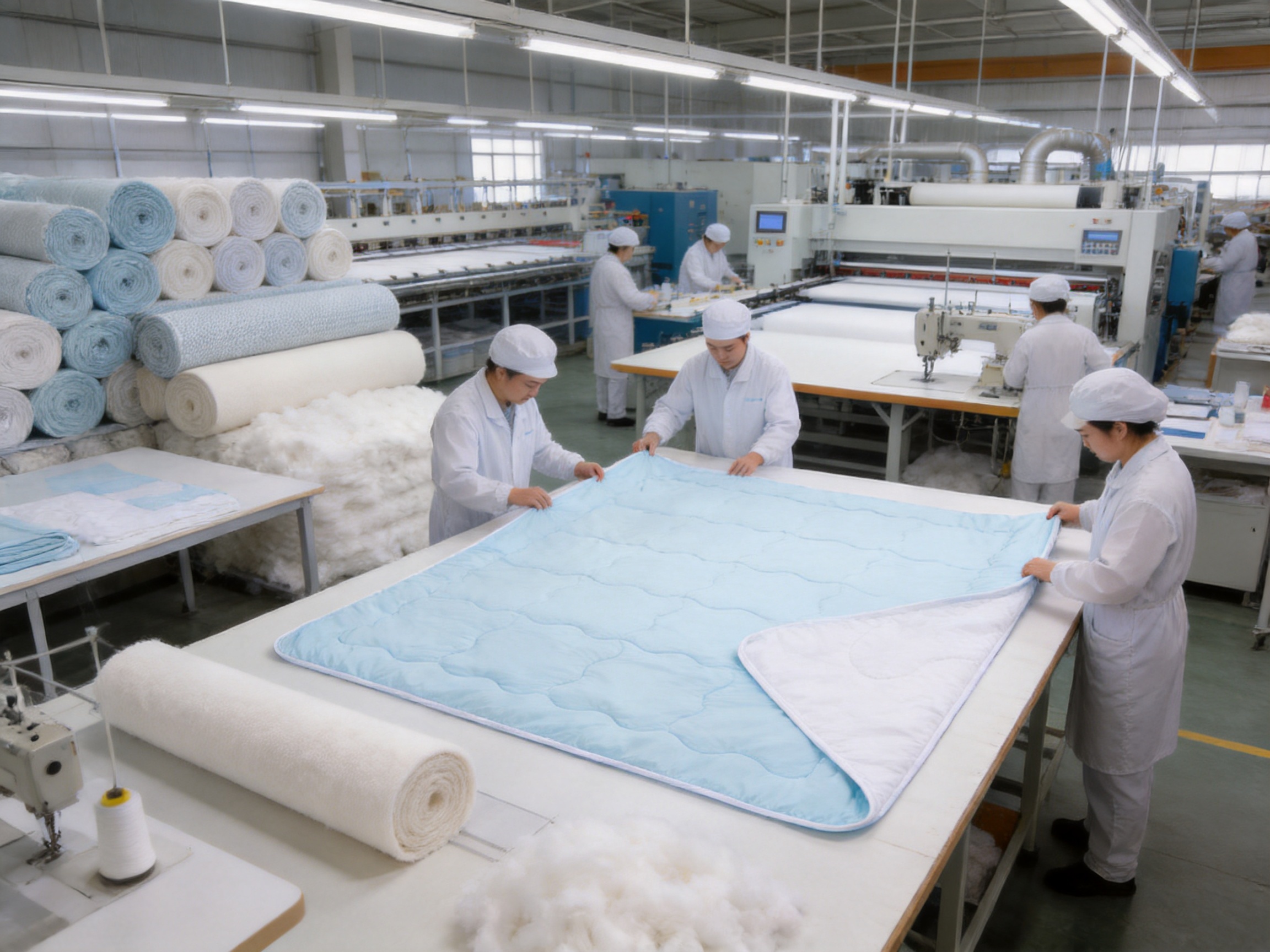
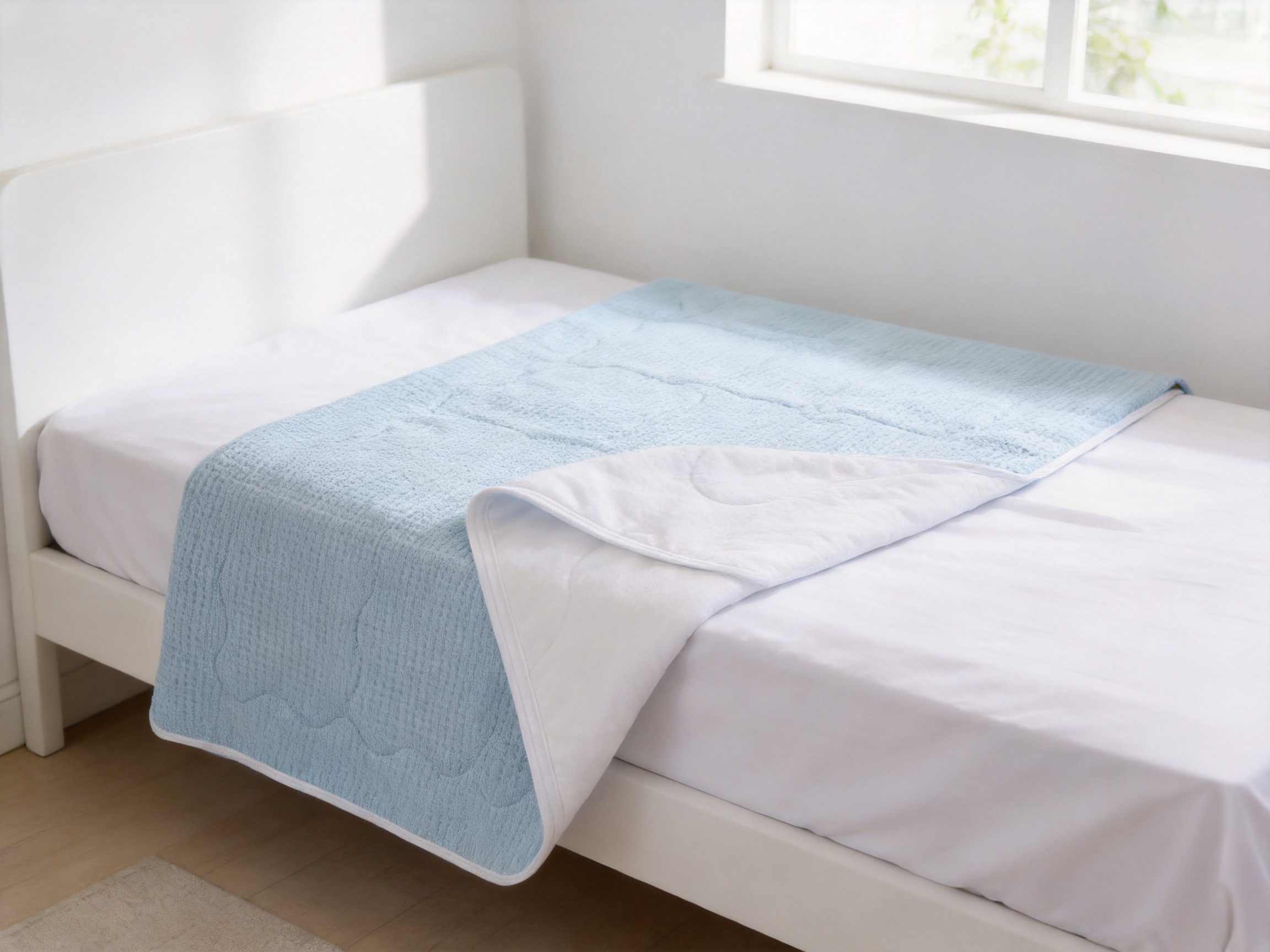
Choosing the right quilt for warm weather requires more than selecting a lightweight filling. A summer quilt must feel comfortable against the skin, support airflow, manage the sensation of heat, and remain practical for regular household use. It must also offer sufficient coverage without creating the heavy, enclosed feeling associated with winter bedding. The knitted cooling quilt is designed around these requirements, combining a skin-friendly knitted cooling fabric with a soft microfiber brushed reverse and a lightweight 3D plus 0.9D fiber filling.
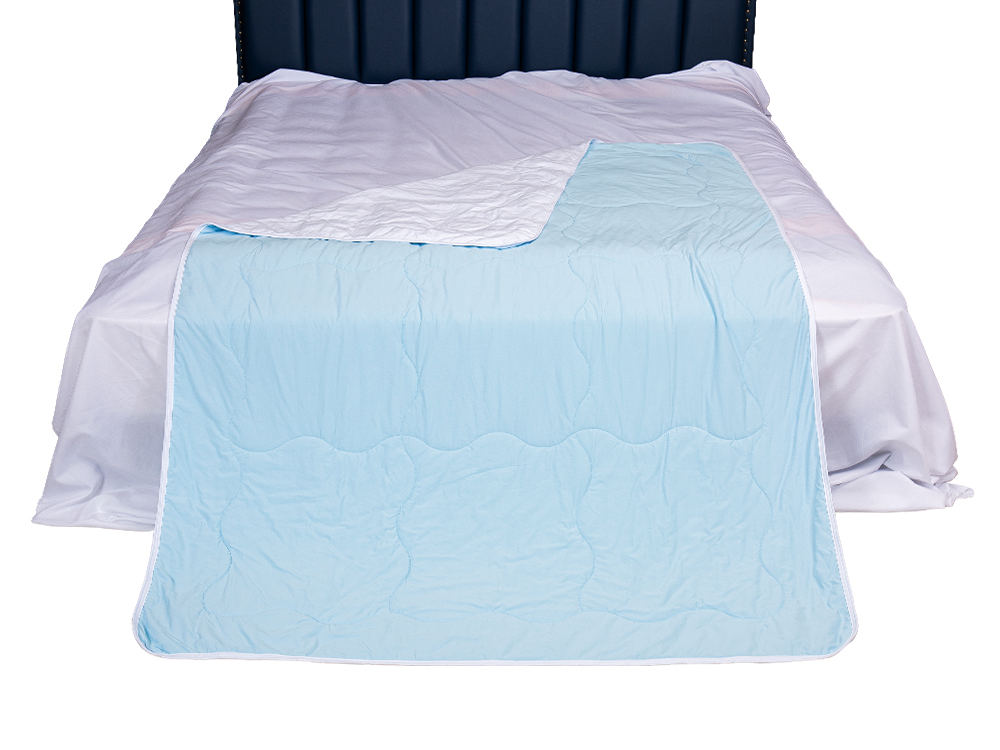
This construction gives the quilt a useful balance of cooling comfort, softness, versatility, and cost-effectiveness. One side is made from 170gsm knitted cooling fabric, while the reverse uses microfiber brushed fabric. The two surfaces provide different tactile experiences, allowing users to select the side that best suits their preferred sleeping environment. The quilt can feel fresh and smooth on warmer nights, while the brushed side provides a softer and cozier sensation when a little more warmth is desired.
Manufactured by Tongxiang Xinlong Bedding Co., Ltd., the product is supported by an established home textile production operation with more than two decades of industry experience. The company produces a broad range of bedding and household textile products, including quilts, pillows, cushions, mattress protectors, blankets, bedspreads, quilt and pillowcases, curtains, and shower curtains. Its production capabilities, technical personnel, equipment base, quality systems, and international certifications provide a foundation for serving retailers, importers, hospitality buyers, distributors, and other customers seeking customized bedding solutions.
This article examines the construction, functional advantages, customization potential, manufacturing strengths, quality considerations, and purchasing applications of the knitted cooling quilt. It also explains how the product compares with conventional summer quilts and why its reversible design can offer a practical advantage in competitive home textile markets.
1. Understanding the Knitted Cooling Quilt
The knitted cooling quilt is a warm-weather bedding product developed for users who want a lighter and more breathable alternative to traditional quilts. Its design consists of three primary components: a knitted cooling fabric on the front, a microfiber brushed fabric on the back, and a 3D plus 0.9D fiber filling between the two fabric layers.
The default size is 140 by 200 centimeters, although customized dimensions are available. This standard size is suitable for many single-bed applications, guest rooms, dormitories, compact bedrooms, and travel-oriented bedding programs. Because size customization is supported, buyers can also discuss alternative dimensions for different markets, bed formats, hospitality requirements, or private-label collections.
Product element |
Specification |
Functional contribution |
Front fabric |
170gsm knitted cooling fabric |
Fresh, skin-friendly surface designed for warm-weather comfort |
Back fabric |
Microfiber brushed fabric |
Soft, smooth, and gently warm reverse surface |
Filling |
3D plus 0.9D fiber |
Lightweight loft, cushioning, and comfortable coverage |
Default size |
140 by 200 centimeters |
Practical single-bed and compact bedding format |
Customization |
Custom sizes available |
Supports different customer and market requirements |
The product is especially suitable for summer because the fabric selection is intended to create a cooler and less restrictive sleeping experience. Unlike a thick winter quilt, it does not rely on heavy insulation. Instead, it provides a moderate level of coverage with a lighter construction. The design is also suitable for consumers who prefer bedding that is easy to layer with sheets, blankets, or other seasonal products.
A significant feature is the use of two different fabric surfaces. Many basic summer quilts use the same material on both sides, limiting the user’s ability to adjust the tactile experience. This product introduces a reversible concept. The cooling fabric side can be selected when a fresher hand feel is preferred, while the microfiber brushed side can be used when a softer and more enveloping surface is desirable.
2. The Role of the 170gsm Knitted Cooling Fabric
The front side uses 170gsm knitted cooling fabric. The knitted construction gives the surface a flexible, comfortable hand feel and helps the quilt conform naturally to the body. This is valuable for sleep products because bedding should move with the user rather than feel rigid or excessively structured.
A skin-friendly surface is particularly important during warm weather. When temperatures rise, people often become more sensitive to rough, dense, or poorly ventilated fabrics. A smooth and comfortable knitted surface can help improve the immediate touch experience. The fabric is designed for use against the skin, making it appropriate for customers who prioritize softness and surface comfort in summer bedding.
The 170gsm specification also reflects a balanced approach to fabric weight. The material is substantial enough to provide a stable and attractive surface while remaining appropriate for a lightweight seasonal quilt. It is not positioned as a heavy insulating layer. Instead, it contributes to a practical combination of durability, appearance, flexibility, and comfort.
Knitted fabric can also provide visual and tactile differentiation in a bedding collection. Compared with plain woven fabrics, knitted surfaces may create a more relaxed and modern appearance. This helps the product appeal to consumers looking for bedding that feels casual, contemporary, and comfortable rather than formal or overly dense.
For retailers and distributors, the cooling fabric creates a clear marketing point. “Cooling” bedding is widely associated with hot-weather comfort, breathable sleep, and improved personal temperature management. While the product should not be represented as a medical or temperature-regulating device, its cooling fabric surface gives buyers a straightforward way to communicate its intended seasonal use.
Benefits of the Front Surface
The front fabric contributes several practical benefits to the overall product. First, it gives the quilt a fresh surface intended for warmer conditions. Second, its knitted structure supports flexibility and a comfortable drape. Third, its skin-friendly character makes it appropriate for direct contact with sleepers. Finally, its distinctive construction helps create product differentiation in a market where many quilts have similar shapes and fillings.
For private-label buyers, the cooling fabric side can become the central feature of a summer bedding story. Packaging, product photography, retail descriptions, and seasonal promotions can all focus on the product’s fresh hand feel and reversible construction. This makes the quilt easier to position than a generic fiber-filled blanket without a clearly defined use occasion.
3. The Microfiber Brushed Reverse
The reverse side is made from microfiber brushed fabric. This fabric provides a contrasting experience to the knitted cooling surface. Rather than being designed primarily around a fresh sensation, the brushed side emphasizes softness and gentle warmth. It gives consumers another way to use the same quilt according to room temperature, personal preference, or seasonal transition.
The brushed construction creates a softer tactile surface that can feel comfortable over sleepwear or bedding layers. It can also make the quilt more appealing to users who want a warm and cozy side without moving to a much thicker or heavier product. This is useful during early summer, late summer, air-conditioned nights, and other situations in which a purely cool-feeling surface may not be ideal.
The microfiber reverse also strengthens the product’s cost-effectiveness. The product does not need to use premium cooling fabric on both sides to deliver a versatile experience. By combining cooling fabric on one side with microfiber brushed fabric on the other, the construction maintains functional contrast while controlling material costs. This allows buyers to offer a feature-rich quilt at a more accessible price point.
Compared with a quilt made from one identical fabric on both sides, the two-sided structure offers greater utility. Customers can turn the quilt over rather than purchase separate products for slightly different comfort preferences. For manufacturers, retailers, and hospitality buyers, this can simplify product assortments while preserving a sense of added value.
Reversible Comfort for Different Conditions
Bedrooms are not always maintained at the same temperature throughout the night. Outdoor temperatures may change, air-conditioning settings may vary, and individual sleepers may have different preferences. A reversible quilt responds to these changing conditions more effectively than a single-surface product.
On warmer nights, the knitted cooling side can face upward or toward the sleeper, depending on the user’s preferred arrangement. On cooler nights, the brushed microfiber surface can provide a softer and cozier contact experience. This does not turn the product into a four-season heavy quilt, but it does extend its practical use beyond a narrowly defined hot-weather application.
The reversible design may also be useful in hospitality settings. Hotels, serviced apartments, guesthouses, and dormitories can provide a product that accommodates a broader range of guests without requiring several different quilt types in every room. The product’s standard size and customizable dimensions can further support different room formats and purchasing programs.
4. Lightweight Filling with 3D and 0.9D Fiber
The filling combines 3D and 0.9D fiber. This construction is intended to provide a lightweight layer of loft and softness while preserving the quilt’s suitability for summer use. Fiber filling helps the quilt maintain a comfortable volume and prevents it from feeling like a single flat fabric layer.
The three-dimensional fiber component can contribute to loft and resilience. A quilt with appropriate loft may feel more cushioned and comfortable over the body. The finer 0.9D fiber component supports a softer overall hand feel and helps create a smoother transition between the outer fabrics and the internal filling.
The value of this filling combination lies in balance. A summer quilt should not be so thin that it offers no sense of coverage, but it should also avoid the excessive bulk associated with cold-weather bedding. The 3D plus 0.9D fiber construction is selected to provide a practical middle ground: light enough for warm conditions, yet substantial enough to feel like a real quilt rather than a simple cover.
Fiber-filled products are also widely used in commercial bedding because they can offer consistent construction and straightforward handling. They are suitable for a variety of packaging formats, including folded retail packs, bulk cartons, and customized private-label presentations. Buyers can discuss their intended sales channel and packaging needs as part of the product development process.
Coverage Without Excessive Weight
One of the key competitive advantages of the product is its ability to provide coverage without relying on heavy insulation. Consumers who sleep in warm climates or air-conditioned rooms often need a layer that feels comforting but does not trap excessive heat. The lightweight filling supports this requirement.
The quilt can also be used as part of a layered bedding system. During transitional seasons, users may combine it with a sheet, light blanket, or duvet cover. During the hottest periods, it may be used alone. This flexibility helps extend the product’s relevance and can improve its value to customers who prefer adaptable bedding rather than highly specialized products.
5. Main Advantages Over Conventional Summer Quilts
The knitted cooling quilt competes with several categories of products, including plain microfiber quilts, single-sided summer quilts, thin polyester blankets, and heavier conventional quilts. Its advantage is not based on one feature alone. It comes from the interaction of the cooling surface, brushed reverse, lightweight filling, customizable sizing, and manufacturing support.
Two Distinct Surface Experiences
A conventional single-fabric quilt gives the user one primary tactile experience. The knitted cooling quilt provides two. This creates a direct and easy-to-understand benefit for end users. The same quilt can feel fresh on one side and softly cozy on the other.
More Versatility Than a Single-Season Product
Although it is designed mainly for summer and warm-weather use, its reversible construction helps it serve transitional conditions as well. This can make it more useful than a very thin cooling blanket that is only comfortable during the hottest part of the year.
Better Product Differentiation
Retailers need clear reasons for customers to choose one bedding product over another. The combination of knitted cooling fabric, microfiber brushing, and mixed fiber filling creates several distinct selling points. It can be presented as a reversible cooling quilt, a dual-feel summer quilt, or a lightweight quilt with two comfort surfaces.
Balanced Cost-Effectiveness
Using cooling fabric on one side and microfiber brushed fabric on the other helps control the total material cost while preserving functional value. This is an important advantage for buyers who want a product with a premium-feeling feature set but need to maintain a competitive target price.
Customization Potential
The default 140 by 200 centimeter size provides a clear starting specification, while customization allows the product to be adapted to other customer requirements. This is useful for brands with established size charts, retailers serving different countries, hospitality businesses, and promotional or seasonal collections.
6. Manufacturing Strength and Production Experience
The product is manufactured by Tongxiang Xinlong Bedding Co., Ltd., a home textile company established in January 2002. The company’s long operating history provides experience in producing multiple categories of household textile products and responding to changing customer requirements.
The company is located in Longxiang Industrial Park, Wuzhen Town, Tongxiang City, Zhejiang Province, China. Its facility covers approximately 21,000 square meters, with a construction area of approximately 18,000 square meters. The company has more than 320 employees and is equipped with various production machines and supporting equipment.
A factory of this scale can provide an important operational foundation for bedding buyers. Bedding production requires coordination among fabric sourcing, cutting, filling preparation, quilting or assembly, finishing, inspection, packing, and shipment preparation. The ability to manage these activities within an established production organization can improve communication and support more consistent order execution.
The company’s product range includes silk cotton quilts, chemical fiber quilts, pillows, cushions, bedspreads, travel quilts, mattress protectors, blankets, quilt and pillowcases, shower curtains, and curtains. This breadth indicates experience across different forms of filled, layered, sewn, and household textile products.
For buyers of the knitted cooling quilt, a broad product portfolio can be beneficial because it demonstrates familiarity with related raw materials, construction methods, finishing requirements, and packaging expectations. It may also make it easier for customers to develop coordinated bedding collections from one manufacturing source.
Technical Personnel and Product Development
The company continues to develop and innovate in response to changes in the home textile industry. It is equipped with professional and technical personnel who support the design and production of household products. For a product such as the knitted cooling quilt, technical knowledge is important because the final performance depends on how the outer fabrics, filling, dimensions, and construction work together.
Product development is not limited to selecting attractive materials. It also involves evaluating how a fabric feels, how the filling distributes within the quilt, how the finished article handles during packing, and how the product meets the intended market position. The company’s technical resources provide a basis for discussing these considerations with customers.
Customization discussions may cover dimensions, fabric choices, color direction, labeling, packaging, and order-specific requirements. Any final specification should be confirmed through technical samples and production documentation before mass manufacturing begins.
7. Quality Management and International Certifications
The company reports that it has passed international certifications and management standards including ISO 9001, ISO 14001, OEKO-TEX-related standards, GRS, and BSCI. These certifications and assessments represent important elements of the company’s quality, environmental, material, and social responsibility framework.
ISO 9001 is associated with quality management systems. In a bedding factory, a quality management approach can support documented procedures, process control, traceability, corrective action, and continuous improvement. These elements are valuable when producing repeat orders or customized products for different customers.
ISO 14001 is associated with environmental management systems. Environmental management encourages organizations to identify and control relevant environmental impacts, establish procedures, and pursue ongoing improvement. For home textile buyers, this can provide additional confidence that environmental considerations are included within the factory’s management structure.
OEKO-TEX-related standards are commonly associated with textile safety and the assessment of harmful substances. The specific certification scope and validity should always be confirmed for the relevant product, material, and production period. When applicable, such standards can support customer requirements for textile products intended for close skin contact.
GRS, or the Global Recycled Standard, is associated with recycled materials and related chain-of-custody requirements. If a customer requires GRS-related materials or claims, the applicable material composition, certification scope, transaction documentation, and labeling rules should be verified before the product is marketed as certified or recycled.
BSCI is associated with social compliance assessment and responsible working conditions. Social compliance is increasingly important for international retailers and brands that evaluate not only product quality but also supply chain practices.
The company also states that it has been rated as a safety production standardization enterprise for several consecutive years since 2016. Workplace safety systems are relevant to stable production because safe, organized operations support employee welfare, reduce disruption, and contribute to reliable factory performance.
8. Manufacturing Process Considerations
The precise production route for each order depends on the final specification, but the manufacture of a knitted cooling quilt generally requires careful coordination across several stages. The process begins with the confirmation of fabric, filling, size, color, construction, labeling, and packaging requirements.
Material Preparation
The knitted cooling fabric and microfiber brushed fabric must be prepared according to the agreed specification. Important considerations may include fabric weight, width, color, hand feel, surface appearance, and inspection results. The filling must also be prepared to achieve the intended weight, loft, and distribution.
Material inspection is important because outer fabrics strongly influence the user’s first impression of the finished quilt. Variation in shade, width, surface quality, or fabric feel can affect both appearance and performance. Consistent material handling supports a more uniform finished product.
Cutting and Layer Alignment
The fabric layers are cut according to the approved dimensions. Accurate cutting helps maintain consistent size and reduces alignment problems during assembly. The front fabric, filling, and reverse fabric must be positioned correctly so that the finished quilt has an even appearance and stable edges.
For customized sizes, cutting plans must be adapted to the customer’s dimensional requirements. This makes technical confirmation especially important. Even a small change in finished size can affect fabric consumption, filling quantity, packaging dimensions, and shipping calculations.
Filling Placement and Assembly
The 3D plus 0.9D fiber filling is placed between the two fabric layers. The filling should be distributed evenly to prevent thin areas, excessive clumping, or uneven loft. Proper assembly helps the quilt maintain a consistent feel across its surface.
The two different fabric sides must also remain correctly oriented during production. Because the product is reversible, both surfaces contribute to the final user experience. A clean, well-aligned construction supports the product’s visual quality and reinforces the perception of value.
Quilting, Sewing, and Edge Finishing
Depending on the approved construction, the layers are secured through suitable sewing or quilting operations. The purpose is to help maintain the position of the filling and preserve the overall shape of the quilt during use and handling.
Edge finishing is another important stage. The edges should be neat, secure, and consistent with the design. Since users frequently handle quilts by their edges, reliable edge construction contributes to durability and general product satisfaction.
Inspection and Packing
Finished products should be inspected for dimensions, fabric appearance, sewing quality, filling distribution, stains, loose threads, labeling, and packaging accuracy. Inspection requirements may vary according to the buyer’s quality standard and destination market.
Once approved, the quilts are folded and packed according to the agreed packaging method. Packaging may be designed for retail presentation, e-commerce shipment, hotel supply, wholesale cartons, or other distribution channels. Buyers should confirm packaging details early because packaging can influence carton quantity, storage, transportation, and final retail presentation.
9. Applications Across Different Markets
The knitted cooling quilt is suitable for a broad range of commercial applications. Its warm-weather orientation and reversible design make it relevant to both consumer and institutional markets.
Retail Bedding Collections
Retailers can position the product within summer bedding, cooling sleep, lightweight comfort, or transitional-season collections. Its dual-surface construction provides several merchandising angles without requiring a complicated product explanation.
For a retail collection, buyers may coordinate the quilt with pillowcases, mattress protectors, blankets, or other home textile products. Since the manufacturer produces multiple bedding categories, customers may be able to explore a broader coordinated assortment with the same supplier.
Private-Label and Brand Programs
Brands seeking a distinctive seasonal product can use the reversible design as a core feature of their private-label offering. Custom size options and discussions around packaging and labeling can help align the product with a brand’s target market.
Before launching a branded collection, buyers should confirm all product claims, care instructions, material declarations, certification requirements, and performance statements. Clear documentation reduces the risk of inaccurate marketing and helps maintain consistency across packaging and online product information.
Hotels and Guest Accommodation
Hotels, serviced apartments, hostels, guesthouses, and dormitories may benefit from a lightweight quilt that accommodates warm climates and air-conditioned rooms. The reversible surfaces provide flexibility for different guest preferences, while the standard or customized size can be matched to the bedding used in each property.
Institutional buyers may also value the factory’s ability to produce other bedding products. A coordinated sourcing program can simplify supplier management and support consistent quality across quilts, pillows, mattress protectors, blankets, and related items.
Seasonal and Promotional Sales
The quilt is suitable for seasonal campaigns, summer home refresh programs, back-to-school bedding, travel accommodation, and promotional gift sets. Its compact and practical nature makes it easier to present as a useful household product rather than a highly specialized item.
10. Purchasing and Customization Guidance
Customers considering this product should begin by defining the intended market and use environment. Important questions include whether the quilt will be sold for home use, hospitality, institutional use, travel, or promotional purposes. The answer will influence size, packaging, labeling, quality inspection, and order planning.
The default size is 140 by 200 centimeters, but other dimensions can be discussed. Buyers should provide the required finished size, acceptable tolerance, preferred packaging dimensions, and expected use. If the product will be paired with a duvet cover or bed linen set, dimensional compatibility should be checked in advance.
Material specifications should also be confirmed. The standard construction includes 170gsm knitted cooling fabric on the front, microfiber brushed fabric on the back, and 3D plus 0.9D fiber filling. If the buyer needs different colors, fabric weights, filling weights, or surface treatments, these changes should be reviewed through a development sample.
Sampling is especially useful for confirming hand feel and visual balance. A photograph may show the fabric color and general appearance, but it cannot fully communicate softness, flexibility, loft, edge finishing, or the difference between the two sides. Physical samples allow the buyer to evaluate the product more accurately.
Buyers should also discuss labeling and compliance requirements for the target market. These may include fiber content, care instructions, country-of-origin information, product dimensions, packaging marks, barcode information, and required testing. The precise requirements vary by destination and sales channel.
Questions to Confirm Before Ordering
Before placing a production order, buyers should confirm the approved sample, fabric specifications, filling composition, finished dimensions, tolerance, color standard, construction method, packaging, carton details, labeling, inspection standard, production lead time, and shipping documentation.
They should also clarify whether any certification claim applies to the finished product or only to specific materials or factory systems. Certification language should be used accurately and only after the relevant documentation has been reviewed.
11. Care, Handling, and Product Communication
Care instructions should be supplied according to the final materials and construction. Because the exact care method may depend on the fabric composition, filling, stitching, and finishing, the final care label should be confirmed with the manufacturer rather than assumed from a general bedding template.
Retail descriptions should present the cooling function responsibly. The quilt is designed for warm-weather comfort and uses knitted cooling fabric, but it should not be described as a medical device or as a guaranteed treatment for sleep or temperature-related conditions. Clear, accurate wording helps build customer trust.
Product photography should show both sides of the quilt. Showing only the cooling surface may cause customers to overlook the microfiber brushed reverse, which is one of the product’s key advantages. Images and packaging can communicate that the quilt is reversible and intended to provide two different comfort experiences.
Retailers may also explain the product through use scenarios: a fresh side for hot summer nights, a soft brushed side for cooler evenings, and a lightweight filling for comfortable coverage. These explanations are simple, practical, and closely connected to the product’s actual construction.
12. Why the Product Offers Strong Market Potential
Consumers increasingly look for bedding that addresses specific comfort needs without becoming unnecessarily complicated. The knitted cooling quilt responds to this trend through a clear and accessible design. It offers a cooling-oriented surface, a soft reverse, and lightweight filling in one product.
The product also occupies a useful position between a thin blanket and a traditional quilt. It provides more structure and coverage than a basic flat throw, while remaining lighter and more seasonally appropriate than a heavily insulated comforter. This middle position can help retailers reach customers who want a practical everyday bedding layer.
From a sourcing perspective, the product combines standardized core specifications with customization possibilities. The standard construction gives buyers a dependable starting point, while custom size options allow adaptation to different sales channels. This balance can make the product suitable for both repeat programs and new product development.
The factory’s established history, broad product range, production facility, technical personnel, equipment, and reported management certifications further support its suitability as a manufacturing partner. These strengths do not replace product testing or buyer inspection, but they provide a solid basis for organized cooperation and ongoing supply.
13. Frequently Asked Questions
Q1: What is the main purpose of the knitted cooling quilt?
The quilt is designed primarily for summer and warm-weather use. It provides lightweight coverage through 3D plus 0.9D fiber filling and uses a 170gsm knitted cooling fabric on one side for a fresh, skin-friendly surface.
Q2: Is the quilt reversible?
Yes. One side uses knitted cooling fabric and the other uses microfiber brushed fabric. Users can select the surface that best matches their preferred tactile experience and room conditions.
Q3: What is the default size?
The default size is 140 by 200 centimeters. Customized sizes can be discussed according to the buyer’s requirements.
Q4: What materials are used in the quilt?
The front uses 170gsm knitted cooling fabric, the back uses microfiber brushed fabric, and the filling consists of 3D plus 0.9D fiber.
Q5: Is the quilt suitable for colder weather?
It is primarily intended for summer and warm-weather conditions. The brushed microfiber reverse can provide a cozier sensation during cooler evenings, but the product is not designed to replace a heavy winter quilt.
Q6: Can the product be customized for private-label sales?
Customized sizes are available, and buyers can discuss product development, packaging, labeling, and other order requirements with the manufacturer. Final customization details should be confirmed through technical samples and written specifications.
Q7: What types of customers may purchase this product?
The quilt may suit retailers, bedding brands, importers, distributors, hotels, guesthouses, dormitories, serviced apartments, and other organizations requiring lightweight seasonal bedding.
Q8: What manufacturing capabilities support this product?
The manufacturer has operated since 2002, occupies approximately 21,000 square meters, has more than 320 employees, and uses various production machines and equipment. It also employs professional and technical personnel and produces multiple categories of home textile products.
Q9: What certifications and management standards does the company report?
The company reports certifications or assessments including ISO 9001, ISO 14001, OEKO-TEX-related standards, GRS, and BSCI. The exact scope and validity should be confirmed for the relevant order and product.
Q10: How should buyers evaluate a sample?
Buyers should check the fabric hand feel on both sides, finished dimensions, filling distribution, loft, edge construction, stitching, appearance, labels, packaging, and any required testing or compliance information.
Q11: Does the cooling fabric guarantee a specific temperature reduction?
No specific temperature-reduction result should be assumed unless supported by appropriate testing. The product is designed for warm-weather comfort and uses a cooling fabric surface, but performance claims should be based on verified product information.
Q12: Can the quilt be included in a wider bedding collection?
Yes. The manufacturer also produces pillows, cushions, mattress protectors, blankets, bedspreads, travel quilts, quilt and pillowcases, and other home textile products. Buyers can discuss coordinated product programs according to their needs.
14. Conclusion
The knitted cooling quilt offers a practical and differentiated solution for summer bedding. Its 170gsm knitted cooling fabric provides a fresh and skin-friendly surface, while the microfiber brushed reverse introduces a softer and cozier alternative. The 3D plus 0.9D fiber filling adds lightweight loft and coverage without turning the product into a heavy winter quilt.
Its greatest competitive strength is the combination of reversible comfort and cost-conscious construction. By using cooling fabric on one side and microfiber brushed fabric on the other, the quilt delivers two distinct surface experiences while maintaining a commercially attractive structure. The default 140 by 200 centimeter size supports common single-bed applications, and customized dimensions expand its potential for private-label, hospitality, and international markets.
The manufacturing background of Tongxiang Xinlong Bedding Co., Ltd. further supports the product. The company has been established since 2002, operates a substantial production facility, employs more than 320 people, maintains technical resources, produces a broad range of household textile products, and reports multiple international management and social responsibility certifications.
For buyers seeking a lightweight, versatile, and marketable summer quilt, this product provides a strong foundation. Its combination of cooling fabric, brushed microfiber, mixed fiber filling, reversible design, customization potential, and established manufacturing support makes it suitable for modern retail collections and professional bedding supply programs.
Knitted Cooling Quilt
References
1. Product specification information supplied for the knitted cooling quilt, including fabric composition, filling, default dimensions, and customization availability.
2. Company profile information supplied for Tongxiang Xinlong Bedding Co., Ltd., including establishment date, facility scale, employee count, product categories, and manufacturing capabilities.
3. ISO 9001 quality management system principles and continuous improvement practices.
4. ISO 14001 environmental management system principles and environmental performance improvement.
5. OEKO-TEX textile safety and harmful-substance assessment principles.
6. Global Recycled Standard framework for recycled materials and supply chain verification.
7. BSCI principles concerning social compliance and responsible working conditions.
8. General home textile product development and quality inspection practices for quilts, blankets, and filled bedding products.


 +86-573-88798028