



 Français
 Español
 Deutsch
Content
- 1 Product Overview: A Quilt Designed for Everyday Comfort
- 2 Aloe Vera-Treated Brushed Fabric: A Softer Surface with Added Functional Value
- 3 Why the 200gsm 3D Fiber Filling Matters
- 4 Advantages Over Ordinary Quilts in the Market
- 5 Manufacturing Strength Behind the Quilt
- 6 Advanced Production Process: From Material Selection to Finished Quilt
- 7 Comfort Benefits for End Users
- 8 Design and Visual Appeal
- 9 Applications Across Different Markets
- 10 Quality Control and Certification Advantages
- 11 Customization Opportunities for Buyers
- 12 Care, Handling, and Practical Use
- 13 Why This Quilt Is a Strong Choice for Professional Buyers
- 14 Frequently Asked Questions
- 14.1 What makes the Aloe Vera Treated Polyester Quilt different from a regular polyester quilt?
- 14.2 Is the quilt suitable for sensitive skin?
- 14.3 What size is available?
- 14.4 What is the filling material?
- 14.5 Can the quilt be used in hotels or guest rooms?
- 14.6 Is private-label production possible?
- 14.7 Why is 3D fiber filling useful?
- 14.8 What certifications support the manufacturing quality?
- 14.9 How should the quilt be cared for?
- 15 Conclusion
- 16 References
- 17 Product: Aloe Vera Treated Polyester Quilt
In the modern home textile market, a quilt is no longer judged only by warmth. Consumers, hotels, retailers, importers, and bedding distributors now look for a complete combination of comfort, hygiene, durability, appearance, customization flexibility, and responsible manufacturing. The Aloe Vera Treated Polyester Quilt is designed for this higher standard. It brings together aloe vera-treated brushed fabric, a soft microfiber-style surface, lightweight 200gsm 3D fiber filling, and a clean white appearance finished with light green aloe vera edging. The result is a quilt that feels gentle against the skin, supports a fresher sleeping environment, and presents a calm, modern look suitable for family bedrooms, guest rooms, hospitality projects, and private-label bedding programs.
This quilt belongs to the microfiber quilt category and is made for users who want comfort without excessive weight. The brushed fabric surface offers a smooth and soft hand feel, while the aloe vera treatment gives the quilt a more skin-friendly character. The product is described as antibacterial and anti-mite, making it especially attractive for buyers who care about bedding hygiene and long-term freshness. Unlike many ordinary polyester quilts that focus only on price, this quilt emphasizes both functional finishing and everyday usability. Its clean construction, customizable sizing, and balanced filling make it a practical choice for multiple markets.
Behind the product is a home textile manufacturer with more than two decades of bedding production experience, a large production base, advanced equipment, and a full product range that includes quilts, pillows, cushions, mattress protectors, blankets, mattress covers, bedspreads, curtains, and related household textile products. The company operates with standardized quality management, international certifications, and a strong focus on production consistency. These manufacturing strengths allow the Aloe Vera Treated Polyester Quilt to offer advantages not only in surface comfort, but also in product reliability, supply capability, and customization value.
Aloe Vera Treated Polyester Quilt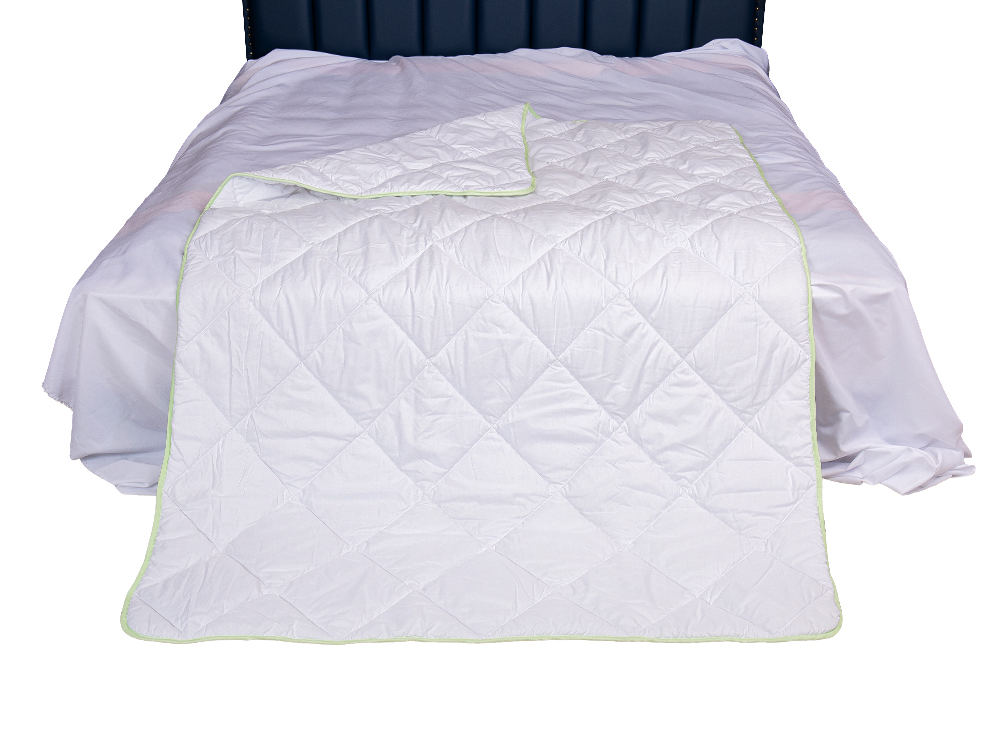
Product Overview: A Quilt Designed for Everyday Comfort
The Aloe Vera Treated Polyester Quilt is created to meet the daily needs of people who want bedding that feels soft, looks fresh, and performs dependably over repeated use. The default size is 140x200cm, while custom sizes are available for different markets and bed standards. This flexibility is important because bedding requirements vary widely between regions. European single sizes, Asian home bedding sizes, hotel project specifications, and private-label retail formats may all require different dimensions. A manufacturer capable of custom sizing gives buyers more freedom to match local demand.
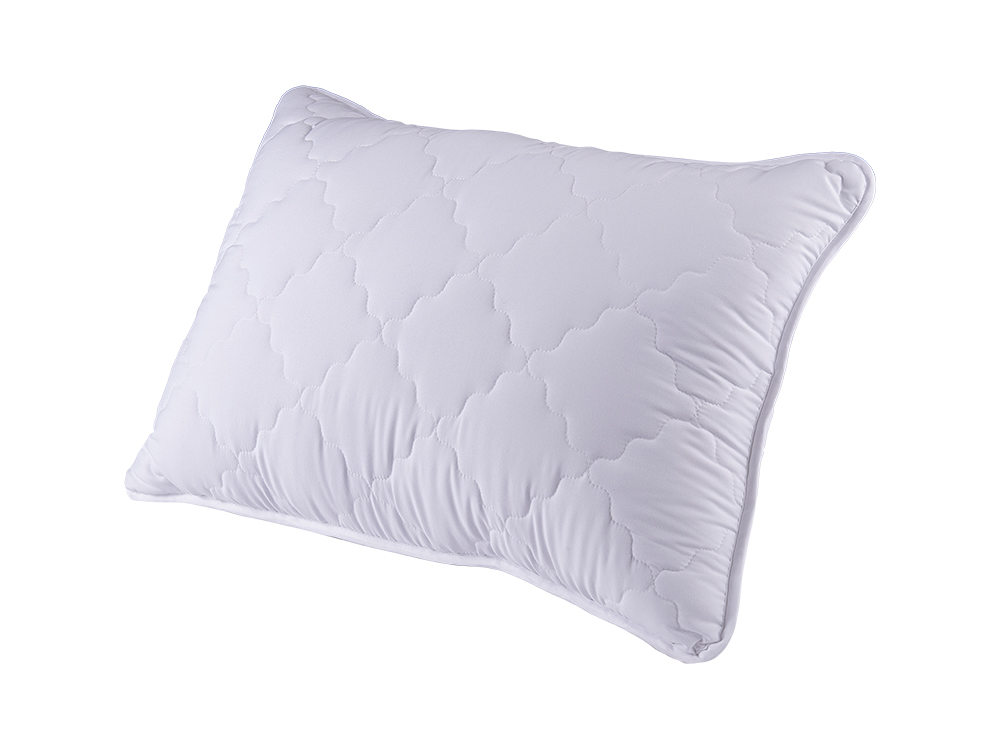
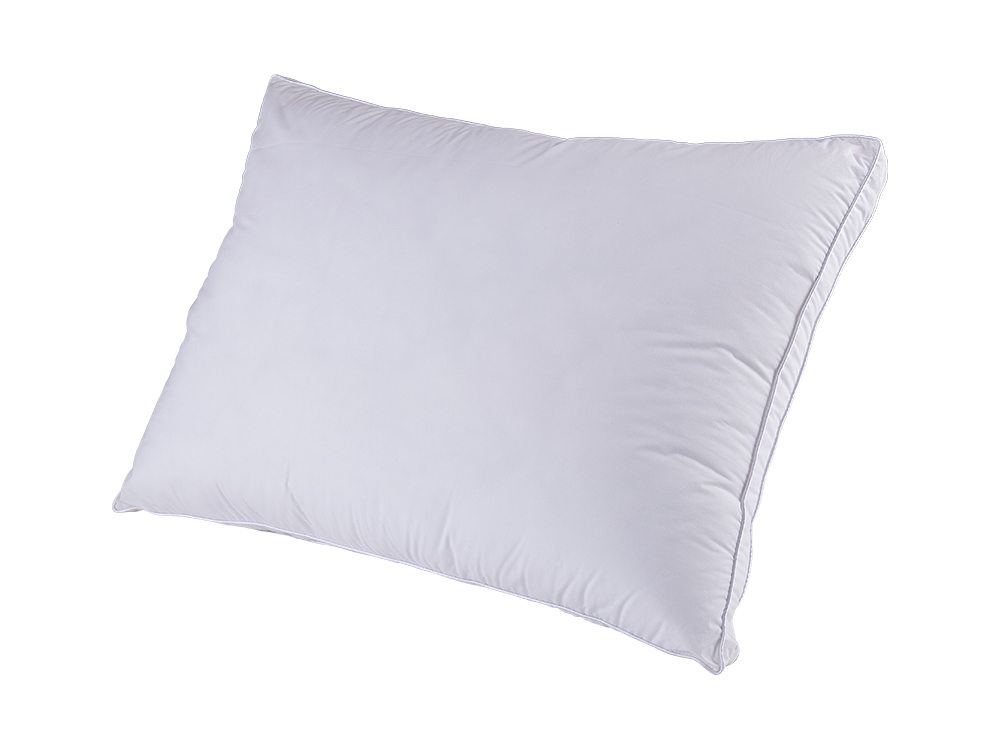
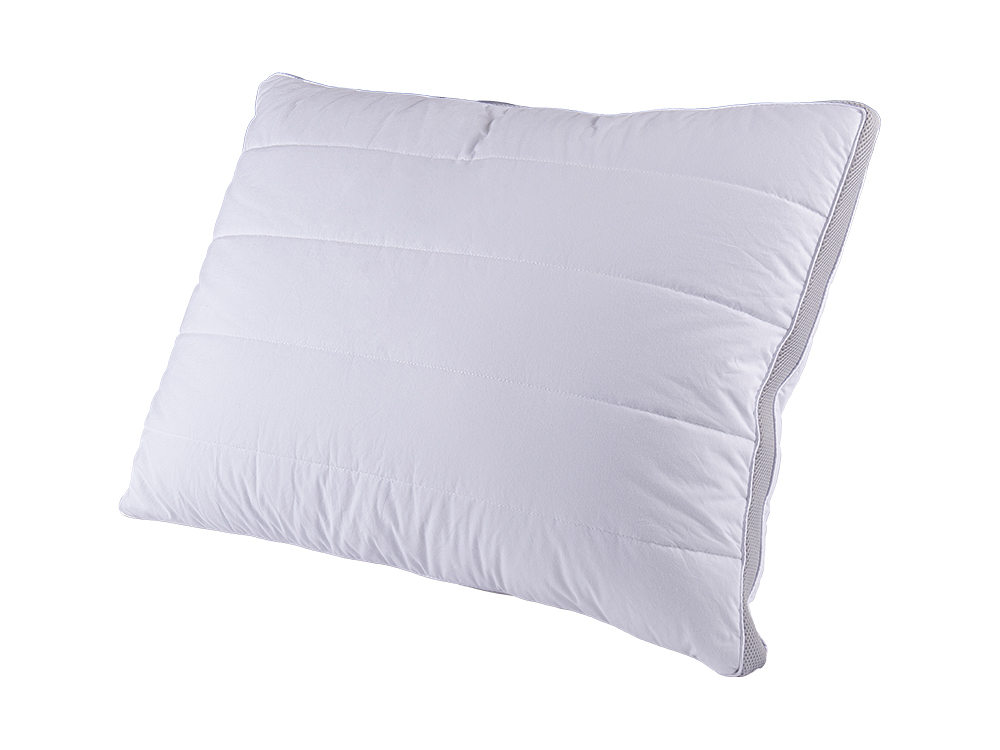
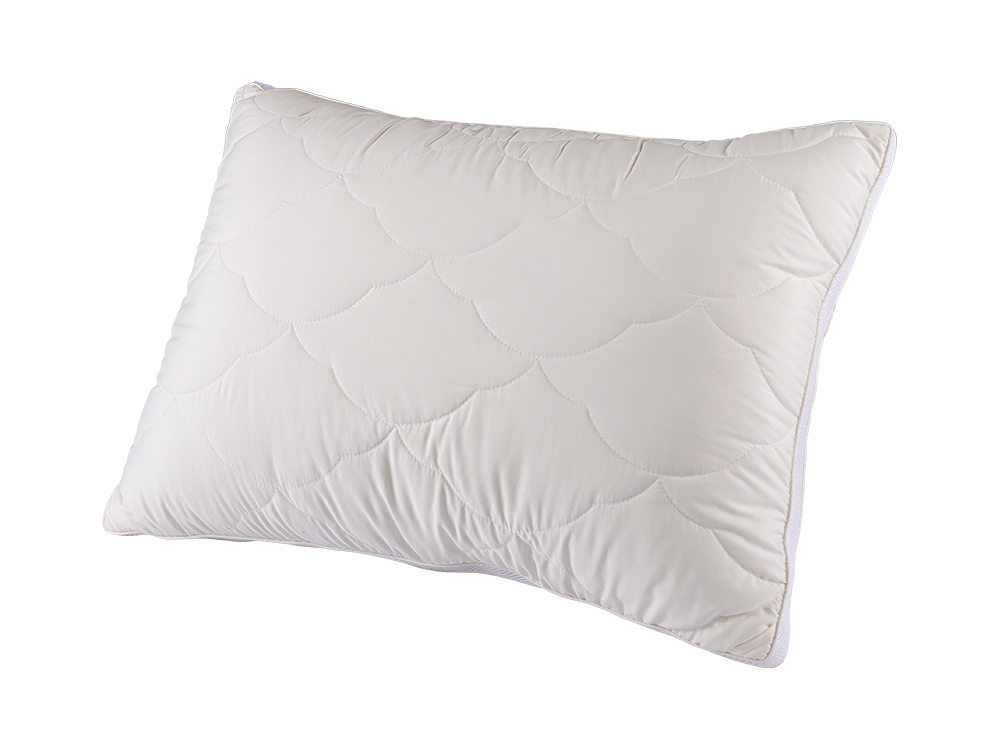
The fabric is aloe vera-treated brushed fabric. Brushing enhances softness by raising fine fibers on the fabric surface, creating a smoother and warmer touch. Aloe vera treatment adds an additional comfort-focused finish. Aloe vera is widely associated with soothing and skin-friendly qualities, and in bedding applications it helps create a more pleasant surface experience. The white fabric gives the quilt a clean and pure appearance, while the light green edging visually communicates freshness and the aloe vera theme. This simple design makes the product easy to match with different bedroom styles and duvet covers.
The lining or filling is 200gsm 3D fiber. This filling level offers a balanced feel: light enough for comfortable daily use, yet substantial enough to provide gentle warmth and loft. 3D fiber has a spring-like structure that helps improve resilience, air circulation, and volume retention compared with flatter or lower-quality filling materials. For buyers, this means the quilt is not only comfortable when new, but also designed to maintain a pleasant shape and usable loft over time.
Product Attribute |
Specification |
User Benefit |
Product Type |
Aloe Vera Treated Polyester Quilt |
Comfortable, practical quilt for home, guest room, and hospitality use |
Category |
Microfiber Quilt |
Soft surface, lightweight feel, and easy daily handling |
Default Size |
140x200cm |
Suitable for common single-bed applications |
Custom Size |
Available upon request |
Supports regional markets, private labels, and project orders |
Fabric |
Aloe vera-treated brushed fabric |
Soft, skin-friendly, antibacterial, and anti-mite characteristics |
Filling |
200gsm 3D fiber |
Lightweight warmth, resilience, and comfortable loft |
Appearance |
White fabric with light green aloe vera edging |
Fresh, clean, and modern visual presentation |
Aloe Vera-Treated Brushed Fabric: A Softer Surface with Added Functional Value
The fabric is one of the most important elements of any quilt because it is the layer users feel most directly. In ordinary low-cost quilts, the fabric may be stiff, noisy, rough, or poorly finished. Such fabric can reduce the comfort of the entire bedding product even when the filling is adequate. The Aloe Vera Treated Polyester Quilt addresses this issue by using brushed fabric that has been treated with aloe vera. This gives the quilt a noticeably softer and more skin-friendly surface.
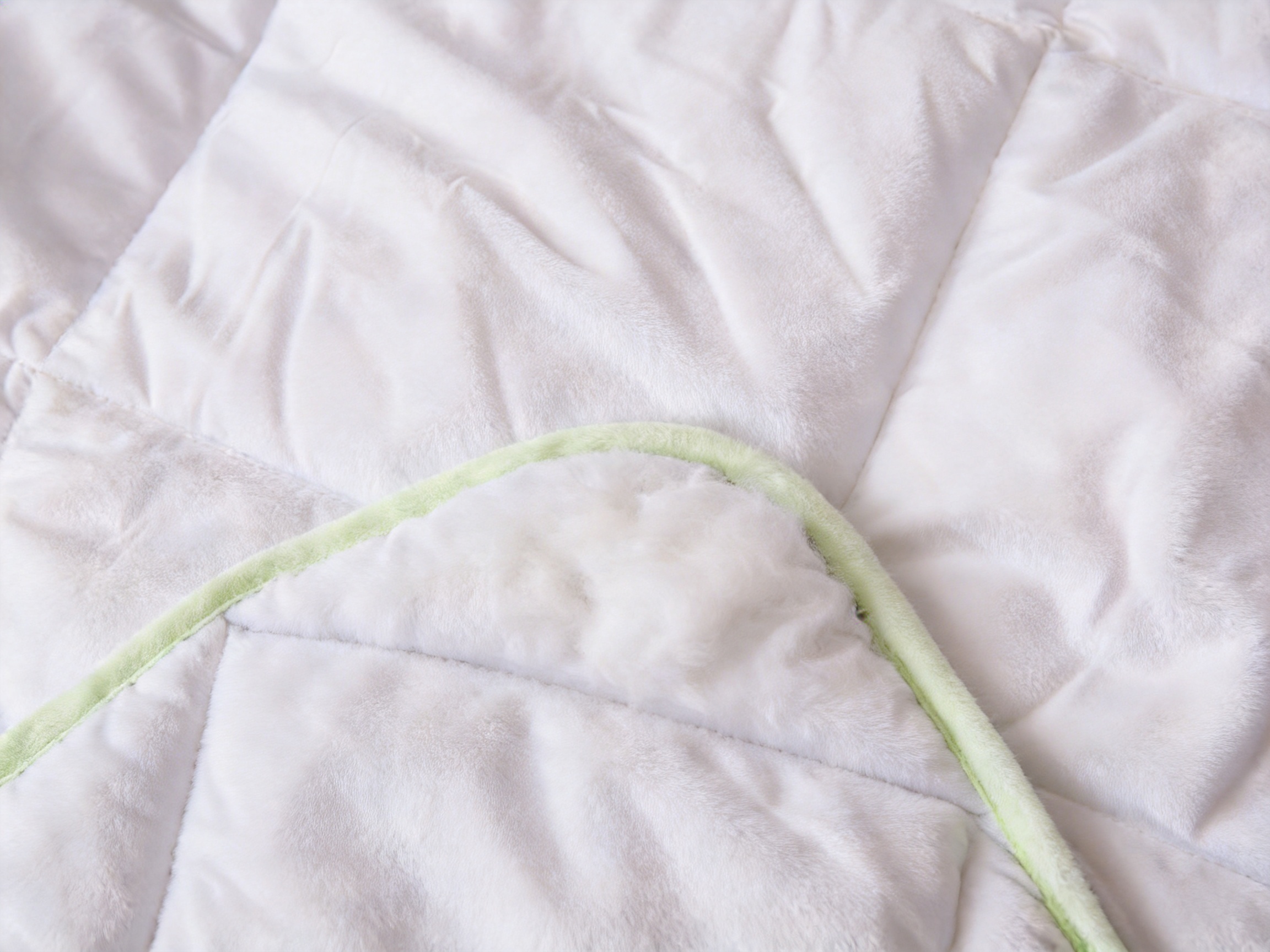
Brushed fabric is created through a finishing process that gently raises fine fibers from the fabric surface. This process produces a warmer, softer hand feel and reduces the flat, slippery sensation sometimes associated with untreated synthetic fabrics. When used in a quilt, brushed fabric helps create immediate comfort when the quilt is touched, folded, or placed over the body. It also provides a more inviting retail presentation because shoppers often evaluate bedding first by hand feel.
The aloe vera treatment adds a functional and emotional advantage. Bedding is closely connected with rest, wellness, and personal comfort. Aloe vera is widely recognized by consumers as a natural ingredient associated with soothing care. When this idea is applied to textile finishing, it creates a product story that is easy to understand and attractive in the marketplace. The quilt is not just another polyester quilt; it is a comfort-focused quilt with a skin-friendly identity.
The fabric is also described as antibacterial and anti-mite. These properties are valuable because bedding is used for many hours every night and is exposed to body moisture, dust, and environmental particles. A quilt that supports a cleaner and fresher sleeping environment has clear appeal for families, hotels, dormitories, and guest accommodations. While proper care and regular cleaning remain important, the antibacterial and anti-mite features help differentiate this quilt from basic alternatives that offer no hygiene-focused finishing.
Why the 200gsm 3D Fiber Filling Matters
The filling determines much of a quilt’s warmth, weight, loft, breathability, and resilience. The Aloe Vera Treated Polyester Quilt uses 200gsm 3D fiber, a practical filling choice for users who prefer a comfortable quilt without heavy pressure. The 200gsm specification gives the quilt a light-to-medium profile, making it suitable for many seasons, climate-controlled rooms, and daily household use. It can be used as a primary quilt in mild conditions or as a layering piece in cooler environments.
3D fiber is different from simple flat fiber because its structure helps create space within the filling. This structure improves loft and gives the quilt a fuller, more elastic feel. When the quilt is compressed during packing, use, or storage, quality 3D fiber can recover better than many lower-grade fillings. This is important for distributors and retailers because quilts must often be packed, shipped, stored, and displayed before reaching the end user. A filling that retains loft improves both product appearance and customer satisfaction.
The 200gsm filling also supports easier care and handling. Very heavy quilts can be difficult to fold, wash, dry, and store. A lighter quilt is more convenient for modern households, especially in apartments, student housing, guest rooms, and hospitality settings where bedding must be moved and maintained frequently. For hotels or rental accommodations, handling efficiency can reduce labor pressure and improve room turnover convenience.
Another benefit of polyester 3D fiber is consistency. Natural fillings can vary from batch to batch, and they may require more specialized care. Polyester fiber can be engineered and controlled to meet target weight, loft, and performance requirements. This makes it suitable for large-scale production and bulk purchasing. Buyers who need stable quality across repeated orders benefit from a filling material that can be produced with reliable specifications.
Advantages Over Ordinary Quilts in the Market
Many quilts on the market compete mainly on price. While low price can attract attention, it often comes with compromises: thin fabric, uneven filling, rough touch, poor stitching, weak edges, unpleasant odor, poor loft recovery, or limited size options. The Aloe Vera Treated Polyester Quilt is positioned differently. It combines a comfort-enhancing fabric treatment, functional hygiene features, resilient filling, attractive edging, and professional manufacturing support. These characteristics help it stand out in a crowded bedding category.
Superior Hand Feel
Compared with standard polyester quilts made from plain untreated fabric, this quilt has a softer surface because of the brushed fabric finish. The aloe vera treatment further supports a gentle touch. For end users, this means the quilt feels more pleasant during nightly use. For retailers, the improved hand feel helps increase perceived value when customers compare products in-store or online through close-up visuals and product descriptions.
Freshness and Hygiene-Focused Features
The antibacterial and anti-mite characteristics provide a practical advantage over basic quilts. In today’s market, consumers increasingly care about clean living, healthier sleep environments, and bedding that supports comfort beyond warmth. A quilt with hygiene-focused features offers a stronger selling point, especially for families with children, guest accommodations, and buyers who are sensitive to dust-related discomfort.
Balanced Warmth Without Excessive Weight
Some quilts feel warm but too heavy, while others are light but lack comfort and loft. The 200gsm 3D fiber filling creates a balanced experience. It provides softness and light warmth while remaining easy to move, fold, and store. This makes it highly suitable for transitional seasons, warmer climates, air-conditioned rooms, and layered bedding systems.
Clean and Marketable Appearance
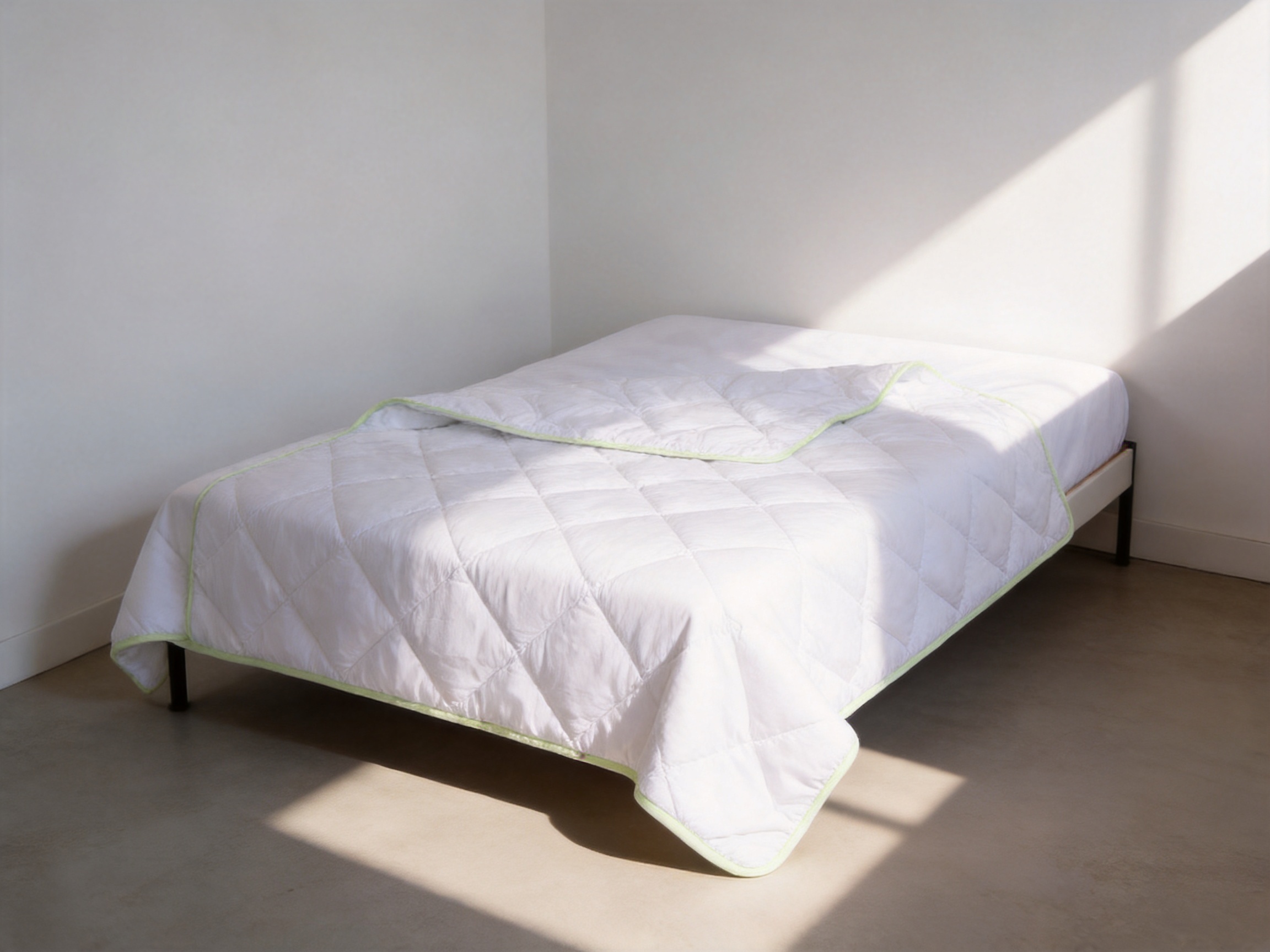
The white fabric with light green aloe vera edging gives the quilt a fresh and recognizable visual identity. Many basic quilts are plain and forgettable. The green edging gives this product a subtle design feature that reinforces the aloe vera concept without making the quilt too decorative or difficult to coordinate. It can fit easily into minimalist, modern, hotel, or family bedding environments.
Customization for Different Business Needs
The default 140x200cm size is practical, but custom sizing greatly expands the product’s market value. Importers may require different dimensions for local standards. Retailers may want exclusive sizes for product differentiation. Hotels may need project-specific bedding specifications. The ability to customize size makes the quilt suitable for more than one channel and helps buyers build tailored product programs.
Manufacturing Strength Behind the Quilt
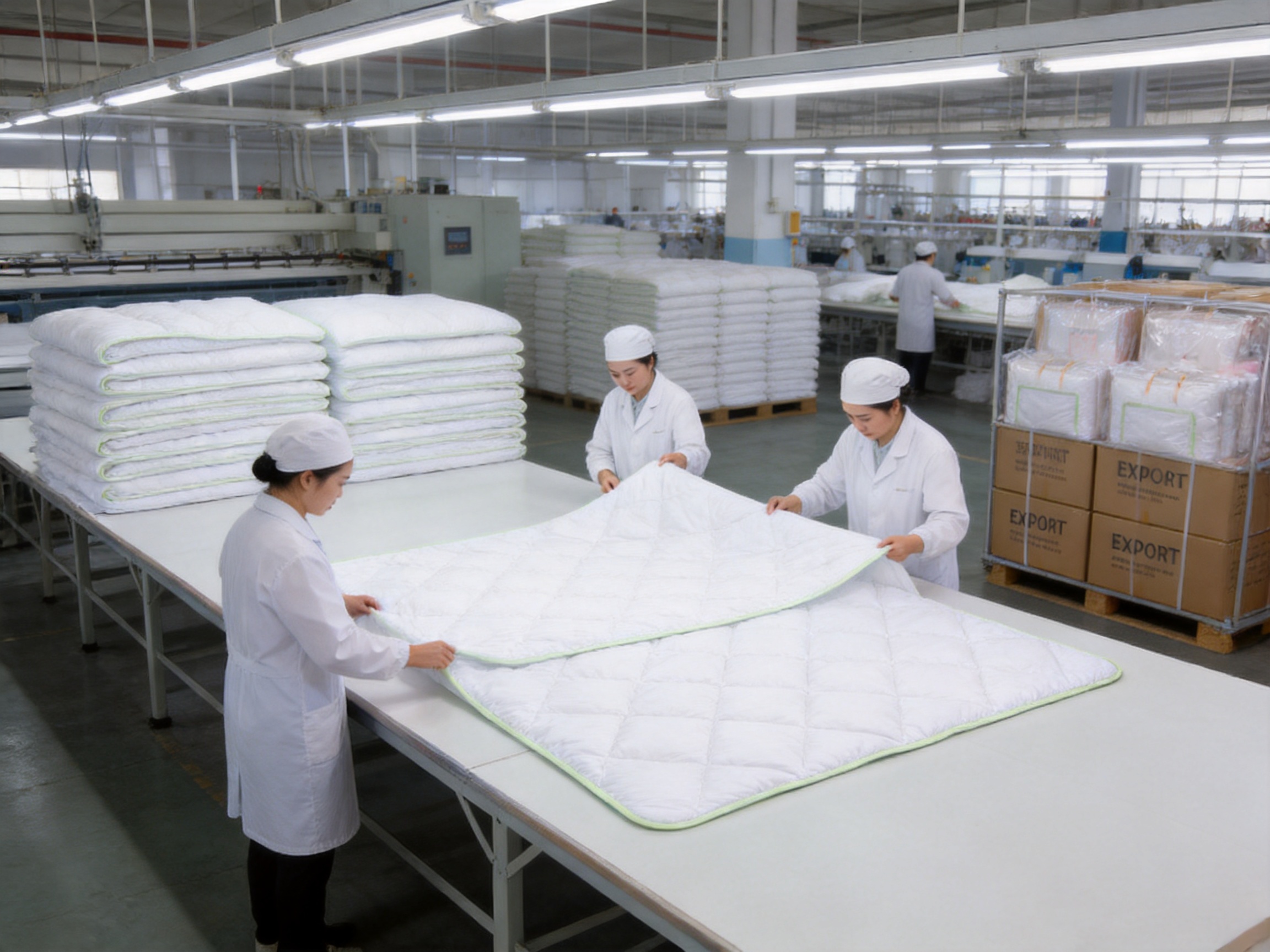
A good quilt depends not only on materials, but also on the manufacturer’s ability to control each step of production. Tongxiang Xinlong Bedding Co., Ltd. was established in January 2002 and has accumulated extensive experience in home textile manufacturing. Located in Wuzhen, Tongxiang City, Jiaxing, Zhejiang Province, China, the company operates in a region known for textile production resources and supply chain advantages. Its facility covers 21,000 square meters, with a construction area of 18,000 square meters, and it has more than 320 employees.
This scale allows the company to support both regular production and customized orders. For international buyers, production scale matters because it affects delivery capability, order stability, sample development, quality consistency, and the ability to respond to seasonal demand. A small workshop may produce simple quilts, but it may struggle with repeatability, documentation, export requirements, or large-volume orders. A mature bedding manufacturer with advanced equipment and experienced staff offers a more dependable purchasing experience.
The company produces a broad range of home textile products, including silk cotton quilts, chemical fiber quilts, pillows, cushions, bedspreads, travel quilts, mattress protectors, blankets, quilt covers, pillowcases, shower curtains, curtains, and related products. This wide product range indicates strong textile processing knowledge and flexible production capacity. For buyers, it also creates opportunities for combined sourcing. A customer who purchases the Aloe Vera Treated Polyester Quilt may also develop matching pillows, mattress protectors, cushions, or bedding accessories with the same supplier.
The company has passed international certifications such as ISO9001, ISO14001, OEKO-100, OEKO-STeP, GRS, and BSCI. These certifications support quality management, environmental management, textile safety, sustainable process control, recycled material standards, and social compliance expectations. In the global bedding market, certifications are increasingly important because importers and retailers must meet regulatory, ethical, and consumer expectations. A certified manufacturer helps reduce sourcing risk and supports smoother cooperation with professional buyers.
Advanced Production Process: From Material Selection to Finished Quilt
The production of an aloe vera-treated polyester quilt requires more than simply sewing fabric around filling. Each stage affects the final comfort, durability, appearance, and consistency of the product. A professional manufacturer follows controlled procedures to ensure that materials, treatment, cutting, filling distribution, quilting, edging, inspection, and packing all meet agreed standards.
Material Preparation
The process begins with selecting appropriate fabric and fiber filling. The brushed fabric must have a soft surface, stable construction, and suitability for aloe vera treatment. The 3D fiber filling must meet the required 200gsm weight and loft expectations. Material selection is essential because even the best sewing process cannot fully correct poor fabric or inconsistent filling. By starting with reliable materials, the manufacturer builds quality into the product from the beginning.
Fabric Finishing and Aloe Vera Treatment
The brushed fabric undergoes finishing to achieve the desired touch and functional properties. Aloe vera treatment is applied to create a more skin-friendly and comfort-oriented fabric surface. Proper finishing control is important because the treatment should be distributed evenly and should not create stiffness, uneven color, or unpleasant odor. The goal is to preserve the softness of the brushed fabric while adding the product’s signature aloe vera character.
Filling Processing
The 3D fiber filling must be opened, blended, and distributed properly. Advanced production equipment helps improve uniformity so that the filling does not form lumps or thin areas. Even filling distribution is one of the most important quality indicators in a quilt. If the filling is uneven, the quilt may feel uncomfortable, look poor, or provide inconsistent warmth. Professional filling preparation supports a smoother finished product.
Cutting and Size Control
Fabric cutting must follow accurate size specifications. For the default 140x200cm product, dimensional control ensures that the quilt fits correctly and looks symmetrical. For custom orders, accurate cutting is even more important because buyers may require strict size tolerances. Consistent cutting reduces waste, improves sewing efficiency, and supports the professional appearance of the final quilt.
Quilting and Stitching
Quilting secures the filling and fabric together. It helps prevent filling migration and supports long-term usability. Stitch quality affects both durability and appearance. Loose threads, skipped stitches, uneven patterns, or weak seams can reduce product value. A professional quilt manufacturer uses suitable quilting equipment and trained operators to ensure that the product is stable, neat, and ready for repeated use.
Edging and Finishing
The light green aloe vera edging is more than decoration. Edge binding protects the quilt perimeter, reinforces the product, and gives it a finished look. Poor edging can fray, twist, or open after use. Neat edging improves durability and makes the quilt more attractive in retail display and customer photography. The green edging also strengthens the product’s visual identity and communicates the aloe vera concept.
Inspection and Packing
Before shipment, quilts should be inspected for size, fabric condition, filling distribution, stitching quality, edge finishing, cleanliness, and appearance. Packing must protect the quilt during storage and transportation while presenting it appropriately for the buyer’s sales channel. Export orders may require specific cartons, labels, compressed packing, inserts, or private-label packaging. A manufacturer with export experience can handle these requirements more efficiently.
Comfort Benefits for End Users
The ultimate purpose of a quilt is to improve sleep comfort. The Aloe Vera Treated Polyester Quilt does this through softness, light warmth, breathable structure, and a cleaner-feeling surface. Its brushed fabric feels gentle when handled, and the 3D fiber filling gives the quilt a comfortable loft without unnecessary heaviness. Users can enjoy a sense of coverage and coziness while still being able to move freely during sleep.
The skin-friendly character of the aloe vera-treated fabric is especially important because bedding comes into close contact with the body. Although many users place quilts inside duvet covers, the fabric quality still matters during handling, airing, folding, and cases where the quilt is used directly. A softer shell fabric improves the overall perception of quality. It also reduces the harsh or synthetic feel sometimes found in ordinary low-end quilts.
For households, the quilt is easy to integrate into daily routines. Its lighter filling makes it convenient to fold in the morning, store when not in use, or place in a guest room. For people who prefer simple bedding, the clean white design with green edging looks fresh even without a decorative cover. For people who use duvet covers, the quilt remains a practical inner layer that delivers comfort and warmth.
For hotels, guest houses, dormitories, and serviced apartments, the product’s comfort-to-weight balance is particularly useful. Bedding in these environments must be comfortable for many types of users, easy for staff to handle, and durable enough for frequent use. A quilt that is too heavy can be inconvenient, while a quilt that is too thin may disappoint guests. The 200gsm 3D fiber filling offers a balanced solution.
Design and Visual Appeal
Visual design influences purchase decisions, especially in retail bedding. The Aloe Vera Treated Polyester Quilt uses a white base fabric, which suggests cleanliness, simplicity, and versatility. White is a strong choice for bedding because it matches almost any bedroom color scheme and is widely accepted in both home and hospitality markets. It also allows the light green edging to stand out clearly without being excessive.
The light green edging is an effective design detail because it communicates freshness. Green is commonly associated with nature, plants, and wellness, making it a natural match for the aloe vera concept. Instead of relying on loud printed patterns, the quilt uses a subtle border to create identity. This makes the product attractive to a wider group of buyers. It can be sold as a clean wellness-inspired quilt, a comfortable microfiber quilt, or a practical everyday bedding item.
The design also supports private-label opportunities. A clean white quilt with green edging can be easily photographed, packaged, and branded for different customer segments. Retailers may position it as a skin-friendly quilt, an antibacterial quilt, a lightweight microfiber quilt, or an aloe vera bedding product. Hospitality buyers may focus on comfort, cleanliness, and ease of maintenance. The same product structure can support multiple marketing strategies.
Applications Across Different Markets
The Aloe Vera Treated Polyester Quilt is suitable for many bedding channels because of its balanced specifications and clean design. In household retail, it can be offered as a comfortable single-size quilt or adapted into custom sizes for double, queen, king, or regional bed formats. Its soft touch and aloe vera treatment give sales teams a clear product story that ordinary quilts may lack.
In the hospitality market, the quilt can serve hotels, guest houses, resorts, dormitories, hostels, and serviced apartments that need reliable bedding. The white fabric fits common hospitality preferences, while the lightweight filling supports convenient room service operations. Antibacterial and anti-mite features can also support guest confidence in bedding cleanliness, provided that normal laundering and care standards are followed.
For importers and wholesalers, the product is attractive because it combines differentiation with practical cost control. Polyester filling is generally more accessible and scalable than many premium natural fillings, while the aloe vera-treated fabric adds a value-added feature. This combination can help wholesalers offer a mid-range or comfort-enhanced product without moving into very high-cost bedding categories.
For e-commerce, the quilt has clear searchable selling points: aloe vera-treated fabric, brushed softness, antibacterial function, anti-mite character, 3D fiber filling, lightweight warmth, and custom size availability. These features can be translated into product titles, bullet points, and lifestyle descriptions. The clean design also photographs well, especially when paired with fresh bedroom settings and close-up fabric images.
Quality Control and Certification Advantages
Quality control is a major factor in bedding procurement. Buyers need confidence that each shipment will match approved samples and specifications. The manufacturer behind this quilt operates with standardized management and has obtained multiple certifications, including ISO9001 for quality management and ISO14001 for environmental management. These systems help ensure that production follows organized procedures rather than relying only on individual operator experience.
OEKO-related certifications are especially relevant for home textiles because bedding is used close to the skin. Textile safety standards help buyers and consumers feel more secure about the materials and finishing processes used in the product. OEKO-STeP also reflects attention to sustainable textile production processes. GRS certification supports recycled material management where applicable, while BSCI reflects social compliance expectations in the supply chain. Together, these certifications demonstrate a broader manufacturing capability than basic sewing operations.
The company has also been recognized for safety production standardization for several consecutive years since 2016. This reflects attention to safe operations and organized factory management. In international sourcing, responsible production is increasingly important. Retailers, wholesalers, and brand owners need suppliers who can provide stable quality, compliant processes, and documentation support. A manufacturer with these strengths can help buyers reduce supply chain uncertainty.
For the Aloe Vera Treated Polyester Quilt specifically, quality control should focus on several points: fabric softness, treatment consistency, filling weight, filling evenness, stitching strength, edge binding quality, size accuracy, cleanliness, odor control, packaging integrity, and batch consistency. A professional manufacturer can inspect these details before shipment, reducing the risk of customer complaints and returns.
Customization Opportunities for Buyers
Custom size availability is a key advantage of this quilt. Bedding markets differ significantly across countries, and a one-size-only product may limit sales potential. The default 140x200cm size is useful, but buyers may request other dimensions to match single, twin, double, queen, king, hotel, child, or regional bed standards. Custom sizing allows the product to enter more retail and project channels.
Beyond size, professional bedding manufacturers often support adjustments in packaging, labeling, stitching pattern, edge color, filling weight, and product presentation according to order requirements. For example, a retailer may prefer a compressed package for e-commerce shipping, while a department store may prefer a handled bag with printed inserts. A hotel project may require plain bulk packing with clear size labels. A private-label buyer may need barcodes, care labels, brand labels, or carton marks.
The aloe vera concept also allows product line expansion. Buyers can develop matching pillows, mattress protectors, cushions, or blankets with similar finishing themes. Since the manufacturer produces multiple home textile categories, coordinated bedding programs are possible. A complete aloe vera bedding collection can create stronger shelf impact and higher average order value than a single quilt.
Care, Handling, and Practical Use
Proper care helps preserve the comfort and appearance of any quilt. Users should always follow the care label supplied with the finished product, especially because exact care instructions may depend on customized fabric, filling, and packaging specifications. In general, polyester quilts are appreciated for practical maintenance and daily usability. They are usually easier to handle than many heavy natural-fill quilts and can be aired, folded, and stored conveniently.
To maintain freshness, the quilt should be kept in a dry and ventilated environment. Regular airing can help remove moisture accumulated during normal use. Using a duvet cover can protect the quilt from direct stains and reduce the frequency of full washing. For hospitality use, care procedures should follow professional laundering standards and buyer-specific textile management requirements.
When storing the quilt, it is best to keep it clean and dry. Avoid long-term compression if maximum loft retention is desired. Although 3D fiber has good resilience, all filled bedding benefits from proper storage. Shaking or gently fluffing the quilt after unpacking can help restore volume and improve appearance before use or display.
Why This Quilt Is a Strong Choice for Professional Buyers
Professional buyers need products that are comfortable for end users, differentiated for sales, stable in production, and supported by reliable manufacturing. The Aloe Vera Treated Polyester Quilt fits these needs well. It is not overly complicated, but it offers meaningful upgrades compared with basic polyester quilts. The aloe vera-treated brushed fabric gives it a soft and skin-friendly identity. The antibacterial and anti-mite characteristics support a cleaner bedding message. The 200gsm 3D fiber filling provides practical comfort. The white fabric and green edging create a fresh, marketable appearance.
From a sourcing perspective, the product also benefits from the manufacturer’s scale and experience. A factory with more than 320 employees, advanced equipment, a 21,000-square-meter site, and broad home textile production capability can support serious business cooperation. Certifications such as ISO9001, ISO14001, OEKO-100, OEKO-STeP, GRS, and BSCI further strengthen buyer confidence. These qualifications are not just decorative; they show that the company has invested in quality systems, environmental responsibility, textile safety, process management, and social compliance.
The product is especially suitable for buyers who want a quilt that can be sold at a stronger value point than plain low-cost quilts. It gives marketing teams real features to explain, including aloe vera treatment, brushed softness, hygiene-oriented finishing, lightweight 3D fiber filling, and custom sizing. These points help create a more persuasive product listing and a more satisfying customer experience.
Frequently Asked Questions
What makes the Aloe Vera Treated Polyester Quilt different from a regular polyester quilt?
The main difference is the aloe vera-treated brushed fabric. Regular polyester quilts may use plain fabric with a standard finish, while this quilt uses a softer brushed surface enhanced with aloe vera treatment. It is also described as antibacterial and anti-mite, giving it additional hygiene-oriented value. The 200gsm 3D fiber filling provides lightweight warmth and resilience, making the quilt more comfortable and practical than many basic alternatives.
Is the quilt suitable for sensitive skin?
The quilt is designed with skin-friendly comfort in mind. The brushed fabric feels soft, and the aloe vera treatment supports a gentler surface experience. However, individual sensitivities vary, so users with known allergies or special medical conditions should check product labels and care instructions before use.
What size is available?
The default size is 140x200cm, and custom sizes are available. This makes the quilt suitable for different regional bed standards, private-label requirements, and hospitality projects.
What is the filling material?
The quilt uses 200gsm 3D fiber filling. This filling is lightweight, resilient, and designed to provide comfortable loft without excessive heaviness.
Can the quilt be used in hotels or guest rooms?
Yes. Its clean white appearance, light green edging, soft touch, and practical filling weight make it suitable for hotels, guest rooms, serviced apartments, dormitories, and other accommodation settings. The antibacterial and anti-mite features also support a freshness-focused bedding message.
Is private-label production possible?
Custom production is supported, including custom sizes. Depending on order requirements, buyers may also discuss packaging, labeling, stitching, edging, and related product development. The manufacturer’s broad home textile capability makes it suitable for private-label bedding programs.
Why is 3D fiber filling useful?
3D fiber has a structured form that helps create loft, resilience, and air space inside the quilt. This improves comfort and helps the quilt recover volume after packing or use better than many flat, low-grade fillings.
What certifications support the manufacturing quality?
The manufacturer has passed certifications including ISO9001, ISO14001, OEKO-100, OEKO-STeP, GRS, and BSCI. These certifications support quality management, environmental management, textile safety, process responsibility, recycled material standards where applicable, and social compliance.
How should the quilt be cared for?
Users should follow the care label attached to the product. In general, keeping the quilt dry, ventilated, and protected with a duvet cover can help maintain freshness and appearance. Avoid long-term heavy compression if loft retention is important.
Conclusion
The Aloe Vera Treated Polyester Quilt is a strong example of how modern bedding can combine comfort, function, and manufacturing reliability. Its aloe vera-treated brushed fabric provides a soft and skin-friendly surface, while its antibacterial and anti-mite characteristics support a cleaner-feeling sleep environment. The 200gsm 3D fiber filling delivers lightweight warmth, resilience, and easy handling. The white fabric with light green edging creates a fresh visual identity that is simple, attractive, and suitable for many markets.
Compared with ordinary polyester quilts, this product offers clearer value. It is softer, more distinctive, more hygiene-oriented, and more customizable. For consumers, it offers comfortable nightly use. For retailers, it provides strong selling points. For hotels and accommodation projects, it offers practical bedding performance. For importers and private-label buyers, it is supported by an experienced manufacturer with advanced equipment, large-scale production capability, and recognized international certifications.
In a market where customers increasingly expect bedding to be soft, clean, safe, stylish, and dependable, the Aloe Vera Treated Polyester Quilt answers those expectations with a balanced and practical solution. It is a quilt designed not only to cover the body, but also to improve the overall bedding experience.
References
Textile Institute. Textile Terms and Definitions. Textile Institute Publications.
ISO. ISO 9001 Quality Management Systems: Requirements. International Organization for Standardization.
ISO. ISO 14001 Environmental Management Systems: Requirements with Guidance for Use. International Organization for Standardization.
OEKO-TEX Association. Standard 100 by OEKO-TEX: General and Special Conditions.
OEKO-TEX Association. STeP by OEKO-TEX: Sustainable Textile and Leather Production Standard.
Textile Exchange. Global Recycled Standard: Implementation Manual.
Business Social Compliance Initiative. BSCI Code of Conduct.
Horrocks, A. R., and Anand, S. C. Handbook of Technical Textiles. Woodhead Publishing.
Sinclair, R. Textiles and Fashion: Materials, Design and Technology. Woodhead Publishing.


 +86-573-88798028