



 Français
 Español
 Deutsch
Content
- 1 Understanding the Role of a Mattress Protector
- 2 Product Structure and Material Composition
- 3 Key Advantages of the Knitted Mattress Protector
- 4 Advantages Compared with Basic Competitor Products
- 5 Manufacturing Capabilities and Production Strengths
- 6 Quality Considerations for Buyers
- 7 Applications in Different Markets
- 8 Customization Opportunities
- 9 Recommended Sourcing Process
- 10 Care and Use Guidance
- 11 Why This Product Is a Strong Commercial Choice
- 12 Frequently Asked Questions
- 12.1 What is a knitted mattress protector?
- 12.2 Is this protector thick like a mattress topper?
- 12.3 What is the standard size?
- 12.4 Can the product be customized?
- 12.5 What is the benefit of the knitted front fabric?
- 12.6 What is the purpose of the brushed backing?
- 12.7 What does 150gsm 6D polyester filling provide?
- 12.8 Is the protector waterproof?
- 12.9 Is it suitable for hotels and rental properties?
- 12.10 How should buyers evaluate quality?
- 12.11 What certifications are associated with the manufacturer?
- 12.12 Can this product be sold under a private label?
- 13 Conclusion
- 14 References
- 15 Product: Knitted Mattress Protector
A mattress protector is one of the most important layers in a well-prepared bed. It sits between the mattress and the sheets, helping preserve the mattress while contributing to a cleaner, more comfortable sleeping environment. Among the many available designs, the knitted mattress protector offers a balanced combination of protection, softness, attractive appearance, easy maintenance, and production flexibility.
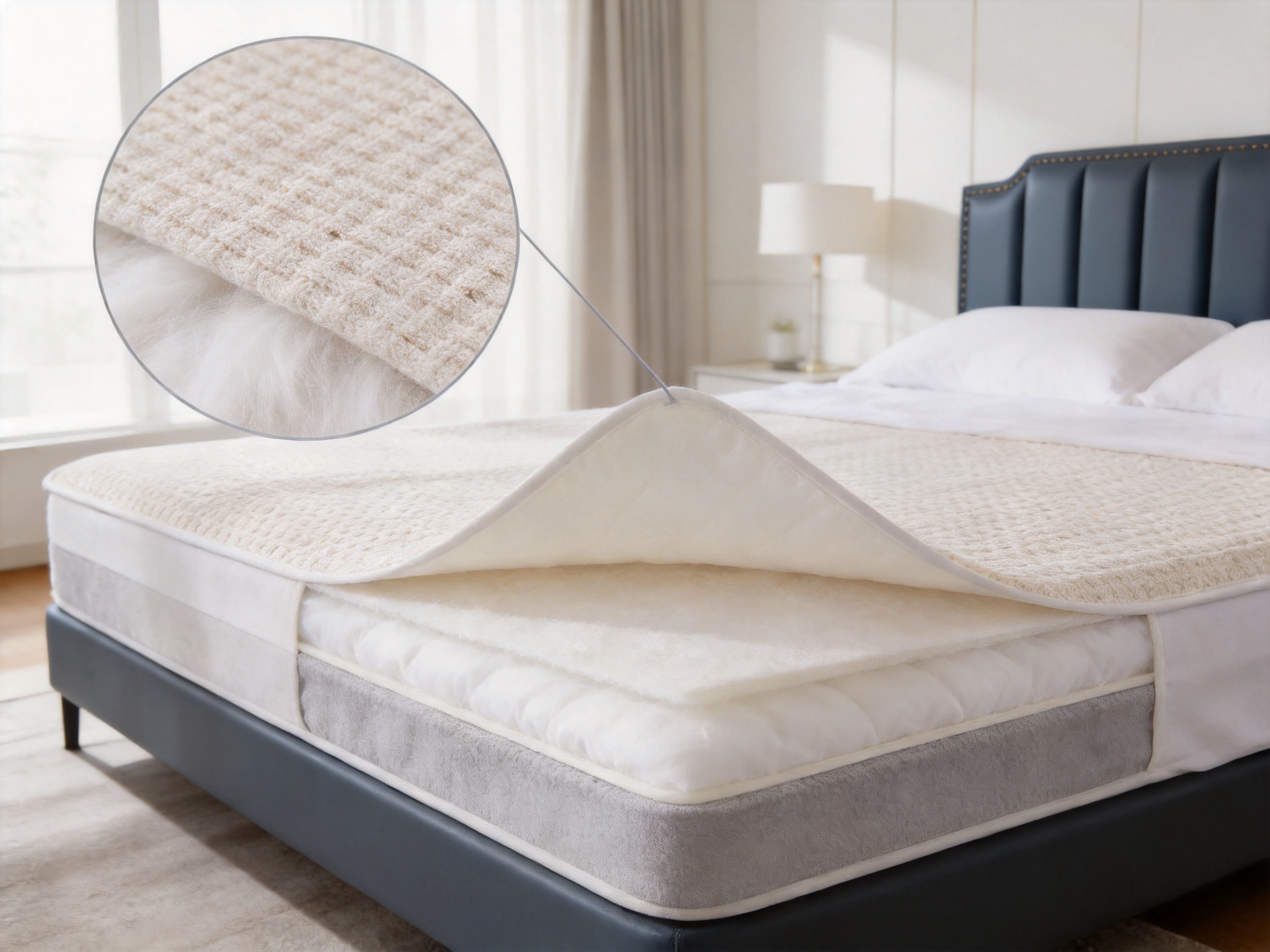
The knitted mattress protector presented in this article is designed for customers seeking a thin and practical bedding layer rather than a bulky mattress pad. Its construction combines a 250gsm polyester knitted fabric on the top, an 80gsm brushed fabric on the underside, and 150gsm 6D polyester filling between the two layers. This combination creates a product that is comfortable enough for everyday use while remaining comparatively lightweight, easy to handle, and simple to clean.
Unlike basic single-layer mattress covers, this product is engineered with multiple functional layers. The knitted surface gives the protector a fashionable textile appearance and a pleasant hand feel. The brushed underside adds softness and helps create a stable contact layer. The polyester filling provides light cushioning and improves the overall structure without making the protector excessively thick.
For wholesalers, retailers, hospitality businesses, bedding brands, and private-label customers, the product also offers a practical foundation for customization. The standard size is 120 x 200 cm, while custom dimensions can be produced according to customer requirements. This flexibility makes the protector suitable for different mattress sizes, sales channels, and market preferences.
Understanding the Role of a Mattress Protector
A mattress is a long-term investment, but it is exposed to daily pressure, friction, body moisture, dust, and accidental spills. Replacing a mattress frequently can be expensive and inconvenient. A mattress protector provides a removable textile barrier that helps reduce the direct impact of everyday use on the mattress surface.
The main purpose of a protector is not to replace a waterproof mattress encasement or a medical-grade protective cover. Instead, it is intended to offer an additional layer of comfort and practical protection while remaining easy to remove and launder. This makes it particularly useful in homes, hotels, rental properties, dormitories, guest rooms, and other environments where regular bedding maintenance is important.
A well-designed protector should satisfy several requirements. It should fit the intended mattress size, remain comfortable beneath the sheet, withstand repeated handling, and be simple to remove when cleaning is necessary. It should also have a neat appearance that supports the visual quality of the entire bedding set.
The knitted mattress protector addresses these requirements through its layered construction. The product is thin enough to avoid dramatically changing the feel of the mattress, yet it provides a more substantial textile structure than a very basic flat cover. Its fabric combination also allows the manufacturer to balance surface appearance, softness, filling support, and production efficiency.
Product Structure and Material Composition
The performance of any mattress protector depends heavily on its materials and how the layers work together. This model uses three main components: a knitted polyester face fabric, a brushed polyester backing fabric, and 6D polyester filling.
| Component | Specification | Primary Function |
|---|---|---|
| Front fabric | 250gsm polyester knitted fabric | Provides a fashionable surface, textile softness, and a comfortable contact layer beneath the sheet |
| Back fabric | 80gsm brushed fabric | Adds a soft underside and supports the layered structure |
| Filling | 150gsm 6D polyester | Creates light cushioning, body, and loft |
| Standard size | 120 x 200 cm | Suitable for the stated standard production format |
| Custom sizing | Available according to order requirements | Supports different mattresses, markets, and private-label programs |
250gsm Knitted Polyester Face
The 250gsm knitted polyester face is the most visible and tactile part of the protector. Knitted construction is valued for its flexible appearance and soft textile character. Compared with a plain, rigid woven surface, a knitted fabric can provide a more comfortable and contemporary look, which is important for bedding products displayed in retail stores or online catalogs.
Polyester is widely used in home textiles because it offers a useful balance between durability, consistency, and ease of care. It can be manufactured in repeatable specifications, supports a broad range of colors and patterns, and generally performs well in products that require frequent handling. The knitted structure also helps the surface look more substantial than an extremely thin fabric.
The face fabric is designed to be attractive as well as functional. Its fashionable appearance allows the protector to be used not only as a hidden bedding layer but also as part of a coordinated bed presentation. Depending on the customer’s program, the fabric may be developed in different colors, textures, or visual directions, subject to material and production confirmation.
80gsm Brushed Backing
The underside uses 80gsm brushed fabric. Brushing creates a softer surface by raising fine fibers on the fabric face. This gives the underside a pleasant hand feel and helps it sit comfortably against the mattress or other bedding layer.
The brushed backing also contributes to the overall visual and tactile contrast of the product. The upper side has a knitted appearance, while the underside has a softer brushed character. This combination allows the protector to feel more carefully designed than a basic cover made from one uniform fabric.
Because the backing is relatively lightweight, it does not add unnecessary bulk. This is important for customers who want a mattress protector that can be folded, packed, transported, and stored efficiently. A lighter backing can also support easier product handling during bed making and routine cleaning.
150gsm 6D Polyester Filling
The protector contains 150gsm 6D polyester filling. Filling helps create a lightly cushioned feel and gives the product body between the top and bottom fabrics. The purpose is not to transform the protector into a thick mattress topper. Instead, the filling adds a moderate layer of softness and structure while preserving the product’s practical, thin profile.
Six-denier polyester fiber is commonly selected for products that require a balance of resilience, loft, and softness. The fiber specification contributes to a fuller textile feel while remaining suitable for a lightweight bedding product. The exact final hand feel can depend on quilting, finishing, compression, and packaging conditions, but the stated filling weight provides a clear foundation for consistent product development.
Key Advantages of the Knitted Mattress Protector
Thin and Practical Construction
One of the central advantages of this product is its thin construction. Some mattress pads are heavily filled and can substantially alter the height, firmness, and feel of a mattress. That type of product may not be appropriate for consumers who prefer to preserve the original mattress experience.
This knitted mattress protector is designed as a lighter alternative. It offers a textile barrier and modest cushioning without becoming unnecessarily bulky. The result is a product that can be placed under a fitted sheet with minimal disruption to the bed’s overall profile.
The thin format is also useful for storage and transportation. Retail customers can fold the protector conveniently, while commercial users can manage multiple units more efficiently. For importers and distributors, a lighter construction may help simplify packing and improve warehouse utilization, subject to final packaging specifications.
Easy to Remove and Maintain
Ease of removal is an important advantage in everyday bedding. A mattress protector that is difficult to take off may not be cleaned as regularly as necessary. This design is intended to be easy to remove, allowing users to replace it, clean it, or inspect the mattress beneath it without excessive effort.
Polyester fabrics are generally selected for bedding products partly because they are practical to care for. The protector’s textile construction is suitable for customers who value convenience and routine maintenance. Care instructions should always be confirmed according to the final fabric finishing, sewing method, and customer requirements, but the overall product concept clearly emphasizes easy handling and cleaning.
For hotels, serviced apartments, dormitories, and rental properties, efficient bedding turnover is especially valuable. Staff can remove the protector during room servicing, send it for cleaning, and replace it with a fresh unit. This supports a more organized housekeeping process and helps reduce the direct exposure of mattresses to daily use.
Attractive Knitted Appearance
A mattress protector does not need to look purely functional. Consumers increasingly expect home textile products to combine performance with attractive design. The knitted face gives this model a more fashionable appearance than a plain, undifferentiated protective layer.
The visual quality of bedding influences how customers perceive comfort, cleanliness, and value. A neatly knitted surface can support a more premium presentation, particularly when coordinated with sheets, bedspreads, quilts, or decorative cushions. For brands developing complete bedding collections, this product can be incorporated into a broader textile story.
The knitted surface can also support product differentiation. Many low-cost protectors compete primarily on price and may have a generic appearance. A carefully selected knitted fabric gives distributors an opportunity to present a product with a stronger visual identity while retaining the practical benefits of polyester construction.
Balanced Softness and Support
The product’s three-layer structure creates a balance between comfort and functionality. The top knitted layer contributes surface softness and visual appeal. The 6D polyester filling adds light loft and cushioning. The brushed underside provides a soft foundation.
This balance is useful because excessive softness is not always an advantage in a mattress protector. A very thick or loosely filled product can shift, compress, or create an unfamiliar sleeping surface. A very thin single-layer product, on the other hand, may feel insubstantial and offer limited comfort value. The stated construction occupies a practical middle ground.
For consumers, the protector can help make the bed feel more finished without overwhelming the mattress. For commercial buyers, it provides a product specification that is easy to explain: a knitted face, brushed reverse, and 6D polyester filling in a thin layered design.
Flexible Custom Sizing
The default size is 120 x 200 cm, but custom sizing is available. This is a major advantage for customers serving markets with different mattress dimensions. Mattress sizes vary between countries, retailers, hotels, and furniture systems, so a fixed-size product may not be suitable for every sales program.
Custom sizing can support private-label brands, hospitality projects, contract furnishing, and specialized retail channels. A customer may request dimensions for a specific mattress range, a regional standard, or a coordinated bedding collection. Before production, the final dimensions, tolerance, border construction, attachment method, and packaging should be confirmed in a technical specification.
Custom size capability also gives buyers greater control over product positioning. A brand can develop several sizes under one product family rather than searching for different suppliers for each dimension. This can simplify sourcing and help maintain a consistent appearance across the collection.
Advantages Compared with Basic Competitor Products
The bedding market includes many mattress protectors with different structures and price points. A simple comparison helps explain where this knitted model can offer an advantage.
Compared with Single-Layer Flat Covers
Single-layer flat covers are often lightweight and inexpensive, but they may provide limited cushioning and a less substantial appearance. They can also feel less comfortable when placed directly beneath a sheet. The knitted mattress protector adds a 150gsm filling layer and a soft brushed backing, giving it more body and a more developed textile structure.
At the same time, the product remains thinner than a heavily padded mattress topper. This means buyers do not have to choose between an extremely basic cover and a bulky sleeping layer. The knitted protector provides an intermediate option for customers seeking practical protection with a moderate level of comfort.
Compared with Heavy Mattress Pads
Heavy mattress pads may create a plush sleeping surface, but they can be more difficult to fold, store, wash, and transport. Their greater volume may also affect fitted-sheet compatibility. The thin construction of this protector offers a more streamlined alternative for customers who prioritize convenience and mattress feel.
A thin protector can be particularly valuable in warm climates, compact bedrooms, guest rooms, and commercial settings where bedding must be changed frequently. It can also reduce the visual and physical bulk of a layered bedding system.
Compared with Plain Woven Polyester Protectors
Plain woven polyester protectors can provide reliable basic coverage, but their appearance may be more utilitarian. The knitted face of this product creates a softer and more fashionable visual impression. This can improve shelf appeal and support a more premium product presentation.
The difference is also relevant to online retail. Product photography must communicate comfort and quality quickly. A textured knitted surface can be easier to present attractively in photographs than a completely plain fabric. Clear images, accurate dimensions, and honest material information should accompany the product to ensure that customer expectations are properly managed.
Compared with Low-Quality Multi-Layer Products
Not every multi-layer protector offers the same level of consistency. Product value depends on fabric quality, filling distribution, stitching, edge finishing, dimensional control, and final inspection. A professional manufacturer with established production systems can provide stronger support in these areas than an unverified supplier.
Tongxiang Xinlong Bedding Co., Ltd. has operated in the home textile industry since January 2002. Its experience includes quilts, pillows, cushions, bedspreads, travel quilts, mattress protectors, blankets, quilt and pillowcases, shower curtains, and curtains. This broad product background is important because it demonstrates familiarity with different textile constructions and bedding applications.
Manufacturing Capabilities and Production Strengths
The quality of a mattress protector is influenced not only by its material specification but also by the manufacturer’s ability to convert that specification into a stable finished product. Production strength includes equipment, personnel, process control, quality systems, and experience with customer requirements.
Established Home Textile Production Experience
The manufacturer was established in January 2002 and has developed long-term experience in home textile production. This experience can help support more consistent decision-making across material selection, cutting, filling, sewing, finishing, inspection, and packing.
A company that produces several categories of home textiles can also understand how products are used together. A mattress protector may be sold as an independent item, but it often forms part of a wider bedding program that includes quilts, pillows, blankets, bedspreads, cushions, and covers. Experience across these categories can help customers coordinate fabric appearance, product quality, packaging, and seasonal collections.
Production Site and Workforce
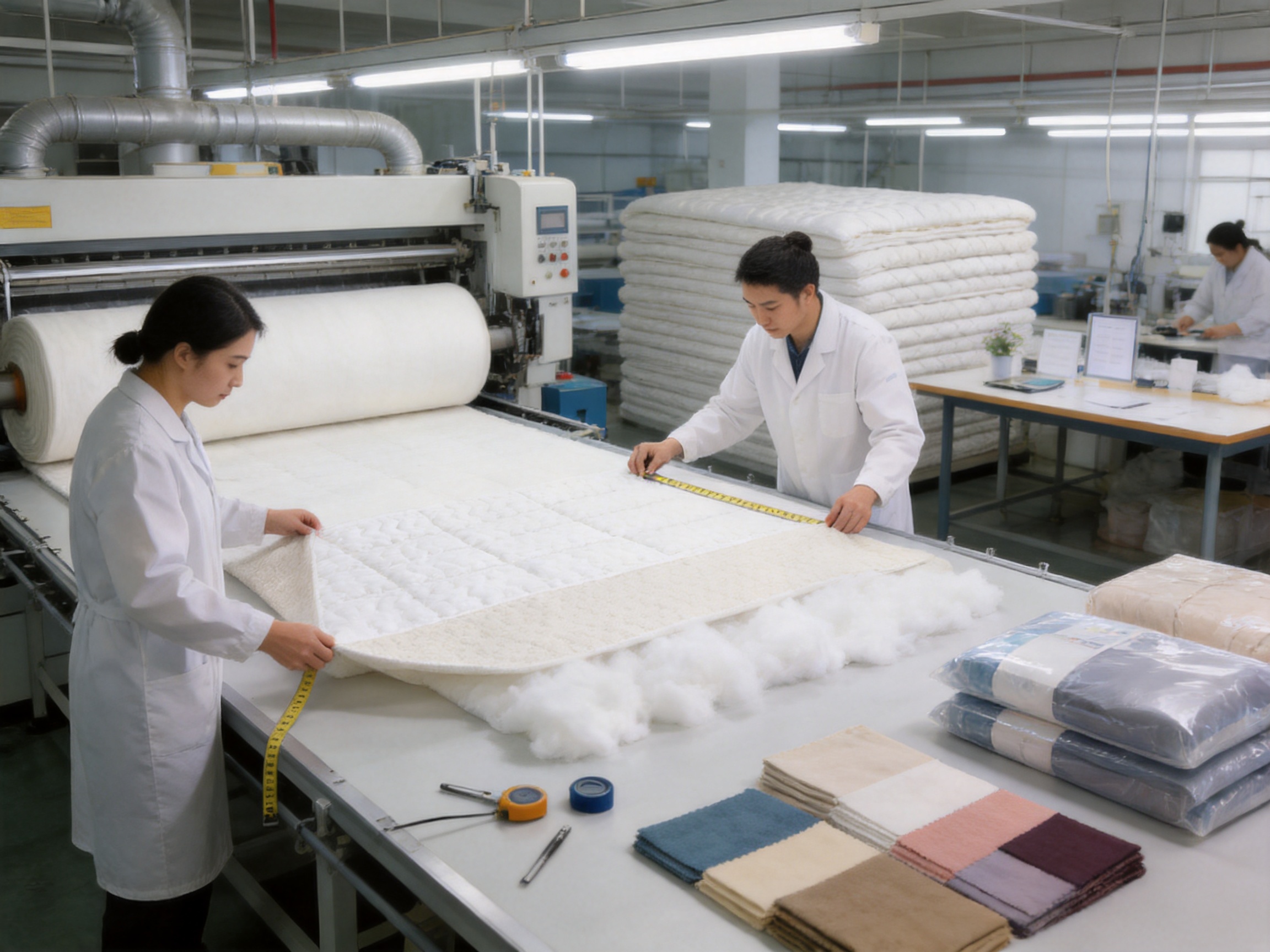
The company’s facility covers approximately 21,000 square meters, with a construction area of approximately 18,000 square meters. It has more than 320 employees and is equipped with various production machines and systems for home textile manufacturing.
A facility of this scale can provide a stronger foundation for organized production than a very small workshop. It may support clearer separation of material preparation, sewing, filling, inspection, and finished-goods handling. Production scale can also be useful for customers requiring repeat orders, multiple sizes, or coordinated product categories.
Workforce size alone does not guarantee quality, but experienced personnel and clearly defined responsibilities can improve manufacturing stability. The company states that it employs professional and technical personnel to support product development and production. This is relevant for buyers seeking custom designs rather than only standard catalog products.
Process Control from Material to Finished Product
A professional mattress protector production process normally begins with the confirmation of the technical specification. This includes fabric composition, weight, color, width, filling type, finished size, edge design, stitching requirements, labeling, packing, and inspection standards.
For this product, the production process can be organized around the following general stages:
First, the knitted face fabric, brushed backing, and 6D polyester filling are checked against the approved specification. Material inspection is important because variations in fabric weight, width, color, surface texture, or filling distribution can affect the finished product.
Second, the fabrics are prepared and cut according to the confirmed dimensions. Cutting accuracy is essential for custom-size products. Inconsistent panels may lead to uneven edges, distortion, or difficulty during sewing and packing.
Third, the filling is placed between the front and back layers. The filling must be distributed as evenly as possible so that the protector does not develop noticeably thin or thick areas. Controlled handling at this stage supports more consistent loft and comfort.
Fourth, the layers are joined through the specified sewing or quilting method. The exact construction should be confirmed in the final production sample. Joining helps keep the layers aligned during use, washing, folding, and transport.
Fifth, the edges are finished to create a clean and durable perimeter. Edge quality influences appearance, handling comfort, and resistance to fraying or separation. It is also important for maintaining the finished dimensions.
Finally, completed units are inspected, folded, labeled, and packed according to the customer’s requirements. A reliable final inspection program should check dimensions, fabric appearance, stitching, filling distribution, cleanliness, labeling, and packing condition.
These stages represent a practical production framework. The exact machinery, stitch density, quilting pattern, and finishing details should be confirmed through samples and technical documentation before bulk production.
Quality Management and Certifications
The company states that it has passed international certifications and management standards including ISO9001, ISO14001, OEKO-related certifications, GRS, and BSCI. The supplied company information also refers to OEKO-100, OEKO-STEP, and several years of safety production standardization recognition.
Certification names, scopes, validity periods, and applicable product categories should always be verified during the sourcing process. Nevertheless, the presence of formal management and social-compliance systems can be a positive indicator for buyers who require documented supplier evaluation.
ISO9001 is associated with quality management systems, while ISO14001 is associated with environmental management systems. GRS is commonly connected with recycled materials and chain-of-custody requirements where applicable. BSCI is associated with social-compliance assessment. These systems do not replace product inspection, but they can support a more organized manufacturing environment.
For buyers, the most useful approach is to combine certification review with sample approval, laboratory testing where necessary, production inspection, and clear contractual specifications. This creates a more complete quality-control process than relying on a certificate alone.
Quality Considerations for Buyers
When purchasing knitted mattress protectors in bulk, buyers should evaluate the complete product rather than focusing only on the fabric weight. Several details can affect customer satisfaction and long-term performance.
Fabric Appearance and Hand Feel
The knitted face should be examined for consistent texture, color, surface cleanliness, and freedom from visible defects. The brushed backing should feel soft and should not show excessive fiber loss during normal handling. If the product is part of a bedding collection, color matching with related products should also be checked.
Filling Distribution
The 150gsm filling should be distributed evenly throughout the product. Uneven filling can create cold spots, thin sections, or an inconsistent appearance. Buyers may specify an acceptable tolerance and inspection method during product development.
Dimensional Stability
Finished dimensions should be measured after production and, when relevant, after laundering tests. Textile products may change slightly after washing or drying, so buyers should confirm the expected tolerance before placing large orders. Custom-size products require especially careful dimensional control.
Seam and Edge Finishing
Seams should be secure, clean, and appropriate for the intended use. The perimeter should be finished without excessive loose threads, skipped stitches, puckering, or open sections. A clean edge improves both durability and presentation.
Packaging and Labeling
Packaging should protect the protector from moisture, dust, compression damage, and deformation during storage and transport. Labels should include the information required by the destination market, such as size, fiber content, care instructions, country of origin, and brand information where applicable.
Private-label customers may also request customized packaging, barcodes, inserts, woven labels, printed labels, or carton markings. These details should be finalized before bulk production to avoid delays and inconsistent presentation.
Applications in Different Markets
Household Bedding
For household use, the protector is suitable for bedrooms, guest rooms, children’s rooms, and seasonal bedding arrangements. Its thin construction makes it convenient for consumers who want an additional layer without a dramatic change to mattress comfort.
It can be used with a sheet, quilt, blanket, or bedspread as part of a complete bedding system. Its knitted appearance may also appeal to consumers who prefer bedding products with a soft, decorative textile surface.
Hotels and Hospitality
Hotels and other accommodation providers need bedding products that are easy to handle and maintain. A removable mattress protector can support routine housekeeping operations and help reduce direct exposure of the mattress to everyday use.
The relatively thin structure is useful when bed linens must be changed frequently. It may also be easier for staff to fold, transport, and store than a heavily padded mattress pad. Hospitality buyers should confirm washing durability, attachment design, size range, and commercial laundry requirements before ordering.
Rental Properties and Student Housing
Rental apartments, dormitories, and student accommodation often require practical bedding accessories that can be replaced or cleaned efficiently. A mattress protector gives property managers an additional layer of control over mattress maintenance without requiring a thick, expensive product.
Custom sizing can be valuable when a housing provider uses a consistent bed and mattress specification across multiple rooms. A standardized protector can simplify purchasing, inventory management, and replacement planning.
Retail and Private-Label Bedding
Retailers and bedding brands can use the product as part of a broader home textile collection. The knitted face offers visual differentiation, while the standard and custom-size options support different market strategies.
Private-label customers may position the protector as a practical comfort product, an easy-care bedding essential, or a coordinated accessory for quilts and bedspreads. The final marketing claim should remain consistent with confirmed testing and product specifications.
Customization Opportunities
Customization can extend beyond dimensions. Depending on order volume, materials, and technical feasibility, customers may discuss colors, knitted patterns, surface textures, labels, packaging, edge treatments, and coordinated bedding products.
Color development should be based on approved samples or recognized color references. The appearance of knitted polyester can vary according to yarn, dyeing, finishing, lighting, and screen display, so physical sample approval is recommended before mass production.
Packaging customization can help a product stand out in retail environments. Options may include individual polybags, printed paper inserts, branded cartons, recycled packaging materials, or barcode systems. Packaging decisions should consider the target market, shipping method, storage conditions, and sustainability goals.
Customers can also request a coordinated product range. Since the manufacturer produces pillows, quilts, blankets, cushions, bedspreads, and other home textiles, buyers may be able to develop complementary products through one supplier. Consolidated sourcing can help simplify communication and improve collection consistency, although every product should still receive its own sample approval and quality review.
Recommended Sourcing Process
A successful mattress protector order begins with a clear product brief. The brief should identify the finished size, fabric composition, fabric weights, filling specification, color, edge construction, label requirements, packing method, order quantity, and delivery destination.
The next step is sample development. A pre-production sample allows the buyer to evaluate the actual knitted texture, brushed backing, filling feel, dimensions, color, stitching, and overall appearance. If custom sizing or packaging is required, these details should be included in the sample process rather than discussed only after bulk production begins.
After the sample is approved, the buyer and manufacturer should confirm a written specification. This document should define measurable requirements and acceptable tolerances. It should also identify inspection procedures, packing details, and any required testing.
During production, buyers may arrange material inspection, in-line inspection, or final inspection depending on order size and risk level. Inspection is particularly valuable for checking custom dimensions, filling distribution, fabric appearance, stitching, and carton quantities.
Before shipment, the final packing list, shipping marks, labels, and documents should be reviewed. Good communication at this stage can reduce misunderstandings and help ensure that the delivered product matches the approved sample.
Care and Use Guidance
Users should follow the care instructions supplied with the final product. Washing and drying conditions can vary depending on the fabric finish, sewing construction, label requirements, and customer market. In general, the protector should be removed from the mattress before cleaning and allowed to dry thoroughly before reuse.
Regular inspection can help identify loose threads, damaged edges, or excessive wear. If the protector is used in a hospitality or rental environment, a planned replacement schedule may be appropriate. The replacement interval depends on usage frequency, washing conditions, handling practices, and the buyer’s quality standards.
The protector should be used with a suitable mattress and sheet arrangement. It is not automatically a waterproof product, medical barrier, or complete mattress encasement unless such features are specifically added, tested, and documented. Clear product communication helps prevent incorrect expectations.
Why This Product Is a Strong Commercial Choice
The knitted mattress protector combines several benefits that are valuable in competitive bedding markets. Its thin format makes it practical. Its layered construction gives it more substance than a basic single-layer cover. Its knitted face improves visual appeal. Its brushed underside contributes softness. Its polyester filling creates light cushioning. Its removable design supports routine maintenance. Its custom-size capability expands its market suitability.
These features create a balanced product rather than one focused on only a single selling point. Some protectors compete primarily through low cost, while others emphasize heavy padding or specialized waterproof performance. This model is positioned as a practical, comfortable, and attractive everyday mattress protector for customers who want useful protection without unnecessary bulk.
The manufacturing background of Tongxiang Xinlong Bedding Co., Ltd. adds another important advantage. With production experience dating back to 2002, a large home textile facility, more than 320 employees, professional technical personnel, and a broad product portfolio, the company is equipped to support both standard and customized bedding programs.
Its stated quality, environmental, social-compliance, and safety-related certifications provide an additional basis for supplier evaluation. Buyers should still complete their own verification and inspection process, but the combination of production experience, facility scale, product range, and management systems can make the supplier a suitable candidate for long-term cooperation.
Frequently Asked Questions
What is a knitted mattress protector?
A knitted mattress protector is a removable bedding layer designed to sit over or around a mattress beneath the fitted sheet. This model uses a 250gsm polyester knitted face, an 80gsm brushed backing, and 150gsm 6D polyester filling.
Is this protector thick like a mattress topper?
No. It is designed as a thin mattress protector rather than a thick mattress topper. It provides light cushioning and layered textile protection while aiming to preserve the general feel and profile of the mattress.
What is the standard size?
The default size is 120 x 200 cm. Custom sizes can be discussed according to the buyer’s mattress specifications and production requirements.
Can the product be customized?
Yes. Custom dimensions are available, and buyers may also discuss colors, surface appearance, labels, packaging, and coordinated bedding products. Final customization options depend on order quantity, materials, and technical confirmation.
What is the benefit of the knitted front fabric?
The knitted front fabric provides a fashionable textile appearance and a soft, flexible surface. It helps the product look more attractive than a plain basic cover and can support a coordinated bedding collection.
What is the purpose of the brushed backing?
The 80gsm brushed backing provides a softer underside and contributes to the comfort and layered structure of the protector. Its lightweight construction helps avoid unnecessary bulk.
What does 150gsm 6D polyester filling provide?
The filling adds light loft, body, and cushioning. It helps the protector feel more substantial than a single-layer cover without making it as bulky as a heavily padded mattress pad.
Is the protector waterproof?
The supplied specification does not identify this product as waterproof. Buyers requiring waterproof performance should request a specially developed construction and confirm testing, coating, membrane, seam, and care requirements.
Is it suitable for hotels and rental properties?
It can be suitable for hotels, serviced apartments, dormitories, rental properties, and guest rooms because it is designed to be removable, practical, and easy to handle. Commercial buyers should confirm durability and laundering requirements before placing an order.
How should buyers evaluate quality?
Buyers should review the approved sample, fabric texture, filling distribution, finished dimensions, stitching, edge finishing, labeling, packaging, and any required testing. A written specification and final inspection are recommended for bulk orders.
What certifications are associated with the manufacturer?
The company information states that the manufacturer has passed or obtained systems and certifications including ISO9001, ISO14001, OEKO-related certifications, GRS, and BSCI. Buyers should verify current certificates, scopes, validity, and applicability during supplier qualification.
Can this product be sold under a private label?
The custom-size capability and home textile manufacturing background make it suitable for discussion as a private-label product. Labels, packaging, colors, and other requirements should be agreed upon during sample development and documented before mass production.
Conclusion
The knitted mattress protector is a versatile bedding product that combines practical protection with comfort and visual appeal. Its 250gsm knitted polyester face gives it a fashionable appearance, while the 80gsm brushed backing contributes softness and the 150gsm 6D polyester filling provides light cushioning and structure.
Its thin design makes it easier to remove, store, transport, and maintain than many heavy mattress pads. Its custom-size capability allows the product to serve different markets, mattress systems, hospitality projects, and private-label programs. Compared with basic single-layer covers, it offers a more developed construction and more attractive presentation. Compared with thick mattress toppers, it remains streamlined and practical.
The manufacturer’s long-term experience, production facility, workforce, technical personnel, broad home textile portfolio, and stated management certifications provide a solid foundation for commercial cooperation. With proper sample approval, documented specifications, quality inspection, and packaging control, the product can serve as a dependable addition to residential, hospitality, retail, and customized bedding collections.

Knitted Mattress Protector
References
1. Product specification supplied for the knitted mattress protector, including fabric weights, filling, standard size, and custom-size availability.
2. Company information supplied for Tongxiang Xinlong Bedding Co., Ltd., including establishment date, facility area, workforce, product categories, and manufacturing capabilities.
3. General textile quality-management principles related to incoming material inspection, dimensional control, sewing inspection, filling distribution, and final product evaluation.
4. General bedding-care and product-development practices for polyester fabrics, brushed textiles, knitted constructions, and filled home textile products.
5. General descriptions of ISO9001, ISO14001, OEKO-related standards, GRS, BSCI, and supplier compliance evaluation procedures.



 +86-573-88798028
