



 Français
 Español
 Deutsch
Content
- 1 Introduction
- 2 Product Overview
- 3 Material and Construction
- 4 Quilting Pattern and Functional Performance
- 5 Advantages Compared with Basic Quilt Alternatives
- 6 Manufacturing Capabilities
- 7 Manufacturing Process for the Polyester Jacquard Quilt
- 8 Quality and Certification Strengths
- 9 Applications in Different Markets
- 10 Why Manufacturer Experience Matters
- 11 Purchasing Considerations
- 12 Care and Product Longevity
- 13 Environmental and Responsible Manufacturing Considerations
- 14 Q&A
- 14.1 What is the main material of the Polyester Jacquard Quilt?
- 14.2 What size is the standard product?
- 14.3 Is the quilt suitable for all seasons?
- 14.4 What makes the product different from a plain polyester quilt?
- 14.5 What is the purpose of quilting?
- 14.6 What is the purpose of piping?
- 14.7 Can the quilt be customized?
- 14.8 Is the quilt suitable for hotels and guest rooms?
- 14.9 Does the company have quality and compliance certifications?
- 14.10 How should buyers evaluate a sample?
- 14.11 What information should be included in a purchase specification?
- 14.12 Why is factory experience important for this product?
- 15 Conclusion
- 16 References
- 17 Product: Polyester Jacquard Quilt
Introduction
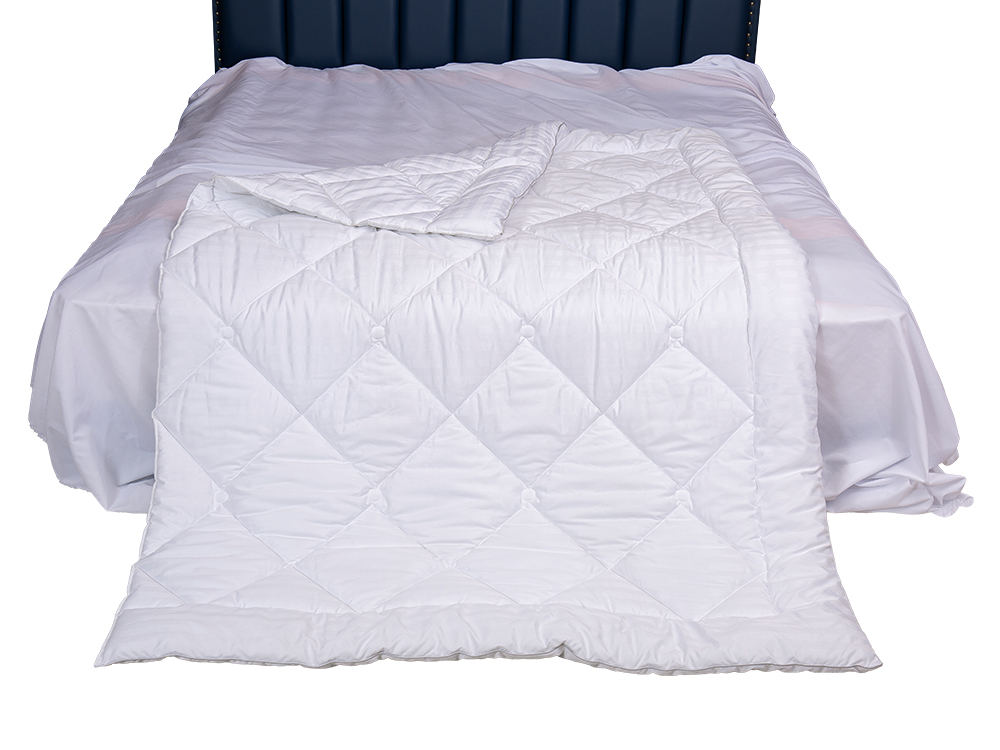
A quilt is more than a practical layer of warmth. It is also an important part of bedroom presentation, sleeping comfort, seasonal flexibility, and everyday home care. The Polyester Jacquard Quilt combines a decorative outer surface with functional synthetic filling to create a bedding product suitable for modern bedrooms, guest rooms, hospitality projects, retailers, and contract furnishing applications. Its balanced construction brings together jacquard fabric, classic piping, structured quilting, and 6D polyester filling in a compact 140 x 200 cm format.
Designed as a polyester embossed quilt, this product provides a sophisticated appearance while remaining practical for regular use. The textured surface helps create visual depth, allowing the quilt to complement both traditional and contemporary interiors. At the same time, the synthetic composition offers a consistent manufacturing standard, reliable shape retention, and convenient care compared with many more delicate natural-fill alternatives.
The quilt is produced by Tongxiang Xinlong Bedding Co., Ltd., a Chinese home textile manufacturer with experience in quilts, pillows, cushions, mattress protectors, blankets, bedspreads, quilt covers, pillowcases, curtains, and other household textile products. The company has developed a production system supported by professional personnel, advanced equipment, standardized operating procedures, and international management and social responsibility certifications.
This article examines the Polyester Jacquard Quilt in detail. It explains its material structure, visual advantages, comfort characteristics, manufacturing process, quality controls, potential applications, and competitive strengths. It also presents practical questions and answers for buyers evaluating the product for wholesale, retail, hospitality, or custom home textile programs.
Polyester Jacquard Quilt
Product Overview
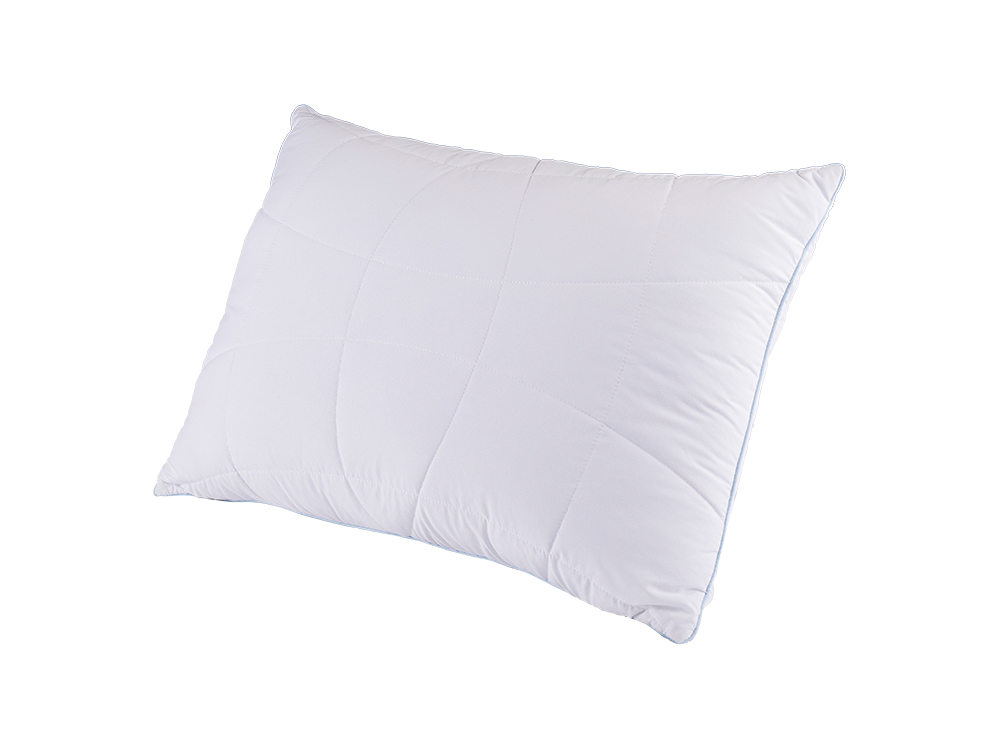
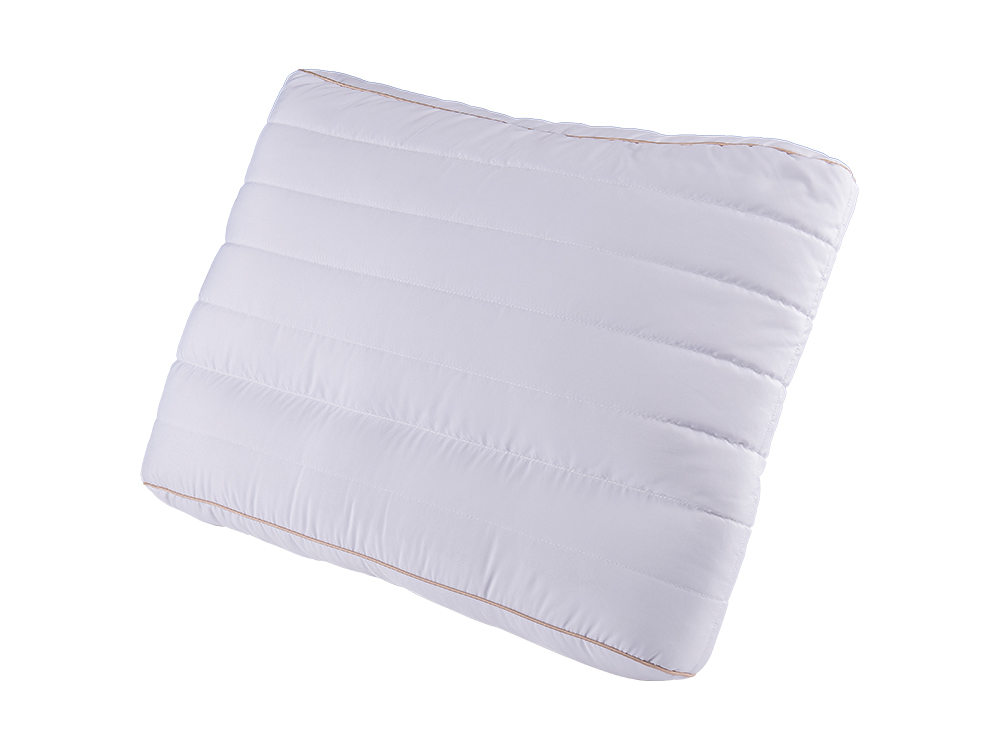
The Polyester Jacquard Quilt is a decorative and functional bedding item made with a jacquard-style outer fabric and a polyester filling. Its product description identifies classic piping technology and attractive quilting patterns as key visual and structural features. These details help the quilt achieve a finished appearance that is more refined than a simple plain quilted cover.
The standard product information is summarized below.
| Item | Specification |
|---|---|
| Product name | Polyester Jacquard Quilt |
| Product category | Polyester Embossed Quilt |
| Standard size | 140 x 200 cm |
| Outer fabric | 90gsm striped fabric |
| Filling | 300gsm 6D polyester |
| Construction details | Jacquard fabric, classic piping, and quilted patterns |
| Primary product use | Bedroom bedding, guest rooms, retail, and hospitality applications |
The 140 x 200 cm size offers a convenient format for single beds, compact bedrooms, dormitory rooms, guest rooms, and decorative layering. It can also be used as a lightweight cover placed over a larger bedspread or as an additional comfort layer during cooler seasons. For buyers serving different markets, the standard size provides a clear base specification from which additional size or packaging discussions may be developed.
The use of 90gsm striped fabric gives the outer layer a relatively light and visually organized surface. The 300gsm 6D polyester filling contributes substance, loft, and warmth without making the quilt excessively heavy. This combination is intended to deliver a practical balance between appearance, comfort, transport efficiency, and everyday usability.
Material and Construction
Jacquard Surface Design
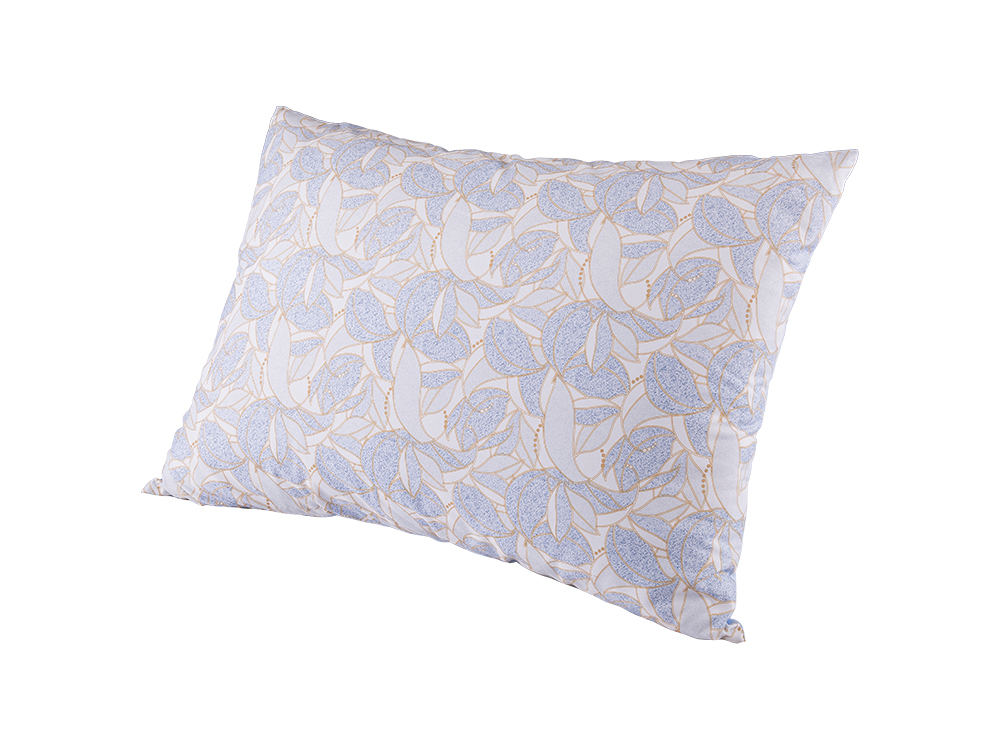
Jacquard fabric is valued for its woven or structured decorative effect. Unlike a completely flat printed surface, jacquard construction can create visual variation through texture, pattern arrangement, and differences in surface reflection. This gives the Polyester Jacquard Quilt a more dimensional appearance, especially when viewed under bedroom lighting or against plain sheets.
The textured appearance can support a variety of interior styles. In a classic room, it may reinforce an elegant and coordinated atmosphere. In a contemporary room, the surface can add softness and detail without requiring strong colors or elaborate decoration. This adaptability is an advantage for retailers and project buyers who need a product that can fit several market segments.
Jacquard styling also helps the product appear more substantial than a basic flat polyester quilt. Competitors that rely only on plain fabric or simple printed patterns may offer fewer visual details. By contrast, a jacquard surface can communicate a higher level of finish while preserving the practical benefits associated with polyester textiles.
Striped Fabric Characteristics
The specified outer material is 90gsm striped fabric. A striped structure can provide an orderly visual rhythm and can work effectively with the quilt’s embossed or quilted pattern. The restrained pattern makes the product easier to coordinate with sheets, pillowcases, blankets, and other bedding accessories.
A relatively light outer fabric can also support efficient handling during production and distribution. It allows the filling and quilting structure to remain visually prominent while avoiding an unnecessarily bulky shell. For wholesale buyers, the balance between decorative effect and manageable product weight can be useful when calculating carton capacity, storage requirements, and shipping costs.
Fabric selection must always be considered together with stitching, filling distribution, edge construction, and finishing quality. A suitable fabric alone does not determine the performance of a quilt. The product’s overall value comes from the way the outer material, internal filling, quilting pattern, and edge treatment work together.
300gsm 6D Polyester Filling
The quilt uses 300gsm 6D polyester filling. The stated weight provides a substantial layer of insulation and softness for a practical household quilt. The 6D designation refers to the fiber denier specification, which is part of the filling’s technical description. Polyester filling is widely used in bedding because it can provide consistent loft, stable production characteristics, and accessible pricing.
Compared with some natural fillings, polyester is often selected for its uniformity and straightforward maintenance. The filling can be manufactured to a consistent weight and distributed across the quilt according to the required quilting layout. This consistency is valuable for buyers who need repeatable product specifications across multiple orders.
Polyester filling also offers an alternative for consumers who prefer non-animal-derived bedding materials. It can be suitable for homes, rental properties, dormitories, hotels, and other settings where bedding must be practical, replaceable, and easy to manage. As with all bedding products, care instructions should be followed according to the final product label and buyer requirements.
Classic Piping
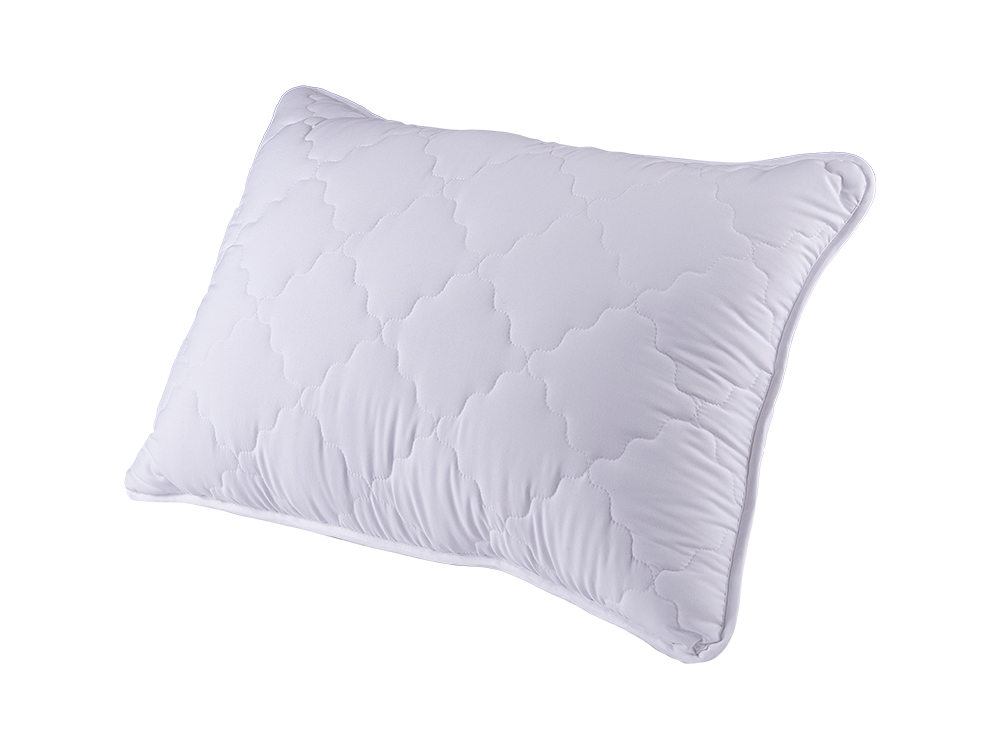
Classic piping is one of the product’s key finishing features. Piping creates a defined border around the quilt and helps emphasize its shape. It can also provide a clean transition between the quilted body and the outer edge, making the product look more tailored and complete.
From a practical perspective, edge finishing is important because the perimeter receives frequent handling. A well-executed piped edge can contribute to a neat outline and reinforce the visual impression of quality. It also allows the quilt to maintain a more structured appearance when placed on a bed, folded for display, or packaged for sale.
Many low-cost quilts compete primarily through simple construction and minimal finishing. The addition of piping gives this product an opportunity to stand apart from basic alternatives. For retailers, the edge detail can be highlighted as a visible quality feature because it is immediately recognizable without requiring technical explanation from the customer.
Quilting Pattern and Functional Performance
Quilting is not only a decorative process. It also helps connect the outer fabric and inner filling into a more stable bedding structure. By securing the layers at selected points or along planned lines, quilting can help reduce excessive movement of the filling during normal use.
The Polyester Jacquard Quilt uses beautiful quilting patterns to create a decorative surface while supporting the product’s construction. The pattern can divide the quilt into organized sections, contributing to a more even appearance. A well-planned quilting layout can also help the quilt fold neatly and maintain a consistent presentation in retail packaging.
Quilting provides an important competitive advantage over loosely assembled bedding products. If the filling is not adequately secured, it may shift, gather, or produce an uneven appearance over time. The combination of quilted construction and polyester filling is therefore valuable for buyers who want a practical product that maintains its visual character through repeated use.
The performance of a quilt depends on many variables, including stitch quality, seam strength, filling distribution, fabric stability, washing conditions, and consumer care. The available product information identifies the main construction materials and decorative techniques but does not establish a universal performance guarantee for every care situation. Buyers should confirm testing requirements, washing instructions, colorfastness standards, and packaging specifications before final commercial production.
Advantages Compared with Basic Quilt Alternatives
More Refined Appearance
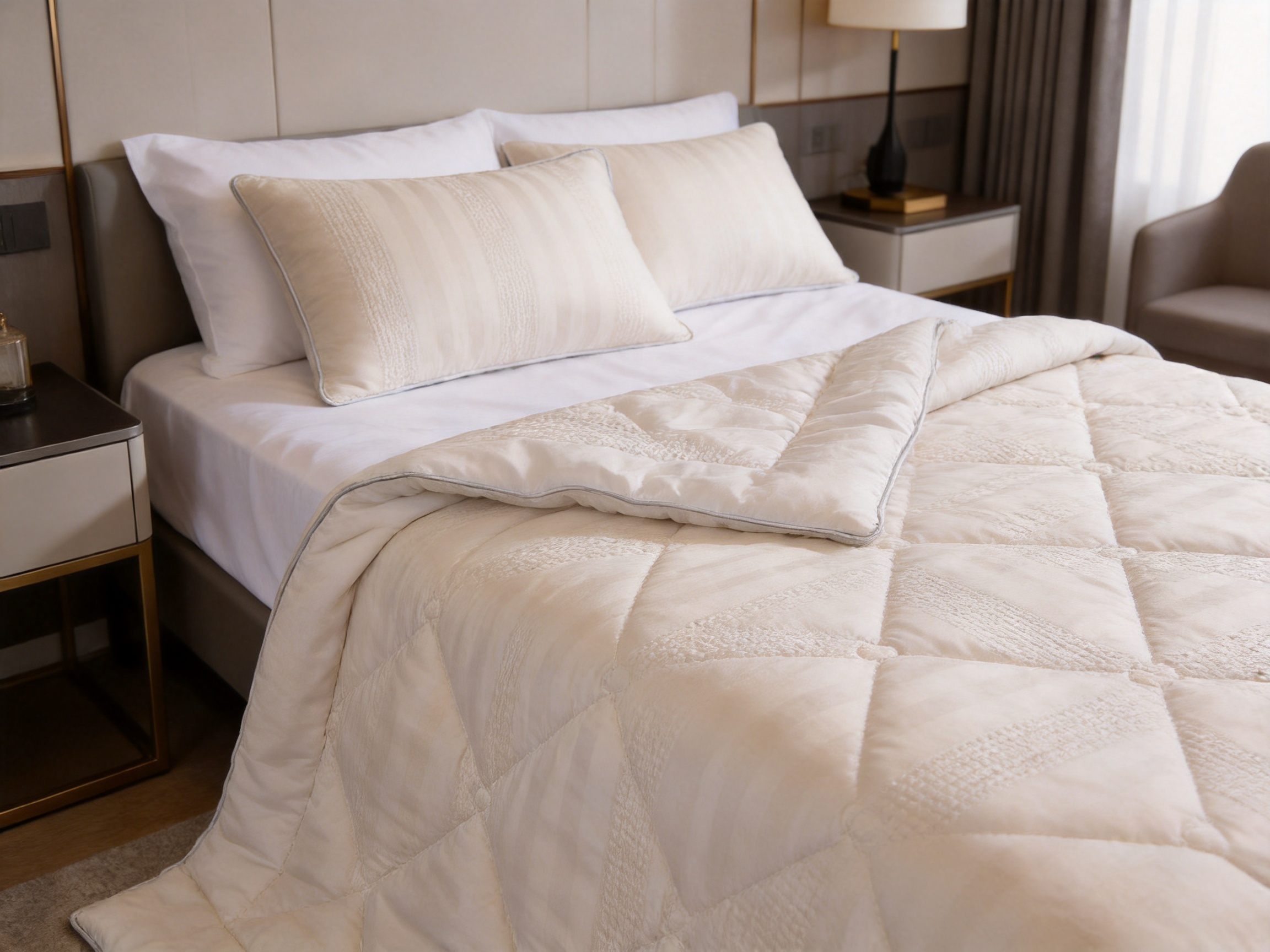
One of the clearest advantages of the Polyester Jacquard Quilt is its decorative presentation. A plain polyester quilt may offer warmth and basic coverage, but it may not provide the same level of texture or visual interest. The combination of jacquard fabric, striped surface styling, quilting patterns, and piping gives this product a more finished appearance.
This advantage is especially relevant in retail environments. Customers often make an initial judgment based on the surface appearance of a bedding product. Texture and edge finishing can make the quilt appear more premium, even when the product remains accessible in price. A retailer can therefore position it as an attractive upgrade from an ordinary utility quilt.
Balanced Weight and Warmth
The 300gsm polyester filling offers meaningful insulation while remaining more manageable than very heavy bedding constructions. The quilt can be used independently in suitable seasons or as one layer in a broader bedding system. This flexibility can be useful for consumers who prefer to adjust bedding according to room temperature and personal comfort.
The product’s moderate format also supports easy folding, storage, and handling. A quilt that is too heavy or bulky may be inconvenient for daily use, seasonal storage, or hospitality housekeeping. The stated filling and fabric specifications suggest a product designed for a practical middle ground between thin decorative covers and very heavy winter quilts.
Consistent Synthetic Construction
Polyester materials are widely used in commercial bedding because they support repeatable specifications. Fiber weight, fabric weight, dimensions, and quilting patterns can be monitored through standardized production processes. This is important for wholesale customers that need consistency across batches.
Natural materials can offer appealing qualities, but they may also vary more noticeably in texture, color, or filling characteristics depending on source and processing. A polyester quilt can offer buyers greater predictability when planning collections, private-label programs, or hospitality supply schedules.
Suitable for Multiple Sales Channels
The design is adaptable to several distribution channels. It can be presented as a decorative home quilt in a retail bedding collection, supplied as a guest-room item, included in a student accommodation program, or offered through online home textile stores. Its combination of appearance and practical materials gives it broader commercial potential than a product designed for only one narrow use.
For online sales, the jacquard surface and piping can be emphasized through close-up product photography. For physical retail, the quilt can be folded or displayed on a bed to show its pattern and outline. For hospitality buyers, the consistent polyester construction and standard 140 x 200 cm size may simplify product selection and inventory planning.
Accessible Luxury
The product is described as a luxurious home quilt, but its use of polyester helps maintain a practical manufacturing and purchasing profile. This combination can be described as accessible luxury: a quilt that looks more detailed and polished than a basic utility item without depending on expensive or highly delicate materials.
Accessible luxury is increasingly important in home textiles. Consumers may want their bedrooms to look elegant, but they also expect manageable care, reliable quality, and reasonable value. The Polyester Jacquard Quilt addresses these priorities through visible design details and a straightforward synthetic construction.
Manufacturing Capabilities
Tongxiang Xinlong Bedding Co., Ltd. was established in January 2002 and is located in Longxiang Industrial Park, Wuzhen Town, Tongxiang City, Zhejiang Province, China. The company’s stated address is No. 268 Xingfa Road, Wuzhen, Tongxiang City, Jiaxing, Zhejiang Province, China.
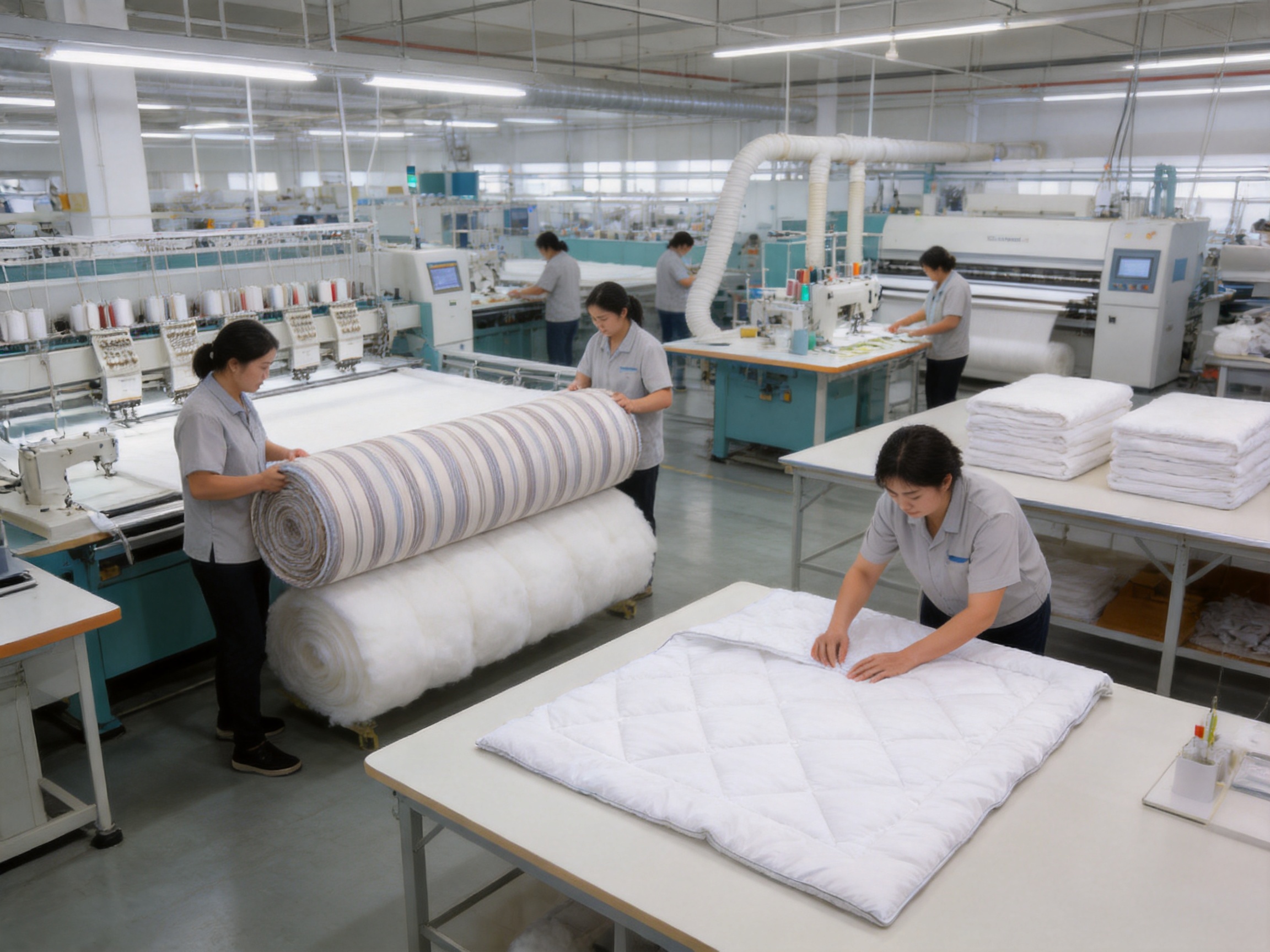
The company covers approximately 21,000 square meters, with a construction area of approximately 18,000 square meters. It has more than 320 employees and is equipped with various advanced production machines and facilities. These resources provide a substantial foundation for the manufacture of quilts and related home textile products.
The company’s product range includes silk cotton quilts, chemical fiber quilts, pillows, cushions, bedspreads, travel quilts, mattress protectors, blankets, quilt and pillowcases, shower curtains, curtains, and other household textile items. This broad category experience is relevant to the production of the Polyester Jacquard Quilt because many of the required capabilities overlap across bedding products.
A manufacturer that produces several types of home textiles can develop practical knowledge in fabric handling, filling preparation, quilting, sewing, finishing, inspection, packaging, and order coordination. This broader manufacturing background can help support product consistency and provide buyers with opportunities to develop coordinated bedding collections.
Professional and Technical Personnel
The company states that it is equipped with professional and technical personnel who support product design and manufacturing. In a product such as the Polyester Jacquard Quilt, technical expertise is important at several stages. Fabric must be handled appropriately, filling must be distributed consistently, quilting patterns must be aligned, and piping must be applied neatly around the edge.
Technical personnel can also assist with production planning and problem solving. If a fabric behaves differently during sewing, if a quilting pattern needs adjustment, or if a buyer requests a different packaging format, experienced staff can help evaluate the production implications. This capability is valuable for importers, distributors, and private-label customers who require dependable communication during product development.
Standardized Operating Procedures
The company emphasizes standardized operating procedures and continuous improvement of employee technical skills. Standardization is particularly important for bedding products because quality depends on repeated execution. A single sample may look attractive, but commercial success depends on whether the same appearance and construction can be reproduced across a larger order.
Standardized procedures can cover incoming material checks, fabric preparation, filling handling, sewing sequence, quilting alignment, edge finishing, product inspection, folding, and packaging. The exact internal process may vary by order and product design, but a disciplined manufacturing system helps reduce avoidable variation.
For buyers, this production discipline can create greater confidence in repeat orders. It can also make it easier to establish approval samples, inspection criteria, and packaging instructions before a shipment is released.
Quality as a Core Business Principle
The company identifies quality as the life of the enterprise and states that it continuously works to improve employee skills, operating procedures, technical levels, and product quality. This quality-focused approach aligns with the requirements of modern bedding markets, where appearance, safety, durability, and consistency all affect customer satisfaction.
Quality management in quilt manufacturing should not be limited to final visual inspection. It should begin with appropriate materials and continue through each production stage. A comprehensive approach considers fabric defects, filling cleanliness and distribution, stitch security, piping alignment, dimensions, labeling, packaging, and finished-product appearance.
Manufacturing Process for the Polyester Jacquard Quilt
1. Material Planning and Incoming Inspection
Production begins with the preparation of the specified materials. For this product, the primary components include 90gsm striped fabric, 300gsm 6D polyester filling, thread, piping materials, labels, and packaging supplies. Each material must be checked against the order requirements before it enters production.
Incoming inspection may include verification of fabric weight, width, color, surface appearance, and general consistency. The polyester filling should be checked against the specified type and weight. Accessories such as piping and labels must also be confirmed so that the finished quilt matches the approved product information.
Early inspection is important because a material problem discovered after quilting or final assembly can create additional waste and delay. By identifying discrepancies at the beginning, a manufacturer can protect production efficiency and reduce the risk of nonconforming goods.
2. Fabric Preparation and Cutting
Once the materials are approved, the fabric is prepared for cutting. The cutting plan must account for the finished size of 140 x 200 cm, seam allowances, piping placement, quilting requirements, and any manufacturing tolerances. Proper cutting helps maintain dimensional consistency and supports accurate alignment between the top and bottom fabric layers.
Pattern direction can be important for striped or jacquard materials. The fabric must be arranged so that the visual effect remains consistent across the quilt. Careful planning can reduce mismatched stripes, uneven pattern orientation, and unnecessary material waste.
Efficient cutting is also important for cost control. A well-organized cutting layout helps maximize fabric utilization while preserving the appearance of the finished product. This is one area where experienced production planning can create advantages over less organized manufacturing operations.
3. Filling Preparation
The 300gsm 6D polyester filling is prepared according to the required product weight and dimensions. Consistent filling preparation is necessary to achieve a balanced quilt. If some areas receive too much or too little material, the finished product may feel uneven or appear irregular.
Filling preparation may involve opening, spreading, layering, or otherwise arranging the polyester material before it is placed between the fabric layers. The exact machinery and sequence depend on the factory’s equipment and internal procedures. Regardless of the specific method, the objective is to create an even internal layer that can be secured through quilting.
4. Layer Assembly
The outer fabric layers and polyester filling are assembled into a quilt sandwich. At this stage, the production team must ensure that the materials are correctly positioned and that the design remains centered and aligned. The striped fabric and jacquard effect should appear orderly, while the filling should extend evenly toward the intended finished boundaries.
Layer assembly requires attention because errors can affect every later stage. Misalignment may result in uneven edges, inconsistent quilting, or an unattractive final shape. Skilled operators and appropriate work instructions can help maintain uniformity across the production line.
5. Quilting
The assembled layers are then quilted according to the selected design. Quilting secures the fabric and filling while creating the decorative pattern identified in the product description. The pattern must be applied consistently so that the quilt has an even appearance from one side to the other.
Quilting quality depends on stitch formation, pattern alignment, thread tension, spacing, and the relationship between the sewing path and the filling thickness. If the stitching is too loose, the layers may not be held securely. If it is too tight, the surface may pucker or lose its intended softness. Balanced machine settings and operator experience are therefore essential.
6. Piping and Edge Finishing
After or during the appropriate construction stage, classic piping is applied around the perimeter. The piping must follow the edge smoothly and meet neatly at the joining point. Uneven piping can reduce the product’s visual quality, while well-executed piping gives the quilt a defined and professional outline.
Edge finishing also involves trimming excess material, securing seams, and checking that no loose threads or open sections remain. These details may appear minor, but they strongly influence customer perception. A quilt with a clean edge is more likely to look attractive when displayed and more likely to meet the expectations of quality-conscious buyers.
7. Final Inspection
Finished quilts should be inspected for dimensions, pattern appearance, fabric defects, quilting consistency, piping quality, filling distribution, stitching security, and general cleanliness. Inspection criteria should be agreed upon with the buyer when the product is manufactured for wholesale or private-label purposes.
Inspection may include both visual checks and measurement checks. The quilt can be reviewed for correct size, surface symmetry, edge alignment, and labeling. Any issues should be recorded and addressed before folding and packaging.
8. Folding and Packaging
After approval, the quilt is folded and packed according to the required sales channel. Retail packaging may require individual bags, inserts, barcodes, or presentation labels. Hospitality or project orders may use bulk packaging designed for efficient warehouse handling.
Packaging should protect the jacquard surface, piping, and quilting during transportation. It should also help maintain a neat presentation when the product reaches the customer. Buyers should confirm packaging dimensions, carton quantities, labeling, and shipping marks during order development.
Quality and Certification Strengths
The company states that it has passed international certifications and standards including ISO 9001, ISO 14001, OEKO-TEX-related standards, GRS, and BSCI. These certifications and assessments represent important aspects of quality management, environmental management, textile-related product responsibility, recycled-material systems where applicable, and social compliance.
ISO 9001 is generally associated with quality management systems. Its relevance to bedding production lies in process control, documentation, corrective action, customer focus, and continuous improvement. A structured quality management system can help a manufacturer manage repeat orders more systematically.
ISO 14001 is generally associated with environmental management systems. For a textile manufacturer, environmental management may relate to resource use, waste handling, operational controls, and ongoing improvement. Buyers with environmental procurement policies may consider this type of management certification during supplier evaluation.
OEKO-TEX-related certification is commonly associated with testing for harmful substances in textile products or materials, depending on the specific certificate and scope. Buyers should request current documentation and confirm that the certificate applies to the relevant product, materials, and production facility.
GRS, or the Global Recycled Standard, is associated with recycled materials and related chain-of-custody requirements when the applicable materials and products fall within its scope. The product information identifies GRS among the company’s certifications, but buyers should verify whether a particular Polyester Jacquard Quilt uses certified recycled content before making recycled-content claims.
BSCI is associated with social compliance and responsible supply chain practices. For international buyers, social compliance evaluation can be an important part of supplier selection, especially for large retail, hospitality, and institutional programs.
Certifications should always be checked for validity, scope, issuing organization, and covered site. Nevertheless, the company’s stated certification portfolio demonstrates an effort to operate within recognized quality, environmental, textile safety, and social responsibility frameworks.
Applications in Different Markets
Retail Bedding Collections
The Polyester Jacquard Quilt can serve as a core item in a retail bedding collection. Its textured surface and piped edge provide visible selling points, while its polyester construction supports accessible pricing and broad consumer appeal. Retailers can position it as an elegant everyday quilt, a seasonal layer, or a decorative bed covering.
It can be coordinated with plain sheets, patterned pillowcases, lightweight blankets, and matching cushions. Because the design is decorative without being excessively specialized, it may appeal to customers seeking a refined bedroom update without replacing all existing bedding.
Online Home Textile Sales
Online retailers can present the quilt through detailed product photography showing the jacquard texture, striped surface, quilting pattern, and piped border. Close-up images can help customers understand the surface quality, while full-bed images can communicate proportion and styling.
Online product descriptions should clearly state the size, outer fabric, filling, care guidance, and intended use. Accurate information helps reduce returns and supports consumer confidence. Retailers should avoid making unsupported claims about warmth ratings, hypoallergenic performance, or washing behavior unless these characteristics have been specifically tested.
Hotels and Guest Rooms
The quilt can be considered for guest rooms, inns, serviced apartments, and other accommodation settings. Its decorative appearance can contribute to room presentation, while the standard polyester construction may be suitable for routine operational use.
Hospitality buyers typically evaluate more than appearance. They may also consider laundering procedures, replacement availability, packaging, size consistency, color coordination, and supply reliability. Before adoption, these buyers should confirm the appropriate care method, testing requirements, and commercial quantities.
Dormitories and Rental Housing
The 140 x 200 cm format may be suitable for single beds in dormitories, student housing, employee accommodation, and rental properties. The product’s manageable size makes it relatively easy to store and distribute, while its decorative construction can give simple rooms a more finished appearance.
Promotional and Private-Label Programs
Home textile distributors and private-label brands may use this product as a foundation for a customized collection. Potential development areas can include size options, colors, packaging, labels, quilting layouts, fabric selections, and coordinated bedding accessories. All customization possibilities should be confirmed with the manufacturer based on minimum order quantities, available materials, production capacity, and technical requirements.

Why Manufacturer Experience Matters
Supplier experience is a major consideration when sourcing a quilt. A product may appear simple, but the manufacturing process involves material selection, filling preparation, quilting, piping, inspection, packing, and shipment coordination. Experience across these stages can reduce the risk of avoidable production problems.
Tongxiang Xinlong Bedding Co., Ltd. has operated since 2002 and focuses on home textile manufacturing. Its broad product range indicates experience with different combinations of fabrics, fillings, dimensions, and finishing methods. This background may help the company understand the practical requirements of buyers serving different markets.
The company’s location in Zhejiang Province places it within an important Chinese textile manufacturing region. Its factory area, workforce, equipment base, and product scope provide a substantial operating platform for bedding production. These resources can be particularly relevant for customers seeking a long-term supplier rather than a one-time trading arrangement.
Long-term manufacturing relationships can improve communication and product consistency. Once a buyer has approved specifications, packaging, inspection requirements, and reference samples, future orders can potentially be managed more efficiently. The manufacturer’s stated focus on continuous improvement further supports the possibility of sustained cooperation.
Purchasing Considerations
Buyers evaluating the Polyester Jacquard Quilt should first confirm the intended market and use. A retail buyer may prioritize appearance, packaging, price, and consumer care. A hotel buyer may emphasize laundering, durability, replacement cycles, and color consistency. A private-label brand may require custom labels, packaging, dimensions, and quality standards.
The approved specification should clearly identify the finished dimensions, fabric composition, fabric weight, filling composition, filling weight, quilting pattern, edge treatment, color, labeling, and packaging. If a buyer requires a different size or material, the change should be documented before sampling and production.
Sample approval is an important step. Buyers should review the sample under suitable lighting and inspect the fabric texture, pattern alignment, edge piping, stitch quality, filling distribution, dimensions, and overall appearance. If the product will be laundered, the buyer may also wish to conduct a care test based on the expected consumer or commercial washing process.
Inspection requirements should be agreed before production begins. These may include acceptable measurement tolerances, defect classifications, packaging checks, carton markings, and sampling levels. Clear standards help both parties evaluate the finished goods objectively.
Buyers should also request current certification documents when claims relating to quality, environmental management, textile safety, recycled materials, or social compliance are important to the purchasing decision. Certification scope should be checked carefully, especially when a certificate applies to a factory or management system rather than every individual product.
Care and Product Longevity
The long-term appearance of any quilt depends on both manufacturing quality and user care. Consumers should follow the care instructions supplied with the final product. Washing temperature, drying method, detergent selection, storage conditions, and ironing practices can all influence fabric appearance and filling performance.
Polyester quilts are often selected because they are practical and relatively easy to maintain, but “easy care” does not mean that all washing methods are suitable. Excessive heat, harsh chemicals, overloading, or improper drying may affect the fabric, quilting, piping, or filling. Retailers should provide clear care instructions and avoid general claims that are not supported by testing.
Proper storage can also help preserve the product. The quilt should be clean and completely dry before being stored for a long period. It should be protected from excessive moisture and compressed only as recommended. Regular airing may help maintain freshness between uses.
Environmental and Responsible Manufacturing Considerations
Polyester bedding offers manufacturing and performance benefits, but responsible sourcing requires attention to material origin, production controls, energy use, waste, packaging, and end-of-life considerations. The company’s stated ISO 14001 and GRS-related credentials are relevant areas for buyers investigating environmental management and recycled-material capabilities.
Environmental claims must be connected to verified product information. If a specific quilt contains recycled polyester, the buyer should request evidence of the recycled content and confirm the applicable certification scope. If the product uses standard polyester, it should not be marketed as recycled merely because the supplier has a GRS-related certification for other products or materials.
Packaging efficiency can also contribute to responsible sourcing. A quilt that folds compactly may use warehouse and transport space efficiently, although the actual benefit depends on packaging design, carton quantity, and shipping method. Buyers can discuss packaging optimization while ensuring that the product remains protected during handling.
Social responsibility is another important part of responsible manufacturing. The company’s stated BSCI-related status indicates attention to supply chain and workplace expectations. Buyers should review current audit information and determine whether it meets their own ethical sourcing policies.
Q&A
What is the main material of the Polyester Jacquard Quilt?
The quilt uses a polyester-based construction. The specified outer material is 90gsm striped fabric, and the filling is 300gsm 6D polyester. The design also incorporates jacquard styling, quilting, and classic piping.
What size is the standard product?
The listed standard size is 140 x 200 cm. This format is suitable for many single beds, guest rooms, dormitories, compact bedrooms, and decorative layering applications.
Is the quilt suitable for all seasons?
The 300gsm filling provides a practical level of substance and warmth, but suitability depends on room temperature, climate, personal preference, and the way the quilt is used. It may function as an everyday quilt in moderate conditions or as an additional layer in colder environments.
What makes the product different from a plain polyester quilt?
The product combines jacquard fabric, a striped surface, decorative quilting patterns, and classic piping. These features create a more textured and finished appearance than a basic flat polyester quilt.
What is the purpose of quilting?
Quilting secures the fabric and filling together while creating a decorative pattern. It can help support more even filling distribution and contribute to the product’s overall structure and visual appeal.
What is the purpose of piping?
Piping creates a defined border around the quilt. It contributes to a neat outline, reinforces the tailored appearance, and provides a visible finishing detail that can enhance the perceived quality of the product.
Can the quilt be customized?
Potential customization may include dimensions, colors, fabric selections, quilting patterns, labels, packaging, and coordinated products. Specific options depend on the manufacturer’s materials, equipment, minimum order quantities, and production schedule. Custom requirements should be confirmed before an order is placed.
Is the quilt suitable for hotels and guest rooms?
It may be suitable for hotels, guest rooms, serviced apartments, and other accommodation settings because of its decorative appearance and practical polyester construction. Commercial buyers should confirm laundering requirements, durability expectations, dimensions, packaging, and supply arrangements before adoption.
Does the company have quality and compliance certifications?
The company states that it has passed or obtained certifications and assessments associated with ISO 9001, ISO 14001, OEKO-TEX-related standards, GRS, and BSCI. Buyers should request current certificates and verify their scope, validity, issuing organizations, and applicability to the intended product.
How should buyers evaluate a sample?
Buyers should review the sample for size, fabric appearance, stripe alignment, jacquard texture, filling distribution, quilting consistency, piping quality, loose threads, seams, labels, packaging, and general cleanliness. If necessary, they should perform care or laundering tests based on the intended market.
What information should be included in a purchase specification?
A purchase specification should include finished size, fabric type and weight, filling type and weight, color, quilting pattern, piping details, labels, packaging, inspection criteria, tolerances, delivery requirements, and any certification or testing requirements.
Why is factory experience important for this product?
A quilt requires coordinated control of fabric, filling, cutting, quilting, piping, inspection, and packaging. A manufacturer with long-term home textile experience and a broad product range may be better positioned to manage these stages consistently and support repeat orders.
Conclusion
The Polyester Jacquard Quilt is designed to combine visual refinement with practical bedding performance. Its 90gsm striped fabric, 300gsm 6D polyester filling, jacquard surface, decorative quilting, and classic piping create a balanced product for modern homes and commercial interiors.
Its key advantages include a more elegant appearance than a basic plain quilt, a manageable 140 x 200 cm format, consistent synthetic construction, flexible market applications, and a finish suitable for retail presentation. The quilt can serve as an everyday bedroom item, a decorative guest-room layer, a dormitory solution, or a foundation for a private-label bedding collection.
The manufacturing strengths of Tongxiang Xinlong Bedding Co., Ltd. add further value. Established in 2002, the company operates a substantial home textile facility with more than 320 employees, professional and technical personnel, advanced production equipment, standardized procedures, and a broad product portfolio. Its stated quality, environmental, textile safety, recycled-material, and social compliance credentials can support supplier evaluation when verified against current documentation.
For buyers, the most effective sourcing process is to confirm the technical specification, approve a representative sample, define inspection requirements, verify certifications, and establish packaging and delivery details before mass production. With these controls in place, the Polyester Jacquard Quilt can provide a compelling combination of decorative appeal, manufacturing consistency, practical comfort, and commercial versatility.
References
1. Product specification supplied for the Polyester Jacquard Quilt, including size, fabric, filling, construction details, and product category.
2. Company profile and manufacturing information supplied for Tongxiang Xinlong Bedding Co., Ltd.
3. General textile manufacturing principles concerning jacquard fabrics, quilted construction, piping, synthetic filling, and bedding quality control.
4. ISO 9001 quality management system principles.
5. ISO 14001 environmental management system principles.
6. OEKO-TEX textile safety and harmful-substance testing principles.
7. Global Recycled Standard principles for recycled materials and chain-of-custody management.
8. Business Social Compliance Initiative principles concerning responsible supply chains and workplace practices.


 +86-573-88798028
