



 Français
 Español
 Deutsch
Content
- 1 Product Overview
- 2 Softness Created by Brushed Polyester Fabric
- 3 Decorative Value of the Embossed Jacquard Surface
- 4 Warmth and Loft from 3D and 6D Polyester Filling
- 5 Advantages Over Basic Quilts
- 6 Advantages Over Higher-Priced Natural-Fiber Quilts
- 7 Suitable Applications and Target Customers
- 8 Manufacturing Expertise Behind the Product
- 9 Production Process for an Embossed Brushed Quilt
- 10 Quality Management and Production Reliability
- 11 Why Factory Scale Matters to Buyers
- 12 Cost Efficiency Without Removing Useful Features
- 13 Care, Handling, and Buyer Considerations
- 14 Customization and Product Development Opportunities
- 15 How to Evaluate This Quilt Against Competitor Products
- 16 Merchandising and Presentation Benefits
- 17 Environmental and Responsibility Considerations
- 18 Recommended Buyer Evaluation Checklist
- 19 Frequently Asked Questions
- 19.1 What is the size of the Polyester Embossed Brushed Quilt?
- 19.2 What fabric is used for the outer layer?
- 19.3 What is the filling made from?
- 19.4 Is this quilt suitable for customers with a limited budget?
- 19.5 How does it differ from a plain polyester quilt?
- 19.6 Can the product be customized?
- 19.7 Is the quilt appropriate for hospitality use?
- 19.8 How should buyers compare this quilt with competing products?
- 19.9 What certifications does the manufacturer report?
- 19.10 What information should be included on the product label?
- 20 Conclusion
- 21 References
- 22 Product: Polyester Embossed Brushed Quilt
A quilt is more than a decorative layer placed on a bed. It contributes to warmth, sleeping comfort, visual appeal, easy care, and the overall feeling of a bedroom. For retailers, hospitality buyers, bedding distributors, and private-label brands, the right quilt must also provide consistent quality, competitive cost, reliable production, and broad consumer appeal. The Polyester Embossed Brushed Quilt is designed to address these needs through a balanced combination of soft fabric, attractive surface texture, lightweight warmth, and efficient synthetic filling.
This quilt features a 90gsm polyester jacquard brushed fabric on the outer layer and a 300gsm filling made from a blend of 3D and 6D polyester fibers. Its 140 x 200 cm size is suitable for individual sleepers, guest rooms, children’s rooms, dormitories, seasonal bedding collections, and many standard single-bed applications. The brushed surface delivers a soft hand feel, while the embossed jacquard pattern gives the product a refined appearance without requiring expensive natural fibers or complicated decorative additions.
The product is especially suitable for customers who want an attractive and comfortable quilt at a reasonable price. Its construction provides a practical alternative to higher-priced bedding products that rely on premium natural fillings, complex embellishment, or heavy construction. At the same time, it offers advantages over basic flat polyester quilts because the brushed fabric and embossed pattern create a more elevated tactile and visual experience.
Behind the product is an experienced home textile manufacturer with a long-term focus on quilts, pillows, cushions, mattress protectors, blankets, bedspreads, quilt covers, pillowcases, curtains, and related household textile products. The manufacturer operates a substantial production facility, employs a large workforce, uses advanced production equipment, and maintains international management and social responsibility certifications. These capabilities support stable production, quality control, product development, and customized supply programs.
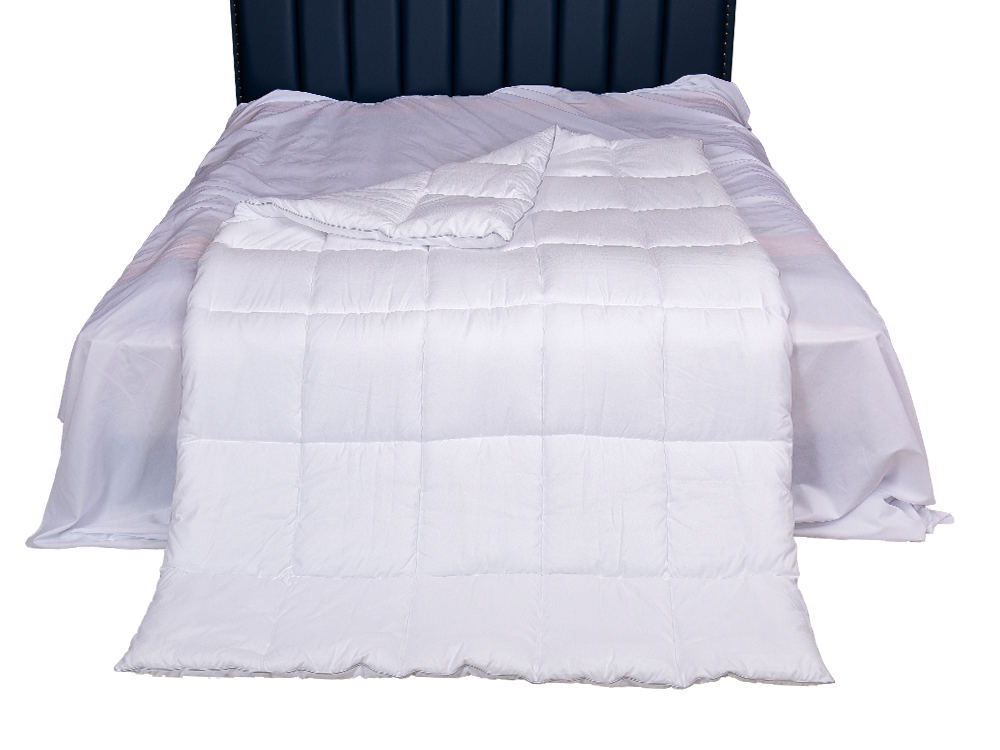
Polyester Embossed Brushed Quilt
Product Overview
The Polyester Embossed Brushed Quilt is a practical bedding product developed for everyday comfort and value. The quilt combines a textured outer fabric with a soft synthetic filling. The outer fabric is made from 90gsm polyester jacquard brushed material, while the filling consists of 300gsm 3D and 6D polyester fibers. Together, these materials create a quilt that feels soft, looks decorative, and provides a comfortable level of warmth for regular use.
The product is supplied in a 140 x 200 cm size. This format is commonly used for single beds, compact bedrooms, guest accommodation, children’s beds, student housing, and other applications where an individual-size quilt is required. The size also makes the product relatively easy to package, handle, store, and transport compared with larger bedding formats.
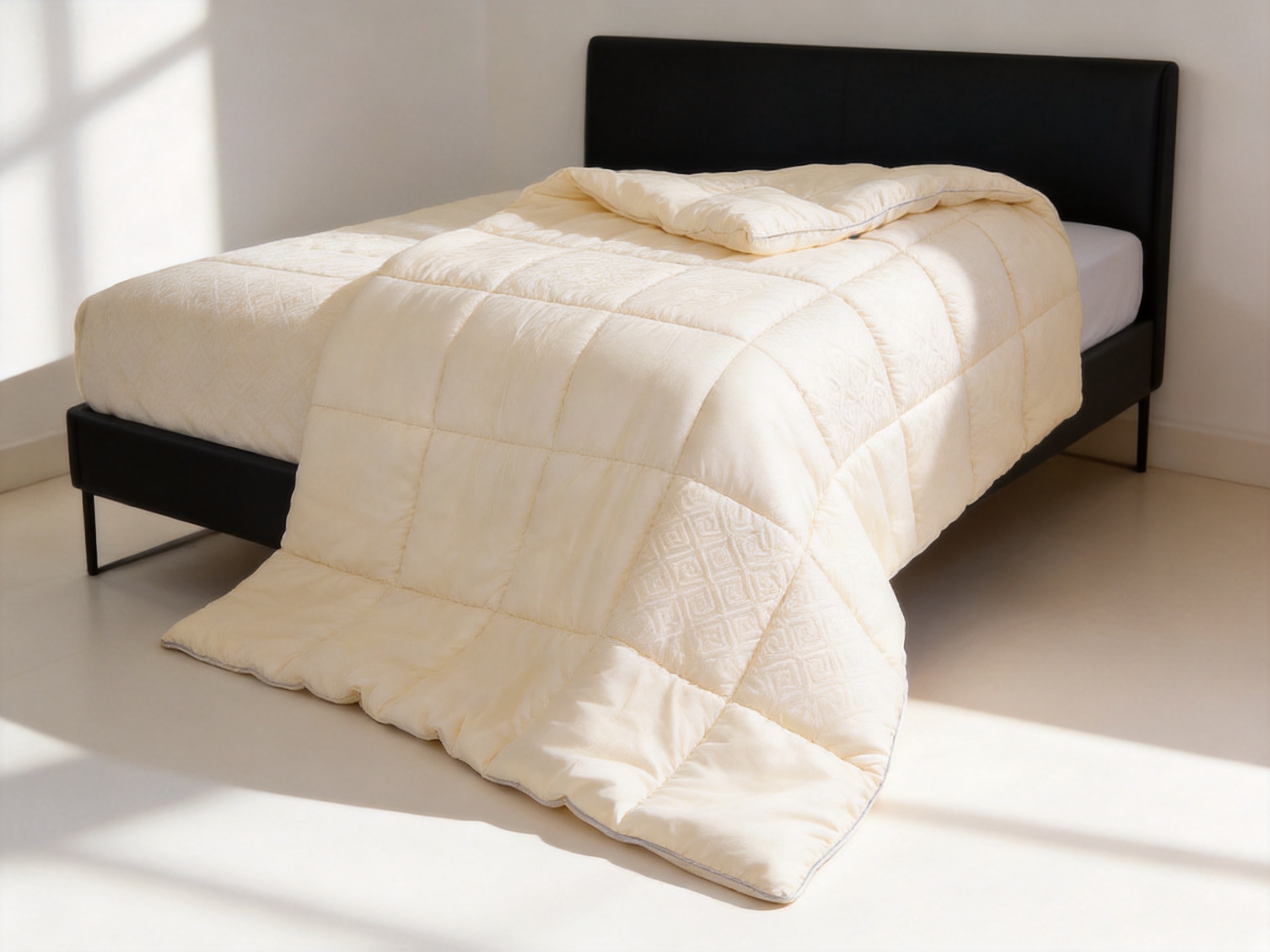
The embossed surface is an important visual feature. Instead of presenting a completely plain face, the quilt incorporates a raised or pressed jacquard pattern into the fabric. This pattern adds depth and dimension, helping the quilt appear more sophisticated when placed on a bed. It can be coordinated with plain sheets, patterned duvet covers, decorative cushions, and a wide range of bedroom styles.
The brushed finish contributes a different kind of value. Brushing gently raises fine fibers on the surface of the polyester fabric, creating a softer touch and a warmer initial hand feel. This is particularly useful in bedding because the first contact between the sleeper and the quilt strongly affects the perception of comfort. A brushed surface can make a cost-effective synthetic product feel more inviting than an untreated plain fabric.
Product Feature | Specification | Practical Benefit |
Product type | Polyester embossed brushed quilt | Combines decorative appearance with everyday comfort |
Finished size | 140 x 200 cm | Suitable for single-bed and individual-use applications |
Outer fabric | 90gsm polyester jacquard brushed fabric | Soft touch, textured appearance, and practical durability |
Filling | 300gsm 3D + 6D polyester | Soft loft, warmth, and resilient volume |
Primary market position | Comfortable value-oriented bedding | Accessible alternative to higher-priced quilt constructions |
Softness Created by Brushed Polyester Fabric
Fabric hand feel is one of the first qualities consumers notice when selecting a quilt. A product can have attractive packaging and a competitive price, but if the surface feels harsh, stiff, or synthetic, it may not meet expectations. The brushed polyester fabric used in this quilt is intended to provide a smoother and more comfortable contact surface.
Brushing changes the surface character of the fabric by lifting fine fibers. The result is a soft, slightly warm texture that can improve comfort during rest. This finish is particularly valuable in cooler seasons, when users appreciate bedding that does not feel cold or overly smooth when first touched. The surface also gives the quilt a cozy visual impression that supports its intended use as warm household bedding.
Polyester is widely used in home textiles because it offers a practical combination of strength, process stability, color compatibility, and ease of care. Compared with many delicate natural fibers, polyester can be engineered for repeated use and consistent manufacturing. It can also support a wide variety of surface treatments, including brushing, jacquard weaving, embossing, printing, and quilting.
The 90gsm fabric weight provides a balance between a light outer shell and sufficient coverage for the filling. A fabric that is too heavy may reduce softness and flexibility, while a fabric that is too light may not offer the desired sense of substance. This construction is intended to keep the quilt comfortable and manageable without making it unnecessarily bulky.
Decorative Value of the Embossed Jacquard Surface
Visual appearance has become increasingly important in the bedding market. Consumers often use quilts not only for warmth but also as visible components of bedroom styling. A quilt with an embossed jacquard surface can make a bed look more finished and carefully coordinated, even when the surrounding décor is simple.
The jacquard construction allows the pattern to be integrated into the fabric rather than applied only as a superficial printed image. The resulting texture can remain visible from different viewing angles and can create subtle highlights and shadows across the surface. This gives the quilt a more dimensional appearance than a basic solid-color product.
Embossed styling also helps the product compete with decorative bedspreads and more expensive quilted bedding. It offers a premium-inspired appearance while maintaining the cost advantages associated with polyester materials. For retailers, this can make the product suitable for value-focused collections that still need to look attractive on shelves, websites, catalogs, and showroom beds.
The restrained decorative approach is also commercially useful. A highly specific pattern may appeal to a narrow audience, while an elegant embossed texture can work across different interior styles. It may be placed in a contemporary bedroom, a traditional guest room, a student residence, or a hospitality setting without appearing out of place.
Warmth and Loft from 3D and 6D Polyester Filling
The filling is a central factor in a quilt’s performance. This product uses 300gsm 3D and 6D polyester filling, a synthetic fiber combination selected to provide softness, loft, resilience, and warmth. The filling weight gives the quilt a comfortable level of substance while maintaining the flexibility needed for everyday handling.
Three-dimensional polyester fibers are commonly valued for their ability to create air space within the filling. Air held between fibers contributes to insulation, because still air can help reduce the movement of heat away from the body. The structure also supports a fuller appearance and a softer hand feel than a very flat filling.
Six-dimensional fibers can contribute additional loft and resilience. Their structure allows the filling to recover after compression, helping the quilt maintain volume during use and storage. A resilient filling is important because quilts are frequently folded, packaged, washed, transported, and placed on beds. If the fibers collapse too easily, the product may lose its original appearance and comfort.
The blended filling is designed to create a balanced performance rather than focusing on only one characteristic. Excessive loft may make a quilt difficult to store or uncomfortable in moderate temperatures, while insufficient loft may reduce warmth. The 300gsm specification provides a practical middle ground for consumers who want a warm and comfortable quilt without the weight and expense of some heavier constructions.
Synthetic filling also offers supply and price advantages. Natural fillings such as down, wool, or silk can provide excellent performance, but they often involve higher raw material costs, more complex sourcing, and additional care considerations. Polyester filling enables manufacturers to produce consistent volumes while keeping the final product accessible to a wider group of customers.
Advantages Over Basic Quilts
The Polyester Embossed Brushed Quilt has several advantages over a basic flat polyester quilt. The first is surface comfort. An untreated fabric may feel functional but lack softness, whereas the brushed finish gives the product a more pleasant hand feel. The second is visual appeal. The embossed jacquard design introduces texture and dimension that a plain shell does not provide.
The third advantage is the combination of appearance and affordability. Some decorative quilts use embroidery, complex patchwork, piping, or multiple layers that increase production time and cost. The embossed jacquard approach can create a refined design effect through the fabric construction itself. This helps control manufacturing complexity while still delivering a product with visible character.
The fourth advantage is practical filling performance. The 3D and 6D polyester combination provides softness and loft without requiring premium natural filling materials. The product can therefore appeal to customers who want warmth and comfort but do not need or cannot justify a luxury-priced quilt.
Compared with extremely lightweight quilts, the 300gsm filling offers a fuller and warmer experience. Compared with very heavy quilts, the product may be easier to fold, move, package, and use in different rooms. This balance allows distributors to position it as an adaptable everyday product instead of a narrowly seasonal item.
Advantages Over Higher-Priced Natural-Fiber Quilts
Natural-fiber quilts remain popular for their traditional appeal, but they are not always the most practical option for every customer or market. Products filled with down, silk, or wool may require more careful sourcing, specialized cleaning, and higher retail prices. Some consumers may also have concerns about allergen sensitivity, animal-derived materials, or maintenance requirements.
A polyester quilt offers a straightforward alternative. The materials are familiar to large-scale textile manufacturing, and the product can be designed for consistent dimensions, filling distribution, and surface appearance. This consistency is especially important for commercial buyers who need to reorder the same item over time.
The synthetic construction may also be suitable for institutional and hospitality applications where bedding must be easy to manage. Guest rooms, dormitories, rental accommodation, and seasonal lodging often require products that can be handled efficiently and replaced at a controlled cost. A value-oriented polyester quilt can meet these operational needs while still offering a comfortable presentation.
It is important to present the product accurately. It should not be described as identical to down, silk, or wool, because each material has different characteristics. Its advantage lies in its own balance of softness, warmth, decorative design, production consistency, and affordability. For many consumers, those practical benefits are more relevant than the prestige of a premium filling.
Suitable Applications and Target Customers
Retail Bedding Collections
The quilt can be included in everyday bedding ranges designed for price-conscious shoppers. Its embossed surface gives the product enough visual interest to stand out from plain entry-level quilts. Retailers may position it as a comfortable single-bed quilt, a guest-room essential, or a seasonal home textile item.
Hospitality and Guest Accommodation
Hotels, hostels, serviced apartments, guesthouses, and short-term rental properties require bedding that looks clean and presentable while remaining practical to purchase and manage. The textured surface can contribute to a neat room presentation, while the synthetic filling supports a value-focused procurement strategy.
Student Housing and Dormitories
The 140 x 200 cm format is suitable for many individual sleeping arrangements. The quilt’s manageable size and cost-conscious material selection make it relevant for student accommodation, employee housing, and other furnished residential environments where standardized bedding is required.
Children’s and Teenagers’ Rooms
A soft and warm quilt can be used in children’s or teenagers’ bedrooms, subject to the buyer’s own product safety, care, and labeling requirements. The embossed surface offers decorative appeal without requiring an overly elaborate design. The practical synthetic filling can also be useful for households seeking easy-to-manage bedding.
Private-Label and Promotional Collections
Distributors and private-label brands may use this product as a base for a broader bedding program. Depending on the manufacturer’s capabilities and agreed specifications, buyers may discuss colors, packaging, labels, fabric variations, sizes, and other project requirements. A manufacturer with integrated textile experience is better positioned to support these programs than a supplier specializing in only one narrow product category.

Manufacturing Expertise Behind the Product
The quality of a quilt depends not only on its listed materials but also on how those materials are converted into a finished product. Manufacturing controls influence fabric preparation, cutting accuracy, filling distribution, sewing strength, quilting consistency, edge finishing, inspection, and packing. An experienced bedding factory can coordinate these stages more effectively and identify problems before they reach the customer.
The manufacturer behind this product was established in 2002 and has developed long-term experience in home textile production. Its product range includes silk cotton quilts, chemical fiber quilts, pillows, cushions, bedspreads, travel quilts, mattress protectors, blankets, quilt covers, pillowcases, shower curtains, curtains, and other household textile products.
This broad category knowledge is valuable because many bedding products share common technical requirements. Fabric selection, fiber handling, sewing methods, quilting patterns, finishing standards, inspection procedures, and packaging controls can be adapted across different product types. Experience with multiple categories also supports more informed product development and problem solving.
The company operates on a site of approximately 21,000 square meters, with a construction area of approximately 18,000 square meters. Its workforce includes more than 320 employees, supported by various production machines and professional technical personnel. These resources provide a foundation for handling regular production orders as well as developing new products for different customer groups.
Production Process for an Embossed Brushed Quilt
Material Planning and Incoming Inspection
Production begins with the selection and preparation of fabric and filling materials. The outer fabric must be checked for weight, width, color consistency, surface appearance, and defects. The filling must be evaluated for cleanliness, loft, fiber distribution, and suitability for the specified construction.
Incoming inspection helps reduce the risk of inconsistency later in the production process. If fabric rolls vary substantially in shade or width, the finished quilts may not match. If filling quality is unstable, different production batches may have different loft or hand feel. Organized material control is therefore a basic but important part of product quality.
Brushed Fabric Preparation
The polyester fabric is prepared with a brushed surface to improve softness and comfort. Brushing must be controlled carefully. Excessive brushing may damage the fabric or create an uneven surface, while insufficient brushing may not deliver the intended hand feel. Proper equipment settings, operator experience, and inspection help maintain a consistent result across the fabric width.
The fabric may also require processes such as relaxation, alignment, and conditioning before cutting. These steps help reduce distortion and support dimensional accuracy. Since bedding panels must fit together evenly, fabric preparation contributes directly to the final appearance of the quilt.
Jacquard and Embossed Pattern Control
The jacquard pattern is an important design element and must be monitored for clarity, alignment, and repeat consistency. The embossed effect should be visible without compromising the flexibility of the fabric. Pattern control is especially important when multiple panels are joined, because significant mismatches can affect the visual quality of the finished product.
Technical personnel may check the fabric under different lighting conditions and from different viewing angles. This is useful because textured surfaces can appear differently depending on light direction. Consistent pattern execution helps the quilt maintain a refined appearance when displayed in stores or photographed for online sales.
Cutting and Layer Preparation
Once the fabric has been approved, it is cut according to the required 140 x 200 cm finished size and the planned seam allowances. Cutting accuracy helps control finished dimensions and prevents unnecessary material waste. The top fabric, bottom fabric if applicable, filling layers, binding components, and labels must be organized before assembly.
Accurate layer preparation is also important for filling distribution. If the filling is uneven before quilting or closing, some areas may become too thin while others become excessively thick. Careful preparation supports a more uniform result throughout the quilt.
Filling Placement and Quilting
The 300gsm 3D and 6D polyester filling is spread across the fabric layers. It must be distributed evenly so that the finished quilt provides consistent softness and warmth. Quilting or securing operations help hold the filling in place during use, folding, and cleaning.
The quilting pattern must balance security with comfort. Stitching that is too widely spaced may allow filling movement, while stitching that is too dense may compress the filling and reduce loft. The selected construction should preserve the soft character of the polyester fibers while maintaining a stable finished form.
Sewing and Edge Finishing
Edges are closed using suitable sewing methods, with attention to seam strength and neatness. Well-finished edges improve durability and reduce the likelihood of loose fibers or fabric separation during normal handling. The corners should be formed evenly, and the quilt should remain square or properly aligned after finishing.
Edge finishing also affects the product’s appearance in packaging and on the bed. Uneven edges, puckering, or inconsistent stitching can make a quilt appear lower in quality, even when the materials themselves are satisfactory. Skilled sewing operators and appropriate machine settings are therefore essential.
Final Inspection and Packing
Finished quilts should be checked for dimensions, surface defects, loose threads, sewing problems, filling irregularities, stains, and packaging accuracy. Inspection may take place during production and again before shipment. Products that do not meet the agreed specifications should be identified and corrected or removed.
Packaging protects the quilt during storage and transport. It also presents important product information to the buyer, including size, material composition, care instructions, batch details, and customer-specific labeling where applicable. Appropriate packaging helps preserve the quilt’s appearance and supports efficient handling in distribution channels.
Quality Management and Production Reliability
A reliable bedding supplier must do more than produce attractive samples. It must be capable of repeating the same standards across commercial quantities and future orders. This requires documented procedures, trained personnel, equipment maintenance, material control, process inspection, and final quality checks.
The manufacturer states that it has passed international certifications and management or responsibility standards including ISO9001, ISO14001, OEKO-TEX-related standards, GRS, and BSCI. Buyers should confirm the current status, scope, and applicability of each certification for their specific order. These systems and certifications can provide a useful framework for quality management, environmental practices, material traceability, and responsible workplace procedures.
ISO9001 is associated with quality management systems and process control. ISO14001 relates to environmental management. OEKO-TEX standards are commonly used in textile markets to assess harmful substances under the applicable standard and product scope. GRS is associated with recycled-content claims and chain-of-custody requirements where applicable. BSCI is linked to social compliance assessment. Each standard has its own requirements, and buyers should request relevant documentation when needed.
The company also reports that it has been recognized for safety production standardization for several consecutive years since 2016. Workplace safety is relevant to production continuity as well as employee welfare. A well-managed factory is better prepared to maintain stable operations, respond to production issues, and protect the people involved in manufacturing.
Why Factory Scale Matters to Buyers
Factory scale does not automatically guarantee quality, but it can provide useful operational advantages when supported by effective management. A facility with substantial production space, experienced employees, technical staff, and multiple categories of equipment may be able to coordinate orders more efficiently than a very small workshop.
Scale can support material purchasing, production scheduling, quality inspection, packaging coordination, and shipment planning. It may also help a supplier maintain continuity when demand changes or when customers require several related bedding products from one source.
For buyers, supplier consolidation can reduce communication complexity. Instead of working with separate vendors for quilts, pillows, mattress protectors, blankets, cushions, and bedspreads, a home textile specialist may support a more integrated product program. This can make it easier to align colors, packaging, quality expectations, and delivery schedules across a collection.
At the same time, buyers should evaluate every order according to its own specifications. Clear technical documents, approved samples, pre-production confirmation, inspection standards, packaging requirements, and delivery terms remain important regardless of factory size.
Cost Efficiency Without Removing Useful Features
The product is designed for customers who want to manage their budget while retaining comfort and attractive appearance. Cost efficiency comes from several factors. Polyester is widely available and suitable for large-scale production. The filling can be processed consistently. The embossed jacquard design provides decorative value through the fabric structure rather than relying only on labor-intensive ornamentation.
The 140 x 200 cm size also controls material consumption compared with larger quilts. This can be useful for single-bed programs, hospitality projects, dormitory supply, and entry-level retail ranges. Compact packaging can further help with storage and transportation, although the exact packed dimensions depend on the agreed packaging method.
Value does not mean that the product is limited to low-end use. A well-designed budget-conscious quilt can serve customers who prioritize practicality, easy coordination, and reliable comfort. Many consumers prefer to purchase attractive bedding at a reasonable price and replace or refresh it as their room style changes. This product supports that purchasing behavior.
Care, Handling, and Buyer Considerations
Care instructions should always be confirmed with the supplier and printed according to the final tested product construction. Polyester quilts are generally selected partly for their practical maintenance characteristics, but the exact washing, drying, ironing, and storage instructions depend on the fabric finish, quilting method, labels, and packaging requirements.
Consumers should avoid storing a quilt while it is damp. Proper drying helps preserve freshness and reduces the risk of odor or moisture-related problems. During storage, the quilt should be kept in a clean, dry, ventilated environment. Excessive compression for long periods may reduce temporary loft, so allowing the quilt to recover after unpacking can help restore its appearance.
For commercial buyers, care labels and product documentation should be reviewed before mass production. The labeling should accurately state the fiber content, size, care method, country of origin where required, and any other market-specific information. Buyers should also verify packaging language and testing needs for the destination market.
Customization and Product Development Opportunities
A manufacturer with experience across home textile categories can often support more than a standard catalog item. Buyers may discuss adjustments to color, pattern, fabric construction, filling weight, size, quilting style, edge finish, label placement, packaging, and carton requirements. The feasibility of each change depends on minimum order quantities, equipment, material availability, testing, and production scheduling.
Color development is one possible area of customization. Retailers may request neutral shades for minimalist collections, soft colors for children’s ranges, or coordinated tones for hotel and guest-room programs. Embossed textures can also be selected to complement the intended market position.
Filling weight may be adjusted for different climates and seasons. A lighter version may suit warmer regions or summer collections, while a heavier version may be more suitable for colder rooms. Any change should be evaluated through sampling and performance review, because filling weight affects warmth, loft, package volume, and final cost.
Size customization may be useful for different regional bed standards. Buyers should provide clear finished dimensions, tolerances, seam requirements, and packaging expectations. A pre-production sample is recommended before large-scale manufacturing, especially when the product will be sold under a private label or included in a coordinated collection.

How to Evaluate This Quilt Against Competitor Products
When comparing quilts from different suppliers, buyers should look beyond the retail photograph and headline price. A meaningful comparison should include fabric composition, fabric weight, surface finish, filling type, filling weight, size, quilting method, edge construction, dimensions, packaging, certifications, inspection procedures, and production experience.
Some competing products may use a lower fabric weight or a simpler unbrushed shell. These products may be less expensive, but they may not provide the same surface softness or decorative appearance. Other competitors may use a heavier filling, which can offer greater warmth but may also increase cost, package size, and weight. The appropriate choice depends on the target customer and intended use.
It is also important to compare filling descriptions carefully. “Polyester filling” can refer to many different fiber structures and qualities. The stated combination of 3D and 6D fibers gives buyers more information than a generic fiber description, although samples and technical documents should still be reviewed before approval.
Supplier capability is another competitive factor. A product may look attractive in a sample but become inconsistent in mass production if the supplier lacks appropriate equipment, trained staff, or quality systems. An established home textile factory with multiple product categories and technical personnel may offer better support for repeat orders, coordinated collections, and product modifications.
Comparison Area | Potential Basic Alternative | Advantage of This Product |
Surface feel | Plain untreated polyester | Brushed finish provides a softer, warmer hand feel |
Surface appearance | Flat solid fabric | Embossed jacquard texture adds visual depth |
Filling performance | Generic polyester fiber | 3D and 6D fiber combination supports loft and resilience |
Market positioning | Basic low-cost bedding | Value-oriented product with a more refined presentation |
Supplier capability | Single-category workshop | Experienced home textile manufacturer with broad product knowledge |
Merchandising and Presentation Benefits
The product’s value can be communicated effectively through a combination of close-up fabric photography, lifestyle bedding images, clear specification panels, and practical benefit statements. The brushed surface should be presented as soft and comfortable, while the embossed pattern should be shown under lighting that reveals its dimensional effect.
Retail descriptions should avoid unsupported promises and focus on verifiable features. Suitable points may include the 140 x 200 cm size, 90gsm polyester jacquard brushed fabric, 300gsm 3D and 6D polyester filling, soft hand feel, embossed texture, everyday warmth, and value-oriented positioning.
For hospitality buyers, the presentation should emphasize standardized sizing, manageable material cost, attractive room appearance, and supply reliability. For consumers, the emphasis may be placed on softness, warmth, decorative style, and ease of integrating the quilt into an existing bedroom.
Packaging can also influence purchasing decisions. A clean folded presentation, accurate labeling, and protection against dust and moisture help create confidence. If the product is sold online, the package should be designed to protect the quilt during parcel delivery while clearly communicating the product’s specifications.
Environmental and Responsibility Considerations
Polyester products should be evaluated responsibly across their complete life cycle. Buyers may consider material efficiency, product durability, packaging reduction, production energy use, wastewater management, and the possibility of recycled content where suitable. The manufacturer’s stated environmental and responsibility certifications may support buyer due diligence, but the specific scope and validity should always be verified for the intended product and order.
A durable quilt that remains usable for a reasonable period can reduce the need for frequent replacement. Consistent construction, secure stitching, resilient filling, and appropriate care all contribute to product life. Buyers should balance low initial cost with expected performance, because a product that fails prematurely may create greater resource consumption and customer dissatisfaction.
If recycled polyester is requested, the buyer should confirm whether the requested material is available for the specific fabric or filling and whether the appropriate chain-of-custody documents can be provided. Material claims should be supported by valid documentation and used in accordance with the requirements of the destination market.
Recommended Buyer Evaluation Checklist
Before placing an order, buyers should confirm the finished size and acceptable dimensional tolerance. The stated size is 140 x 200 cm, but the buyer should clarify whether this refers to the finished product before or after laundering, as well as the permitted deviation.
The fabric specification should be reviewed, including the 90gsm weight, polyester composition, jacquard structure, brushed finish, color, pattern repeat, and appearance standard. A sealed reference sample or approved laboratory sample can help control future production.
The filling specification should include the 300gsm weight, 3D and 6D polyester composition, distribution requirements, loft expectations, and any agreed testing. Buyers should also confirm the quilting or securing method and inspect whether the filling remains evenly distributed.
Packaging should be discussed in detail. This may include individual bags, inserts, labels, cartons, barcode requirements, carton marks, quantity per carton, and shipping protection. Clear packaging instructions reduce confusion during mass production.
Finally, buyers should confirm production lead time, minimum order quantity, inspection arrangements, payment terms, shipment documents, and after-sales procedures. A complete commercial agreement supports smoother cooperation and helps prevent misunderstandings.
Frequently Asked Questions
What is the size of the Polyester Embossed Brushed Quilt?
The specified size is 140 x 200 cm. This is an individual-size format suitable for many single beds, guest rooms, dormitories, children’s rooms, and compact sleeping arrangements. Buyers should confirm the required tolerance and final measurement method before production.
What fabric is used for the outer layer?
The outer fabric is specified as 90gsm polyester jacquard brushed fabric. Polyester provides practical strength and manufacturing consistency, while the brushed finish is intended to create a softer hand feel. The jacquard construction contributes a textured and decorative appearance.
What is the filling made from?
The filling is specified as 300gsm 3D and 6D polyester. This synthetic fiber combination is intended to provide softness, loft, resilience, and comfortable warmth. The exact performance should be evaluated through an approved product sample and the buyer’s agreed testing requirements.
Is this quilt suitable for customers with a limited budget?
Yes. The product is specifically positioned as a comfortable and attractive option for customers who want to control spending. Polyester materials, efficient production, and a practical single-bed size help support value-oriented pricing while the brushed and embossed features give the quilt a more refined presentation than a basic plain product.
How does it differ from a plain polyester quilt?
The main differences are the brushed surface and embossed jacquard design. The brushed fabric is intended to feel softer, while the embossed texture gives the quilt greater visual depth. The 3D and 6D filling also provides a defined specification rather than a generic description of polyester fiber.
Can the product be customized?
Customization may be possible for areas such as color, size, filling weight, fabric variation, quilting style, labels, and packaging. The available options depend on order quantity, material sourcing, production capacity, and technical requirements. Buyers should request a formal feasibility review and pre-production sample.
Is the quilt appropriate for hospitality use?
The quilt may be suitable for hotels, guesthouses, dormitories, serviced apartments, and other accommodation settings that need attractive, practical, and value-oriented bedding. Buyers should evaluate the product against their own laundering frequency, fire and safety requirements, room standards, and replacement policies.
How should buyers compare this quilt with competing products?
Buyers should compare the complete specification rather than price alone. Important points include fabric weight, brushing quality, jacquard appearance, filling type and weight, dimensions, quilting construction, edge finishing, packaging, certifications, inspection procedures, and supplier experience. A physical sample is recommended before approval.
What certifications does the manufacturer report?
The manufacturer reports certifications or compliance systems including ISO9001, ISO14001, OEKO-TEX-related standards, GRS, and BSCI, as well as safety production standardization recognition. Buyers should request current certificates and verify their scope and validity for the specific order and destination market.
What information should be included on the product label?
Label requirements vary by market, but commonly requested information includes product name, size, fiber composition, filling composition, care instructions, country of origin, manufacturer or importer details, and any required compliance marks. Final labeling should be reviewed against the laws and retail standards of the destination country.
Conclusion
The Polyester Embossed Brushed Quilt offers a balanced solution for buyers seeking comfort, appearance, warmth, and cost control. Its 90gsm polyester jacquard brushed fabric provides a soft and inviting surface, while the embossed design adds a decorative dimension that helps the quilt stand apart from plain entry-level alternatives. The 300gsm 3D and 6D polyester filling contributes loft, resilience, and practical warmth in a manageable 140 x 200 cm format.
Its strongest competitive advantage is the combination of useful features. It is not positioned solely as the cheapest quilt, nor does it depend on expensive luxury materials. Instead, it delivers a practical middle ground: a soft surface, refined appearance, comfortable filling, manageable size, and accessible market positioning.
The manufacturing background further strengthens the product proposition. An established home textile factory with broad category experience, professional technical staff, substantial production facilities, advanced equipment, and documented management systems can provide a stronger foundation for consistent production and long-term supply cooperation.
For retailers, distributors, hospitality buyers, and private-label customers, the quilt can serve as a flexible component of a broader bedding program. With appropriate sampling, quality confirmation, packaging planning, and market-specific labeling, it can be developed for many everyday bedding applications. Its combination of appearance, comfort, manufacturing practicality, and value makes it a competitive choice for customers who want dependable home textile products without unnecessary expense.
References
1. Product specification supplied for the Polyester Embossed Brushed Quilt: 140 x 200 cm, 90gsm polyester jacquard brushed fabric, and 300gsm 3D + 6D polyester filling.
2. International Organization for Standardization. ISO 9001, Quality Management Systems: Requirements.
3. International Organization for Standardization. ISO 14001, Environmental Management Systems: Requirements with Guidance for Use.
4. OEKO-TEX Association. Standard references for textile testing and harmful-substance assessment.
5. Textile Exchange. Global Recycled Standard reference materials and chain-of-custody principles.
6. amfori. Business Social Compliance Initiative reference materials for responsible supply-chain assessment.
7. Technical information on polyester fiber structures, brushed textile finishes, jacquard fabric construction, and quilt filling performance.


 +86-573-88798028
