



 Français
 Español
 Deutsch
Content
- 1 Understanding the Flannel Blanket Construction
- 2 Softness and Tactile Comfort
- 3 Warmth Without Excessive Bulk
- 4 Machine Washability and Everyday Convenience
- 5 Advantages Over Basic or Lower-Specification Blankets
- 6 Applications Across Different Markets
- 7 Manufacturing Capabilities and Production Organization
- 8 Advanced Production Processes
- 9 Quality Management and Certifications
- 10 Customization and Private-Label Development
- 11 Responsible Product Evaluation for Buyers
- 12 Why Factory Experience Matters
- 13 Seasonal Marketing Opportunities
- 14 Care Guidance for Long-Term Performance
- 15 Environmental and Social Considerations
- 16 Supply Chain and Order Coordination
- 17 Frequently Asked Questions
- 17.1 What is the standard size of the flannel blanket?
- 17.2 What materials are used in the blanket?
- 17.3 Is the blanket suitable for cold seasons?
- 17.4 Can the blanket be machine washed?
- 17.5 Will the blanket remain warm after washing?
- 17.6 Does the blanket shed?
- 17.7 What is the benefit of 3D fiber filling?
- 17.8 Can buyers request custom colors and packaging?
- 17.9 Is the product suitable for private-label brands?
- 17.10 What types of customers can use this blanket?
- 17.11 What quality certifications does the manufacturer report?
- 17.12 How should a buyer evaluate a sample?
- 17.13 Can the manufacturer supply other home textile products?
- 18 Conclusion
- 19 References
- 20 Product: Flannel Blanket

A well-made blanket is more than a seasonal household accessory. It is a practical layer of warmth, a source of everyday comfort, and an important part of the overall sleeping experience. For retailers, importers, hospitality suppliers, and private-label bedding brands, the quality of a blanket directly influences customer satisfaction, repeat purchases, and product reputation. The flannel blanket described in this article is designed to meet these expectations through a soft surface, a warm construction, durable materials, and a manufacturing process suitable for professional home textile supply.
With a 180gsm flannel face, a 90gsm brushed fabric base, and 3D fiber filling, this blanket combines tactile softness with practical insulation. Its construction is intended to deliver warmth without making the product unnecessarily heavy or difficult to maintain. The fabric is comfortable against the skin, the brushed base contributes to a fuller hand feel, and the internal fiber layer supports consistent loft and heat retention.
The blanket is available in a default size of 140 by 200 centimeters and may also be customized according to customer requirements. This flexibility allows the product to serve a wide range of markets, including household bedding, guest rooms, dormitories, rental properties, seasonal retail collections, and promotional home textile programs. Its machine-washable design also makes it more convenient than many delicate or high-maintenance alternatives.
Behind the product is Tongxiang Xinlong Bedding Co., Ltd., a professional home textile manufacturer established in 2002. The company operates from Wuzhen, Tongxiang, Zhejiang Province, an area with a strong textile manufacturing tradition. With a production site covering approximately 21,000 square meters, a construction area of about 18,000 square meters, more than 320 employees, advanced equipment, and international management certifications, the manufacturer has developed capabilities for producing a broad portfolio of bedding and home textile products.
This article examines the flannel blanket in detail, including its materials, construction, comfort advantages, care performance, customization potential, quality control, manufacturing strengths, and suitability for different buyers. It also explains why a structured production system and experienced supplier can make a meaningful difference when compared with lower-cost, less specialized blanket sources.
Understanding the Flannel Blanket Construction
The performance of a blanket depends on the relationship between its outer fabric, backing, filling, stitching, finishing, and care characteristics. A product can feel soft at first touch but fail to provide lasting warmth, or it can be warm but too bulky, rough, or difficult to wash. The construction of this flannel blanket is intended to balance these factors rather than relying on a single material feature.
The outer layer uses 180gsm flannel fabric. Flannel is valued for its soft surface and gentle touch, which are created through a brushed textile structure. Brushing raises fine fibers on the fabric surface, producing a smooth, warm hand feel. This surface is particularly appropriate for blankets because it feels comfortable when placed directly against the body, over clothing, or on top of bedding.
The blanket also uses 90gsm brushed fabric as a base layer. This backing contributes to the product’s softness and fullness while supporting the outer flannel layer. A suitable base can improve the overall hand feel, help create a more stable structure, and make the finished blanket feel more substantial without requiring an excessive amount of filling.
Inside the blanket is 3D fiber filling. This type of synthetic fiber structure is designed to create air spaces within the blanket. Since still air is a poor conductor of heat, these spaces help slow the movement of warmth away from the body. The filling also contributes to loft, resilience, and a more comfortable, gently cushioned feel.
Product element |
Specification |
Contribution to performance |
Product type |
Flannel blanket |
Soft, warm, versatile seasonal bedding layer |
Default size |
140 × 200 cm |
Suitable for personal use, guest rooms, and flexible retail positioning |
Customization |
Available according to requirements |
Supports private-label and market-specific programs |
Face fabric |
180gsm flannel |
Soft, brushed, comfortable surface |
Base fabric |
90gsm brushed fabric |
Additional softness, structure, and fullness |
Filling |
3D fiber |
Loft, insulation, and a comfortable hand feel |
Care feature |
Machine washable |
Convenient maintenance for regular household use |
Softness and Tactile Comfort
Softness is one of the first qualities customers notice when they handle a blanket. It affects both perceived value and the likelihood that a customer will use the product regularly. The flannel surface is designed to provide a gentle touch rather than a coarse or stiff feel. This makes the blanket suitable for use during rest, reading, watching television, traveling, or sleeping.
The brushed surface gives the textile a warm tactile character. Unlike a smooth woven sheet fabric, brushed flannel has a slightly raised surface that feels more inviting in cool conditions. The surface fibers help the blanket feel warm as soon as it is placed over the body. This immediate warmth is an important advantage during autumn and winter, when consumers often seek bedding that feels comfortable without requiring a long period of preheating.
Softness also has a practical relationship with layering. A blanket that is comfortable against the skin can be used independently, placed over a sheet, or combined with a quilt or duvet. Its versatile surface makes it suitable for multiple bedding arrangements. It can serve as an additional winter layer on a bed, a sofa throw for daily use, or a portable comfort item for travel and outdoor situations where appropriate.
In comparison with blankets made from untreated or low-quality fabrics, a well-finished flannel blanket can provide a more pleasant experience over repeated use. Poorly processed surfaces may feel harsh, shed excessively, or become uneven after washing. The product described here is intended to resist shedding and preserve its soft hand feel through regular care, which supports longer-lasting customer satisfaction.
Warmth Without Excessive Bulk
Warmth is created by the combined effect of fabric density, surface brushing, filling, construction, and trapped air. The 180gsm flannel face offers a warm surface, while the 90gsm brushed base adds another layer of textile protection. The 3D fiber filling then contributes loft and insulation by creating a lightweight internal structure.
This combination provides a practical alternative to blankets that depend entirely on heavy materials. A very heavy blanket can be difficult to handle, inconvenient to wash, and uncomfortable for some users. On the other hand, a thin blanket may not provide enough warmth during colder periods. The multilayer construction seeks to occupy a useful middle ground: warm enough for cold seasons, but manageable for everyday handling and household laundering.
The long-lasting warmth effect is also important for commercial buyers. Retail customers expect a blanket to perform beyond its first few uses. If the filling compresses quickly or the surface loses its insulating feel after washing, the product may receive negative feedback. Maintaining stable loft and a consistent surface helps the blanket preserve its functional value over time.
The balance of warmth and weight can be especially useful in hospitality and furnished accommodation. Guest rooms, serviced apartments, student housing, and rental properties need bedding that is comfortable but also practical to clean, store, and replace. A machine-washable flannel blanket can be included as a supplementary layer for guests who prefer additional warmth.
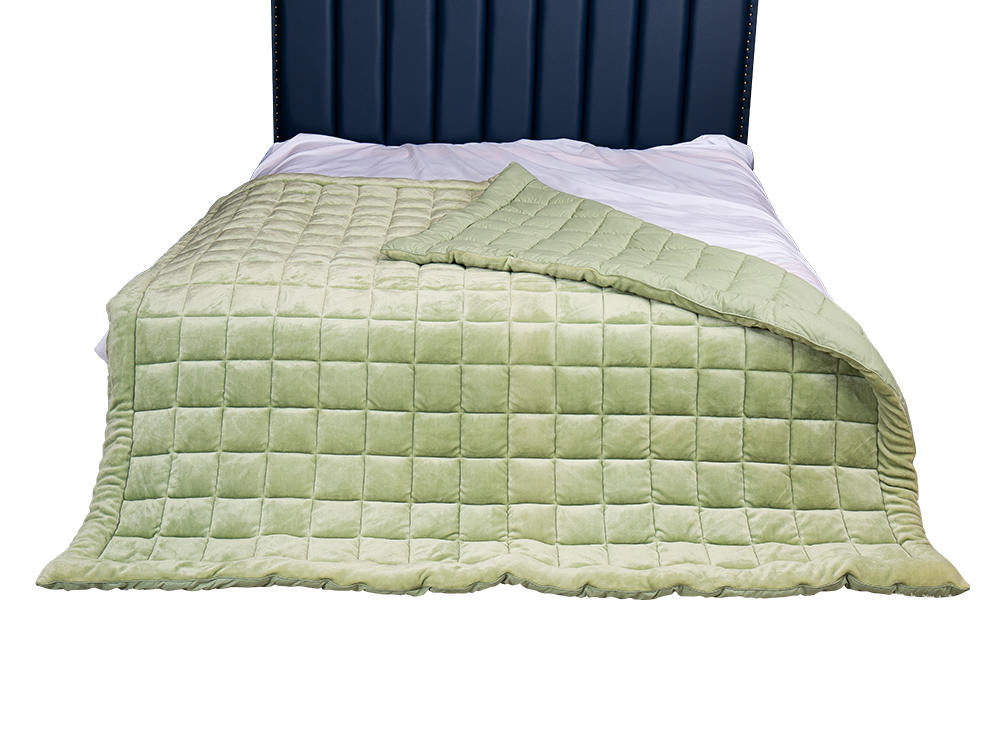
Flannel Blanket
Machine Washability and Everyday Convenience
Care requirements strongly influence the real value of a blanket. A product that requires specialized cleaning may be suitable for occasional decorative use but less useful as everyday bedding. This flannel blanket is designed to be machine washable, helping consumers and professional users maintain cleanliness with ordinary laundry equipment.
Machine washability is valuable for several reasons. First, it supports hygiene by allowing the blanket to be cleaned more frequently. Second, it reduces the time and expense associated with professional dry cleaning. Third, it makes the product more attractive to families, property managers, hotels, dormitories, and other users who need bedding that can be maintained efficiently.
The stated performance objective is that the warmth effect should not be significantly reduced after washing. This depends on proper material selection, stable construction, suitable stitching, and appropriate care instructions. The filling must remain distributed, the fabric layers must retain their relationship, and the surface should continue to provide a comfortable hand feel after laundering.
As with all textile products, the exact care result depends on washing conditions. Users should follow the supplier’s final care label, select an appropriate machine cycle, avoid excessive heat unless specifically permitted, and ensure that the blanket is thoroughly dried. Correct care helps protect the fabric surface, filling loft, color appearance, and overall shape.
For wholesale buyers, clear care guidance can also reduce product returns and customer confusion. Packaging and labels may be customized to include washing instructions, fiber information, size details, and brand communication. A professional supplier can help buyers coordinate these requirements as part of a broader private-label program.
Advantages Over Basic or Lower-Specification Blankets
Blankets in the marketplace vary widely in quality. Some low-cost products may use thin fabric, uneven filling, weak stitching, or poorly finished surfaces. While these products may have a low initial purchase price, they can create higher costs through customer complaints, returns, short service life, and inconsistent repeat orders.
The flannel blanket offers several advantages over basic alternatives. Its first advantage is the combination of a brushed flannel face and brushed base. Instead of relying on a single thin layer, the construction is designed to improve softness and fullness from both sides of the textile assembly.
Its second advantage is the use of 3D fiber filling. This type of filling can support a more resilient internal structure than flat, low-loft materials. It is intended to create warmth while preserving a manageable weight. The internal fiber arrangement also supports a smoother, more comfortable appearance when the blanket is properly finished.
Its third advantage is practical washability. Consumers increasingly expect home textiles to be easy to care for. A blanket that can be cleaned in a household washing machine has a clear usability advantage over products that require delicate or specialized maintenance.
Its fourth advantage is customization. The default size is 140 by 200 centimeters, but buyers may request other dimensions. This allows the blanket to be adapted for different bed sizes, regional preferences, hospitality specifications, promotional campaigns, or private-label collections.
Its fifth advantage is supplier depth. A specialized home bedding manufacturer can coordinate fabric sourcing, filling preparation, cutting, sewing, inspection, finishing, and packaging within an organized production system. This is generally more dependable than purchasing from a trading source with limited control over the factory process.
Applications Across Different Markets
Household Bedding
For household use, the blanket can function as a primary cold-season layer or as an additional layer over a quilt, duvet, or mattress covering. Its soft surface makes it suitable for bedrooms, living rooms, reading areas, and guest spaces. The 140 by 200 centimeter size offers flexible personal coverage and can be marketed as a single-user blanket, a sofa blanket, or a versatile home comfort product.
Guest Rooms and Hospitality
Hotels, inns, serviced apartments, and holiday rentals often provide supplementary blankets for guests. A flannel blanket is appropriate for this role because it offers warmth, softness, and straightforward maintenance. Its machine-washable characteristic is particularly useful where bedding must be cleaned between stays or rotated through a professional laundry program.
Hospitality buyers may also request custom dimensions, colors, labels, packaging, and order quantities. A manufacturer with experience in home textile production can help align the product with the visual identity and operating requirements of the property.
Student Housing and Institutional Use
Dormitories, student residences, care facilities, and staff accommodation may require practical blankets that are comfortable, easy to launder, and suitable for repeated handling. The combination of warm performance and machine washability makes this type of blanket appropriate for institutional purchasing, provided that the final specifications meet the buyer’s relevant standards.
Retail and E-Commerce
For retail and online sales, tactile comfort must be communicated through product photography, descriptions, packaging, and customer reviews. Terms such as soft flannel surface, warm brushed base, 3D fiber filling, machine washable, and customizable size can help explain the product’s value. Retailers may position the blanket as a winter essential, a gift item, a home comfort product, or a seasonal bedding upgrade.
Private-Label Collections
Private-label brands can use the product as part of a larger bedding collection that includes quilts, pillows, mattress protectors, mattress covers, cushions, and related home textiles. Coordinated sizes, colors, packaging, and labels can help create a consistent product identity. Customization also allows buyers to develop different versions for value, mid-market, or premium retail segments.
Manufacturing Capabilities and Production Organization
The quality of a blanket is closely connected to the organization of the factory that produces it. A reliable supplier needs more than suitable raw materials. It must also have trained personnel, appropriate machinery, documented procedures, production planning, inspection routines, and the ability to respond to changing market requirements.
Tongxiang Xinlong Bedding Co., Ltd. was established in January 2002 and has developed more than two decades of experience in home textile manufacturing. The company is located in Wuzhen, Tongxiang, Zhejiang Province, within a region recognized for its textile industry and manufacturing infrastructure.
The company’s facility covers approximately 21,000 square meters, with a construction area of about 18,000 square meters. More than 320 employees support its operations. This scale provides a foundation for organized production, workforce specialization, equipment maintenance, order coordination, and quality management.
The company produces a broad range of home textile products, including silk cotton quilts, chemical fiber quilts, pillows, cushions, bedspreads, travel quilts, mattress protectors, blankets, quilt and pillowcases, shower curtains, and curtains. This product breadth is relevant to blanket buyers because it demonstrates experience with multiple types of fabrics, fillings, sewing operations, finishing processes, and packaging requirements.
A manufacturer with a diversified product portfolio can also support buyers who want to source several bedding categories from one supplier. Consolidated sourcing may simplify communication, sampling, quality coordination, production scheduling, and shipment planning.
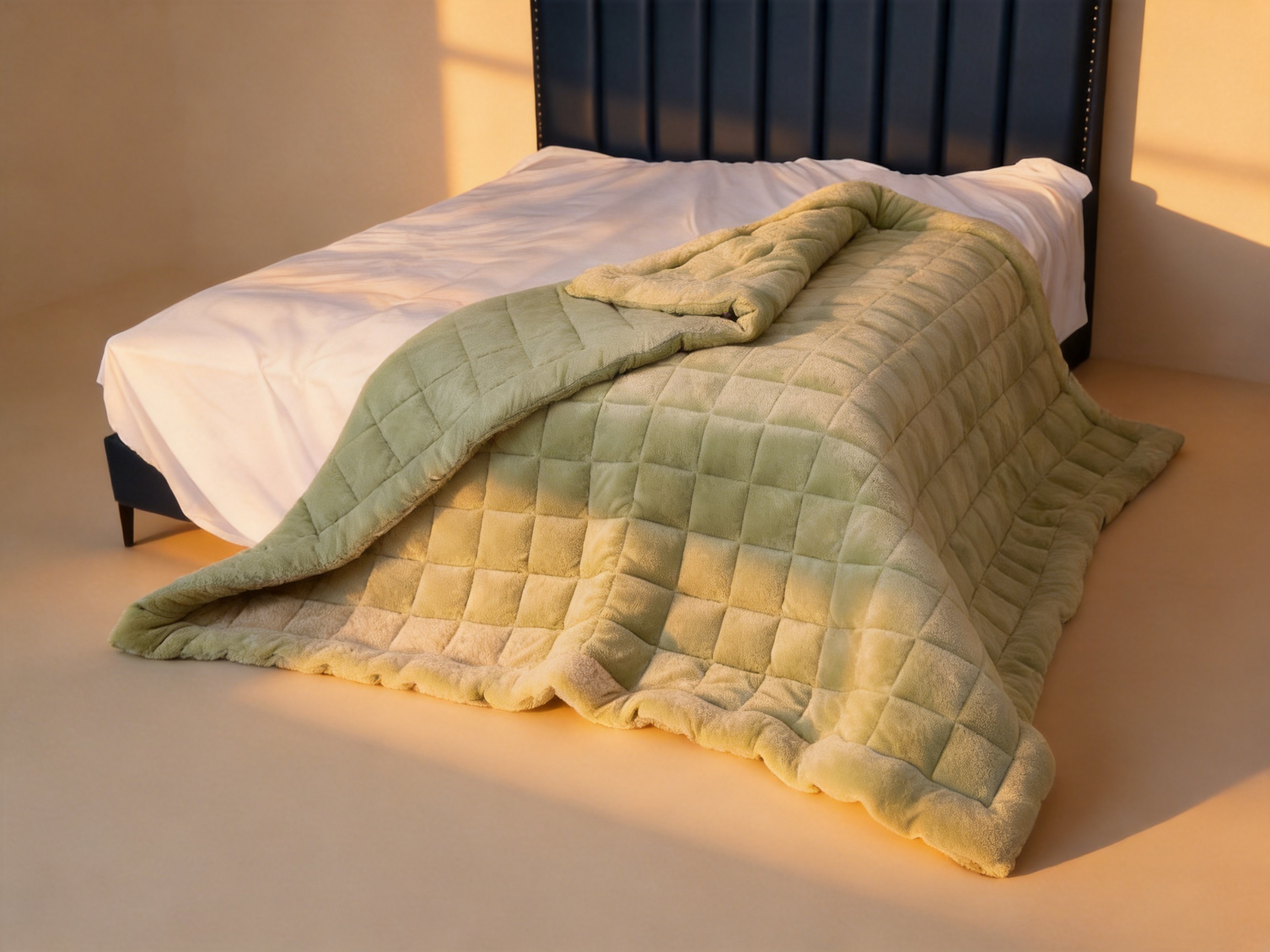
Advanced Production Processes
Material Selection and Incoming Inspection
Production begins with the selection of suitable flannel, brushed base fabric, and 3D fiber filling. Material specifications must be reviewed before production to confirm weight, texture, width, color, hand feel, and consistency. Incoming inspection helps identify problems before materials reach the cutting or filling stages.
For a flannel blanket, the fabric surface is especially important. A supplier must pay attention to softness, brushing quality, surface uniformity, shedding tendency, and visual appearance. Filling materials must also be assessed for cleanliness, loft, resilience, and compatibility with the intended product construction.
Cutting and Panel Preparation
Accurate cutting is essential for maintaining the finished dimensions of the blanket. Panels should be prepared according to the approved size, allowing for seams, edge finishing, and any required shrinkage considerations. Consistent cutting helps prevent uneven edges, dimensional variation, and mismatched layers.
For customized orders, cutting plans must be adjusted to the buyer’s requested dimensions. This is one area where factory experience is valuable because different sizes may require different material utilization, production layouts, packaging formats, and inspection standards.
Filling Distribution
The 3D fiber filling must be distributed evenly throughout the blanket. Uneven filling can create cold spots, thick areas, thin areas, and an irregular appearance. A structured production process helps ensure that the filling is spread consistently before the layers are joined.
Even distribution is also important for washing performance. If filling shifts excessively during laundering, the blanket may lose its shape or develop uneven insulation. Appropriate stitching and construction methods help hold the filling in position and support long-term usability.
Layer Assembly
The flannel face, brushed base, and filling must be aligned and assembled carefully. The goal is to create a stable multilayer structure with a smooth surface and balanced hand feel. Assembly accuracy affects the appearance of the product, the comfort of the user, and the blanket’s ability to maintain its shape.
Stitching and Edge Finishing
Stitching secures the layers and contributes to durability. Edge finishing protects the perimeter of the blanket and gives the product a neat, retail-ready appearance. Careful sewing can reduce fraying, improve strength, and support the product’s resistance to repeated handling and washing.
Factories producing professional home textiles typically use standardized sewing procedures and equipment settings. Operators must be trained to maintain consistent seam allowances, stitch density, tension, and edge alignment. These details may appear small, but they have a significant effect on perceived quality.
Final Finishing and Inspection
After sewing, the blanket may undergo finishing steps such as trimming loose threads, checking dimensions, smoothing the surface, folding, and preparing packaging. Inspection should address visual appearance, fabric defects, seam integrity, filling distribution, labeling, and packing accuracy.
A professional inspection process helps identify nonconformities before shipment. For buyers, this reduces the risk that damaged, incorrectly sized, poorly finished, or incorrectly labeled products will reach the market.
Quality Management and Certifications
Tongxiang Xinlong Bedding Co., Ltd. reports certification and compliance achievements including ISO9001, ISO14001, OEKO-TEX Standard 100, OEKO-TEX STeP, GRS, and BSCI. These certifications and systems represent important aspects of manufacturing management, environmental responsibility, textile safety, recycled material standards where applicable, and social compliance.
ISO9001 is associated with quality management systems. In practical terms, a quality management framework encourages documented processes, defined responsibilities, corrective action, continual improvement, and greater consistency between production batches.
ISO14001 relates to environmental management. A structured environmental system can help a manufacturer monitor resource use, waste management, environmental responsibilities, and operational impacts. For international buyers, environmental management may be an important part of supplier evaluation.
OEKO-TEX Standard 100 is widely recognized in the textile sector for testing textile products and components for harmful substances according to the applicable product requirements. Buyers should confirm the exact scope and validity of certification for the specific materials and products ordered.
OEKO-TEX STeP focuses on sustainable textile and leather production facilities. Such a system can support improved transparency around production conditions, environmental performance, quality management, and social responsibility.
The Global Recycled Standard, commonly known as GRS, is relevant to products containing qualifying recycled materials and includes requirements concerning processing, chain of custody, social practices, environmental practices, and chemical restrictions. The applicability to a specific blanket should always be verified based on the actual materials used.
BSCI is associated with social compliance and responsible supply chain practices. For buyers serving international markets, supplier social responsibility can be as important as product performance, particularly when products are sold through major retailers or distributed in regions with detailed sourcing requirements.
Certifications do not replace product-specific inspection or buyer testing. However, they can provide a valuable foundation for supplier assessment. Buyers should request current documentation, confirm the scope of certificates, and agree on product specifications and inspection standards before mass production.
Customization and Private-Label Development
Customization is a significant advantage for companies that want to differentiate their bedding range. The standard 140 by 200 centimeter size can serve as a starting point, while other dimensions may be developed for specific markets. Buyers may also discuss fabric colors, printed designs, labels, packaging, folding methods, and carton markings.
Size customization is particularly useful because bedding conventions vary by country and sales channel. A retailer may require a single blanket size for a compact apartment market, while a hotel group may require larger coverage for double beds. Institutional buyers may specify dimensions based on storage systems, bed frames, or laundry equipment.
Packaging can also influence product presentation. A blanket may be packed in a printed bag, a reusable textile bag, a cardboard sleeve, or a retail box, depending on the target market. Packaging should protect the product during transportation while presenting the key selling points clearly.
Private-label buyers may provide artwork for brand labels, care labels, hangtags, inserts, and outer cartons. The supplier can then coordinate the production process according to approved samples and specifications. Clear communication at the sampling stage helps prevent misunderstandings about color, dimensions, construction, packaging, and labeling.
For a successful customized program, buyers should provide a detailed product brief. This may include the required finished size, tolerance, fabric composition, fabric weight, filling type, color references, stitching requirements, packaging design, labeling language, inspection standard, order quantity, and delivery expectations.
Responsible Product Evaluation for Buyers
Professional buyers should evaluate the flannel blanket through both physical samples and documented specifications. A sample can demonstrate softness, appearance, warmth, thickness, stitching, and overall construction. However, a sample alone may not establish whether mass production will remain consistent.
Buyers should consider requesting a pre-production sample, a sealed approval sample, and production inspection procedures. The approved sample should represent the agreed materials and workmanship. Any changes to fabric, filling, stitching, or packaging should be communicated and approved before production continues.
Useful evaluation points include finished dimensions, fabric weight, surface softness, shedding, filling uniformity, seam strength, edge appearance, color consistency, wash performance, shrinkage, odor, label accuracy, and packaging condition.
For large orders or regulated markets, buyers may also request laboratory testing. Possible tests can include fiber composition, colorfastness, dimensional stability, flammability where required, harmful substance testing, and washing durability. The appropriate test program depends on the destination market, product claims, and customer requirements.
Evaluation area |
What buyers should review |
Why it matters |
Fabric surface |
Softness, brushing uniformity, shedding, visible defects |
Influences comfort, appearance, and perceived value |
Filling |
Even distribution, loft, resilience, cleanliness |
Supports stable warmth and long-term usability |
Dimensions |
Finished size and agreed tolerance |
Ensures suitability for the intended bed or application |
Stitching |
Seam strength, stitch consistency, thread trimming |
Improves durability and presentation |
Wash performance |
Shape retention, filling stability, softness after laundering |
Confirms practical care performance |
Packaging |
Protection, labels, folding, carton information |
Supports logistics, retail presentation, and brand accuracy |
Compliance |
Applicable certifications and test documents |
Supports responsible sourcing and market entry |
Why Factory Experience Matters
Home textile manufacturing involves many interconnected steps. Fabric selection affects sewing behavior. Filling type affects weight and quilting requirements. Packaging affects folding and storage. Washing performance depends on the relationship between materials and construction. A supplier that understands these connections is better positioned to develop a stable product.
Experience also improves communication. Buyers often need guidance when deciding between fabric weights, filling levels, sizes, packaging formats, and target price points. An established manufacturer can explain how these choices influence comfort, appearance, production complexity, and cost.
The company’s long operating history since 2002 provides experience in the home textile sector. Its product portfolio includes many related categories, allowing it to apply knowledge from quilt, pillow, mattress protector, cushion, bedspread, and blanket production. This broad experience can be valuable when developing coordinated collections or adapting a blanket for a particular market.
Production scale can also support more consistent scheduling. While every order must be assessed individually, a facility with substantial space, trained personnel, and dedicated equipment is generally better equipped to manage material preparation, production planning, inspection, and packaging than a small workshop with limited resources.
At the same time, a responsible buyer should evaluate each order on its own requirements. Factory size alone does not guarantee product quality. The most reliable approach combines supplier documentation, sample approval, clear specifications, agreed tolerances, production communication, and inspection.
Seasonal Marketing Opportunities
The flannel blanket is naturally suited to autumn and winter marketing. Retailers can present it as a cold-season essential, a cozy home accessory, or a practical gift. Its softness and warmth can be emphasized in lifestyle imagery, while its machine-washable feature can be highlighted as a functional benefit.
Marketing may also focus on flexible use. The blanket can be placed on a bed for additional insulation, folded over a sofa for easy access, or used in guest rooms and travel settings. These multiple applications help extend the product beyond a single seasonal purchase occasion.
For online listings, product descriptions should be accurate and specific. Buyers should communicate the actual fabric and filling specifications, the default size, the availability of customization, the care method, and any applicable certifications. Avoiding unsupported claims helps protect customer trust and ensures that marketing remains consistent with the manufactured product.
Private-label brands can develop coordinated seasonal collections by combining the flannel blanket with matching or complementary quilts, pillows, mattress protectors, cushions, and bedspreads. A unified color palette and packaging style can make the collection more recognizable and improve cross-selling opportunities.
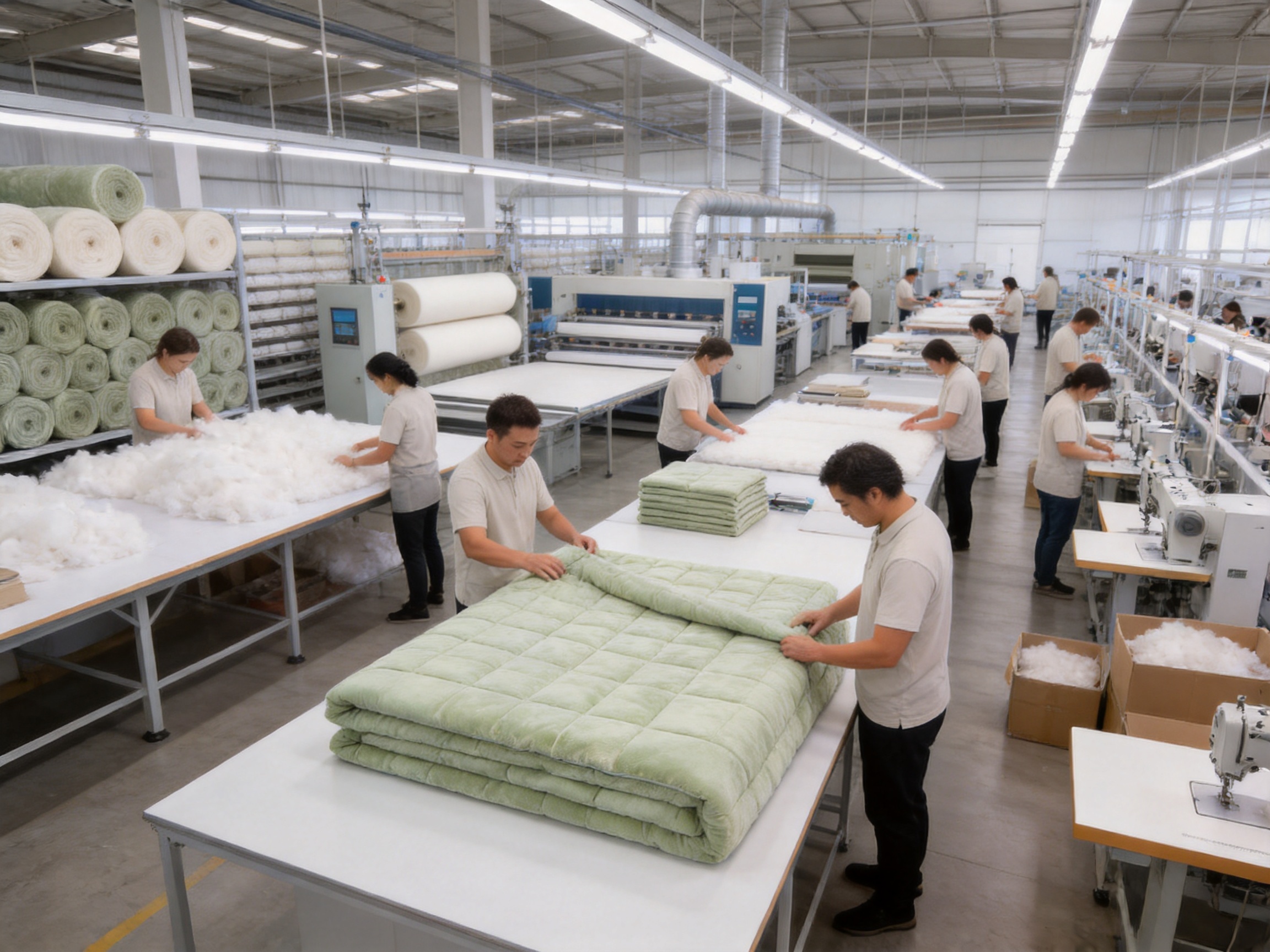
Care Guidance for Long-Term Performance
Proper care helps maintain the softness, warmth, and appearance of a flannel blanket. Users should always follow the care instructions supplied with the finished product because the recommended temperature, drying method, and detergent use may vary according to the final materials and construction.
Before washing, the blanket should be checked for loose objects, sharp items, or heavy staining. Washing it with similar colors can help protect its appearance. Overloading the washing machine may prevent proper cleaning and place unnecessary stress on the fabric and seams.
A suitable detergent should be used according to the care label. Excessive detergent may leave residue on the surface, while overly aggressive chemical treatment may affect softness or color. Fabric softener should only be used when compatible with the product instructions.
After washing, the blanket should be dried thoroughly. Moisture remaining inside the filling can create an unpleasant odor and may affect the product if stored for a long time. Gentle handling during drying and folding can help preserve the blanket’s shape and loft.
For commercial users, a laundering protocol should be established before regular operation. Hotels and institutions may need to confirm that their machines, detergents, drying systems, and folding procedures are compatible with the blanket. Testing a sample through the intended laundry cycle is a sensible step before placing a large order.
Environmental and Social Considerations
Modern home textile buyers increasingly evaluate products according to environmental and social criteria in addition to comfort and price. Material efficiency, responsible production, waste reduction, chemical management, energy use, and workplace practices can all influence supplier selection.
The manufacturer’s reported ISO14001, OEKO-TEX STeP, GRS, and BSCI-related credentials demonstrate attention to areas that may be important in responsible sourcing. Buyers should confirm current certification documents and determine whether the certificates apply to the specific factory, materials, product, and production process involved in their order.
The blanket’s durability and machine washability can also support practical sustainability. A product that remains useful through repeated use may reduce the need for frequent replacement. Easy care can lower dependence on specialized cleaning services, although the environmental impact of laundering still depends on water temperature, drying method, detergent, and frequency.
Responsible product communication is essential. Claims about recycled content, environmental benefits, safety, or certification should be supported by appropriate documentation. Buyers and suppliers should work together to ensure that labels and marketing materials accurately describe the final product.
Supply Chain and Order Coordination
Successful blanket sourcing depends on more than production alone. Buyers must coordinate specifications, sampling, order quantities, delivery schedules, packaging, documentation, and quality expectations. Early communication reduces the risk of delays and costly changes.
At the quotation stage, buyers should specify the desired size, fabric requirements, filling, color, packaging, estimated quantity, destination market, and required certificates. If any details remain open, they should be identified clearly rather than assumed.
During sampling, the supplier and buyer should review the product from both functional and commercial perspectives. The sample should be checked for softness, warmth, appearance, dimensions, filling distribution, edge finishing, labels, and packaging. Written approval helps establish a clear reference for production.
Before mass production, the buyer may request confirmation of raw materials, production timing, packaging materials, and inspection arrangements. For large or customized orders, a pre-shipment inspection can verify whether the finished goods match the approved requirements.
Clear communication is particularly important when multiple products are ordered together. Because the manufacturer produces blankets, quilts, pillows, mattress protectors, mattress covers, cushions, and other home textile items, buyers may be able to coordinate a broader bedding program. However, each product should still have its own specification sheet and approval sample.
Frequently Asked Questions
What is the standard size of the flannel blanket?
The default size is 140 by 200 centimeters. Other sizes can be discussed for customized orders, depending on the buyer’s requirements and production planning.
What materials are used in the blanket?
The construction uses 180gsm flannel fabric, 90gsm brushed fabric as the base, and 3D fiber filling. These materials are combined to provide a soft surface, additional fullness, and practical warmth.
Is the blanket suitable for cold seasons?
Yes. The brushed flannel surface provides a warm hand feel, while the multilayer construction and 3D fiber filling support insulation. It is intended as a cold-season home textile product and may also be used as an additional layer over other bedding.
Can the blanket be machine washed?
Yes. The blanket is designed to be machine washable. Users should follow the care label supplied with the finished product and use suitable washing and drying conditions.
Will the blanket remain warm after washing?
The product is designed so that its warmth effect is not significantly reduced after washing. Actual performance depends on the final construction and correct care. Buyers may request wash-performance evaluation when developing a customized order.
Does the blanket shed?
The product is described as having a low-shedding, comfortable surface. As with all brushed textiles, normal care and washing practices should be followed to help maintain the surface condition.
What is the benefit of 3D fiber filling?
3D fiber filling contributes to loft and creates air spaces that help support insulation. It can also provide a fuller hand feel while keeping the blanket manageable for everyday use.
Can buyers request custom colors and packaging?
Customization can be discussed for size and other order requirements. Buyers should provide detailed information about colors, labels, packaging, artwork, and market specifications during the inquiry and sampling stages.
Is the product suitable for private-label brands?
Yes. The blanket can be considered for private-label programs, especially when buyers require customized sizing, packaging, labels, or coordinated home textile products.
What types of customers can use this blanket?
Potential customers include household retailers, e-commerce brands, hotel and hospitality suppliers, dormitory operators, furnished accommodation providers, institutional buyers, importers, distributors, and private-label bedding companies.
What quality certifications does the manufacturer report?
The manufacturer reports ISO9001, ISO14001, OEKO-TEX Standard 100, OEKO-TEX STeP, GRS, and BSCI-related certifications or compliance credentials. Buyers should request current documentation and verify the scope applicable to their specific order.
How should a buyer evaluate a sample?
A buyer should review the fabric softness, surface appearance, shedding, filling distribution, dimensions, seam quality, edge finishing, washing performance, labels, and packaging. For larger orders, the buyer should also agree on production tolerances and inspection procedures.
Can the manufacturer supply other home textile products?
Yes. The company produces various home textile products, including quilts, pillows, cushions, bedspreads, travel quilts, mattress protectors, blankets, quilt and pillowcases, shower curtains, and curtains.
Conclusion
The flannel blanket is designed to combine softness, warmth, convenient care, and flexible sourcing potential. Its 180gsm flannel face offers a comfortable brushed surface, the 90gsm brushed base contributes additional fullness, and the 3D fiber filling supports insulation and resilience. The default 140 by 200 centimeter size is suitable for many personal and household applications, while customization creates opportunities for hospitality, institutional, retail, and private-label programs.
Compared with basic blankets that may use thin materials, uneven filling, or limited care options, this construction provides a more balanced combination of comfort and practicality. Machine washability improves convenience, while the intended retention of warmth after washing supports longer-term product value.
The manufacturing background is equally important. Established in 2002, Tongxiang Xinlong Bedding Co., Ltd. operates a substantial home textile facility in Wuzhen, Tongxiang, Zhejiang Province, with more than 320 employees, advanced equipment, and experience across multiple bedding categories. Its reported management and compliance certifications provide additional points for buyers to evaluate during supplier selection.
For the best results, buyers should define specifications carefully, approve samples, verify documentation, establish quality tolerances, and communicate packaging and labeling requirements before production. With appropriate cooperation between buyer and manufacturer, the flannel blanket can become a dependable component of a cold-season bedding range and a strong option for comfortable, practical, and customizable home textile supply.
References
1. Product specification materials supplied for the flannel blanket, including fabric, filling, size, and care characteristics.
2. Company information supplied for Tongxiang Xinlong Bedding Co., Ltd., including manufacturing history, facility scale, employee numbers, product categories, and certifications.
3. General textile manufacturing principles concerning brushed fabrics, fiber filling, multilayer bedding construction, stitching, finishing, and inspection.
4. ISO 9001 quality management system principles for manufacturing organizations.
5. ISO 14001 environmental management system principles for production facilities.
6. OEKO-TEX textile safety and sustainable production framework information.
7. Global Recycled Standard principles concerning recycled materials and responsible processing.
8. Business Social Compliance Initiative principles concerning social responsibility in global supply chains.


 +86-573-88798028
