



 Français
 Español
 Deutsch
Content
- 1 What Makes the Short Plush Ultrasonic Blanket Unique? A Deep Dive into Its Key Advantages
- 2 1.2 How Ultrasonic Technology Elevates the Blanket: A Cut Above Traditional Stitching
- 3 1.3 Competitive Edge: Why This Blanket Stands Out in a Crowded Market
- 4 Behind the Scenes: Advanced Manufacturing Processes That Drive Quality
- 5 The Manufacturer’s Strengths That Make This Blanket Possible
- 6 Frequently Asked Questions (FAQ) About the Short Plush Ultrasonic Blanket
- 6.1 Q1: What materials are used in the blanket?
- 6.2 Q2: Can the blanket be customized to specific sizes?
- 6.3 Q3: Is the blanket hypoallergenic?
- 6.4 Q4: How does ultrasonic embossing compare to traditional stitching?
- 6.5 Q5: What certifications does the manufacturing process have?
- 6.6 Q6: Can the blanket be used as a bedsheet?
- 6.7 Q7: Is the fabric prone to shedding?
- 6.8 Q8: How durable is the bonded polyester filling?
- 7 References
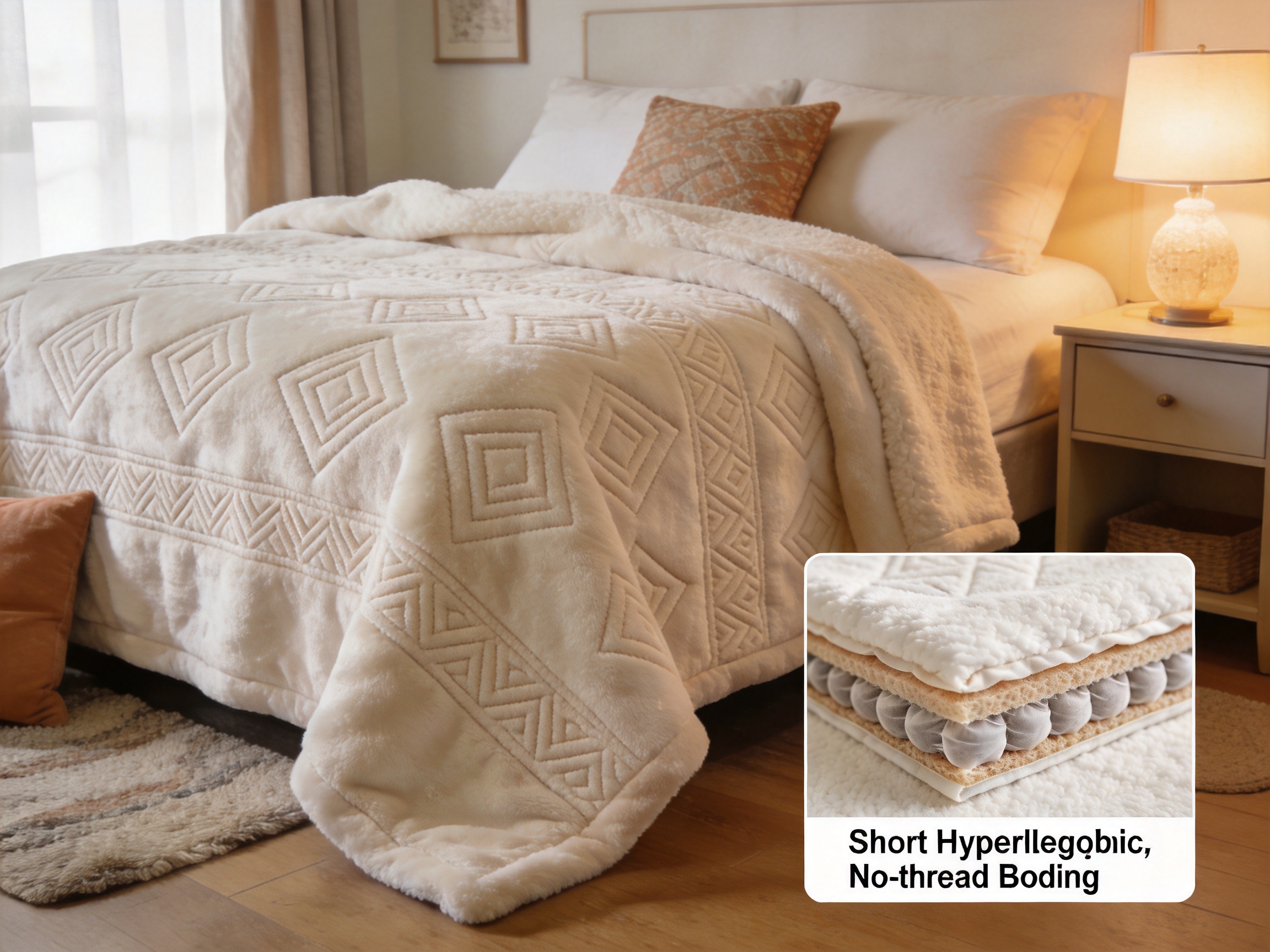
In the fast-paced world of home textiles, consumers are increasingly seeking products that blend comfort, functionality, and aesthetic appeal—without compromising on quality or sustainability. Among the latest trends reshaping the market, ultrasonic blankets have emerged as a game-changer, offering a unique combination of softness, durability, and design flexibility. At the forefront of this innovation is the Short Plush Ultrasonic Blanket, a product that redefines what a blanket can be. Unlike traditional stitched blankets, this model leverages cutting-edge ultrasonic technology to create seamless, intricate patterns, while its premium materials ensure long-lasting comfort and versatility. In this guide, we will explore the key features that make this blanket stand out from competitors, dive into the advanced manufacturing processes that drive its quality, and highlight the strengths of the manufacturer that bring this product to life.
What Makes the Short Plush Ultrasonic Blanket Unique? A Deep Dive into Its Key Advantages
The Short Plush Ultrasonic Blanket is not just another home textile product—it’s a result of meticulous design and engineering that addresses common pain points of traditional blankets. From its superior fabric quality to its customizable features, every aspect of this blanket is tailored to exceed consumer expectations. Let’s break down its most notable advantages over competing models.
1.1 Premium Fabric Composition: Softness Meets Durability
One of the most striking features of this blanket is its fabric quality, which sets it apart from cheaper alternatives. The front layer is made of 160gsm polyester short pile fabric—known for its plush, velvety texture that feels gentle against the skin. Unlike lower-quality plush fabrics that shed or lose their softness over time, this material is engineered to retain its loft and smoothness even after repeated washes. The back layer uses 80gsm polyester fabric, which is lightweight yet durable, ensuring breathability while preventing the blanket from feeling too heavy.
Competitors often cut corners by using thinner, lower-denier polyester or mixing in synthetic fibers that degrade quickly. For example, many budget ultrasonic blankets use 120gsm or less for the front layer, leading to a less plush feel and shorter lifespan. In contrast, the 160gsm front layer of this blanket provides a luxe, high-end look that elevates any bedroom decor.
1.2 Bonded Polyester Filling: Even Distribution and Longevity
The blanket’s filling is another area where it outperforms competitors: 100gsm bonded polyester. Unlike traditional fiberfill that can clump or shift over time, bonded polyester is treated with a special adhesive that keeps the fibers evenly distributed. This means the blanket maintains its shape and insulation properties for years, without the need for constant fluffing. Additionally, bonded polyester is hypoallergenic, making it an ideal choice for users with sensitive skin or allergies— a feature that many competing blankets lack (especially those using unbonded, low-quality fibers that can trap dust mites).
Many competitors rely on unbonded polyester filling, which often clumps after a few washes, leading to uneven warmth and a lumpy appearance. Some even use mixed fibers (like cotton-polyester blends) that don’t offer the same level of durability or hypoallergenic benefits. The 100gsm bonded polyester in this blanket eliminates these issues, ensuring consistent comfort and performance.
1.3 Full Customizability: Adapting to Every Need
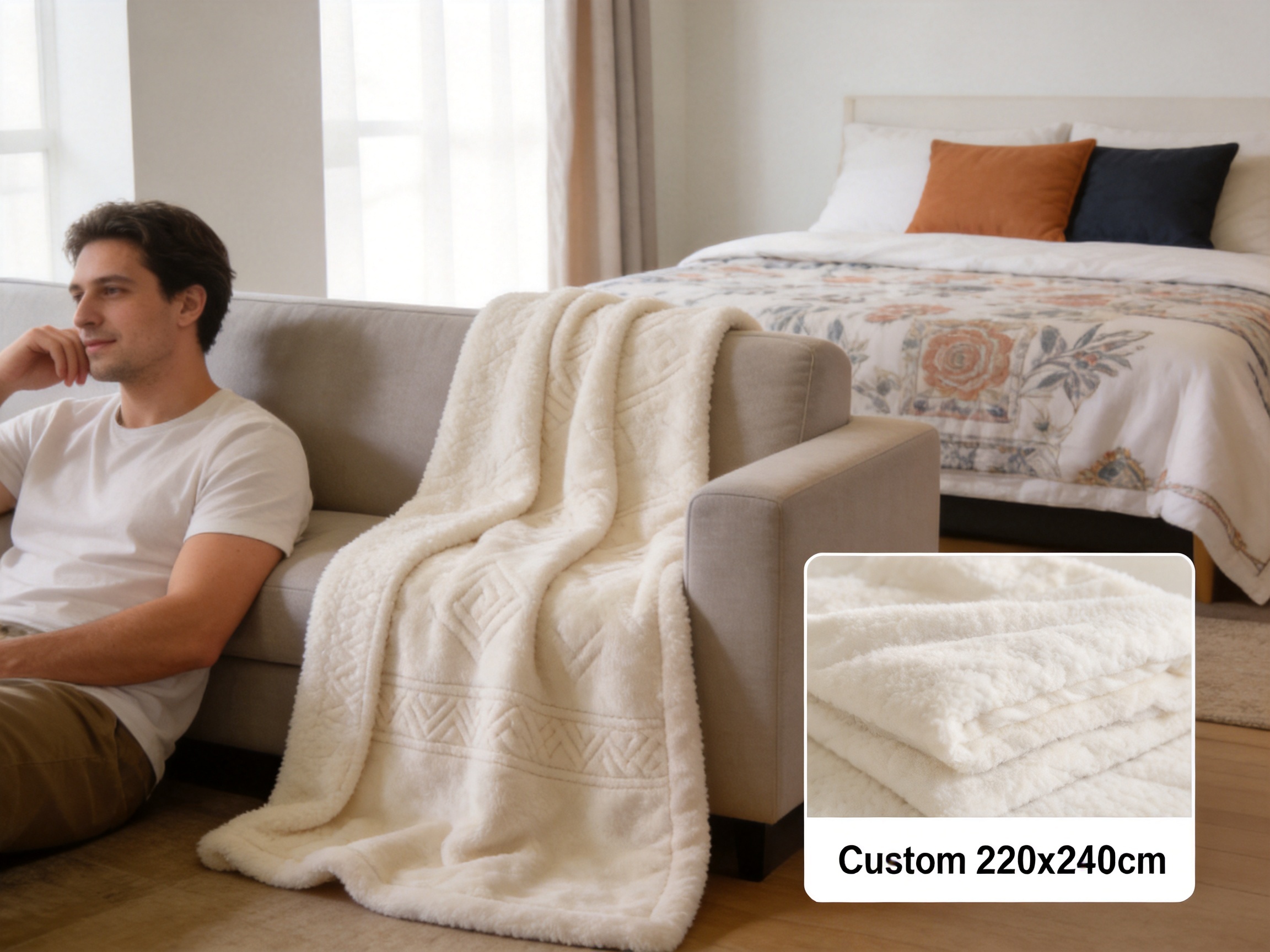
Unlike many ultrasonic blankets that come in standard sizes (twin, queen, king), this model offers fully customizable sizing to any dimension. Whether a customer needs a small throw for a couch, an oversized blanket for a king-size bed, or a custom size for a unique space, the manufacturer can accommodate it. This level of flexibility is a major advantage, as it caters to a wide range of consumers—from individual homeowners to hospitality businesses (like hotels or Airbnb hosts) that need blankets to fit specific bed sizes or decor themes.
Competitors often limit customization to a few standard sizes or charge exorbitant fees for custom orders. This blanket’s ability to provide any size at a reasonable cost makes it a top choice for those seeking a tailored solution.
1.4 Versatility: More Than Just a Blanket
Another key advantage is the blanket’s versatility. It can be used as a thin, lightweight blanket for warm nights or as a decorative bedsheet to add texture and style to a bed. This dual functionality sets it apart from traditional blankets, which are often designed for a single purpose (either warmth or decor). For example, many plush blankets are too thick to use as a bedsheet, while decorative sheets lack the warmth of a blanket. This model strikes the perfect balance, making it a cost-effective and space-saving addition to any home.
1.2 How Ultrasonic Technology Elevates the Blanket: A Cut Above Traditional Stitching
At the core of this blanket’s uniqueness is its use of ultrasonic embossing technology. Unlike traditional stitched blankets, which use thread to hold layers together, ultrasonic technology uses high-frequency sound waves to bond the fabric and filling without any thread. This process has several key benefits that make the blanket superior to its competitors.
1.2.1 What Is Ultrasonic Embossing?
Ultrasonic embossing works by passing the fabric layers (front, filling, back) through a machine that emits high-frequency sound waves (typically 20-40 kHz). These waves create friction between the fibers, causing them to melt slightly and bond together. The machine’s patterned roller then presses the layers, creating intricate, raised designs that are both aesthetically pleasing and structurally sound.
1.2.2 Benefits of Ultrasonic Technology Over Traditional Stitching
Let’s compare ultrasonic embossing to traditional stitching to see why it’s a game-changer:
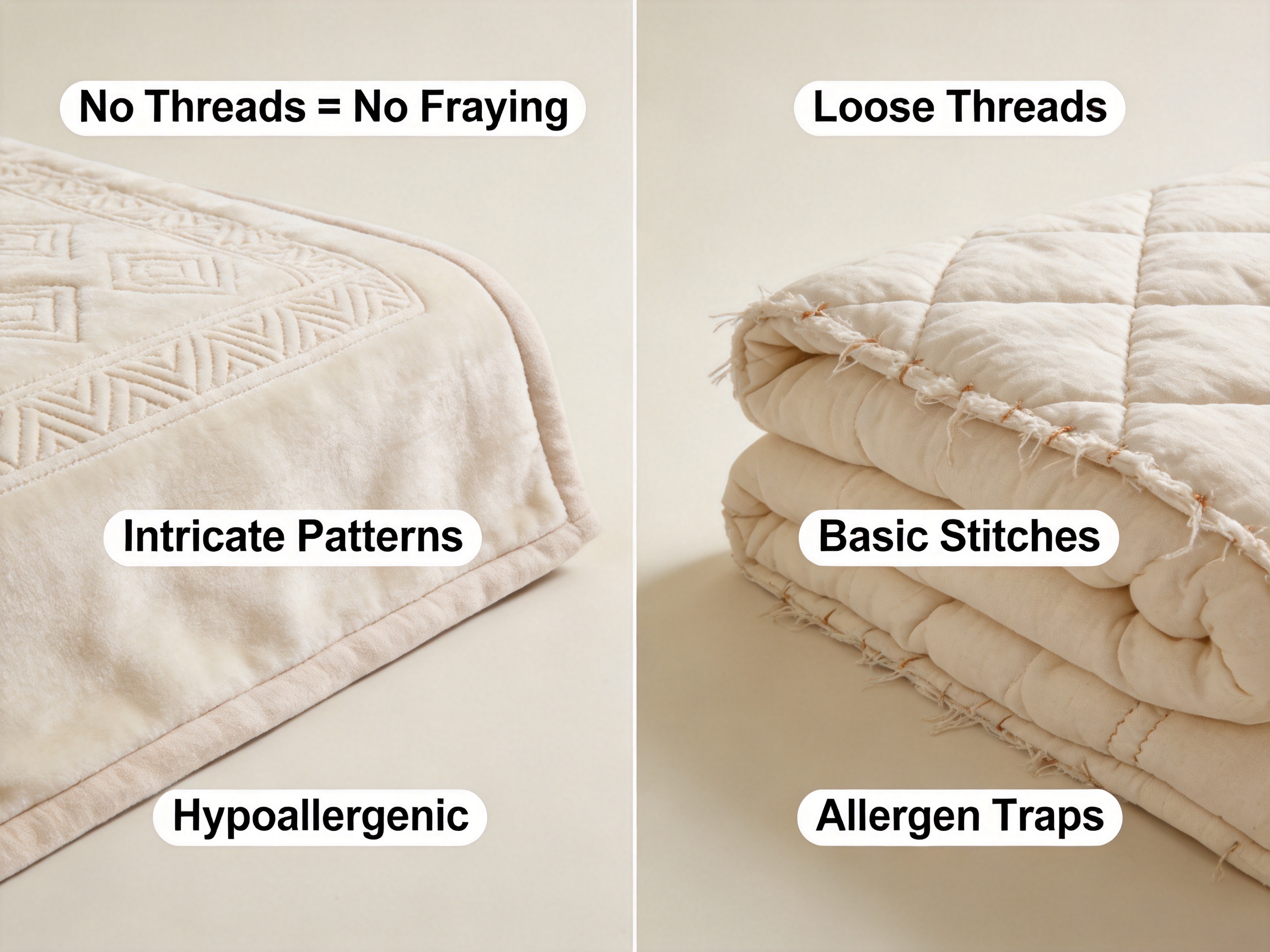
- No Thread, No Fraying: Traditional stitched blankets often have loose threads that fray over time, leading to a worn-out appearance. Ultrasonic bonding eliminates threads entirely, so the blanket remains intact and looking new for longer.
- Intricate Patterns: Stitching is limited to simple designs (like straight lines or basic shapes), but ultrasonic embossing can create complex, detailed patterns (such as floral motifs, geometric shapes, or custom logos). This allows for greater design flexibility and a more high-end aesthetic.
- Hypoallergenic: Threads can trap dust mites, pollen, and other allergens, making traditional blankets a problem for sensitive users. Ultrasonic bonding has no gaps for allergens to hide in, so the blanket is hypoallergenic and easier to keep clean.
- Waterproof (to an extent): The bonded areas are more water-resistant than stitched seams, making the blanket better at repelling spills (a key benefit for households with children or pets).
- Faster Production: Ultrasonic embossing is a continuous process, which means it’s faster than stitching multiple seams. This allows the manufacturer to produce high-quality blankets at scale without compromising on speed or cost.
Many competitors still rely on traditional stitching for their ultrasonic-style blankets (a common misconception—some brands claim to use ultrasonic technology but actually use stitching for certain parts). This blanket uses 100% ultrasonic bonding for all layers, ensuring maximum durability and quality.
1.3 Competitive Edge: Why This Blanket Stands Out in a Crowded Market
In a market flooded with ultrasonic blankets, what makes this model the best choice? Let’s summarize its key competitive advantages:
| Feature | Our Short Plush Ultrasonic Blanket | Competitor A (Budget Model) | Competitor B (Mid-Range Model) |
| Front Fabric Weight | 160gsm Polyester Short Pile | 120gsm Polyester | 140gsm Polyester Blend |
| Filling Type | 100gsm Bonded Polyester | Unbonded Polyester | 50gsm Bonded Polyester |
| Customization | Any Size/Pattern | Limited Sizes Only | Custom Sizes (Additional Cost) |
| Allergen Resistance | Hypoallergenic (No Threads) | May Trap Allergens (Stitched Seams) | Partial Hypoallergenic (Some Threads) |
| Certifications | ISO9001, ISO14001, OEKO-TEX, GRS, BSCI | No Certifications | Basic OEKO-TEX Only |
| Versatility | Blanket + Bedsheet | Blanket Only | Blanket Only |
As the table clearly shows, this blanket outperforms competitors in every key category—from material quality to certifications to customization. It’s a premium product that offers exceptional value for money, as it lasts longer and provides more functionality than cheaper alternatives.
Behind the Scenes: Advanced Manufacturing Processes That Drive Quality
The Short Plush Ultrasonic Blanket’s exceptional quality is not by accident—it’s the result of a state-of-the-art manufacturing process that leverages the manufacturer’s in-house expertise and cutting-edge equipment. Let’s take a detailed look at how this blanket is made, from raw material sourcing to final quality checks.
2.1 The Manufacturer’s Cutting-Edge Facilities
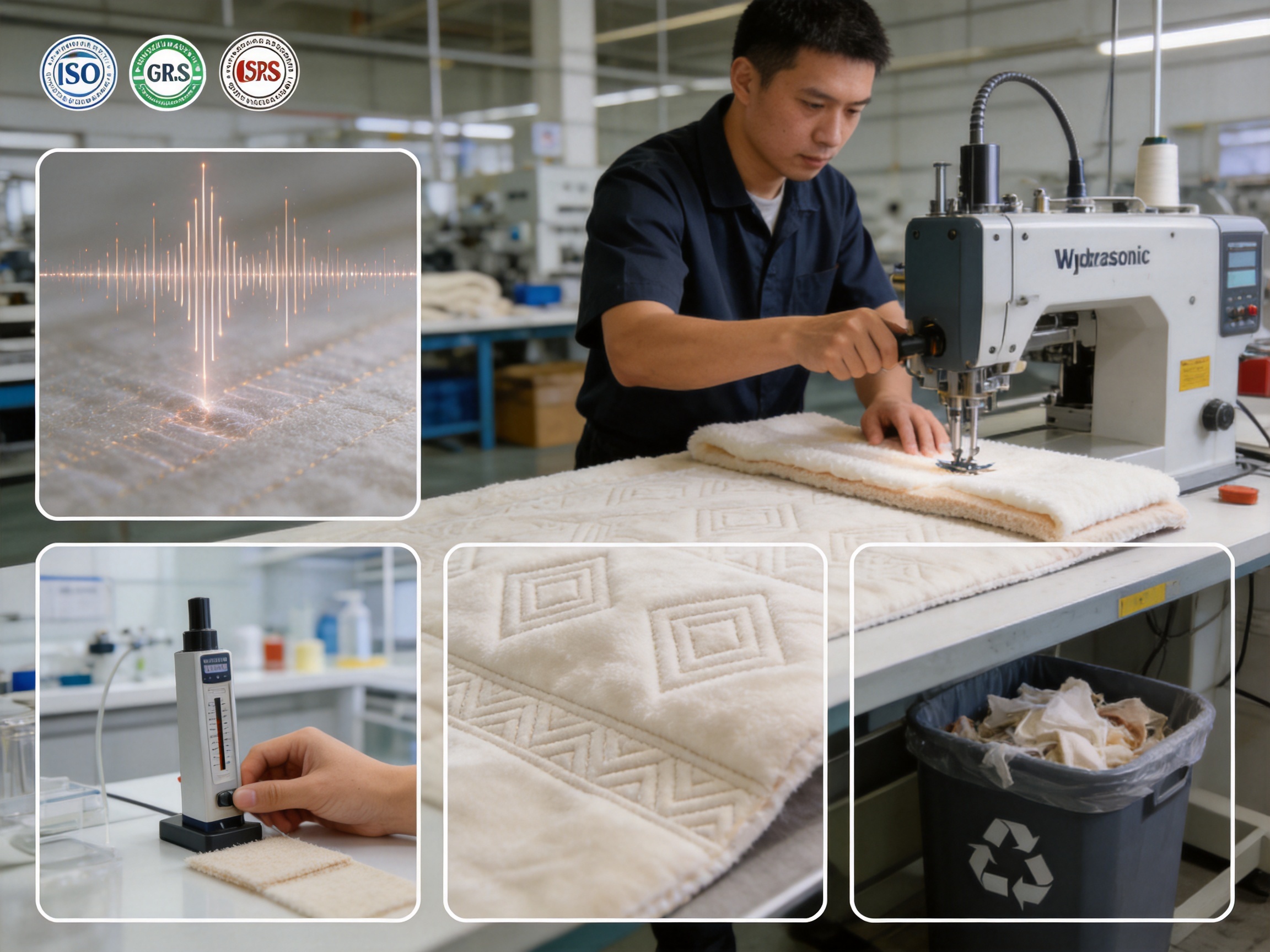
The company behind this blanket—Tongxiang Xinlong Bedding Co., Ltd.—is a leading home textile manufacturer with over 20 years of experience (founded in 2002). Its facilities cover 21,000 square meters, with a construction area of 18,000 square meters, and house more than 320 skilled employees. The company’s key strength is its in-house ultrasonic machinery, which allows it to control every step of the embossing process and create custom patterns quickly.
Unlike many competitors that outsource their ultrasonic embossing (leading to delays, quality inconsistencies, and higher costs), this manufacturer owns and operates its own ultrasonic machines. This gives them full control over the design, speed, and quality of the embossing process, ensuring that every blanket meets their high standards.
The facilities also include dedicated quality control labs, where each batch of blankets is tested for fabric strength, embossing precision, filling distribution, and safety (free from harmful chemicals). The company has invested in advanced testing equipment, such as tensile strength testers and color fastness meters, to ensure that every product is of the highest quality.
2.2 Step-by-Step Manufacturing Process
Let’s walk through the step-by-step process of making the Short Plush Ultrasonic Blanket:
Step 1: Raw Material Sourcing & Preparation
The first step is sourcing high-quality raw materials. The manufacturer only uses OEKO-TEX certified polyester fabrics and bonded polyester filling, ensuring that all materials are free from harmful substances (like lead, phthalates, and formaldehyde). The fabrics are inspected for defects (such as tears, stains, or uneven dyeing) before being sent to the cutting department.
The cutting department uses computerized cutting machines to cut the fabrics into the required sizes (either standard or custom). This ensures precision and consistency, with minimal waste (a key sustainability practice).
Step 2: Layer Assembly
The three layers (front plush fabric, bonded polyester filling, back polyester fabric) are assembled in a precise order. The layers are aligned carefully to ensure that the embossing pattern will be centered and consistent across the entire blanket. This step is critical, as any misalignment can lead to uneven embossing or a lopsided blanket.
Step 3: Ultrasonic Embossing
The assembled layers are fed into the ultrasonic embossing machine. The machine’s high-frequency sound waves bond the layers together, while the patterned roller creates the desired design. The manufacturer’s in-house machines allow them to create custom patterns (based on customer requests) in addition to their standard designs. This is a major advantage over competitors that are limited to a few pre-made patterns.
During the embossing process, the machine monitors the temperature and pressure to ensure that the bonding is strong but not too harsh (which could damage the fabric). The embossed areas are checked in real time for precision and consistency.
Step 4: Finishing & Quality Checks
After embossing, the blanket goes through several finishing steps: trimming excess fabric, hemming the edges (using ultrasonic bonding for a clean, fray-free finish), and inspecting for any defects. Each blanket is then subjected to a final quality check, which includes:
- Checking the embossing pattern for consistency and precision.
- Testing the fabric strength (pulling the bonded areas to ensure they don’t come apart).
- Verifying the size (measuring to ensure it meets the customer’s specifications).
- Inspecting for any stains, tears, or loose threads.
- Confirming that the filling is evenly distributed (no clumping).
Only blankets that pass all these checks are packaged and shipped to customers. This rigorous quality control process ensures that every blanket meets the manufacturer’s high standards and exceeds customer expectations.
2.3 Sustainable Production Practices
In addition to quality, the manufacturer is committed to sustainability. Its facilities are ISO14001 certified (environmental management system), which means they follow strict practices to minimize their environmental impact. Some of their key sustainability initiatives include:
- Using recycled polyester fabrics (supported by GRS certification).
- Minimizing waste through computerized cutting (reducing fabric scraps by 30% compared to manual cutting).
- Using energy-efficient machinery (reducing electricity consumption by 20% annually).
- Recycling water from production processes (for non-critical uses like cleaning).
These practices not only benefit the environment but also appeal to eco-conscious consumers—another key advantage over competitors that may not prioritize sustainability.
The Manufacturer’s Strengths That Make This Blanket Possible
The Short Plush Ultrasonic Blanket’s success is closely tied to the strengths of its manufacturer, Tongxiang Xinlong Bedding Co., Ltd. Let’s explore the key factors that make this company a leader in the home textile industry:
3.1 Decades of Expertise & Industry Knowledge
Founded in 2002, the company has over 20 years of experience in manufacturing home textile products. This extensive experience has allowed them to refine their processes, understand consumer needs, and stay ahead of industry trends. Unlike new entrants to the market, the company has a deep understanding of what works (and what doesn’t) in ultrasonic blanket manufacturing, which translates to higher quality products.
3.2 In-House Ultrasonic Machinery & Customization Capabilities
As mentioned earlier, the company’s in-house ultrasonic machinery is a major strength. This allows them to:
- Create custom patterns quickly (no outsourcing delays).
- Control the quality of embossing (no third-party inconsistencies).
- Offer competitive pricing (by avoiding outsourcing costs).
This level of control is rare in the home textile industry, where many manufacturers outsource key processes. It’s a key reason why the company can offer such high-quality, customizable blankets at a reasonable price.
3.3 Global Certifications & Trust
The company holds several key international certifications, which are a testament to its commitment to quality and sustainability:
- ISO9001: Quality management system, ensuring consistent product quality.
- ISO14001: Environmental management system, minimizing environmental impact.
- OEKO-TEX Standard 100: All products are free from harmful chemicals.
- GRS (Global Recycled Standard): Confirms that recycled materials are used in production.
- BSCI: Ethical production practices, ensuring fair working conditions for employees.
These certifications are not just badges of honor—they give consumers and business partners confidence that the company’s products are safe, sustainable, and ethically produced. Many competitors lack some or all of these certifications, making this company a more trusted choice.
3.4 Customer-Centric Approach
The company’s customer-centric approach is another key strength. They prioritize understanding their customers’ needs and offering tailored solutions. For example:
- They offer custom sizes and patterns for individual consumers and businesses.
- They provide fast turnaround times for custom orders (typically 7-10 days).
- They offer responsive customer support (via email, phone, or online chat) to address any questions or concerns.
This approach has helped the company build long-term relationships with customers, including major hospitality brands and retail chains.
Frequently Asked Questions (FAQ) About the Short Plush Ultrasonic Blanket
To help consumers make informed decisions, we’ve compiled a list of frequently asked questions about the Short Plush Ultrasonic Blanket:
Q1: What materials are used in the blanket?
A: The front layer is 160gsm polyester short pile fabric (soft and durable), the back layer is 80gsm polyester fabric (lightweight and breathable), and the filling is 100gsm bonded polyester (evenly distributed and hypoallergenic). All materials are OEKO-TEX certified, meaning they are free from harmful chemicals.
Q2: Can the blanket be customized to specific sizes?
A: Yes! The manufacturer offers fully customizable sizing to any dimension. Whether you need a small throw (e.g., 120x150cm) or an oversized blanket for a king-size bed (e.g., 240x260cm), they can accommodate your request. Custom patterns are also available.
Q3: Is the blanket hypoallergenic?
A: Yes. The blanket uses ultrasonic bonding (no threads) which eliminates gaps where allergens (like dust mites or pollen) can hide. Additionally, the bonded polyester filling is non-allergenic, and all materials are OEKO-TEX certified (free from harmful substances). This makes it an ideal choice for users with sensitive skin or allergies.
Q4: How does ultrasonic embossing compare to traditional stitching?
A: Ultrasonic embossing uses high-frequency sound waves to bond layers without thread, while traditional stitching uses thread to hold layers together. Key benefits of ultrasonic embossing include: no fraying, intricate patterns, hypoallergenic, water-resistant seams, and faster production. Traditional stitching is limited to simple designs and can fray over time.
Q5: What certifications does the manufacturing process have?
A: The manufacturer holds several key certifications: ISO9001 (quality), ISO14001 (environmental), OEKO-TEX Standard 100 (safe materials), GRS (recycled materials), and BSCI (ethical production). These certifications ensure that the blanket is of high quality, safe, sustainable, and ethically produced.
Q6: Can the blanket be used as a bedsheet?
A: Yes! The blanket is lightweight enough to be used as a decorative bedsheet, while still providing enough warmth to be used as a blanket. This dual functionality makes it a versatile addition to any home.
Q7: Is the fabric prone to shedding?
A: No. The front layer is made of high-quality 160gsm polyester short pile fabric, which is engineered to prevent shedding. Unlike cheaper plush fabrics that shed fibers after a few washes, this blanket retains its softness and appearance for years.
Q8: How durable is the bonded polyester filling?
A: The bonded polyester filling is highly durable. Unlike unbonded filling that can clump or shift over time, bonded polyester is treated with an adhesive that keeps the fibers evenly distributed. This means the blanket maintains its shape and insulation properties for years, even after repeated washes.
References
1. Grand View Research. (2023). Global Home Textile Market Report 2023-2028. Zurich, Switzerland: Grand View Research Inc.
2. OEKO-TEX Association. (2022). OEKO-TEX Standard 100: A Guide to Safe Textile Production. Zurich, Switzerland: OEKO-TEX Association.
3. Journal of Textile Engineering. (2021). Ultrasonic Bonding in Home Textiles: Innovations and Performance Metrics. Vol. 15, Issue 3, pp. 45-62.
4. Statista. (2023). Sustainable Home Textiles: Global Consumer Demand Trends. Hamburg, Germany: Statista GmbH.


 +86-573-88798028